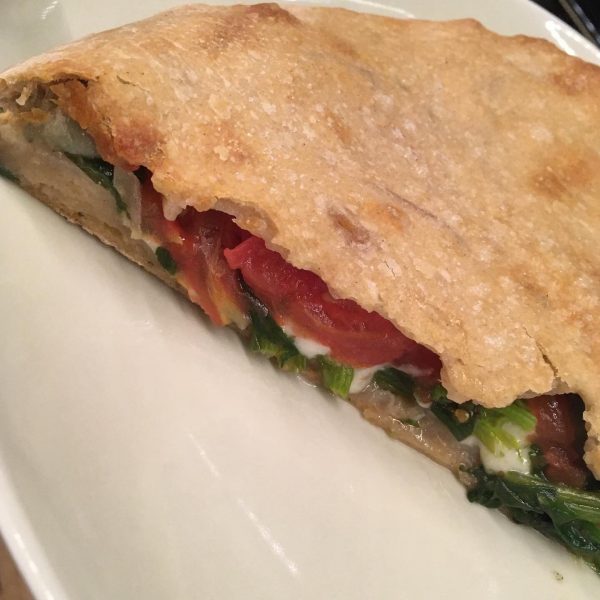
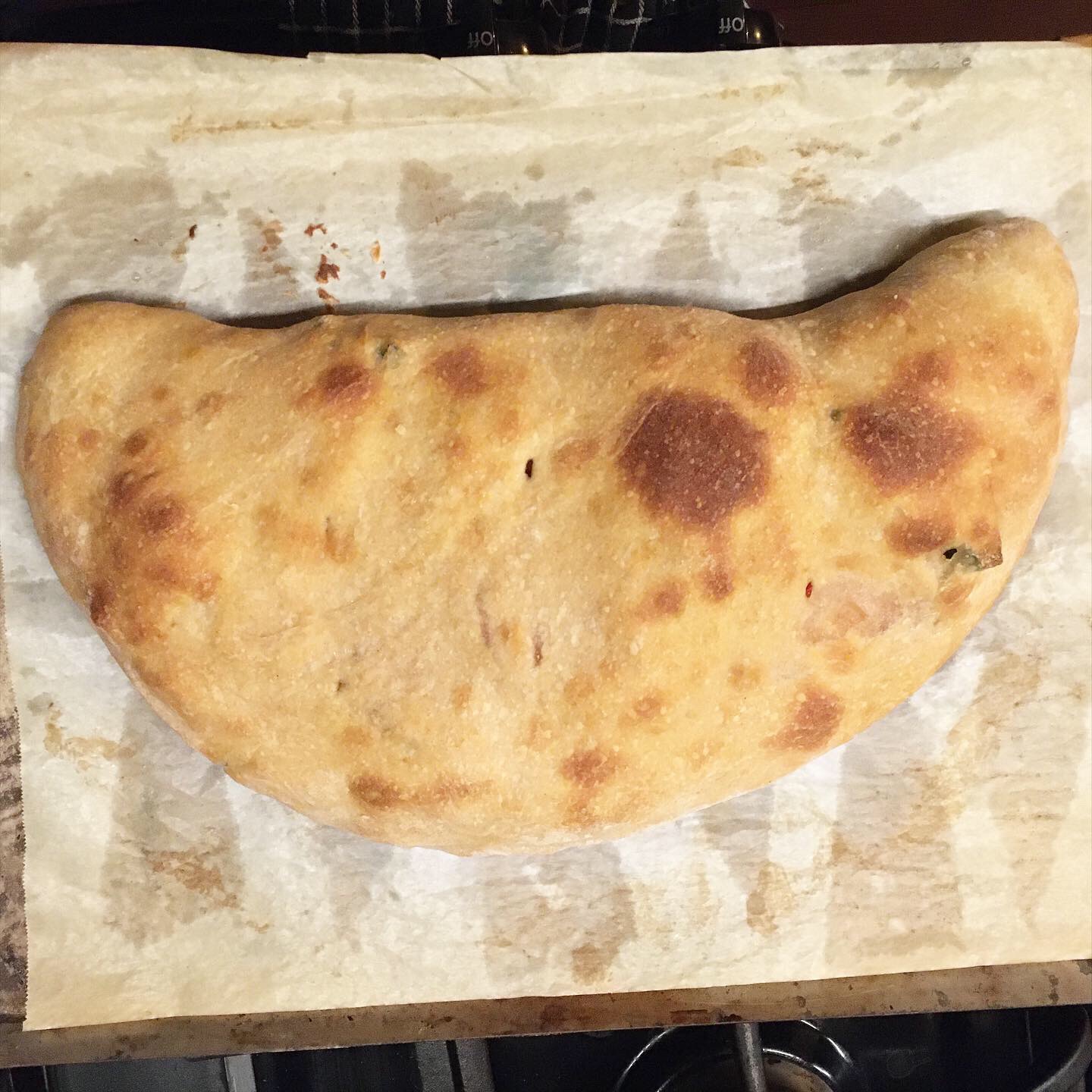
Stuffed bread or kind of calzone

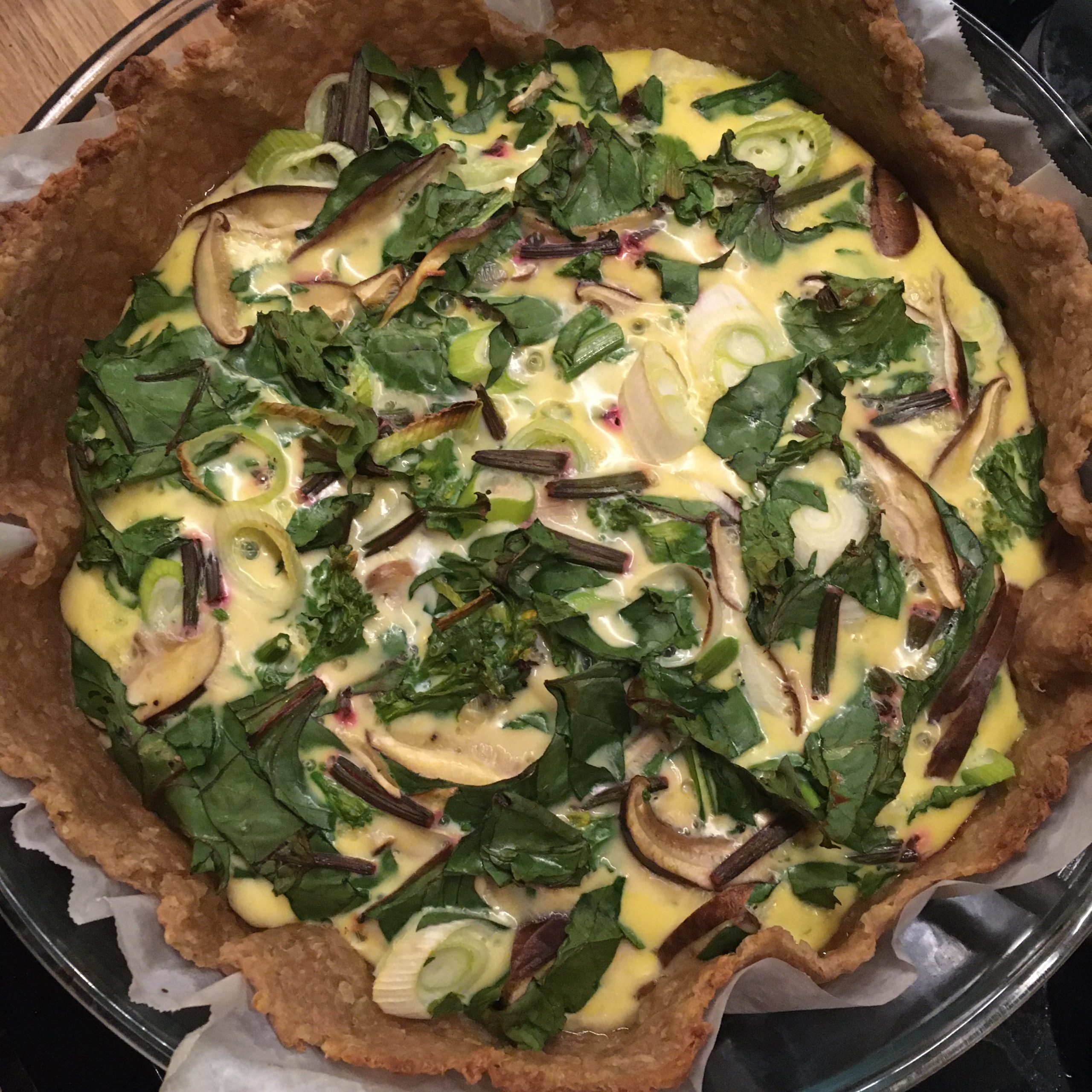
It’s past 20:00 and A. is done working. I know because I can hear him play a tune on his guitar from my “office”, meaning he is waiting for me to stop working and he is hungry… now is going to be a good time for me to think about dinner if we want to eat anytime soon! I am not in the mood for a Japanese recipe, nor for pasta… I was thinking about a quiche but that will take too much time to bake… so what then?

The rainy day makes me crave for a sunny recipe… I have this ball of campagne bread proving since the morning that has risen to a lovely volume. And this mozzarella from a local cheese farm I am slowly eating into bites as I think… diner is all decided! It will be a stuffed bread or a kind of calzone, with fresh vegetables in and mozzarella.

I turn on the oven to 250deg. I take a piece of my dough, about 10cm diameter ball, and roll it into a 4-5mm thin circle of 40-50cm diameter. Cut my mozzarella into slices, top half of the dough. Wash a tomato, a bundle of spinach, cut them and continue topping the half. Then I fold gently the second half and close it. It kinda look like a giant gyoza!! A bit of olive oil on the top, a pinch of salt, a few tiny pick to make some holes and in the oven for 20min!

The result was really great, crispy crust on the outside, but still a bit melting on the inside, infused with the vapors of the vegetables. Something I will do again for sure!!!
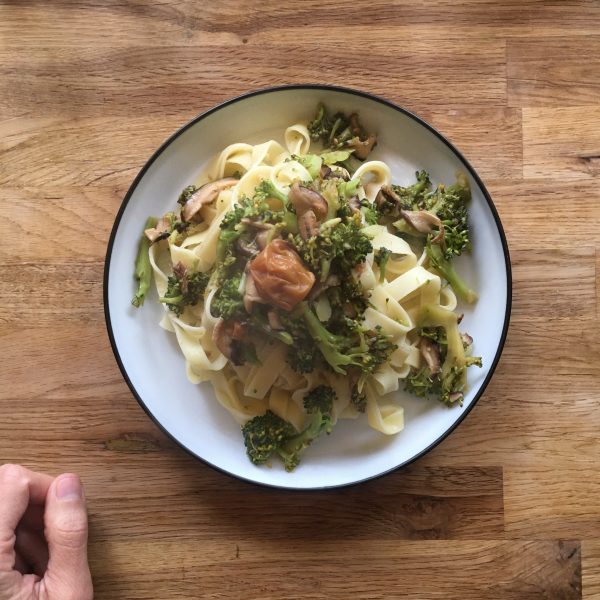
Definitely in love with wafu pasta

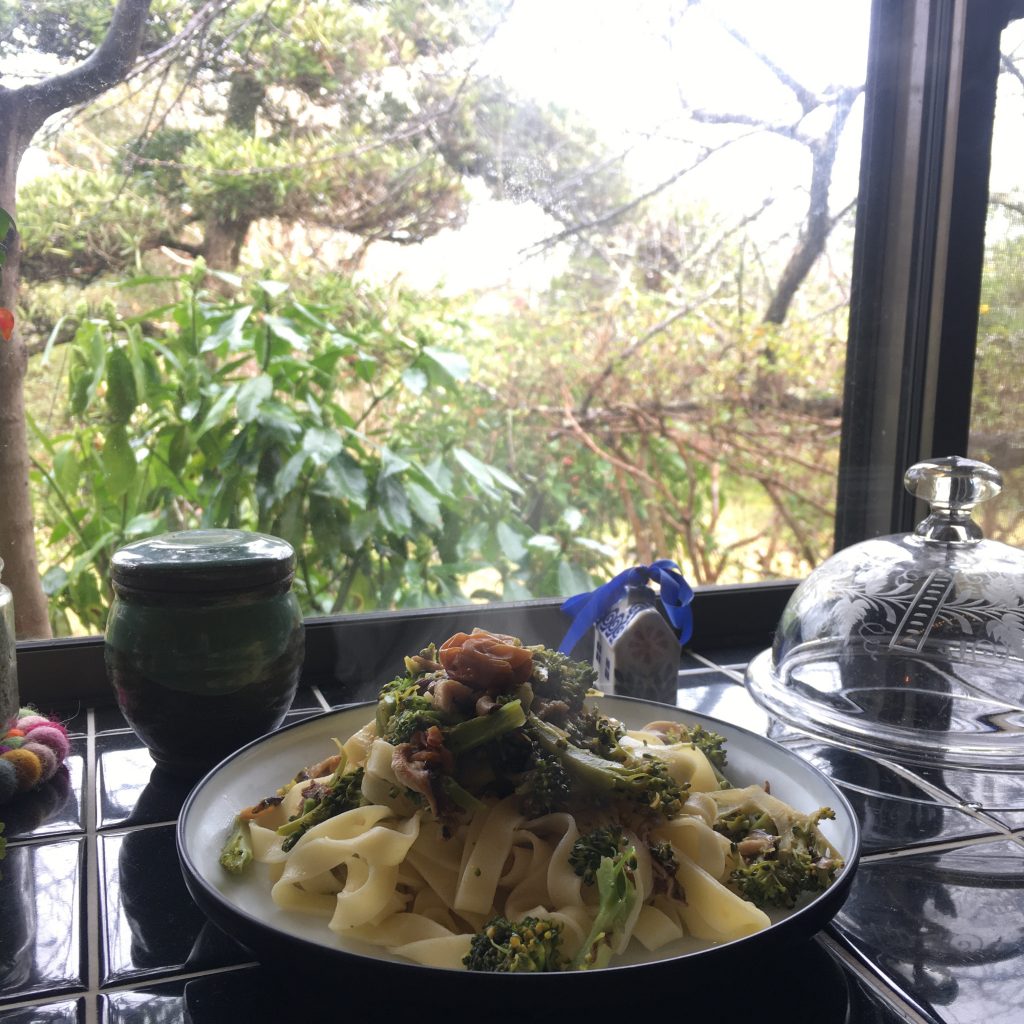
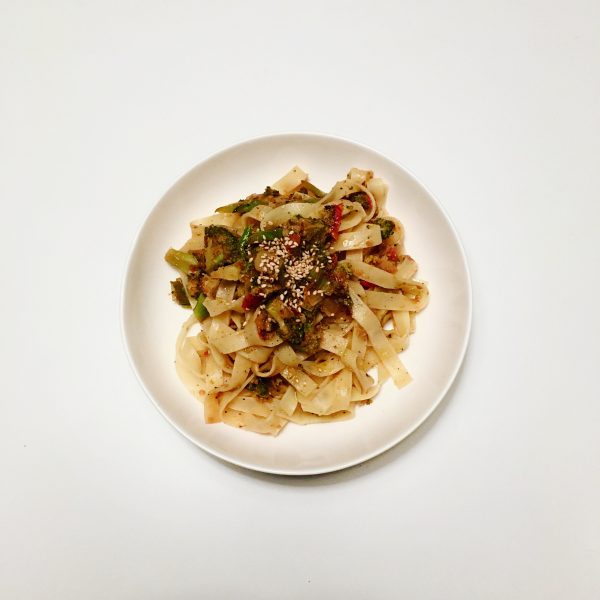
As I was reading the Japan times the other day I discovered they have a monthly column called Japanese kitchen with some cooking tips and recipes and found an old recipe of natto and umeboshi pasta. Neither A. nor I are fans of natto but it was time to prepare lunch and I was planning to make tagliatelle but I wanted to eat umeboshi, so wafu pasta naturally, and the recently read recipe made me create this super simple version: replacing natto by seasonal vegetables, and using some soya sauce for dressing the pasta. As I mentioned in my earlier post on the topic, wafu pasta are something of their own kind that may be ignominious to the purists but once you have tried them they are quite exquisite and the mariage of flavors can be exceptional. I loved the one of this recipe. I hope you will too.

Umeboshi, nanohana and shiitake tagliatelle (serves 2)

  • 180g of fresh tagliatelle
  • 5 nanohana
  • 3-5 shiitake depending on size
  • 3 plain umeboshi medium size
  • 1tbs of soya sauce
  • A ponch of sesame seeds

Wash and slice the shiitake. Wash and cut the nanohana in 3. In a large pan slightly greased (I used sesame oil, but anything works) start cooking the vegetables under cover at low heat. In the meantime boil the pasta. Drain the pasta and add to the pan. Stir well. Add the soya sauce, the sesame seeds, the flesh of one umeboshi, stir again and serve. Top each plate with an umeboshi, enjoy!

Auto pilot in the kitchen…

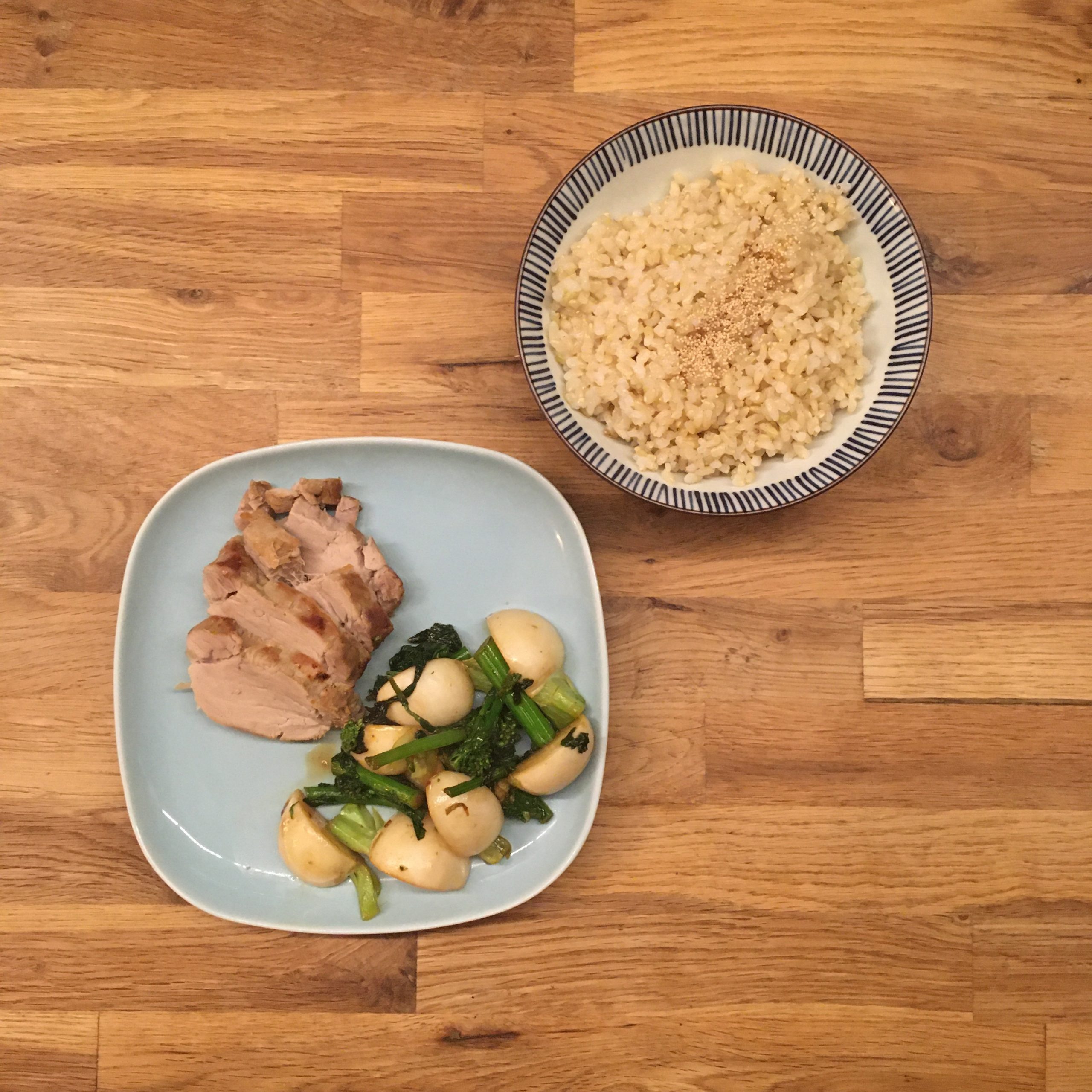
There are times in the year like the one now: busy at work that leaves shorter times to cook, busy in the garden that leaves little time to cook too, end of the season and timid transition to a new one that force to use the same ingredients over and over and inventing new recipes or testing new recipes is not really on the agenda. I have exhausted my resources or almost. When time comes I put myself in autopilot for the cooking: I use as less resources as possible, working on the basic, classic versions of my registry. Spinach, shiitake, broccoli, carrots and bok choy are cooked in minimum time for the simplest recipes ever.

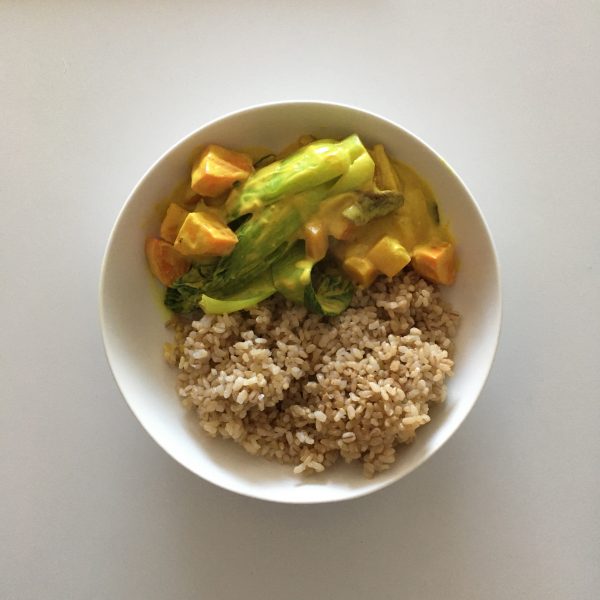
I have a few new recipes I’ve been loving to make in the past year. One is coconut milk curry, and it is one of my favorite super quick lunch fix. It is sooooo very simple and hands free that you can cook and work or cook and go for a walk while the pot is on the stove. And the result is always so colorful and tasteful that it’s a hit! I serve it with brown rice preferably but white rice would work too. Here is the recipe for today’s version, of course you can adjust the spiciness and the vegetables to the season, the location and your taste. I would usually use a combination of three vegetables: one crunchy, one creamy and one green…

Coconut cream curry (serves 2)

  • 1 large carrot
  • 1 bok choy
  • 5 shiitake
  • 100g of coconut cream or milk
  • 1tbs of turmeric
  • 1/2tbs of curry powder
  • 1 tiny pinch of red pepper
  • 1 pinch of salt
  • 1 pinch of black pepper

Wash and cut the vegetables to the shape and size you like. In a pan slightly greased, put the carrot and the shiitake and start cooking at medium heat, then add the coconut cream or milk and stir well. Cook at low heat under cover. It your vegetables pieces are rather large add 1/2 cup of water. Add the spices. Let on the stove for 15min still at low heat. Add the bok choy and cook for 3 minutes until leaves are still bright green. And that’s it… serve with rice.

If that isn’t super simple tell me what simple means for you!!!

Nabana, nanohana whatever you call it, it’s spring!

I remember reading Natsume Soseki’s novels more than 20 years ago and not fully understanding how he could write that the new year celebrations were also marking the beginning of spring with plum trees blooming… until I realize he was talking of the former calendar and the lunar New year which is basically in February. And indeed at this time of the year spring is in the air. Not only plum tree are blooming, the spring vegetables are sprouting, it’s time for fukinoto and nanohana.

Blooming plum tree: a sign of spring and the promise of many fruits in June

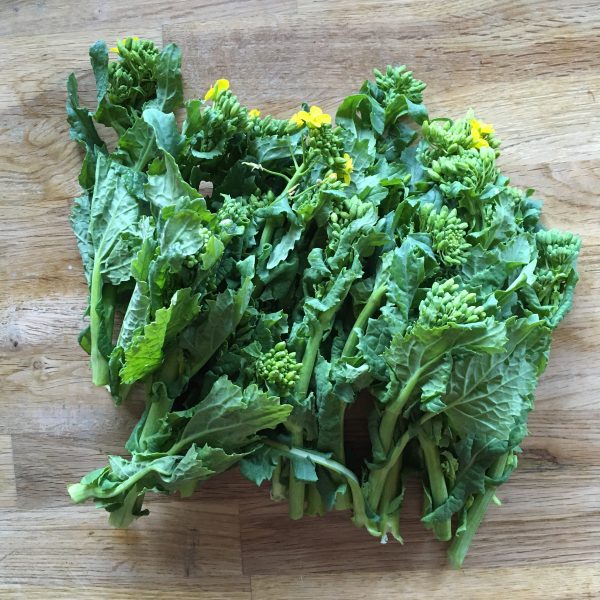
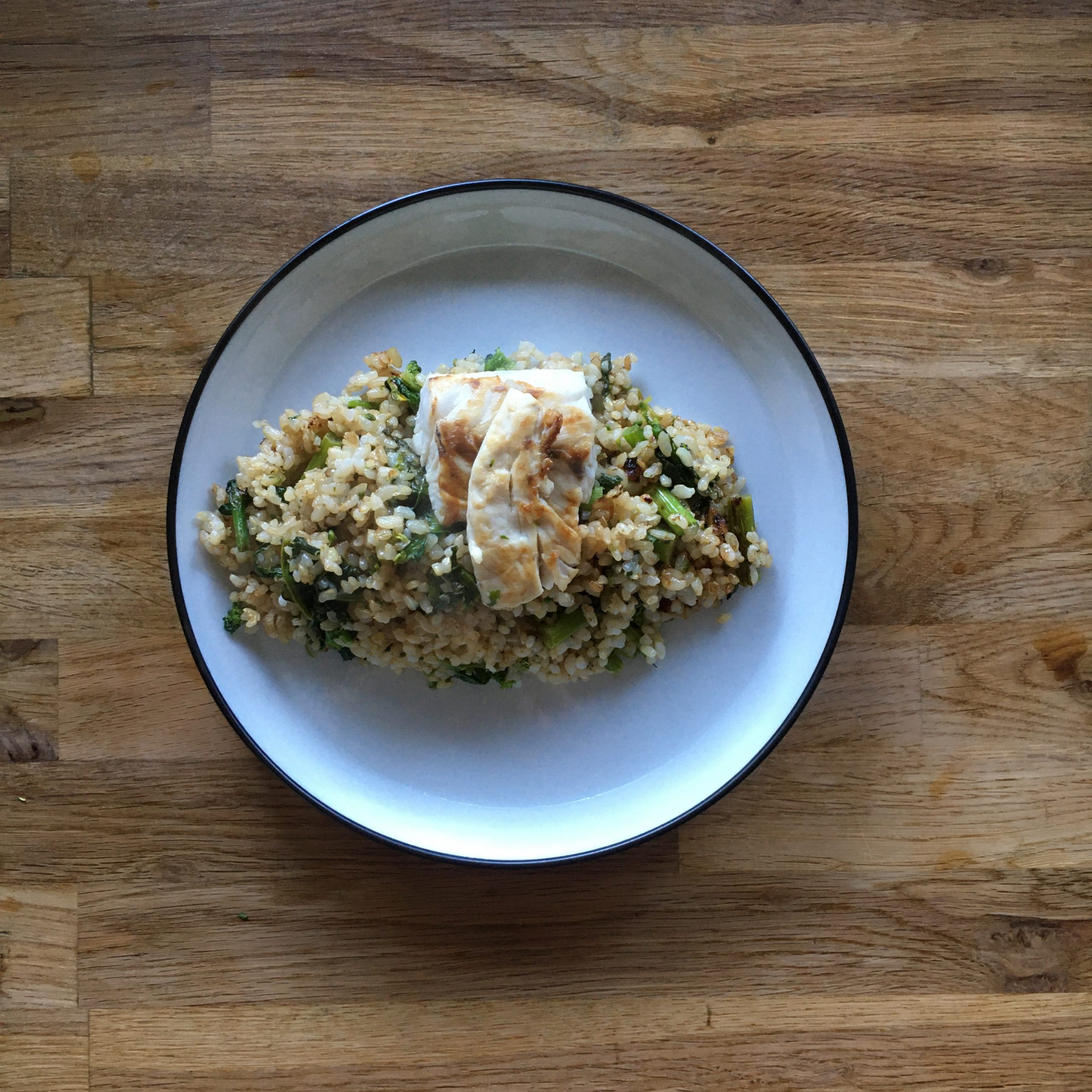
Nanohana, also called nabana 菜の花 or 菜花 that I often translated as canola is indeed a close relative indeed, but also of broccoli. The little yellow flowers at the top of this brilliant green stick and leaves, brings sunshine in any dish. And there can be many. It’s a very versatile vegetable, easy to prepare Japanese way or with western influences. I love nanohana in quiche or with pasta, in sautéed rice, with eggs, also cooked in dashi and topped with katsuobushi, and seasoned with soya sauce. As you can see I love it!

And maybe I love it that much because I believe that the first time I remember eating nanohana was at our wedding lunch, 14 years ago. Indeed, A. And I got married in winter, or rather early spring in the old calendar. And after the ceremony at the shinto shrine we celebrated with our guest in a ryoutei 料亭 we liked very much, in Ningyocho. And the chef who had carte blanche, impressed us with a combination of Japanese traditional and seasonal flavors, and some more western cuisine. Perfect given the mix of culture in our guests. So that’s when I remember eating nanohana.

Incidentally, nanohana is the emblem flower of Chiba prefecture, and the Isumi railway becomes picturesque when they bloom together with sakura (typically in a few weeks), I invite you to come and visit the area, it’s truly beautiful.

More Wafu pasta

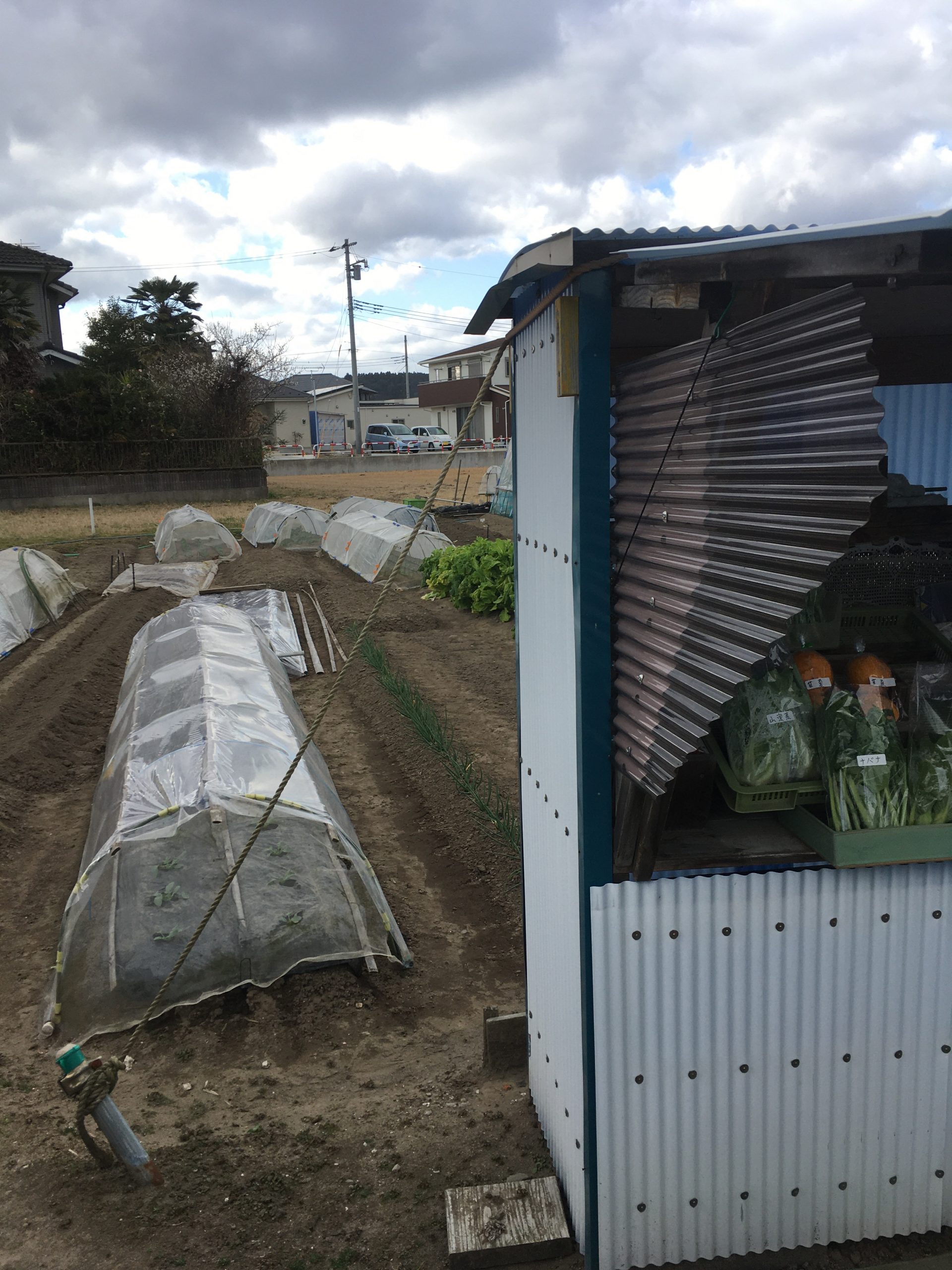
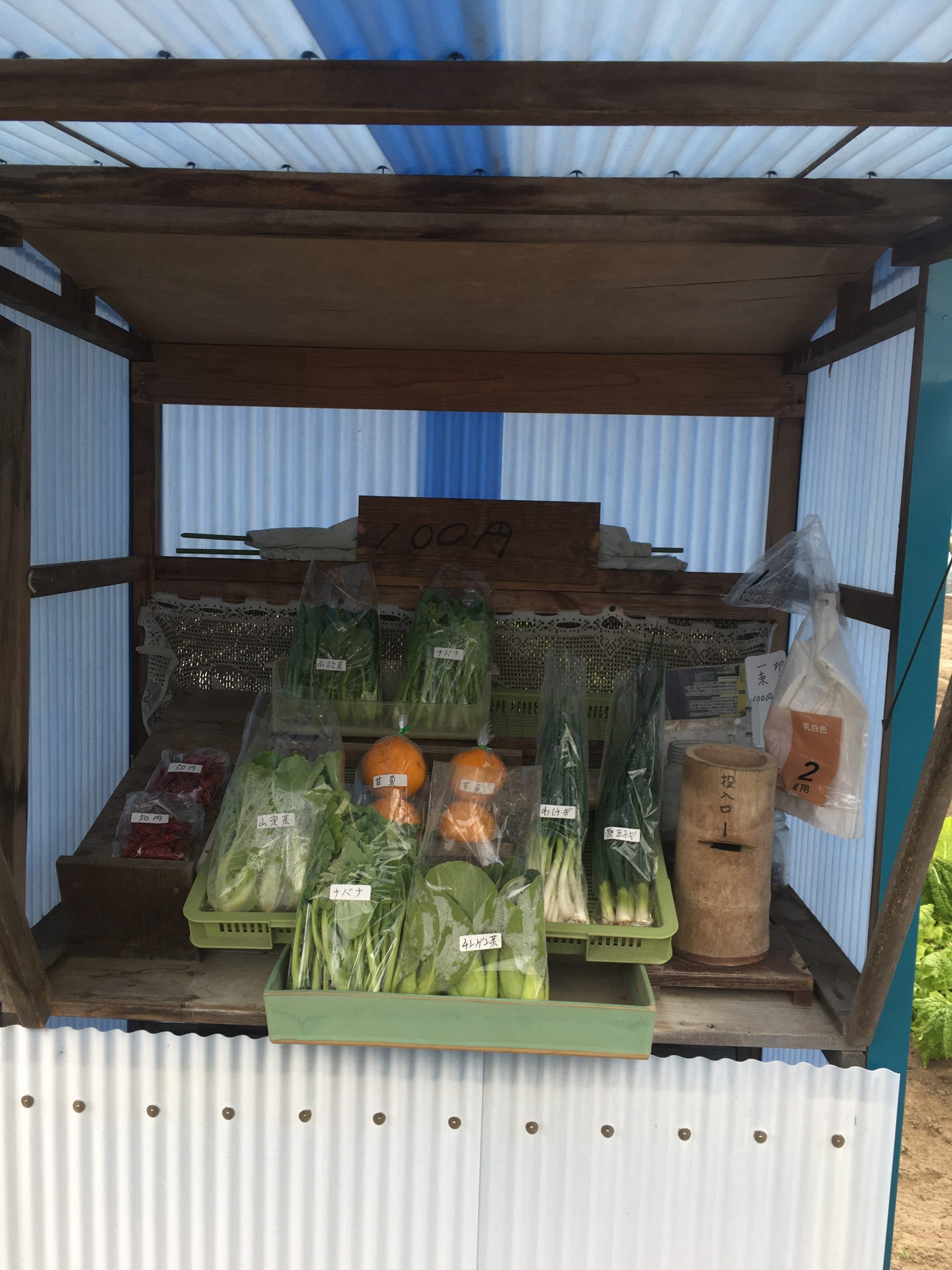
I have a principle that I apply for pretty much anything and even more when I cook or think about cooking, it’s to be always flexible and opened to opportunities, or see change in plans as one. Nothing is definite. A recipe evolves and comes to life as ingredients are mixed together, taking the mood and the time into consideration… This is exactly how this wafu pasta recipe was created. It all started with a bicycle ride to go diy shopping. On the way back, if we take this road, I like to stop at the little stall that sells local fresh vegetables grown right on the spot. Sometimes the shelves are empty, and sometimes they have little treasures. They just had many little treasures this day. In particular a big bundle of tiny sweet leeks appealed me. I just picked it, slid a 100yen coin in the box and off we went.

But what to do with them… I had no plan… until a few days later when time for dinner came and it was decided we would eat pasta. Tagliatelle. A bit of sesame oil was remaining in the pan from some little rice crackers I made, so I decided to use it. Chopped the little sweet leeks, coated them in sesame oil, added a very ripe large tomato (that can easily be replaced by a good tomato sauce or preserved tomatoes), and cooked at low heat until I obtained a creamy tomato sauce with the delicious flavor of the fragrant sesame oil, slightly confit. Added the boiled pasta, stirred well and added a bit of sesame seeds before serving. A new version of the wafu pasta…

How do eat your pasta Japanese-style? Have you ever tried???

Scones x Qagħaq tal-Ħmira

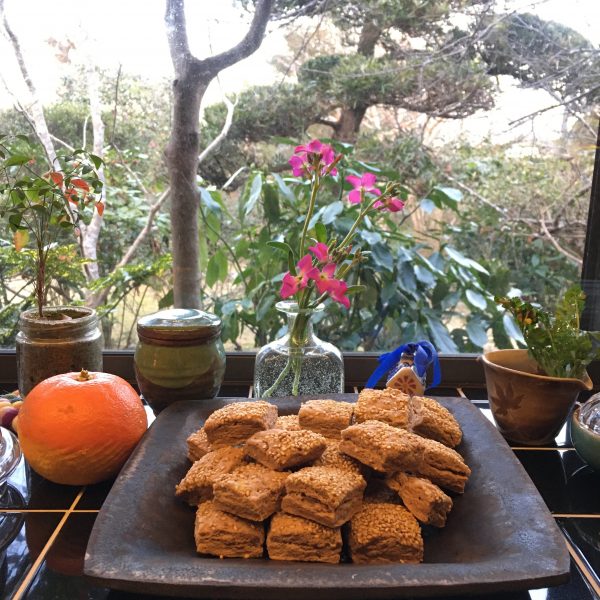
The very special blend of spices, citrus fruits zest and sesame seeds of Maltese Qagħaq tal-Ħmira is still floating around me and inspires me a lot, but it’s not always that I can wait for my sourdough Lois to work slowly a dough which in this still cold season can be 12 to 24 hours… sometimes we need something to eat, QUICK!!!! So I came up with a scone version of Qagħaq tal-Ħmira… it may be a blasphemy to the true Maltese tradition, so I apologize for this rather crude recipe. But to my defense, this scone recipe brings in all the flavors of Qagħaq tal-Ħmira in only 25min: 10min of kneading & shaping and 15min of baking. The softness of the famous slightly brioché bread is replaced by a more crumbly dry scone one. Add jam, honey or butter to it, or it alone in bite version… it is truly nice! Really!!! Try it and tell me what you think!

Scones Qagħaq tal-Ħmira way

  • 150g of flour
  • 50g of butter
  • 30g of sugar
  • 1tsp of baking powder
  • 1 pinch of salt
  • 1tsp of ground cloves
  • 1tsp of anis seeds
  • 1/4 of orange zest
  • sesame seeds for the topping
  • a bit of water or milk

Pre-heat your oven at 180deg.

In a bowl mix all the ingredients except for the last two: sesame seeds and water/milk. Start kneading. Add a bit of water/milk while kneading until you obtain a homogeneous dough. Roll to 3cm thick and top with sesame seeds. Roll a little bit thinner and be sure the sesame seeds are well incrusted. Cut to the shape and size you want, and put on a sheet of cooking paper. Bake 15min, and enjoy as soon as you like.

Isn’t that super simple???

Warming up!

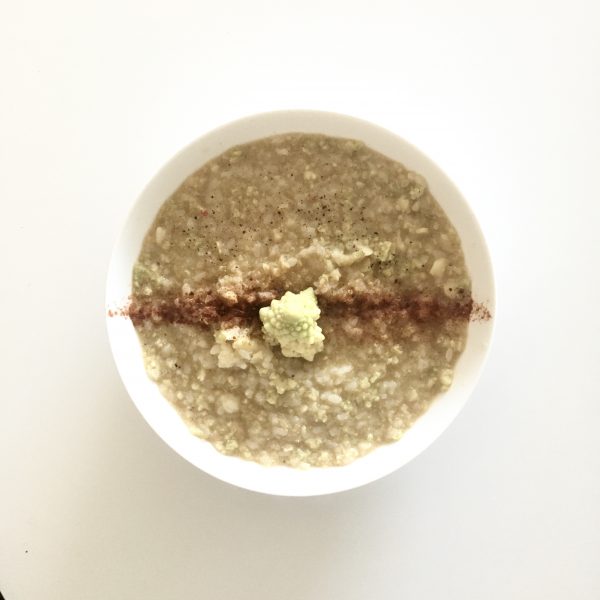
Sunny but cold days follow each others this week, so a warming and rich soup is always good, isn’t it? I had rice ready for lunch and a romanesco in the fridge, and I wasn’t sure about how to eat them together, when the idea of combining them in a soup came to my mind. I was a bit worried about how it would turn, but with a few well chosen spices it was really a great idea! Not very photogenic though… so let me share the recipe here with you. I hope you’ll like it and test it!

Rice and cauliflower soup

  • 1/2 cauliflower or romanesco
  • 1 cup of rice (cooked)
  • 1 pinch of nutmeg
  • 2 pinches of paprika
  • salt and pepper
  • 1 little pinch of red pepper (optional)

If your rice is not cooked yet, cook it, you can use leftover rice too.

Wash the cauliflower or romanesco and steam it. Then mash it roughly adding a bit of the cooking water, to obtain a rather liquid but not too though, mixture (blender works too). In a pan heat gently, add the rice, salt and pepper, the nutmeg, the paprika and if you like it a little spicier the red pepper. Stir and serve hot.

No need to wait for Valentine for a chocolate truffle!

While there is a tradition for girls to offer chocolate for Valentine in Japan and I usually prepare chocolate truffles for that occasion for A., I recently come with a truffle recipe that is so simple that I make some almost every month or so!! So there’s no need for me to wait for Valentine anymore to make truffles!!! Not that like them much, I usually don’t touch them, but this recipe finally makes them tolerable for me so I surprised myself eating a few!

Contrarily to another truffle recipe I published that I found was simple, this one is taking simplicity to another level. It requires only three ingredients: chocolate, cocoa powder and butter and is really quick. And because of the nature of the ingredients it keeps easily 3-4 days probably more but I never manage to pass that, it’s all gone before!! So if you like chocolate, simple sweets recipes and don’t have much time, this one is really a hit!

Chocolate truffles

  • 150g of dark chocolate
  • 10g of butter (I use salted one, I like the little touch it gives)
  • Cocoa powder for rolling

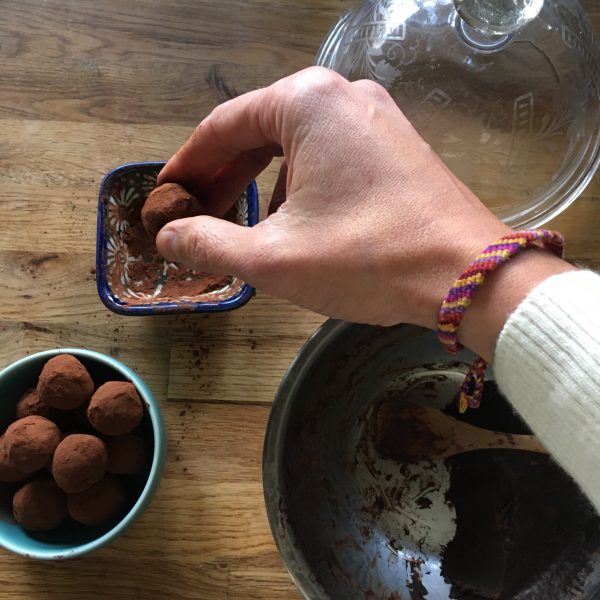
In a pan heated at low heat, melt the buter and the chocolate, and stir well to obtain an homogeneous texture. This is the ganache. Let it cool down. When it has, in a little bowl put some cocoa powder, with a spoon take a bit of ganache, roll it in your hands and then in the cocoa powder. And that’s one truffle! (Upper picture) Continue with the rest. Keep at room temperature if not too hot, or refrigerated. Don’t forget to take them out 1h before eating. Isn’t that simple???

Chandeleur VS Setsubun

In France, on February 2nd, it’s Chandeleur. A quick search on the internet told me that it’s Candlemas, a Christian celebration, 40 days after Christmas, the presentation of Jesus to the temple (thanks Wikipedia for enlightening my ignorance), but for me Chandeleur was just the day we ate crepes. A most awaited time as for some obscure reason my mum wouldn’t flip crepes often and we would for sure have some on February 2nd!!! One of my mother traditional savory filling was béchamel and ham, while I did like it then, I now barely prepare béchamel. A. doesn’t like it and I find it a bit heavy unless it is to eat with leeks or mushrooms only. My crepes filling is usually very simple: spinach, mushrooms, ham or prosciutto, eggs, cheese. Usually no more than two at the time, we are eating crepes not a kind of “put it all”… and it’s s good excuse to have a few crepes with different filling combinations!!!

To be honest, I care a lot less now of Chandeleur, because, as you may know if you follow me on Instagram, I flip crepes more often then I don’t! Crepes are my quick fix for a snack treat and A. loves them. And once in a while we also have savory crepes, or more precisely galettes, because I cannot help but love buckwheat crepes. I like them simple, with some vegetables and eggs, or ham and melted cheese. So over time I realize I have been skipping Chandeleur quite often, but who cares? As soon as you have a good crepe basic recipe you can make them anytime and realize how easy it is! You can easily change the wheat flour by 2/3 of buckwheat in my recipe to make galettes, you can even increase more the percentage of buckwheat, but don’t forget that with wheat comes gluten and with gluten comes consistency and firmness, so going gluten free means more cooking time before flipping and extreme carefulness in handling.

I don’t have a shallow crepes pan so I simply flip them in a large non sticky frypan slightly greased with butter, and it works perfectly well, no need to clutter the kitchen with this kind of goodies!

Have a good crepes flipping if you are planning to make some! I made some last week so I’ll pass today! Oh! And this year Setsubun 節分 is on February 2nd (it usually is on 3rd or 4th)… a celebration to welcome the new season (spring) that I love very much. I prefer by far traditions that are linked to seasons cycles or natural events rather than religions, so let’s throw beans to chase the evil out and hope for a quiet and peaceful home and year for everyone.

Proudly powered by WordPress | Theme: Baskerville 2 by Anders Noren.

Up ↑

Verified by MonsterInsights