Edamame gohan

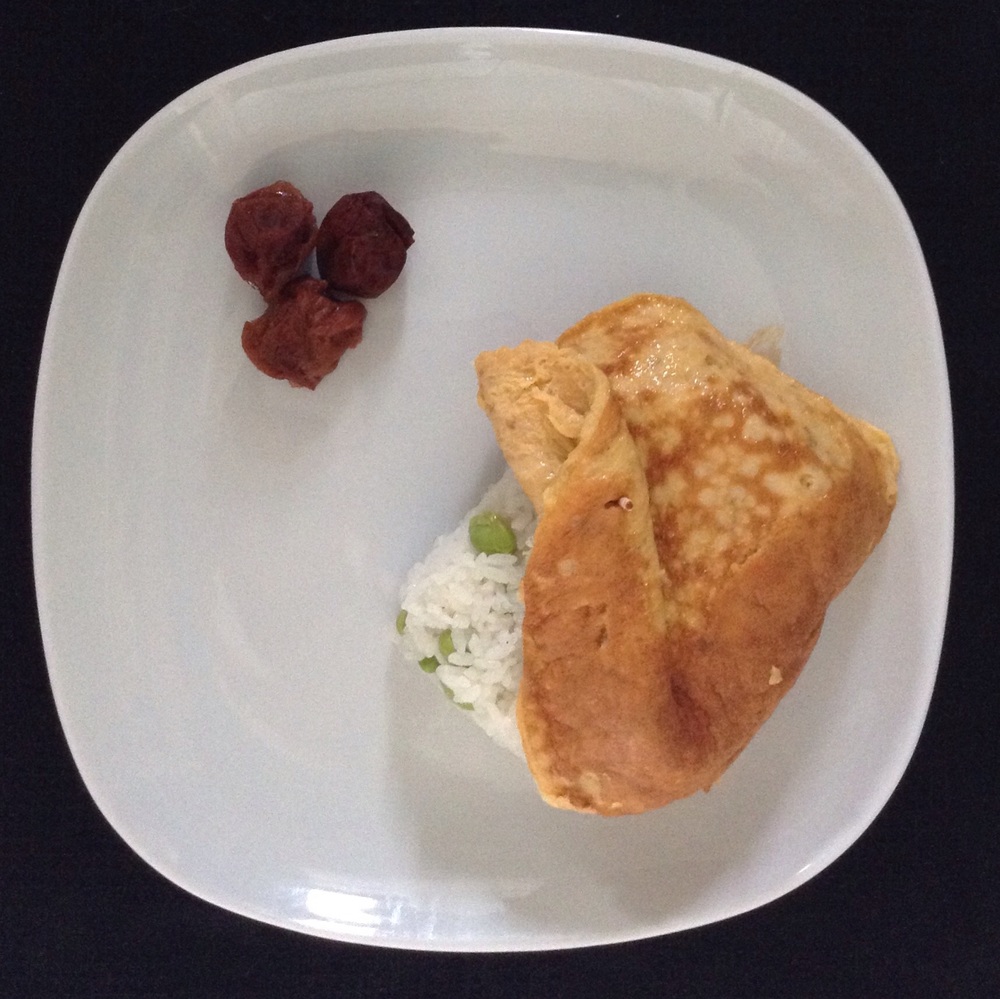
There is something that I love in summer in Japan, it’s fresh edamame. A few weeks ago they’ve appeared on the market stands and I’ve already introduced one recipe with eggplants from the shojin cuisine tradition. Of course with just salt they are perfect too. One other way I love them it’s with rice. It’s better to peel them but not an obligation. I prefer to as much as I can. The flavour and texture is better. It melts with the rice. I cook the rice and the edamame separately and only add them a few minutes before serving. I always add a pinch of salt. Here it is served with a katsuobushi-soya sauce omelette and 25year old umeboshi. 

Simple Japanese dinner

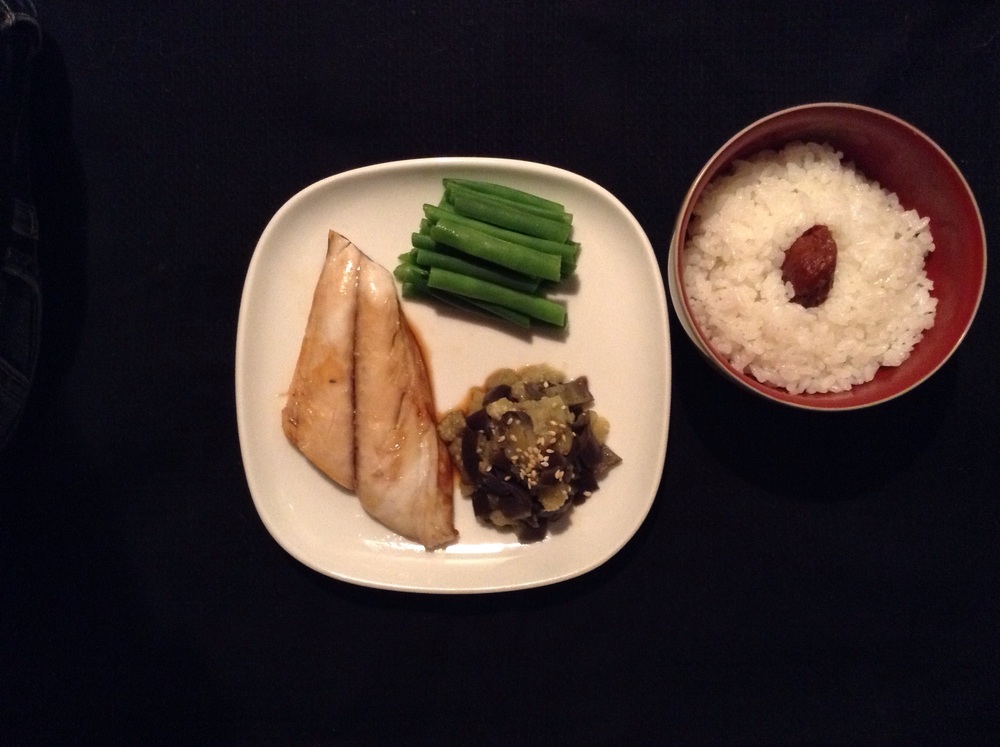
A simple piece of horse mackerel marinated in soya sauce and oven grilled; dashi blanched green beans and eggplants, white rice and umeboshi make for a perfect dinner in this rainy season period. Simple, tasty and colorful. I wish you a nice end of week! 

Umeboshi – 梅干し

The best way to enjoy umeboshi is with simple plain white rice in my opinion. Since I got a big pot of freshly made little shiso umeboshi from our neighbor  (mine are big plums without shiso), I really wanted to try them. I prepared simple white rice, and to make it a dinner I added a little of ginger grilled pork and some little radishes grilles too.

The plum are just freshly pickled and in their juice to they are salty-sour-sweet, very tasty and melting in the mouth. Actually they are delicious without rice too and now I understand why a Japanese traditional snack for kid is umeboshi. There are so many ways to prepare them and so many ways to eat them!!

Yellow everything

Sometimes things are just like that: in the fridge there is a yellow zucchini a yellow capsicum, new carrots and eggs and the first things that comes to mind with this chilly grey weather is curry-rice. In the end it gives a all yellow everything plate.  Simply delicious and tasty, but very well presented I reckon!!! I need to work on my plating again… How do you do your plating for everyday’s food that has no real shape like curry-rice?

Donburi

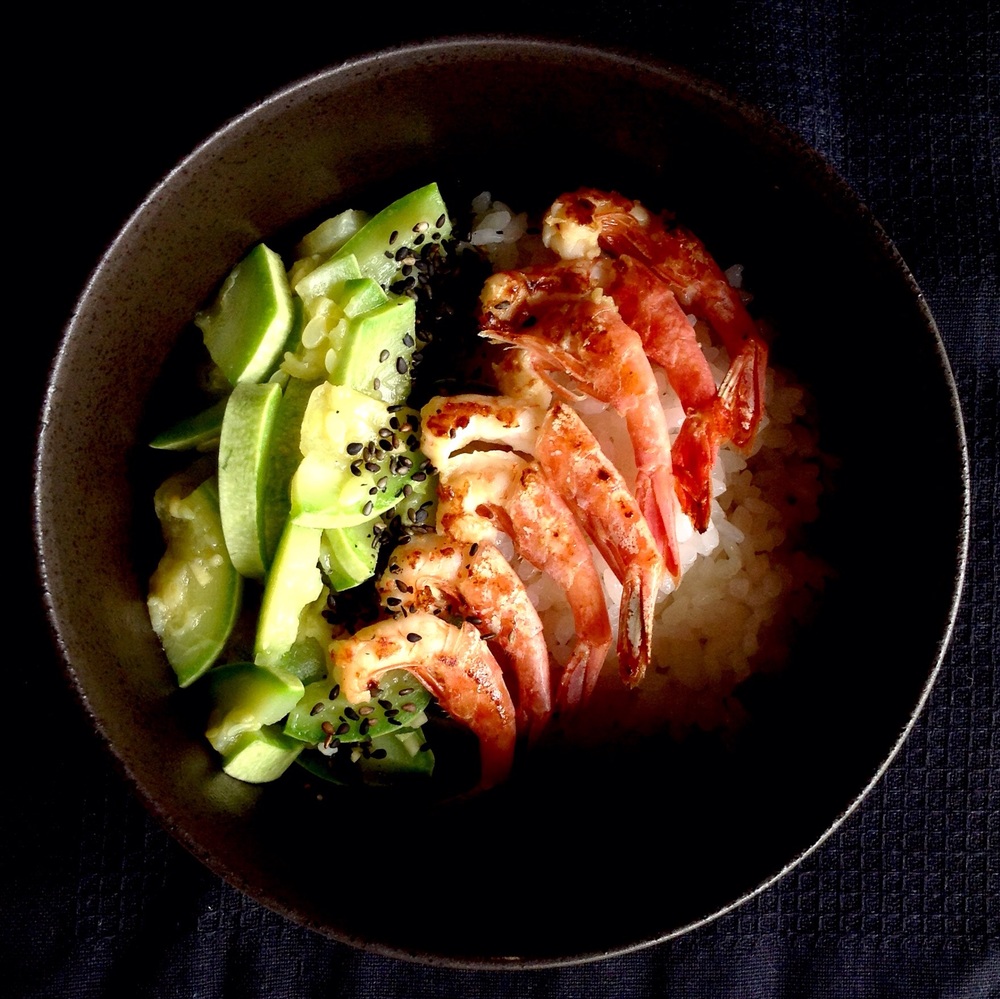
It’s a fact rare enough to be mentioned: I’ve cooked shrimps!!! Indeed it is awfully rare that I cook shrimps: 1. Because it’s not so easy to find wild shrimps; 2. Because I prefer them without head, don’t you think too these giant eyes are kind of weird? 3. It smells quite strong after… Anyway, I found some wild shrimps prepared for sashimi: head removed. They were not giant prawns like I like best but still a lot of conditions were there to give it a try. And I decided then to prepare them with what might already the last zucchini of the season (extremely short season in Chiba) with ginger and rice. So I gratted fresh ginger and marinated the shrimps in. Then I grilled them on a hot pan. I just steamed the zucchini and added small pieces of ginger and soya sauce. Served on top of Japanese rice, decorated with black sesame seeds. That’s all!!

Bayberry – 山桃

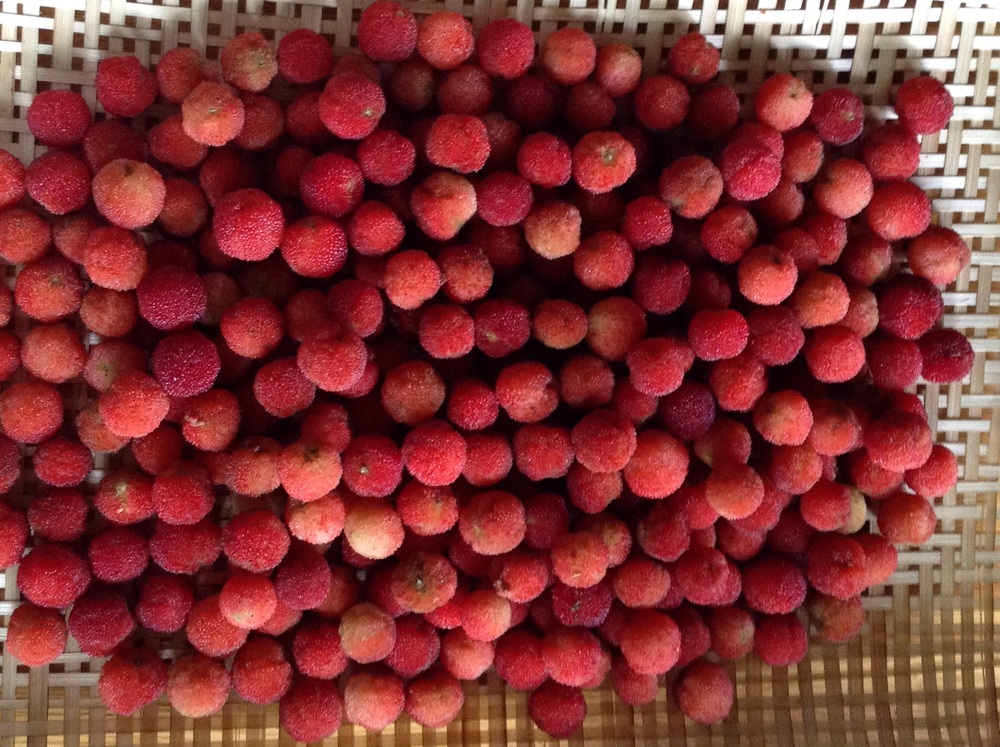
 Freshly harvested bayberry
Freshly harvested bayberry
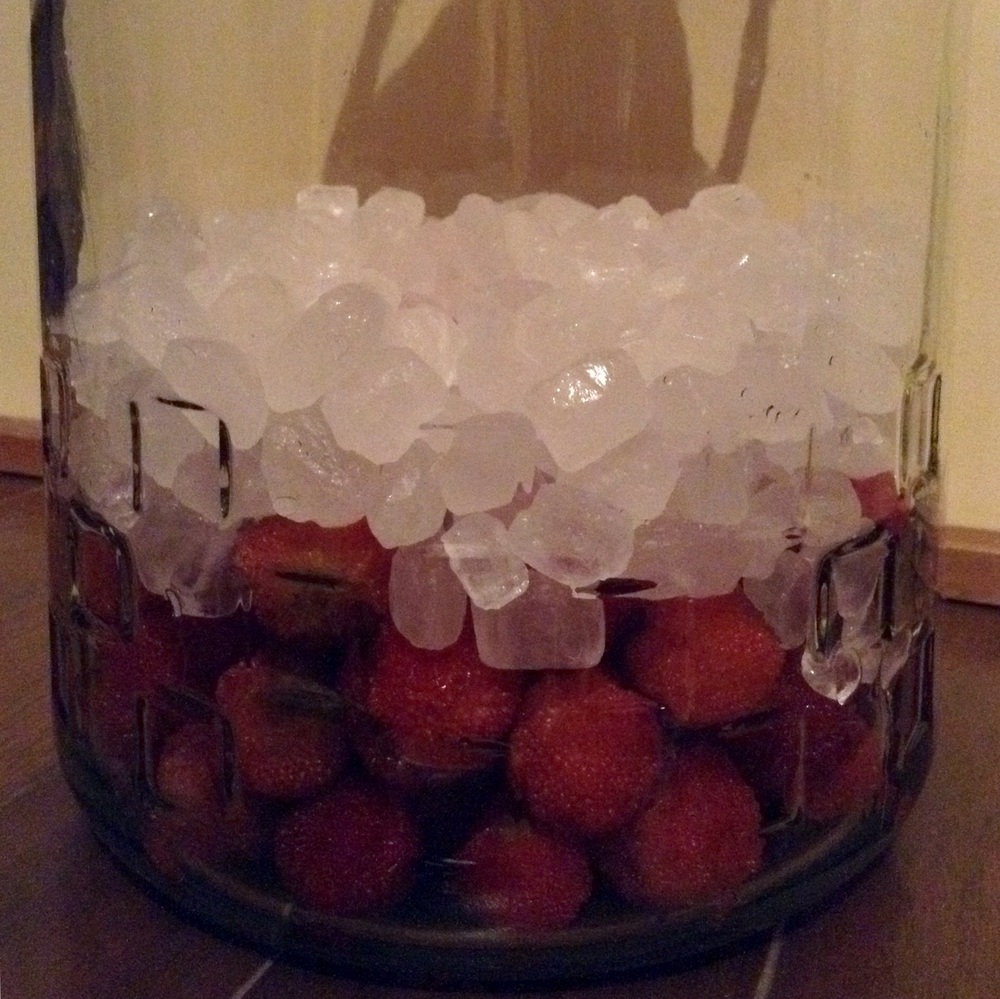
 Syrup in the making  
Syrup in the making  

We have a bayberry tree in our garden. At first it was so much fighting with the surrounding trees it was small and not giving really fruits but now that we’ve trimmed trees around and at the foot remove all the weed and tiny bamboos it’s growing quite quickly and this year it is giving tones of fruits. A large part of them felt during the big storm early Saturday morning so I decided to harvest the one still on the tree and ripe enough, which means that I hervested 2kg of fruits. Bayberry are very similar to strawberry tree fruits but they are an Asian species. I only know the Asian version in syrup in cocktails in Asian restaurant when I was a kid! Actually they taste a little like cranberry while having a very different texture.

I didn’t know what to do with that many fruits  thanks to IG followers advice and a bit of net browsing I managed to know how to prepare them:

  1. wash them under running water
  2. soak them 2h in slightly salted water to be sure there is no bug in: I collected a little worm only! Remove the stems.
  3. wash them and dry them with a clothe. 
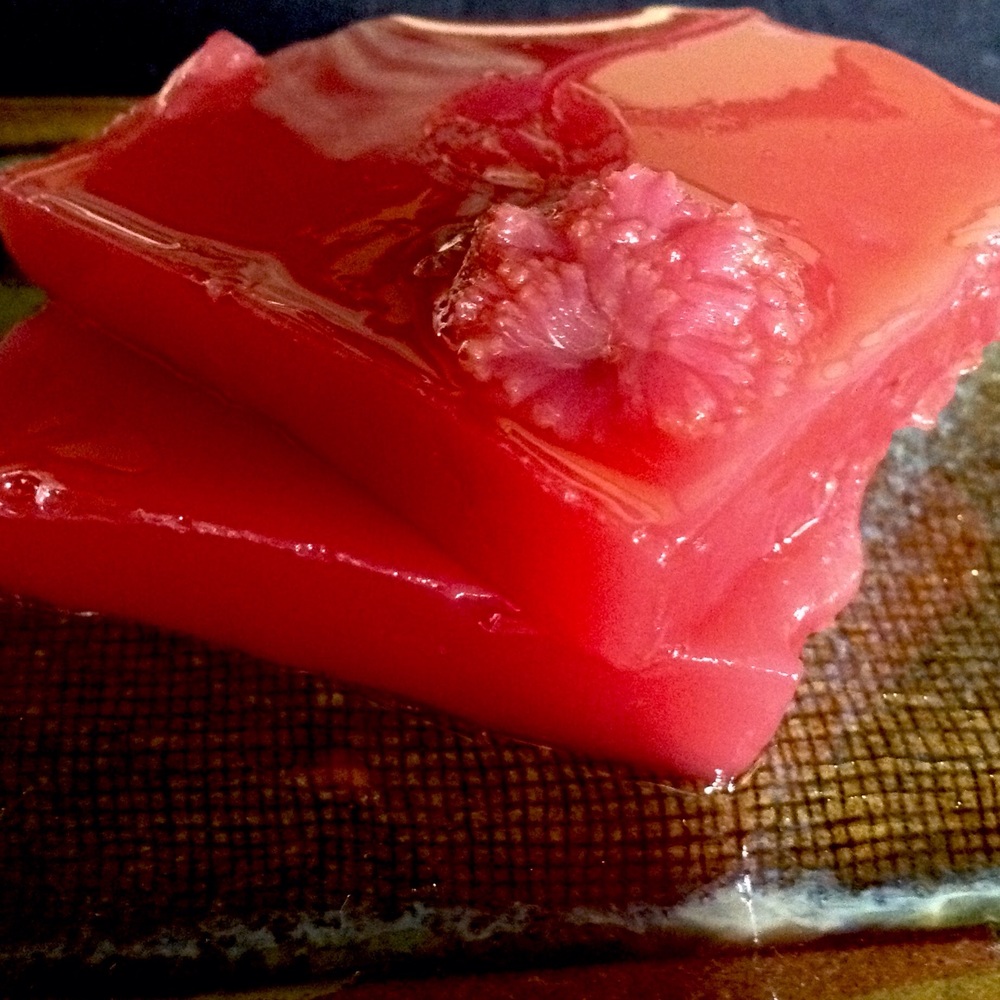
 Jelly
Jelly

now they are ready for any preparation. I did some sugar syrup with 700g of fruits and 700g of block sugar. Now I just need to wait for the sugar to melt and for the syrup to be ready. The other thing I had in mind was jam. Unfortunately without any pectin it does jellify apparently so my jam ended up in an other syrup that I used right away and o make jelly for dessert adding just agar agar to the syrup and using a mold. I like my jelly no too stiff do I used little agar agar, and added a fruit in each piece. I have also used the same syrup for flavoring a cake for our breakfast tomorrow. I removed the seeds and added the pulp and syrup to a yogurt cake mix without any oil or butter in. I am sure there are many more variations to think about!!!

Simmered plums

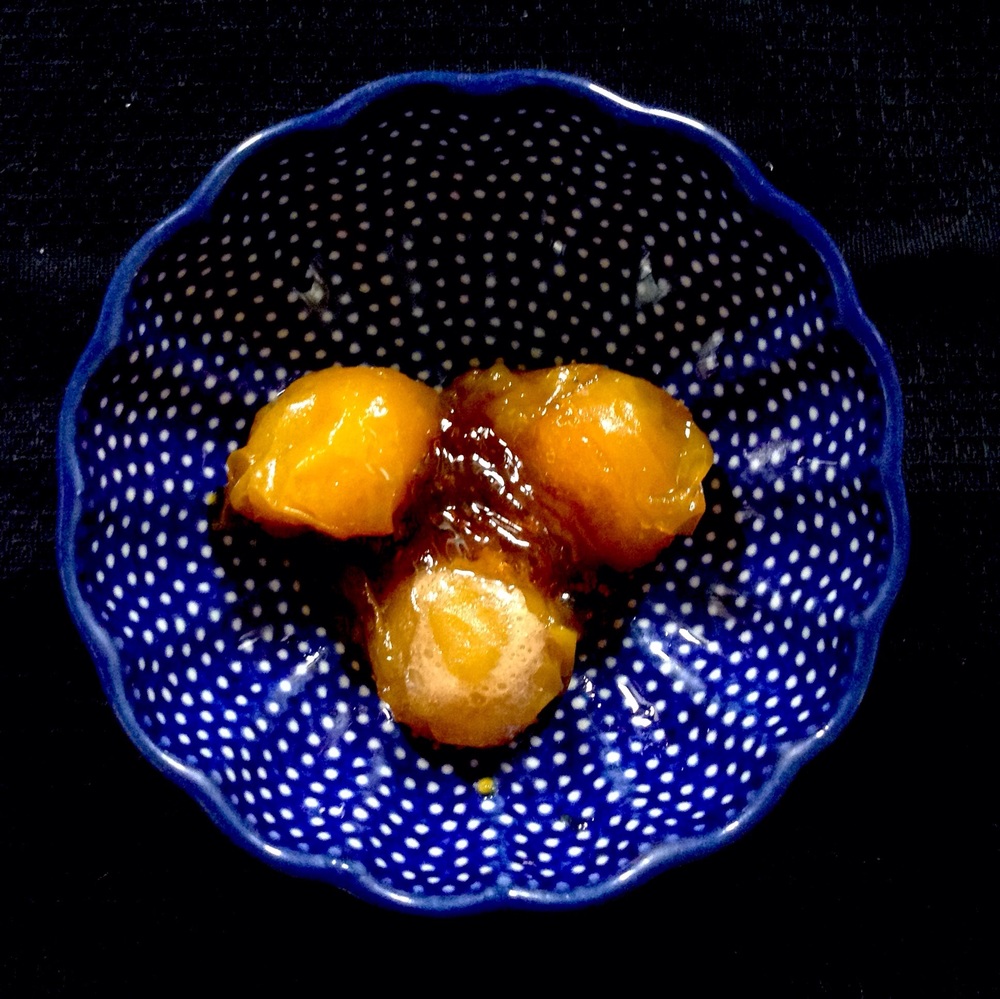
When I harvested the garden plums I had in mind to try one recipe of simmered plum from my Shojin cuisine book. So I kept 6 of the largest and greenest plums for that recipe. But busy with other things I didn’t prepare them right away and the plum have turned from green to a beautiful orange, and were ripening very quickly. So I decided to go for an other manner to cook them, simply preparing some kind of compote. I put the plums in ample water and boiled them at low heat for 2h under cover; then I drained most of the water and kept only 5 to 10mm in the pan, added 2tbs of brown sugar and simmered at low heat again for 30min without cover, or until almost all the syrup is gone. Instead I obtained a thick jelly (the brown paste in between the plum on the picture).

You can serve the plums warm, at room temperature or cold. 

Okara croquettes

While in search for new recipes and tastes to change my routine cooking  I’m testing cooking ideas, one at a time. Some very simple like these okara croquettes served simply with pickled vegetables (nukatsuke) and rice. The recipe for the croquettes is just so simple: I mix one egg with half a little bag of okara, add flavoring: this time I used shichimi (7 spices – 七味) and stir well. In a slightly greased pan I cook at low heat on both sides until golden.

Shojin cuisine inspiration

Since I got my Shojin cuisine book I only tried one recipe but many others are really simple and delicious. So I’ve decided to try (and slightly adapt) two other recipes. One is a classic, the otherone is rather new for me. But even the classic I gave it a little twist. I really love green beans salad, alone, with potatoes or with tomatoes. It’s a real simple dish perfect with thin little green beans or flat beans that my mother cooked very often in season. I used the recipe of miso green beans as a base and mixed it with my childhood memories. So I added small ripe tomatoes. So it’s just blanching the green beans, just a few minutes, they should remain vivid green and crisp, mixing with miso of you choice, adding the tomatoes in quarters (bottom left of the picture).

The second recipe is eggplant and edamame. The colors and mix of textures and tates really attracted me and I was very happy with the result. The recipe apparently used fava beans or broad beans but the season is over and the season for eamame just started so I replaced them. Also in the recipe the beans were sweetened with sugar, but I didn’t find it necesary, the edamame being already super sweet. So you need half little eggplant per person and a handfull of shelled edamame for two. Halve the eggplants, in a frypan greased with oil cook the eggplants, skin size first, the turn them. They must be soft but not overcooked. Keep to cool on kitchen paper skin up. Boil the edamame, when ready shell them and peel them. The thin skin over the beans must be removed for a smooth preparation, and is actually super easy to remove. Place the beans in a mortar and crush them but not too much. Cut the eggplnt in bites and top them with the edamame. 

Both recipes are perfect served at room temperature. 

Proudly powered by WordPress | Theme: Baskerville 2 by Anders Noren.

Up ↑

Verified by MonsterInsights