A day-trip to Mashiko

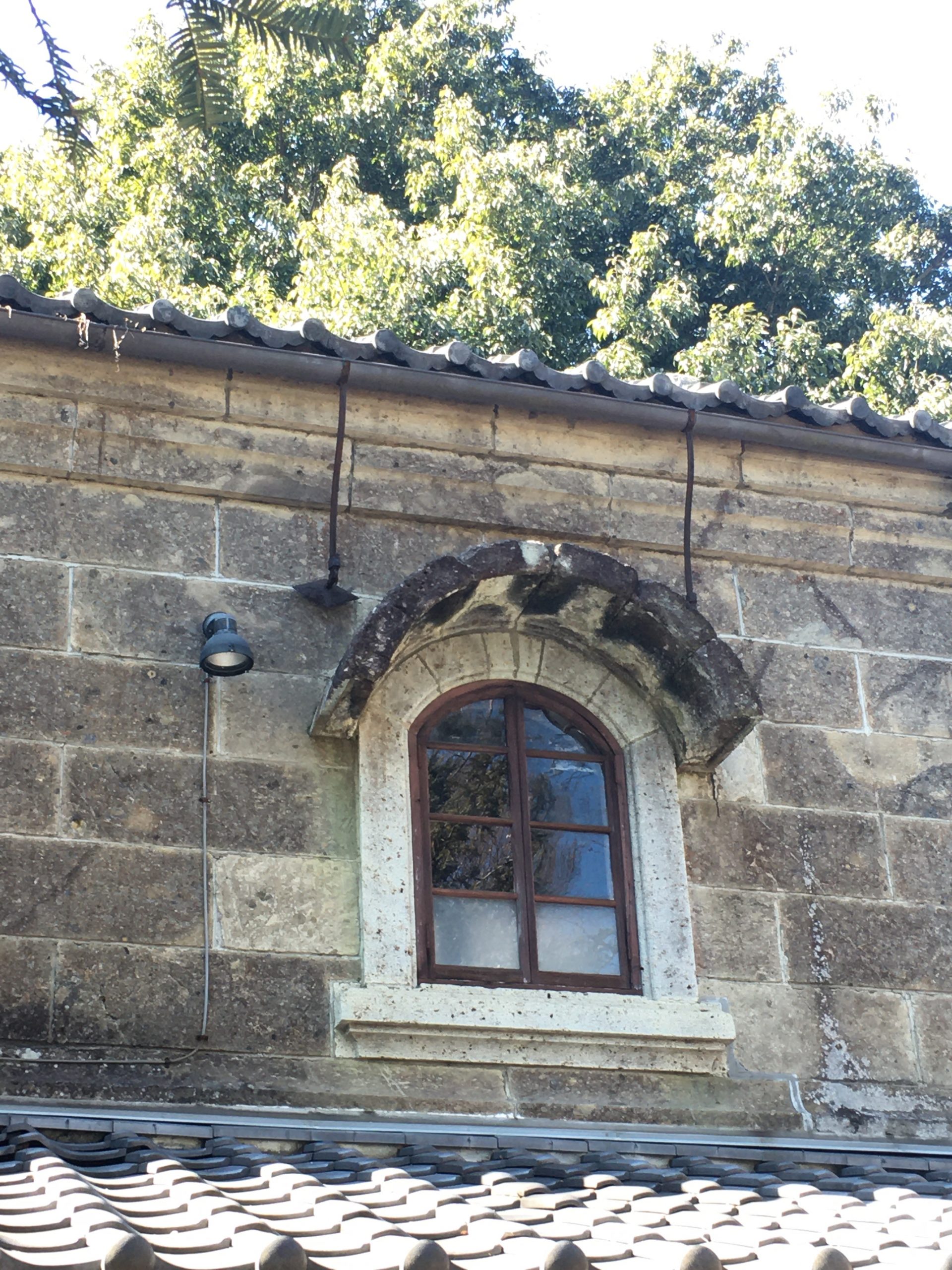
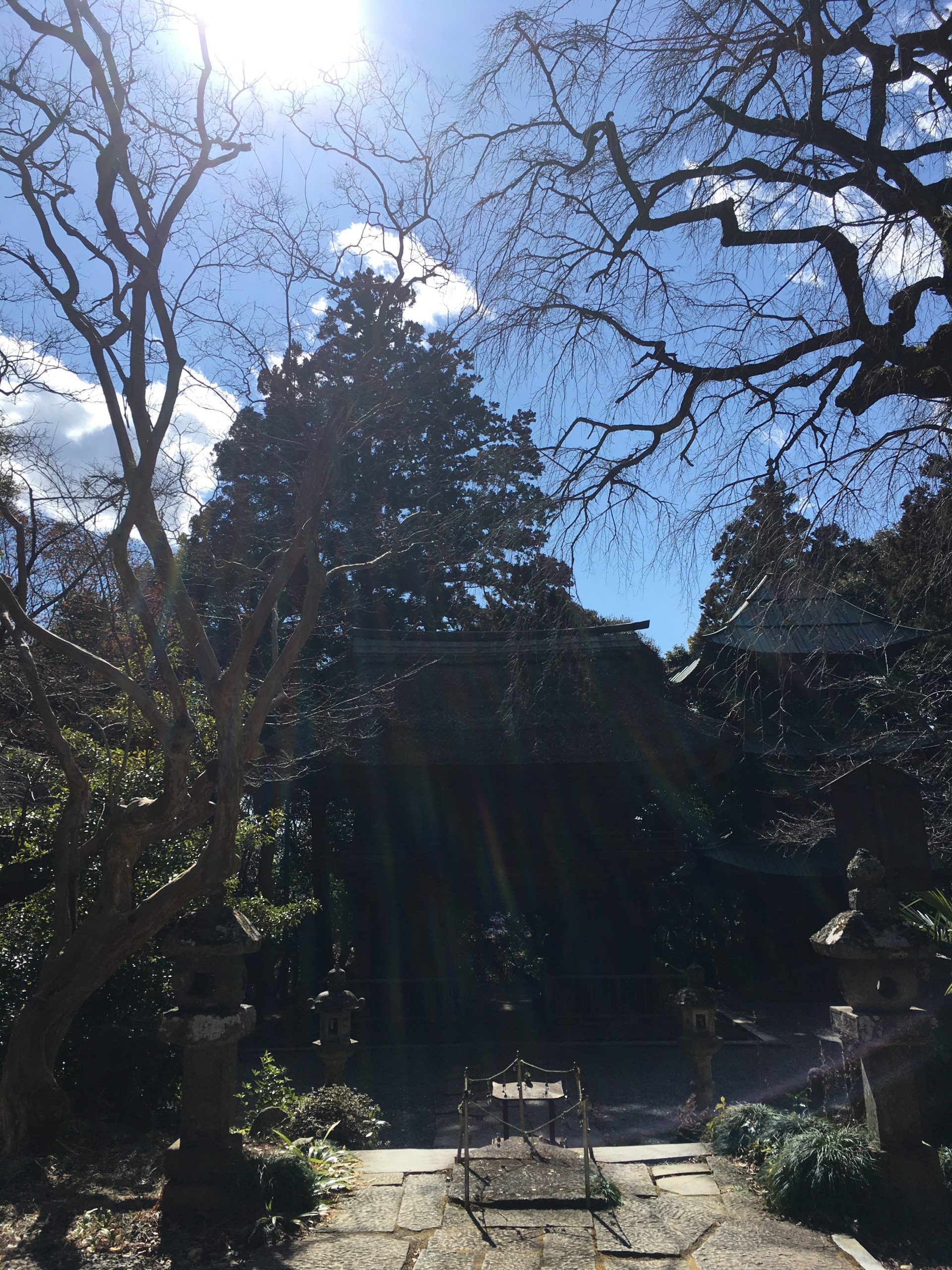
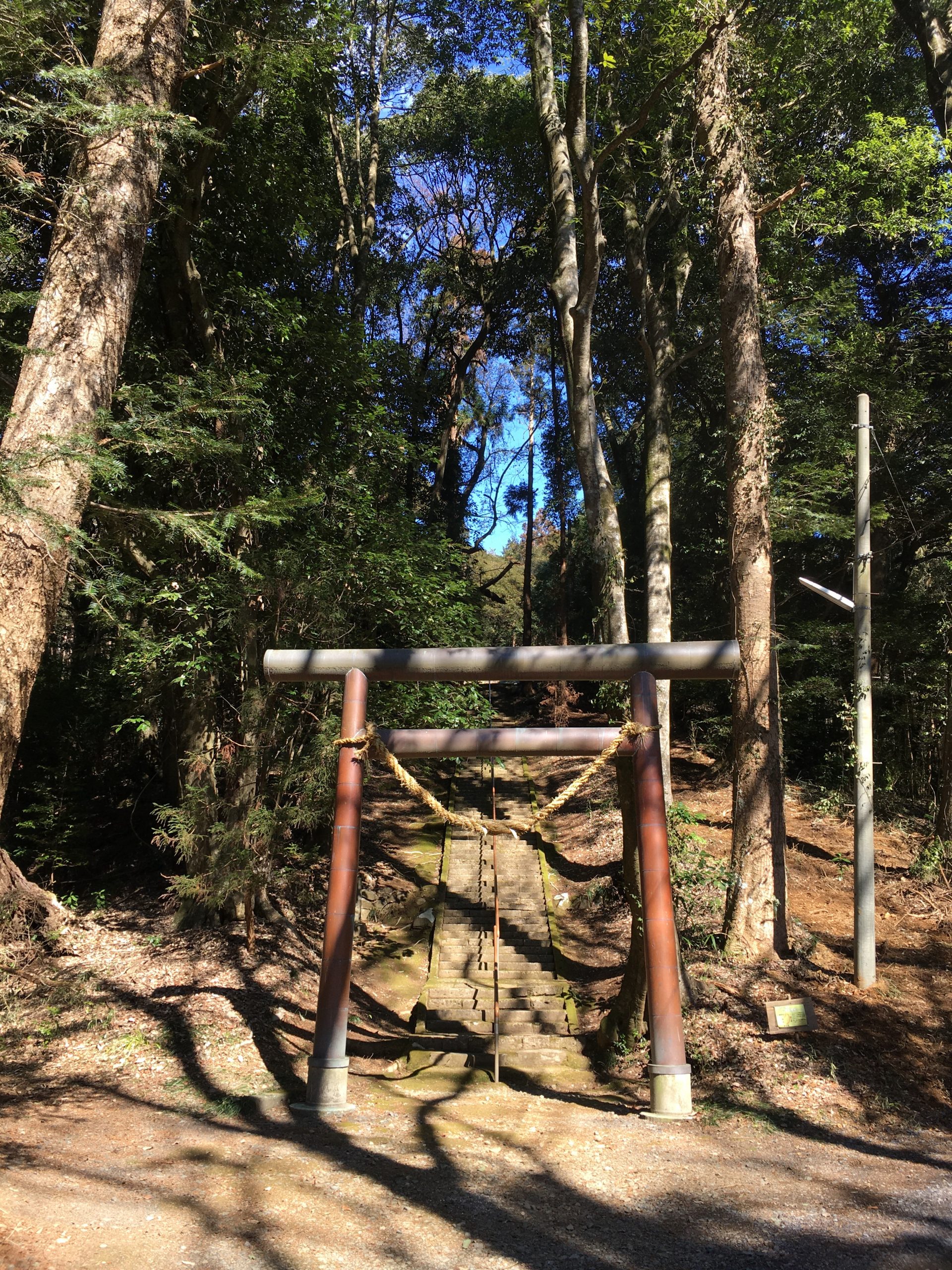
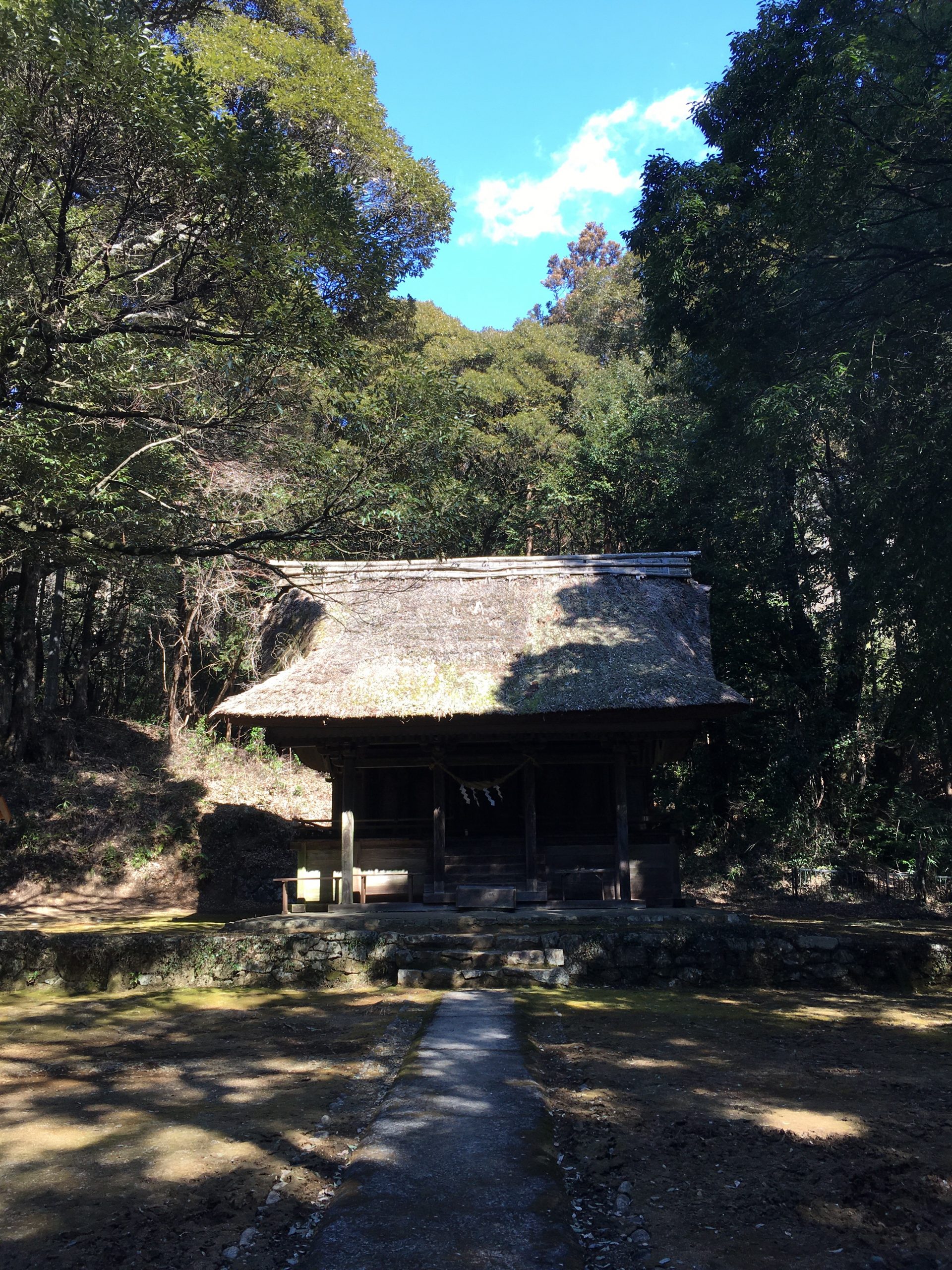
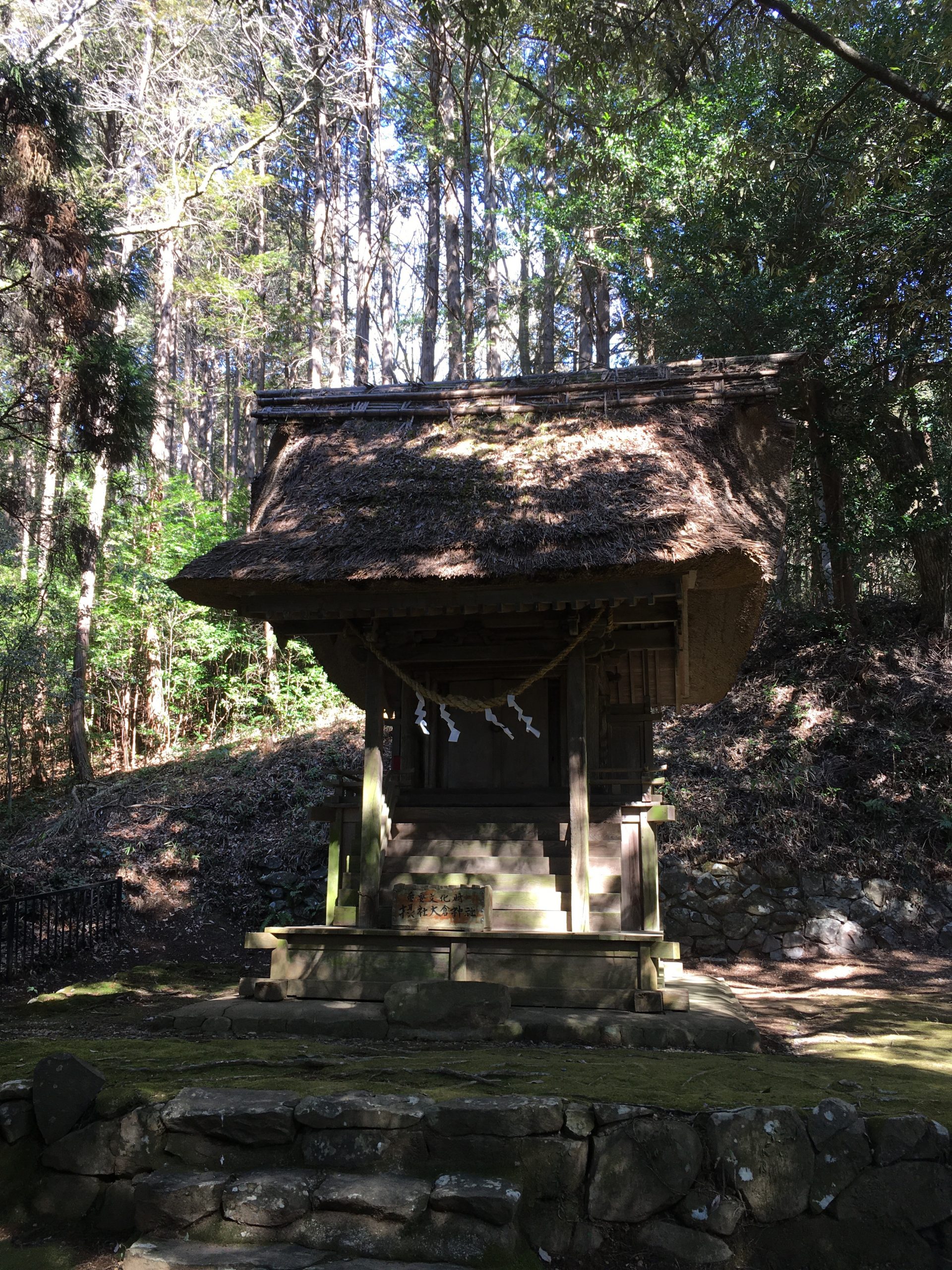
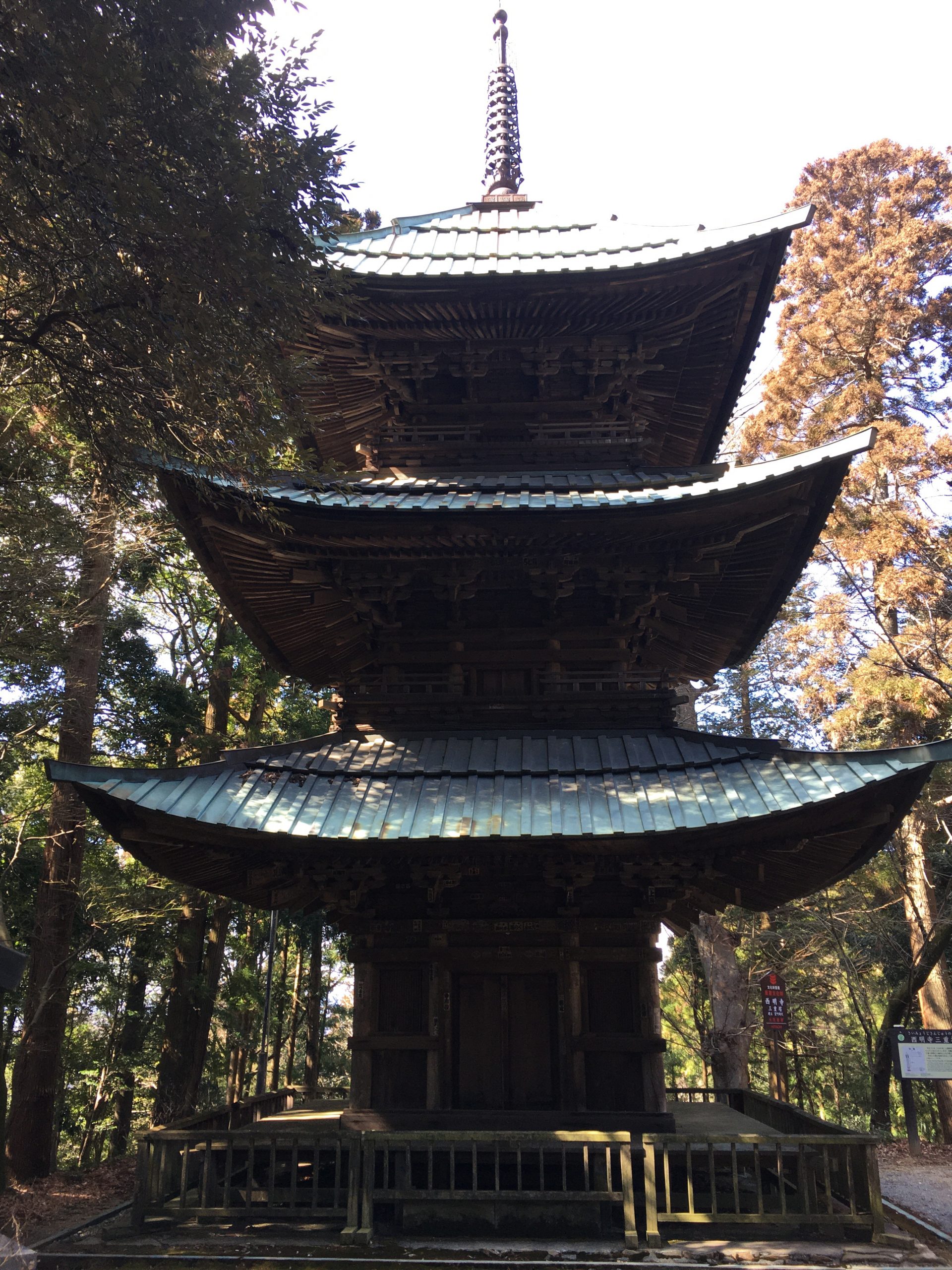
Days off in the middle of the week are rare. Most national holidays would be somehow close to a weekend, so we would spend them in Ohara. This year the emperor birthday was on a Wednesday and we had to be in Tokyo the day before and the day after. Everyday I see mount Fuji from the window I want to go there, so we first thought about going there. But the fear of wasting our time in traffic jam, and the lack of idea of places to visit around kind of killed the idea in the egg. Instead we were looking for a place with not only rich nature, but something more. I pulled out our old guide books and we ended up picking Mashiko as our destination for the day. Our criteria were simple: the driving time should be about 90min, it has to have great natural environment, it has to have some craft or art to see, and some historical sights, finally a possible, even short, hike with a spot to lay a blanket and picnic in the sun. Mashiko 益子 is about 130km from Tokyo, many sites recently registered as national cultural heritage, in particular some temples in the forest near hiking trails, and is famous for its potteries. Additionally the place where Shoji Hamada, who contributed to the creation of Mingei 民藝. It ticks all the boxes.

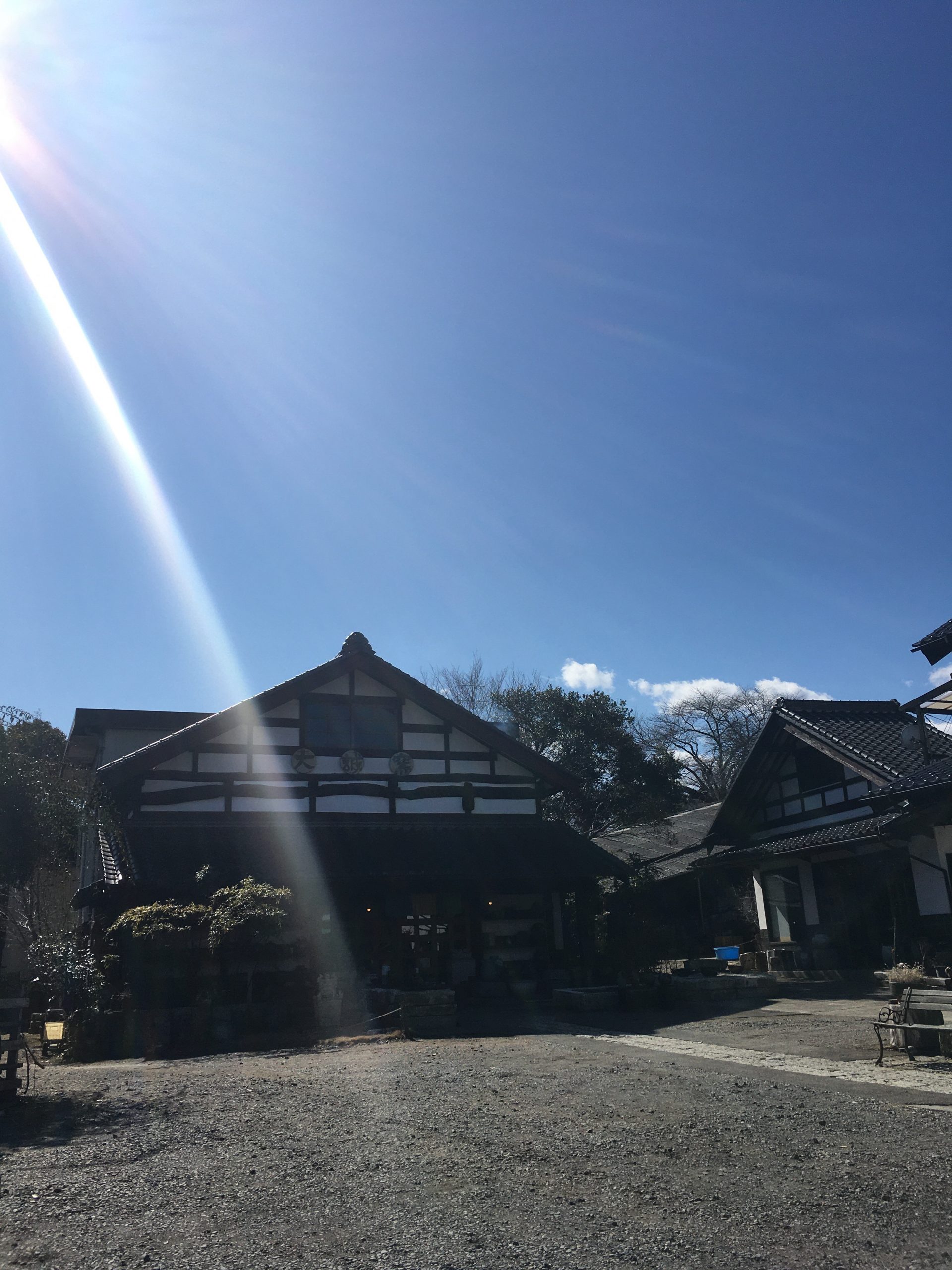
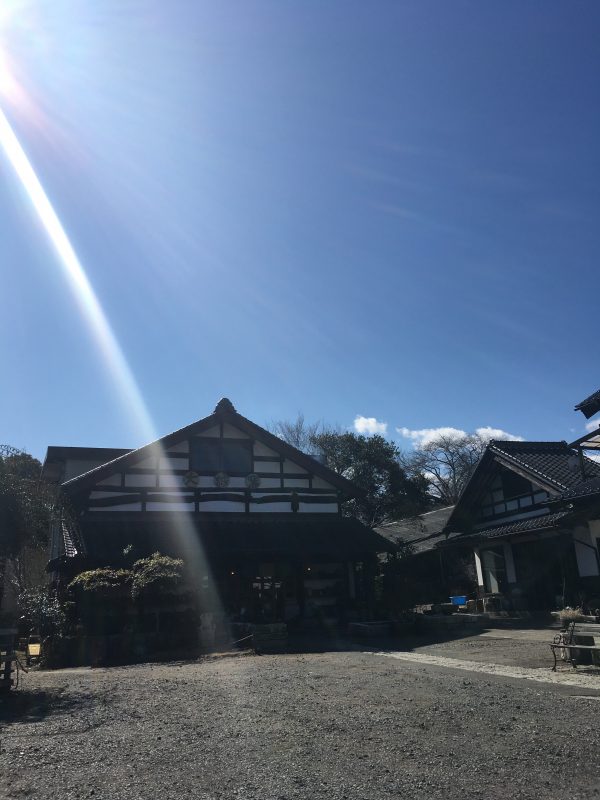
Mashiko is a small potter town. It is all well set to be a tourist attraction, but the pandemic made our visit a little paradise. Very few tourists in the main street, and even fewer people to the slightly more remote sights such as temples and shrines, and Hamada’s house. So every thing was quiet, bathing in the warm light of the cold winter sun.

Many of the pottery shops on the main street are just average but some do have a very nice collection of Mashiko yaki 益子焼. Some are more like galleries with edgy works. The indigo dye house down the corner of the street is worth the visit. On the opposite direction of the street, the big plaza with the ignominious giant tanuki (see picture above) is more so-so, but continue further and there is an amazing antique shop. But what we really felt for was Hamada’s residence, about 15min away on the other side of the hill. The walk there was charming, and the property is pure delight. It is nice to see all these kilns covered going uphill. Abd the Saimyoji temple and the Tsuna shrine.
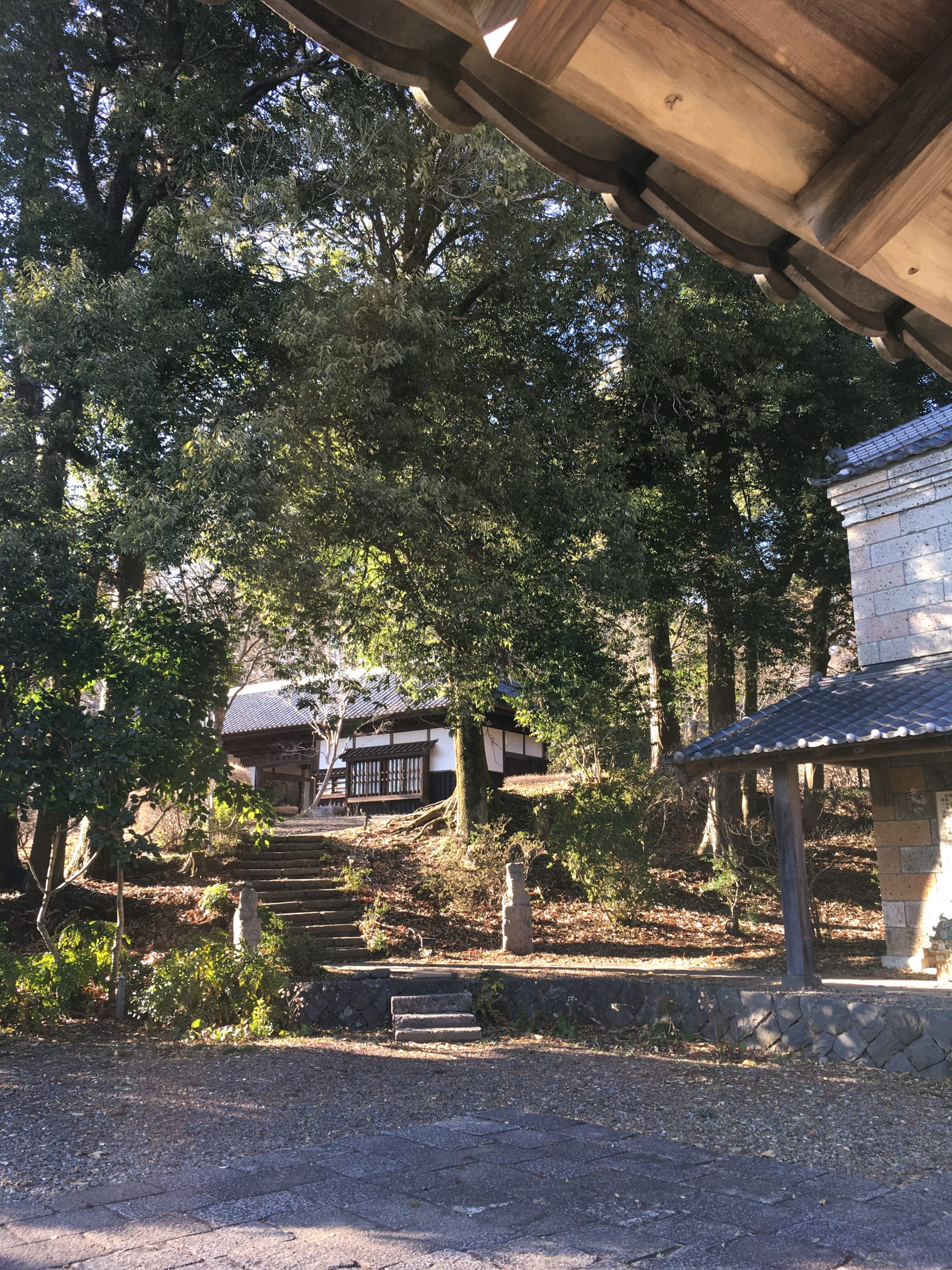
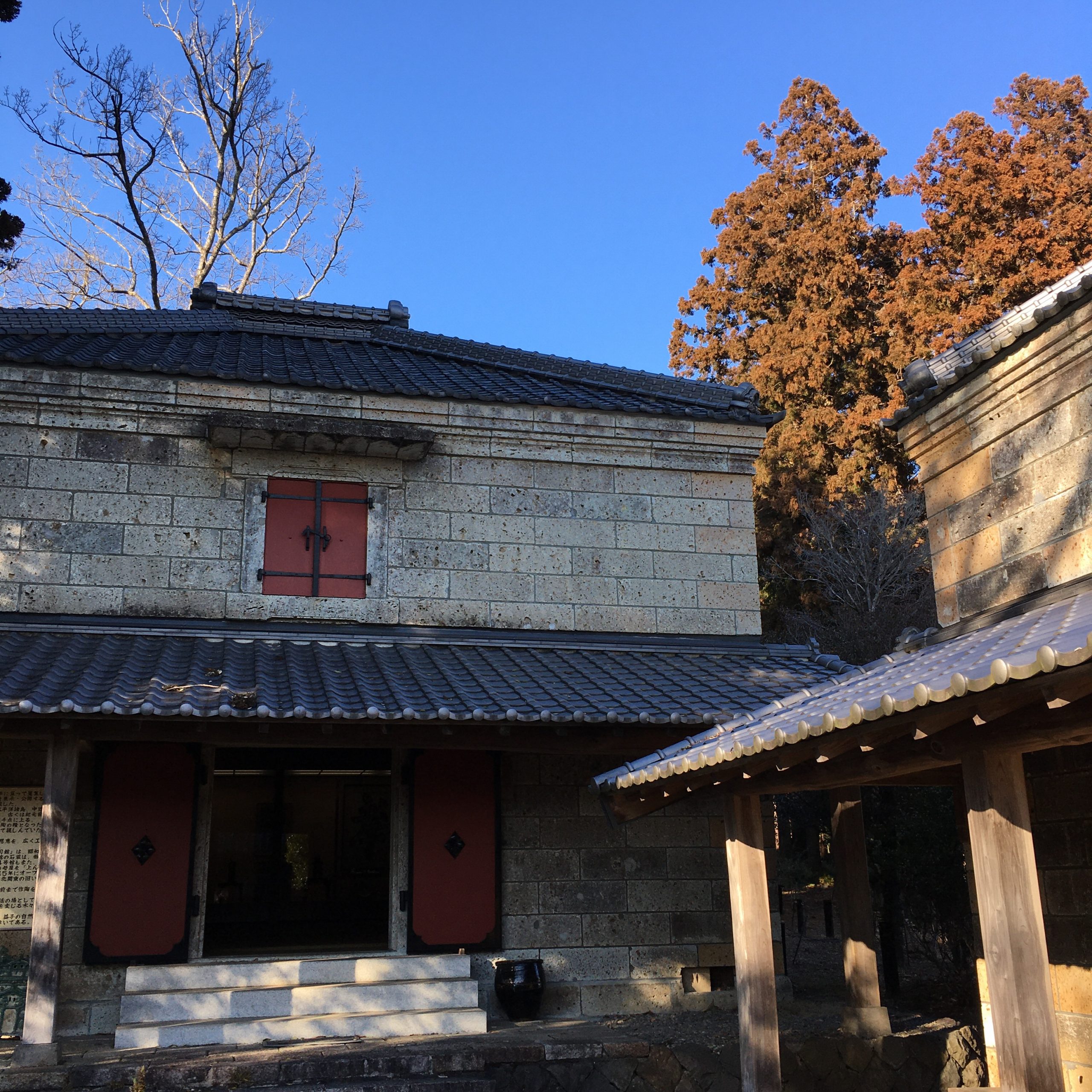
It was really cold there but it was beautiful and quiet, and people really kind. I’m sure we’ve missed some interesting sights, but that’ll give us an excuse to visit again!!!

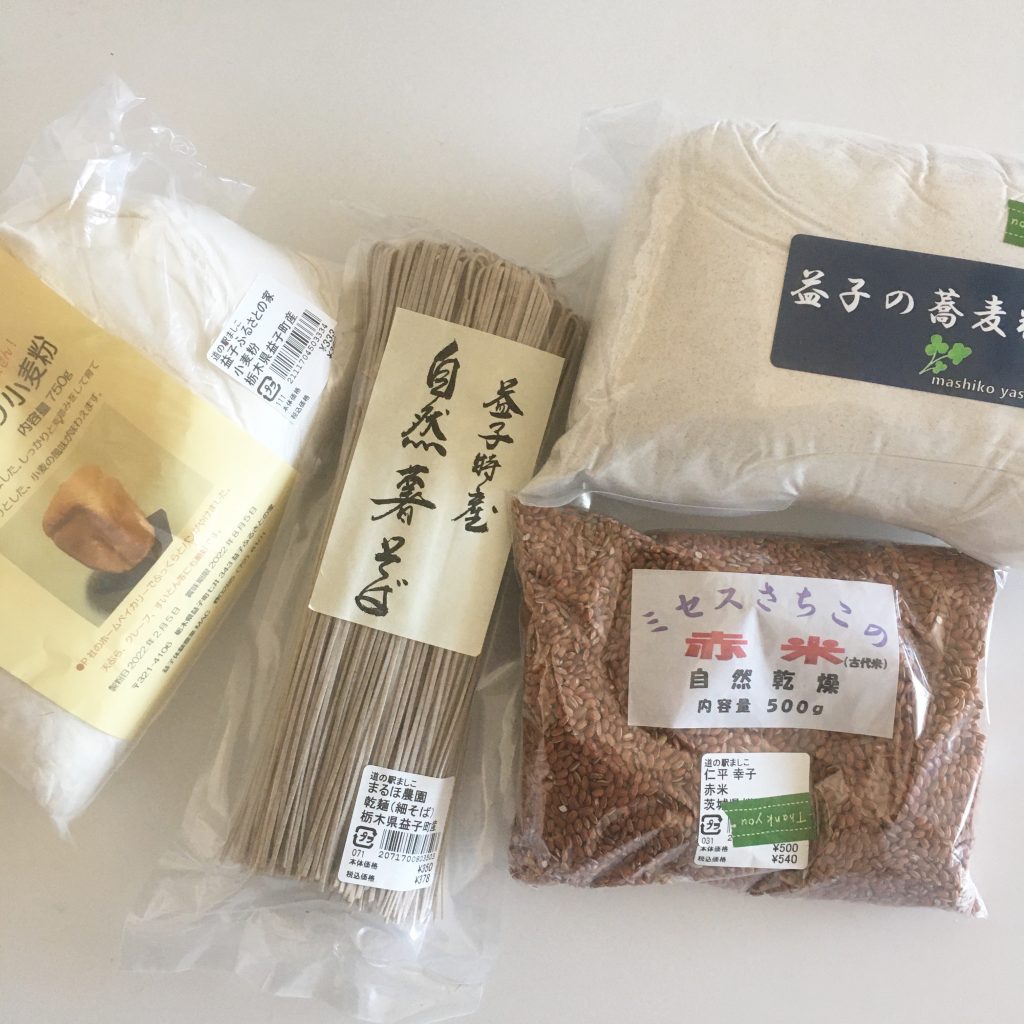
And as we could go back to Tokyo without packing on local products we stopped at Mashiko michi no eki 道の駅, a very nice new wooden structure, also quiet and spacious, to pack on fresh fruits and vegetables and on staples such as flour, soba, rices. They had an excellent selection very nicely presented.

We didn’t know what to expect exactly but Mashiko surely charmed us!
Hassaku – 八朔

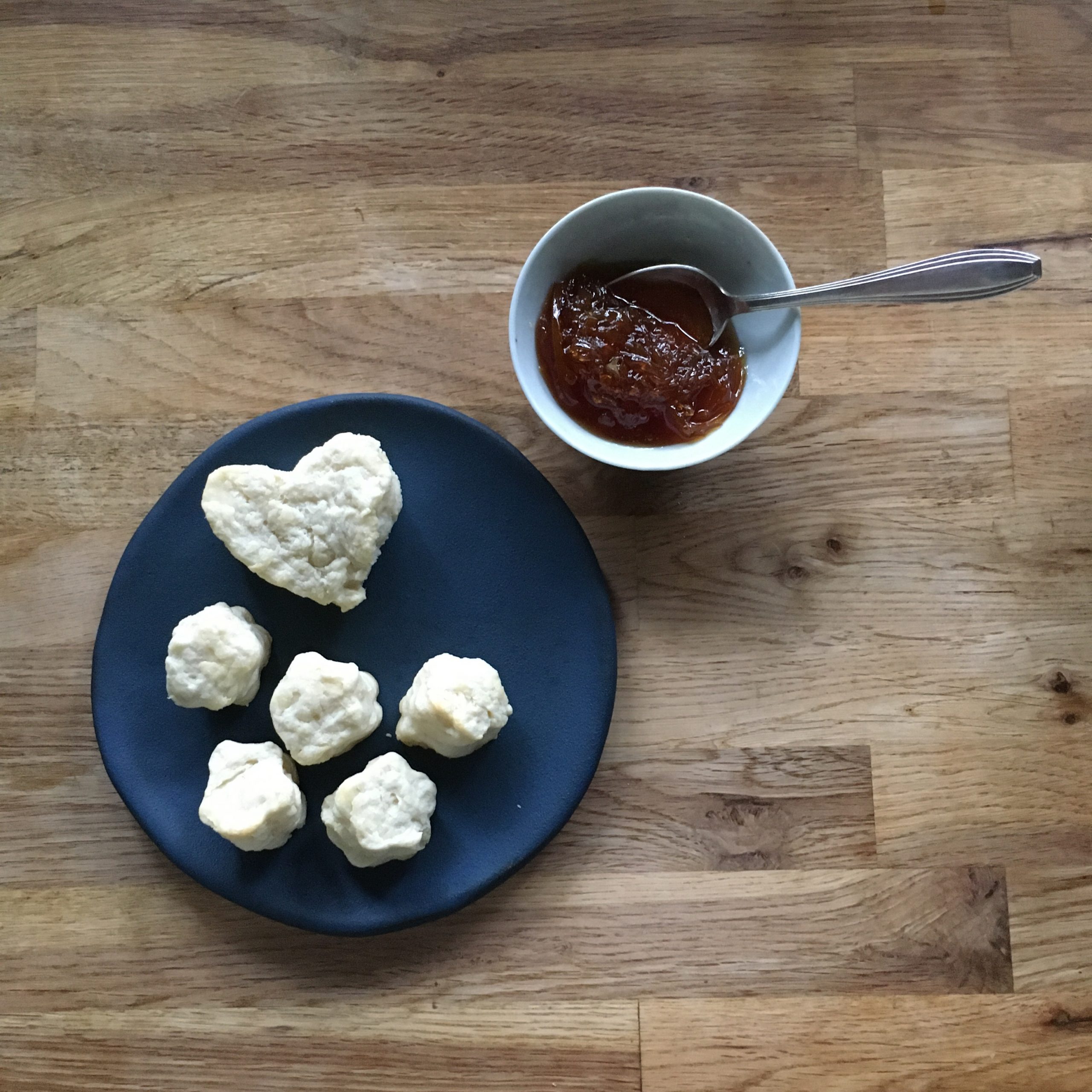
Two weeks without a post is a grand premiere here… For the past 7 years I have been posting a few times a week and at most every 10 days when I was busy at work and on travel. So why 2 weeks this time? Well… travel is definitely not what is taking any of my time, even though we had a failed attempt to go back to France back in November, and the planning took a lot of our time, only to cancel everything 5 days prior departure because the situation was not looking too good in France then… but that’s a long time ago! I can tell you that work has been busy but nothing out of the ordinary. So what? Have I quit cooking??? For sure not! But what did I cook then? Well, first a lot of things that were delicious but definitely not photogenic. Then a lot of cruising dishes: quiches, bread and scones but I bet you don’t need another recipe of any of these…

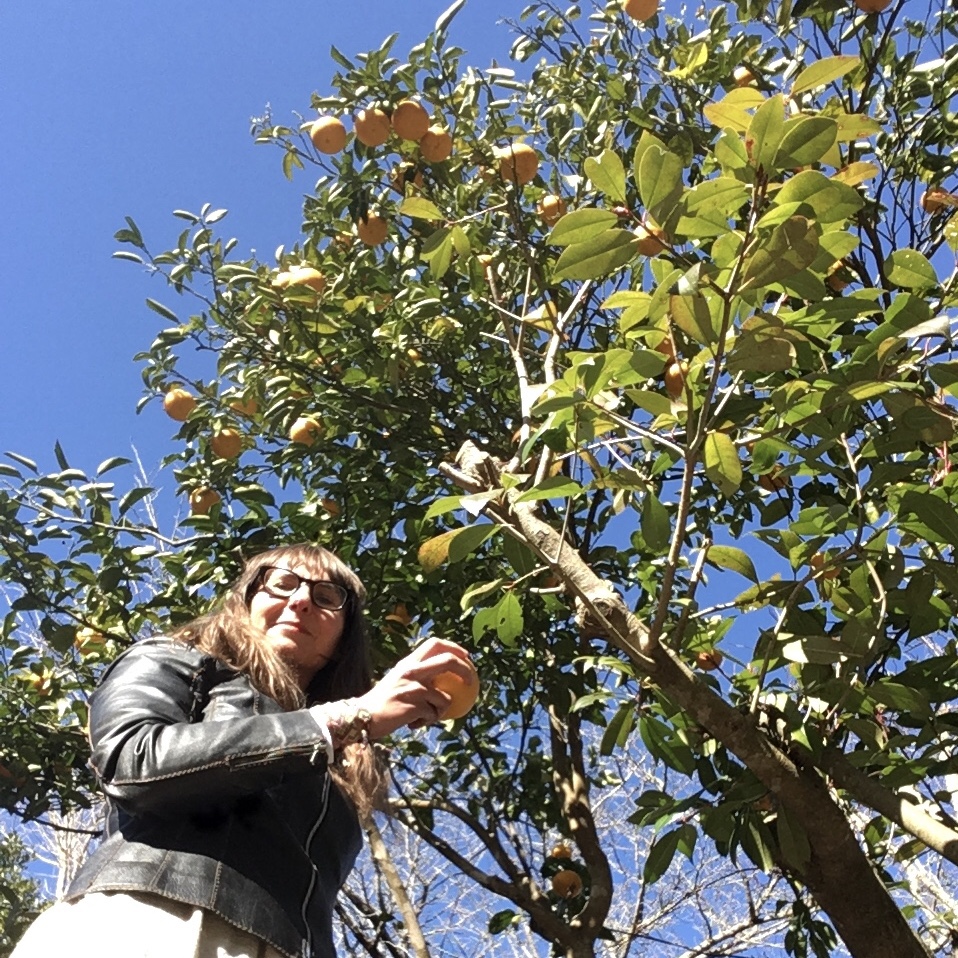
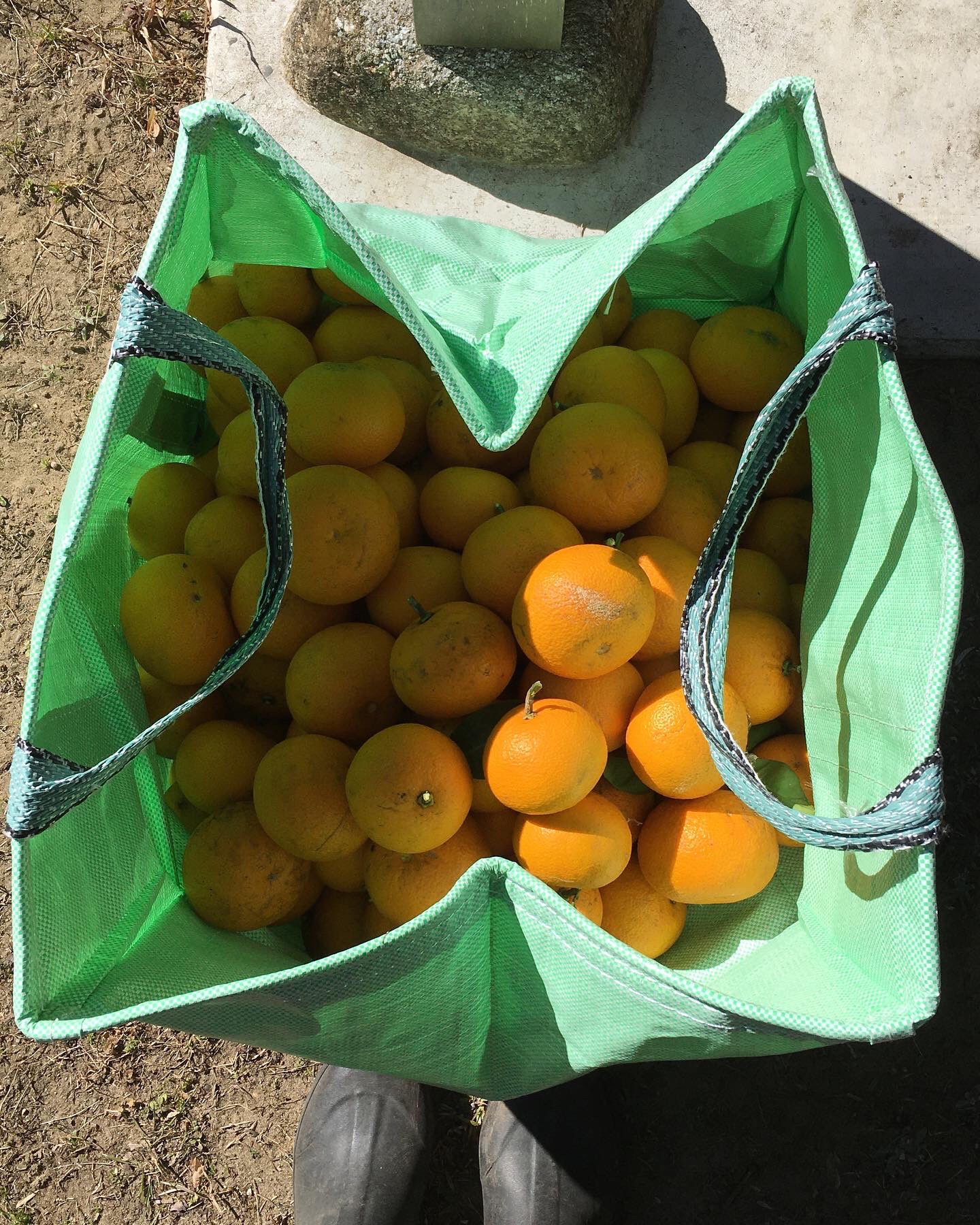
Then we harvested all our hassaku and I went into a little plan of making several recipes…

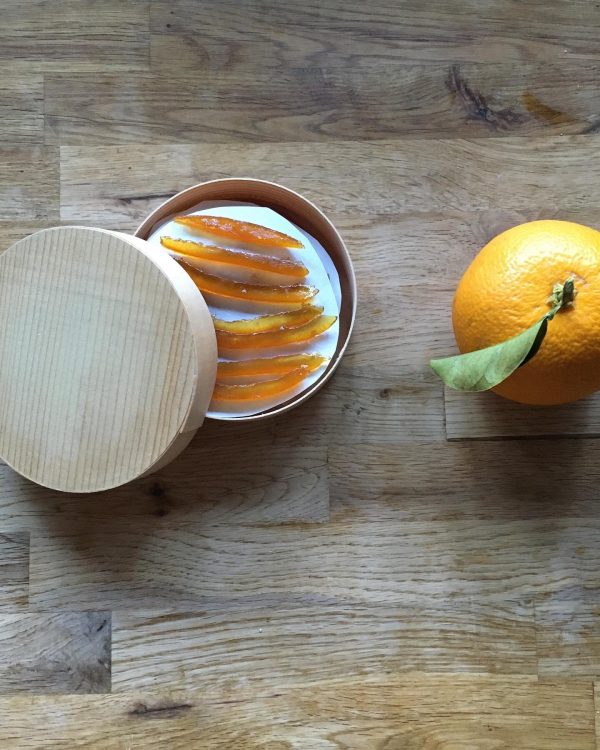
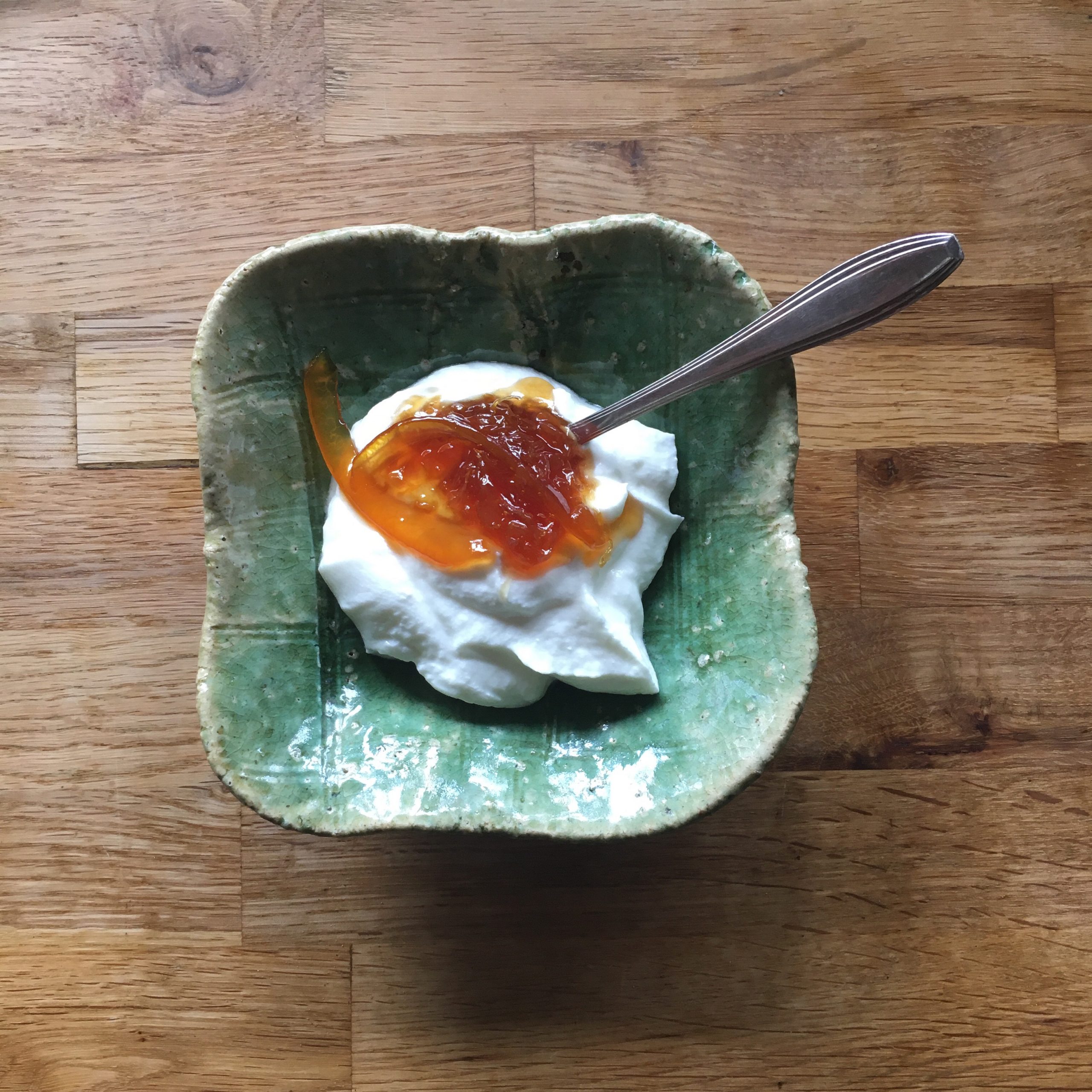
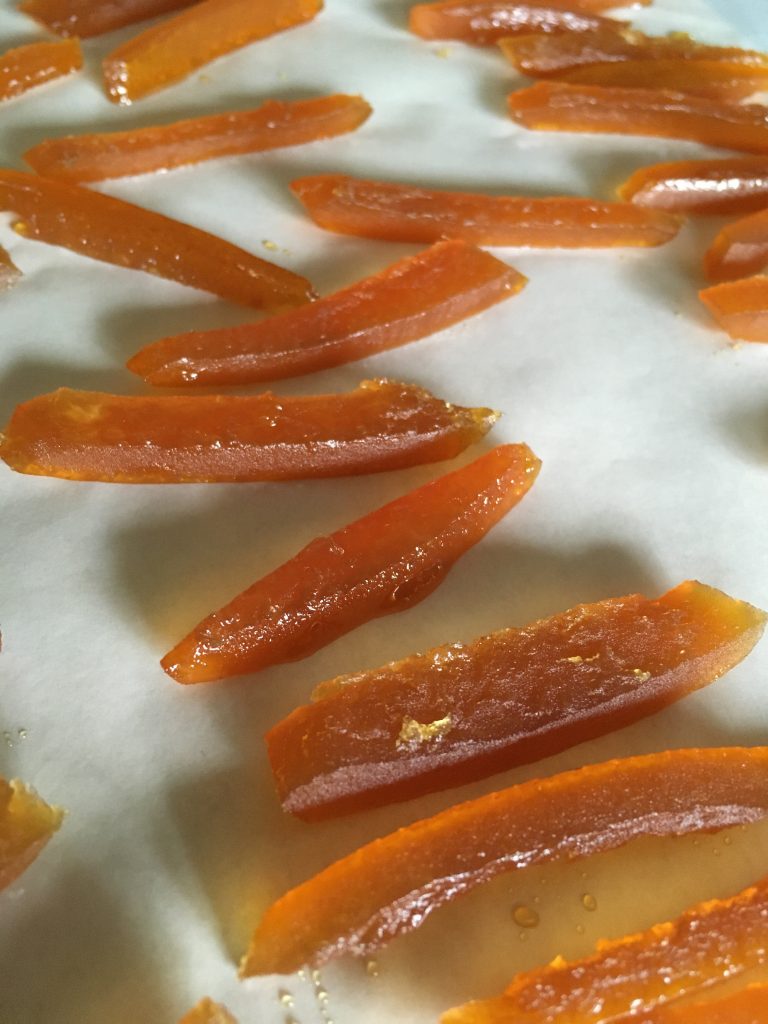
But in the end we love the raw fruits so much, plain and simple, that apart from a little batch of marmelade, but I’m no good to teach anyone how to make it, rather I should learn myself, I made a lot of candied peels after we’ve eaten the flesh. Though we eat little sugar, I love candied fruits and citrus peels of sorts candied. At that, I think I can proudly say that I am not bad! I have learned patience and it is paying off! So here’s my recipe, but if you don’t have hasaku, it works with any other citrus fruits. I personally like the thick skin of hassaku, but lemon, orange, yuzu… they all can work perfectly too. You just need to be sure that your fruits are untreated before and after harvest, that’s why I only candy peels of fruits I am sure about.

Citrus fruits candied peel

  • Untreated citrus fruits of your choice
  • Sugar ( I use only untreated brown cane sugar)
  • Water
  • Patience
  • Dark chocolate (optional)

Candied peels work in any batch size. Wash and dry your fruits. Peel them being careful to be as close to the flesh as possible. Remove any possible fibers layer. Cut the size you like. I like thick ones so that they are almost a square section.

In a pan set the peels. Pour water in a measure cup. From that cup pour into the pan to cover the peels. Check how much you poured in. Add the same volume of sugar to the preparation. Bring to a boil, let on low heat for 15 min. Let cool down in the pan for two hours at least, longer is good. The peel will start to loose their opacity. Bring to a boil again, and cook at low heat for 10 min again. If the liquid is to little add just a bit of water. Let cool down again, and repeat the heating/cooling until the peels are translucent adding just a bit of water not to burn them and such that the syrup doesn’t turn into caramel. When perfectly translucent, heat a last time and move the peels from the pan to a clean surface. I use cooking paper. Let cool down. Now they are ready. You can store them or dip them in chocolate, roll them in cristal sugar (but really, they don’t need anymore sugar!)… I love them just the way they are, A. likes them coated with chocolate…

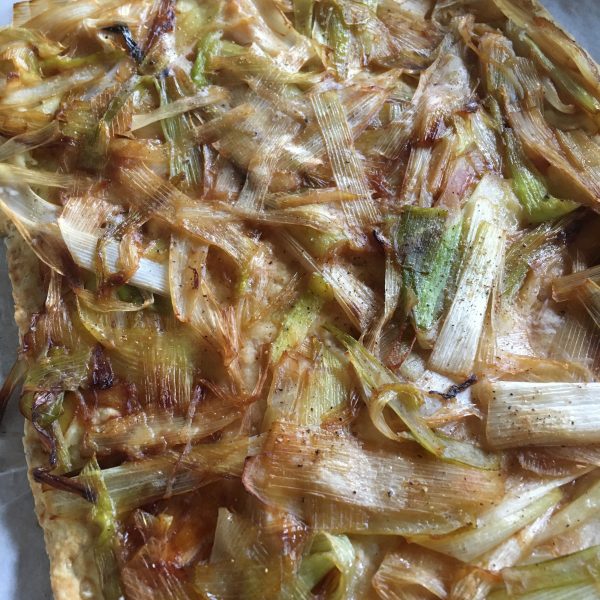
Total improvisation of a thin leek tart

Some days are just like these… you have an idea in mind and it just doesn’t get away… it sticks in your head and even though work is busy the idea keeps lingering until satisfied. This is exactly what happened with this giant bundle of leek I had sitting on the kitchen table. I pictured them nicely cooked and golden and set on a dough… but what kind of dough??? A puff pastry would have been good but then that would postpone eating the leeks… a pizza dough would be the same… a regular sable or short crust pastry would be too crispy…

That’s when I remembered about a leftover of brown rice I had. And I love brown rice dough. It gives texture and a delicious flavor. But that still wouldn’t make it soft as a pizza dough. No problem, I added a bit of baking powder, resulting in a new texture for the dough rolled 2mm thin. The rice gave a granular texture as plan, the baking powder a fluffy one as plan too. This totally improvised recipe was a total hit! And we were so curious about trying it that I didn’t even took a good shot of it! 🙁 but I surely will make some again soon, before the leeks are gone for good, because spring is just around the corner. The red plum tree is in full blossom and the other plum trees are in full bud ready to burst at anytime now!

Leek tart (4 servings)

  • 1cup of brown rice, cooked
  • 100g of flour
  • 4tbsp of oil (or butter)
  • a bit of water
  • 1tsp of baling powder
  • Salt and pepper
  • 5 large leeks

Attention the brown rice needs to be cooked prior to starting the recipe!!!

Wash and cut in strips the leeks. In a pan grease cook then at low heat until soft and golden. If you want to make the process a bit faster add a bit of water now and then.

While the leeks are cooking, pre-heat your oven to 200deg, and in a bowl mix the flour, oil, brown rice. Add the baking powder and a bit of water. Knead until the down is homogeneous. You can water if you fill it is too stiff. Roll the dough to the shape you want about 2-3mm thick. Top with the golden leaks, and set in the oven for 15-20min. Enjoy!

Winter favorite

A., and I too, are big fans of Brussels sprouts. Anytime there are some at the farmers market I would bug some even ic sometimes there are sold in tiny portions of 5 or 6! A few years ago we tried growing some in our kitchen garden, hoping for a consistent harvest, but once again the slugs and caterpillars were too quick at first and since then the plants grow leaves every year but never sprouts… I keep them thought, just in case!

Another winter favorite is turnips. The small and firm turnips of all possible shades from white to purple. That we never tried to grow yet… but they are easy to find by rather big bundles.

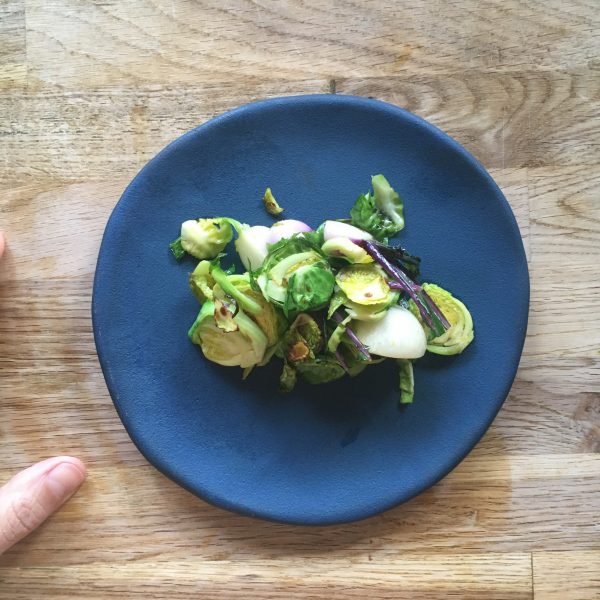
With these two in my basket I came up with a super delicious recipe, perfect for a side or starter. that can be eaten at room temperature or just warm: a beautiful and colorful plate of Brussels sprouts and tiny pink turnips. I dressed them in olive oil only bug you could easily think about adding a few drops of yuzu juice, or even more Japanese, a white miso and yuzu light sauce. So let me share my recipe.

Turnips and Brussels sprouts salad (2 servings)

  • 6 Brussels sprouts
  • 6 little turnips
  • 1tsp of olive oil
  • Salt and pepper
  • Optional: a few drops of yuzu juice or grated yuzu peel, 1 tea spoon of white miso

Wash carefully the vegetables. Slice the Brussels sprouts in 4 or 5. Cut the turnips in 4. If you can’t find tiny turnips then slice them. In a heated pan add the olive oil and the vegetables. Cook while stirring gently for 5 minutes. Add salt and pepper. at this stage you can serve. Add if you want to use them, the yuzu juice and/or the grated yuzu peels. If you use white miso, stir well the yuzu juice with the miso and too the vegetables.

Voila! Really not difficult and soooo scrumptious.

In love with scones again!

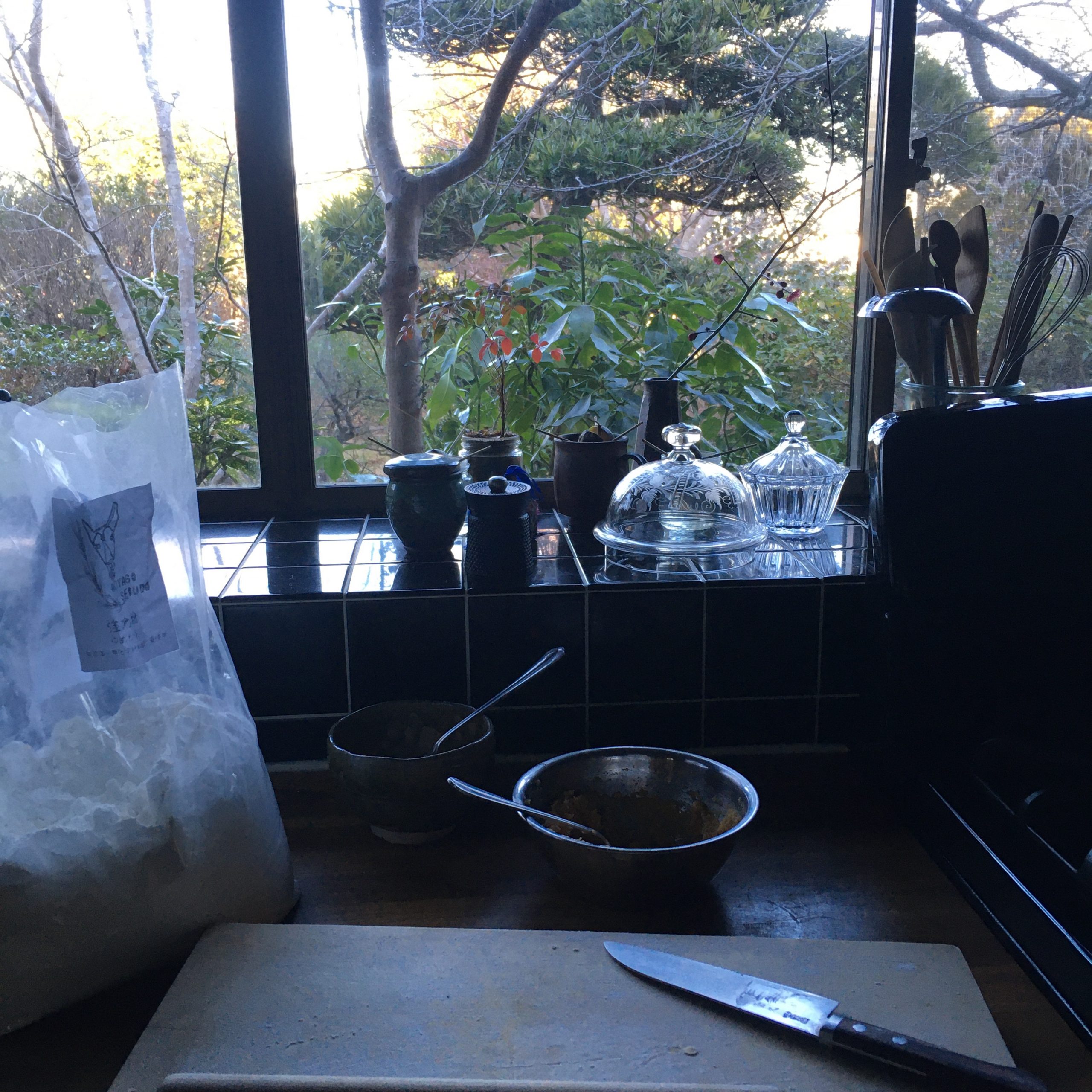
It’s been months I didn’t bake scones. Last year at the same period I was making some probably once or twice a week and then I suddenly stopped… Why? I don’t think I even know the answer… but today, for a change, instead of making crepes for tea-time after our tennis game, I was in the mood for scones. Maybe because it was not late and I had time, and because I already had my hands dirty as I was kneading dough to make bread for tomorrow. Yes… with the cold temperatures it’s about 24 hour or more I need to obtain good rises.

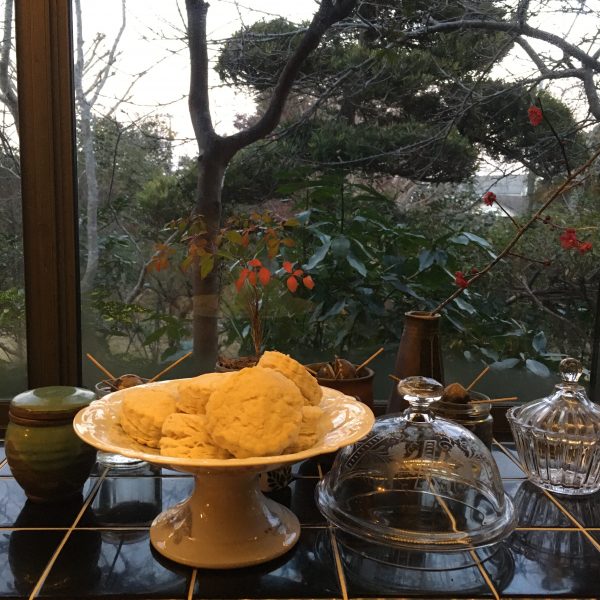
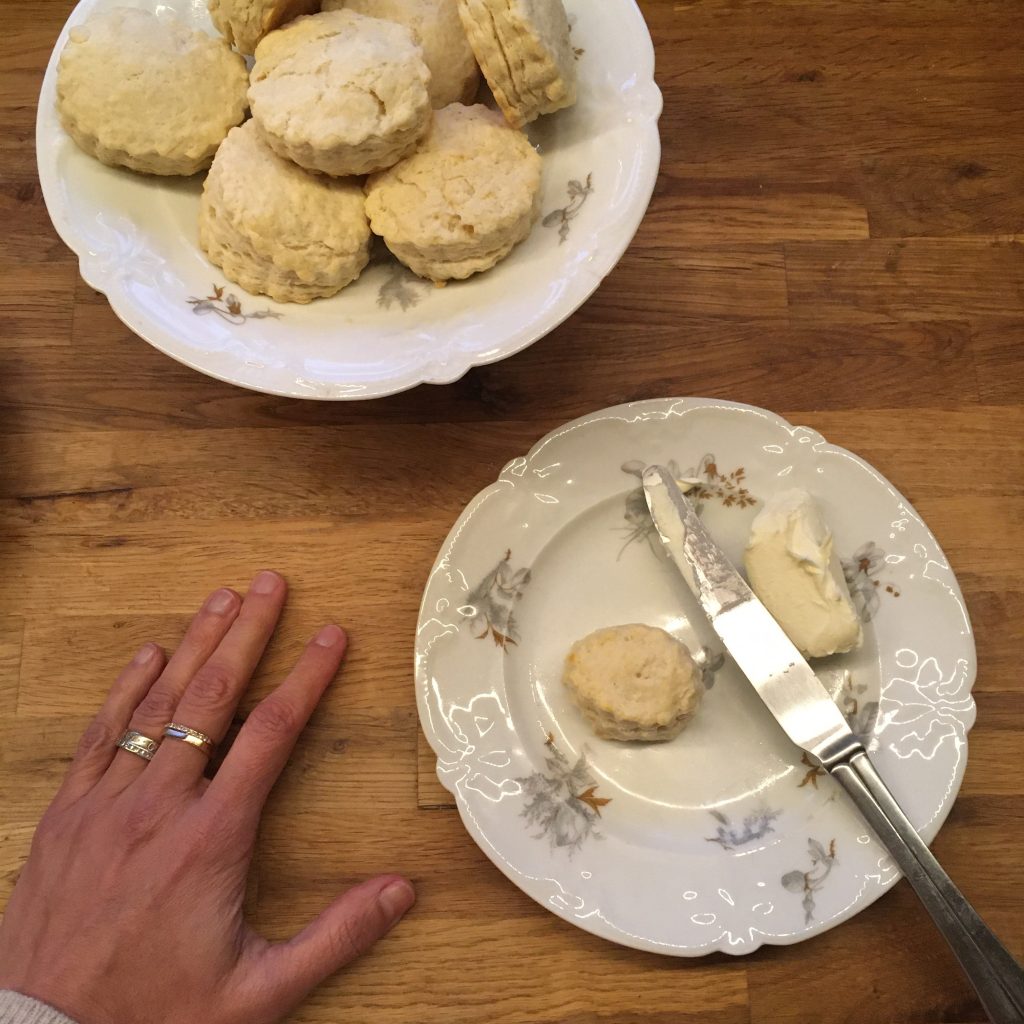
So, hop hop! Here I am, moving my hands from one bowl to the other and starting preparing scone dough. I have now a zero failure recipe, that is really simple. After mixing flour, baking powder and a bit of sugar, I knead with just a bit of butter (1/5 or 1/6 of the flour weight at most) and I use milk, only milk, to moisten the dough, added little by little until I have just the right consistency, just a bit sticky. But really just a bit! Then I roll the dough on a piece of parchment paper to 1cm high and cut them. I made bite size scones. I bake at 200degrees for 15 minutes. And what I like the most with scones is to eat them straight from the oven. Today I chose cream cheese to top them. And I am in love with scones again. Great! Because I made an extra batch for breakfast tomorrow!!!

What about la galette des rois???

If there is one traditional food I don’t care much about it’s the Epiphany kings’ galette, the “galette des rois”. Whether the brioche or the frangipane, I don’t care much about them. Not that I dislike them but I don’t like them either. They are not part of my must-eat food. And since I am bad at making puff pastry, that’s even easier to forget about it… but this year IG was covered with galettes and though I was insensitive to them A. wasn’t… and he asked me why we never have galette though he loves it so much!

What???? Why on earth would you wait more than 20 years to tell me???

How could I have not imagined he would love galette. He who doesn’t like almonds but loves calisson and financiers, he who doesn’t love butter but loves croissants and brioches… of course he loves galette… of course I ignored that…

Well then… I took all the courage it takes to make an attempt at puff pastry when I have failed so often.

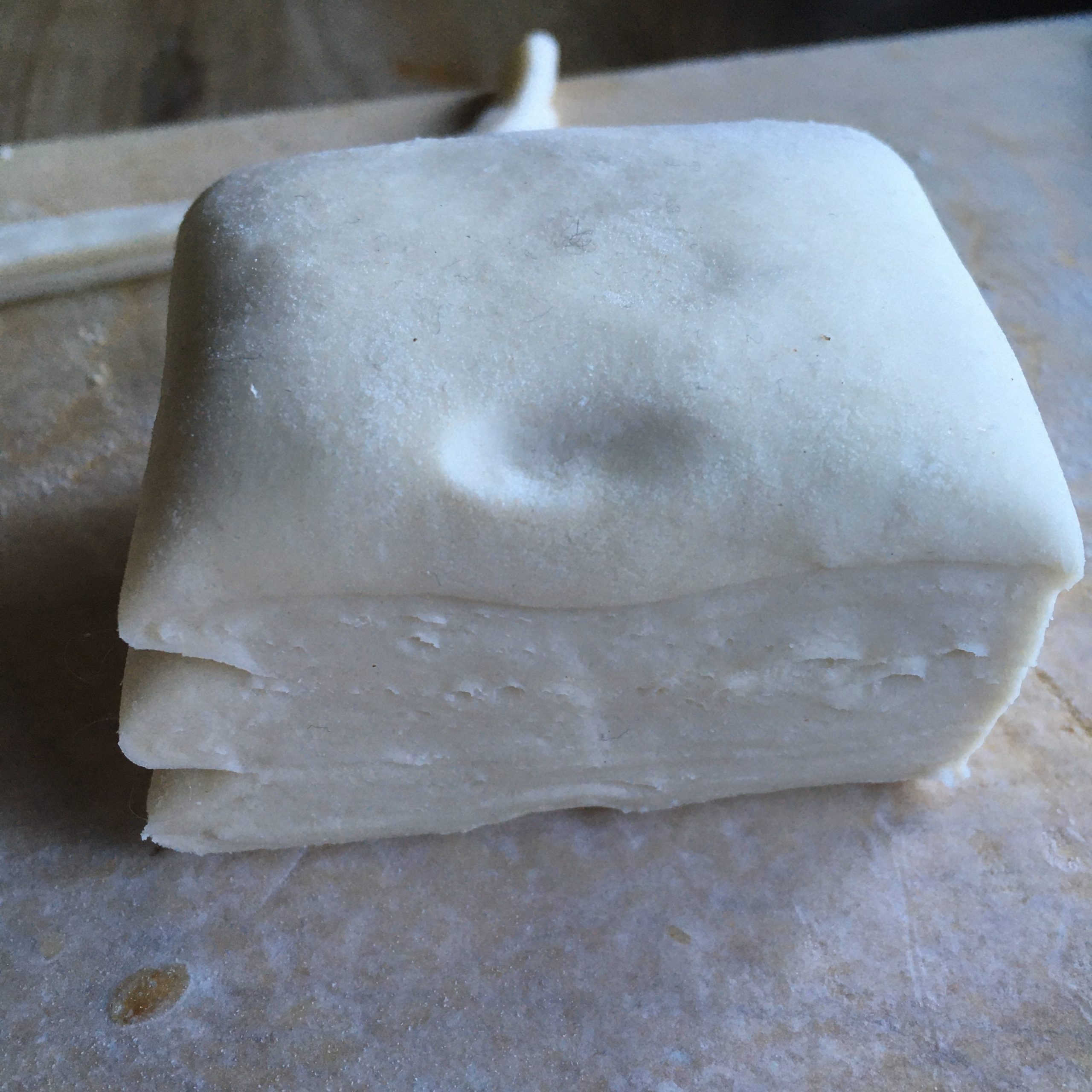
So here I am folding and rolling and turning every hour my puff pastry by the book, hoping it will become something… probably because of the cold temperature inside it is not as tedious as I remembered, and no butter spill.

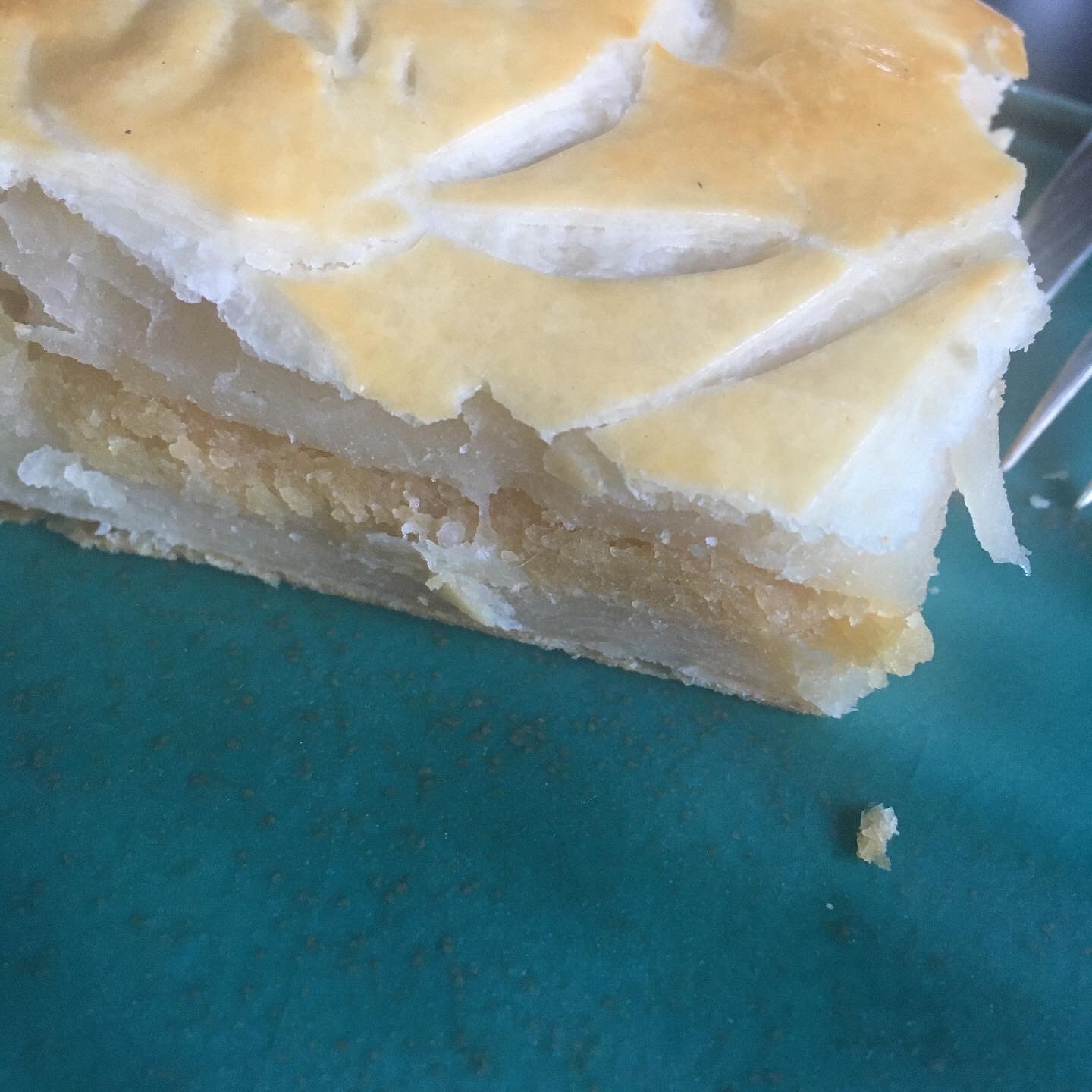
For the frangipane I used a standard recipe: almond powder plenty, 1 egg, a bit of sugar and a tiny bit of butter, stirred into a dense pomade.

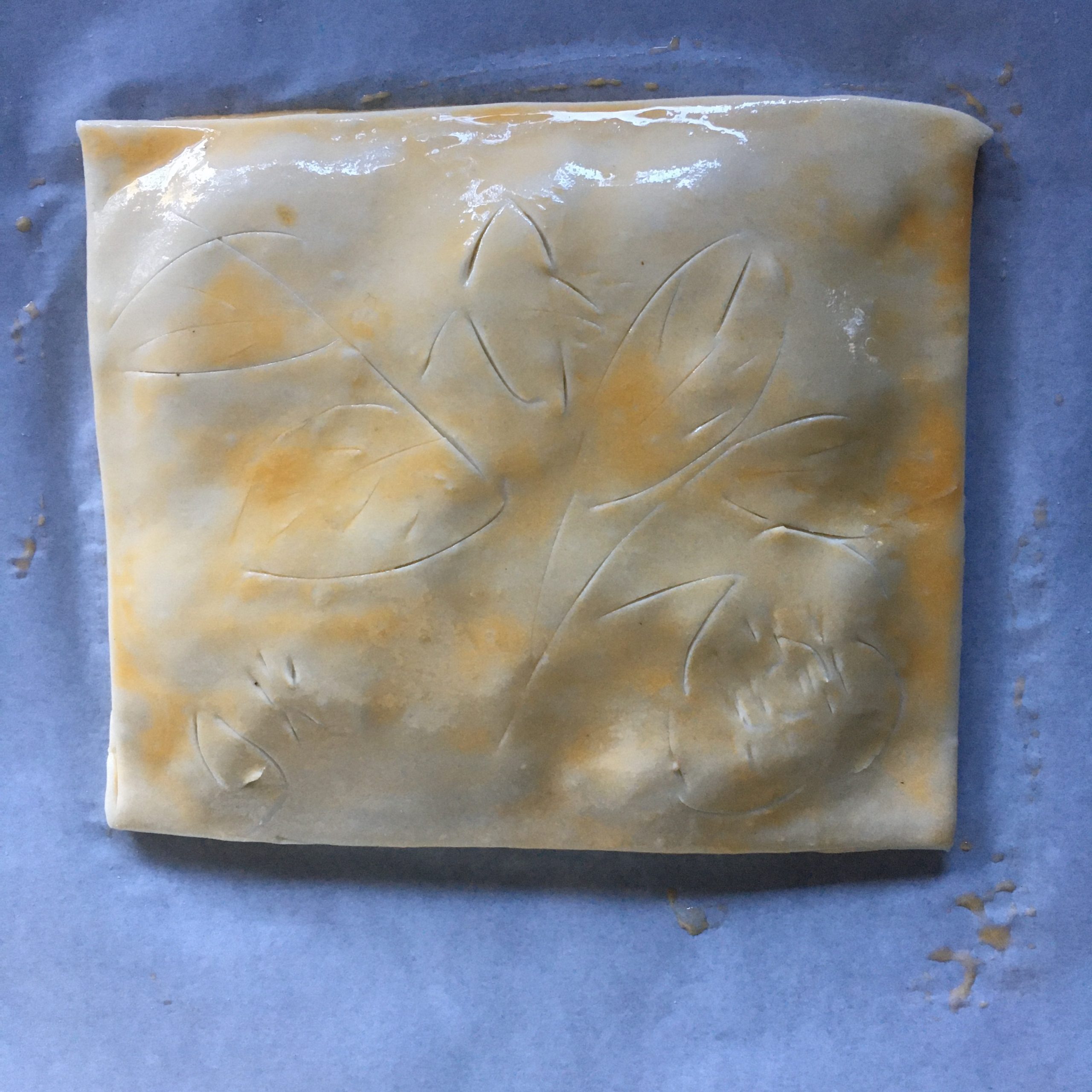
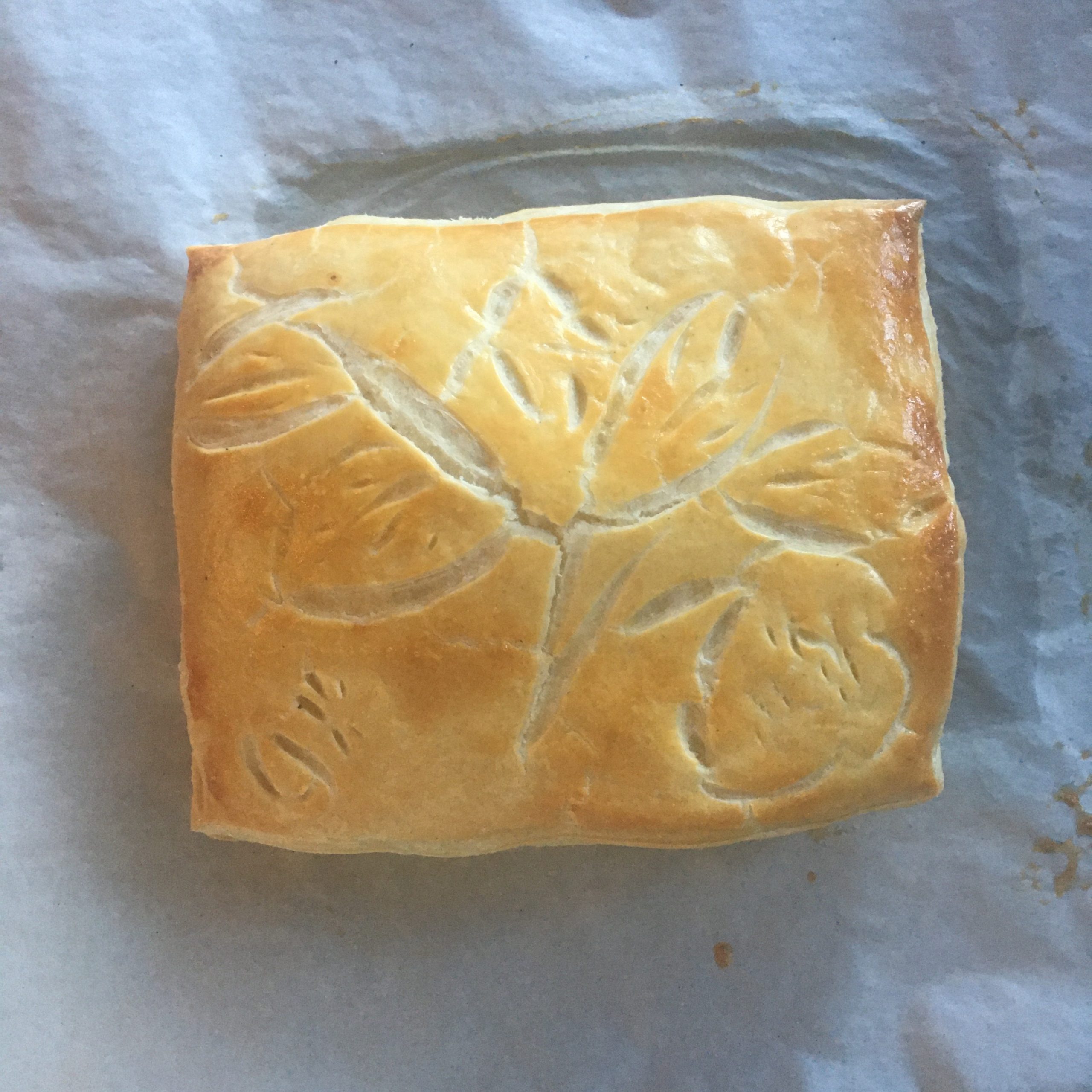
The rest is just simple. I decided for a square galette, rolled one layer of dough, topped with frangipane, leaving enough room to close it. Rolled another layer of dough to put on top, sealed the borders well. Paint an egg batter. Made a little seasonal drawing: blooming camellia japonica as we have so many in the garden, and 30min at 200deg. Until just golden. A. couldn’t wait any longer!!!

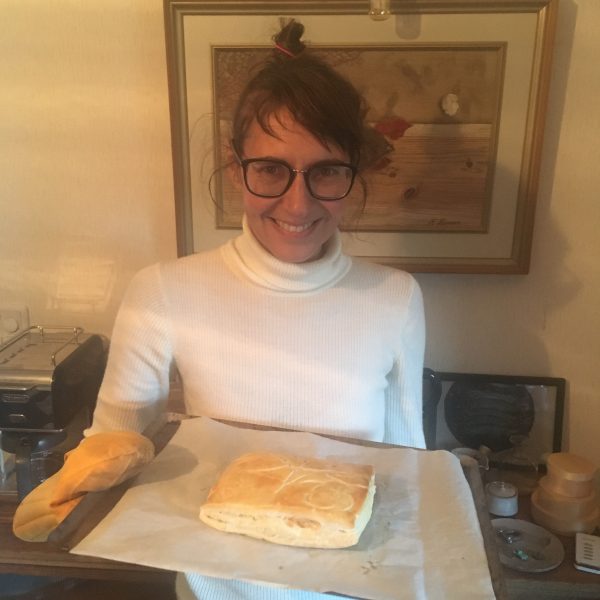
The result was surprisingly delicious. It didn’t have the sticky sugary top it too often has in shops, it was not too sweet, actually very nice, and the puff pastry worked well! Beginner’s luck!!!

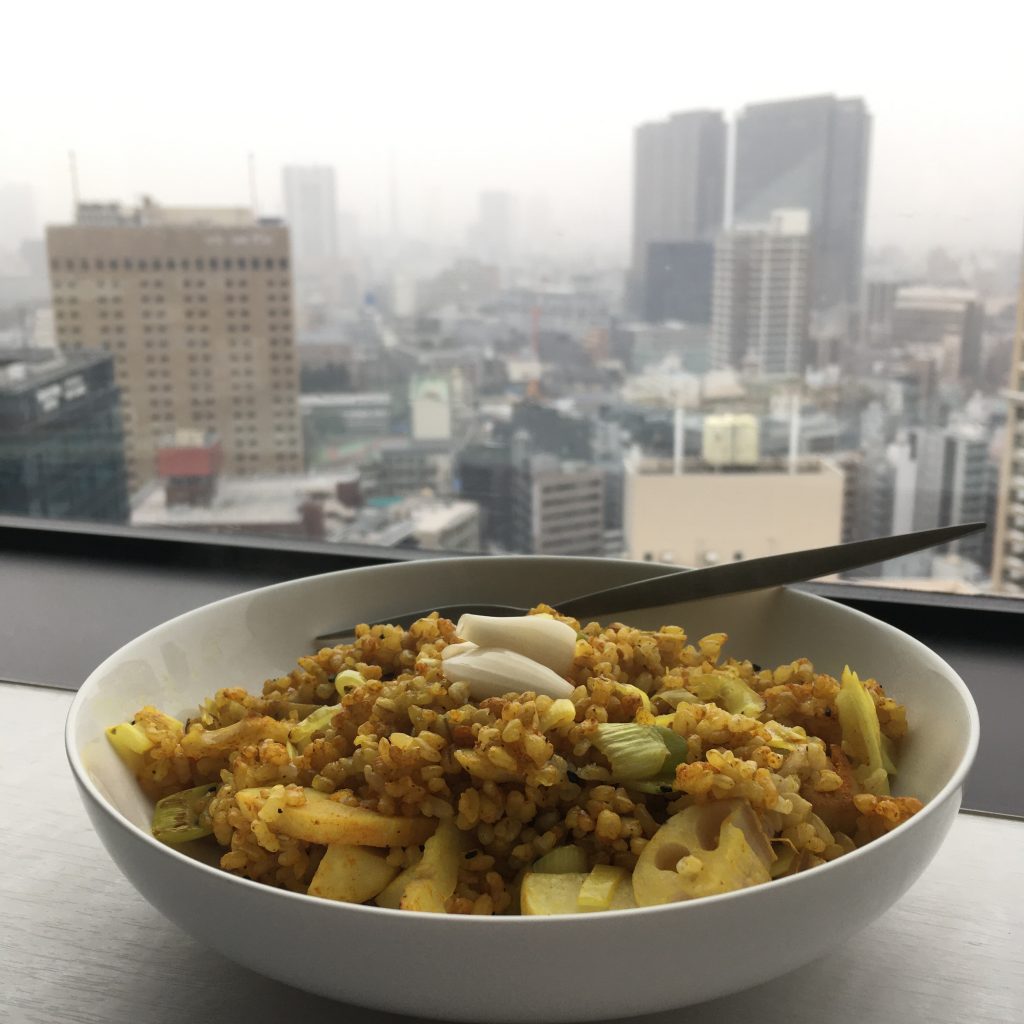
Snowy day gets bright with the warmth of golden rice

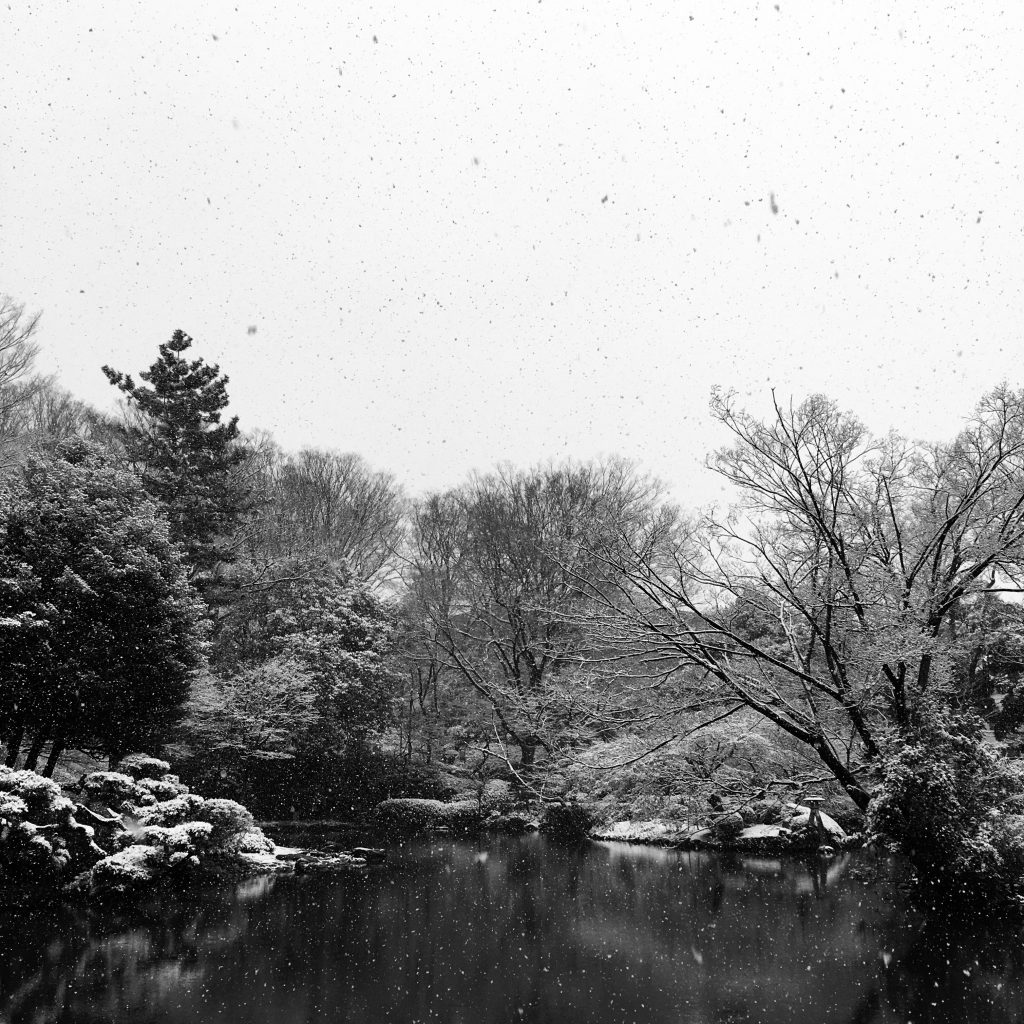
Many of you may be familiar with golden milk, this Indian drink with turmeric and milk, rooted in Ayurveda. Not that I am a fan of it, but borrowing the idea, I prepared myself a warming and bright lunch on a snowy day. Snow doesn’t fall often in Tokyo. Usually once or twice a year in January and March. It is very sudden, it snows a lot for a few hours to cover everything under a beautiful white blanket, and then the next minute is sunny and the blanket melts into a mess of mud and ice. But for a few hours it is magic. The city becomes suddenly quiet.

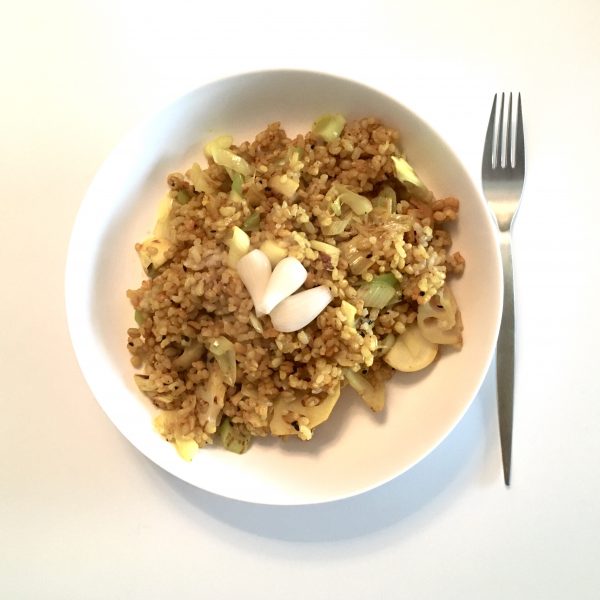
So before going outside for a walk, what best then having a warm lunch? A what if it is not only warm, it is also bright and full of flavors? That’s how I came up with this golden sautéed rice recipe.

Golden rice (2 servings as main dish)

  • 1 cup of brown rice
  • 1 or 2 leaks
  • 3 little turnips or 1 large
  • 1 little lotus root
  • 1tsp pf curry powder
  • 2tsp of ground turmeric
  • Ground black pepper
  • A punch of salt
  • 1tsp of vegetal oil
  • 6 rakkyo (optional)

Cook the rice. Wash and cut the vegetables. In a pan large enough, heat the oil, add the vegetables and cook while steering. Add the rice, the spices and pepper and steer very well. Serve and top with the rakkyo. Eat while watching the cold outside!!

Mochi – 餅

If you have read Natsume Soseki’s novel the cat, watched Juzo Itami’s Tampopo or check the Japanese news today, you may not think highly of this Japanese new year specialty that is eaten widely, but kills about 300 people every year!!! No kidding! Despite the caution announcement every year before new year. And if you are more than 65 the risk maybe high that you suffocate eating mochi if you are not careful! But being careful is easy, and mochi is delicious. So let’s get passed the first bad impression, talk about mochi and let me share with you a few delicious ways to eat mochi.

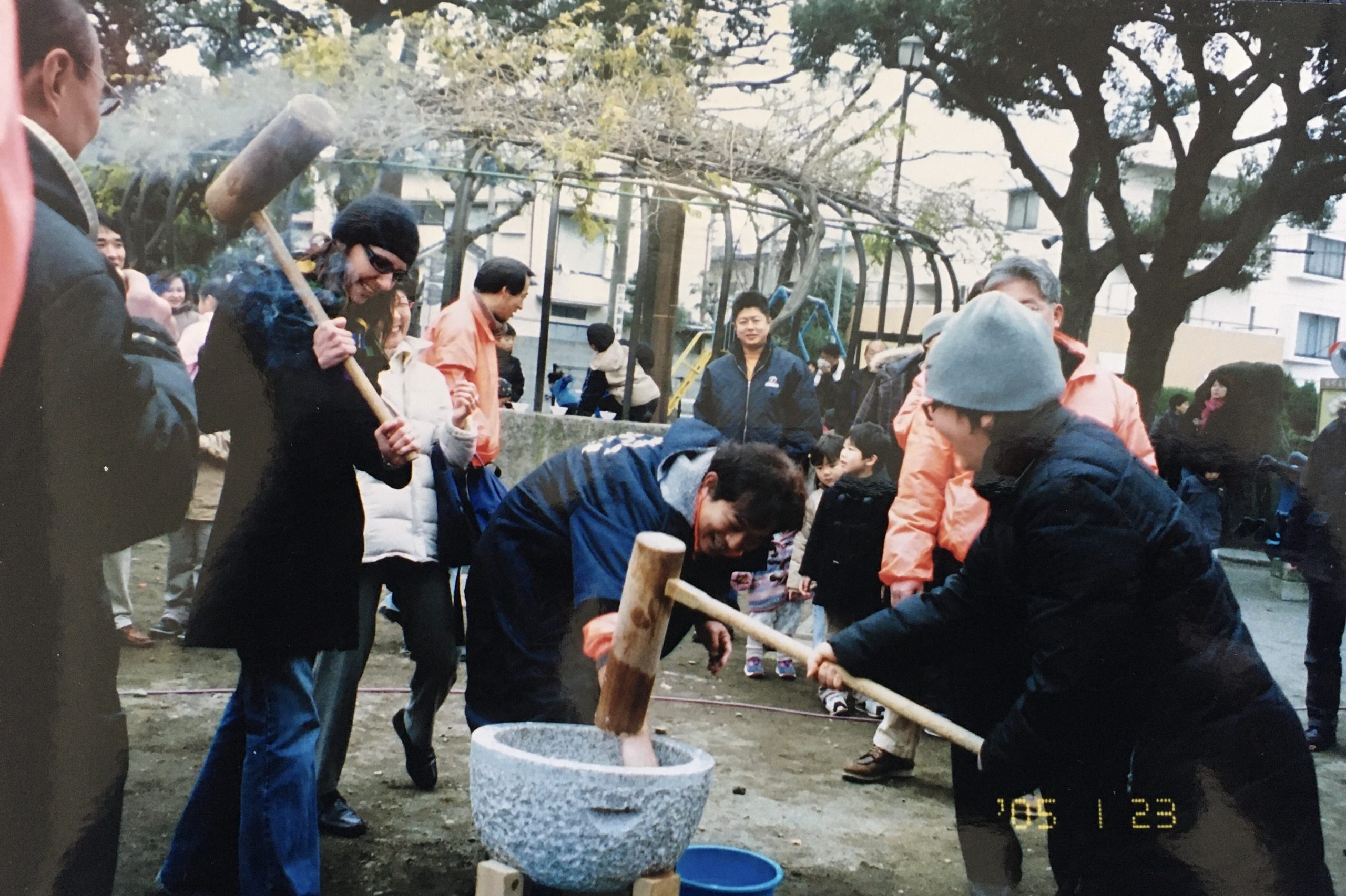
First thing first, you may have heard about mochi but what is it exactly? In most places it is translated as rice cake, but I think it is a bit misleading. Mochi is made of mochigome 餅米 a round rice, slightly more glutinous than the rice you would eat normally, it is cooked them crushed into a paste, the paste is then shaped into a ball of various sizes (smaller are less dangerous to choke on). Making mochi for new year is a tradition and there are plenty of opportunities to go to mochi-dsuki 餅つき events in local communities. We went to our first one in January 2005 with our Japanese teacher. That was fun to pound the rice in a large wooden standing bowl called usu 臼, carved in a trunk, with a huge wooden mallet or pestel called kine 杵.

Me on the left pounding mochi with I. on the day we met for the very first time. (January 2005)

Of course we were scared to try eating it (for the above reasons ;)), but in the end we enjoyed it very much in many many ways: in soup (ozoni), with nori and soya sauce, with kinako, with red beans etc…
Not everyone is equipped with a set to make mochi at home and not everyone makes at least 2kg of mochi at once, so there are other ways to get your hand on mochi and to try this very special Japanese specialty. Here are some options I recommend: steamed mochi rice hand crushed and pound in a mortar, fresh mochi in grocery shops (not so easy to find in the city, easier in the countryside) but it doesn’t keep for long, kirimochi 切り餅, it is basically dried mochi that is very easy to use and keeps much longer and is nice for also making grilled mochi (if you want some let me know I can arrange shipment wherever you are, DM me on Instagram or Facebook). Some websites offers to make mochi with a mixer, but it seems that without a powerful one all you may do is burn your motor, so I wouldn’t actually recommend it. Some others propose to make it from mochi rice flour, I have never tried and I guess it is OK but it will lack the slightly granulous texture that you can have with pounded rice.

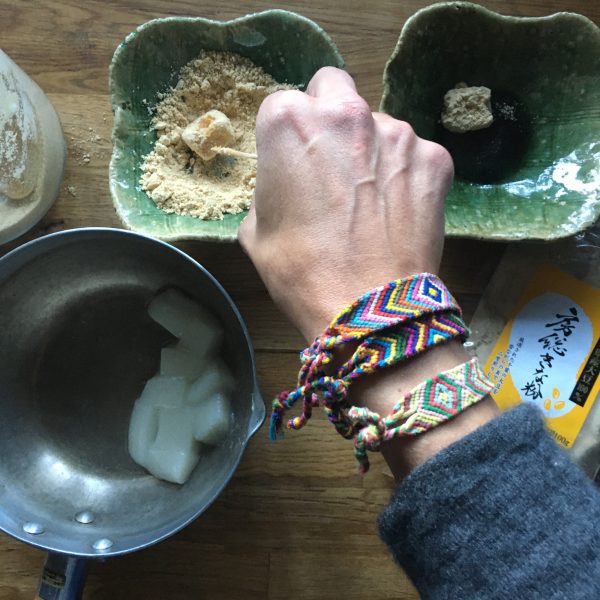
Once you have your mochi ready it is really easy to prepare in one of the many possible versions savory or sweet. If you use kirimochi you may need to return it to softness by simply putting in a pan cover with water and boil it a few minutes on both sides until tender. Today I introduce two recipes, one savory ozoni, in a version with only clear broth inspired by a picture I saw on Instagram, but reinterpreted, but you can also add white miso to it to make it more Kyoto-style! and one sweet kinako mochi, but there are many others. Actually one I love is mochi with soya sauce, very simple but so delicious and perfect as a side for a piece of grilled fish or with some vegetables.

Kinako mochi

  • soft mochi (if you use kirimochi it needs to be returned to softness)
  • kinako (torrefied soya bean powder)
  • brown sugar

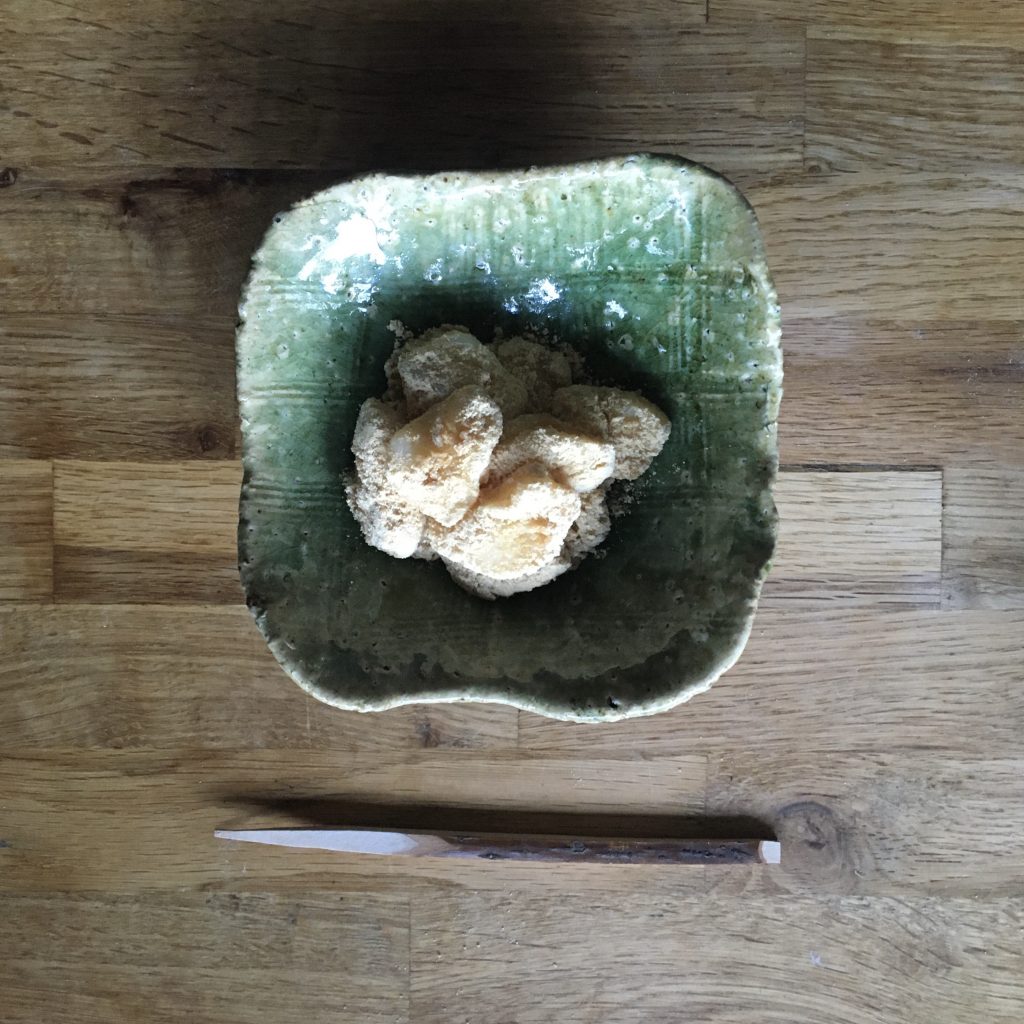
I a bowl mix 4/1 kinako/sugar (for example 4tsp of kinako and 1tsp of sugar). Cut the mochi into bite sizes. Dip the mochi in water and roll in the kinako mix, set in a bowl. You can make as much as you want it is very easy to eat and really delicious!!! The picture below is what I made for two for a tea-time snack. There was about 8-10 small bites.

kinako mochi

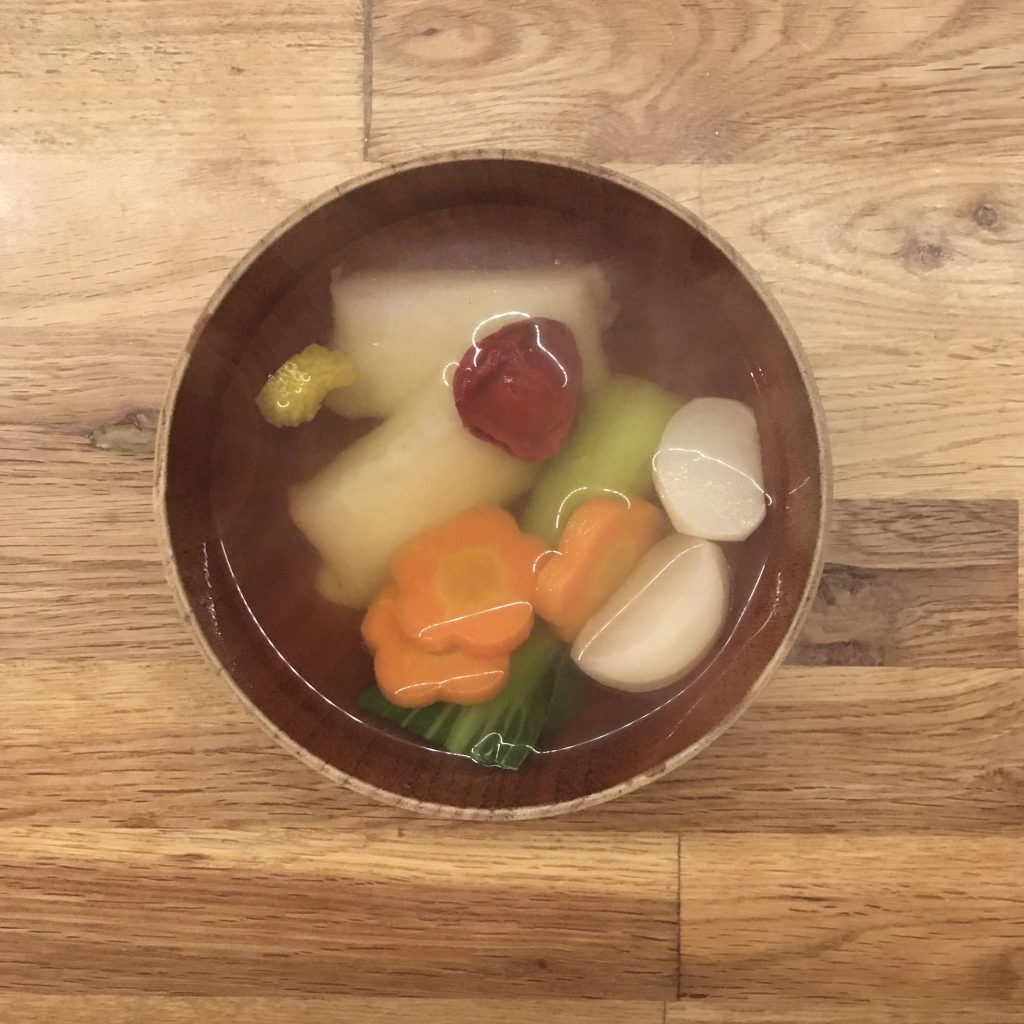
Ozoni (without miso) (2 servings)

  • 500ml of dashi ( I use ichiban dashi (konbu & katsuo) but you can also do with konbu & shiitake dashi for a vegan version)
  • 2 pieces of kirimochi
  • 2 umeboshi
  • a few seasonal vegetables: 1 carrot, a few spinach leaves or 1 small bok choy…, 2 little turnips…
  • optional a zest of yuzu

In a pan, prepare the dashi. In another pan, return the kirimochi until soft. Prepare the vegetables (I used a cookie cutter to make the carrot in plum shapes). Cook them in the pan with the dashi, until just tender. In a bowl of your choice set the mochi, dress the vegetables, add the umeboshi, the yuzu peel and cover with the dashi. Enjoy while it’s hot.

Again send me a message on Instagram or Facebook if you want dashi, kinako or kirimochi.

Welcoming another new year…

I am not good at welcoming new years… Probably because it is too close to my birthday, and I just myself turned one more year and still try to understand what it means… also we celebrate more personal events than any other: birthdays, anniversaries… For many it is a time to look back at achievements and look forward to goals. I have no regrets , and as long as I can remember I never made a good resolutions list. I have no bucket list, nor list of things I want to fix in my life, bad habits I need to get rid of, diets I need to start, addictions I need to quit or things I could do better. Not that I am perfect of course not, but I don’t make lists. Usually when I need to do something I just do it and organize myself to stick to it! January 1st wouldn’t be the time I would particularly change and set goals for myself. So the welcoming of the new year is not so important for me. And for the past 17 years we’ve spent a lot of the new year eves either in a plane or with a big jet lag in the countryside, when it is cold and we usually go early to bed and wake up early too. Though I like the Japanese celebration of new year at a nearby temple or shrine for the festive simplicity of hatsumode 初詣, the first visit of the year to a shrine or temple, and have nice memories of so many spent with friends or family in so many different places in Japan they are also often memories of hours in the cold, waiting in crowded lines for the time to arrive, with bonfire to warm us once in a while. So we now often skip the midnight visit and go later in the day, when it’s less crowded.

Even though we don’t celebrate much, I prepare a nice dinner (as I do every day ;)) and we spend a quiet evening together, as we always do. Nothing fancy… and I like it that way very much.

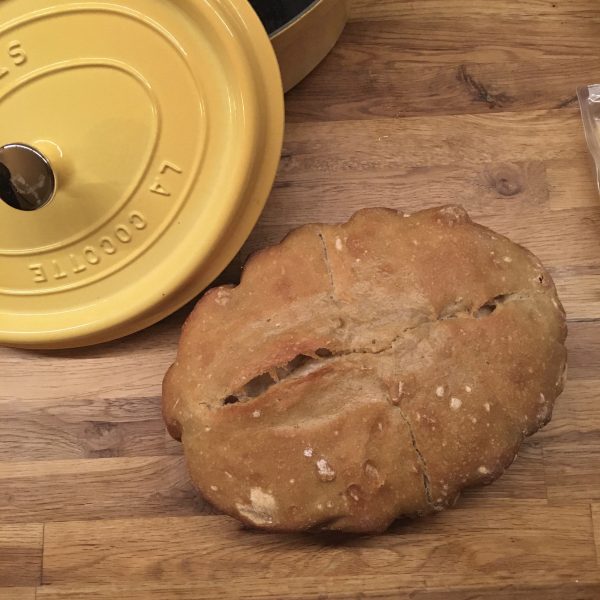
This year is just the same. At the time I write, everything is quiet outside, though the shrine is all lit up to welcome a few visitors during the night. A. is fast asleep, I am struggling to keep an eye open. We will wake up when the day breaks tomorrow. It will be cold and sunny. I have already baked the bread for our breakfast as I tested a new (to me) baking method using a cast iron pot, which has helped me understand why my breads are often too pale. I have an issue with moisture when I bake them. The cast iron pot just solved the problem and I finally could bake a golden bread, with a crust crunchy outside and well balanced crumbs.

So now I can sleep tight, wish you a good end of the year and see you in 2022!

Proudly powered by WordPress | Theme: Baskerville 2 by Anders Noren.

Up ↑

Verified by MonsterInsights