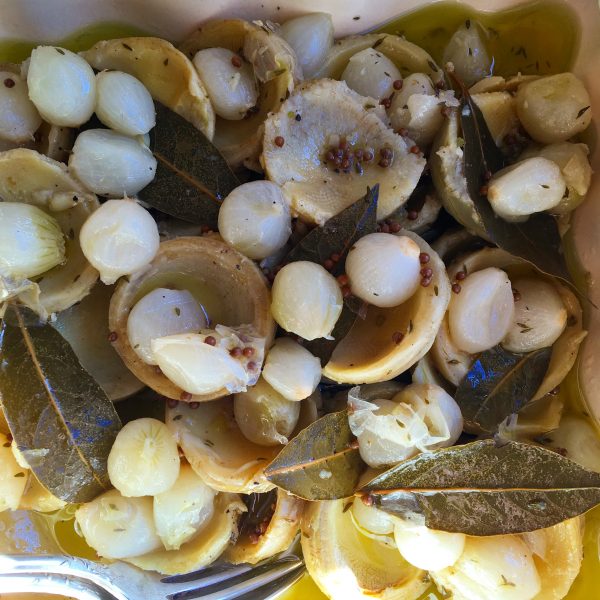
Artichokes

One of the food I miss much in Japan as you already know, is artichoke. For some reason it is something that reminds me my childhood. From the simply boiled large ones that one of my grand mother would prepare to eat one leave after the other dipped in mustard vinaigrette, or the tiny purple artichokes barigoule of my mother or a recipe from my other grand mother “greek style artichokes” I love them all. When we lived in Paris I used to prepare some quite often and the greek style artichokes were always a good pick for casual dinners. When we go back home, my mother always prepare artichokes for me, usually for the very first day when we arrive, since they can be made in advance, and they are very good warm or cold it means lunch or dinner is always ready for us to eat anytime. Yesterday for a family lunch she made artichokes greek style. I thought I’d share that recipe today.

Artichoke greek style (for 2)

– 10 large artichokes (in worst case artichokes heart preserves)

– 10 bell onions

– 1 tbs of coriander seeds

– 2 leaves of laurel

– a branch of thyme

– 3 tbs of olive oil

– 3tbs of white wine (optional)

Boil the artichokes and extract the hearts.

Clean the bell onion by peeling one layer.

In a large pan put the olive oil, the wine, the artichokes hearts, the onions, the coriander, thyme, laurel. Add just a bit of salt and pepper, cover with water and cook at low heat under cover for 40min.

Perfect eaten with fresh rustic bread to enjoy all the delicious juice.
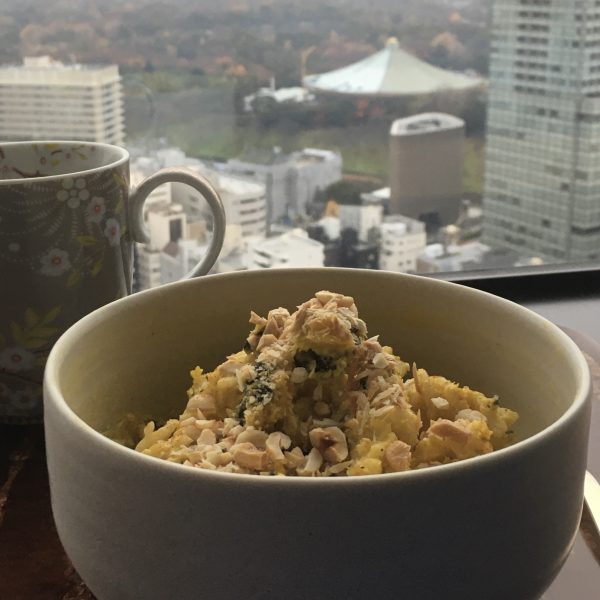
Almost there

While I’m hoping that the doctor will tell me I’m good to go tomorrow I’m still taking it easy, resting a lot and trying to sleep a lot. But the one thing that makes me confident that I am recovering is that now my appetite is gigantic. Indeed in the first few days when I was sick I had very little appetite and I couldn’t eat much but now I’m feeling hungry all the time. Like really all the time!!! And I have a craving for energetic food, in particular super high carb. So, I eat Christmas breads and pasta all the time. And I came up with a few new recipes that I’d like to share with you today.

One is a vegan recipe very simple and perfect if you have a very fragrant olive oil. The second one is an adaptation of the classic Japanese kabocha salad and pasta salad. A vegetarian, warm version that is becoming a new favorite.

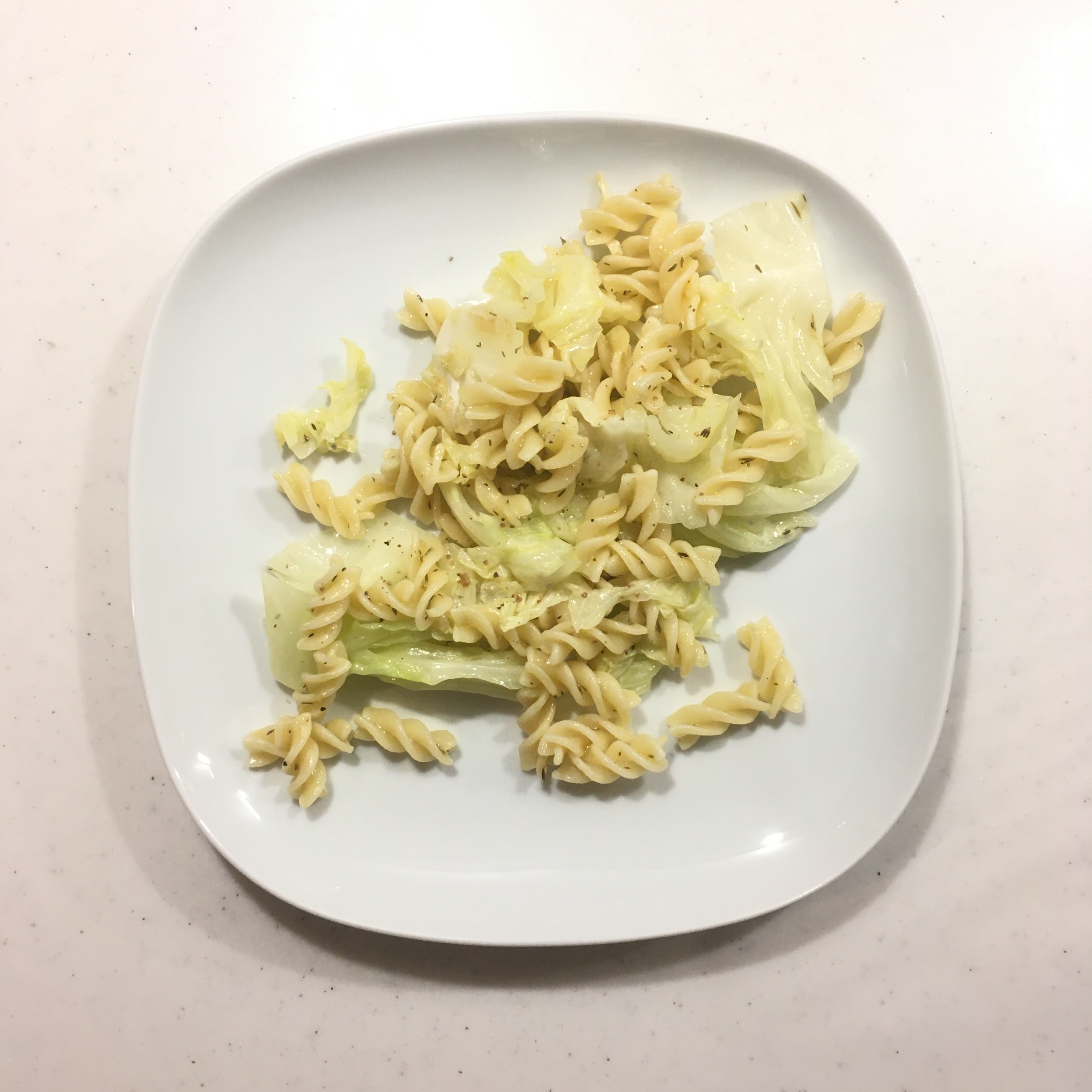
Cabbage pasta: (2 servings)

– 1/4 of a cabbage

– 125g of pasta of you choice

– olive oil

– thyme

– salt and pepper

Steam the cabbage for a few minutes, it should stay in shape but become just a bit translucide. Boil the pasta al dente, drain.

Cut the cabbage in large slices. In a pan greased with a bit of olive oil add the cabbage, the pasta, the thyme, salt and pepper and stir well at low heat. When well stirred add a bit of olive oil and serve to eat immigration.

Kabocha pasta warm salad (2 servings as starter or side, 1serving as main)

– 60g of pasta

– 2 kiri (equivalent to 2 tbs of cream cheese)

– 1/6 of kabocha

– salt, pepper, paprika

– 3-4 hazelnuts and 3-4 cashew nuts

Boil the pasta and the kabocha separately. Drain. In a bowl mash the kabocha with a spatula or a fork, add the cream cheese, salt, pepper and paprika. A pinch of each. Stir until creamy, add the pasta and stir well again. Top with a few hazelnuts and cashew nuts chopped. Enjoy!

How quick…

Not enough time to do all the things I want to do… and in a snap it’s already mid December…

Busy days follow busy days… the excitement of all the things I do leaves me quite resourceless and for the first time in quite a while I feel tired. Tired of so many things undone, tired of running after time, tired because of too little sleep. I am normally a heavy sleeper. If I dont sleep 7-8h I physically can feel it and I am underperforming. For the first time in quite a while I had a nap on Saturday afternoon. It was rainy and cold, perfect to just let it go… Just 20min but my body and my mind were craving for it. It gave me new strength to start again!

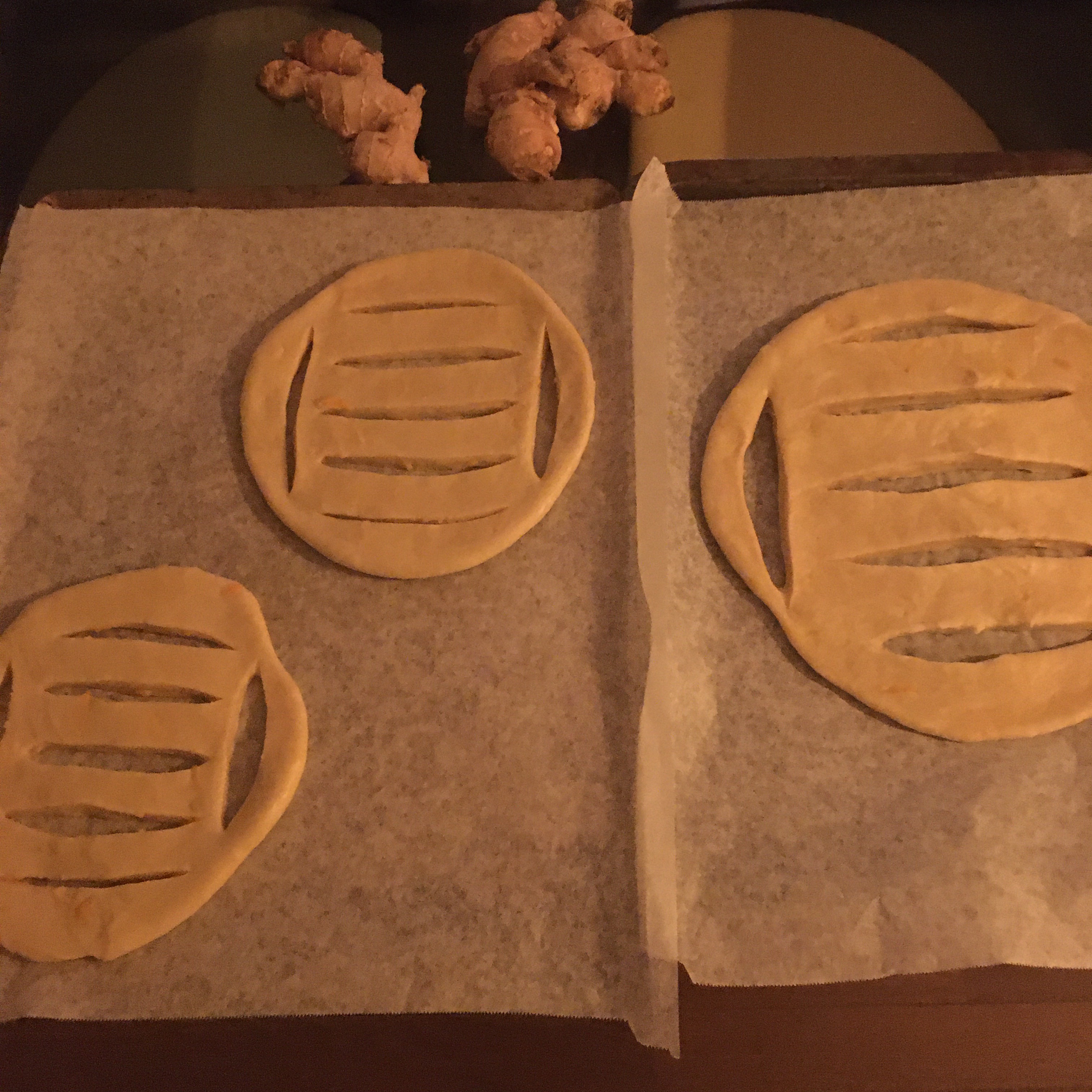
I started by baking pompes a l’huile for ourselves and to give away to friends. December is definitely the time to bake pompes a l’huile, this Provence traditional sweet bread we eat for Christmas. And it’s really easy to make and bake, and so easy to eat, so making several at the same time is probably a good idea!

The recipe is quite simple. I posted it quite some time ago. I made a few variation this time. Used a little less olive oil (believe it or not, I ran out of olive oil!!!) and I used the zest of a tangerine from the garden!

This was a great success! Everyone loves pompe a l’huile!!!

Pompe in the making, proving

Persimmons

When the season for persimmons comes it means that autumn is clearly here and with shorter days, the chilly evenings will be coming soon. And here they are. Not cold enough to tuen the heater on yet, but it’s coming.

While we are not big fans of raw persimmons, like pretty much everyone in Chiba Sotoboso, we have persimmon trees in our garden, two that give sweet persimmons and one that gives bitter ones. Persimmons are like plums in June, impossible to give away!!! Most people don’t even harvest them and their leave-less branches are decorated with beautiful orange fruits. I our gardens the fruits don’t last long as birds happily eat them and that is great. Still I always harvest a few fruits for us as there is one recipe that is my total preferred way of eating persimmons: tofu ae with cucumber.

So here it is:

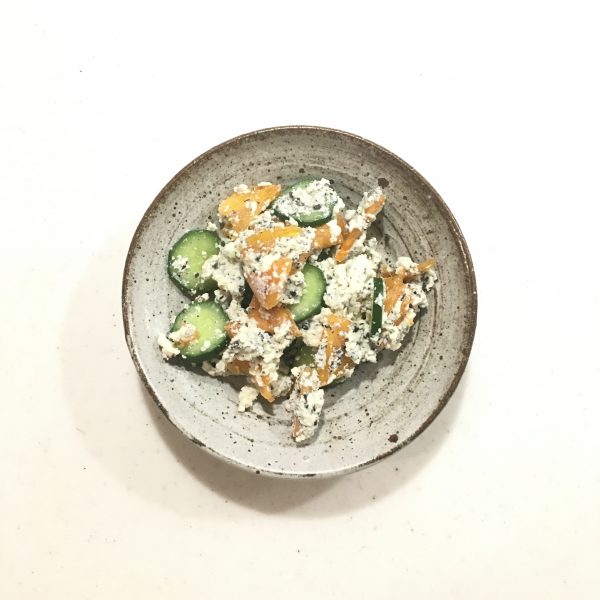
Persimmon, cucumber and tofu ae: 

– 1 persimmon not too soft

– 1 Japanese cucumber  

– 1 small block of drained tofu

– 2tbs of sesame seeds

– a bit of salt

Peel and dice the persimmon, slice the cucumber. Grind the sesame seeds, drain very well the tofu* and mix with the salt. Add the persimmon and the cucumber. Stir well and it is ready to serve.

Oh! By the way, I’m testing new mini videos to explain the recipe… checkout below and on IG!!!

* draining tofu is crucial to obtain the perfect creamy consistency. To drain tofu (hard or soft) first press it gently between two boards with a weight on top. Gravity will make it work perfectly for you after 1h. Then in a clean cloth with thin weaving press the tofu to remove the water has shown in the third video below.

http://gentianeetantoine.com/igk/wp-content/uploads/2019/11/video.mov

http://gentianeetantoine.com/igk/wp-content/uploads/2019/11/video-1.mov

http://gentianeetantoine.com/igk/wp-content/uploads/2019/11/video-2.mov

http://gentianeetantoine.com/igk/wp-content/uploads/2019/11/video-3.mov

Call it cooking… or not

But damn… this was a super delicious combination…

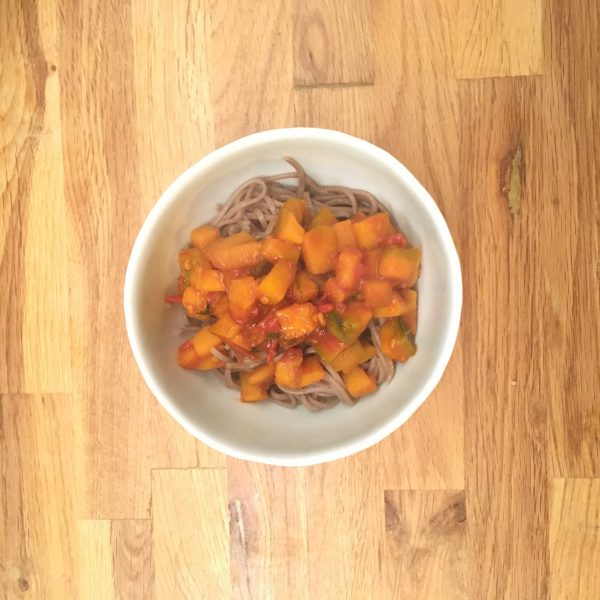
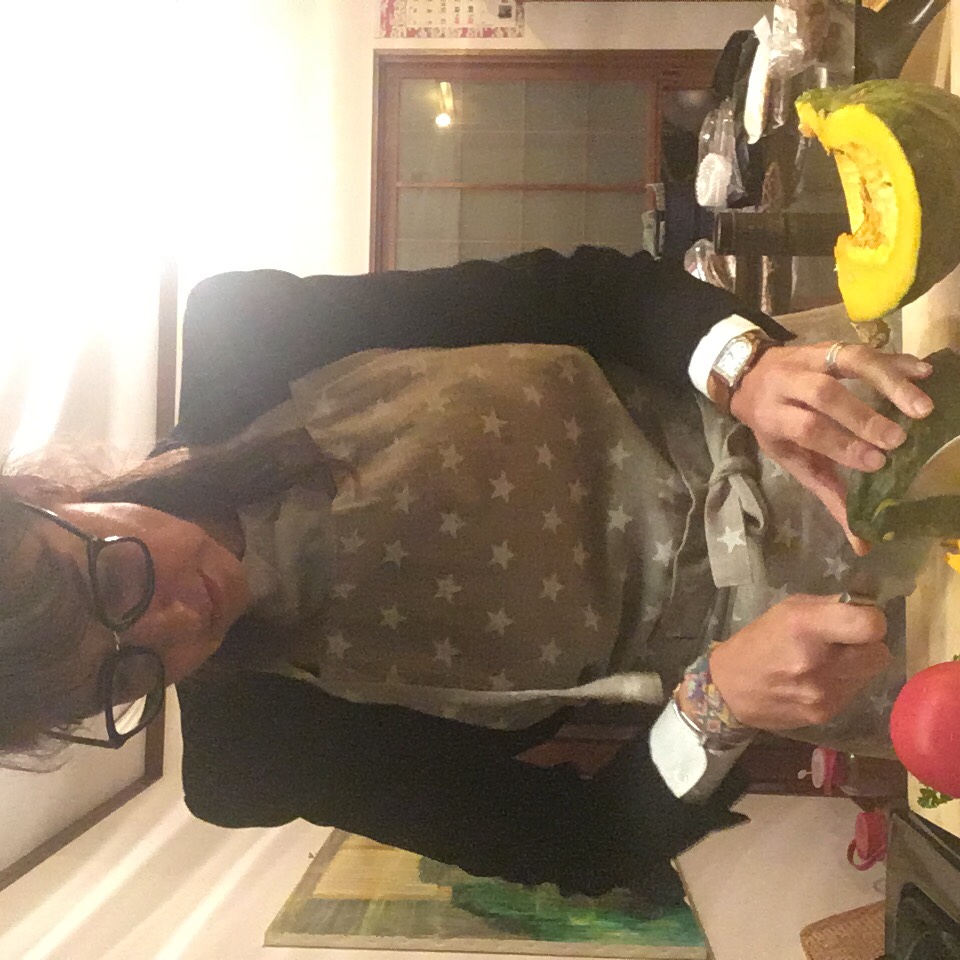
You remember me cooking in apron over my suit right after work? Well I was preparing dinner with the leftover veggies: kabocha and tomatoes. I also picked some fresh parsley in the garden and was thinking about what to do with them when the crave for soba noodles just came. All was decided… And that’s how this recipe of kabocha soba was born. It was so delicious that I really need to share it with you! Moreover because it’s been a while I haven’t shared a proper recipe!!
Kabocha-soba (for two regular servings)

– 125-150g of dry soba noodles (I use 100% buckwheat flour noodles)

– 1/4 kabocha

– 1 large very ripe tomato (if not the season anymore where you are use a tomato preserve without any seasoning)

– a few sprigs of fresh parsley

– 1tsp of soya sauce

– a bit of olive oil

While the water to cook the soba is heated, wash and cut in small cubes (5-10mm) the kabocha. Wash the tomato and dice. In a pan grease with a bit of olive oil, start cooking the vegetables. Add 1/4 cup of water if the tomato is not juicy enough. Cook under cover until the kabocha is soft but not too much. Add the chopped parsley and stop cooking but keep warm. The sauce shouldn’t be liquid or juicy. Just moistened a bit.

Cook the soba as detailed on the package. Serve in bowls. Top with the vegetables, add the soya sauce. Eat immediately and enjoy the perfect balance between the rustic soba flavor, the freshness of the parsley, the sweetness of the tomato and the creaminess of the kabocha, enhanced by the salty taste of the soya sauce!

Lemongrass

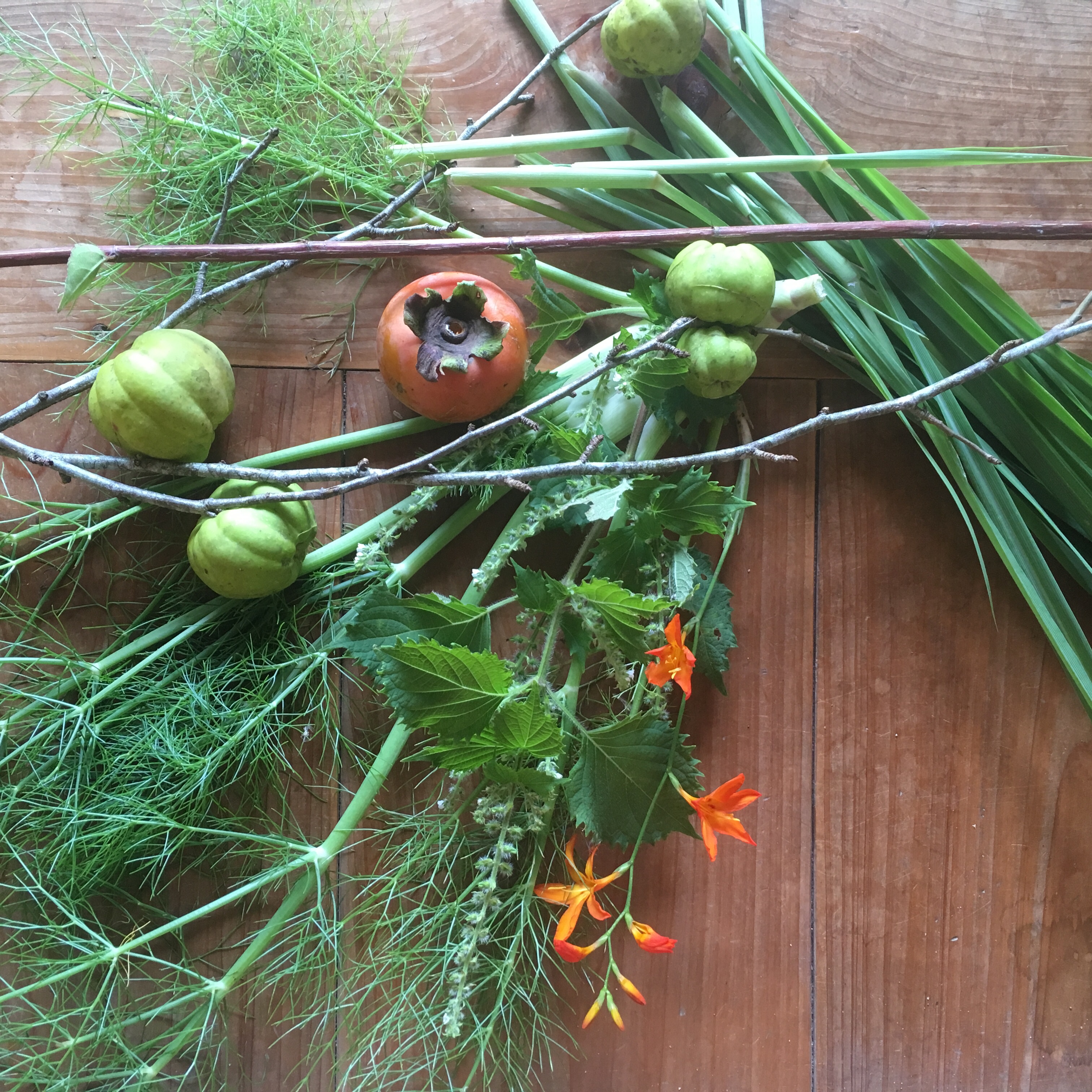
With the terrible summer the garden hasn’t produced much since August. My eggplants are having a hard time growing, same for the celeriac, and the ukon. The beets have disappeared… only the peanuts, the celery branch, and the herbs are doing fine. Regarding the fruits… the jujube are few and very tiny, the persimmons are very small too, I have no lemons and a dozen of yuzu that are not yet mature so will see how this ends up. But little is not nothing so let’s enjoy what we got! And among the harvested products I kind of enjoyed a lot the lemongrass. It was my first year planting some and it easily picked up and produce quite a bit. Well for a plant that loves water must have been satisfied this summer!!!!

I have not a lot of experience cooking with lemongrass and my favorite preparation it definitely herb tea. I found it simple to harvest and dry lemongrass naturally. I just cut in 3cm long the leaves and they dried in 2 days. I use a pinch for a large mug of drink.

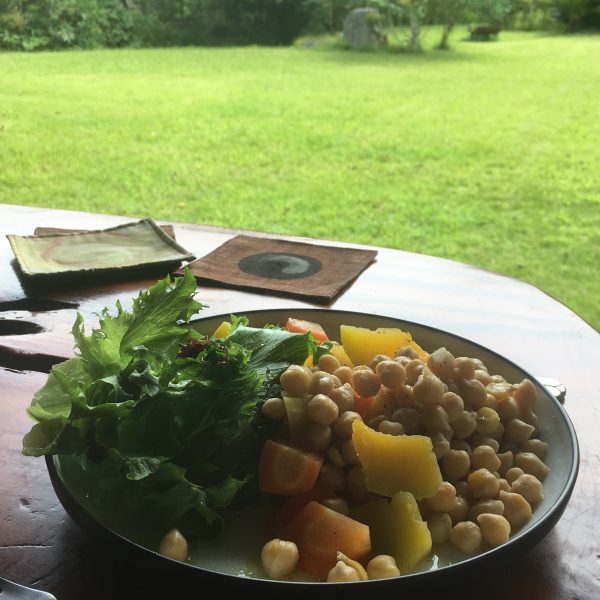
In food, I remembered using quite a lot lemongrass back then when we lived in Paris and also getting tired with the too strong flavor. But a few things I remember loving it for was in clear soups and in vegetables preparations. Remembering that last one I prepared us a very simple meal with simmered chickpeas, carrots, kabocha and I using lemongrass to give a nice fresh flavor to eat. Served with a fresh leaves salad, and a bit of olive oil… it was very nice!

Enjoy the autumn, it’s official now!

Panisse

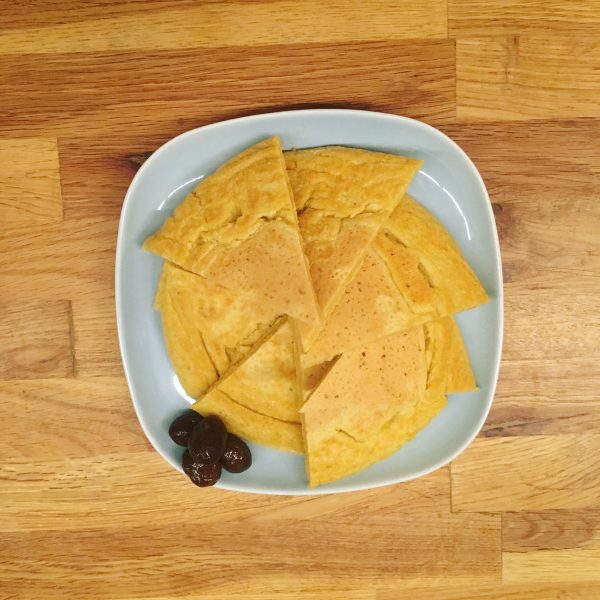
Probably very few of you know what panisse are… you only know if you’ve been to Provence long enough or have a specific interest in regional cooking… Panisse are an other traditional recipe based on chickpea flour and that cones from Italy apparently, but is also famous as far as Marseille. I’ve already shared the recipe of socca from Nice, panisse are something different. They are thicker and fluffier. Most recipes I’ve found are just using the same ingredients as socca but cook it in a pan with a lot more water, and then wait for it to cool down before frying them. I wasn’t too happy with these recipes and tried one I found in one of my vegetarian cookbook. The reason I was interested in that recipe is because you need to add a bit of baking soda to the mix… and you can cook it immediately and eat it immediately too. I still cooked it in a frypan like the socca but it resemble a giant fluffy pancake.

So here is my recipe.

Panisse

– 100g of chickpea flour

– a pinch of salt

– 1tbs of olive oil

– 1tsp of baking powder

– water

In a bowl mix all the ingredients and add water little by little until the mix is thick but not dry.

Heat a frypan of 15cm diameter, grease slightly with olive oil, pour the mix and cook at low heat, under cover, until it’s almost dry on top. Flip, and cook 2more minutes. Cut and eat!

You can use a lot more oil when cooking the panisse, but this is not mandatory… you can also add a bit of salt after too… enjoy!

Ginger

For most people outside of Asia, ginger is this wrinkled beige root that can be found all the time, but in Asia, even if you can find more or less fresh ginger all year round in supermarket, there is still a season for harvesting fresh new ginger, and it’s now!

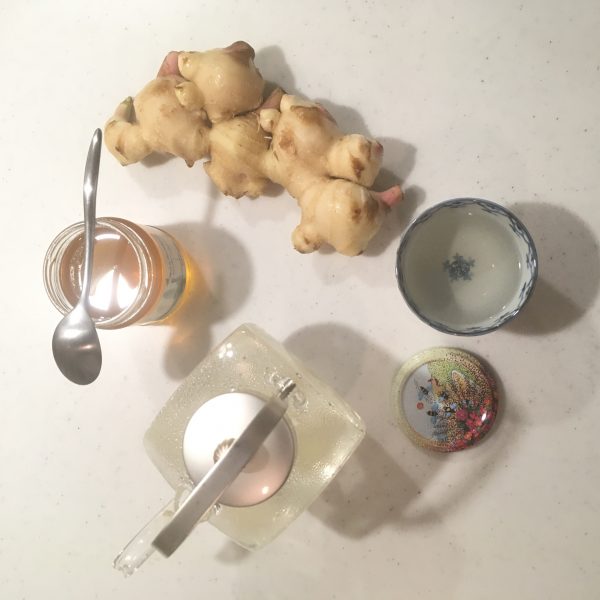
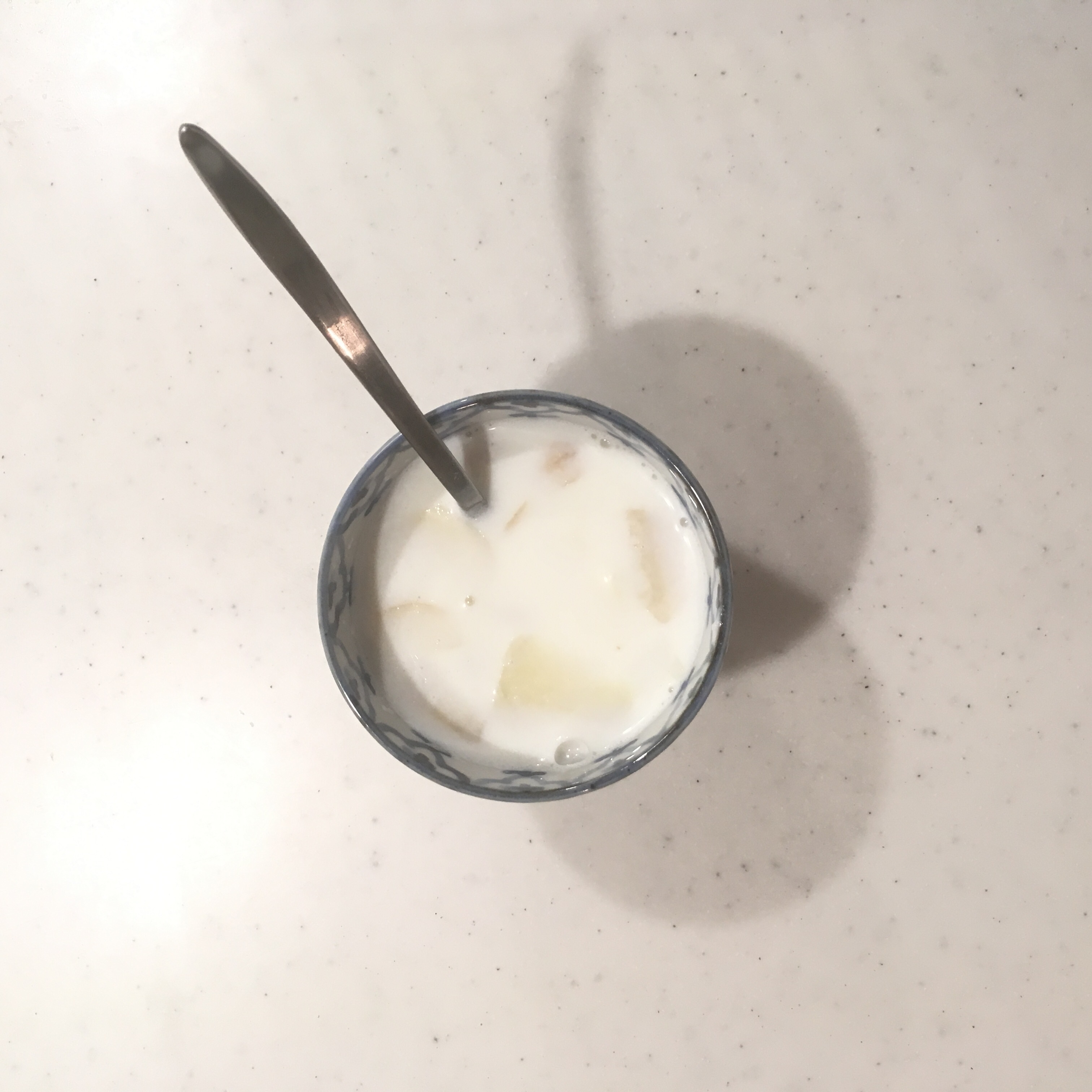
Ginger is often use as condiment in cooking, with tofu, pork… or even more often pickled or candied in a savory preparation. In Japan contrarily to other Asian countries it is rarely used in sweets: not savory candied ginger is not so easy to find. I made some, quite a long time ago and plan to make some again this weekend. There is one thing I particularly love ginger for it’s for preparing drinks. Remember the apple ginger cider? And the honey ginger? Well these are some classics and honey ginger is so easy to make. Well this time I mage a variation of it. It’s ginger milk and honey. It’s of course richer then the herb tea but it has something less stringent and more comforting. For making it, it’s simple. You need a piece of juicy fresh ginger, milk and honey. Wash the ginger and slice it thinly. New ginger skin is so thin you can keep it. In a pan pour the milk and add the ginger. Let sit for one hour. Then boil the milk, serve and add honey. You can serve without filtering and enjoy the ginger while drinking.

One other way to do it is to extract the juice of the ginger by grinding it, add to the milk and boil immediately. This method is faster but I find that extracting the juice of ginger is quite messy… or maybe it’s just me!

And did you know that ginger is good for sore throat and when you are tired too?

Umeboshi tasting

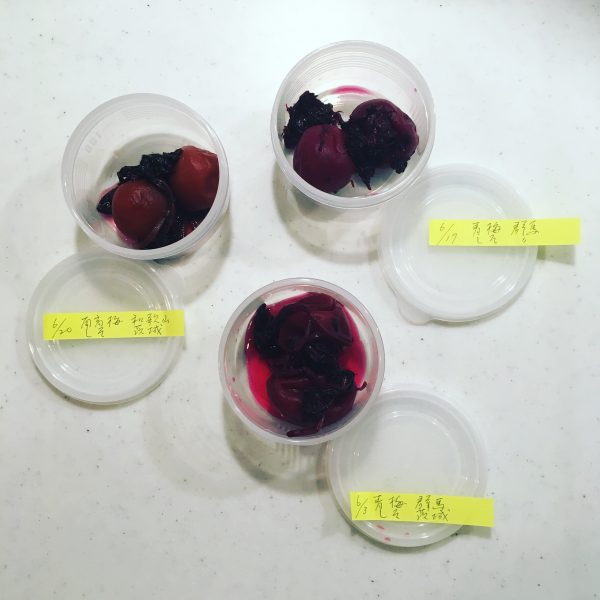
Remember, I told you about my pathetic failure with one batch of umeboshi a few weeks ago… well when we came back to Tokyo I had a little surprise: I had a tasting set of umeboshi!!! Three types of red shiso umeboshi, with slightly different preparations and different kinds of plums all prepared by K. san. I think she was sympathizing with my failure… Her recipes are slightly different than mines so it was interesting to try them. One is very juicy and pink, the two others are more traditional, yet delicious and juicy. Of course they are umeboshi from the year nothing to compare with the 25year old umeboshi I got from my neighbor which are much drier. All to say that umeboshi may be something that seems first weird, too salty or too sour… But they are a very traditional Japanese food, rather unique, super healthy and side products have many virtues. I am sure that among the many varieties there must be one for everyone’s palate! If you don’t like the juicy and flush flesh jumbo ones, try the small and crunchy: karikari ume カリカリ梅. They are personally not my favorite but I like them too.

Also to get used with the taste maybe try ume flavored food. I use to like the ume potato chips, but I stopped buying potato chips 5 years ago… I’m sure there exist other snacks of the like: age mochi, kaki no tane with ume flavor, it can be a good introduction. I any case never buy cheap ones and those with non natural coloring or other ingredients than just salt and plum and shiso.

Proudly powered by WordPress | Theme: Baskerville 2 by Anders Noren.

Up ↑

Verified by MonsterInsights