This recipe is one of our mother recipe and is a traditional Provencal recipe using the leftovers of salted cod . After the cod has been unsalted and washed, just boiled it, then add milk and stir until the milk has been all absorbed by the fish. Add pepper and olive oil, stir again. This mixture, called “brandade” is delicious on toasted bread, with boiled potatoes, as a spread or to stuff veggies. It’s good eaten either warm or cold. Here is a preparation of stuffed cherry tomatoes, perfect for a buffet or finger food.
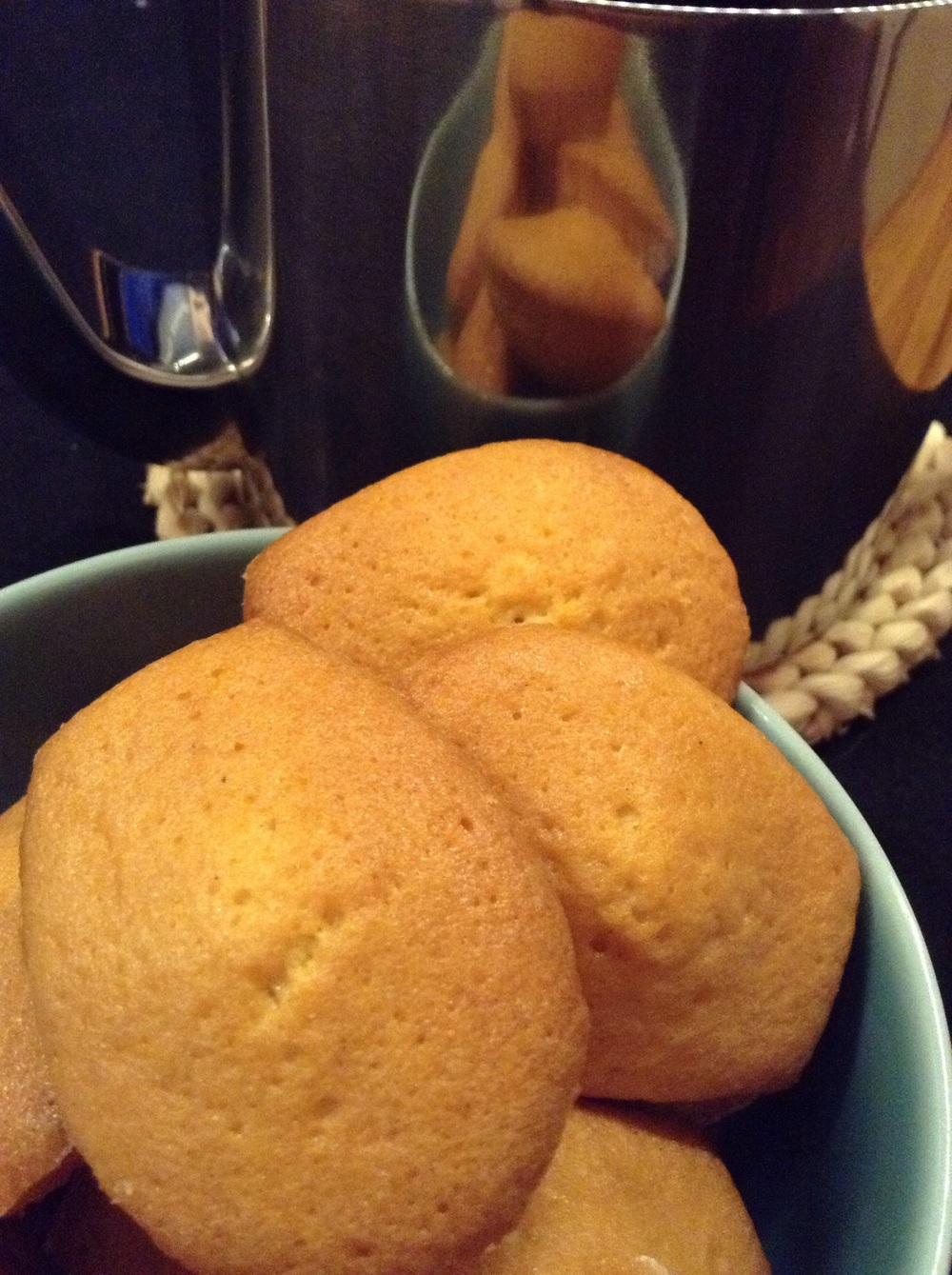
Well, an other rainy Sunday to test some madeleine recipe and I think this time it’s the right one. At first I was a bit reluctant in trying it because it has a lot more butter in it, but so far it’s the one that guarantees the best bumps and the perfect consistency. So, too bad for the butter outage that we still have in Japan, this is the recipe I will adopt as a base for my madeleines from now on!
I found it on the blog Piroulie (http://piroulie.canalblog.com/archives/2008/12/03/10442707.html) and it’s a Lenotre recipe. I always do smaller amounts so I used: 100g of flour, 85g of butter, 40g of brown caster sugar, 2 eggs, 3g of baking powder, a pinch of salt, a large table spoon of honey, then whatever you want for flavoring. This time I used neroli. I first melt the butter in a little pan. Then in a bowl I mix the eggs, the sugar, the salt and the honey, and batter well until a foam starts forming. Then I add the flour, the baking powder and continue to mix. Finally I add the butter and the flavoring and refrigirated for 30min. The oven is preheated at 230deg and as soon as I insert the madeleines I drop the temperature to 200deg as Piroulie recommended. After about 5-7min I again lower to 180deg, then the bumps appear nice and big! I bake until almost all golden, and remove from the mold as soon as I take it out. Quite simple and really delicious!!
Since my last trial of madeleines this summer I didn’t had te time to get my molds and to try again, but now that days are really getting shorter and cooler the tea-time after gardening all afternoon requires a little complement and madeleines are perfect for that. So I went to buy some molds to Kappabashi street the other day and I just tried to make some madeleines again. I picked a different recipe than last time but I am not completely satisfied with the shape. They get a little bump, but not as big as I expeted. Taste-wise: perfect. Let me work a little on the recipe before sharing it. But if you have a good one let me know!!
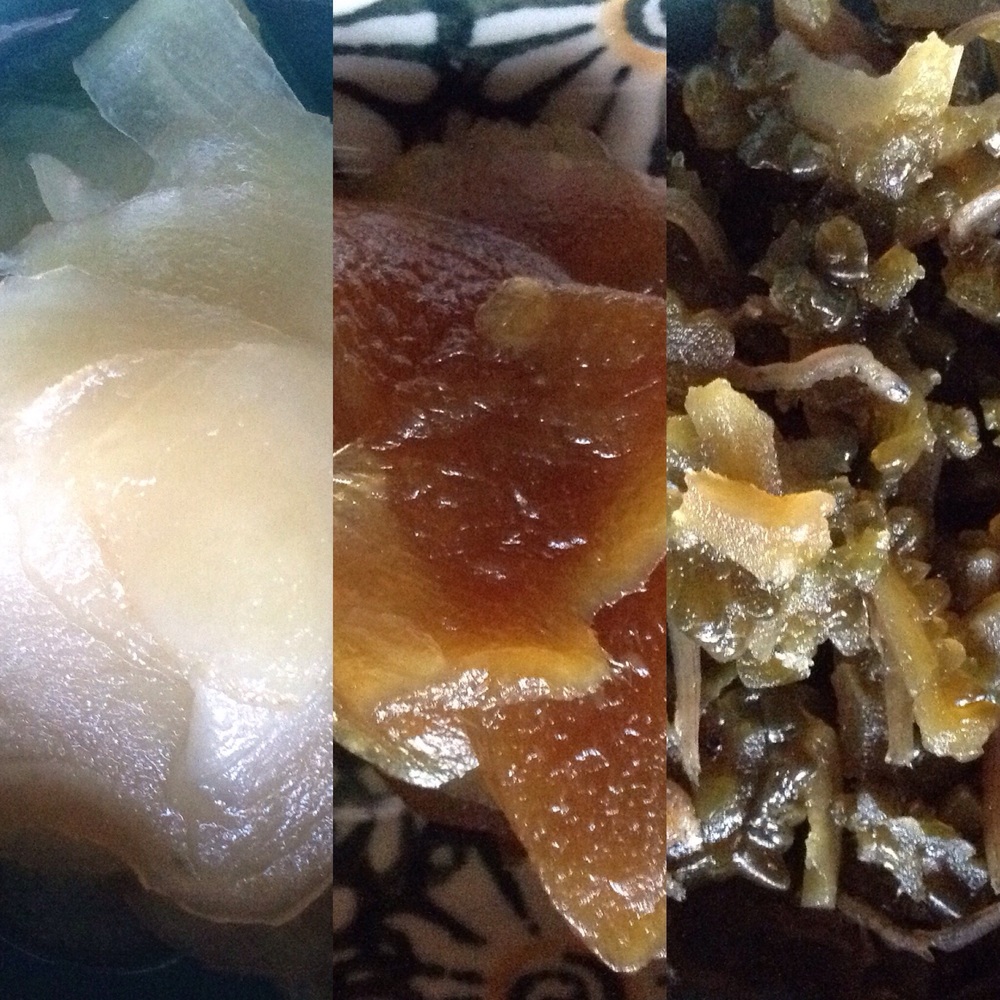
From left to right: ginger in vinegar, candied ginger, gono
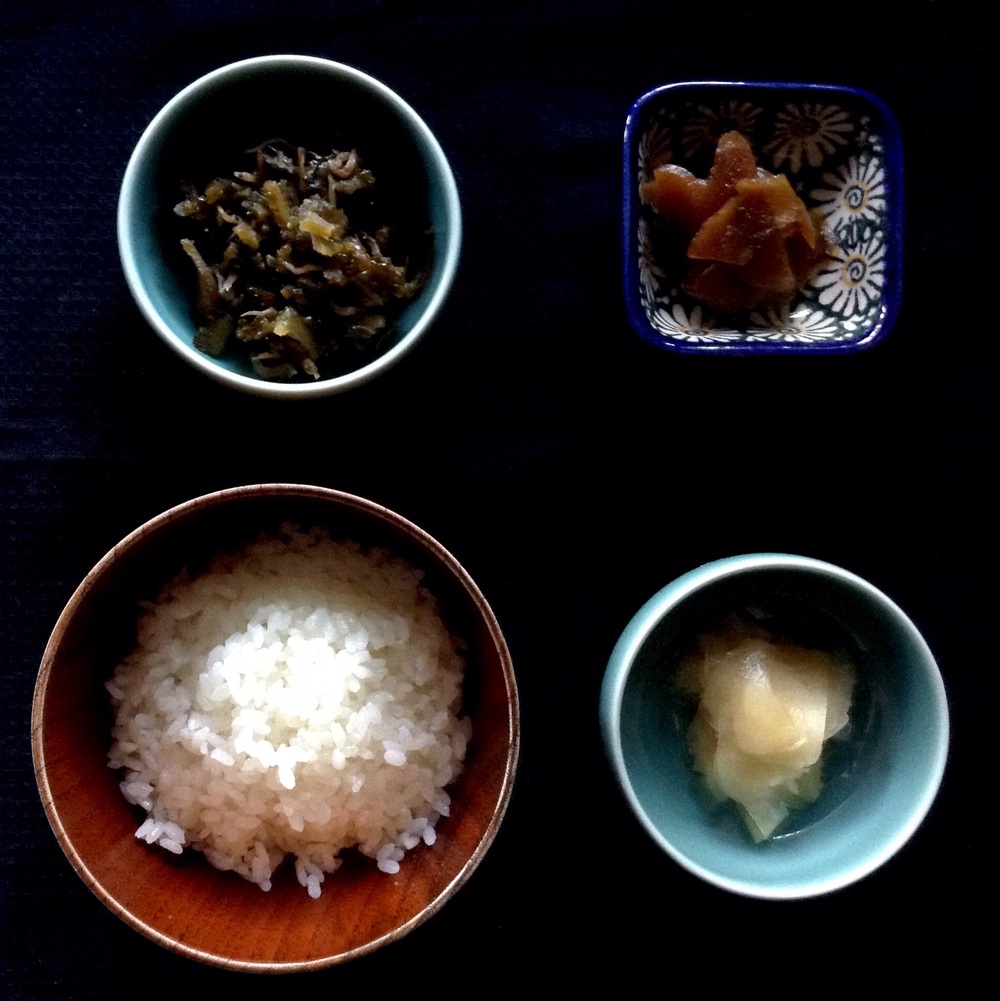
You may remember that I gave away to my neighbors my gingko nuts because there were really too many. So to thanks us our little 84 years old neighbor prepared us some nice Japanese traditional condiments and brang them to us timely just before lunch, so I just had to cook some rice. There were three different preparations: ginger in vinegar, candied ginger in soya sauce, and gobo simmered with mirin, sake, soya sauce, sugar and small fishes. All of them were really delicious and now I want so badly that she teaches me how to prepare these!!!!
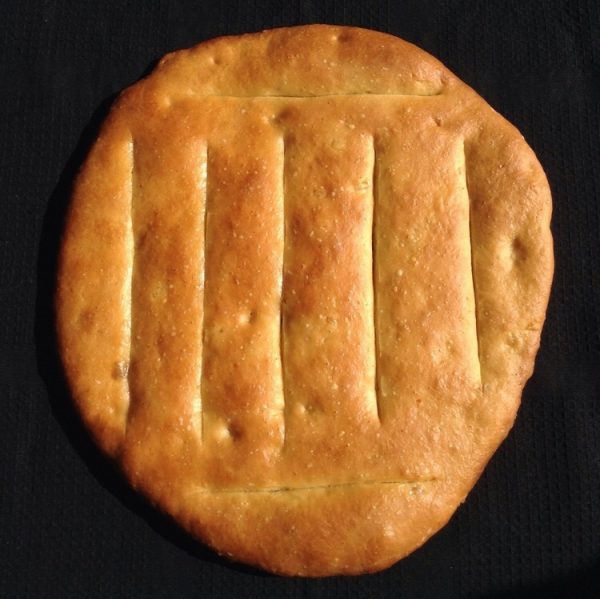
We are weeks before Christmas and this year again I plan to bake the traditional pompe à l’huile for everyone. So right now once in a while I bake one just to polish my recipe. And I think I got it right this time! The pompe à l’huile is a traditional Christmas dessert in Provence. It is often mistaken with Gibassier. Pretty much every family has a recipe or a preference. Pompe brioche, with orange, with neroli, with anise… In our family we like a thin rather dry one, with neroli and a bit of orange peels.
Since it is an olive oil base dough it is extremely easy to knead and with the neroli it smells extremely good. A real pleasure to prepare!
For a 30cm pompe à l’huile I used: 180g of flour (regular flour not the strong one), 6g of dry yeast, 3g of salt, 35g of brown caster sugar, 60g of water, 75g of olive oil, 1 table spoon of neroli, a few candied orange peels, or a zest of orange.
I mix all the ingredients and add the orange peels in the last few minutes of kneading. I knead until the dough is smooth and soft as usual. Then I wait for 2 to 4 hours depending on the room temperature before shaping it. I roll the dough in a circle, cut and if you want you can strech the dough so that the cuts open loose for 1 cm. Then wait for a few hours before baking at 180deg until it goldens. While still hot with a cooking brush apply a thin layer of olive oil.
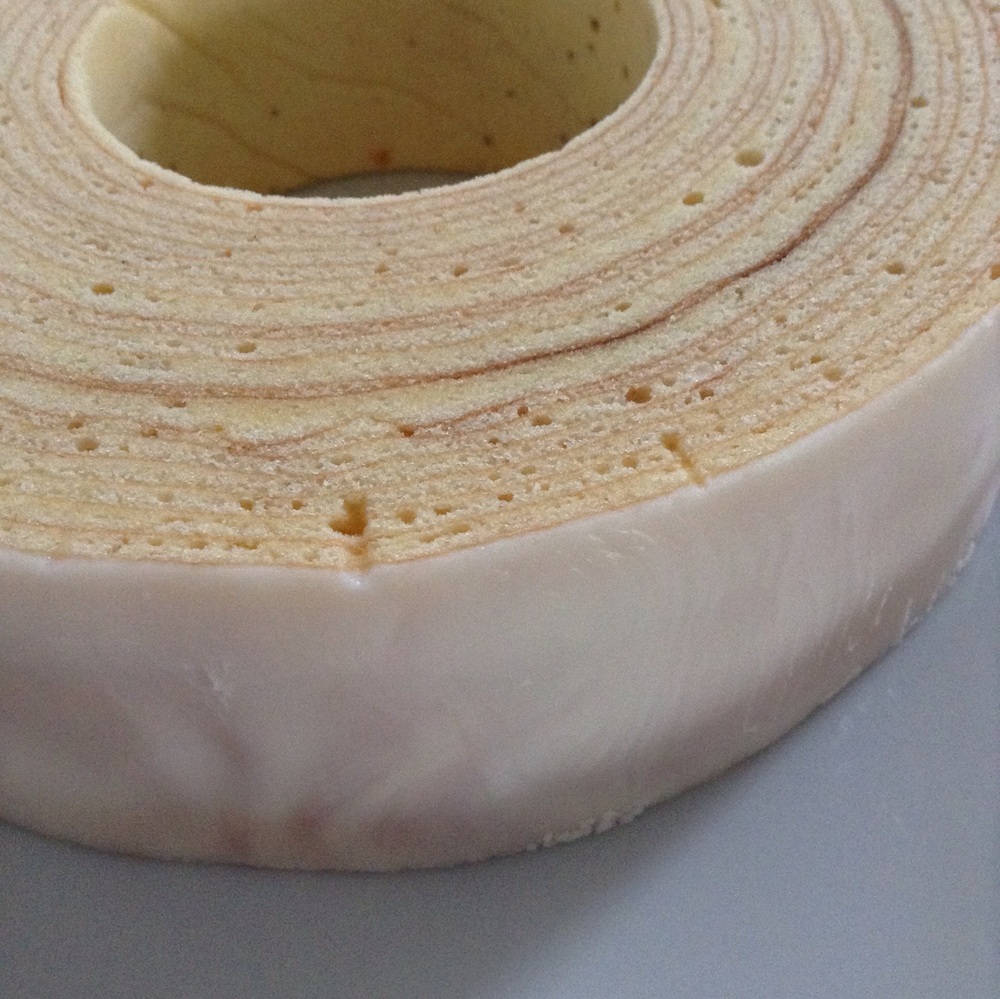
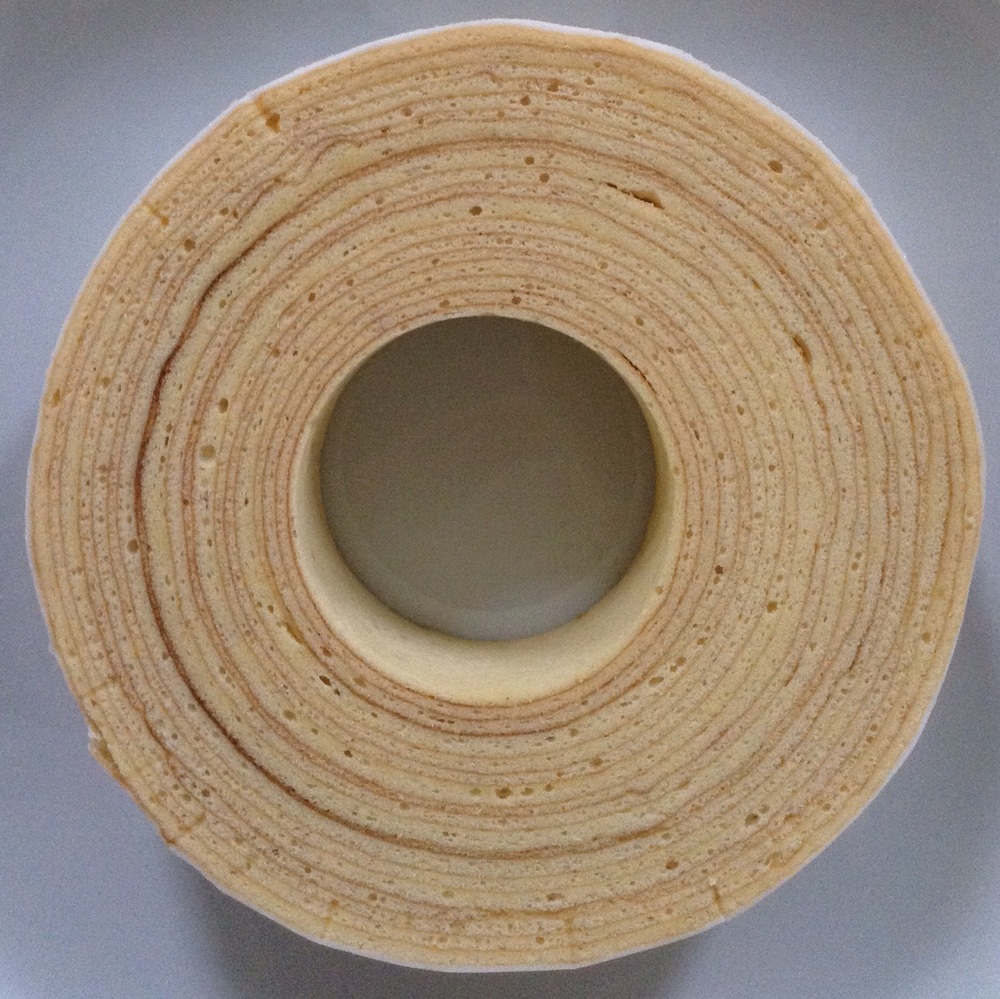
I just travelled one day to Kobe, which means that I’ve spent half of the day in the train. You could imagine that working seated in my office most of the day or working seated on a train is the same but actually the feeling is completely different. In the train I can’t open the windows to breath fresh air nor change the settings of the aircon/heater, neither the neon over lighting. So I feel dry, cold and oppressed, my eyes hurt and I feel exhausted… Anyway… The good thing, except that work was good, is that Kobe is famous for a delicious and somehow strange German cake: the baumkuchen. It’s a layer cake baked while rolling. The kind of thing hard to try at home. And the famous brand Juchheim (the first to introduce the cake in Japan) has plenty of shops in the city and of course at the shinkansen train station. So I couldn’t help but bringing back a little souvenir for our breakfast and some for my students (the tradition of bringing some food souvenir or omiyage in Japanese (お土産) is one important tradition at work).
There are many different brands of baumkuchen of all quality, you can even find some in supermarkets. There are also different flavors of cakes, the most common are plain, macha, chocolate… There is also a number of limited seasonal editions such as yuzu… My favorite for breakfast is the plain one, and I like the one from Juchheim more than the others because of it’s thin outer layer made of ice sugar and butter, which a lot of other brands don’t have.
Dashi is one of the basic ingredient of Japanese cooking and refers like “bouillon” in French or broth to the basic soup used for further cooking. Unlike French bouillon usually made out of fresh vegetables, chiken bones or fish bones… the Japanese dashi is made out of drief ingredients. There are several types of dashi: konbu, dry shiitake, katsuobushi, ninoshi… All are related with the taste of umami. Today let me tell you about katsuobushi dashi (鰹節だし) or dried bonito dashi, since this week I will talk a lot about katsuobushi. This dashi is used in many preparations and recipes.
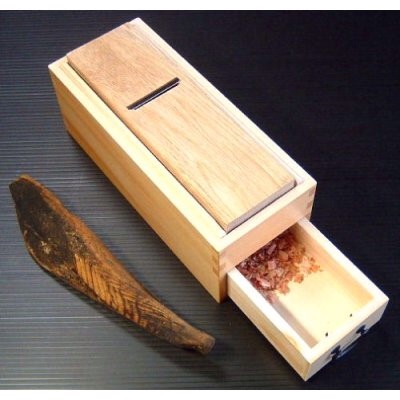
A piece of katsuobushi and the tool to cut the flakes (katsuobusi kezuriki-鰹節削り器)
Actually katsuobushi is not exactly just dried bonito, it also involves a smoking, drying and fermentation processes (arabushi-荒節 and honkarebushi-本枯節), and is usually referred by Japanese as the hardest food in the world. It can be made of different parts of the fish: back or belly, thus more or less fatty giving a different result. The katsuobushi is so hard that it is used in cooking by gratting it to obtain flakes on a special device called katuobushi kezuriki (鰹節削り器). Using this device requires a lot of technique to obtain beautiful flakes and a lot of energy and time. For my chakaiseki classes I learnt how to do it, but for daily use I prefer alredy cut flakes sold in small bags. These flakes are used in many ways (there will be soon a katsuobushi series or week!) and dashi is one of them.
So here are the basics about preparing katsuobushi dashi. The best is to use a water that is not too hard to obtain the most delicious dashi, and of course a good katsuobushi with a not too thin shaving (kezuri katsuo-削り鰹). A good proportion for a base for soup for two, or further cooking is by using 2.2 cup of water and 1 cup of katsuobushi. Heat the water to 85deg. Add the bonito flakes, boil for about 10sec, and then leave for about 1min off the heat. Filter.
With the recent boom of “back to the roots” and to traditions (mainly after the 2011 earthquake) and the renewal going on in Nihonbashi district in Tokyo, a number of very old and traditional shops have revamped their activities and in particular katsuobushi shops. There are now “dashi bar” where you can enjoy a cup of freshly made katsuobushi dashi, and believe me people are queuing for it! Ninben (www.ninben.co.jp) is one of the most famous in Coredo Muromachi.
In the summer of 2006 while browsing the internet to find some nice contemporary art event and exhibition I found information about the Echigo-Tsumari art triennale (ETAT) and some special performances that would be held on the week end, so we jumped in a car and drove up there with no plan but our “triennale passport” and triennale catalog. We completely felt in love with the concept of the triennale, the with the beautiful mountains and rural area. We also met there some unique people: S. and K. that have become very good friends and that work in Tokyo and live up there most of the time n their beautiful house by the forest. Since 2006 we’ve made trips there more than a dozen times, we’ve been there at every season, went snowshoeing in deep snow, attended new year ceremony in the local shrine, went to pick wild vegetables and herbs in spring, young wild bamboo shoot in the beginning of summer, seen traditional bull fight, the red leaves in the mountains in autumn and we have never been disappointed. This area of Japan is truly beautiful with a strong personality.
After some time when we couldn’t go because of too mush work on week ends and because of our new house in the country that needed some maintenance, we finally went again, and it was again the triennale. And again it was a perfect stay. Our friends always welcome us in their beautiful old house (that is not completely innocent in the choice of our own house in the country), they feed us with delicious local products and a lot of fresh vegetables from their potager garden, I usally cook with K., and then we drove all over the countryside small roads to visit the art space and see artworks. And we’ve came back to Tokyo with tones of delicious products. I have my shopping list ready anytime we go there: natural honey and pollen from Akiyamago, 2-5-8 to prepare my own salted pickles at home, Koshikari rice, buckwheat flour from Tsunan… Plus our friends always treat us royally with tons of gifts from their own garden which vary depending on the season. Though very short (we stayed only 2 days) the perfect summer break!
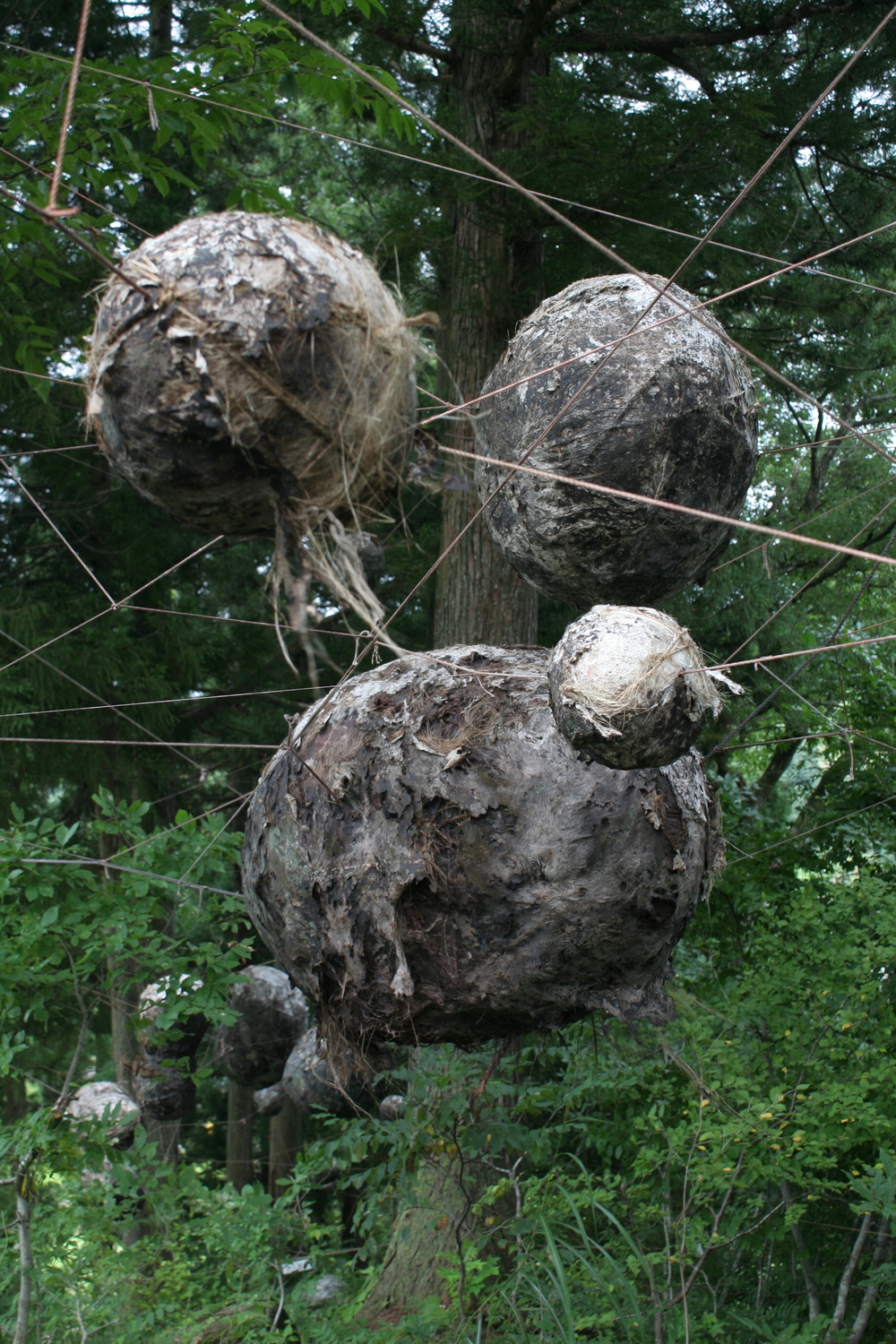
Installation from ETAT 2009
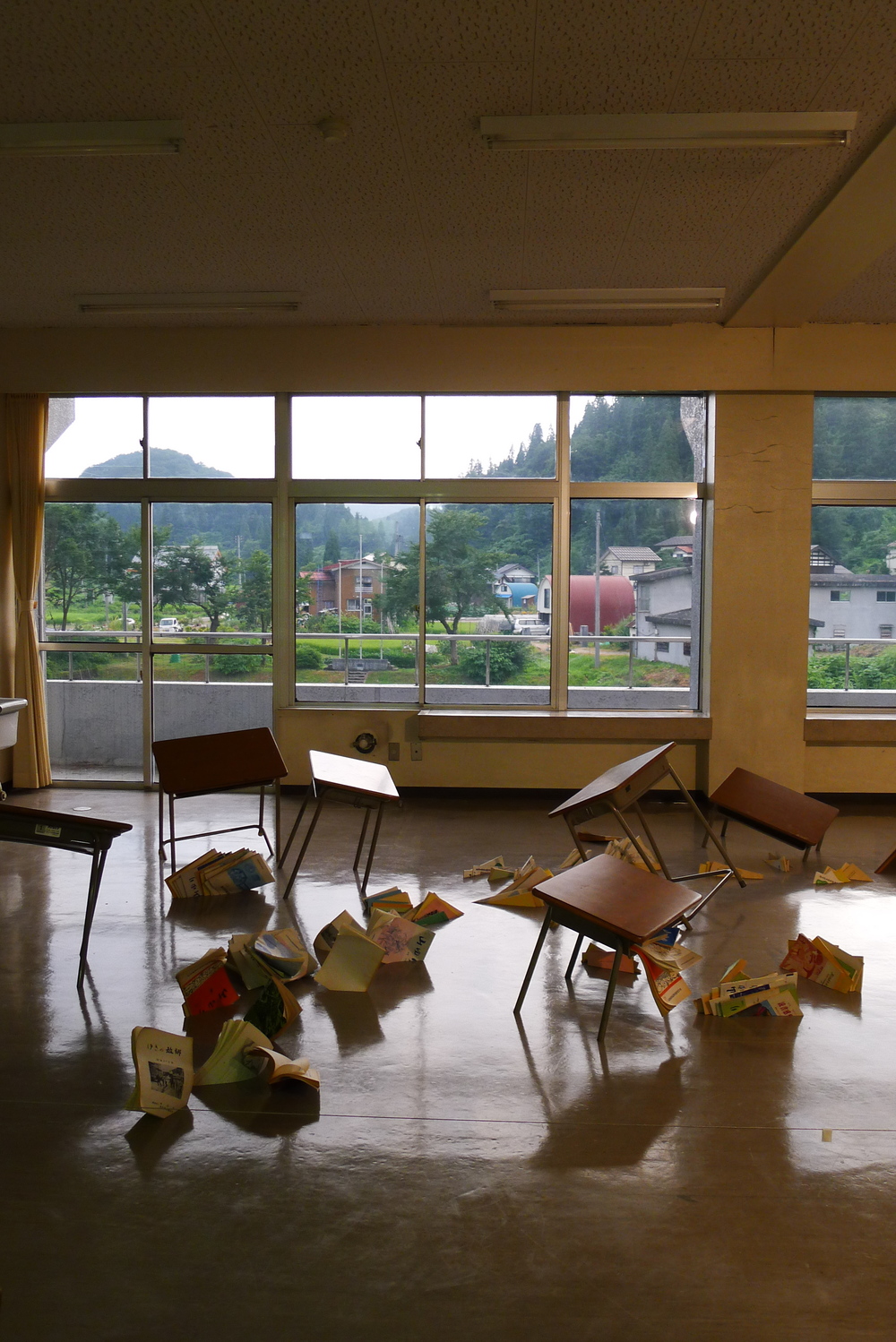
The concept of the triennale is quite simple, it is a contemporary art event that tries to boost this rural area that is depopulated and where there are many empty old houses, farms as well as unused schools because of the lack of kids. So a few houses and schools each time, and some outdoor spaces in the rice paddies, in the forest are also used for installation, exhibition, landscape art… Some of them also use traditional craft of the area, or local history. Since the very first edition in 2003 they’ve called for some famous artists such as Botansky, Turell, Kusama, Guo-Qiang… and mix with younger less known artists and art students. Of course the quality of the artwork is also very wide, but there is always very very nice discoveries. The art works span over an wide area, so driving is the most recommended, distances are not huge but roads are small and can be quite busy with beginners/paper drivers on week end so it takes time and it’s not a fun drive, week days are better for a more intense experience. There is also a number of performances: music, theater and experimental work almost every week worth checking.Since the triennale seems to be quite a success and drains a lot from of people from the city the event is slightly evolving and this time there were lot’s of temporary cafe in the main art spaces promoting local food (mainly for penniless urbanites so expect a lot of curry-rice). Local people are also selling local products, so it’s good to pack with an icebox in your trunk to bring back the country freshness to Tokyo!
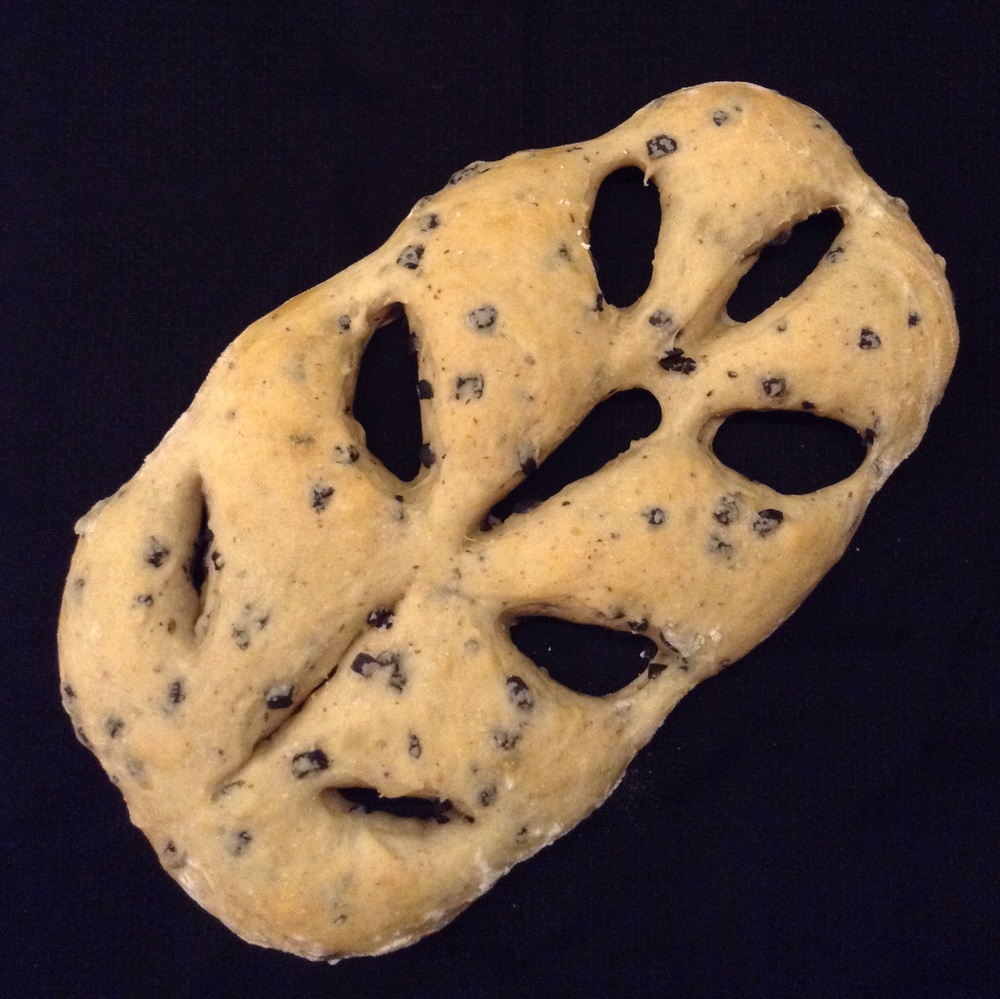
What’s better than a delicious fougasse to go with local cheese from Takahide farm? I’ve already talked about classic fougasse, this time I just added a little of black olives in the preparation. It gives a nice aspect to the bread and a subtle additional taste and texture. So delicious that my fougasses at home don’t last long.