Chickpea pasta

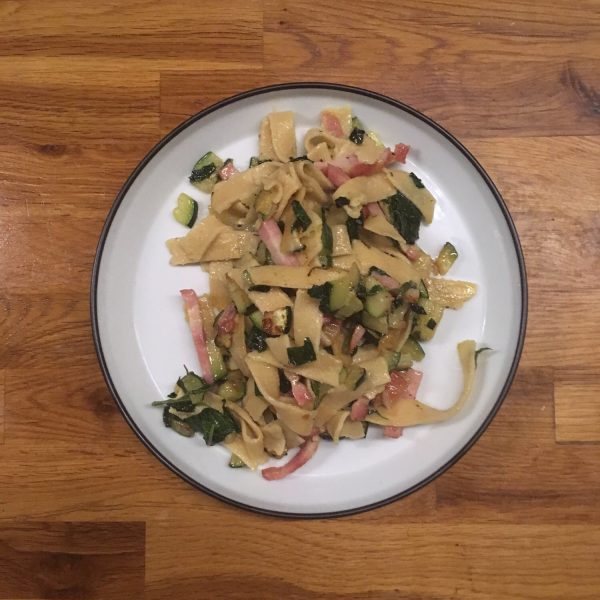
When we traveled to Australia last May, I’ve totally fallen in love with lentil pasta and chickpea pasta found in an organic vegan shop. I’m not particularly interested in gluten-free food but taste wise it was really very interesting. So I decided to try to make my own ones from chickpea flour. I knew it wouldn’t have the consistency of regular wheat pasta because it is gluten-free, so I was expecting something hard to roll, but in fact it wasn’t as bad as I imagined. I was first thinking of making farfalle, but I ran out of time, so I just rolled it manually and made some short tagliatelle. Again I new that long pasta wouldn’t hold together and that the pasta machine wouldn’t help here. The result was amazingly delicious. Probably even better with a stronger olive oil and cold. I served them with bacon, zucchini and mallow jute.

Definitely a recommendation and much easier to make than I thought!

Chickpea pasta

– 150g of chickpea flour, plus some for rolling

– water

In a bowl ready with the chickpea flour, a water little by little to obtain a nice mix, not too sticky. Set for rest for 1h.

Then knead a bit shain and on a floured top rolle the dough, cut the pasta.

Boil them and enjoy!!!
Wax gourd – 冬瓜

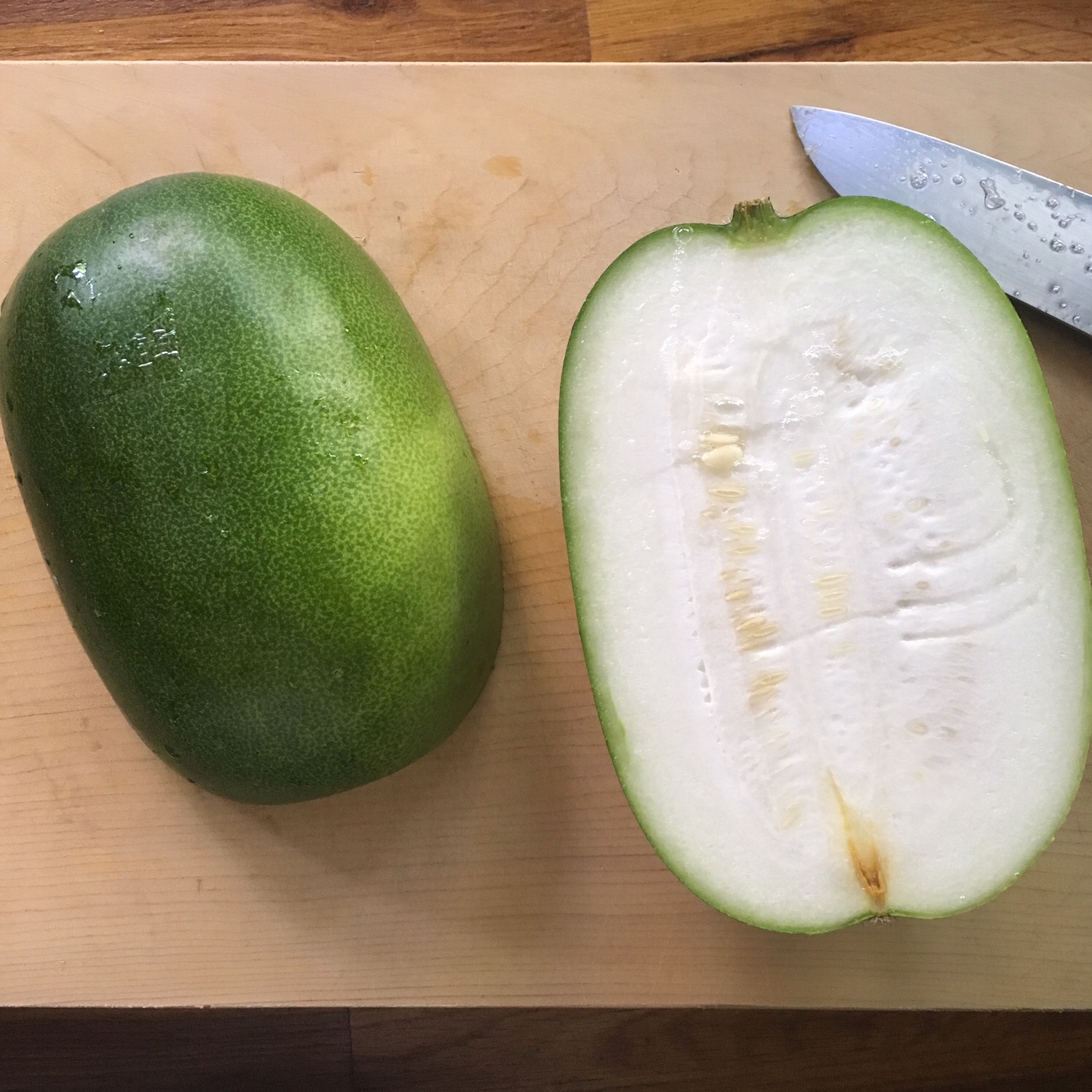
A few years ago (or in an other life… when I was managing time differently) I used to go to 茶懐石 chakaiseki cooking classes once a month. I learned a lot there, about classic Japanese cooking techniques, about Japanese sweets and about some ingredients I was never cooking. Wax gourd is one of them. It is a very delicious vegetable but when you don’t know what to do with it… you just don’t buy it… until this class of July where I was in charge of cooking some, to be served with somen (thin noodles eaten in the summer) and red snapper. And I lived that dish so much that I remember preparing it for friends coming over for dinner.

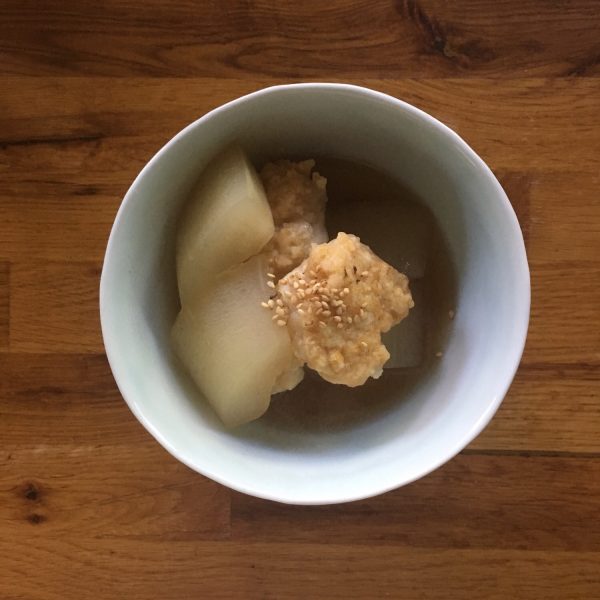
The season for wax gourd has come again and I bought some. I was fancying preparing the same recipe but the heat and our busy schedule changed the plans and I decided to invent a new recipe using the same base. No somen (too heavy for the very hot days) and instead of red snapper (no big one found) I decided to prepare Isumin pork meat balls. Still served with a great dashi. It was super delicious. Here is the detailed recipe.

Wax gourd and meat balls (for 2 people)

– 1/2 wax gourd or 冬瓜

– 100g of pork ground meat

– 40g of potato starch or katagiriko

– 1/2L of katsuobushi dashi

– 2tbs of soya sauce

– 2tbs of sake

– cooking oil

Cut and peel the wax gourd and cook in the dashi with the soya sauce and the sake until a toothpick enters smoothly.

Heat the oil in a frypan. In a bowl mix the meat and the potato starch. Form small balls and fry them until golden.

In bowls serve the wax gourd, the meat balls, then add some of the wax gourd cooking liquid. Top with a few sesame seeds. Enjoy!

Malabar spinach & okra

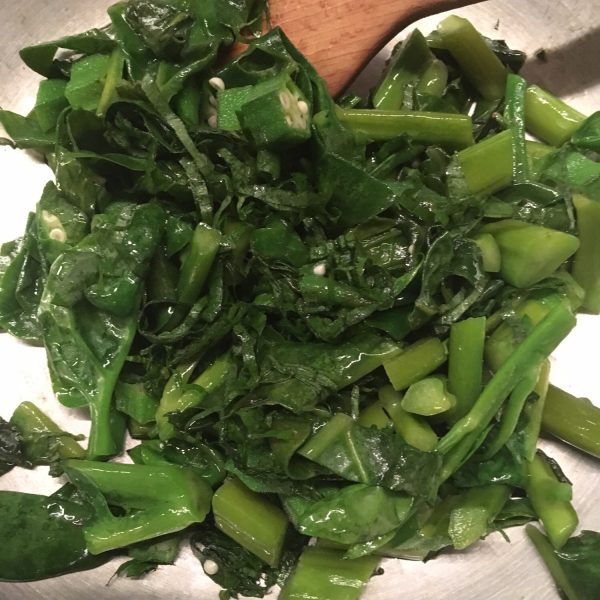
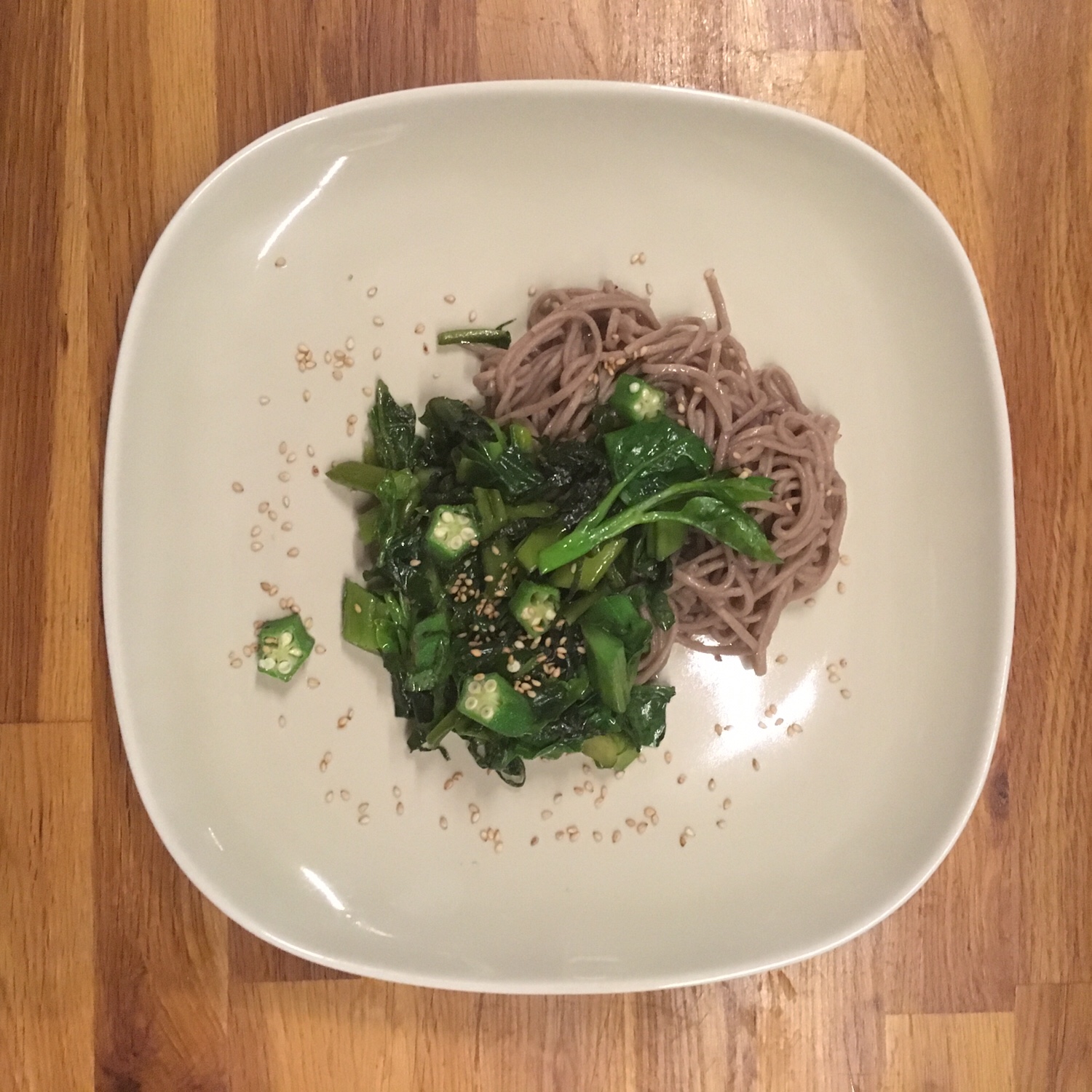
Now that the summer is blasting the green vegetables options are narrowing. Over the zucchini and the French beans… cucumber, jute mallow and okra are the most important green staples for me… but the Malabar spinach is curiously still on the market stands. I love Malabar spinach so much that I continue buying some anytime I see some… and I just discovered that Malabar spinach and okra are a perfect match, and even better when you add shiso.

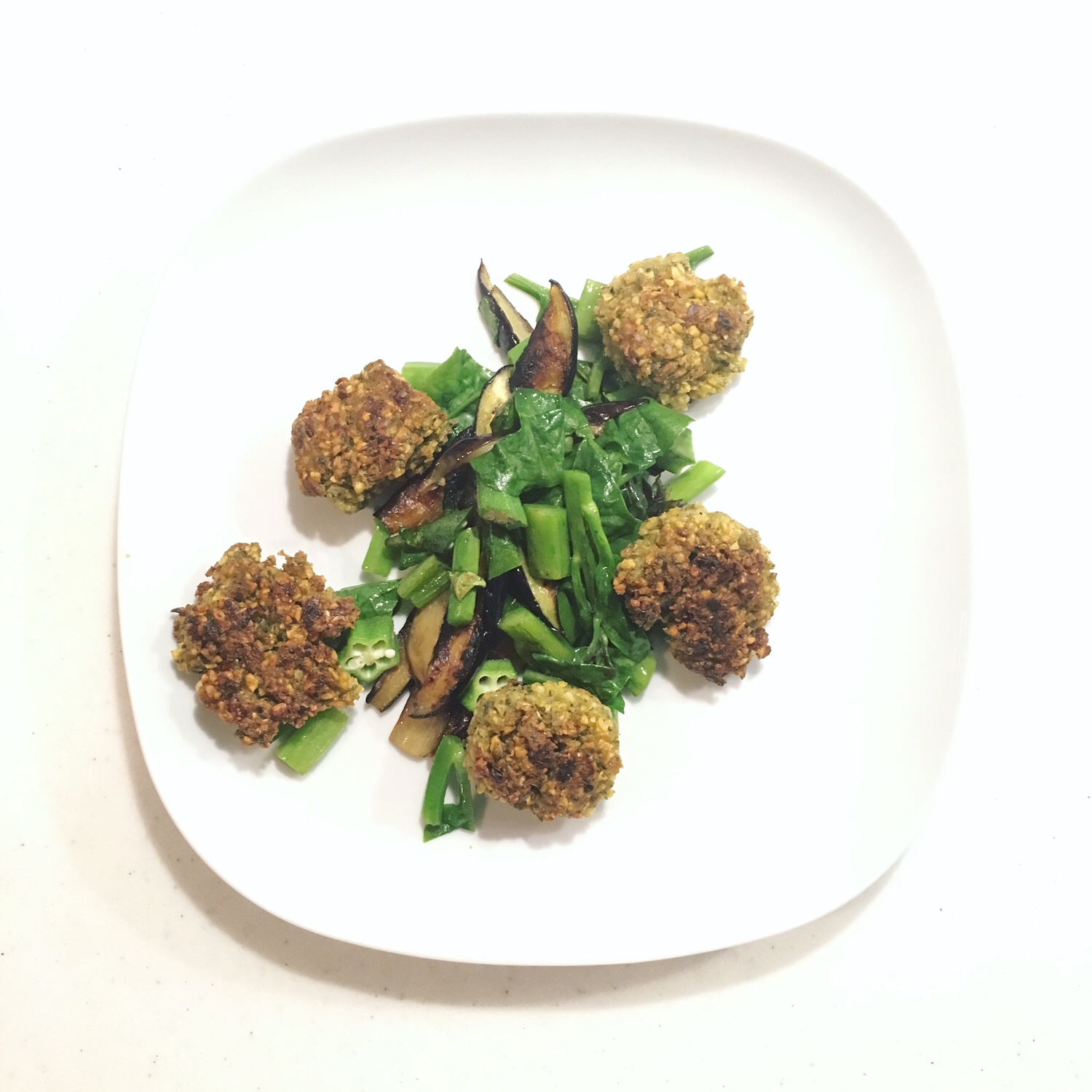
I simply wash and cut the Malabar spinach and the okra and cook them at medium to high heat in a greased frypan. They both must stay crisp. I then add a few leaves of shiso chopped thinly. I serve it with soba or with falafel, but it can be used with anything else: grilled fish, grilled chicken, plain rice, grilled eggplants…

Have a great Sunday!!

Goya chanpuru

In Okinawa cuisine they use a lot of pork meat and of goya, a bitter melon. Goya in Okinawa is delicious, but goya is a vegetable I never buy in Tokyo, because the ones you find in supermarkets are usually horribly bitter and hard (I did try a few times a long time ago…). There are a few tricks to remove the bitterness but normally you shouldn’t even need it… When someone give me one from their garden they are usually very delicious and not bitter at all, then I am more than happy to cook it. And one of the most classic recipe is goya chapuru ゴヤチャンプル. A traditional recipe from Okinawa with goya, tofu, pork meat and eggs. Sometimes moyashi (sprouted soya beans) are added… the pork meat is usually thin slices of pork belly or ribs, or in cheap version Spam. And it is seasoned with sesame oil usually but not always.

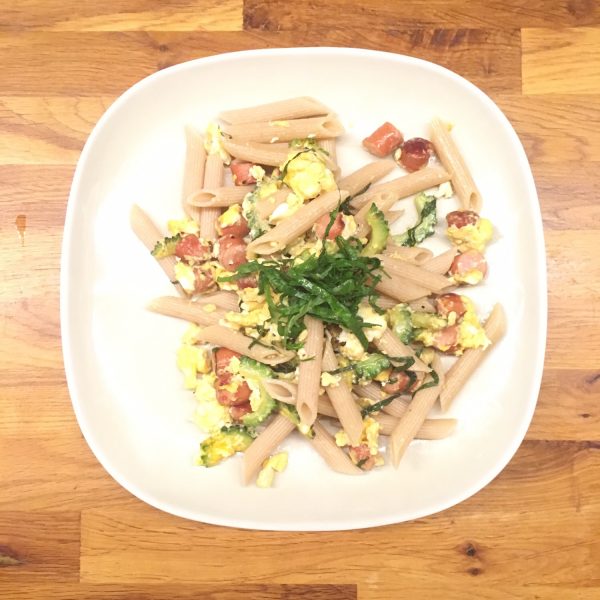
Since I received a beautiful goya And it’s been a really long time I haven’t I was really happy to cook it. With the heat and beautiful weather an Okinawa style preparation was perfectly adequate. Except that I didn’t have tofu and wanted some carbs to make the meal nourishing. I opted for a version of whole wheat penne with a goya, sausage and eggs preparation very similar to goya chanpuru. I used olive oil though rather than sesame oil. I simply cut the sausages in bites, grilled them in a frypan slightly greased, then added the goya, halved and sliced (and the seeds removed) and once they have soften with the heat I had 4 eggs beaten and stir regularly. I served it on top of the boiled penne and added olive oil, salt and pepper to finish.

Caponata

When you are super pleased to invent a new recipe that looks like delicious… and talk about it over the phone with your mom and she tells you that your brilliant idea not only already exists but is actually a classic Sicilian recipe!!! I must have Italian blood at some point!!!!

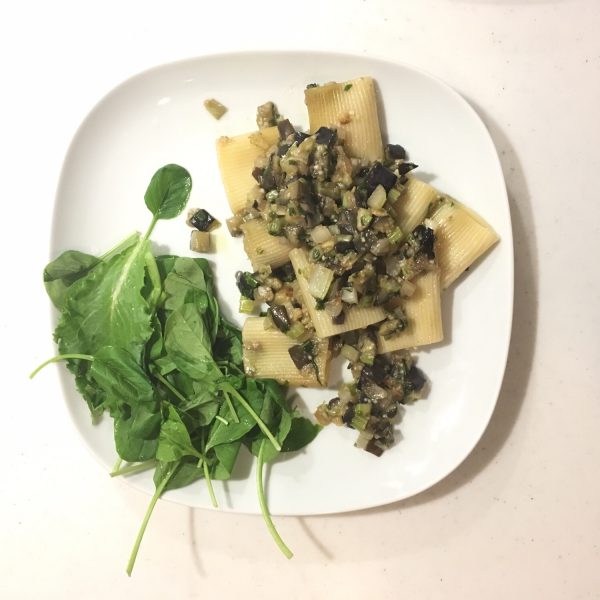
Anyway, this brilliant and delicious summer recipe is caponata! Serve with giant pasta and a bit of salad on the side. Here is my recipe.

Caponata (for 2 people)

– 3 Japanese eggplants

– 1 branch of celery

– 1tsp of capers

– olive oil

– 1tsp of vinegar

Dice in small cubes the eggplants. In a pan heated with olive oil cooked them at medium to high heat until golden. Stir often. Wash and dice the celery, up to the leaves. Add to the eggplants. Cook for 5-10 min at medium heat. Add the capers, and finish with the vinegar. Eat like that or with pasta as presented in the picture. Also good with grated Parmigiano.

Wafu pasta

The way of preparing pasta is unlimited and using Japanese ingredients with pasta may be really strange at first but it is not at all so strange in the end, it’s actually rather good. They are called wafu pasta (和風パスタ) and are actually quite common in Japan, they are regular pasta (most often spaghetti) with a dressing that uses Japanese typical ingredients such as meitaiko, nori… At first I didn’t like this mix too much, probably because it is often served in old not so nice cafe places, but I slowly got used to the idea and actually now enjoy preparing some.

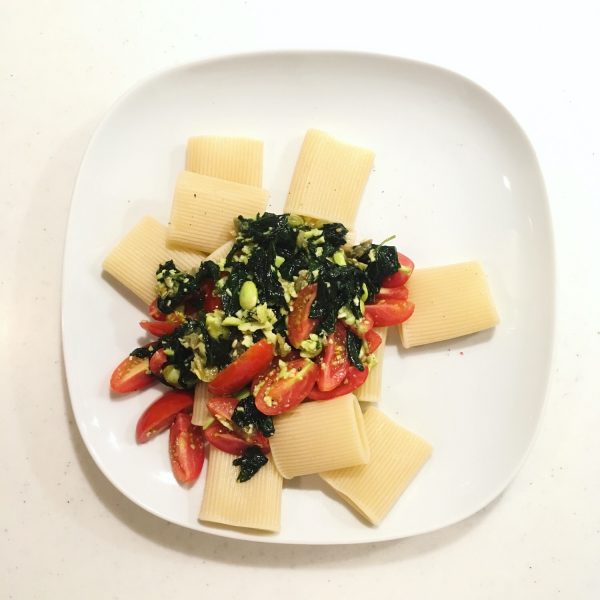
I prepared a summer wafu pasta recipe with crushed edamame, jute mallow and tomatoes with olive oil. It is so simple but so fresh and summer like that I’m thinking I will prepare more wafu pasta in the future!

In the mean a typhoon is coming to Tokyo, keep dry and safe and have a nice weekend!

Anchovies and grapefruit pasta

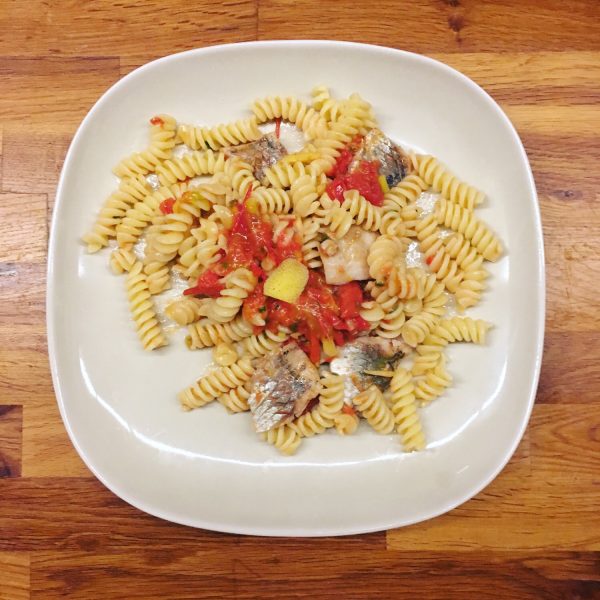
The weather in Kanto area has been quite amazing these past weeks. The summer is blasting with a real summer heat and sunny days or with just a few clouds are following each other without a drop of rain. Even the evening storms are not really coming… with such heat cooking is becoming more complicated because the kitchen quickly becomes very hot and one would usually prefer preparing raw food: salads and salads. But I don’t mind cooking in the heat if it is for preparing something new and good. So largely inspired by the classic Italian gremolata recipe I prepared a new recipe using fresh anchovies (I found anchovies prepared for sashimi!!!), grapefruit (I got from our neighbor garden) and fresh tomatoes, to serve with pasta. And it was fresh and nourishing, exactly what I wanted!

Anchovies and grapefruit pasta (2 people)

– 1/2 grapefruit (we use both juice and zest)

– 2 large ripen tomatoes

– a dozen of anchovies, fresh, boned etc…

– olive oil

– salt and pepper

– 125g of dry pasta of your choice

Boil water for the pasta and cook the pasta.

In a pan heated add olive and the tomatoes washed and diced (if the skin is thick, remove the skin by plunging the tomatoes in the boiling water for the pasta). Cook at high heat and stir once in a while. Once the juice has reduced add the juice of the grapefruit, the zest of 1/4 of the grapefruit and the anchovies, stir a little bit. Add salt and pepper. Add the drained pasta and stir well.

Serve and add a bit more zest for plating. Enjoy!

Some new greens

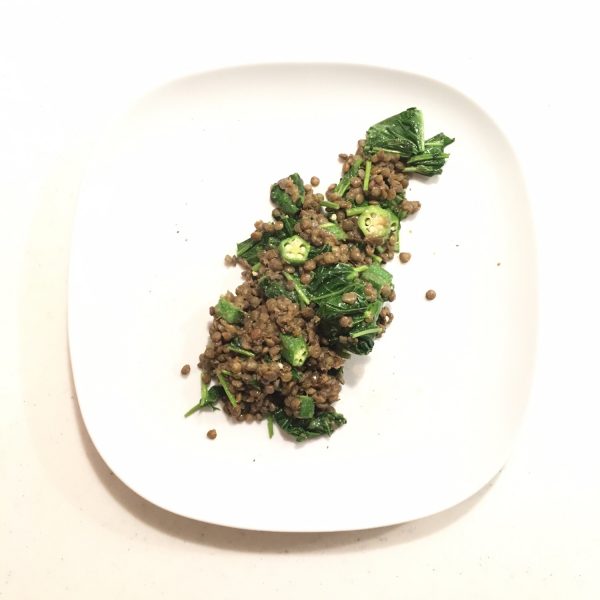
Every season brings a new kind of greens to the table, not just seasonal but also things I have never seen or cooked before. That’s what is fun with shopping at local farmers markets. Each one has some different products. When I shop in Ohara, I don’t find the same things than when I shop in Kuniyoshi, 10km inland or in Ohtaki, just a little further inland. There is always something I have never seen, or something rare in Ohara. For example cresson cannot be found easily in Ohara but inland yes!!! This time I’ve found a new type of green with beautiful thick and shiny green leaves and hollow stems. I used them like spinach somehow but it has a more grassy taste. And with the heat settling in Tokyo I prepared a simple dish with French green lentils, this new green blanched with okra, olive oil and curcuma.

Stay cool!

Jute mallow

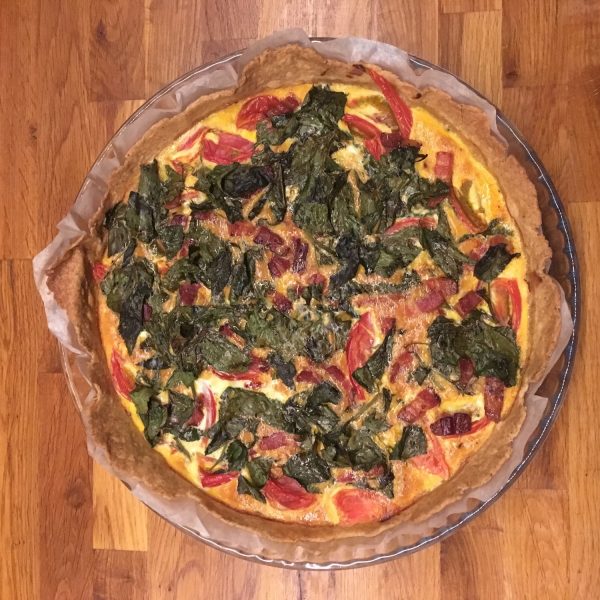
モロヘイヤ (say moroheiya) or jute mallow is a summer green that us eaten often in Japan in miso soup and tempura. I’ve known it for long but was barely cooking it until last summer when we visited our friends in Tsunan and K. prepared some. This little green plant is like okra or yamaimo, it becomes a bit slimy when cut and even more when heated. I know that many people may be disgusted by the slimy aspect and texture but honestly for me, as soon as it is vegetal I don’t mind. And jute mallow is really nice in many other preparations. I use it with eggs in omelets or scrambled eggs, in stir fried vegetables to serve with rice, and in quiche which is today’s recipe.

Jute mallow and mustard quiche

– flour, water, olive oil for the pie crust

– 2 handfuls of jute mallow

– 2 tomatoes

– a piece of smoked bacon (optional)

– 2 tbs of mustard

– 3 eggs and some milk for the egg base

Prepare and roll the dough in a thin layer to set in a large pie dish. Spread the mustard on the pie crust.

Wash the tomatoes and chop them. Wash the jute mallow and remove the thickest/hardest parts if any. Chop and grill the bacon.

Beat the eggs and the milk, add the bacon and vegetables. Stir and pour in the pie crust. Bake for 40min or until golden. Enjoy warm or cold!

Proudly powered by WordPress | Theme: Baskerville 2 by Anders Noren.

Up ↑

Verified by MonsterInsights