Leftover Italian cooking

Since we’ve arrived in Florence, everyday I’ve been cooking something different for dinner: simple vegetables and salad, pasta, risotto, cereals… I’ve tried them all. And I’ve been using as much as possible things I don’t usually find in Japan, and that I love extremely: artichokes, fennels, lamb lettuce and a great variety of cheeses. And what I’ve been doing is make sure that each time I would have some leftover for my lunch the next day. Indeed, what’s better than working all morning, going for a walk at noon, coming back at two cold and starving, and having already the lunch half prepared? And what’s better than olive oil pan roasted pasta or risotto when them become all crispy and golden? For me leftovers are a real treat! And top them with some new sort of cheese everyday and it’s pure happiness, and pure energy for working the rest of the day!

Here are my two favorites from this week: leftover pasta with newly added artichokes, and fennel risotto with newly added plenty of tomme cheese. For the first one (top picture), simple pasta leftover is good. Then boil one or two artichokes remove the leaves and keep the hearts, slice or chop them. In a heated pan generously add olive oil, the pasta, the artichokes. Stir once in a while until the pasta are golden crispy. Top with a bit of parmigiano and eat right away!

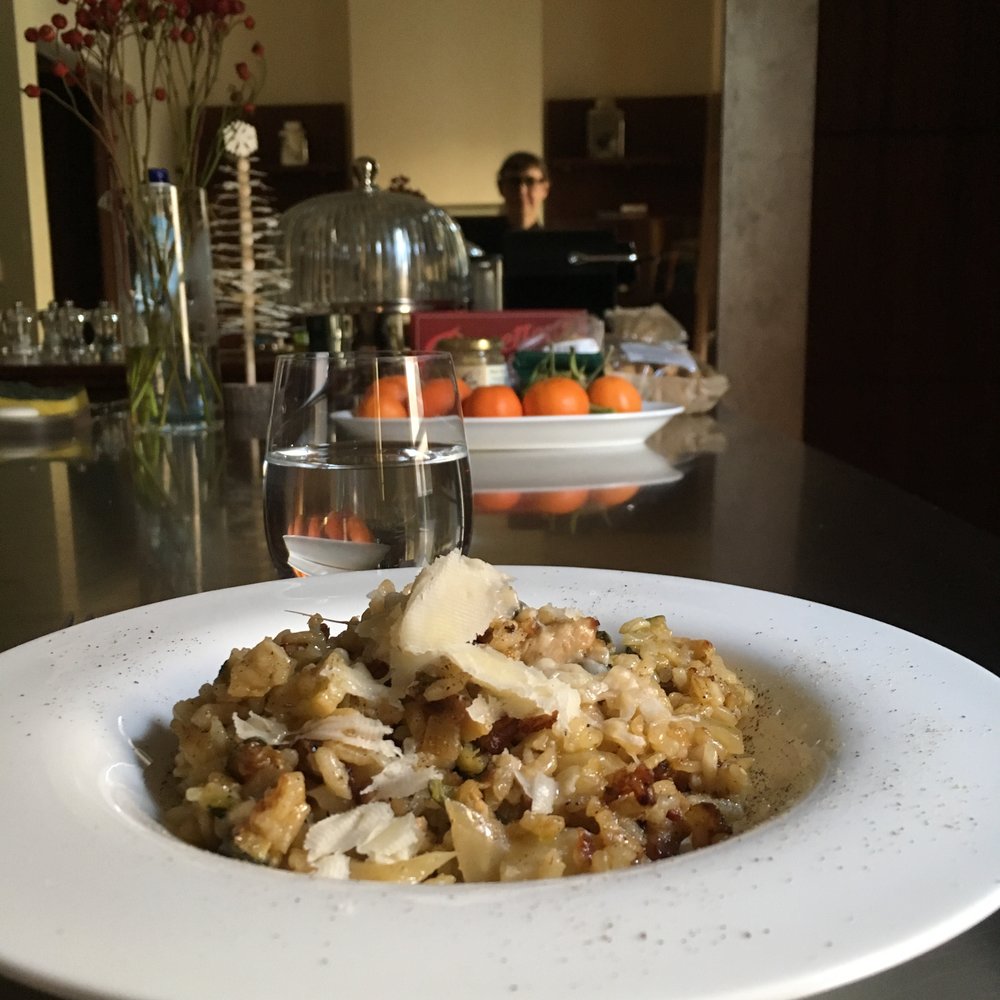
The second one (bottom picture) is even simpler. I actually made some fennel risotto with some pork roast, so I just cooked it again in a pan with a lot of olive oil and didn’t stir until it got really crispy on the edges, then I served it with plenty of some tomme cheese I bought at the market, a much softer cheese than parmigiano but not less fragrant.

Mezzelune

For those who’ve been following us, they know that I love to make fresh pasta, and even more stuffed pasta like ravioli (all my recipes are here!). I’ve been testing many options and yet I was satisfied but never fully satisfied by the result, in particular the pasta itself, but not only, though the taste was always really delicious. So while in Florence and A. too busy with work, I decided it would be a great opportunity for me to learn from a real Italian “Mama” or a real chef. My first idea was to go to Giula’s cooking classes at Juls’ kitchen, but it’s too far away from the city for this time, I’ll go later in the spring… I wanted something that wouldn’t take more than 2h. So when I found the cooking classes at the mercato centrale (again mercato centrale… which in the end I’ve been visiting every day!), and that they just had a vegetarian mezzelune class at the perfect timing for me, I had to go!
And I didn’t regret it, I made some of the best pasta ever I think, because thanks to the chefs I’ve finally learned the tricks that where missing to me:
1. it’s OK to knead a lot the pasta and really use the palm of the hand to squeeze it;
2. let the pasta dough rest before rolling it so that the glutinous structure has time to develop;
3. roll and fold once first before rolling for real;
4. and that’s the most crucial, get the sauce moisten (with some of the boiling water for the pasta) and after boiling the pasta add them to the sauce pan at medium-high heat, shaking regularly, so that they roll over in the sauce and it becomes just creamy, neither to watery nor too dry. Serve and it right away!
So now I feel really equipped to prepare more stuffed pasta!!! And I can’t wait to have my new motor for my pasta machine!!!
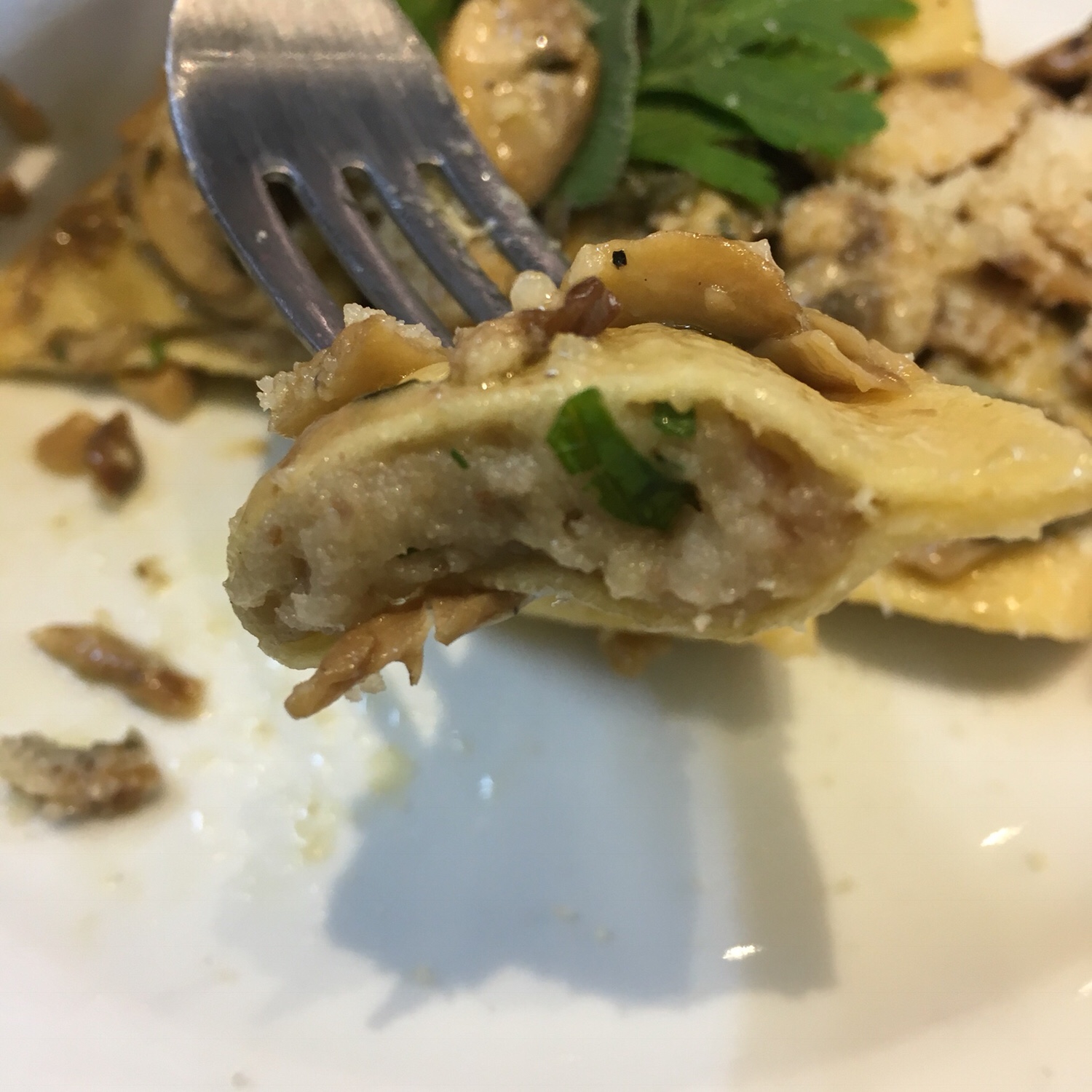
And because this something I would have never prepared, but it was really delicious, here is the recipe of the mezzelune I made.

Potato and chestnut mezzelune (for 2, makes 8-10 mezzelune)

For the pasta:

same recipe as usual: 100g of flour, 1 egg, olive oil (or not)

For the filling:

– 2 small potatoes

– 1 handful of boiled chestnuts

– a bit of parsley

– 10g of butter

– 20g of grated parmigiano

For the sauce:

– 5 mushrooms

– 1 little handful of dried porcini

– olive oil

– 15 g of butter

– 4-6 leaves of sage

– 30g of grated parmegiano

Start boiling the whole potatoes with the skin, simply washed and add the chestnut to soften them.
Re-hydrate the porcini.
Prepare the dough for the pasta , wrap it and keep it on the side.
Clean and peel the mushrooms, chop them, chop  the sage. Drain the porcini and chop them. In a pan heated, add half of the butter for the sauce,  a splash of olive oil, then the mushrooms, the porcini, the sage, cook at high heat until it start to golden, then lower the heat, add some hot water and keep cooking all along, while keeping it moisten.
By now the potatoes should be ready, so peel them and chopped them roughly. Mash them with the chestnut (a blender may be welcome here), add the parsley, the parmigiano and stir well to obtain a creamy-dry paste. Roll the pasta, cut out circles and start filling with the filling. close well.
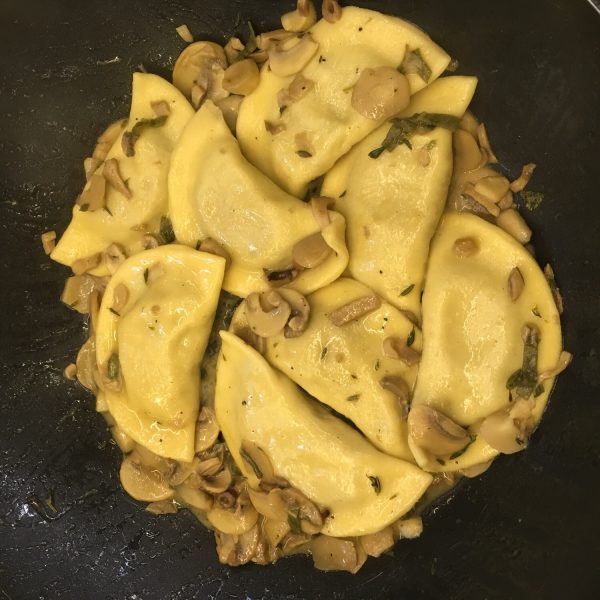
Boil the pasta for about 4-5 minutes, then drain and add them to the sauce pan directly, add the rest of the butter and shake in the pan at high heat, until the pasta has rolled over in the sauce and the sauce has reduced to a creamy texture (look at the top picture at it looks like!). Serve, top with a bit of parmigiano, and enjoy!

Muscovado scones

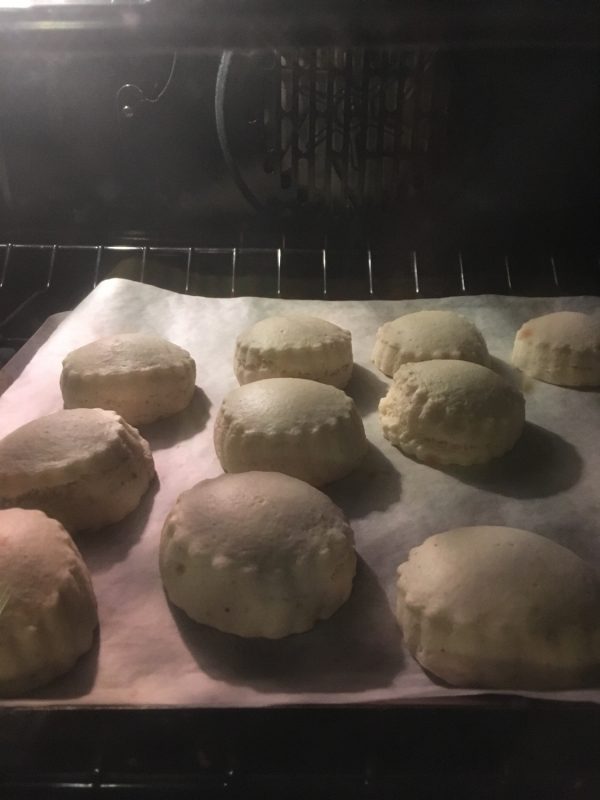
We are lucky to have a friend whose parents live in Okinawa and send regularly some delicious, organic products from there. One of the famous staple from okinawa is muscovado sugar (黒糖 こくとう kokuto) . Muscovado sugar is basically unrefined sugar cane, rich in minerals and with a distinctive dark color and a strong taste. Though it sweetens like other sugars, the taste is not neutral and then cannot be used everywhere. But for recipes like plain scones this is a perfect use, and it is nice to keep a few blocks so that it melts when baking. So for this recipe I simply replaced the milk in the scone recipe by a handful of mucovado sugar melted partially in a bit of hot water. Then I simply prepared the scones as usual and eat them with some butter or rose bud jam from Miyakojima too.

Typhoons

It’s the second weekend with a typhoon this month and the third all day rain weekend. Busy with a lot of work, we decided to stay in Tokyo to see some friends, go to the movies, see an exhibition and … work… It was also a good opportunity for me to get familiar with my new oven. So I baked scones Saturday morning and tarts/quiches on Sunday. And I start to get use to it!  Since I had some leftover brown rice I made a new version on my brown rice quiche. Also with leek, but this time I simply chopped thinly 3 Japanese leeks and cooked them in a bit of butter at very low heat, until they were all creamy and topped the pie crust baked simply without nothing. Perfect match of crispy/creamy texture. I served it with a cresson soup. Simply boiled the cresson with some stock of your choice. Blend, add some cream, and serve. That’s it!

Have a beautiful week!! 

 Baking scones
Baking scones

Butternut squash and pasta

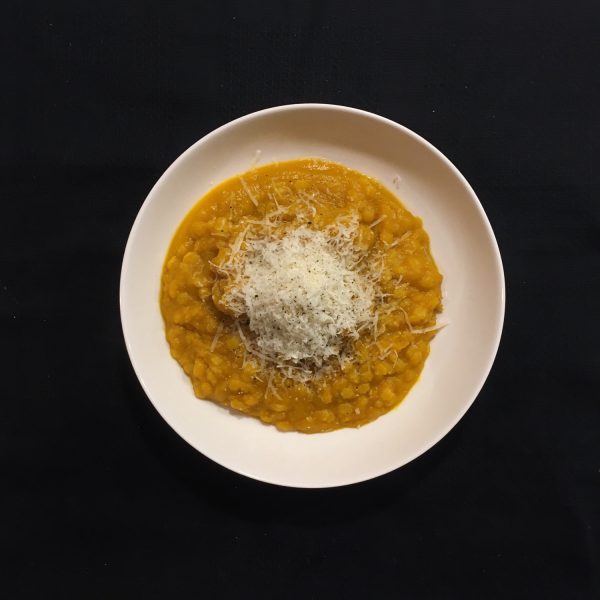
I’ve been posting a lot about butternut squash these days, indeed it’s the pick season now before shifting to kabocha which taste is very different. And since I’ve been living alone in the past weeks, one butternut squash is a lot of food for one, so I’ve cooked it one way, an other, and an other… and tried to find new ones… Last night I came back late from work but at last the rain had stopped so I could walk home using a detour to enjoy being out. But it was really cold. I almost regretted not having a beanie. So I arrived home craving for something hot to eat. And I was pleased to find some leftover butternut squash soup in the fridge. Yet I was starving and it was not enough. So after browsing my cupboard and the fridge I opted for short pasta that I simply threw in the soup that was already boiling and I cooked 10-12 minutes until the pasta were soft and the soup has almost reduced to puree. I generously gratted fresh parmigiano on top and added black pepper. And I was very happy with it!!!

Vegan butternut squash soup (2 or 3 servings)

– 1/2 or 1/3 butternut squash

– 1 cup of soya milk

– salt and pepper

Peel the butternut squash and remove the seeds. Cut in pieces. Boil in 1L of water. Once soft enough, blend everything with the soya milk, salt and pepper. That’s it!  It’s basically the same recipe as the cauliflower soup!

Then you can add the short pasta. I chose stelline. And cook them together in the soup. For a better result use fewer water to cook the butternut squash or as I did, use left over soup.

Simply simpler

No time to fix dinner? Don’t worry, I’ve just found a new preparation for sweet potatoes, and it’s so simple and delicious that it surprised myself. This is a sweet potato soup. But usually sweet potato soup means, that first you cook the potatoes, then blend them, add some cream or whatever and then eat. Last night I didn’t want a soupy soup, but rather something with a mix of textures. So here is what I did and turned superb! 

Sweet potato rough soup   2 servings

– 2 sweet potatoes

– black pepper

– parmegiano (optional) 

I washed 2 sweet potatoes and sliced them. Then in a pan I started to cook them, with just a bit of water to cover. I cooked them at high heat under cover without touching them once until all the water had disappeared and the potatoes started caramelizing in their own juice. Only then I stirred well and started to break them with a wooden spoon. Finally added water again to cover them, and bring to a boil. Add some black pepper, and served. Topped with parmigiano slices.

Kabocha soup

Autumn seems to have arrived. Mornings and evenings are much chillier and days are getting really shorter already. So it’s time to prepare some warm simple soups. After eating so many butternut squash, now I have started to cook kabocha. This little Japanese pumpkin with very green skin that can be eaten too. And making soup with it is really simple and it always make a good starter or a whole meal if accomodated a bit with crouton or grilled bacon. Here is my basic recipe. 

Kabocha soup for 2 or 3 people. 

– 1/2 kabocha

– 1L of water

– 1 little pack of fresh cream

– 1tbs of soya sauce

If you want your soup orange remove the skin, if greenish is ok for you wash the kabocha and keep the skin. Remove the seeds and cut in pieces. Boil in 1L of water under cover. Check the cooking with a toothpick. When very soft stop. With a wood pestle work directly in the pan and purée the kabocha (you can use a blender also if you want!). Add the cream, the soya sauce. Heat before eating. Add black pepper, bacon, parmegiano or whatever you like!!!

Some kinds of pizza

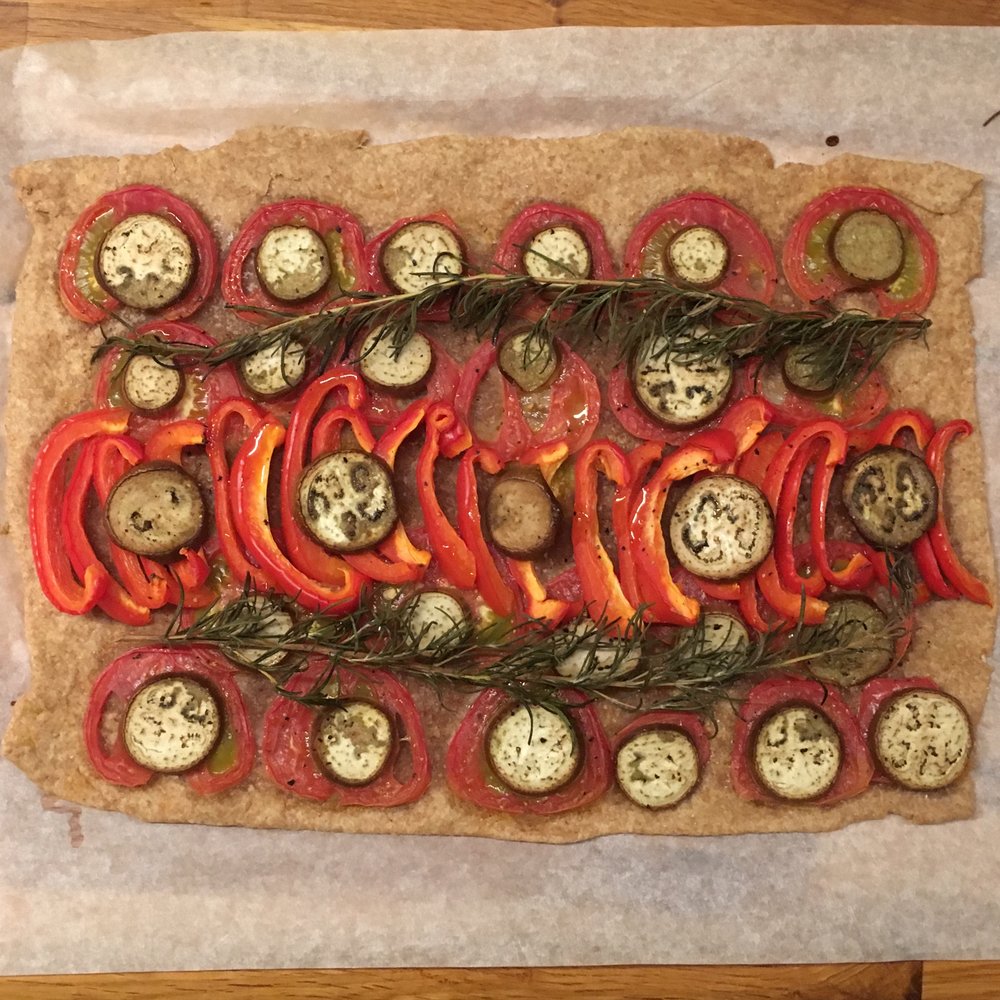
I can’t realize that we are moving in 10 days. It’s seems so far away and so close at the same time, there is so much at work at the same time that it is hard to realize. I’m quite excited because I will have a new kitchen to play with and a bigger oven in Tokyo than my mini one. At the same time I will bring my mini oven to work, which means that I could cook more at work!!! Speaking of ovens, recently I’ve been making things that look like pizze but are not trully ones. May be I was inspired by the macrobiotic aburage (fried tofu) pizza I saw on IG by @rikako.salon_de_r. Once I made the base crust was a pie crust with whole wheat flour, topped with tomatoes, eggplants and red bell peppers, rosemary and olive oil (bottom picture). The second time I made a fougasse or focaccia preparation then topped it with blanched spinaches, cherry tomatoes and for those who like, fresh mozzarella from Isumi (top pictures).

These are perfect for still hot sunny days of September, using the last of the summer vegetables, good eaten just out of the oven or cold. 

Butternut squash…

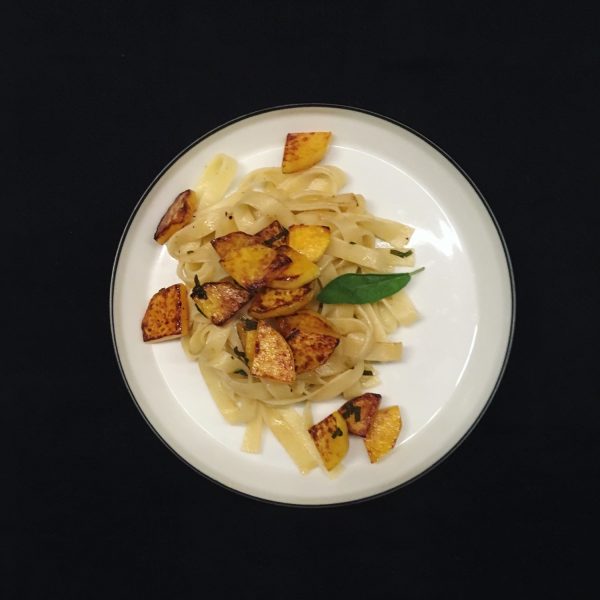
Since last autumn there has been a lot of butternut squash on the shelves at the farmers market, really a lot! I love to cook it because the taste is more subtle than that of kabocha. So since we came back from the summer holidays I have cooked plenty: in lasagna, in cold soup, in risotto, there is also ravioli… Since the summer seems to be completely finished: no very hot days anymore and the nights are almost chilly, it is a perfect ingredient to make the transition to autumn cooking. Last night I prepared it in a new variation. Instead of steaming it I cut it and cooked it in a bit of butter in frypan with fresh sage from the garden. I used it to accomodate some simple tagliatelle. Of course you can replace butter by olive oil, but sometimes it feels like cooking with butter. Add some fresh sage of top and some black pepper.

I wish you a happy September and a great week!

Proudly powered by WordPress | Theme: Baskerville 2 by Anders Noren.

Up ↑

Verified by MonsterInsights