While the summer plays hide and seek, the summer vegetables are still around and should be for a few more weeks.
The great star of the summer in my kitchen this year is eggplant 🍆. We always eat a lot of eggplants in the summer, but this year it looks really like we are eating even more. Last week recipe was a great example but there is much more to do. And today I share with you another Japanese eggplant recipe, vegan this time, as simple as the previous one but with a different set of flavors.
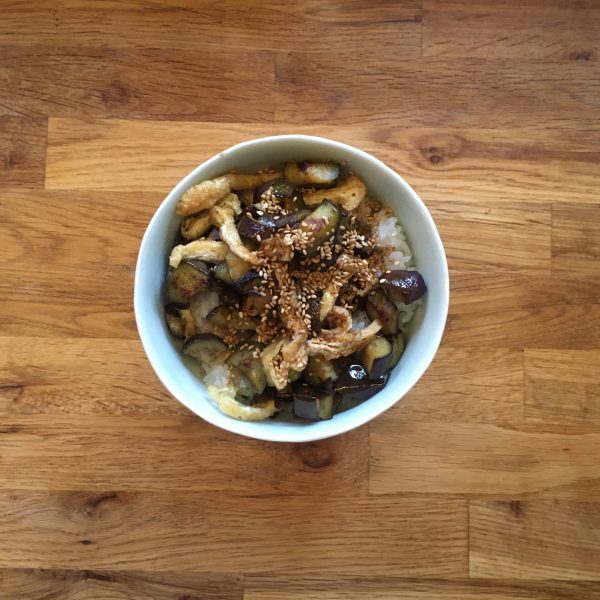
Sautéed eggplants Japanese style
2 Japanese eggplants
1 aburage pad (thin fried tofu sheets)
1 tsp of sesame seeds
1tsp of soya sauce
1tsp of cooking oil, I usually use olive oil no matter what but sunflower or rice oil are OK too
Wash the eggplants and dice them. In a pan set the cooking oil snd heat. When hot add the eggplant and cook at high heat while stirring often. Slice thinly the aburage. Add to the eggplants. Cook and stir until the eggplants are creamy. Add the sesame and soya sauce, stir and serve.
While the base is the same as the perfect eggplant recipe, the flavors are very different. I actually recommend to cook both and compare. It’s perfect to understand umami.
Eggplants in Japan are really something, not just a vegetable but also a mean of transportation, together with cucumbers, for spirits that come to visit during the Obon period.
In Japanese traditional cooking they are often present and prepared in many ways with the other local and seasonal staples. I have introduced several recipe already, yet I surprise myself with new recipes every time I cook some. Recently I have been really into grilling them in the oven without any further complications, and dress them either western style with olive oil… or Japanese style with soya sauce and katsuobushi. I really love the simplicity of a dish that highlights the goodness of a few ingredients. So here is my recipe of the perfect eggplants Japanese style.
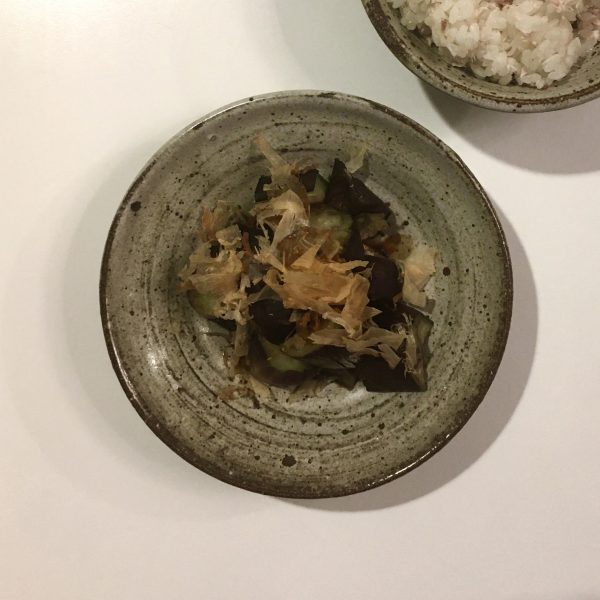
Perfect eggplants Japanese style
2 Japanese eggplants per person
1tsp of soya sauce per person
1 large pinch of katsuobushi per person
Wash the eggplants, and cut them in half in the length. Grill them in the oven until they are soft and a bit golden on top. Take them out and let them cool down a bit. Cut each in 5-6 pieces (bite size), just before eating dress them in a plate, top with soya sauce and katsuobushi. Eat immediately.
I often forget how much we love boiled potatoes. I always have the impression it takes longer to prepare than other ingredients and usually our carbs end up being either pasta, or rice, or a dough of any kind: a quiche, a pie, a stuffed bread etc… You can argue that making a quiche or stuff bread takes more time than boiling and peeling potatoes and you are absolutely right!!!!
So, once in a while I remember how much we love them and boil a few. And when the season of cucumber is at its peak I love to make potato salad.
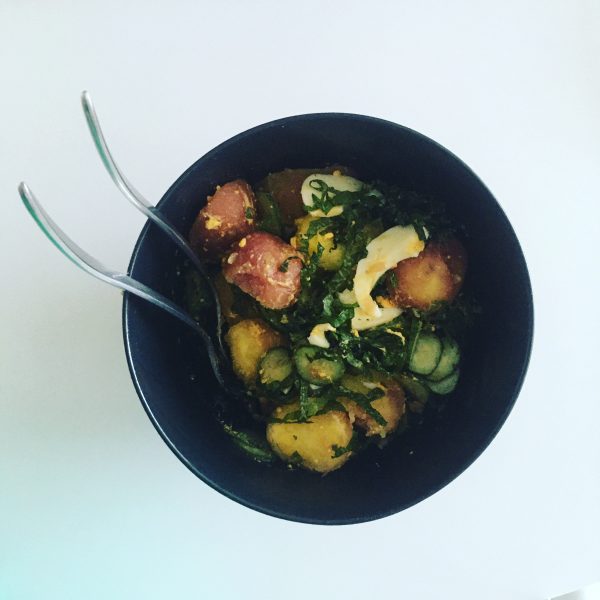
One can think of so many variations of potato salad that two are never the same! Once thing that I really love is the mix boiled potatoes and hard boiled eggs, and since I had a lot of fresh green shiso leaves I decided to prepare a potato salad with Japanese flavors. It was simple and quick to prepare, nourishing and tasty. I highly recommend you try it!!!
Potato salad with Japanese flavors (2 servings as one plate dish)
8 potatoes (ping pong ball size)
1 Japanese cucumber
2 eggs
5 leaves of shiso
1tsp of soya sauce
2tbs of olive oil
Boil the potatoes, and the eggs. Once cool peel the potatoes and cut in two or four. Peel the eggs and chop them. Wash and slice thinly the cucumber. Wash and chisel the shiso leaves. In a bowl put everything, add the olive oil and the soya sauce. Stir well and enjoy!
I love lentils of all sorts, but when I see coral lentils on a shelf, I can’t help being attracted by their beautiful color. And every time I forget that the color will somehow fade away when cooked (contrarily to some fancy pictures you see on the internet… or they have a well kept secret…)
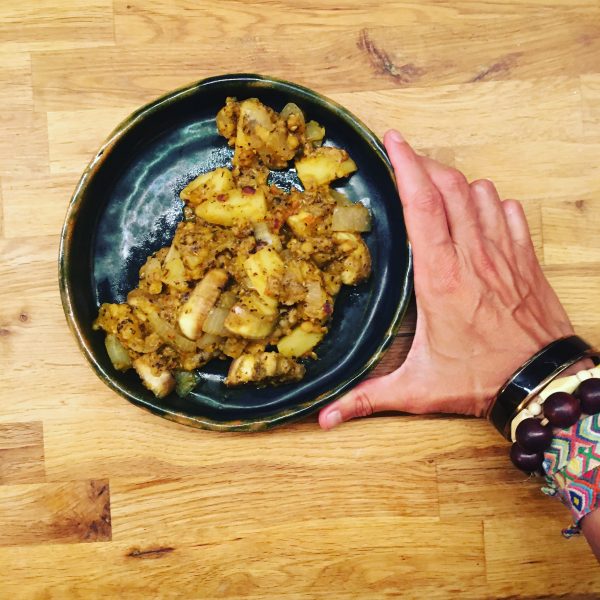
So I usually get excited starting cooking them and thinking about the beautifully colored dish… and 20 minutes later… damned! It’s yellowish brownish… Nonetheless the recipe I came with yesterday was really delicious, and worth remembering. So let me share it with you.
Coral lentils spicy stew (2 servings as whole meal)
100g of coral lentils
5 little potatoes
1 onion
1 eggplant
1tsp of curry powder
1tsp of turmeric
Ground black pepper
Salt
In a large pan put the lentils and cover generously with water. Cook at low heat for 15min or until the water is gone.
Peel the potatoes, cut them in 4. Cut the onion in bites, and the eggplant. Add to the lentils. Almost cover with water, add the spices, salt and pepper and cook at medium to low heat for 10min, or until the water is almost gone. Serve and enjoy!!
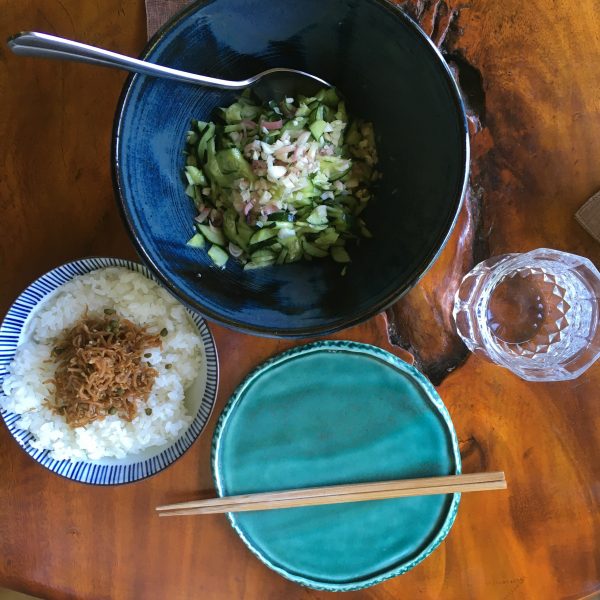
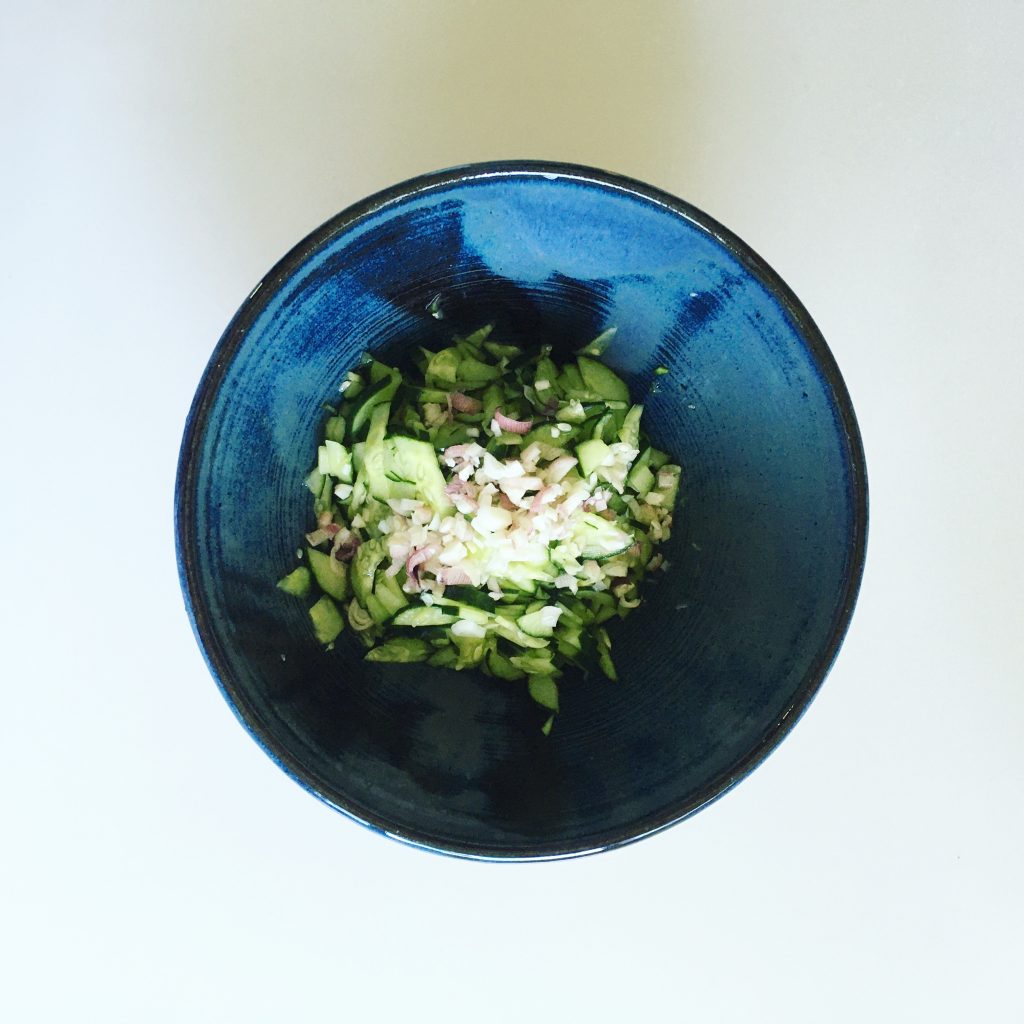
If you like cucumbers you surely like even better Japanese cucumbers. They are tiny, crunchy, juicy, with much less seeds. Chilled they are perfect for the summer. Slightly pickled or not we love them and eat some every day in the hottest season. They are good just cut and dipped in miso for a very rapid snack, or prepared in light pickling with salt or with umezu 梅酢. You can find many of my recipes including cucumber here. But today I came up with a new idea, of a simple cucumber salad, with Japanese flavors. And it is so simple that t is going to be a new summer favorite.
Summer cucumber salad
1 Japanese cucumber
2 myoga (Japanese ginger)
1tsp of umezu (otherwise a pinch of salt and 5 drops of soya sauce)
Wash and pat dry the cucumber. Slice it thinly. Put in a bowl add the umezu and stir with the hand. Wait 5 minutes, in the meantime, wash and chop thinly the myoga. Gently press the cucumber with the hand and remove the juice. Add the myoga and stir. Serve chilled and enjoy!
Every time I think I have seen all the possible greens they grow in Isumi, every time I happily discover a new one. I am most attracted by greens and naturally when I see a new leaf on a shelf I can’t help buying it.
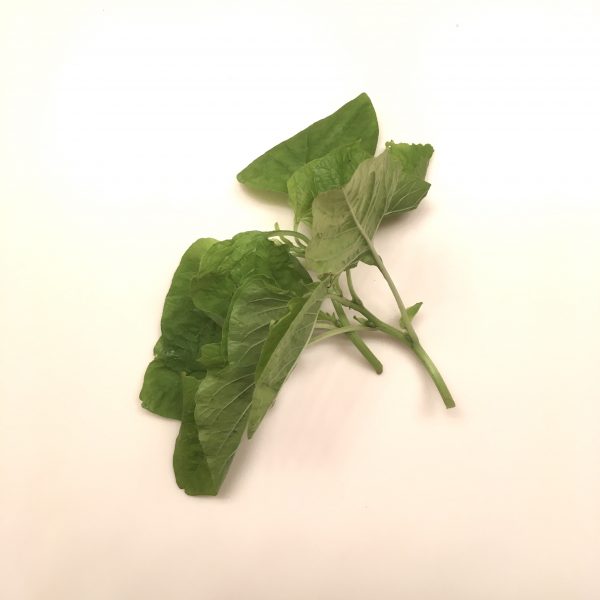
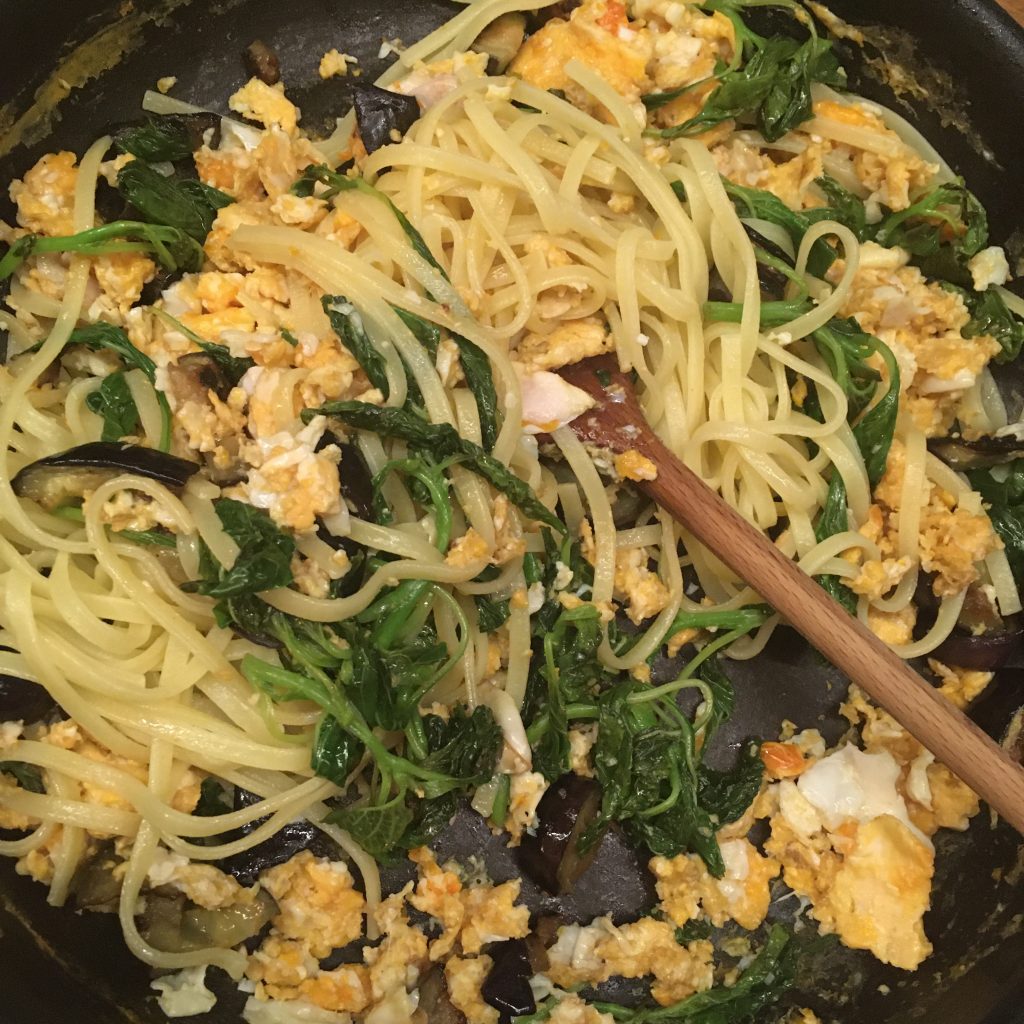
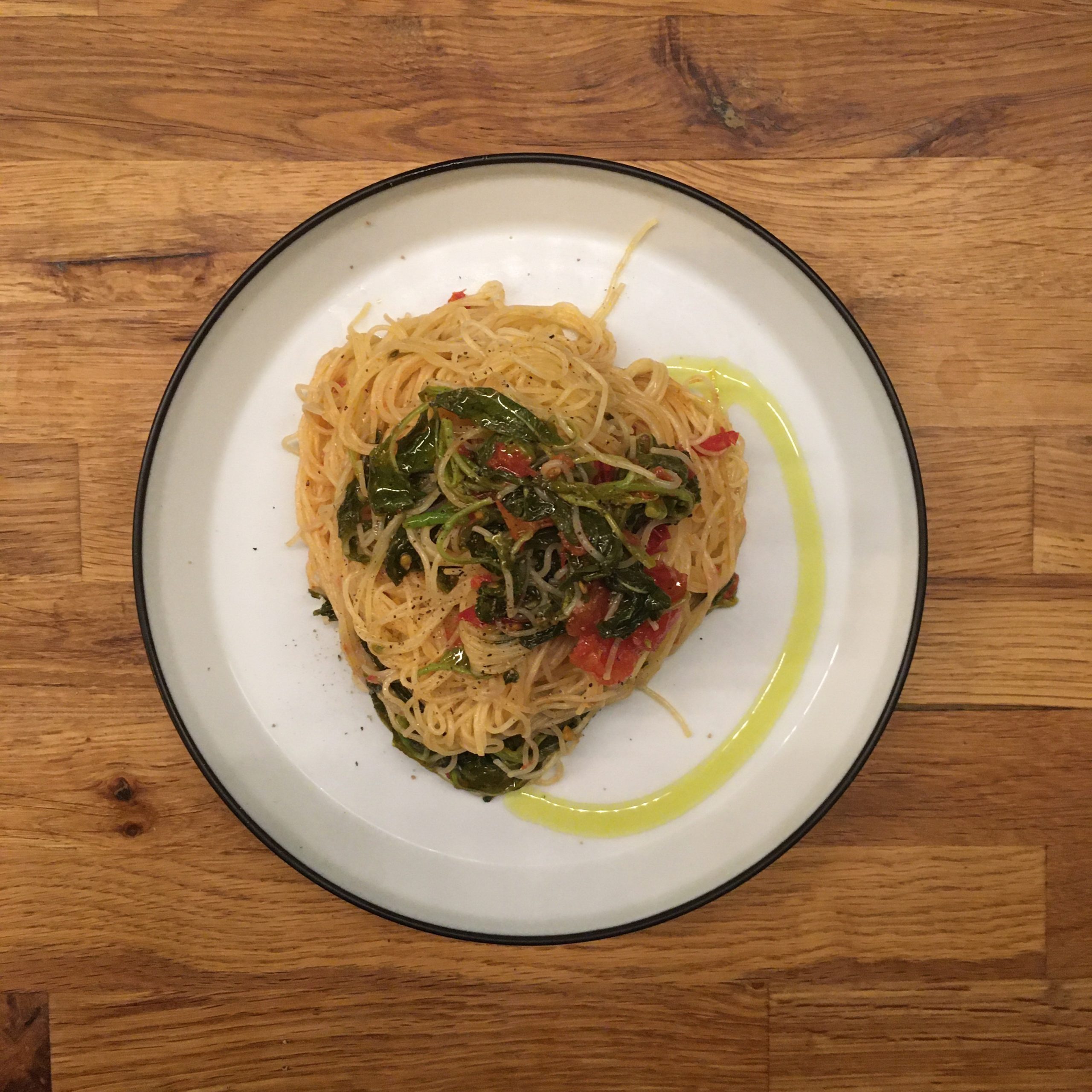
This time our local farmers market surprised me with hiyuna – ヒユ菜 apparently amaranth leaves. A nice green leaf, very tender and mild in taste. It is so mild in taste that I found it fits perfectly western cuisine, despite its Chinese origins! While most recipes I found were stir fry pr soup, I used the nice green leaves for omelette or pasta sauces. A bit like spinach. No wonder why one of their name is Chinese spinach!! And a rapid look at its nutritional value showed that this little leaf is packed with iron, potassium and several vitamins, another good reason to enjoy it.
I also found it was easy to prepare, and it goes very well with eggplants as in the picture below. And with tomatoes as in the other picture below. Enjoy if you find some!!!
In Japan okara is a very easy to find and very cheap product. Indeed, as it is a by-product of soya milk and tofu, there’s quite a lot of it. Up-cycling it in your cooking is also very easy. Apparently it has a good nutritional balance, but what I like with it is the little something different it brings. Added to an omelette for example it makes it extra fluffy and slightly pancake like. In a batter it adds some texture and firmness. Okara flavor is usually very mild and it is really the texture it adds that is interesting .
Okara: soya pulp after pressing to make tofu or milk
Okara is used in traditional recipes such as u no hana, or often in croquettes. I had times when I bought some often, but it was months if not years I didn’t. Probably because I liked one specific brand that was sold near the university but the shop selling it has closed and Has been replaced by another one that don’t have it. So when we went grocery shopping the other day at the local store and with the tofu there was fresh okara from the tofu maker I jumped on the occasion. I made some of the usual recipes aforementioned, but I really wanted to test okara in sweet preparations. I opted for chocolate muffins. I simply added okara instead of part of the flour. Added chocolate chips for the tiny ones and made a melty chocolate heat for the larger ones. And bet what…??? A. just loved them!!! And so did I!!!
On a rainy Sunday like today we met with what would be our little hideaway and resting place. (More about how we ended up here here)
Hydrangeas in our garden
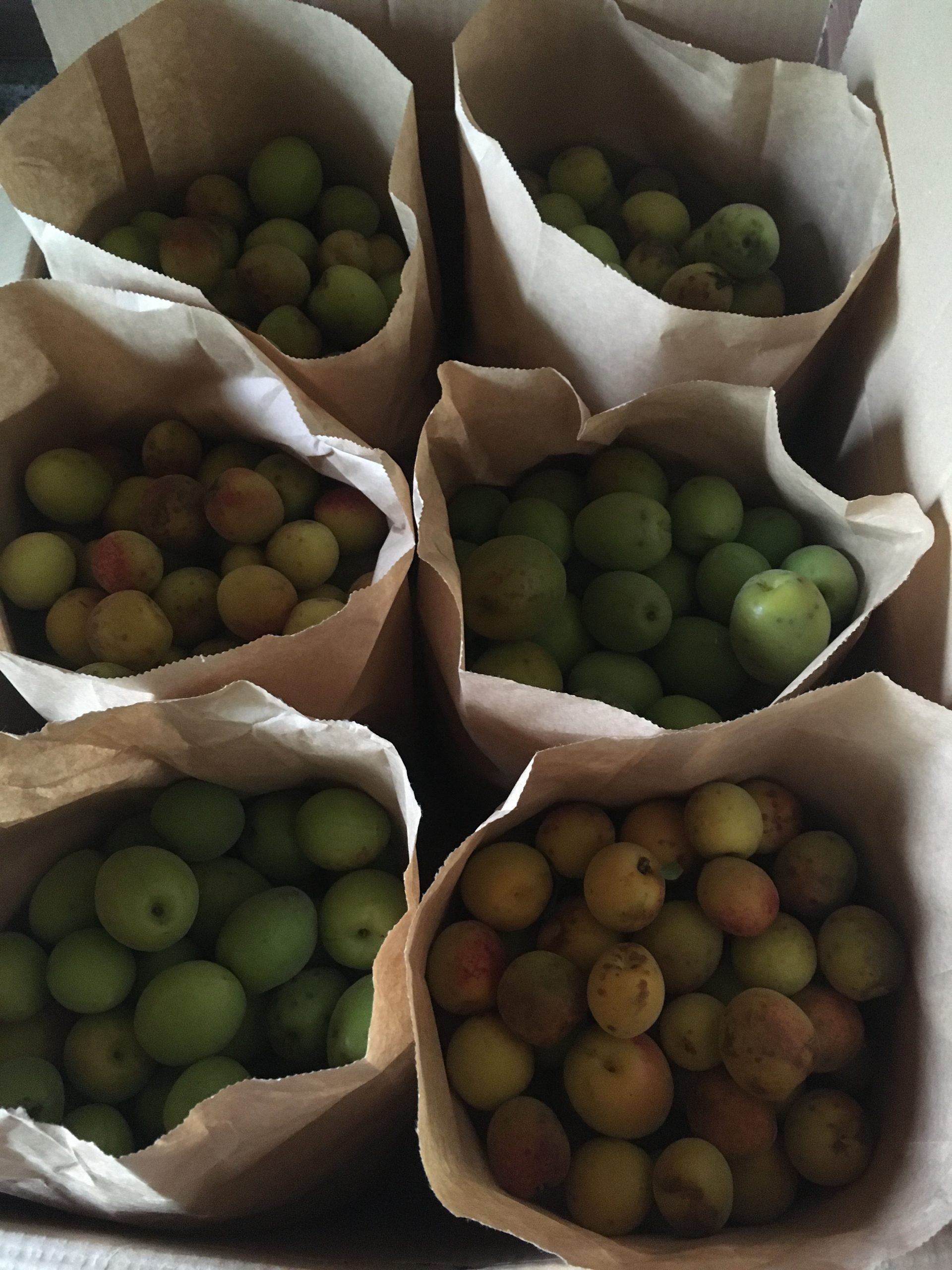
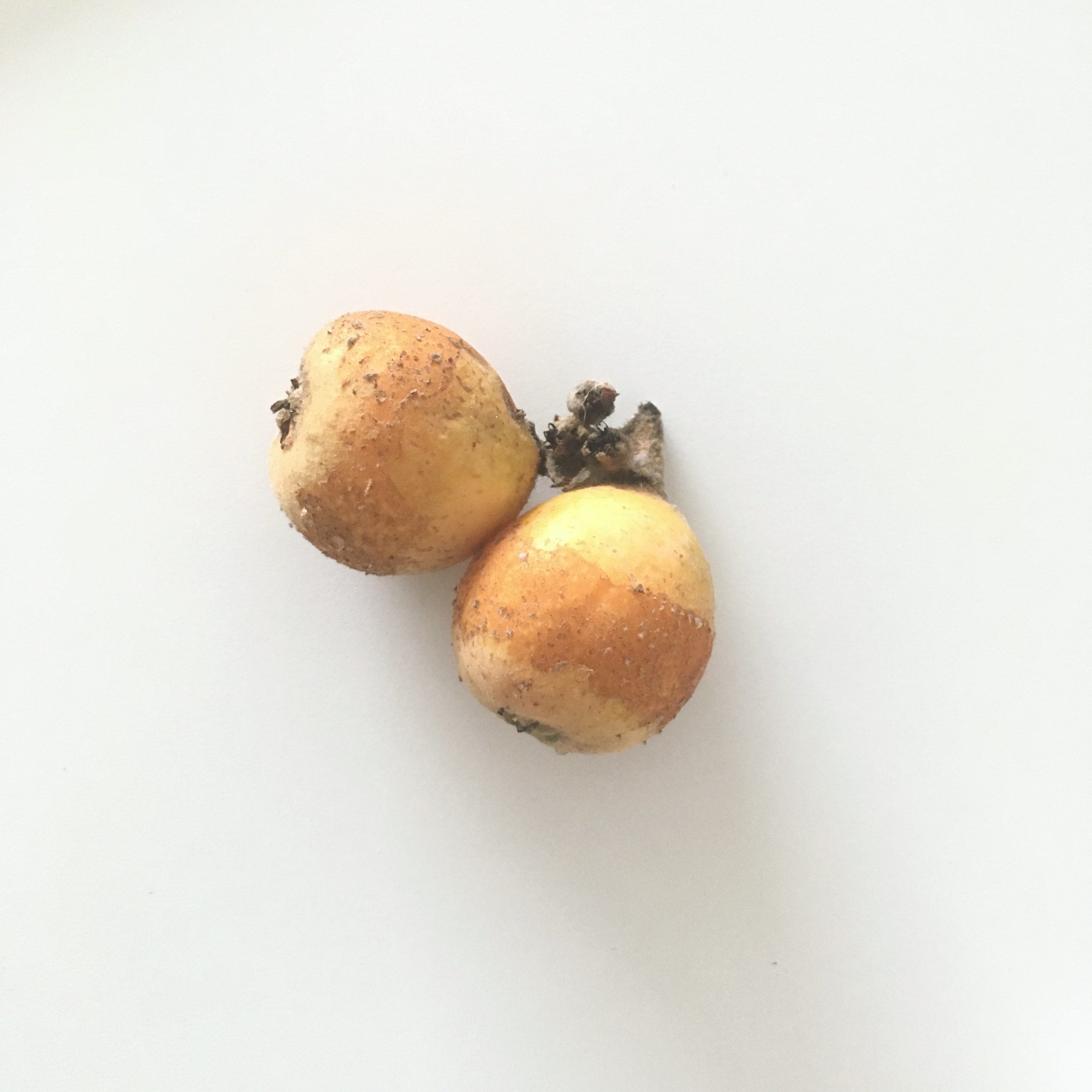
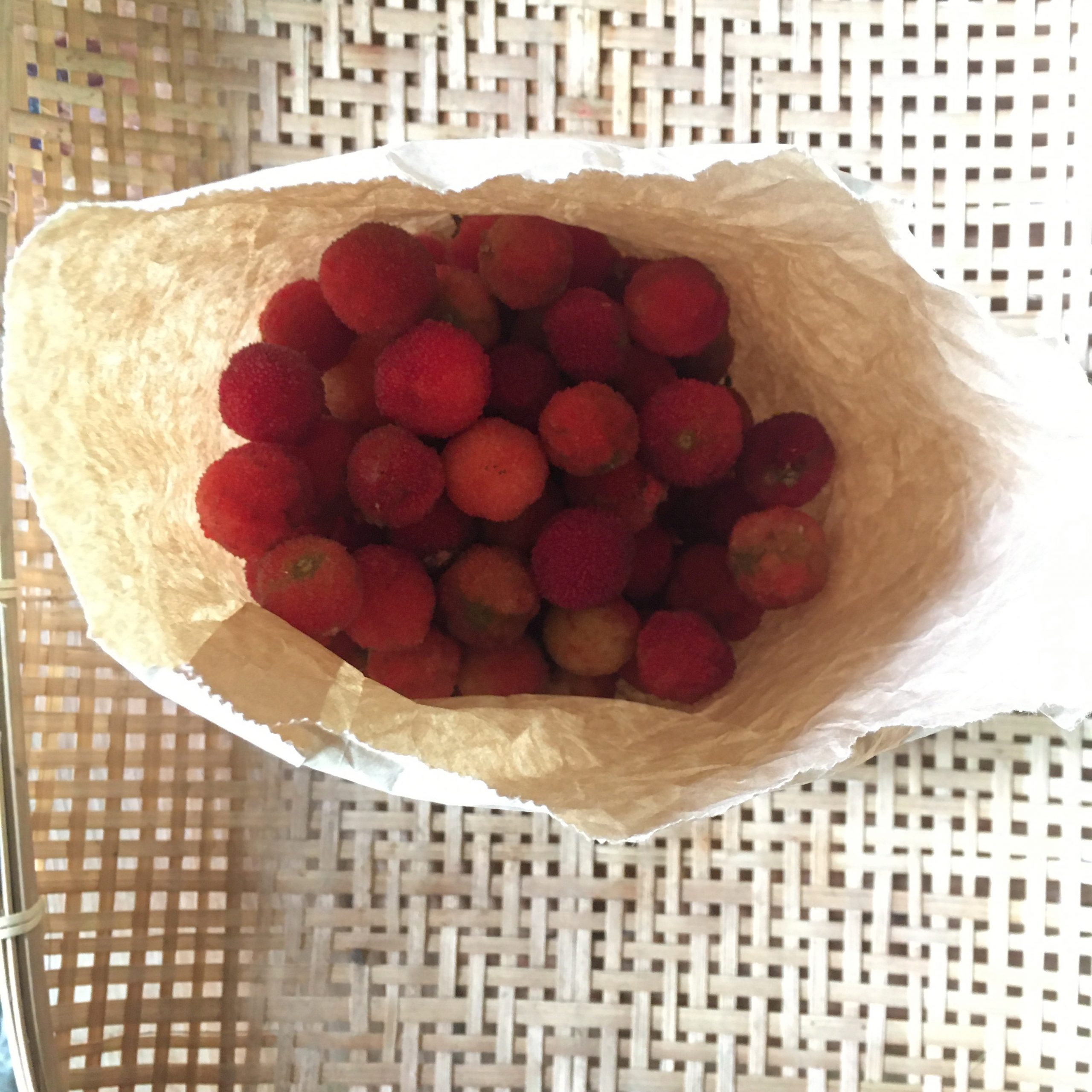
The few things that I found charming as soon as we arrived was the hydrangeas, in full bloom under the rain, with their vibrant gradation of blues and purples. The abundant plum trees covered with fruits, and the lush green of the Japanese maple trees, the gingko, the pine and the azaleas. Everything that makes a Japanese garden, Japanese. I obviously didn’t see many thing that were also there: the loquat tree, the strawberry tree… After 8 years I now know pretty much all, even if I am uncertain about the 3 or 4 different types of plums we have, and every year I harvest more fruits than we can process! In particular the plums and the strawberry tree fruits. So I give away a lot. This year 15kg of plums went to my secretaries at the university!!! And used 5kg for syrup and 3kg for umeboshi. The rest is for the birds, the worms and the ants ;).
June garden harvest: plum, loquat, potato, strawberry tree fruits
After years of struggle making umeboshi and failing, I realized umeboshi are not so difficult to make if you have the proper instruments. I use to make them with whatever I had, before investing in a proper pickle box, that is wide enough and has a lid with a spring where you can apply sufficient pressure and get rid of the heavy stone, the overflowing ume juice and the failure… largely due also to the fact that I cannot check them every day. So if you plan to make umeboshi I highly recommend you invest in the proper recipient. I use a pickle box called Picre.
Umeboshi
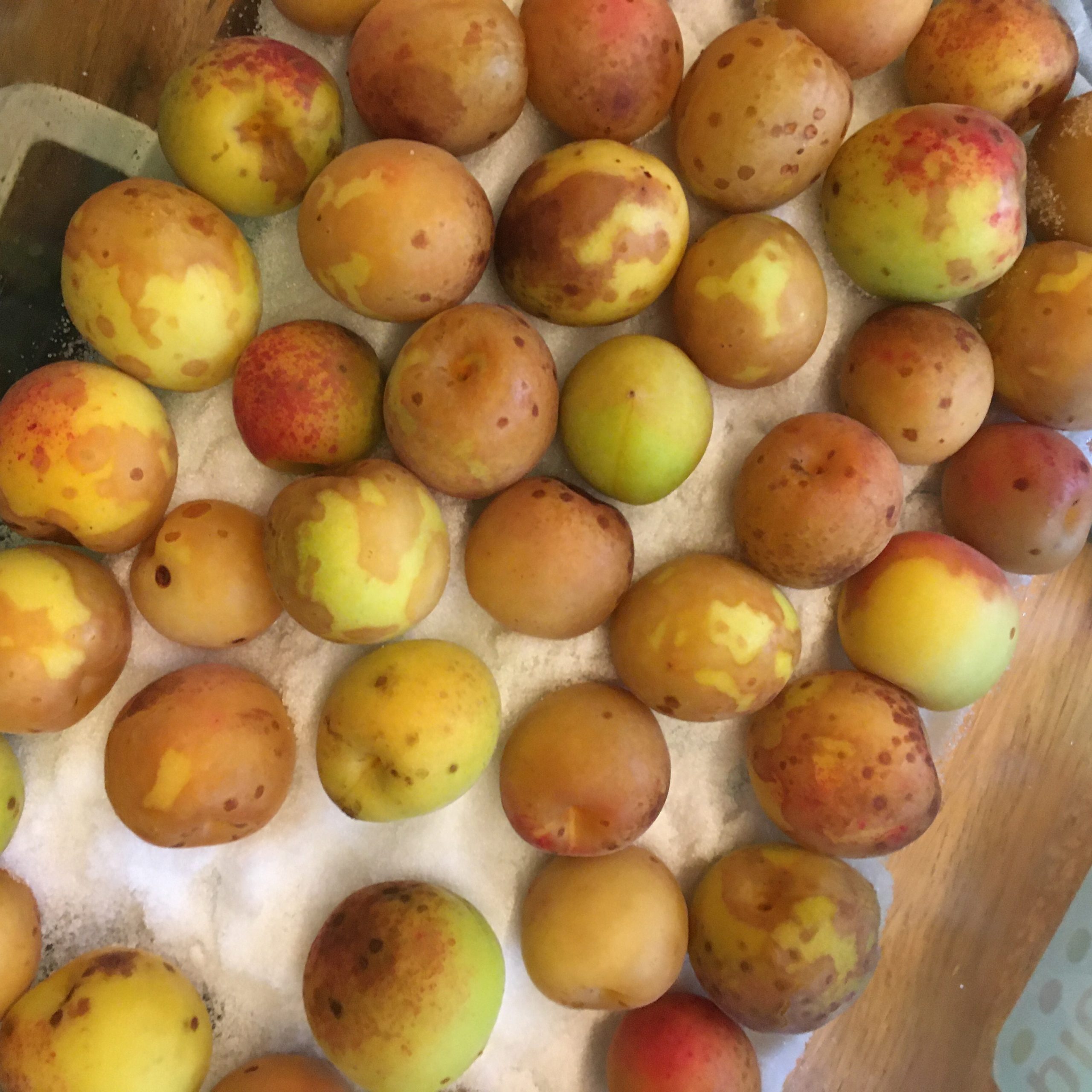
2kg of Japanese plums (yellowish rather than greenish)
360g of salt
If your plums are really hard or toi greenish, dip them in water a few hours before starting.
Wash them and pat them dry carefully. Remove the stems.
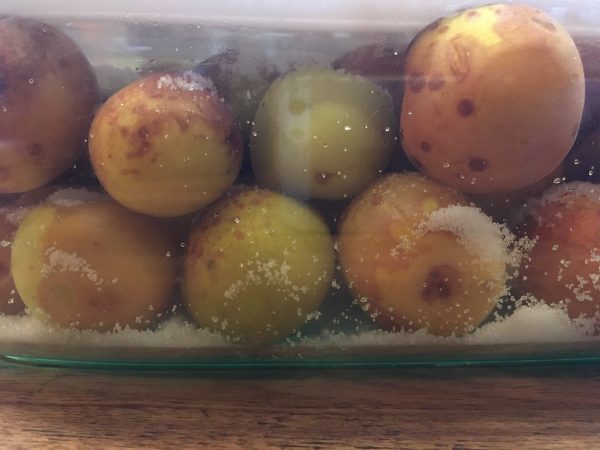
Sterilize your recipient. It should be 3-4 times the volume of your plums to avoid overflowing accidents. Set half of the salt in and create an even layer. Organize the plums on the layer in order to remove space between the fruits as much as possible. Sprinkle a bit of salt. Create a new layer on top remove space as much as possible between all fruits. Sprinkle salt and repeat until all plums are well organized in a compact manner. Sprinkle the remaining salt on top.
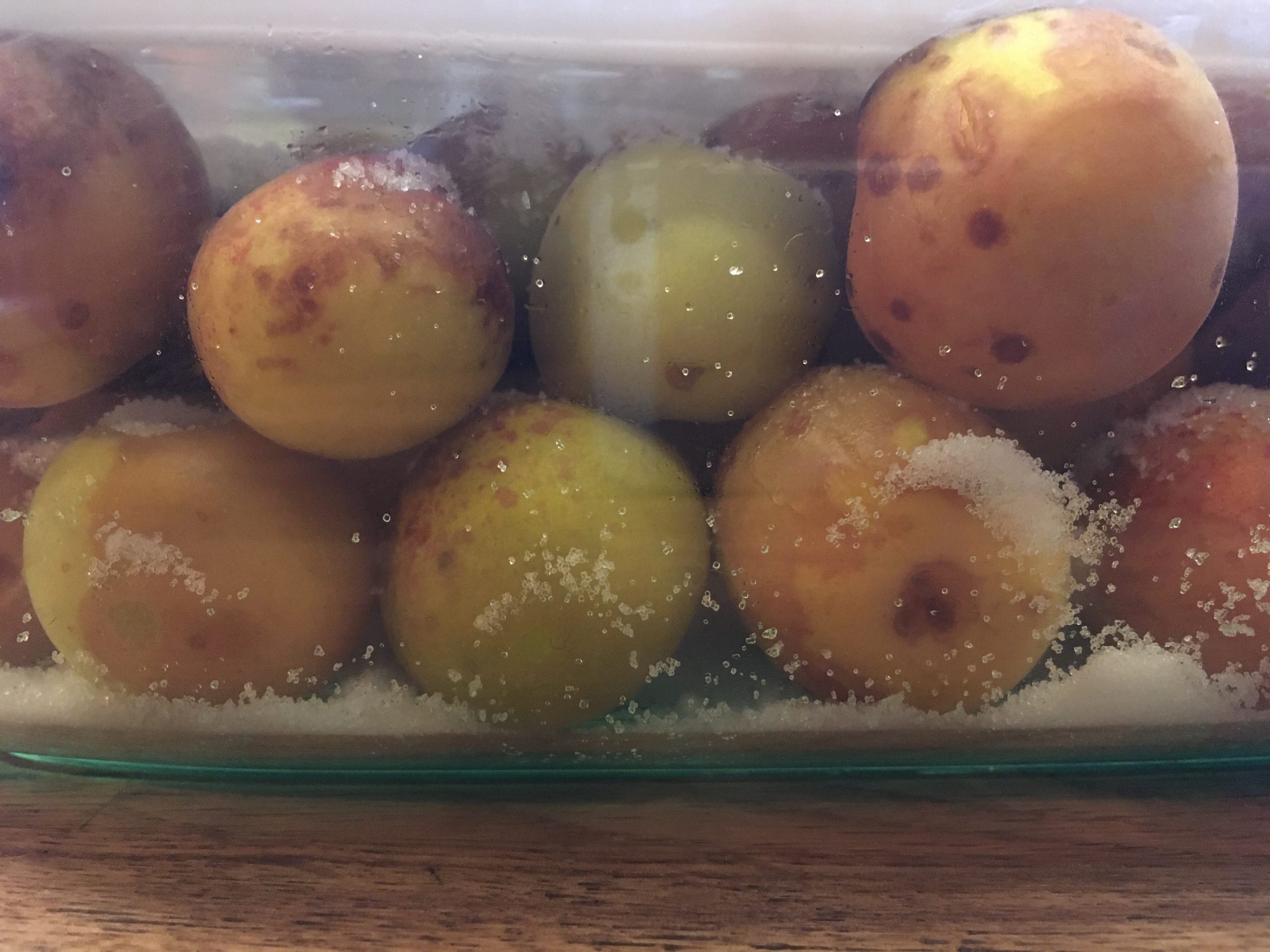
Sterilize the lid and set on top to gently squeeze the plums. Set a heavy weight or pressure on top. After a few days the liquid from the plum will start to be released and a brine will be created. This is umezu. A precious liquid to use for pickling, energy drinks etc… after a week, the liquid should be about the height of the plums. It will continue rising and can be 2-3 times the height of your original plums height hence why choosing a recipient big enough.
Leave that way until the end of July. And see you then for the next step!!!
Plum work: after overnight in the water, day 0, day 7
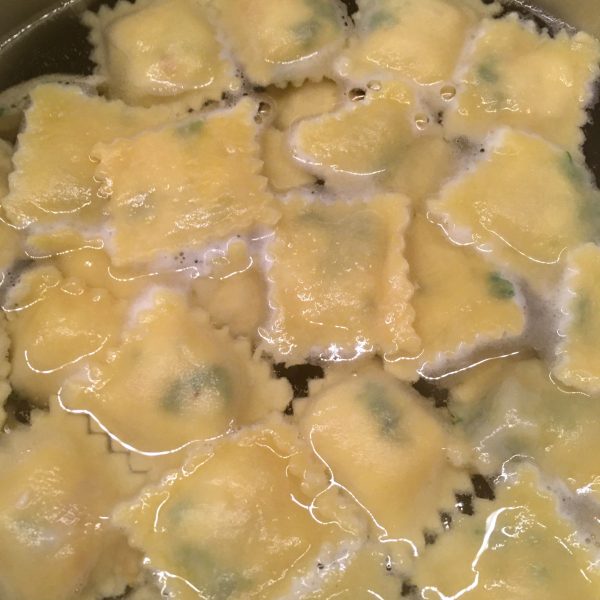
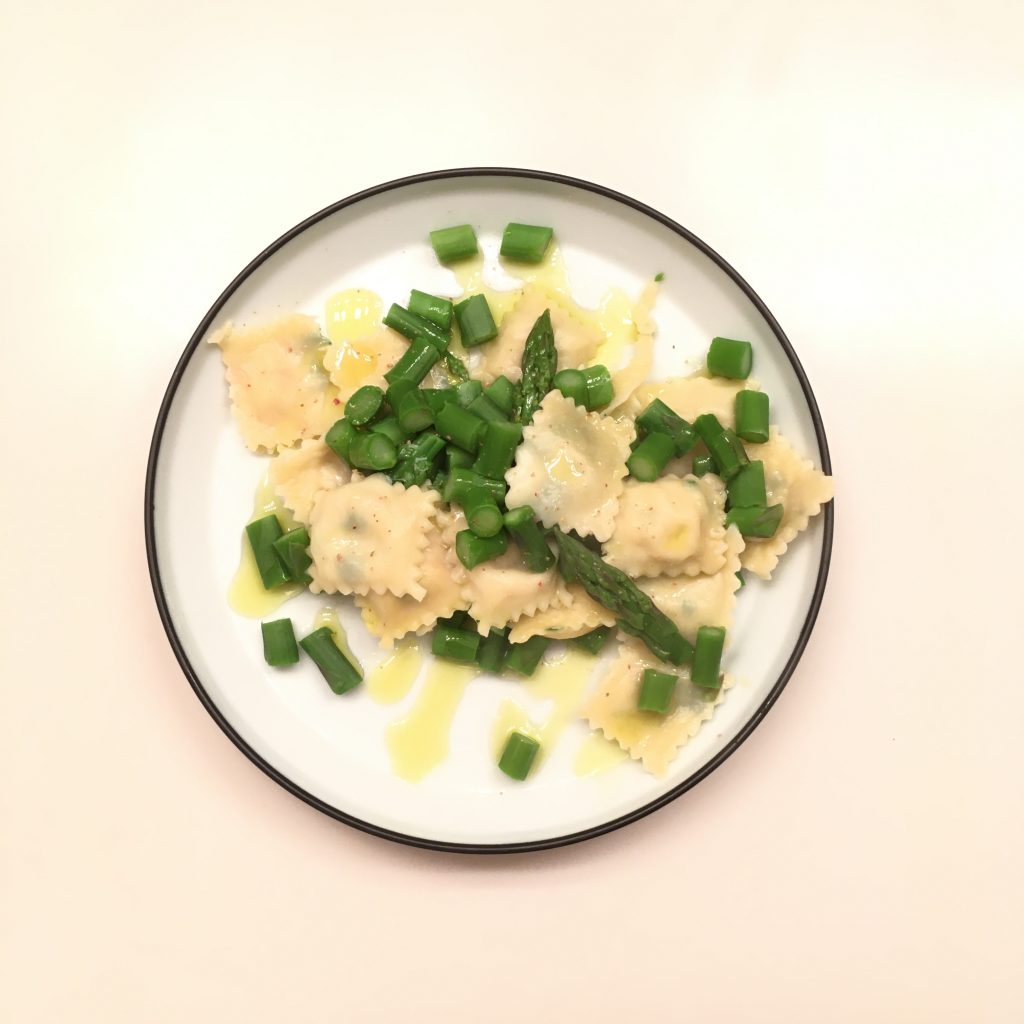
Ravioli… oh! It’s been really a while I didn’t make ravioli… it was high time to fix that… but with all we got from the local shops I wasn’t sure about what use for s filling: korinki and cream cheese, asparagus, eggplant, or flounder… after a certain thinking I had in mind flounder in a sort of bouillon and served with rouille… I was thinking of my own special way of making bouillabaisse… but then something came up at work, upset me and I was working instead of cooking… the dough was ready, the flounder grilled, but neither the bouillon nor rouille were to be done anytime soon… and the clock was ticking and A. was hungry… and past 21:00 I had to go back to the kitchen. Except that now it was too late for a fancy dish… So I ran in the kitchen garden, chopped some fresh parsley, add it to the fish and decided that would be it. Rolled the ravioli dough, filled them in tiny size, and while I was poaching them I felt it was missing something, so I added some asparagus, a fragrant olive oil and that was it.
And you know what: flounder x parsley was a killer filling and I will do again!!! A creamy sauce could have worked fine as well I reckon…