Crazy week(s)

I knew January would be a tough and busy month and it is exactly what it is. It is the season for student graduation thesis and I have a pile of them to read before the end of the month. It is also the moment to think about final exams for the course I teach. But also national exam weekend, with some duty, and on top of that, conferences deadline, experiments, lab visits… At this point of the year it is also often that the weather is unstable, and temperatures are on day as low as 0 deg, and the next day are 15 or more… it is hard to adjust… but it is for sure not yet the end of winter, February and March are usually colder than January in my opinion, or may be it’s just because I’m getting tired of the cold, seeing the plum trees and peach trees blooming…

For these kind of times, a comforting food is always welcome. Some simple flavors and colorful meals. Orange in the plate is great when served with white: perfect mixing carrots, lotus roots and salmon. And this time I don’t let myself get disappointed by the color change due to oxydation of the lotus root. Once peeled, washed and sliced I bathed it in a bit of vinegard. Actually it added a little flavor to the final dish that I really enjoyed and countered balance the sweetness of the carrots and the salmon. Here is my recipe.

Roasted vegetables and salmon (2 people) 

– 1 leek

– 1 piece of lotus root

– 1 carrot

– 2 sliced of salted salmon (unsalted is also ok) 

– 2 tbs of sesame oil

– 1 tbs of white vinegar

Peel, wash and slice the lotus root. Put the slices in a plate and add the vinegar. Turn them so that each side has been in contact with the vinegar. This is too keep the beautiful white color of the lotus root when cooking. Cut the leek in chuncks, same for the carrot (if organic just wash, don’t peel) . In a heated pan, add the sesame oil, the leek, cook 2min at medium heat while stirring once in a while. Add the carrot. Drain the lotus roots and add them. Remove the bones and cut also the samon in bite size. Add to the pan. Cook at low heat under cover for 5-8 min. It’s now ready! Serve with a bowl of rice snd enjoy!
 

Half risotto

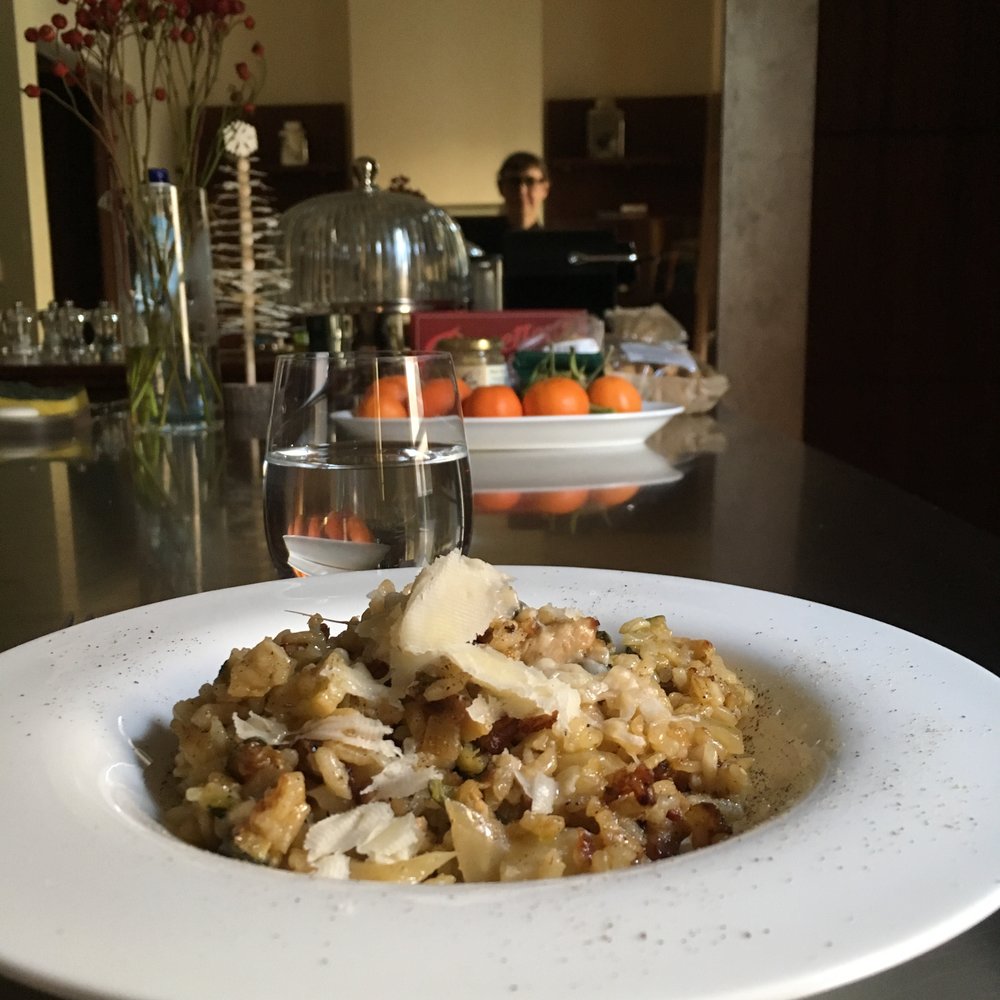
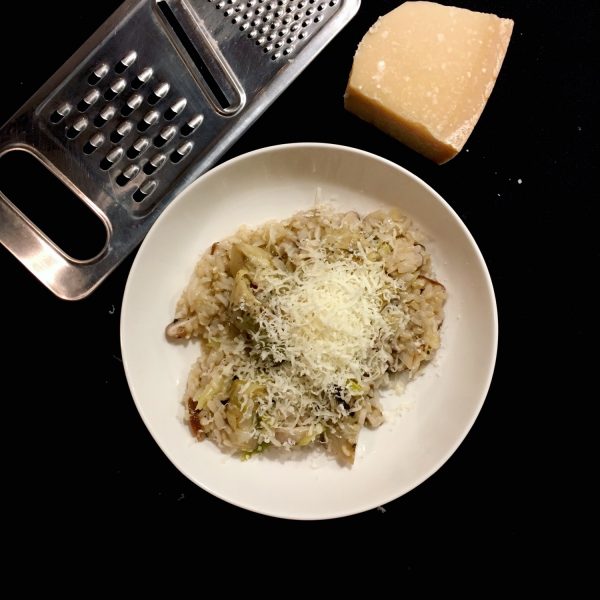
In Japan people born from one Japanese parent and one foreign parent are called “half” (ハーフ) by Japanese people. Using the same idea I use like to use this word for my cooking recipes. Some would use different words such as ethnic food, fusion food or any other that means nothing to me. But “half” really captures my way of cooking. Whether it is French-Japanese or Italian-Japanese, it’s cooking “half” to me. When I make a Japanese quiche, or foie-gras suigyoza… This time, it’s a risotto I prepared, that is perfectly half, in ingredients and inspiration. Half Japanese and half Italian. The rice: 1/2 brown Koshihikari 1/2 Carnaroli; the vegetables: 2 small leeks for the base, then fresh shiitake and some olive oil preserved Italian purple artichokes (you can use fresh one if you can find some… but really in Tokyo it’s not easy…). I topped my risotto with some freshly gratted Parmigiano but it’s optional, A. prefers his risotto straight!

Half risotto (for 2 servings) :

– 60g of Carnaroli rice (or any risotto rice of your choice)

– 60g of brown Japanese rice  (I use Koshihikari from Isumi, but it’s up to you to use the brown rice you like)

– 1 or 2 leeks depending on size

– 4-10 shiitake depending on size (I prefer smaller ones)

– 10 small purple artichokes  (I used olive oil preserved ones)

– olive oil, salt, pepper, Parmigiano…

First chop the leek and cook in a large pan at low heat in a bit of olive oil, stir regularly so that they don’t change color. Wash and cut the shiitake. Prepare the artichokes if fresh and cut in halves unless very small and tender, if in olive oil drain them. Add the rices in the pan and a bit of olive oil. Increase the heat and stir often. When the rice becomes translucent add about 600ml of water (I don’t use broth because the leeks and mushrooms are alrrady bringing enough flavor), salt, pepper, the mushrooms and the fresh artichokes (if in olive oil, wait until the end). Cook under cover at medium-low heat until the liquid has almost disappeared. Add now the artichokes if they were in olive oil. Stir and serve rapidly. Add gratted Parmigiano if you like!

Vegan pie

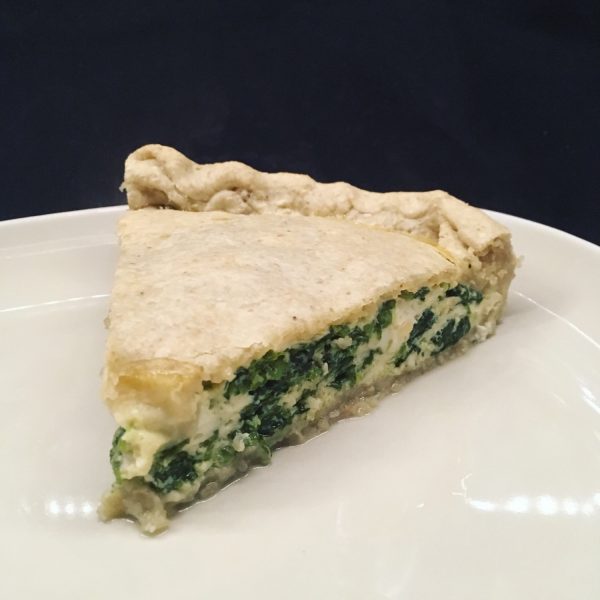
You know how much I love to make quiches and tarts, there are so many examples already posted, and there will be this year many more. But when like me you love making dough, kneading and having flour on your hands, better than quiches and tarts, there are pies, for which you need twice more pie crust and I won’t complain about that!!! Pies are also great when you don’t want to use an egg base, and simply use vegetables and some tofu or some miso etc… I also love them in winter because they seems to be much warming, keeping the vegetables in their heat and steam and preventing them fir getting dry. I plan to make more pies this year and to try new recipes, I have already ideas flowing in my head, so maybe something like a pie a week or will be a good rythm, let’s try what I can do!!!

This first pie is a pure vegan delight with an olive oil base pie crust, with half flour half oat bran, and a filling of spinach, radish tops blanched and silky tofu. Everything is said! Bake for 30-40min and enjoy!!!!

Home-made tagliatelle

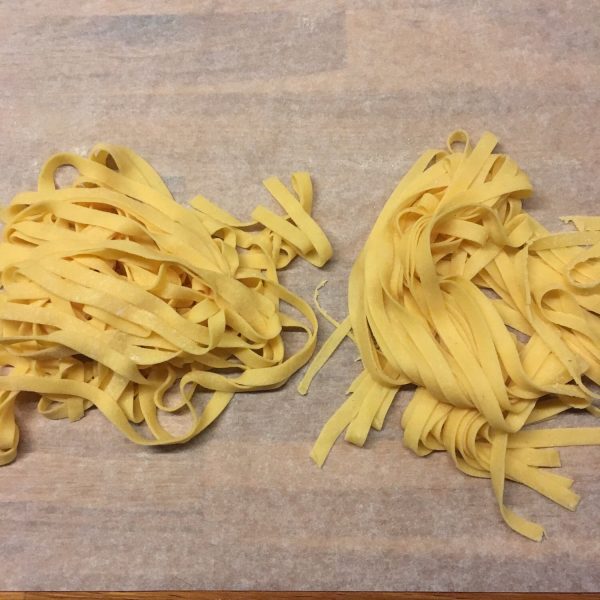
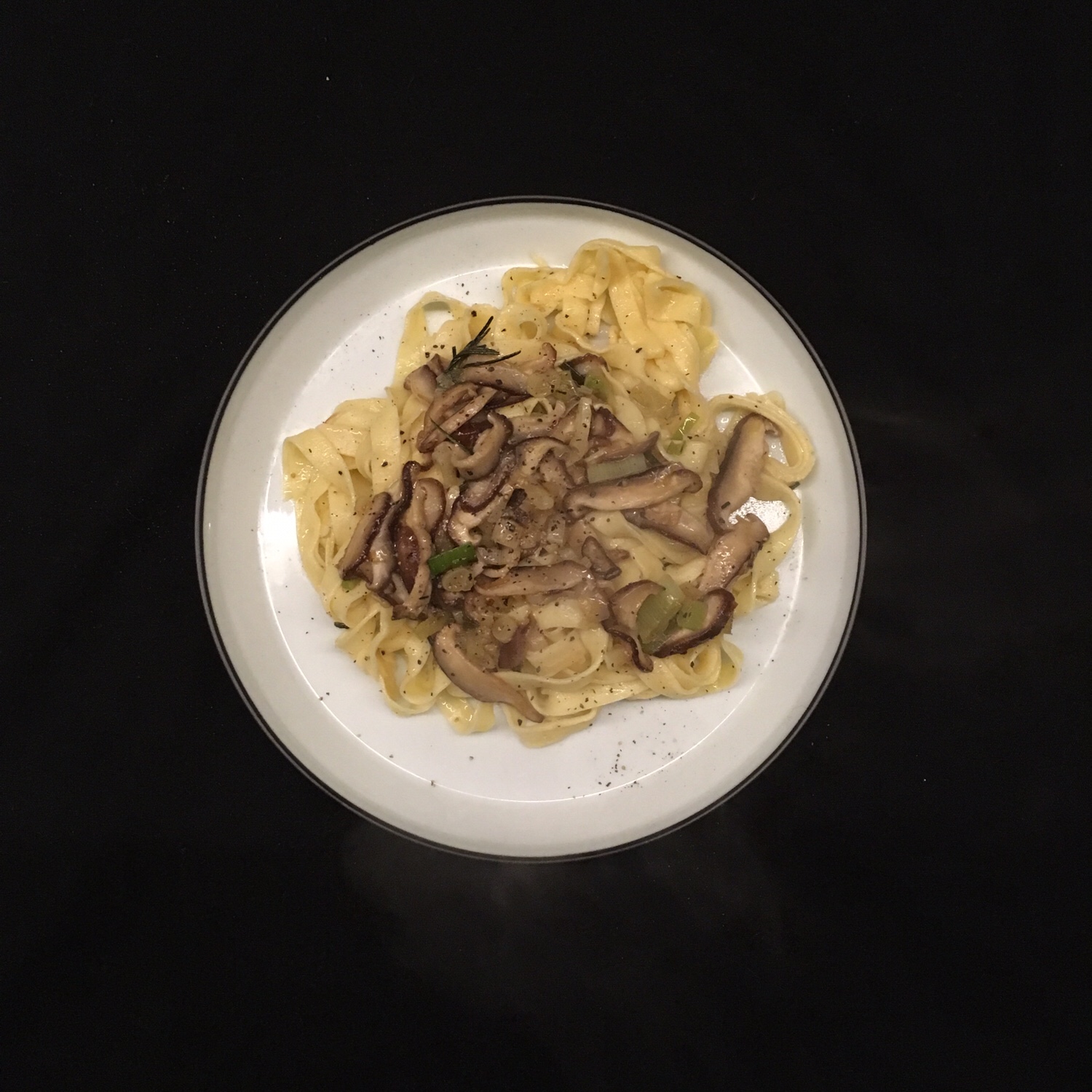
As planned there will be a lot of pasta in 2018, and it has already started! For Xmas I received a motor for my pasta machine!!! Not that I am a big fan of going mechanical, I prefer to knead manually, to chop manually, to ground coffee manually… but I must admit that with the pasta machine three hands rather than two were neededto hold the pasta in, hold the pasta out and manipulate the handle, so it was really tricky and to get things done by myself I was flouring generously the whole top and I was making a real mess actually! The motor makes things much cleaner, and the pasta is great: thin and not too floury. I’m starting to be really good at making pasta!

For a change I didn’t make ravioli though I was quite tempted to, instead I made tagliatelle, and simply prepared them with buttered leek and shiitake.  I used the same preparation steps that for the ravioli. I prepared the leek and shiitake in a large pan with a bit of butter and at low heat and used the boiling water to keep the mix moisten, and when the pasta were ready I just drained them and added them to the vegetables, added a little of olive oil and pepper and stirred well just before serving. So simple and delicious, invigorating before going back to work!!!

Leftover Italian cooking

Since we’ve arrived in Florence, everyday I’ve been cooking something different for dinner: simple vegetables and salad, pasta, risotto, cereals… I’ve tried them all. And I’ve been using as much as possible things I don’t usually find in Japan, and that I love extremely: artichokes, fennels, lamb lettuce and a great variety of cheeses. And what I’ve been doing is make sure that each time I would have some leftover for my lunch the next day. Indeed, what’s better than working all morning, going for a walk at noon, coming back at two cold and starving, and having already the lunch half prepared? And what’s better than olive oil pan roasted pasta or risotto when them become all crispy and golden? For me leftovers are a real treat! And top them with some new sort of cheese everyday and it’s pure happiness, and pure energy for working the rest of the day!

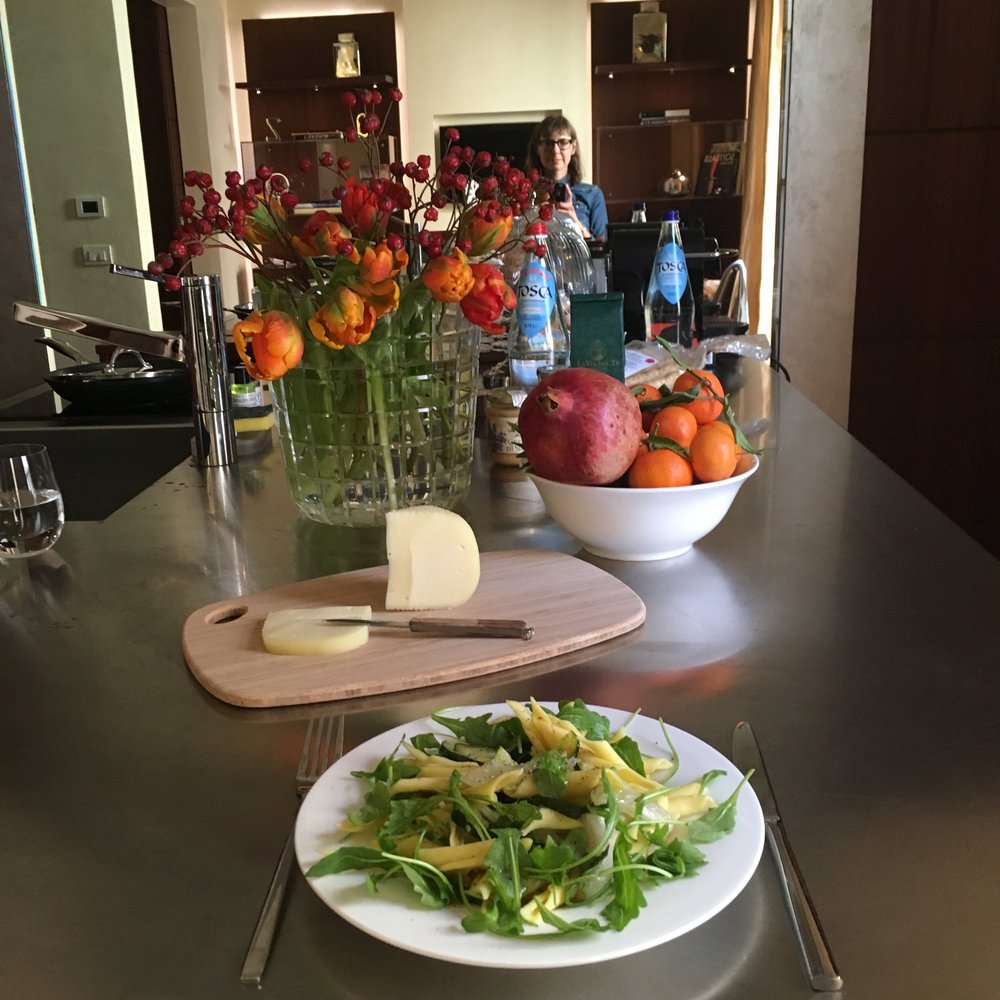
Here are my two favorites from this week: leftover pasta with newly added artichokes, and fennel risotto with newly added plenty of tomme cheese. For the first one (top picture), simple pasta leftover is good. Then boil one or two artichokes remove the leaves and keep the hearts, slice or chop them. In a heated pan generously add olive oil, the pasta, the artichokes. Stir once in a while until the pasta are golden crispy. Top with a bit of parmigiano and eat right away!

The second one (bottom picture) is even simpler. I actually made some fennel risotto with some pork roast, so I just cooked it again in a pan with a lot of olive oil and didn’t stir until it got really crispy on the edges, then I served it with plenty of some tomme cheese I bought at the market, a much softer cheese than parmigiano but not less fragrant.

Mezzelune

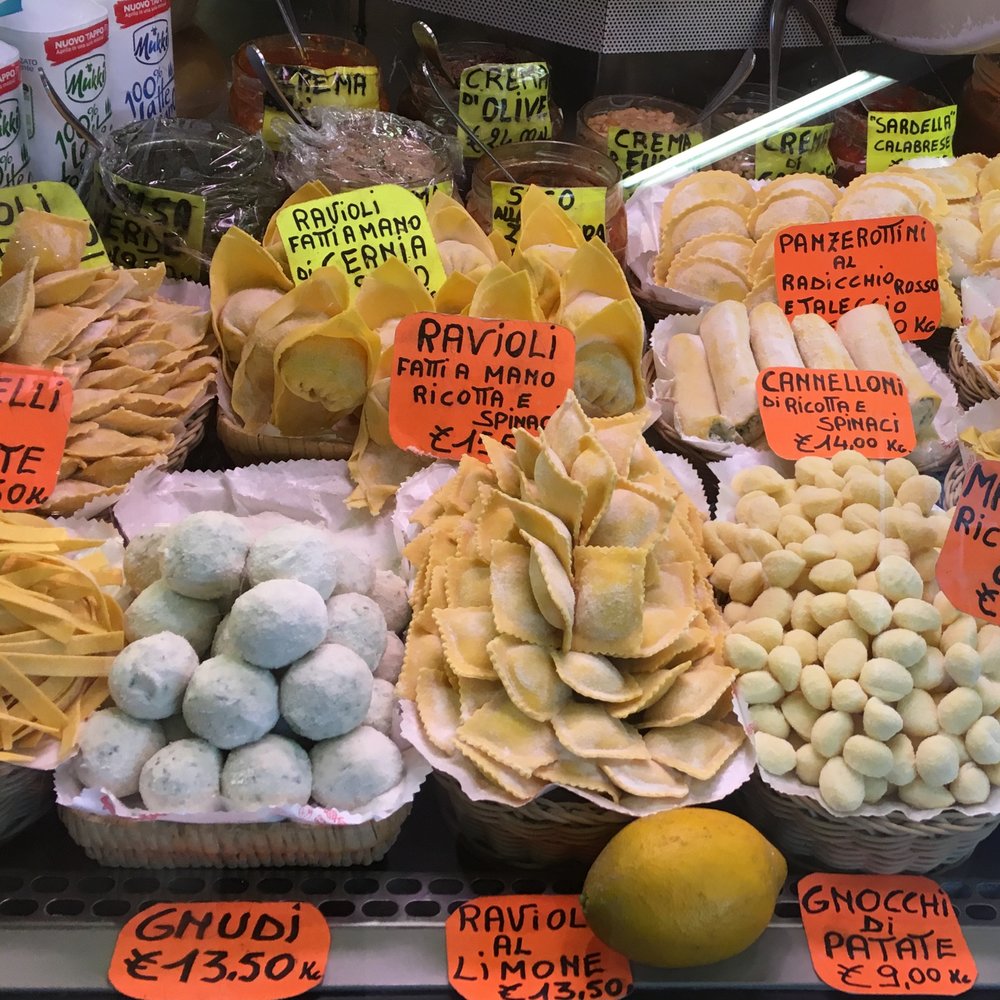
For those who’ve been following us, they know that I love to make fresh pasta, and even more stuffed pasta like ravioli (all my recipes are here!). I’ve been testing many options and yet I was satisfied but never fully satisfied by the result, in particular the pasta itself, but not only, though the taste was always really delicious. So while in Florence and A. too busy with work, I decided it would be a great opportunity for me to learn from a real Italian “Mama” or a real chef. My first idea was to go to Giula’s cooking classes at Juls’ kitchen, but it’s too far away from the city for this time, I’ll go later in the spring… I wanted something that wouldn’t take more than 2h. So when I found the cooking classes at the mercato centrale (again mercato centrale… which in the end I’ve been visiting every day!), and that they just had a vegetarian mezzelune class at the perfect timing for me, I had to go!
And I didn’t regret it, I made some of the best pasta ever I think, because thanks to the chefs I’ve finally learned the tricks that where missing to me:
1. it’s OK to knead a lot the pasta and really use the palm of the hand to squeeze it;
2. let the pasta dough rest before rolling it so that the glutinous structure has time to develop;
3. roll and fold once first before rolling for real;
4. and that’s the most crucial, get the sauce moisten (with some of the boiling water for the pasta) and after boiling the pasta add them to the sauce pan at medium-high heat, shaking regularly, so that they roll over in the sauce and it becomes just creamy, neither to watery nor too dry. Serve and it right away!
So now I feel really equipped to prepare more stuffed pasta!!! And I can’t wait to have my new motor for my pasta machine!!!

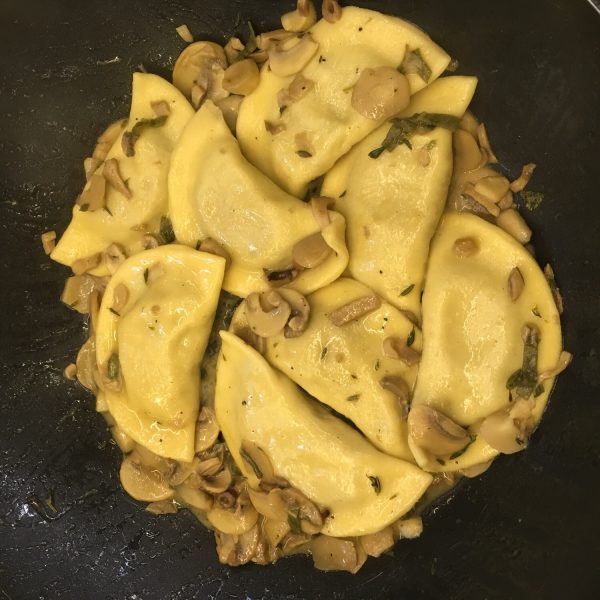
And because this something I would have never prepared, but it was really delicious, here is the recipe of the mezzelune I made.

Potato and chestnut mezzelune (for 2, makes 8-10 mezzelune)

For the pasta:

same recipe as usual: 100g of flour, 1 egg, olive oil (or not)

For the filling:

– 2 small potatoes

– 1 handful of boiled chestnuts

– a bit of parsley

– 10g of butter

– 20g of grated parmigiano

For the sauce:

– 5 mushrooms

– 1 little handful of dried porcini

– olive oil

– 15 g of butter

– 4-6 leaves of sage

– 30g of grated parmegiano

Start boiling the whole potatoes with the skin, simply washed and add the chestnut to soften them.
Re-hydrate the porcini.
Prepare the dough for the pasta , wrap it and keep it on the side.
Clean and peel the mushrooms, chop them, chop  the sage. Drain the porcini and chop them. In a pan heated, add half of the butter for the sauce,  a splash of olive oil, then the mushrooms, the porcini, the sage, cook at high heat until it start to golden, then lower the heat, add some hot water and keep cooking all along, while keeping it moisten.
By now the potatoes should be ready, so peel them and chopped them roughly. Mash them with the chestnut (a blender may be welcome here), add the parsley, the parmigiano and stir well to obtain a creamy-dry paste. Roll the pasta, cut out circles and start filling with the filling. close well.
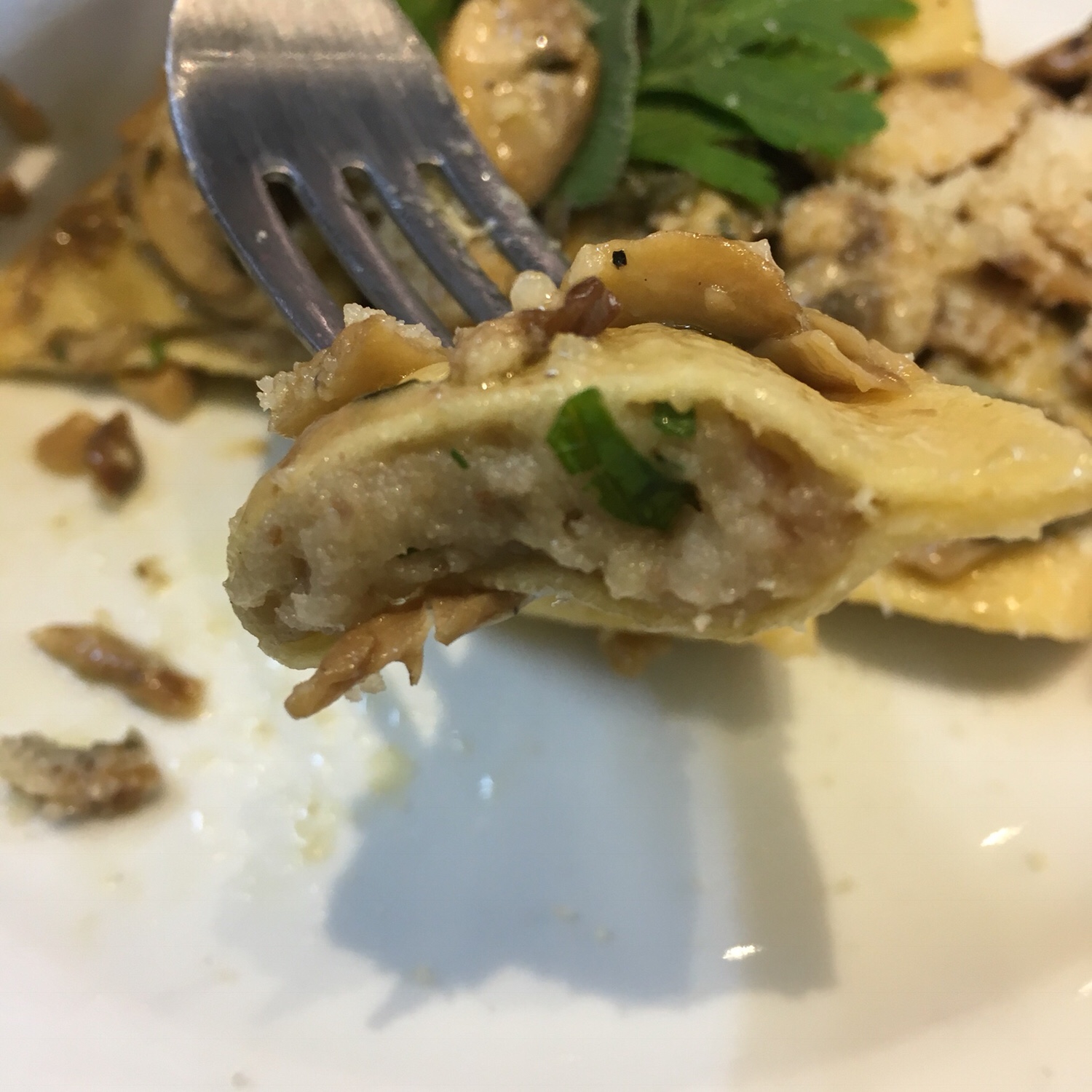
Boil the pasta for about 4-5 minutes, then drain and add them to the sauce pan directly, add the rest of the butter and shake in the pan at high heat, until the pasta has rolled over in the sauce and the sauce has reduced to a creamy texture (look at the top picture at it looks like!). Serve, top with a bit of parmigiano, and enjoy!

Life in Florence

So, it’s been four days we’ve been in Florence, except for Sunday that we spent walking around the city as described here, it’s been a rather studious time. A. leaves early in the morning while it’s all dark and comes back late at night, and this gives me more than plenty of time to work, write and spend a little hour or two outside walking around the city in the cold and shopping for lunches and dinners.

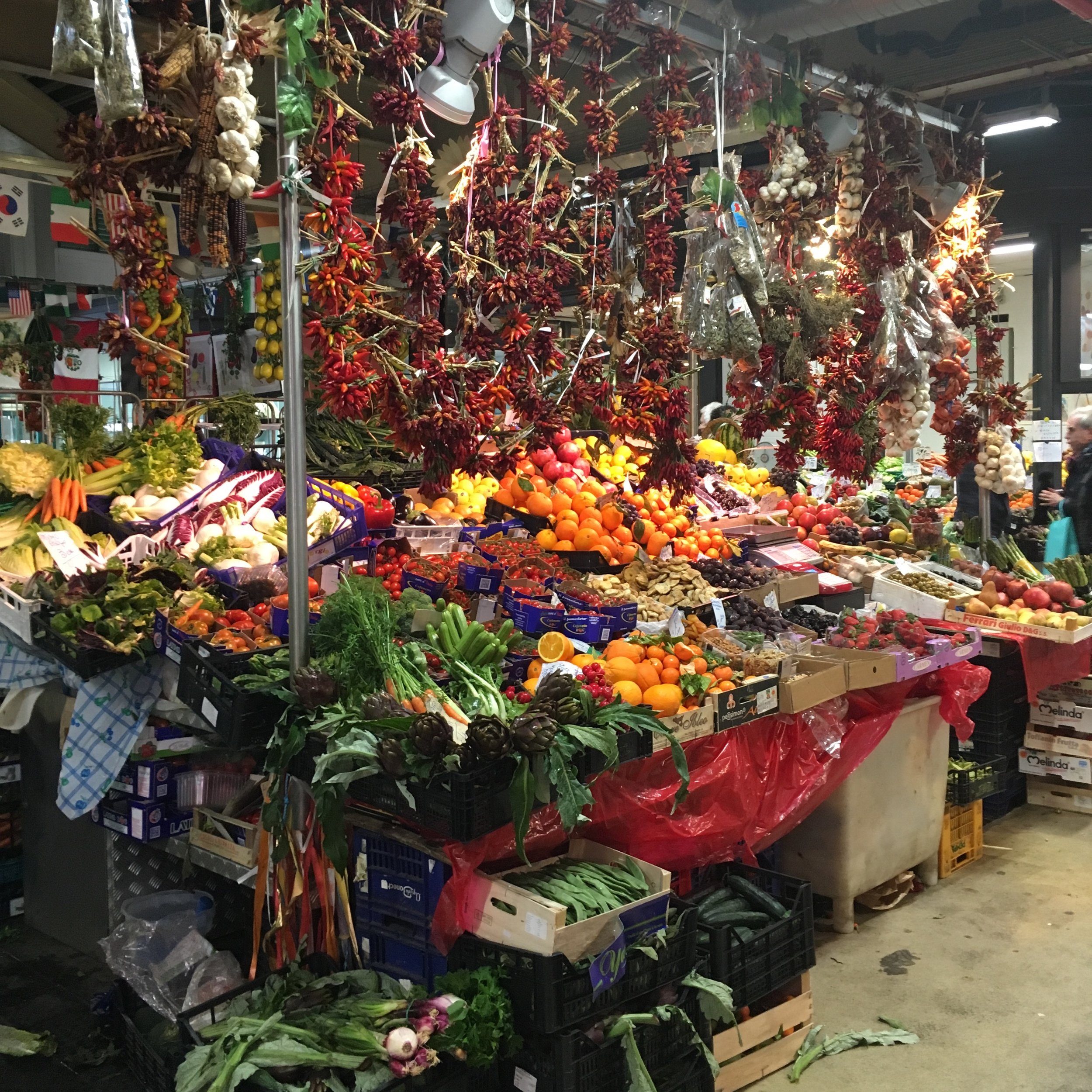
I’ve now explored both the San’Ambroggio market and the San Lorenzo market, got to see everything twice or thrice to decide what to buy choosing between all the delicious cheeses, fresh pasta and all the fruits and vegetables that are alien to Japan. I must say that I passed on fish, not being fully satisfied with the stands and on meat as there was too many options and I am not good with meat too much… but I guess that I will have to try some for A.. For the moment I’m sticking to speck and San Daniele and it’s been perfect. I also got my tea from La Via del Te as recommended by Giula from the beautiful Juls’ kitchen. And really I am more than happy with my little kitchen and the simple cooking I can do!

So far the things I have really been enjoying are the greens: I packed on lamb’s lettuce, rucola, zucchini, fennel and artichokes and I have been using them in many various preparation. My best being this delicious dish of pasta with olive oil roasted fennels and zucchini and topped with rucola. It is so simple and so fresh, and so easy to make, that here is my recipe:

Pasta with zucchini, fennel and rucola (for 2)

– 125g of pasta

– 1 zucchini

– 1/2 fennel

-1 handful of rucola

– olive oil, salt and pepper

– additionally some fresh parmigiano or some other cheese

Boil the water for the pasta and the pasta. In the mean time, wash and cut the fennel and the zucchini, and in an olive oil greased frypan cook them, but not overcook them! Add the drained pasta, salt, pepper, and olive oil, top with rucola and stir, serve immediately. Add cheese if you like!

And have a great Wednesday! 

Polenta “pizza”

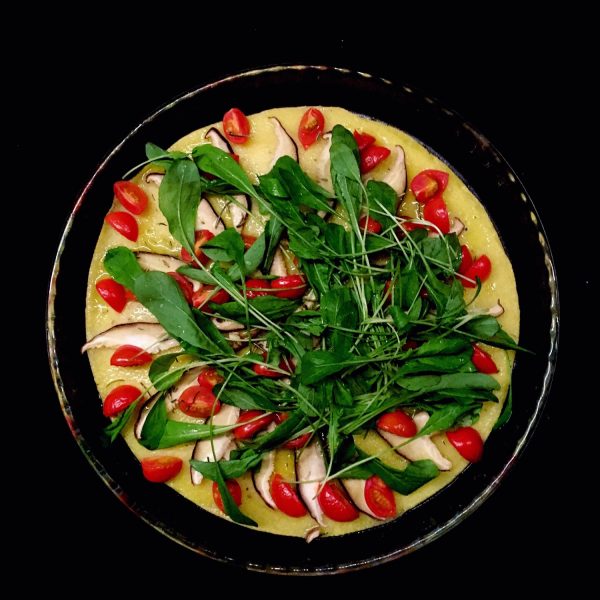
Maybe it’s because we’re going to Italy soon, maybe just because I love it, but there are two things I am craving for: Italian food and Japanese food. So I alternate Italian inspirations and Japanese ones, and sometimes mix the two. When you need a rapid base for dinner polenta is much better than rice. It cokks in no time and it is very versatile and fun to arrange with many vegetables. One of the things I like to prepare it with are mushrooms and tomatoes. Somehow very classic. But you can give it a twist and prepare it like a pizza (vegan, gluten free). Here is my recipe!

Polenta pizza (4 servings)

– 100g of polenta (more or less depending on the size of your pie dish, the thickness of the polenta you want etc…)

– 2 large shiitake or 5 small

– a bundle of rucola

– a hanful of cherry tomatoes

– a branch of rosemary

– olive oil

– salt and pepper

First cook the polenta, you want it slightly dry to hold when it is cold but not undercooked.  Then pour the hot polenta in your olive-oil greased pie dish to obtain an even layer. Since I’m making a “pizza” I don’t want it to be thick, but neither too thin. 5-8mm is the right thing for me. Let it chill. Wash the vegetables and cut them. Add a bit of olive oil on top of the polenta, rosemary, salt and pepper. Then add the tomatoes and shiitake. Pre-heat the oven 30min before serving to 180deg. and cook the polenta and vegetables. Finally when done, just before serving add the rucola. That’s it!

Last bread of the year?

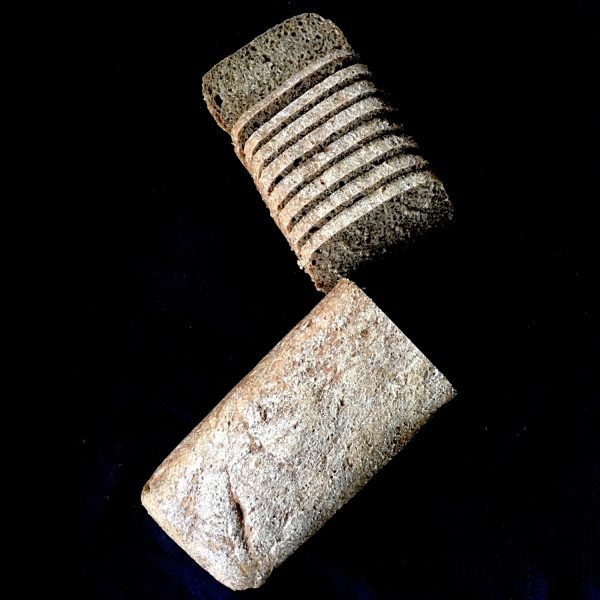
The last week in Japan for this year is just starting. As usual before traveling, the last week is a marathon: squeeze in all the appointments, meetings that require me to be physically here, prepare for packing, and here on top, prepare for Xmas presents, since we’ll follow directly with a visit to our family and friends in France. I’m quite excited to go to Florence, first because I’ve never been there yet, and A. will show me around, there will be cooking opportunities with sone local products; second because these five days there are meant for me to work on a book (not an scientific one, neither a cookbook…). A very new activity, something I don’t know where to start and how to organize myself, it is very challenging for me… I write this book with a philosopher who is used to that so that will probably help a bit… we’ll see. That said, it means that I have less time in the morning to prepare pancakes… so yesterday I baked a big black bread that would be our breakfast for the next three days. I used 1/3 of black wheat flour and 2/3 of whole wheat flour for it. It is very nutritious and tasty. And to slice it more easily and evenly, I baked it in a rectangular bread mold, something that makes it resemble pumpernickel. Simple and delicious. Have a great week!!

Proudly powered by WordPress | Theme: Baskerville 2 by Anders Noren.

Up ↑

Verified by MonsterInsights