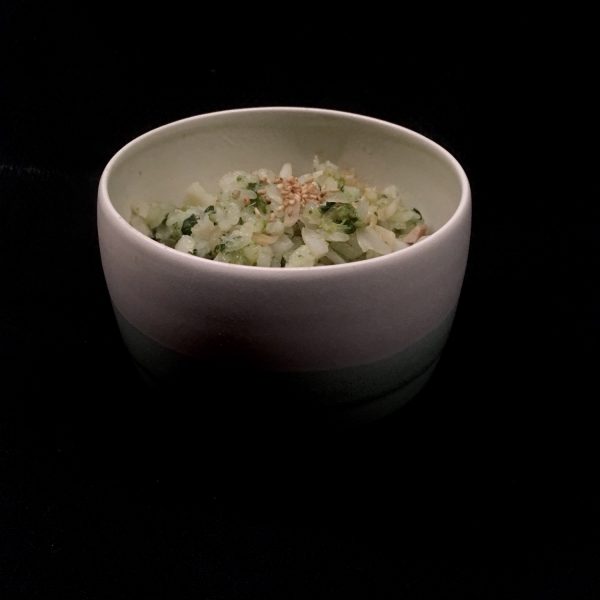
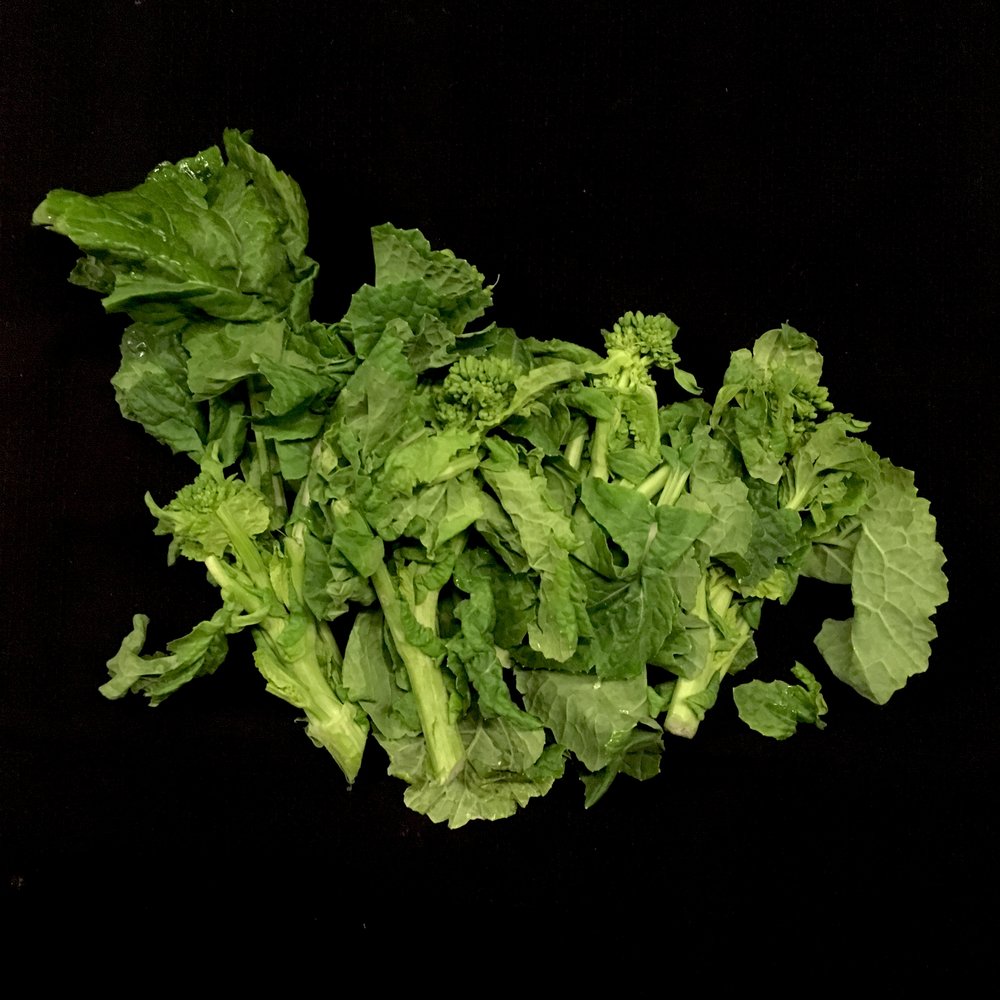
Canola flowers – 菜の花

In a flash we went from cabbages and sweet potatoes to fukinoto and canola flowers. It’s almost spring already, and the vegetables at the farmers market let you know that! Of course it’s only the beginning, and it is nice and interesting to mix winter and early spring ingredients. Canola flowers are versatile and I am very found of them. They start at the same time plum trees start to bloom and they both are markers of our wedding anniversary. Indeed, we got married under beautiful plum trees in full bloom at Gojoten jinja on a cold and perfectly sunny day of February 2007. And for the celebration lunch Kikuya’s chef prepared among the many dishes some canola flowers that we discovered at that time.

I cook canola flowers, or rather I like to call them the Japanese way: na no hana, quite often when the season comes. They are a good alternative to broccoli and more local. I have tried a lot of different combinations and developed many recipes with na no hana, and I still continue. This time with some beautiful cod fish from Hokkaido I prepared a kind of rice bowl. Simple, healthy, tasty and colorful. Try it please!

Na no hana and cod rice (for 2 people)

– 1 cup of Japanese rice (as always Koshihikari from chiba for me)

– 200g or a small bundle of na no hana

– 200g of fresh cod

– 2cups of katsuobushi dashi

– sesame oil, sesame seeds, salt

First start to cook the rice. While it cooks prepare the rest of the ingredients. In a fry pan start grilling the cod on the skin side at medium heat. In a pan prepare the dashi then add the washed na no hana. Boil them until soft. Drain once cooked and chop. Once the rice and the fish are cooked, in a fry pan add some sesame oil, the rice, the fish in crumbles without the skin, and the na no hana. Stir well and cook at high heat for 3-4 minutes. Add salt and sesame seeds and serve. Enjoy!
Italia!

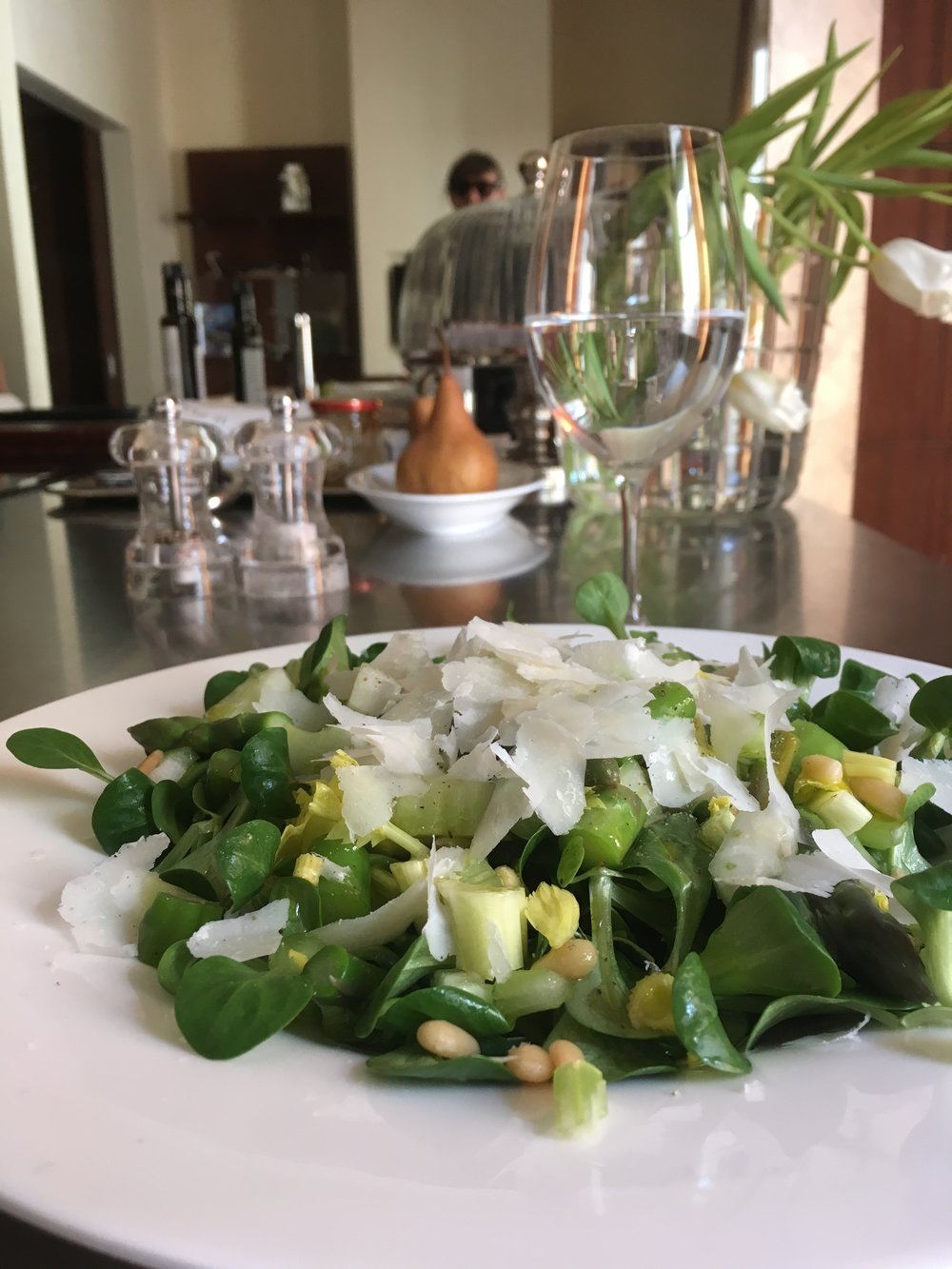
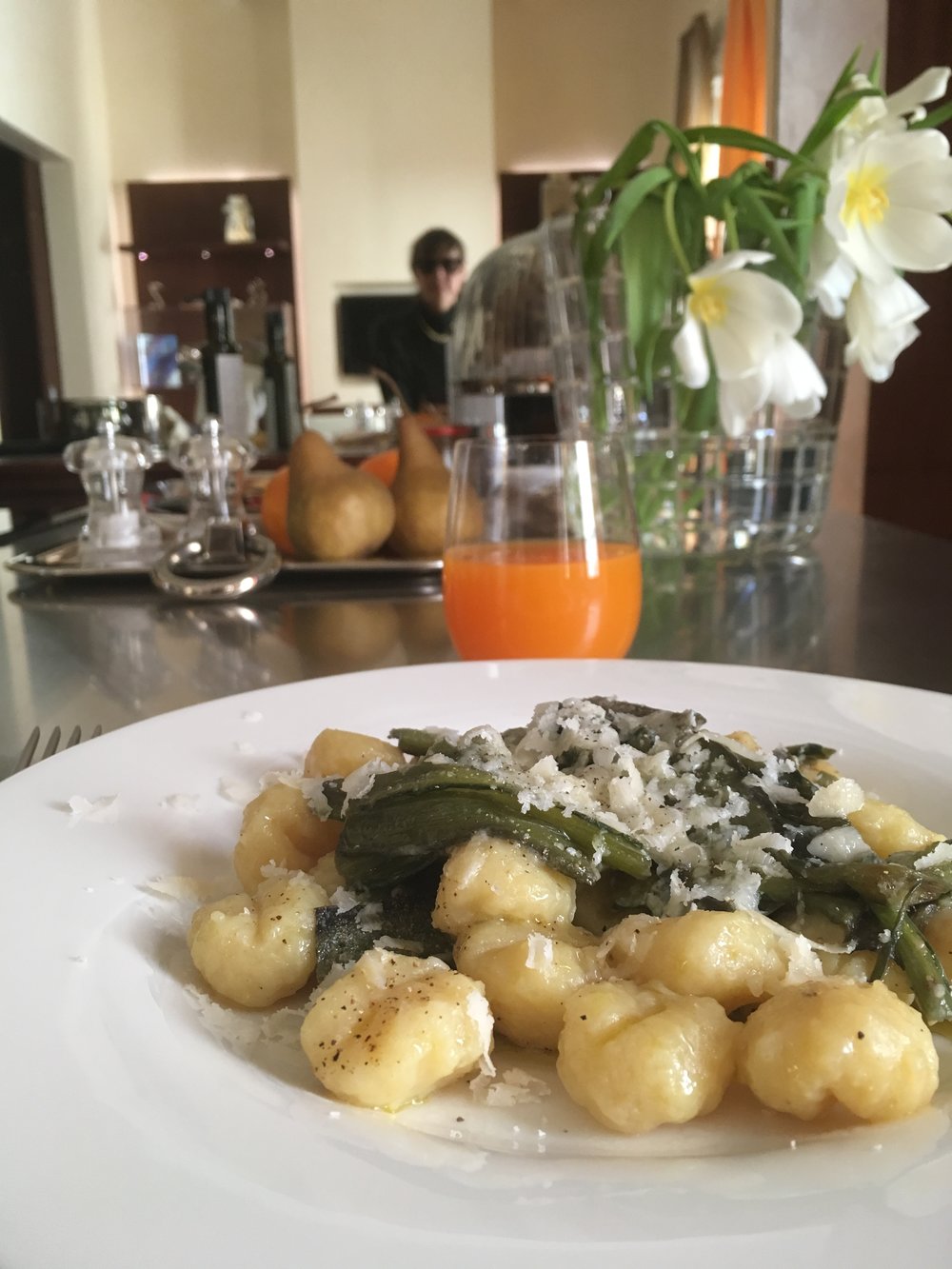
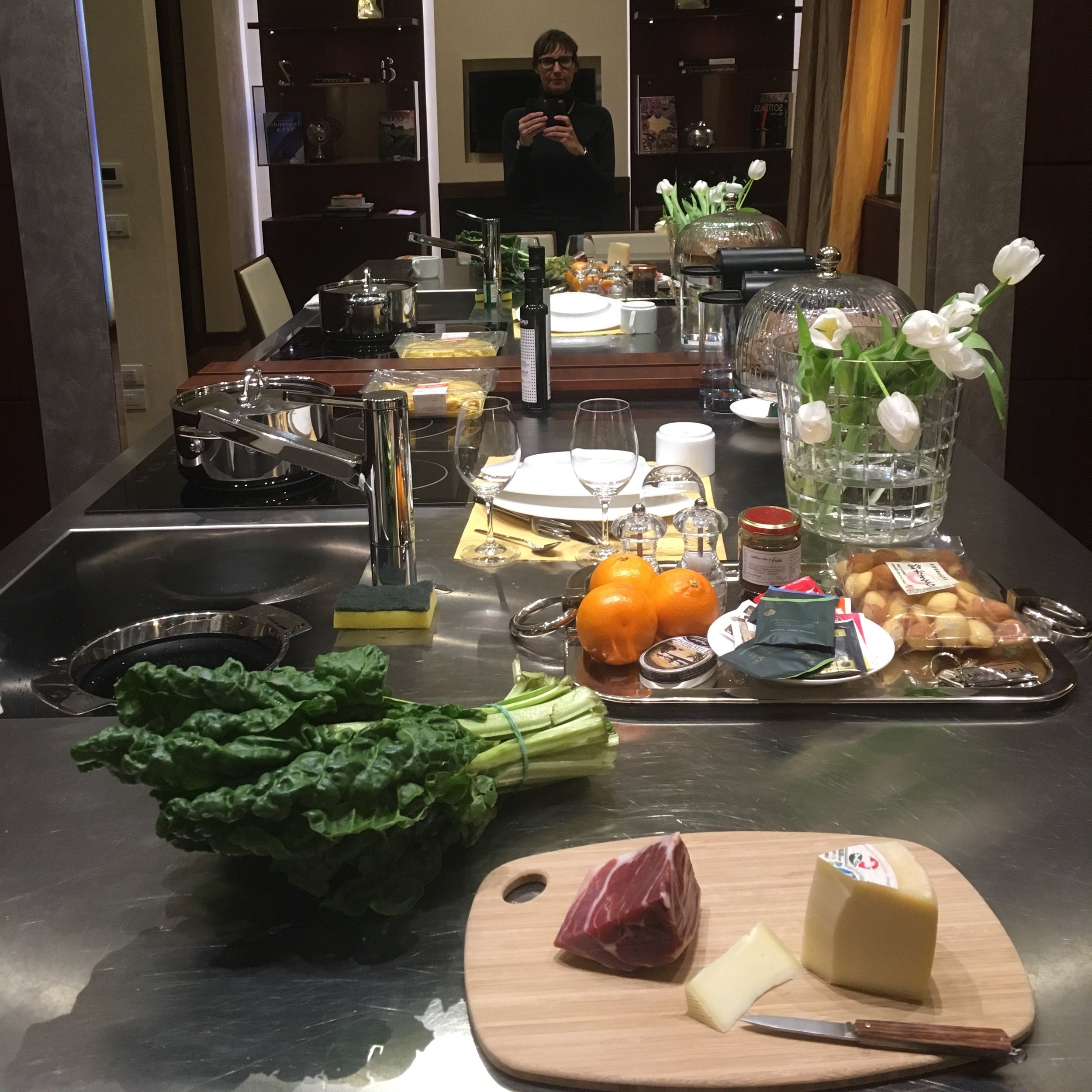
What was supposed to be a nice and peaceful trip to Italy and France started with quite a bit of a commotion with a few centimeters of snow in Paris… and I landed in Paris at 4:00AM only to learn a few hours later that the flights to Florence I was successively checked-in were all cancelled and I decided to fly to Roma instead and take the train and I arrived in Florence 12h later than expected… My long expected visit to the San Lorenzo market, to buy fresh fruits, vegetables, pasta, flowers and cheese was postponed… but not for long! As soon as I came back from work in Pisa on Thursday I went grocery shopping and I could enjoy cooking again the seasonal vegetables that we don’t have in Japan: chards, corn salad…  Sometimes with pasta, sometimes with gnocchi, always with fresh cheese. Here is one of my favorite recipe with corn salad, a fresh simple recipe but really tasty (picture below). I spare you the chard recipes because they were really too simple and the pictures talk for themselves.

Corn salad one plate: 

– 100g of corn salad

– 2 branches of celery

– 6 green asparagus  

– a handful of pine nuts

– freshly grated Parmigiano

– olive oil, salt and pepper  

Wah the vegetables, blanche the asparagus. Chop the celery in dice, chop the asparagus. Mix them together and add the pine nuts. Stir. In the plates, start with corn salad, top with the mixed celery-asparagus-pine nuts, add olive oil, salt and pepper and finish with grated Parmigiano. Enjoy!

Have a great week ahead! 

Pancakes best-of

10 years ago I was baking pancakes twice a year or so… I would often use pancake mix and was never fully happy by the taste and usually had to eat them completely soaked with maple syrup. That was until we travelled to Boston in 2009 and I found a great organic pancake mix at a fancy grocery store. I remember coming back to Tokyo, and waking up very early with the jetlag, the sun was already shining and I decided to take the time to treat us with pancakes made with this newly brought pancake mix before going to work. And it was a revelation, pancakes can actually be really delicious, and they don’t need to be soaked in maple syrup!!! Of course I could never find the pancake mix again, but I didn’t care. What was in the mix taught me that it was really easy to make pancakes from the scratch: any kind flour, baking powder, a bit of sugar or salt, milk (of any kind, or water) and an egg or not (actually now I prefer without, I found the pancakes more fluffy). Since then I have declined all possible ideas: changing the flour: plain, whole, soya, buckwheat, spelt… the milk: cow, almond, soya, coconut, water (when I have nothing in the fridge!), adding muesli, oatmeal, coconut, almond powder, spices, fresh fruits, grated lemon (picture)… making them for breakfast or dinner.., and they are always delicious, different and reslly easy to make. So I roughly cook pancakes once or teice a week when there is nothing else. But here is my ultimate top 3 for the moment:

1. Coconut pancakes: plain flour-coconut milk-grated coconut for a tropical breakfast, perfect with passion fruit jam;

2. Chai pancakes: plain or whole flour-cardamom-cinnamon-ginger for a cold winter morning, great with honey;

3. Muesli pancakes: whatever pancake base with muesli (nuts, cereals and dried fruits) added, anytime an extra energy is needed, I love these ones with butter.

But I must say that the lemon pancakes I cooked recently were amazing and could be in the top 3 together with muesli . Unfortunately I find it hard to get organic or non-chemical/wax lemons so it is not a recipe I can often prepare. Though last weekend I bought about 20lemons at a local organic market in Isumi, so I will use more lemon in the next weeks (after I’m back from Italy and France).

Lemon pancakes 

– 150g of flour

– 1tsp of baking powder, a pinch of salt

– 1tbs of brown sugar

– the zest of 1 lemon

– 200ml of soya milk

– a bit of water

– a bit of vanilla  

Mix all the ingredients to obtain a creamy dough not too liquid. 

Heat a large fry pan (anti-adhesive) pour 3 or 4 rounds of dough (depending on the size of the frypan and of the pancakes) cook at medium Heat until the top is almost dry, flip and cook on the other side. Repeat with the rest of the dough. Serve with honey or yuzu jam!


Romanesco


Every one knows this fractal cabbage that is as beautiful as delicious: the romanesco! It is now not too difficult to find it in Japan too, and they even grow some in Isumi. Since I want to keep it simple and to be able to admire its beautiful shapes that usually I use it simply steamed, or roasted. And sometimes in quiche (all the romanesco recipes are here). I find that the oven slow roast and the quiche overall suit very well this cabbage, and its flavor suits the flavor of buckwheat and shiitake very nicely, so I made a quiche half flour half buckwheat flour, and in the egg base I added plenty of turmeric and pepper and slices of fresh raw shiitake and raw romanesco. And it gave a very subtle combination that was very pleasing.

Have a great week! 

Soup or so

After the snow last week, the snow again this week. The weather in Tokyo was gloomy all of Thursday and Friday and I wanted some simple warm food. One thing I really love in winter is Japanese cabbages. They are perfect steamed with olive oil, thyme and salt, raw with miso, but not only. With carrots, sweet potatoes (or potatoes) they make a perfect rich soup. Soups are an alternative for one plate in winter. And since A. was complaining about the little animal protein we had recently I just added chicken to the basic vegetables soup. Here is my super simple recipe, and very very healthy.

Cabbage soup (for 2 people) 

– 1/2 cabbage

– 2 carrots

– 1 leek

– 1 sweet potato  

– mizuna

– alfalfa  

– 1 chicken breast (optional)

I just wash and chop the vegetables, and put them in a large pan full of water. I cook at high heat until it boils, then lower the heat to low. Chop the chicken breast, add it. Cook for 15min. In the mean time wash some mizuna and cut in 4cm long.

Serve with not too much bouillon, top with the mizuna, and top again with alfalfa. Add a bit of salt, pepper and turmeric if you like. 


Plating

We say in French “les jours (les semaines, les annees…) se suivent mais ne se ressemblent pas”  (days (weeks, years…) follow each other but are never alike) and this is so very true these days for me! Not that I complain about it, but there is very little routine. One day it snows, the next is warm; one day I have intense discussions at work with many different experts, the next I spend in paperwork and administrative tasks; one day I spent writing and reading articles, the next listening to students presentations; one day I run errands and meetings in the city, the next I’m seated 12h in my office… and one day I’m in Tokyo, the next in Italy or in France… It’s a captivating work I do and I’m grateful for all it brings, even a short interview in a French peridocal! But honestly this is not making me better at plating, this is a constant observation. Regardless how my recipes are yummy-easy-healthy. The problem is that I seriously don’t know how to improve it. When I look at my IG feed I feel sorry but I use only my best shots… but when I look at my picture album, I see all these delicious tests I made that I will never dare sharing… For example this amazing plate I made with wild hijiki, grilled swordfish, tomato and caper sauce… deliciously half indeed but the pictures are so bad: lighting, plate, plating… all wrong… Or this broccoli and fukinoto bulgur dish (this one is borderline so I decided to share it… but honestly I hesitated a lot before showing it… but fukinoto are seasonal and the season is right now, and the mix with the broccoli was really great… so at some point I wanted to share it.. because there are so many ways to eat local and seasonal staples that change from the traditional ones. For example fukinoto is mainly eaten in tempura, in miso soup or pickled in miso… but in kind of risotto like this recipe it is also really great! You’ll find the recipe below. And if you have plating advices for daily life food, pleeeeaaaaase let me know!!

Bulgur risotto with fukinoto  (for 2 people)

– 100g of bulgur (I use fine one for it cooks slightly faster) 

– 8 fukinoto of medium size. If they are large 4 or 6 is enough

– a piece of broccoli

– water

– olive oil, salt and pepper  

In a pan grease with olive oil and heated pour the bulgur, start cooking at high heat while stirring for 2 min. Lower the heat, cover the bulgur with water and add about 50% more in volume than the bulgur. Wash the broccoli, the fukinoto. Cut them (if the fukinoto are small don’t cut them). When the water in the bulgur as decreased and is no longer visible add the broccoli and cover, 2min later add the fukinoto and cover for 3 more minutes. Add salt, pepper, olive oil and stir before serving.

Ravioli again!

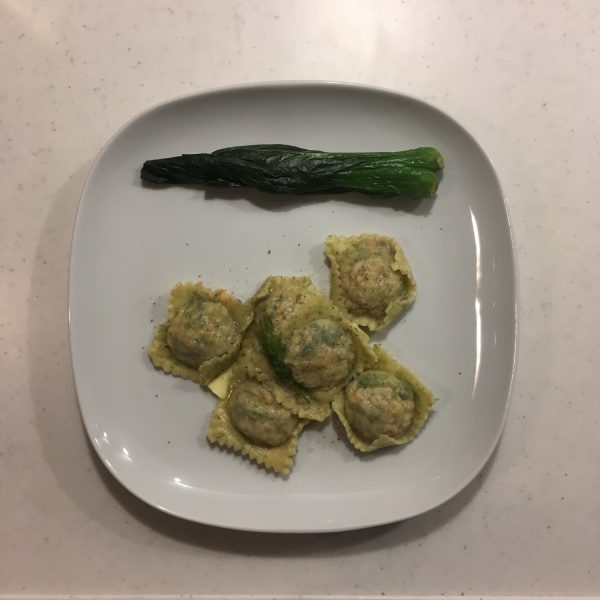
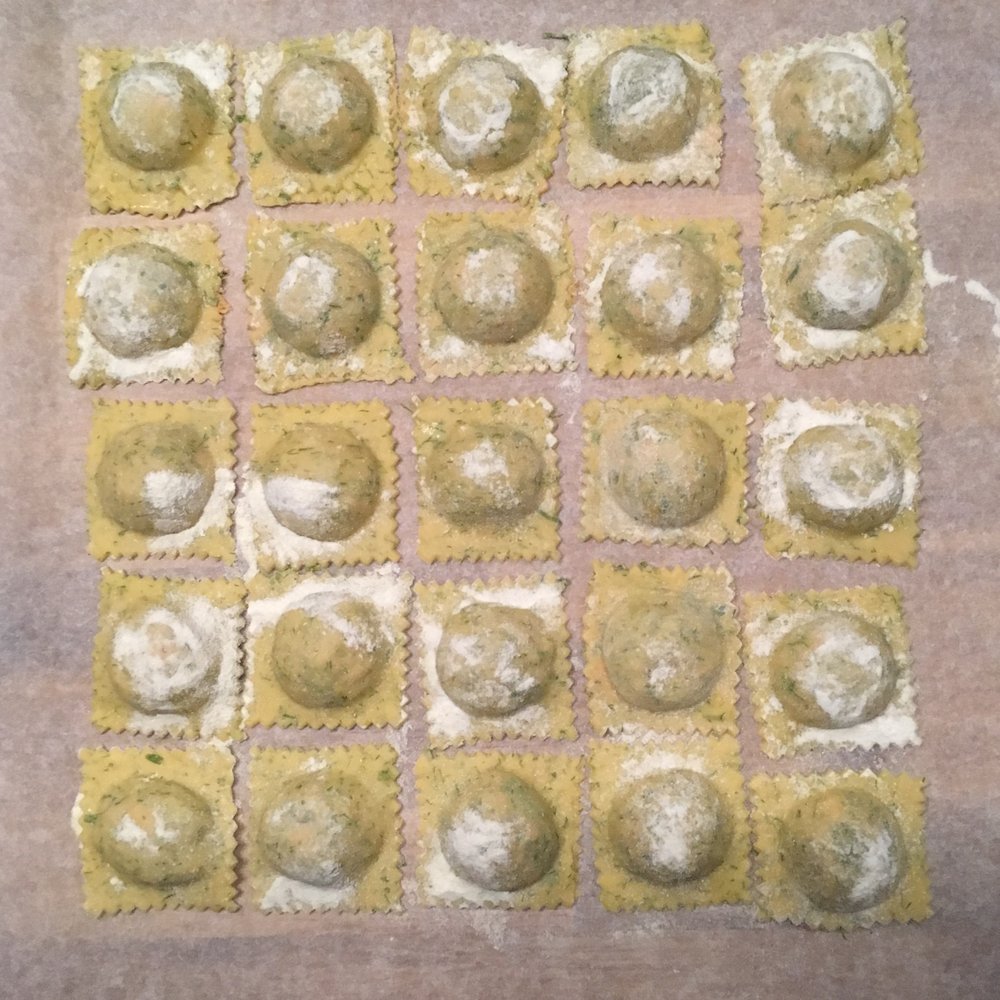
After this busy week at work and several dinners out, a little bit of slow cooking was more than welcome! But it was so cold that I didn’t even dare trying to make bread. Indeed, when we arrived Saturday morning it was 2-3 degrees in the house, it slowly went up to 15-17 by the time it was bed time, and again it was 3 degrees when we woke up the next morning. These old Japanese houses are really not meant to be warmed, they are wind breakers, just to live in wearing many warm layers of clothes. And it totally works. But to make bread in such conditions is really hard (oh! Maybe that’s one reason why bread and alike are not traditional to Japan!). The bread takes forever to rise and it’s never long enough! Instead, I simply kneaded some pasta dough to make ravioli. There was some beautiful salmon from Miyagi, some baby komatsuna, and I had some dill on the verge of drying. The recipe was all set. I put the dill chopped directly in the pasta. I made filling by first grilling the salmon and blanching the komatsuna, then put the two in the blender to obtain an almost creamy texture. Rolled the dough in my pasta machine (with the dill I found it hard to roll it to extra thin) and made the ravioli. I served with some more blanched komatsuna, butter for me, olive oil for A. and it was simply delicious!

I wish a good very week, it might snow again in Tokyo!

Whaou!

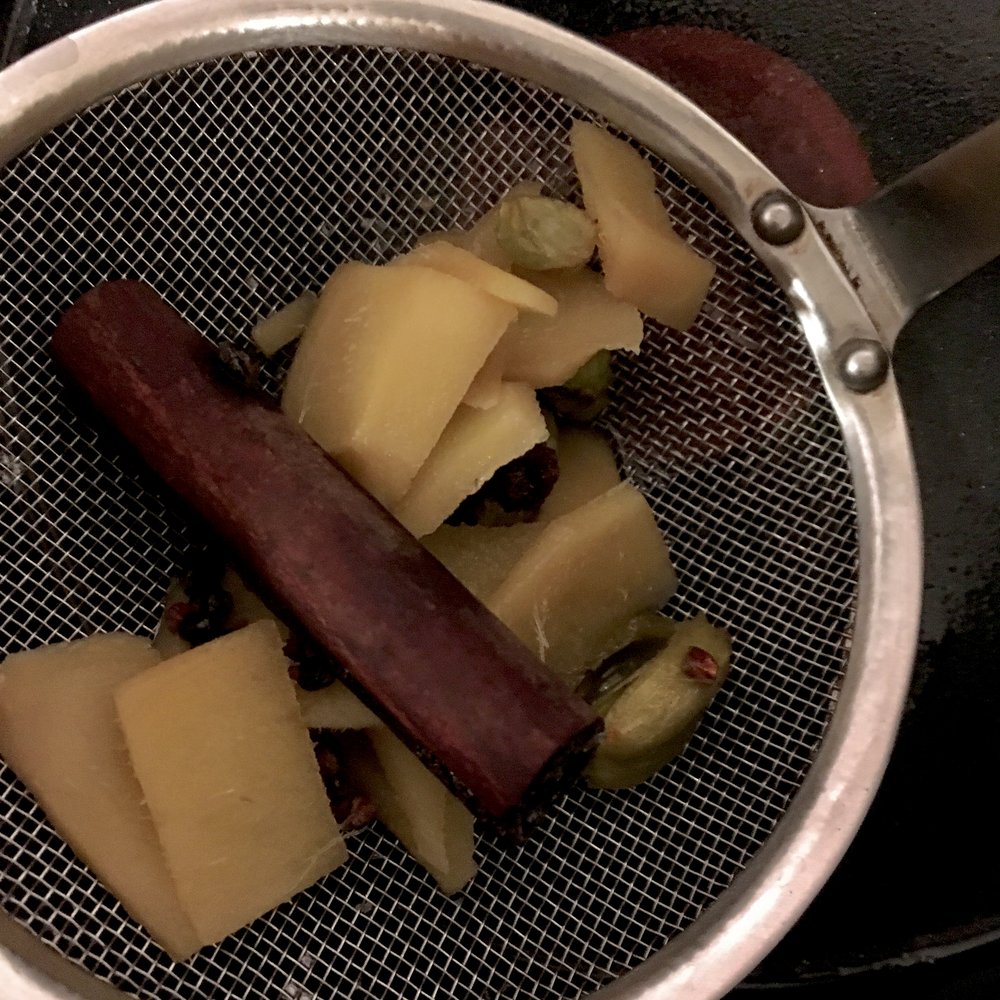
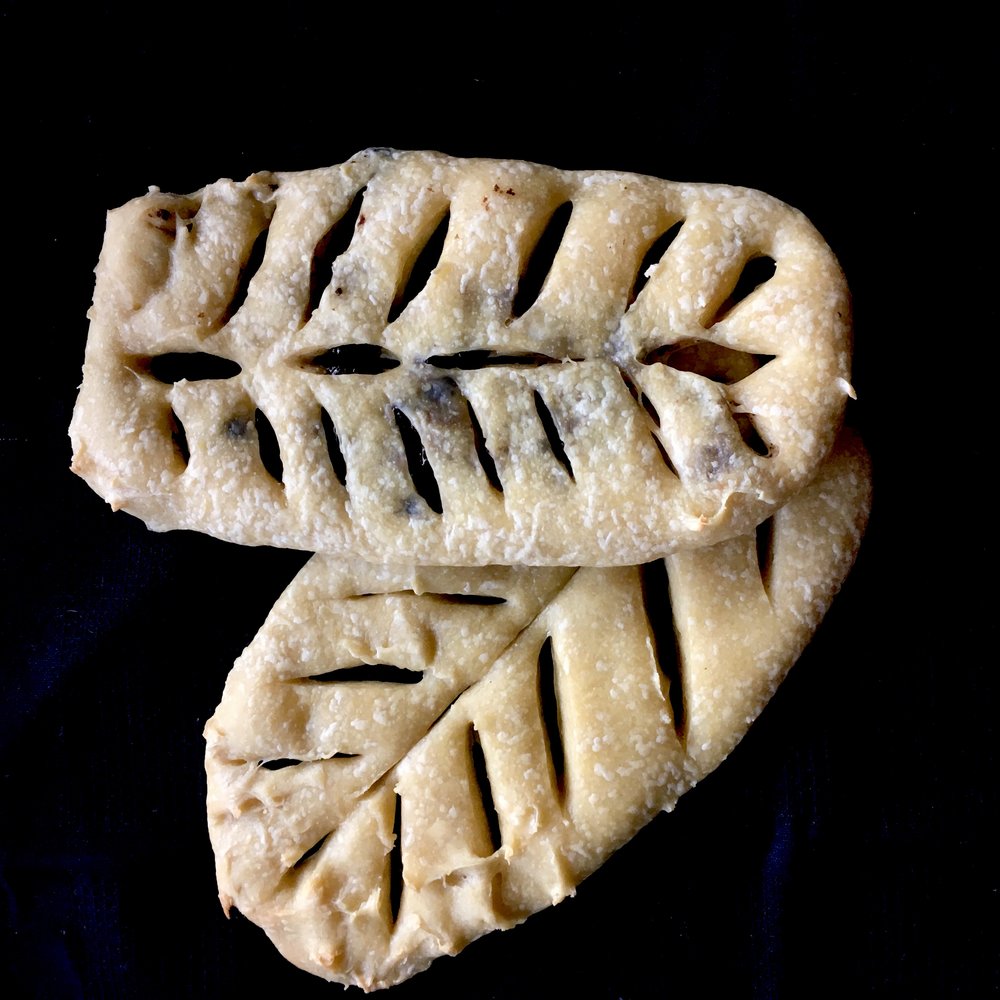
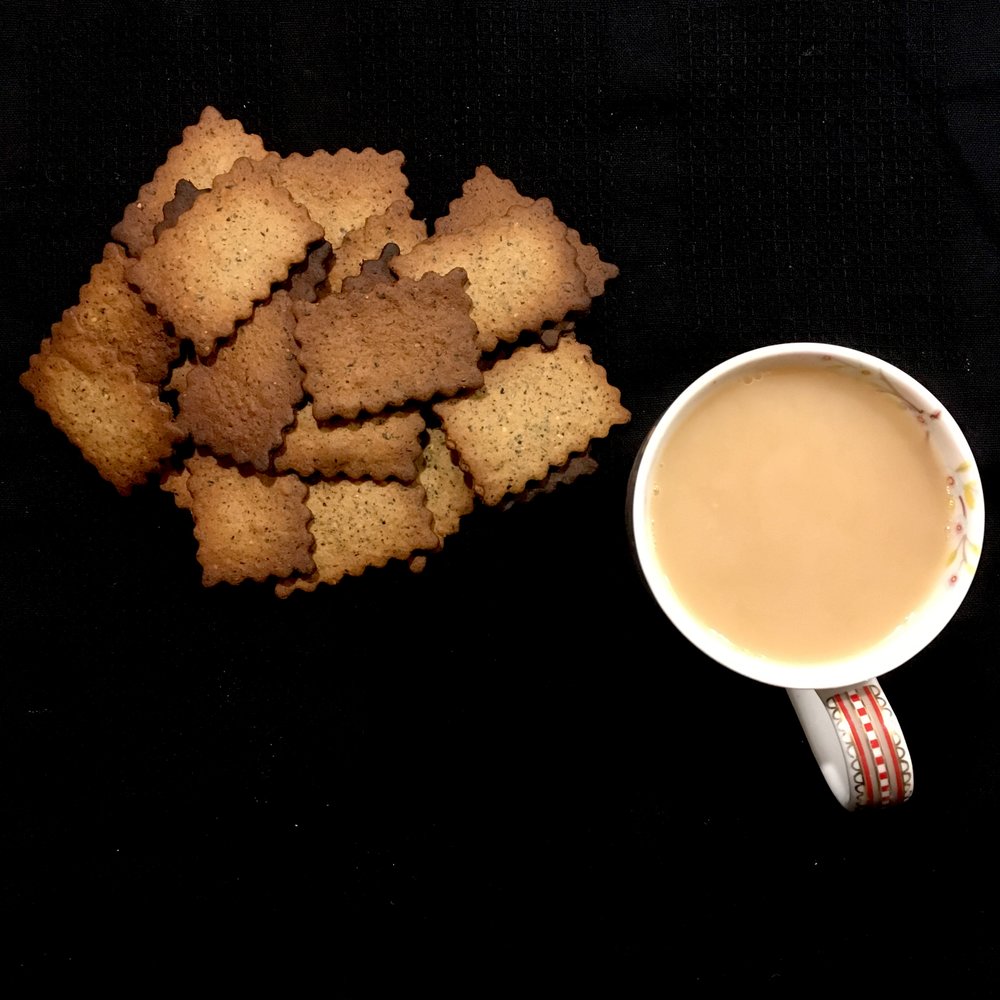
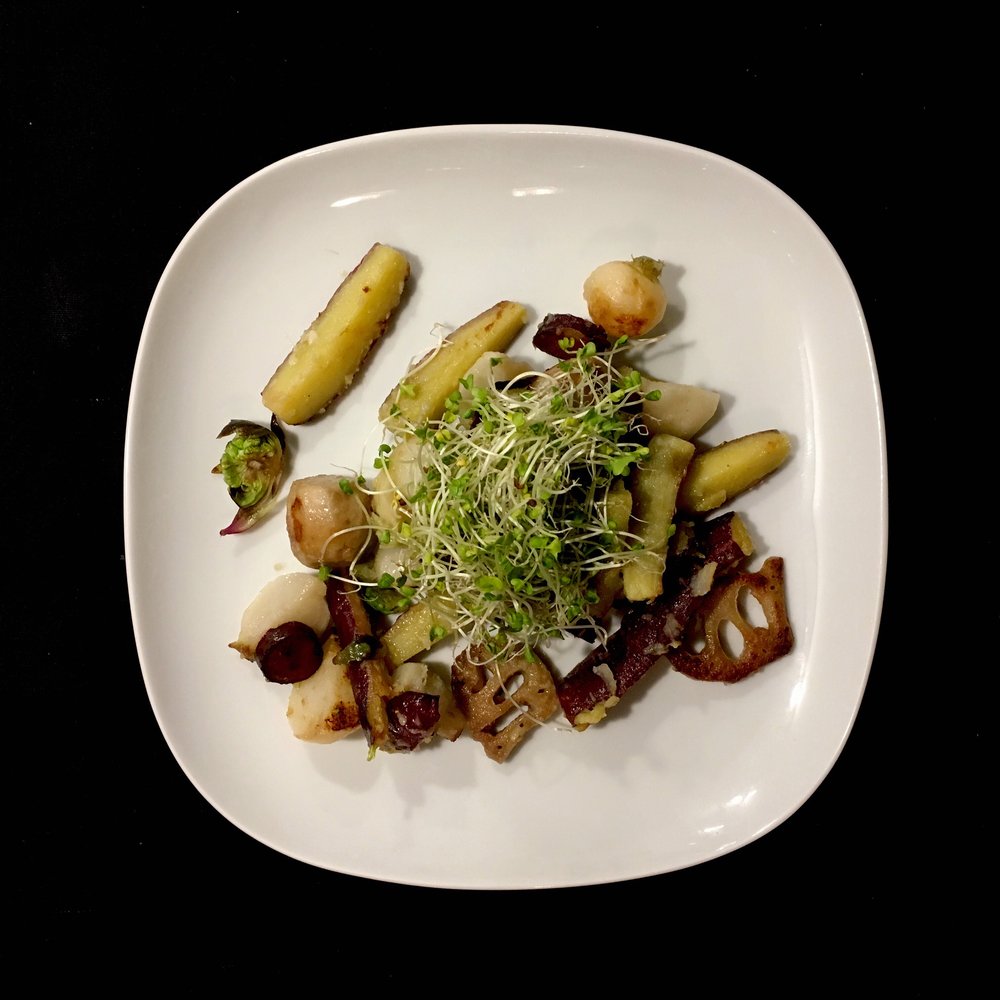
Quite a week, and it’s only Thursday!!!  So let’s get back to when I left you last Saturday… Sunday evening we had 4 guests (mix of French and Japanese) for dinner at home in Tokyo so I cooked some of my half new recipes: creamy cauliflower soup with curried croutons (recipe below), pork cutlet with roasted roots: lotus, taro, sweet potatoes, turnips, deglazed in soya sauce, and for dessert hasaku with spices syrup (ginger, cinnamon and cardamom) served with sesame and kinako biscuits. A. picked many Japanese and French wines to accompany my food. Oh… and I also made some plain and olive fougasse, with the olives from the garden in Aix that my mother prepared! But that was Sunday and it seems ages already!!!

And then Monday it had snowed, quite a lot actually, so I came back home earlier than usual to avoid being stucked with train problems. And I was happy to work from home eating left over sesame-kinako cookies with a hot chaï late. And having nothing to prepare or so for dinner since I hade made too many roasted vegetables! I like to recycle leftovers and do new things with them. So I added fukinoto and topped with sprouts for a perfectly balanced dinner. It was a great flavor experience! Fukinoto bring so much!! They are also the taste of coming spring with plum blossoms! And then there was this workshop I co-organized at the French Embassy. Everything went great, I met amazing people, now I can think about what’s next (and there’s plenty) and go back to the work routine for a short while!!

How is your week doing? 

Cauliflower soup with curried croutons (6 servings as starter)

– 1 cauliflower

– 1 potato

– 150ml of cream

– 4 slices of bread (I used half rye bread I made) 

– 2tsp of curry

– oil for the frying the croutons

– salt, pepper  

In a large pan I boil the cauliflower washed and chopped and the potato, peeled and chopped too. When they are very soft I blend everything. Add water if it’s too thick. Then add the cream.

In a fry pan add oil and the curry, cut the bread in cubes and fry them while turning them regularly. When golden take them out and keep them on cooking paper. When serving heat the soup, add salt and pepper if you lile, serve and top with the croutons. I added a sprinkle of tumeric for adding a bit of color.

Late night dinner

There are days (quite many recently) like that… when I start cooking past 23:00 for our dinner. We’re obviously starving after a long day at work, but nonetheless we want something fresh and tasty. I found that’s often when I get the most creative, in particular when the ingredients are limited as in winter (in summer tomato-eggplant-zucchini would just work fine…), I focus on herbs and flavors. Pasta would often be the base, while they boil I would of course prepare the topping. Last night I add a great inspiration and the result was sooooo great that I really want to share my recipe with you!

Celery pasta  (for 2 people)

– 125g of pasta (I used whole wheat penne)

– 3 branches of celery

– 1 or 2 mizuna bundles

– 3 branches of fresh dill

– olive oil, salt and pepper  

Boil water for the pasta and boil them while you prepare the vegetables. Wash and chop the celery, up to the leaves. Wash and chop the mizuna, same for the dill. In a heated pan add some olive oil, toss the celery, and stir  a bit. Then add the dill and finally the mizuna, salt and pepper. The vegetables don’t actually need to be cooked, so the time they spend in the pan shouldn’t exceed 7-8 minutes. They need to be just warm and rolled over in olive oil. Drain the pasta when cooked and serve. Top with the vegetables. Add a final olive oil touch, and ground pepper. Actually you can add some gratted Parmigiano, it is the perfect final touch!

How do you like your pasta?? I’ll be happy to try new ideas and recipes!

Proudly powered by WordPress | Theme: Baskerville 2 by Anders Noren.

Up ↑

Verified by MonsterInsights