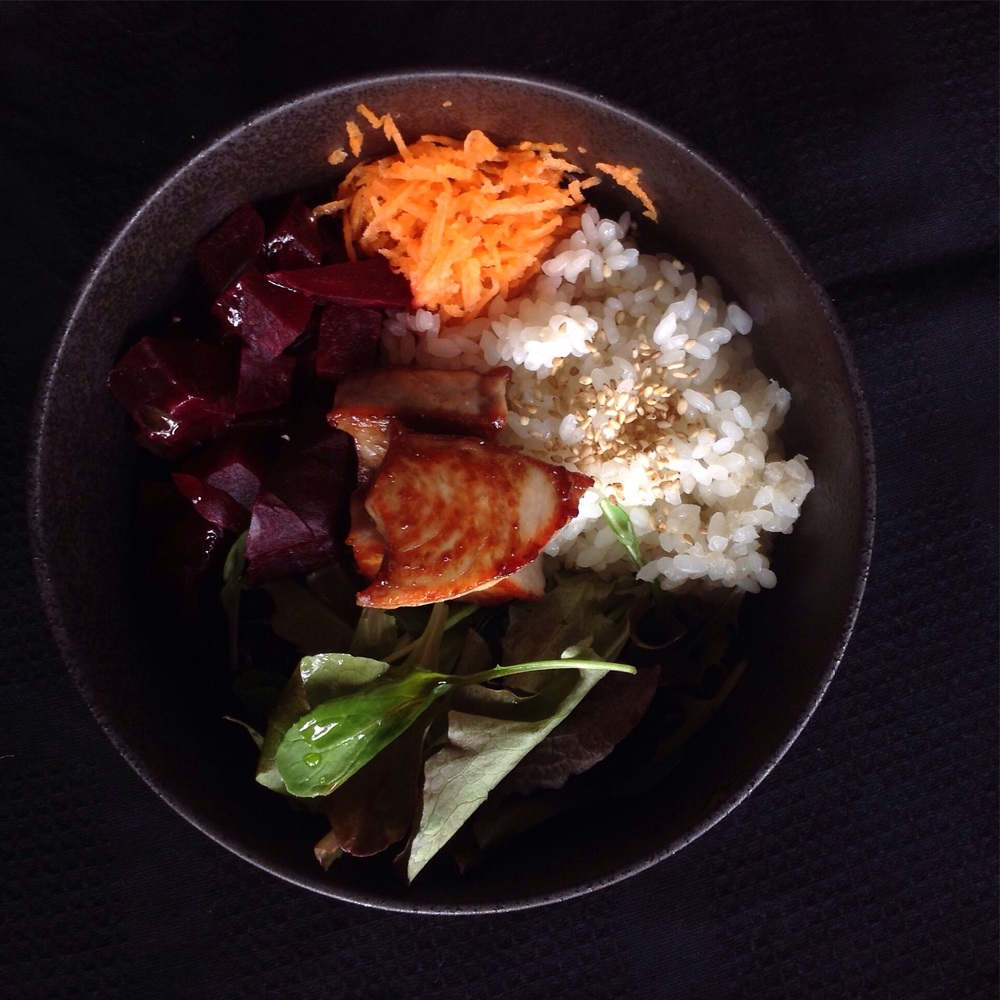
I’ve heard often that when I was a kid I wouldn’t eat nor sleep. I remember very well not sleeping and that’s why I had my first robot: robby, a robot that would lit up when, scared I would wake up and cry for someone. Robby would also play with me. My first robot was an interacting robot that would keep me company, basically the kind of robot I develop now. Regarding food, I remember loving only a few things and beetroot was certainly not one of them! Now I quite like it and enjoy a lot when they are added to salads. I like the taste of sweet earth they have. So today lunch was beetroot, carrot, salad, rice, grilled katsuo and a bit of sesame. Have a nice weekend!
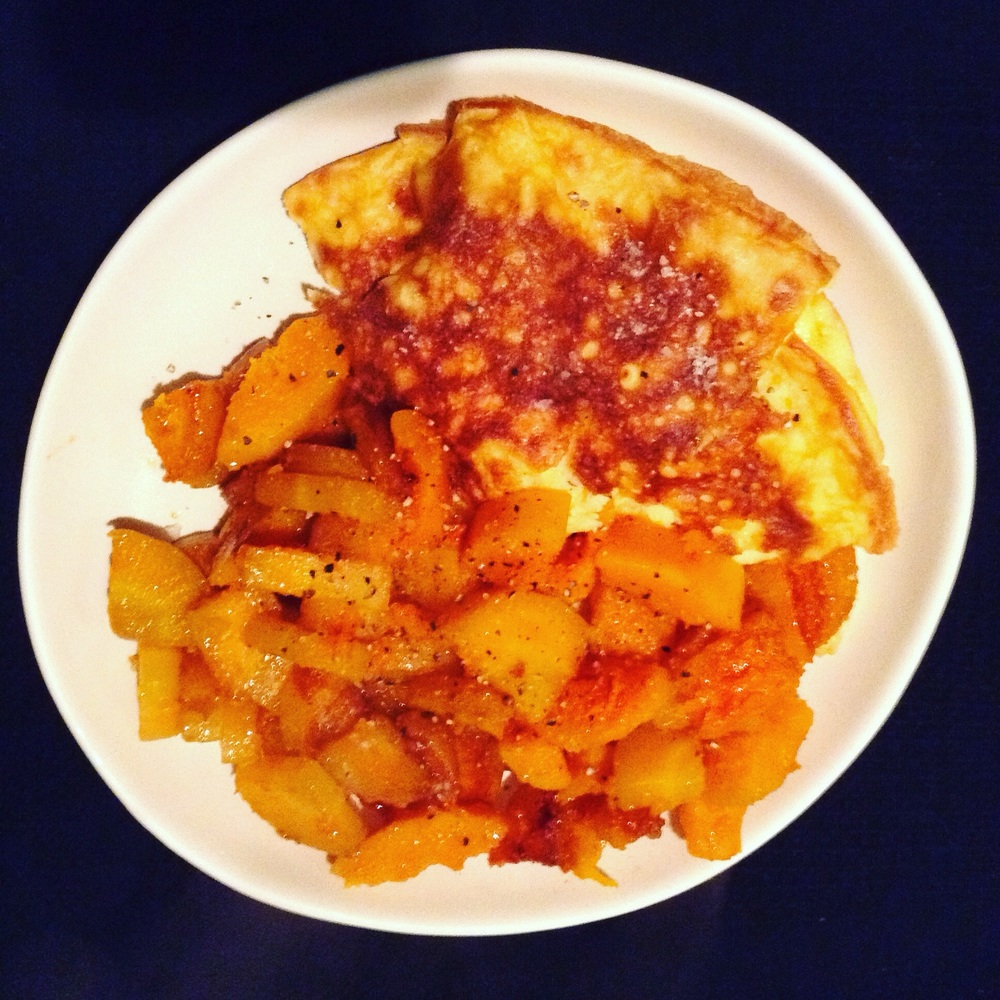
When Thursday and Friday arrive, usually the fridge is getting empty of fresh veggies, but this week since we had some guests for dinner I bought more than usual last weekend to have a wide choice of possible menu, and so there’s still a few deliciously fresh veggies wauting to be cooked. In particular it’s rate to find things different from kabocha in the pumpkin-squash family, but last week I found a beautiful butternut squash. And after all the looking delicious pictures found on IG this autumn, I was really excited to cook it. I just roasted it with yellow carrots, and made a fluffy whipped omelette (which almost tasted like a quenelle and made me think that I really should cook some!!). All in orange tones, the whole plate is served warm and with just a bit of salt and pepper on top. Have a nice Friday!
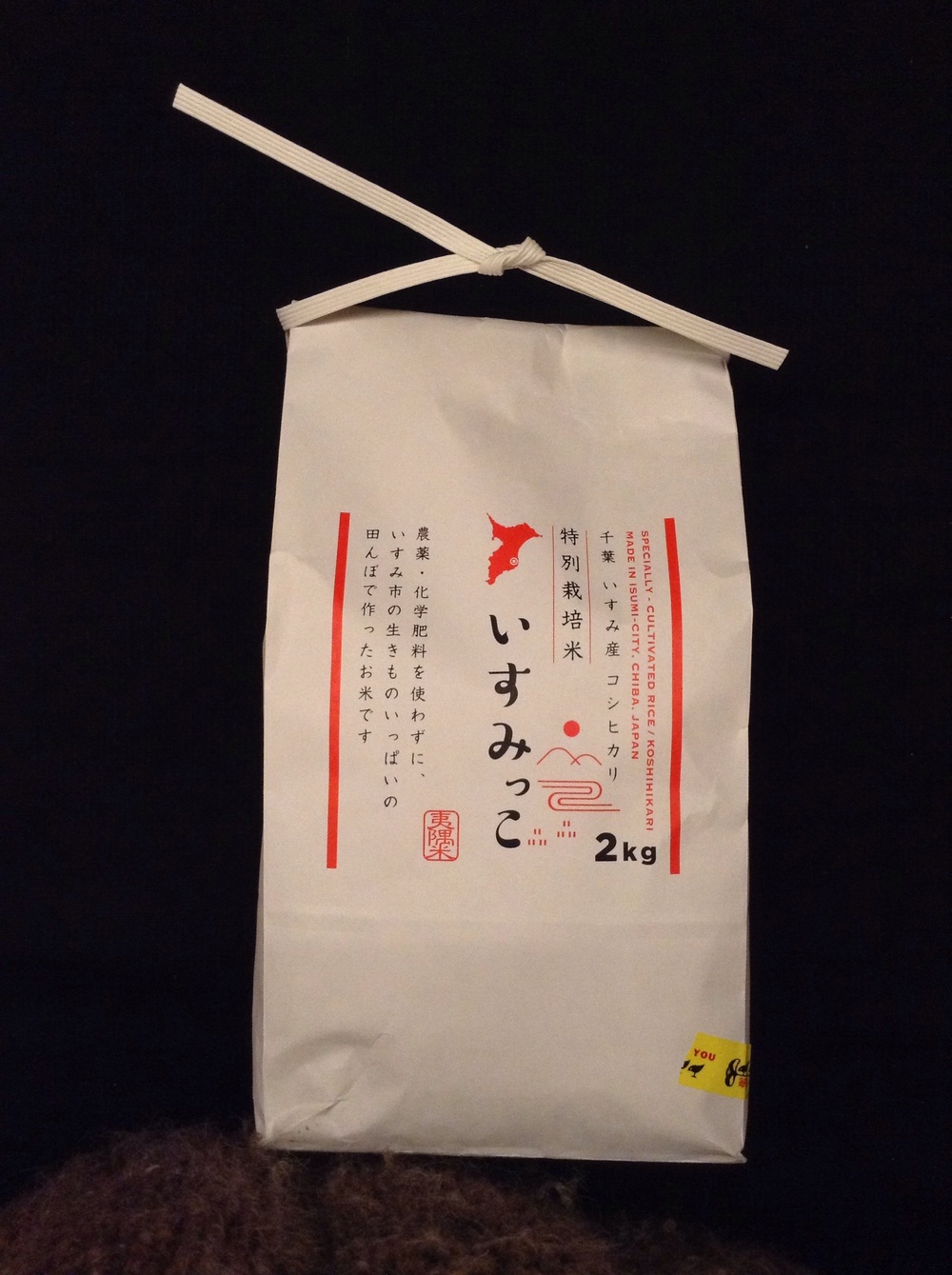
In Japan finding deliciouss Japanese rice to cook is not difficult, it’s like finding bread in France or pasta in Italy. Yet finding organic rice or at least non chemical rice is not so easy. There are only few places I know in Tokyo where to find some for sure and the one usually sold in supermarkets is not chemical free. In the countryside the “Eco” label is already a guaranty of better quality in terms of production, but I’ve hardly found it in the city. Isumi is one place that grows rice in Chiba and they have a rather big production, and I was surprised the other day to find something new on the shelf at the local cooperative: a 100% chemical free rice grown locally and sold in a nicely design package. So I had to buy it. I support all initiatives for local, chemical-free, environmental-conscious production and if possible aesthetical and sustainable packaging. I think this one has it all. I believe the packaging (who buys 2kg rice vag in the country???) is really targeted at Tokyo hipsters (even if there is nothing really as such) but I think there is something good in developing it, it just has to stay sizeable and not to become a crazy business which losses all the ethics and original purpose.
Rainy Saturday calls for a drive to some antiques and old stuff shop or kottoyasan (骨董屋さん) in Japanese. There are not too many but the one from the country are usually much better than in the city and much cheaper. We usually go to one we like in Otaki and where I’ve found many treasures, this time we decided to find new ones, and drove to Kimitsu (west coast of Chiba peninsula). To find a really amazing one. Tons of outdoor stuff (finally found a little (=that fits in our trunk) lantern for the garden), music instruments, paintings and as usual potteries, plates, bowls… As in any of such places it’s never heated nor lit and so cluttered that you need a flash light to see things. Moving around also is an art since passages are really narrow! But still I love these places and could stay hours, looking at all the pieces of life and history that has accumulated there. A perfect occupation for a rainy day.
And because today was unexpectedly sunny we could spend the day outside trimming trees and trying a setting for the lantern.
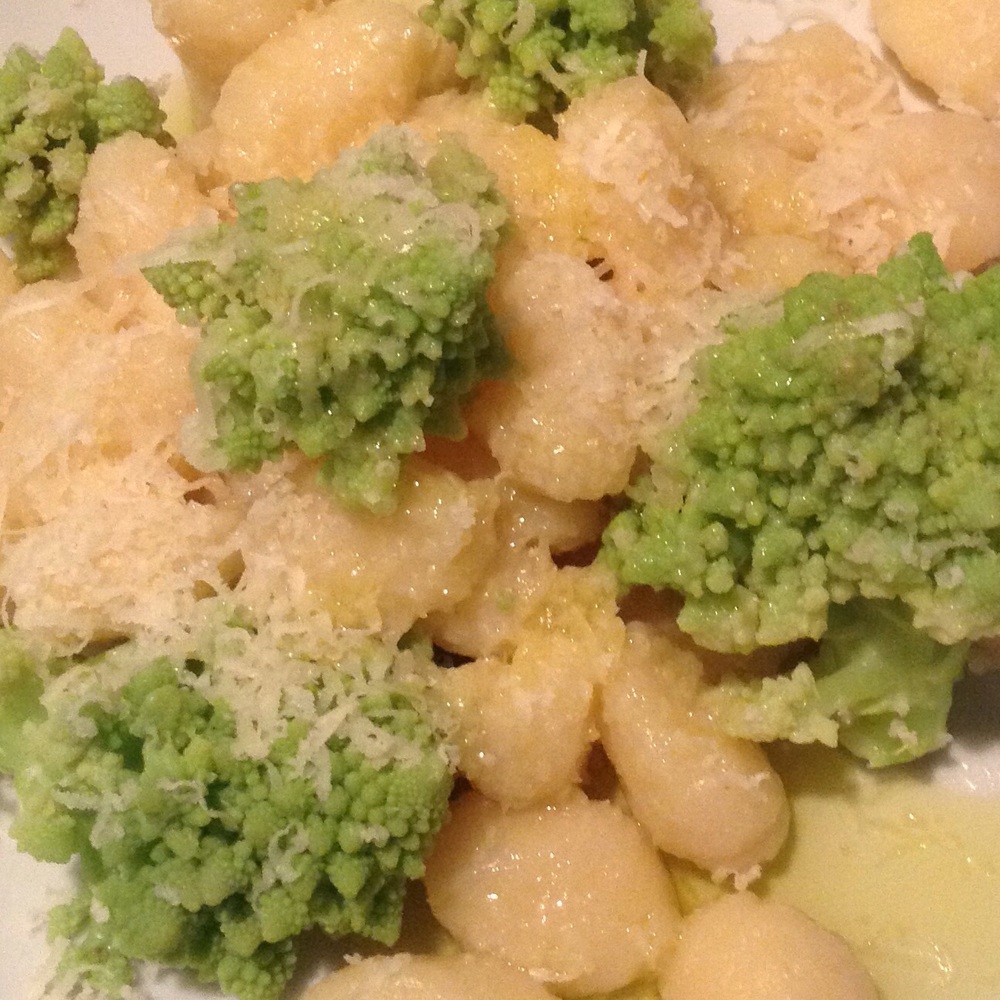
When comes the end of the week (Thursday or Friday) our resources shopped the previous weekend in the country are almost all gone and only a few things remain. This week it was the case gor the romanesco. So beautiful but we had other things to eat first. So easy to prepare that it’s always perfect for late dinners. I tried the combination gnocchi-romanesco-Parmegianno and it was just sublime. As you may guess these are not homemade gnocchi unfortunately, but it work as well if you have some. Boil the gnocchi and 1min before they are ready add the romanesco in little bouquets. Serve altogether when the gnocchi are ready (they float in the water) add so freshly gratted Parmegianno (mine is a souvenir from our holidays in Italy), olive oil, salt and pepper. Enjoy right away.
Recently I found this urgent need to prioritize both at work and at home to get the best of my time. I don’t know if it’s specific to my job, or to being in Japan where working long hours is common yet with poor productivity, but I feel inefficient. At work it’s quite difficult to prioritize because for me the most important is research and teaching, but I spend most of the time doing paperwork, administration, budget plan and research proposals, though what I really want to do is spend more time with my students and read and write more. In the lab I’m on my own, without any assistance and a growing number of problems to solve, all being more pressing and paying often for others poor organization. At home it’s much more simple and rather the contrary, I have a lot of help, good organization and sharing tasks allow to always have time for urgent matters, and for cooking. Which is absolutely important for me because the kitchen is the place I can make the transition from work to home, set my brain to a quieter pace after the bustling day by keeping it busy with thinking and inventing but on a diffferent topic, by keeping my hands busy with a knife requiring velocity and precision. The more veggies to cut, the more relaxed. And only after that can I sit and relax. That’s why for me going to the restaurant after work is hard because I lack the transition.
So here is a little pasta dish, nothing too exciting but still delicious with trofie, plenty of leek cut in small pieces and diced tomatoes, olive oil of course too! Something that just require the perfect amount of time to move on and of knife manipulation to stay focused. Happy Wednesday!
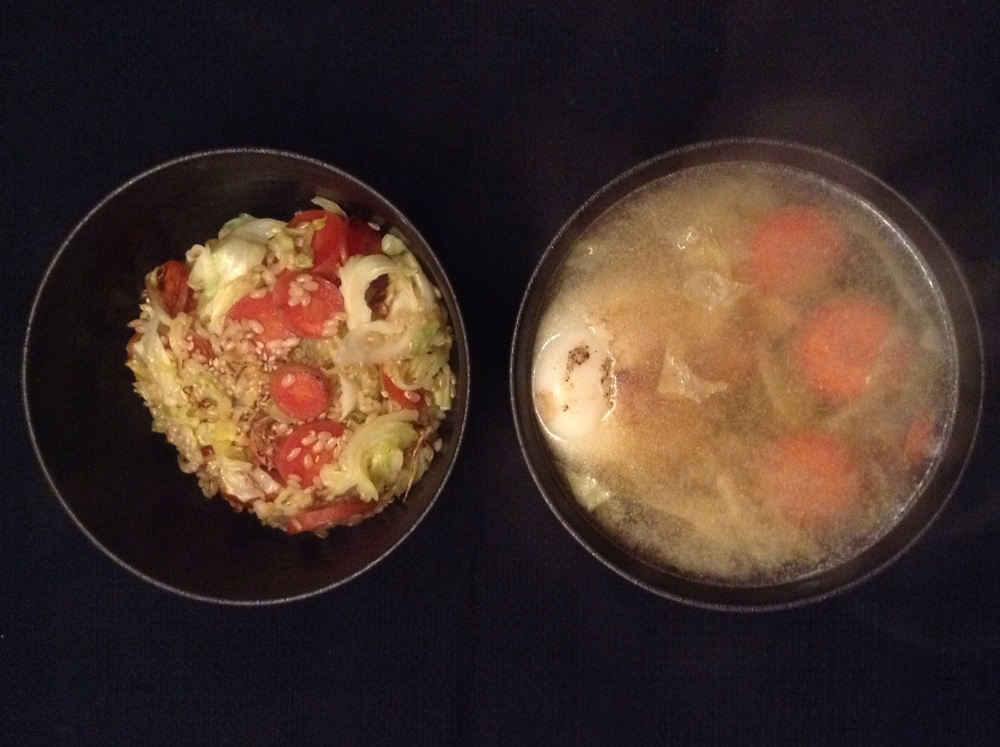
This weekend I tried quite a few new recipes, mainly for breakfast and teatime and we spent quite some time outside in the garden preparing for spring: there’s still loads of fallen leaves, and trees to trim… So when it comes to a meal, something warm and energetic was really important. I had a piece of cabbage that I really wanted to use, and some beautiful winter red carrots. The leftovers of whole rice, and fresh rice cakes (mochi) that I bought at the local farmers market (I love rice cakes but my husband don’t like them to much so I don’t buy fresh ones too often). So I decided to prepare a two way dinner, one a vegan chahan (sautéed rice) and the other a kind of o-zoni (the soup for new year with rice cake in). In a wok I cooked the chopped piece of cabbage and one carrot sliced with a bit of oil and then a bit of water. In the mean time I prepared some konbu dashi by boiling two pieces of konbu in 0.5L of water. I then moved roughthly half of the veggies in the soup and cooked a little longer, while in the wok I added the whole rice already cooked, a bit of sesame oil, and some sesame seeds. I grilled the rice cake to soften it, and added a large spoon of miso in the soup (ideally white miso, but I didn’t have any).
I served both, added the rice cake in the soup, and ready to eat!
Every year (but last year) there is a big event organized by my husband shamisen’s teacher where a lot of people from the traditional Japanese entertainment business and their apprentice and students join. The event is centered on ha-uta (端唄), a type of Japanese singing from the late 19th early 20th, where is added some naga-uta (長唄), dancing and a lot of other attractions. We’ve been participating in the event every year. My husband plays many pieces and for me it was first just a lot of fun watching and listening (before I starting singing too) and a great chance for me to wear a kimono, because everyone is wearing one! Every year I challenge myself with a new pairing kimono-obi, and by wearing it myself. But always with a twist, because in the end I am not Japanese and everyone knows it!!!
The pairing of the obi, the kimono and all the accessories obimi age, obi jime, haori…) can be really awkward at first since the color scheme and mix can for a western eye be quite a shock or an aggression. But with a bit of imagination and browsing a lot of kimono magazines (my favorite is kimono 姫) it becomes easier every time and quite fun. This year I opted for Japanese traditional patterns both for my kimono and my obi and played with greens, dark blue and ivory (which changes radically from the usual dark grey or black I often use), accesorized with a big broche that Prunellia offered me. Japanese with always a Parisienne touch!! And outside I wear it with high heel boots and a vintage clutch bag of course.
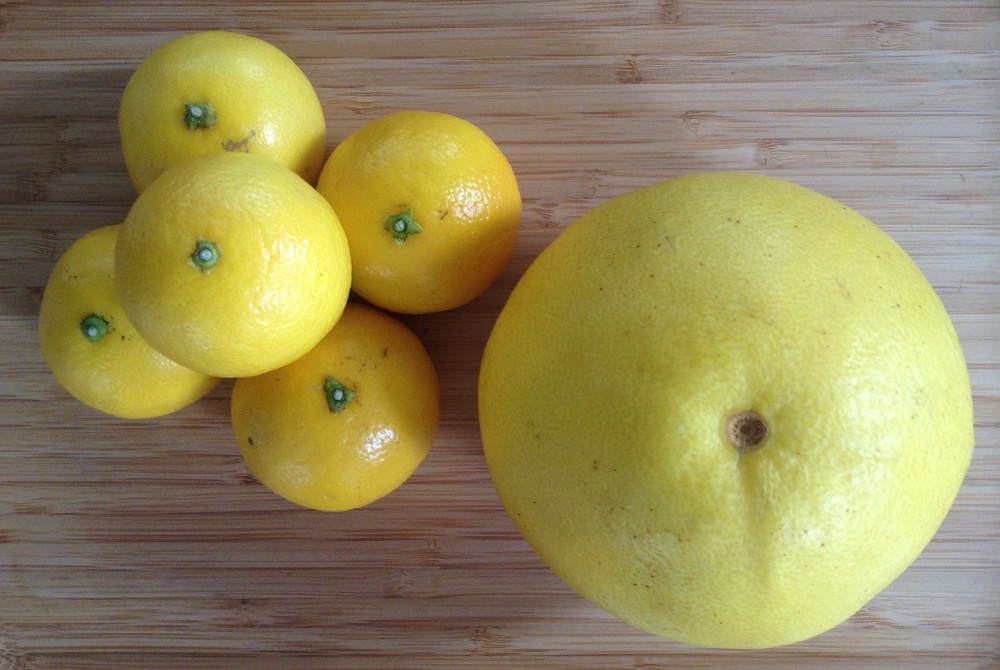
Pretty much every morning on my way to the lab I stop by the local supermarket to buy me something for lunch. Usually some fresh veggies (avocado, tomato, rucolla…) to eat raw in my sandwich or with some pasta-rice-seeds, and a fruit for my snack in the afternoon. After the season of tangerines, I wanted some different citrus fruit and found beautiful iokan. So yesterday I got myself this kind of big tangerine that looks like an orange but not as sweet. And this morning when I was at the cashier the lady explained to me that she owed me 52yens because yesterday she mistakenly charged me for an other citrus fruit. I was really impressed! Not that she misrecognize the fruit, but that she absolutely wanted to reimburse me!!
Back when I lived in France, I remember there were oranges of a few sorts, pomelos, grapefruits, tangerines of two or three sorts, then lemons and limes, cedrats and a few other variations quite difficult not to identify immediately. Arriving in Japan I discovered a whole new citrus fruits variation. Of course there are the now famous and trendy yuzu, but there is really much more than this. The variations vary with the different regions and I am sure not to have completed the exploration, if it can be completed! I don’t even know where to start from with dekopon, iokan, natsu mikan, hassaku, kiyomi, shikwasa… All are delicious with a typical taste and smell, and most grow at different time of the year. They can be used in different preparations or just peeled and eaten like tangerines.