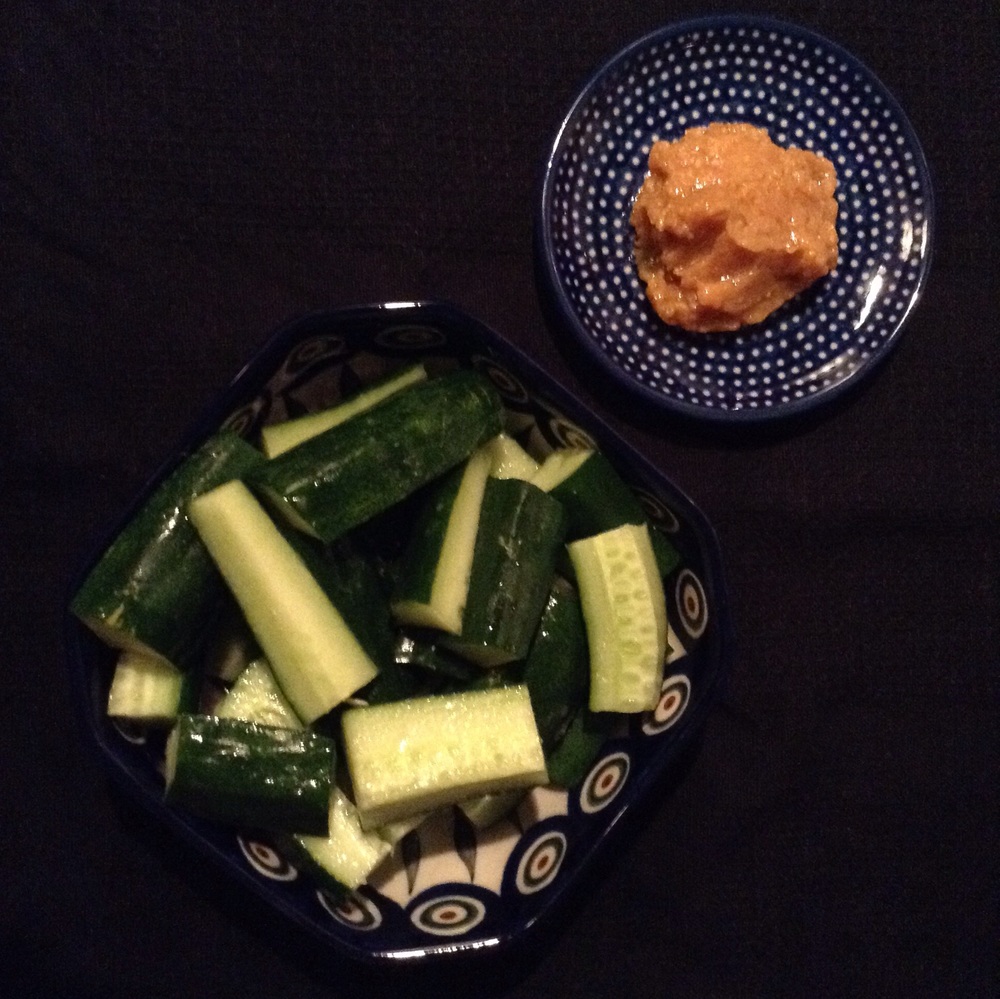
Japanese cucumber with miso

Japanese cucumber are really tiny compared to the huge one in Europe or America. Their diameter is usually between 1 and 2 centimeters and they are 12 to 20 centimeters long. There are few seeds and the the skin is not too thick so you just need to wash the and can eat them.

In summer we eat cucumbers every day and I realized I should have started a cucumber week! I buy them either in Koganei or in Isumi at the local farmers, and this week I have a load of cucumbers from K. And S. From Tsunan. 

I love cucumbers in cold soup and salad, I also love them as pickles. I will soon present you my delicious pickles made in the 2-5-8 but so far I’ve been too busy with work to prepare any. 

But my favorite way to eat them is as a snack while dinner gets ready because it takes 3s to be ready: wash, dry in a cloth and cut in 4 sticks and cut the sticks in 4. And when I have an extra 2min I prepare a dip of miso paste. I use fresh organic mild miso but it works with red miso too, to which I add a little of vegetal oil and stir until creamy.
Local products from Tsunan

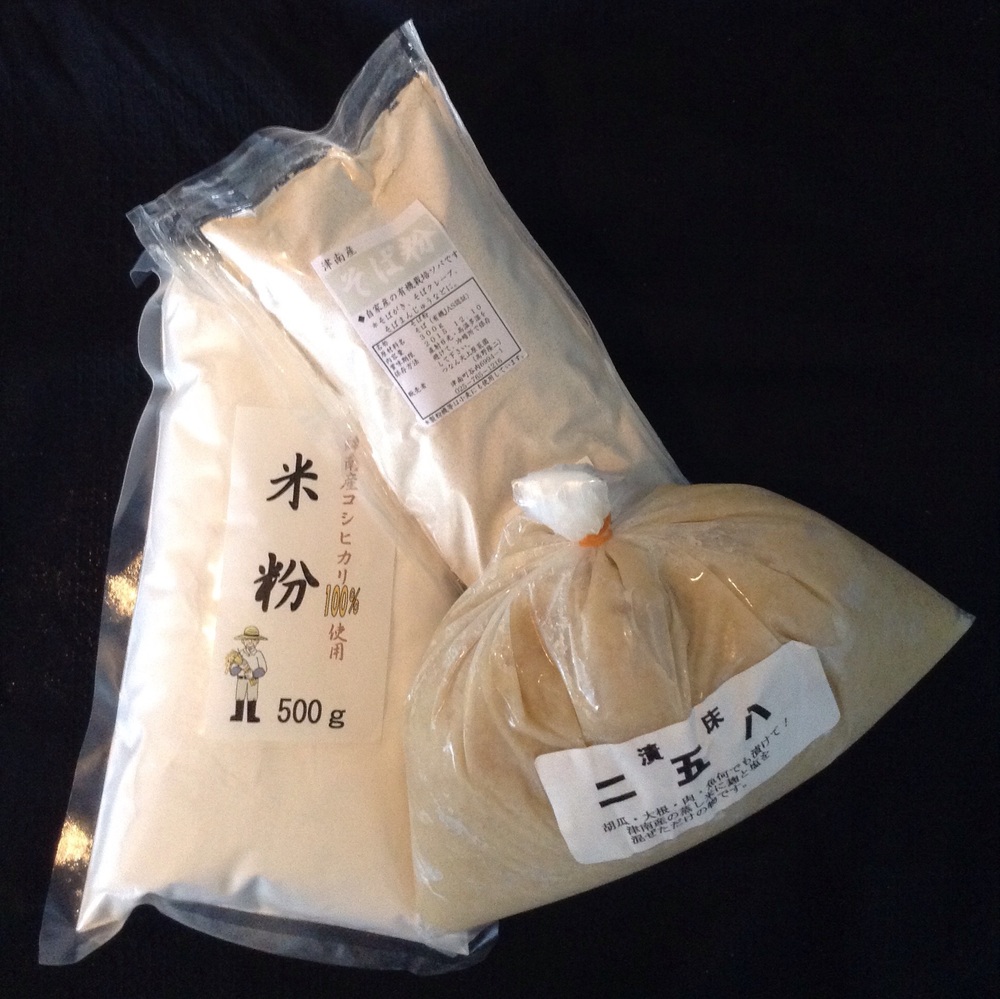
So, as I was mentioning before, I packed a lot of local products from Niigata prefecture and more particularly from Tsunan machi. The area is famous for its rice, a little of buckwheat and since they grow a lot of vegetables there is also delicious pickles, and to make them the 2-5-8, a preparation much easier to use then nuka, and that gives delicious salty pickles. I’ll tell you more about soon.

 Rice flour, buckwheat flour and 2-5-8
Rice flour, buckwheat flour and 2-5-8

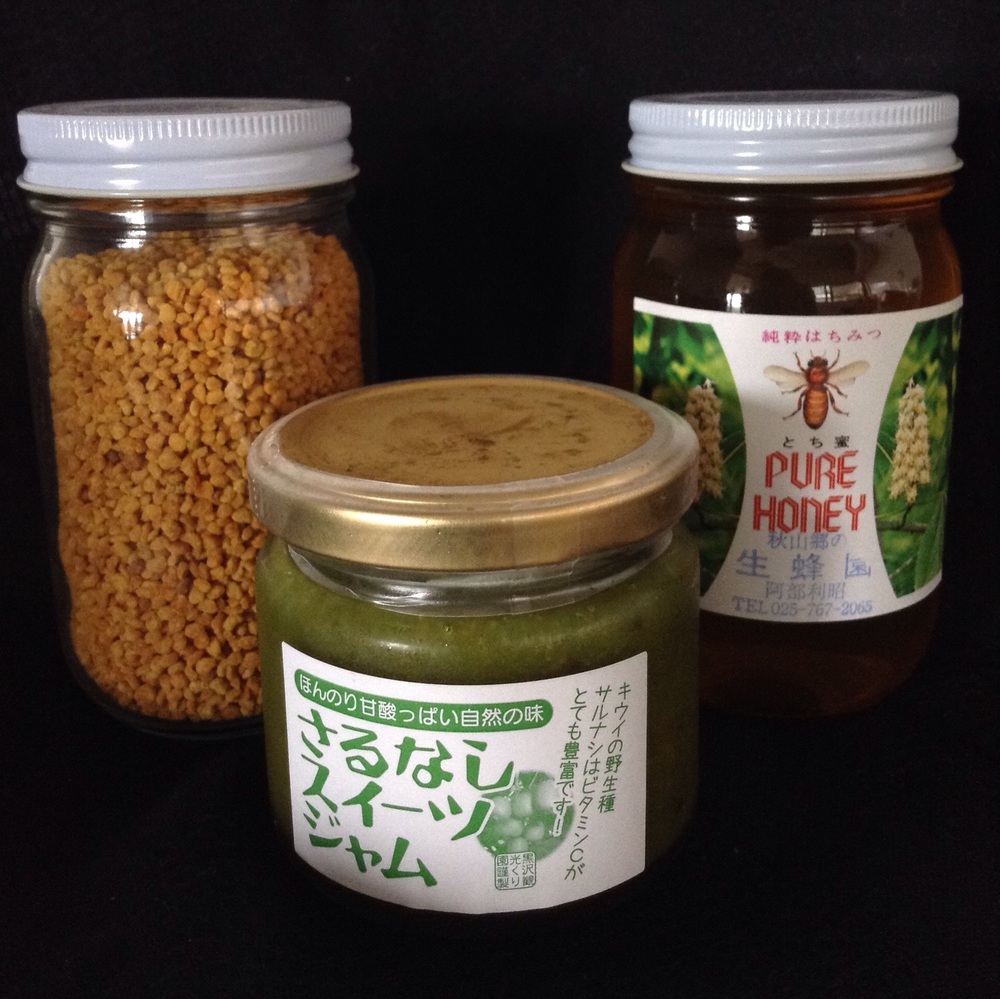
I also like very much the pollen and chestnut tree honey made in Akiyamago by a local producer. And while visiting some artwork we found some nice “sarunashi” (berry kiwi), a sort of wild tiny kiwi, with a taste close to rhubarb, homemade jam. 

 Pollen, honey and berry kiwi jam
Pollen, honey and berry kiwi jam

And an other salad/donburi/one-plate

I’m in a constant quest for new food combinations and freshness, while at the same time I keep things simple and try again and again. That’s what I love about cooking: nothing exactly the same but yet not completly different. Always delicious because I cook what we love. And so many chances to try since we need to eat a little every day, right?

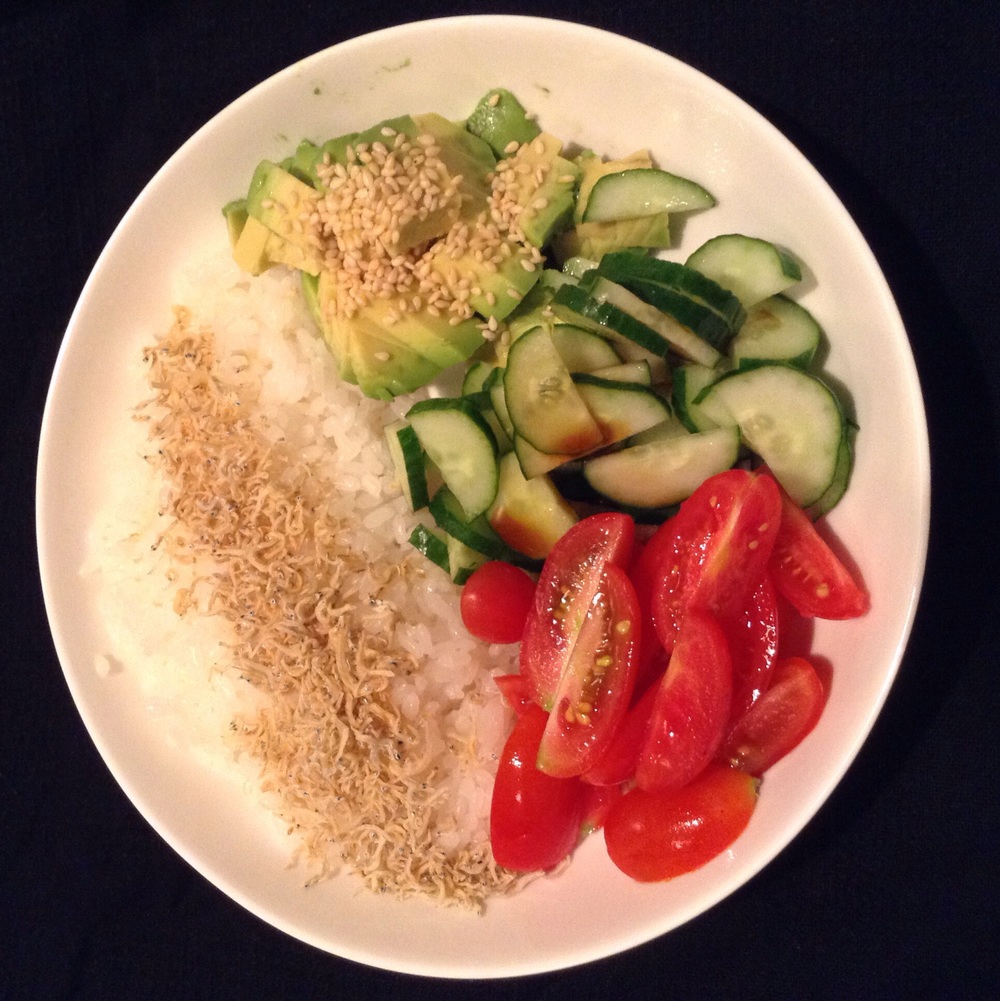
After loving my bulgur donburi, I decided to try a Japanese rice one-plate. I love the combination of the crispy chirimen and the creamy avocado, so I used that base, added some sesame seeds for the taste. Since rice is drier than bulgur and I don’t like to use any dressing with it (it makes it slippery abd impossible to eat with chopsticks) I just added some juicy tomatoes and fresh cucumber. An other delicious and refreshing combination!

One more salad, or bulgur donburi

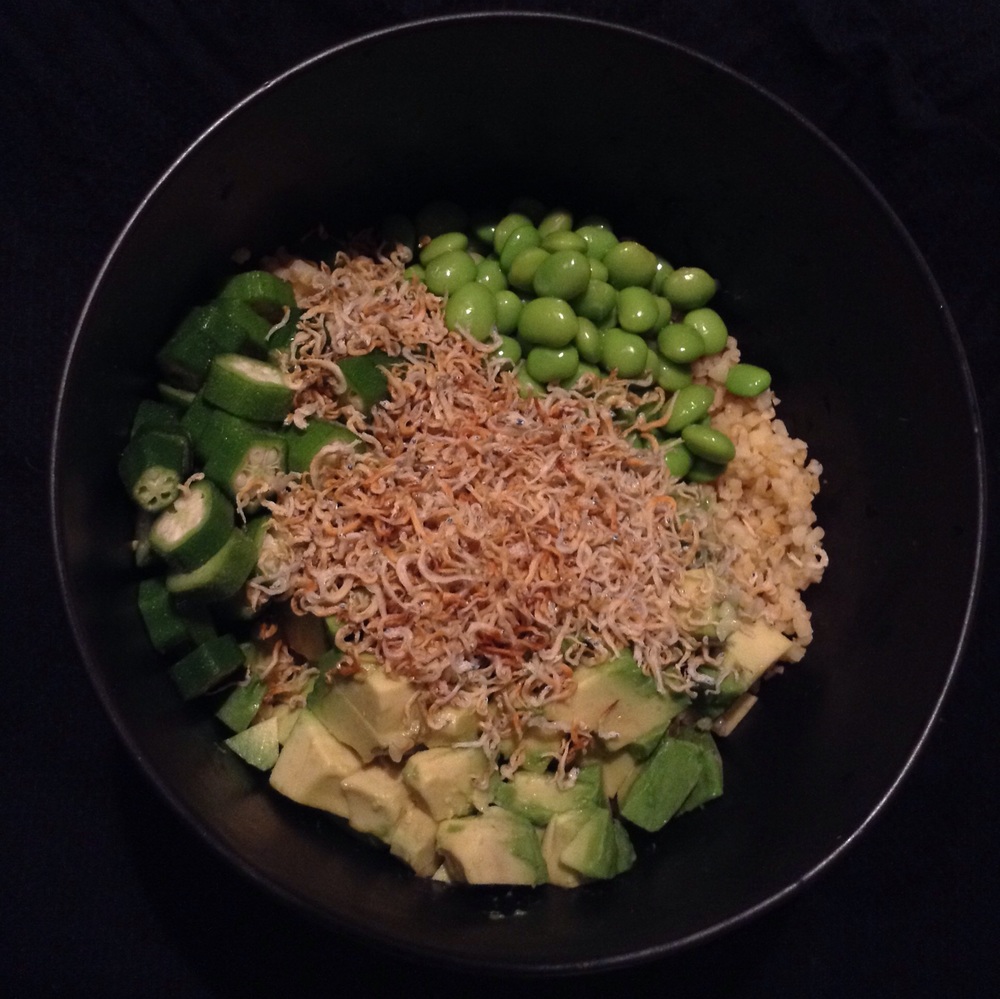
In my search of the perfect summer salad I’m making a lot of trials, never twice the same. Of course as I was writing in my earlier post all have in common a cereal or carb base: bulgur, rice, pasta, couscous… Tons of fresh vegetables: mainly tomatoes, ocra, cucumbers, a very light or non existing dressing. My salad today ressemble more a donburi for two, with Japanese style accomodation. I boiled some fresh edamame, added some sliced ocra and a perfectly rippen avocado, and a finish with grilled chirimen (very tiny half dried and a bit salty fishes). A perfect combination of softness and crispiness, of sweetness and saltiness. A really delicious mix and a great variation from regular rice donburi.

Nashi – 梨

This fruit is always considered as an awkward thing by foreigners in Japan because the nashi has the shape and size of an apple with the skin of a pear and the flesh of something like a pear but munch more crunchy and juicy, with a mild and fresh taste. So basically nothing to compare really neither to apple nor pear. Nashi is the utmost fruit of summer with watermelon. When eaten cool it is so fresh and juicy that it is the perfect snack for hot summer days. It is also a good match for busy breakfast because it is so easy to peel and prepare. Well, you’ve understood I simply love nashi! And I’m awfully lucky because Isumi is a great region for nashi, with a lot of nashi orchards and tons available at the farmers market and local farmers cooperative.

In the past I did some trials such as nashi tart, nashi compote… It was good, nashi supports well being cooked but the taste which is originally very mild due to the high quantity of water doesn’t reveal much in cooking as apple or pear do. So now my recommendation is to eat it just raw, accomodated with other summer fruits, or just alone. So perfectly simple and so delicious!

Simple summer lunch

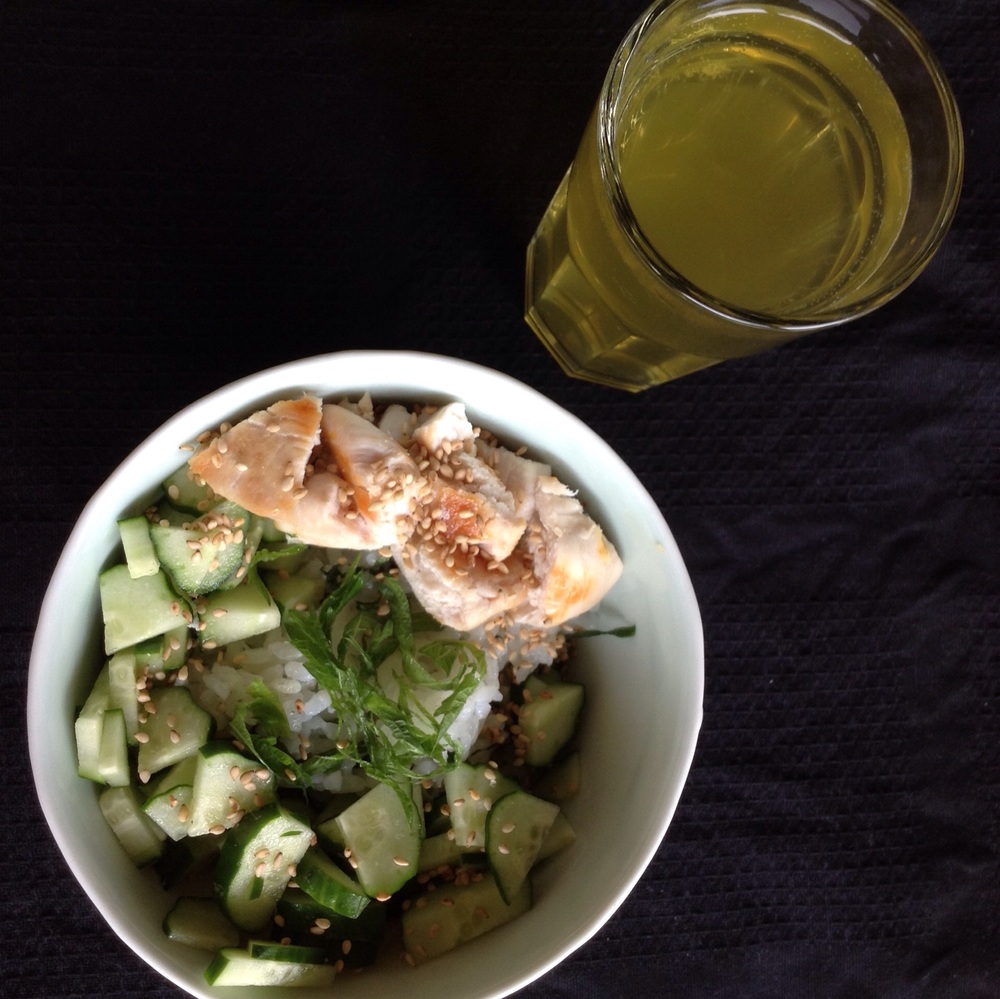
When the temperature exceeds 30deg day and night I only can eat very simple food. Japanese rice is really delicious when it’s hot, and it suits very well simple preparations, without any fat nor dressing. Donburi is always a good and simple way to prepare a rice based perfect meal. This time you can’t imagine something simpler: plain white Japanese rice, fresh cucumber, grilled chicken breast chopped, and a lot of shiso leaves finelly cut, a few sesame seeds for perfection. Served with a glass of cold green tea. How do you cook when it’s hot?

Power lunch

My husband and I usually play tennis together every Saturday morning for aboug 2h, and sometimes the stakes are really high: we play for the color of our new car, its model, the options,  and sometimes even what we’ll have for lunch. That’s how my husband win his piece of meat ;). After our game we usually head to the beach for a refreshing swim, so once we’re back home we’re literally starving so I need to fix something quick and nourishing. Japanese rice is always a good option because it can be cooked unsupervised and gives me enough time to drop by the shower! Cucumbers, tomatoes and all other vegetables that can be eaten raw, Japanese pickles, scrambled eggs… are also very handy. Finally, leftover and tofu make our lunch look like something awesome.

This time it’s a mixture of all that. Plain white rice topped with some sesame seeds, sesame-tofu from Mount Koya, miso green beans, and raw cucumber.

Myoga – 茗荷

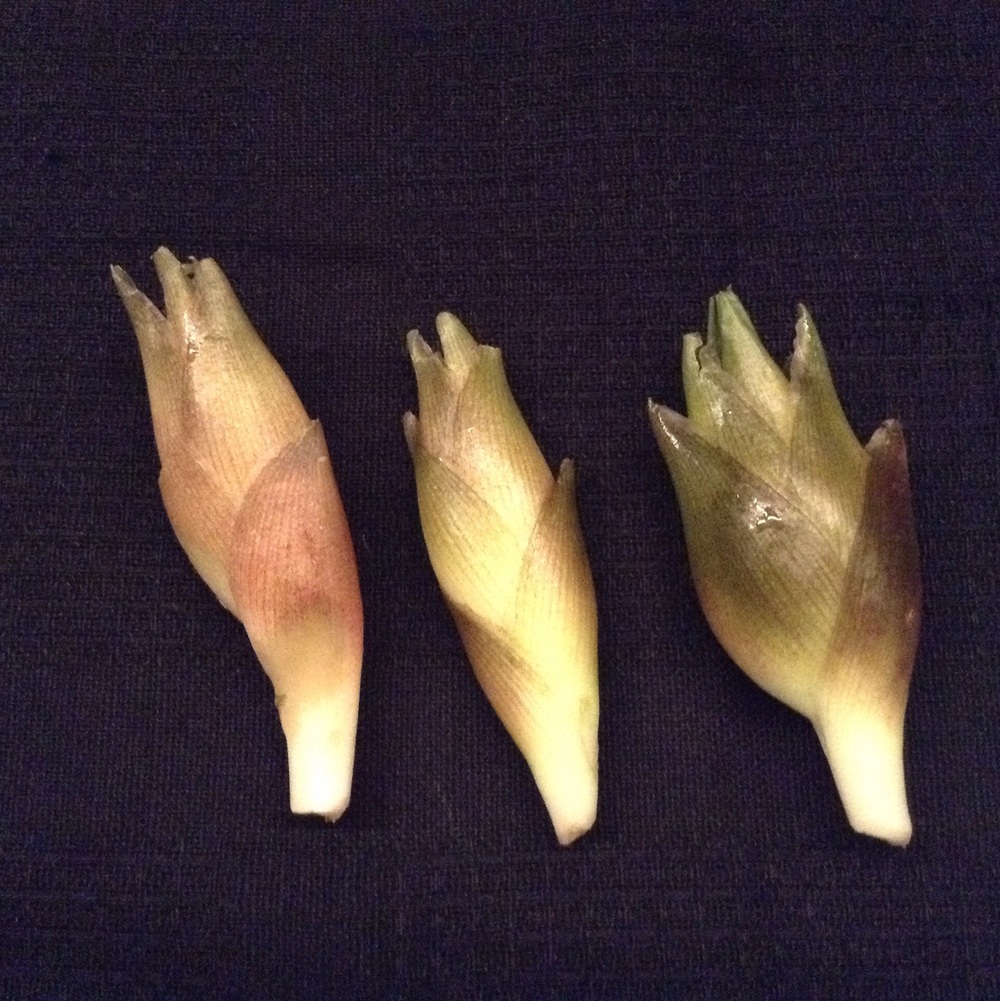
Myoga, also named Japanese ginger is a little plant that is often used in Japanese cuisine. It looks a bit like shallots, but with a fresh and strong taste. The most classic use is in miso soup, with a simple dashi base, miso and finely cut myoga. Other option will be with silky fresh tofu and soya sauce. At home we love the taste of myoga and I often use it. One recipe I came with is to top some simply steamed green beans. Just like for the miso soup I finely slice the myoga, steam the green beans, or better boil them in some dashi, and last season with soya sauce. A simple dish that goes perfectly with rice and other small Japanese dishes.

Raw eggplant salad

The first time I came across a recipe with raw eggplant I was quite suspicious, but then tried it and realized it was really good. So in this “eggplant week” I’ve decided to prepare a raw eggplant salad rather than offering you the more than classic stuffed eggplant, or mozzarella grilled eggplant…

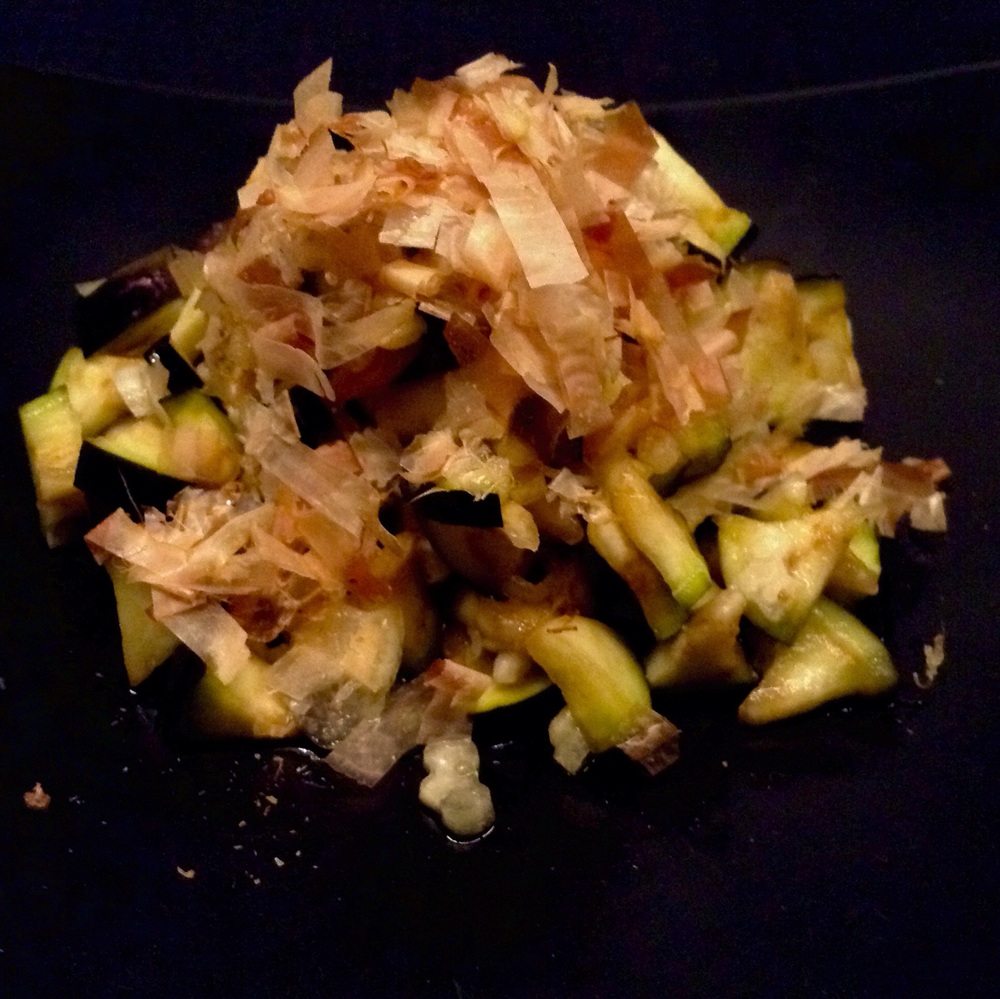
For two as a side dish I used 1 Japanese eggplant, 1 sprout of myoga (wait a little there’s a post coming very soon about it), a little of katsuo bushi, soya sauce. You can add shiso leaves if you have some, I didn’t this time. I cut the eggplant in small bites and drain the water with salt (like you may do for cucumbers), then I slice the myoga finely, (and the shiso if any). Then mix the eggplant and the myoga (and shiso). Serve on a plate, add a bit of soya sauce top with the katsuo bushi and it’s ready to eat!

Proudly powered by WordPress | Theme: Baskerville 2 by Anders Noren.

Up ↑

Verified by MonsterInsights