After days of rain and gloomy weather and some chilly days I am slowly accepting that summer is over. It is also noticeable at our local farmers market: new rice is there and with it sweet potatoes and kabocha little pumpkin) are now taking over. Tomatoes are more rare, nashi tend to be more ripe…
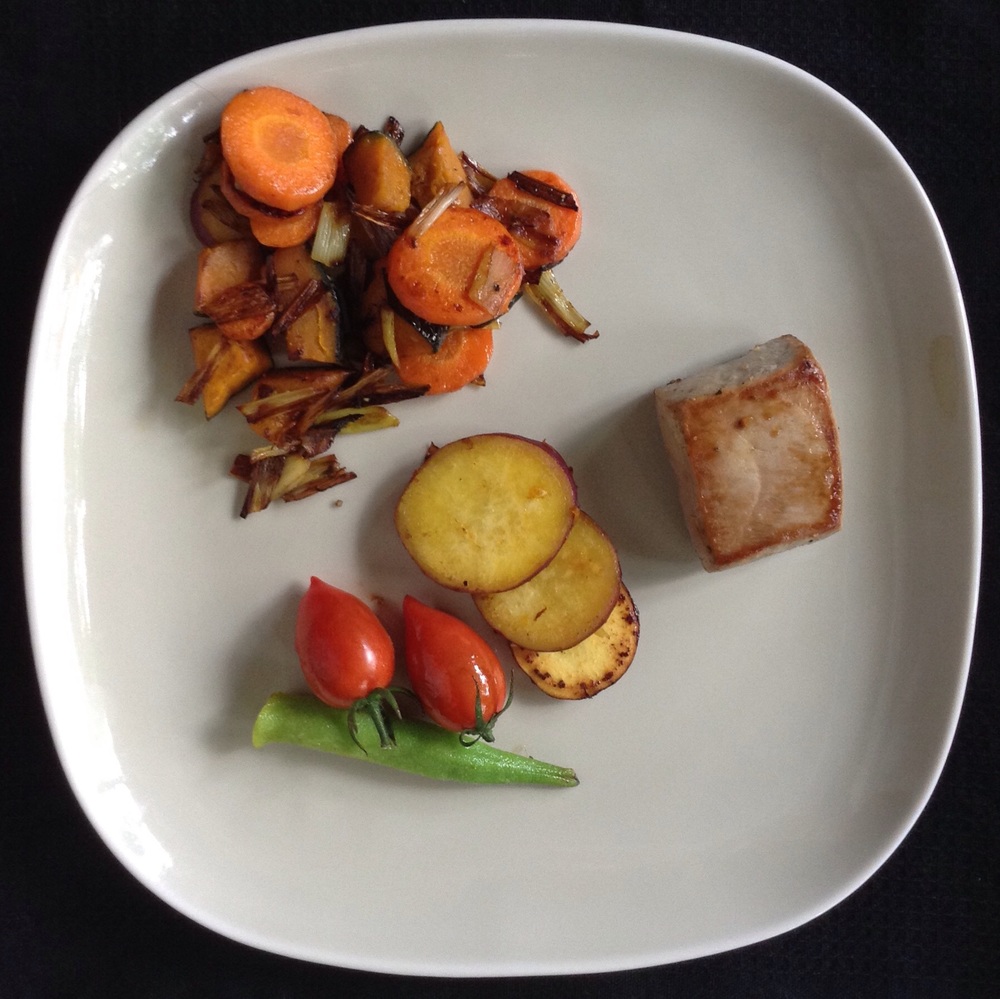
So there is no choice than to move forward and start cooking with new seasonal ingredients. For this dish of grilled tuna I prepared a summer/autumn mix of veggies: tomato and okra for the summer, sweet potatoe, carrot and leek for the autumn. Simply grilled in a greased pan.
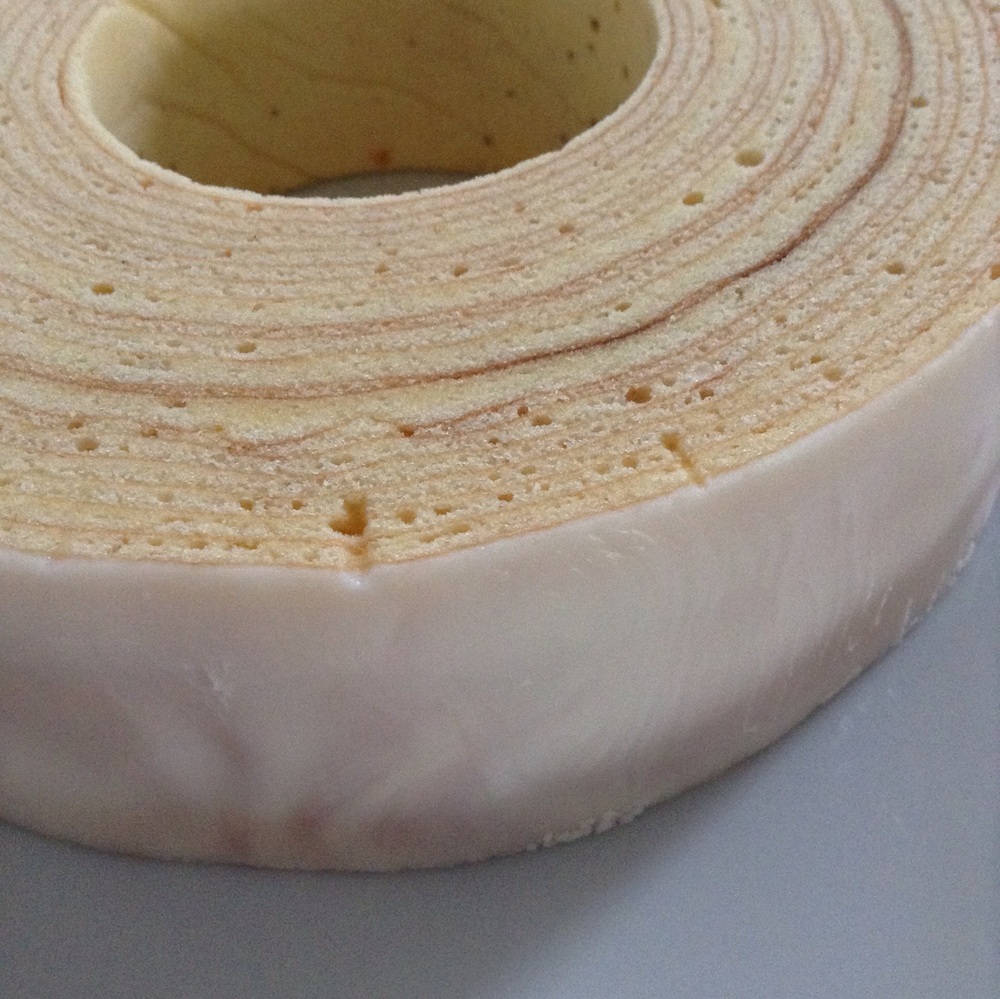
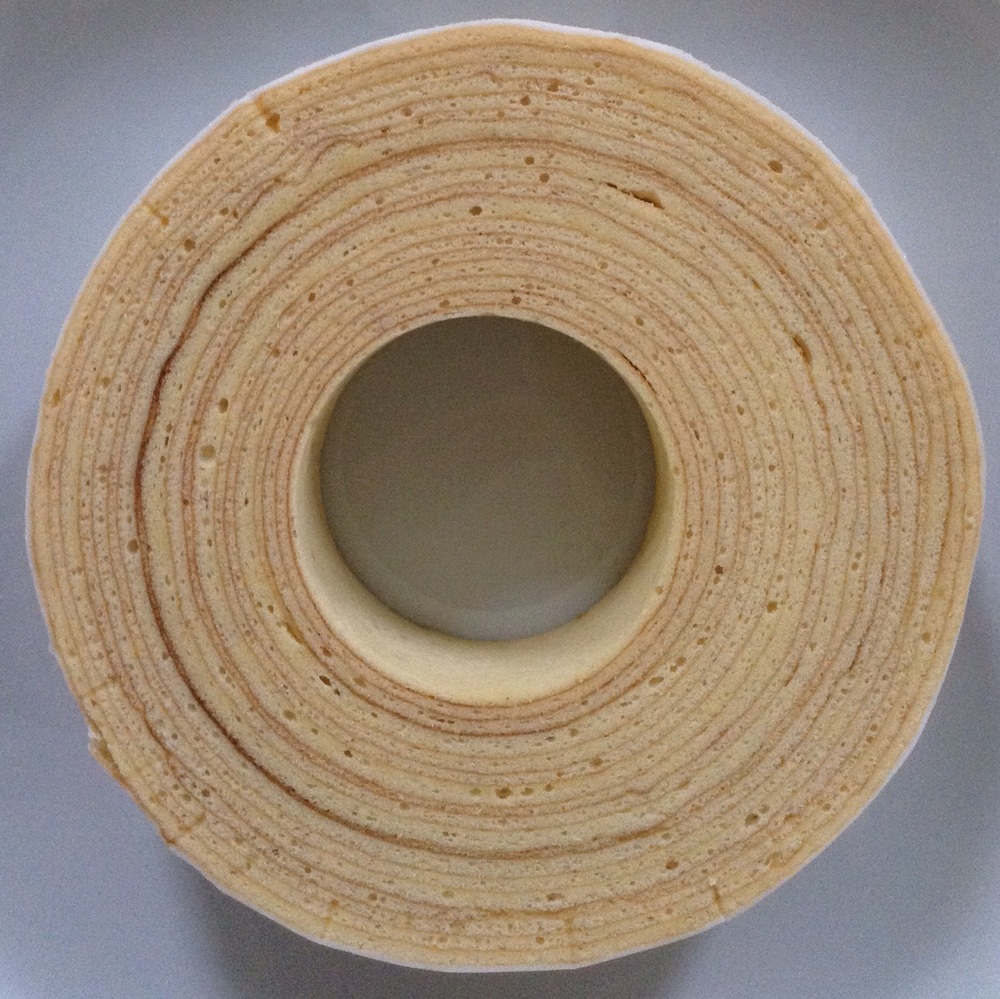
I just travelled one day to Kobe, which means that I’ve spent half of the day in the train. You could imagine that working seated in my office most of the day or working seated on a train is the same but actually the feeling is completely different. In the train I can’t open the windows to breath fresh air nor change the settings of the aircon/heater, neither the neon over lighting. So I feel dry, cold and oppressed, my eyes hurt and I feel exhausted… Anyway… The good thing, except that work was good, is that Kobe is famous for a delicious and somehow strange German cake: the baumkuchen. It’s a layer cake baked while rolling. The kind of thing hard to try at home. And the famous brand Juchheim (the first to introduce the cake in Japan) has plenty of shops in the city and of course at the shinkansen train station. So I couldn’t help but bringing back a little souvenir for our breakfast and some for my students (the tradition of bringing some food souvenir or omiyage in Japanese (お土産) is one important tradition at work).
There are many different brands of baumkuchen of all quality, you can even find some in supermarkets. There are also different flavors of cakes, the most common are plain, macha, chocolate… There is also a number of limited seasonal editions such as yuzu… My favorite for breakfast is the plain one, and I like the one from Juchheim more than the others because of it’s thin outer layer made of ice sugar and butter, which a lot of other brands don’t have.
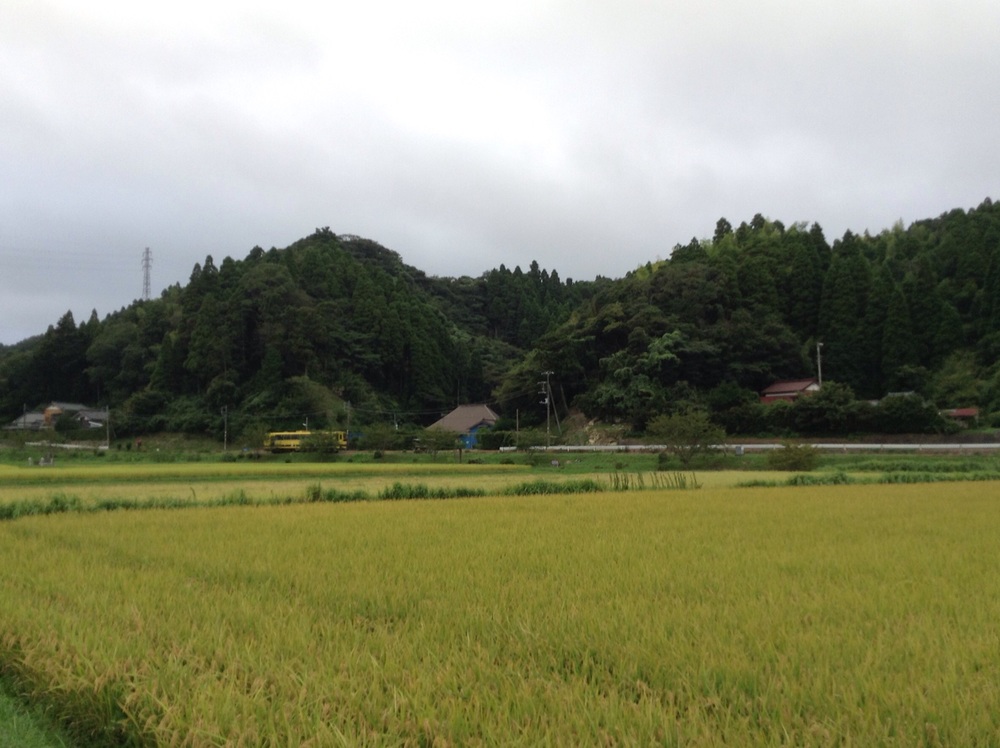
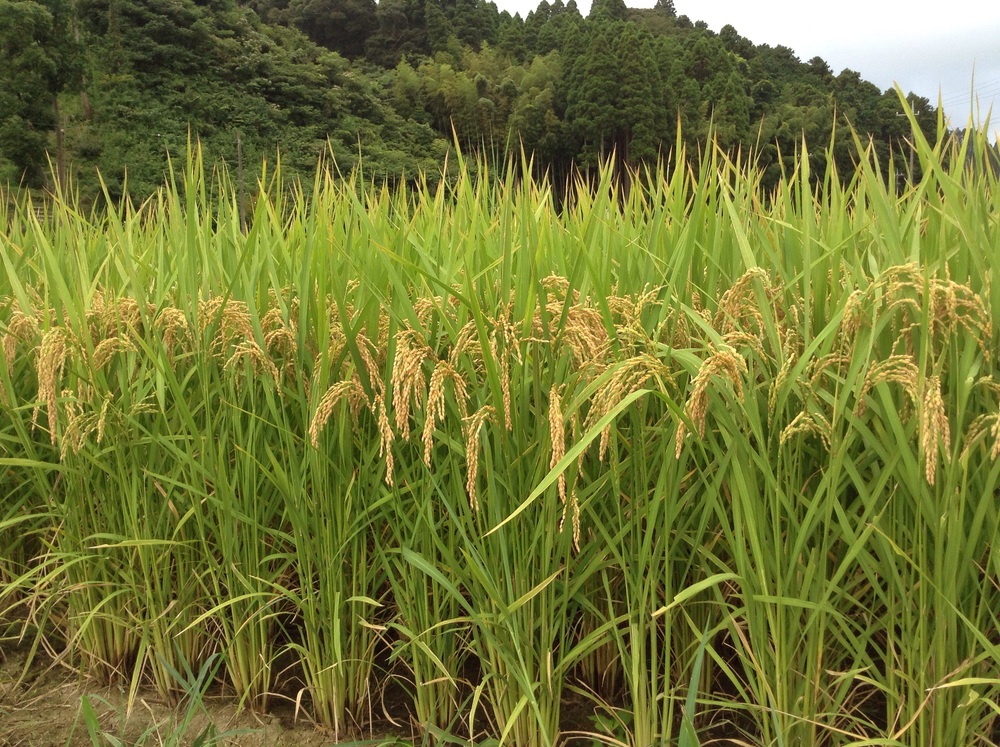
Today I’m traveling to Kobe for work and most of the way from the train window iT’s just rice paddies. Actually, the season for harvesting rice has started a few weeks ago in Isumi, but not everywhere yet in Japan. The beautiful yellow-green rice paddies that undulate in the wind are one by one being cut short. The smell is also changing. When this season starts it is also the end of summer, and this year it’s pretty bad with a lot of rain. Really a lot! And it is also the season for new rice or shin-kome (新米). As new tea in spring, new rice is an important ingredient for Japanese. The taste of new rice is subtle and more refined than usual rice, but it is as much for its gustative properties than for its signification as a the mark of the beginning of autumn, which in Japan is usually long, warm and beautiful.
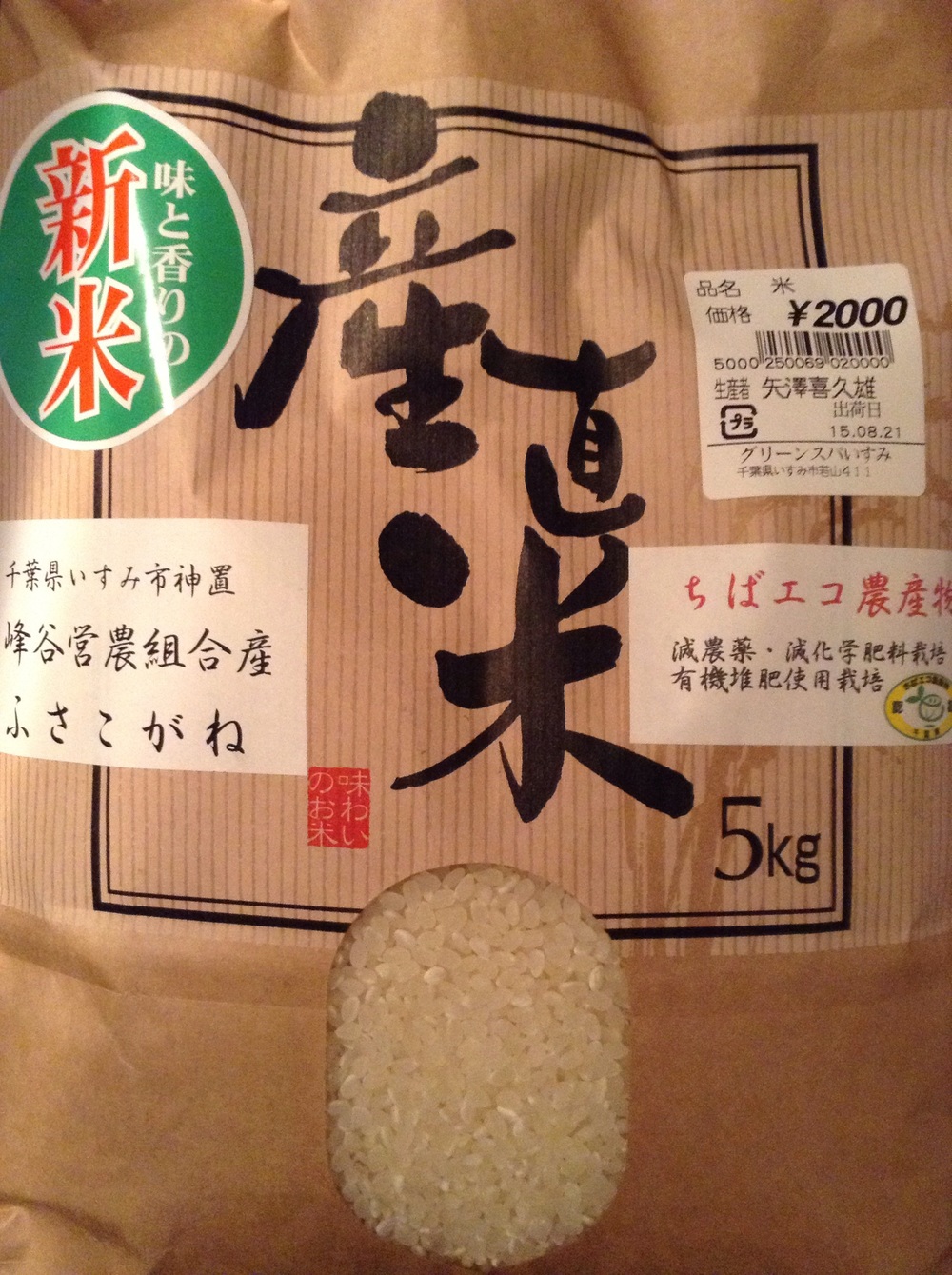
Almost every year I buy a bag of new rice that lasts pretty much a year in Ohara. I only buy organic rice or Eco rice (the yellow Eco mark on the right side of the bag on the picture). There are also many types of rice (kind of breeds) depending on regions, usually I like Koshihikari type (an habit I got from traveling to Tsunan where they mainly grow Koshihikari), but this time I picked a different type since it seems the Koshihikari has not been harvested yet. When still very new I use it mainly for plain white rice or little preparation, after a few months, I don’t bother anymore.
Out of the multitude of recipes and usage of katsuobushi, one thing I love is okaka. Okaka is basically a mix of katsuobushi flakes and soya sauce, sometimes a few sesame seeds. It is often used as a filling of onigiri (rice ball). Today I tried a slightly different manner to serve these onigiri. Instead of using The okaka as a filling I decided to mix it directly with the rice and they grill the balls in a fry pan (small oven or grill can do too) to make yaki-onigiri. I served them with grilled vegetables: tomatoes, okras, shiitake, and with some marinated mackerel.
I baked 1 cup of rice, added 4g of katsuobushi flakes and a tea spoon of soya sauce, stirred well. Them I prepare the balls and flattened them in patties and grilled them in a greased fry pan until golden.
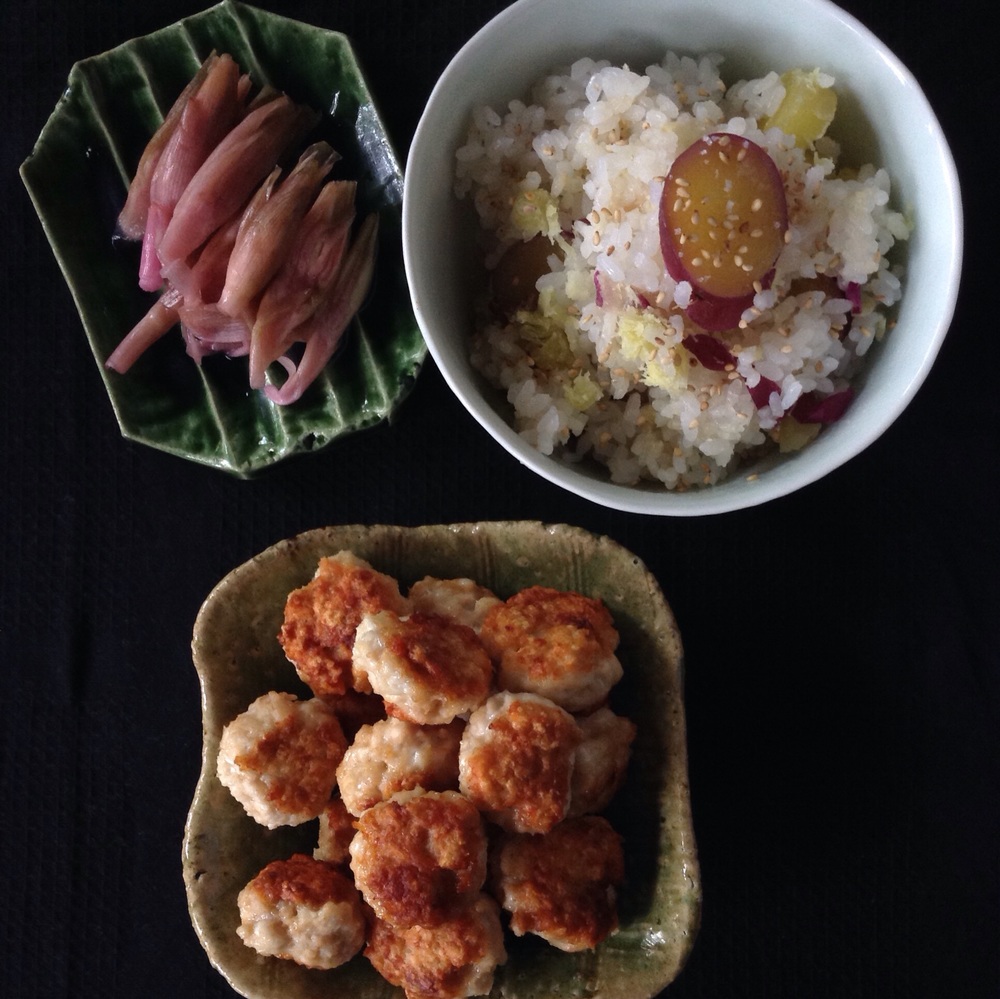
As usual, after our two hours tennis game in the morning we’re just starving and we need a good source of carb and proteins. I love the Japanese combo rice and meat balls. This time sweet potato rice, chicken and soua sauce balls, and pickled myoga in plum vinegar. Perfect!
I bake the rice in a regular pot, add the potatoes sliced at mid time; mix the chicken meat with rice flour and a bit of soya sauce and cook in a fry pan with a bit of vegetal oil. Simple. I got the picled myoga from our local farmers market.
What I love with katsuobushi, it’s that it suits very well greens Simply prepared: delicious spinach topped with katsuobushi, green beans, and even shishito. Shishito is a sort of tiny green pepper with a typical taste, and sometimes they can be really hot, but not often. I usually prepare shishito for snacks, by just grilling them in a pan and serving with salt. But I discovered that adding some soya sauce and topping with katsuobushi make a delicious combination. So simple and yet so many tastes of Japan in one dish!
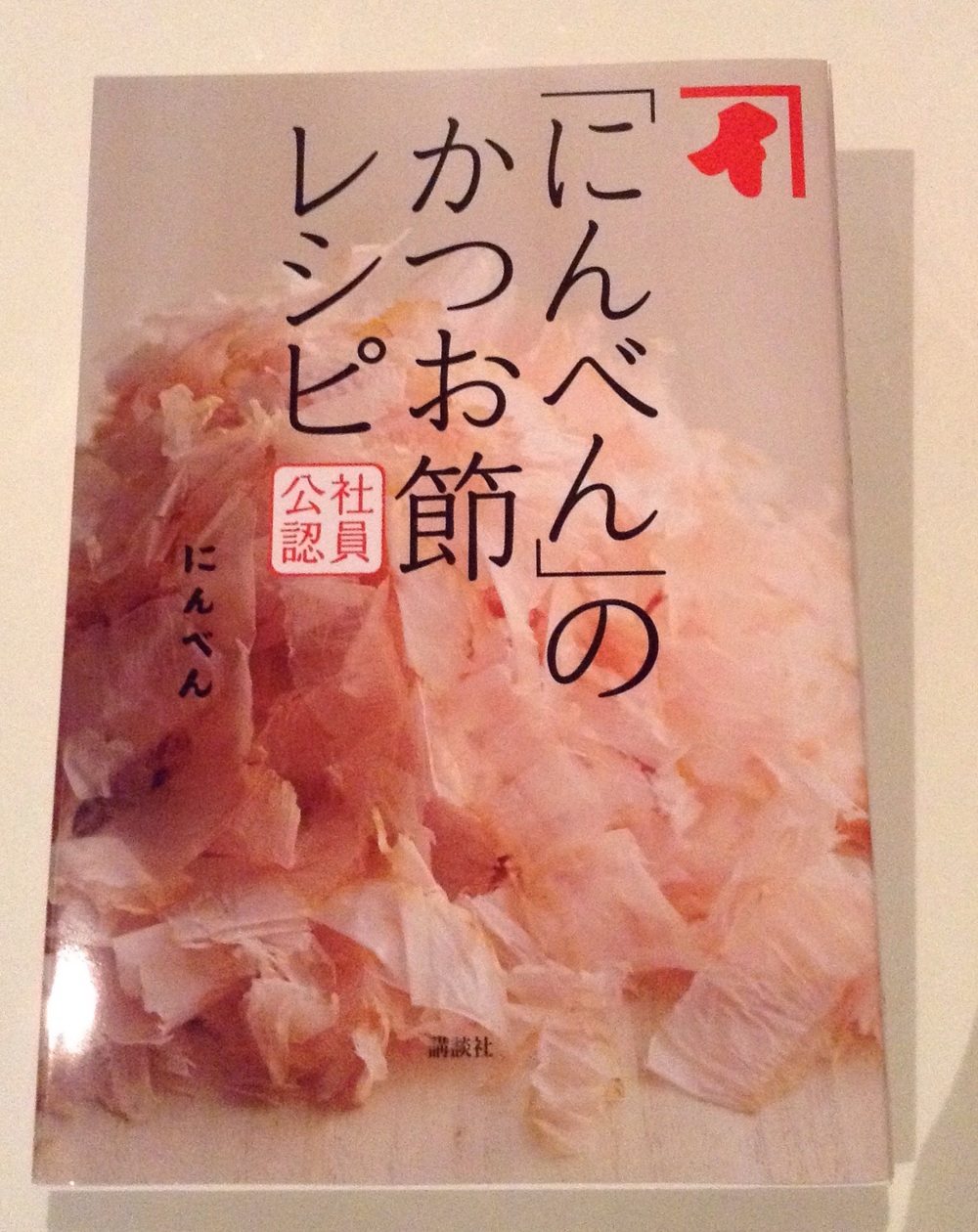
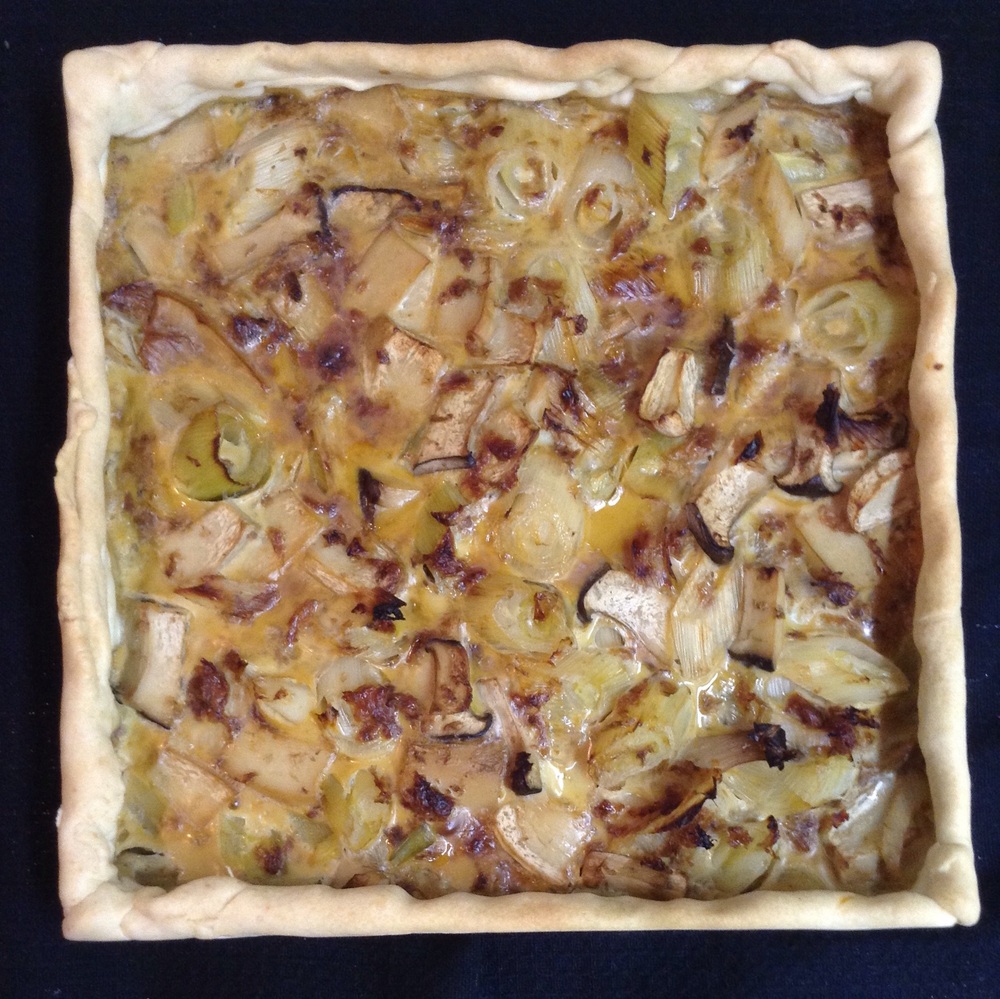
As I was thinking of preparing something about dashi and katsuobushi for a while, I imagined that I had to pay a visit again at Ninben to see if they were selling all of the different katsuobushi I learned about, and I found there a very nice recipe book. Of course all the recipes use katsuobushi. The recipes are all quite simple and perfect to prepare for every day. Since summer has faded away very quickly this year I’m starting to want to eat some fall typical ingredients: kabocha, mushrooms… So the first recipe that inspired me was a Japanese style tart. I of course changed the recipe to adjust it to my own taste (only Japanese can put potatoes into a tart filling!!!) and it came as a perfect tart with leek, eringi mushrooms and katsuobushi, in a home made brise dough. Delicious!
Basically you prepare the dough, then cut the leek and mushrooms, grill them a little in a pan, add soya sauce and 10g of katsuobushi, stir well. Add 3 eggs and set in the dough. Bake until golden. The mix can be starling at first if you are used to mote classic tarts or quiche but it’s really delicious. the original recipe was also includîg carrot and potato, bit I don’t think it is necessary.
Dashi is one of the basic ingredient of Japanese cooking and refers like “bouillon” in French or broth to the basic soup used for further cooking. Unlike French bouillon usually made out of fresh vegetables, chiken bones or fish bones… the Japanese dashi is made out of drief ingredients. There are several types of dashi: konbu, dry shiitake, katsuobushi, ninoshi… All are related with the taste of umami. Today let me tell you about katsuobushi dashi (鰹節だし) or dried bonito dashi, since this week I will talk a lot about katsuobushi. This dashi is used in many preparations and recipes.
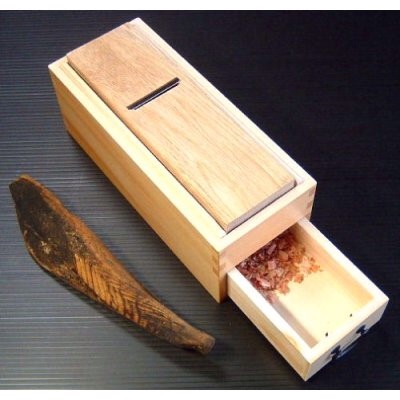
A piece of katsuobushi and the tool to cut the flakes (katsuobusi kezuriki-鰹節削り器)
Actually katsuobushi is not exactly just dried bonito, it also involves a smoking, drying and fermentation processes (arabushi-荒節 and honkarebushi-本枯節), and is usually referred by Japanese as the hardest food in the world. It can be made of different parts of the fish: back or belly, thus more or less fatty giving a different result. The katsuobushi is so hard that it is used in cooking by gratting it to obtain flakes on a special device called katuobushi kezuriki (鰹節削り器). Using this device requires a lot of technique to obtain beautiful flakes and a lot of energy and time. For my chakaiseki classes I learnt how to do it, but for daily use I prefer alredy cut flakes sold in small bags. These flakes are used in many ways (there will be soon a katsuobushi series or week!) and dashi is one of them.
So here are the basics about preparing katsuobushi dashi. The best is to use a water that is not too hard to obtain the most delicious dashi, and of course a good katsuobushi with a not too thin shaving (kezuri katsuo-削り鰹). A good proportion for a base for soup for two, or further cooking is by using 2.2 cup of water and 1 cup of katsuobushi. Heat the water to 85deg. Add the bonito flakes, boil for about 10sec, and then leave for about 1min off the heat. Filter.
With the recent boom of “back to the roots” and to traditions (mainly after the 2011 earthquake) and the renewal going on in Nihonbashi district in Tokyo, a number of very old and traditional shops have revamped their activities and in particular katsuobushi shops. There are now “dashi bar” where you can enjoy a cup of freshly made katsuobushi dashi, and believe me people are queuing for it! Ninben (www.ninben.co.jp) is one of the most famous in Coredo Muromachi.
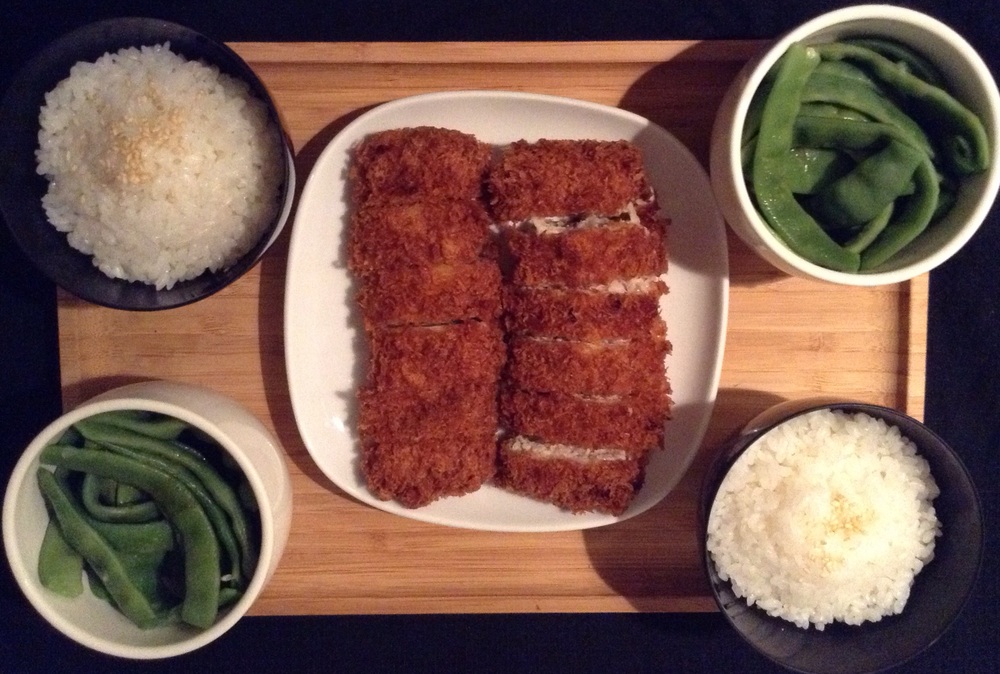
This all week has been pretty crazy. I knew I would be very busy at work and that I’ll have to go early to the lab too, but what I didn’t expect is that the train to commute would let me down so many times. Usually trains are super reliable in Japan, but once in a while there are incidents, and usually they happen all at the same moment. Spending more time to commute then usual I didn’t have so much time left to spend in my kitchen and still needed to indulged with some simple food to keep : rice with sesame seeds, and greens with soya sauce, and since I knew that wouldn’t be enough for my husband, I stopped by Saboten and added some pork filet katsu to the menu.