Shoyu pasta

There are recipe stories that are longer than others and that reflect how “agile” I manage my cooking!!! Last week I was telling you how much I love new onions and that you will see more recipes with them because I had in mind to prepare some ravioli filled with new onion. Everything was clear in my head and I knew exactly what I wanted to do. Sunday late afternoon taking a break from work I went to my kitchen to prepare the pasta dough. Not the classic one, my ravioli would be infused with Japanese flavors. So I made a soya sauce pasta base. Then I started thinking of the filling and boiled a potato to smooth the filling that would consist in chopped new onion slightly cooked in a pan with katsuobushi flakes. And while the potato was boiling I went back to work and worked worked worked, with our new stray cat all cuddled on my laps… and I forgot the potato, time and preparing dinner. At almost 21:00 A. reminded me that we should actually go back to Tokyo… oups… nothing was ready and it was too late to start making ravioli. So we ate the potato, I packed my pasta dough, my new onions and we drove back to the city.

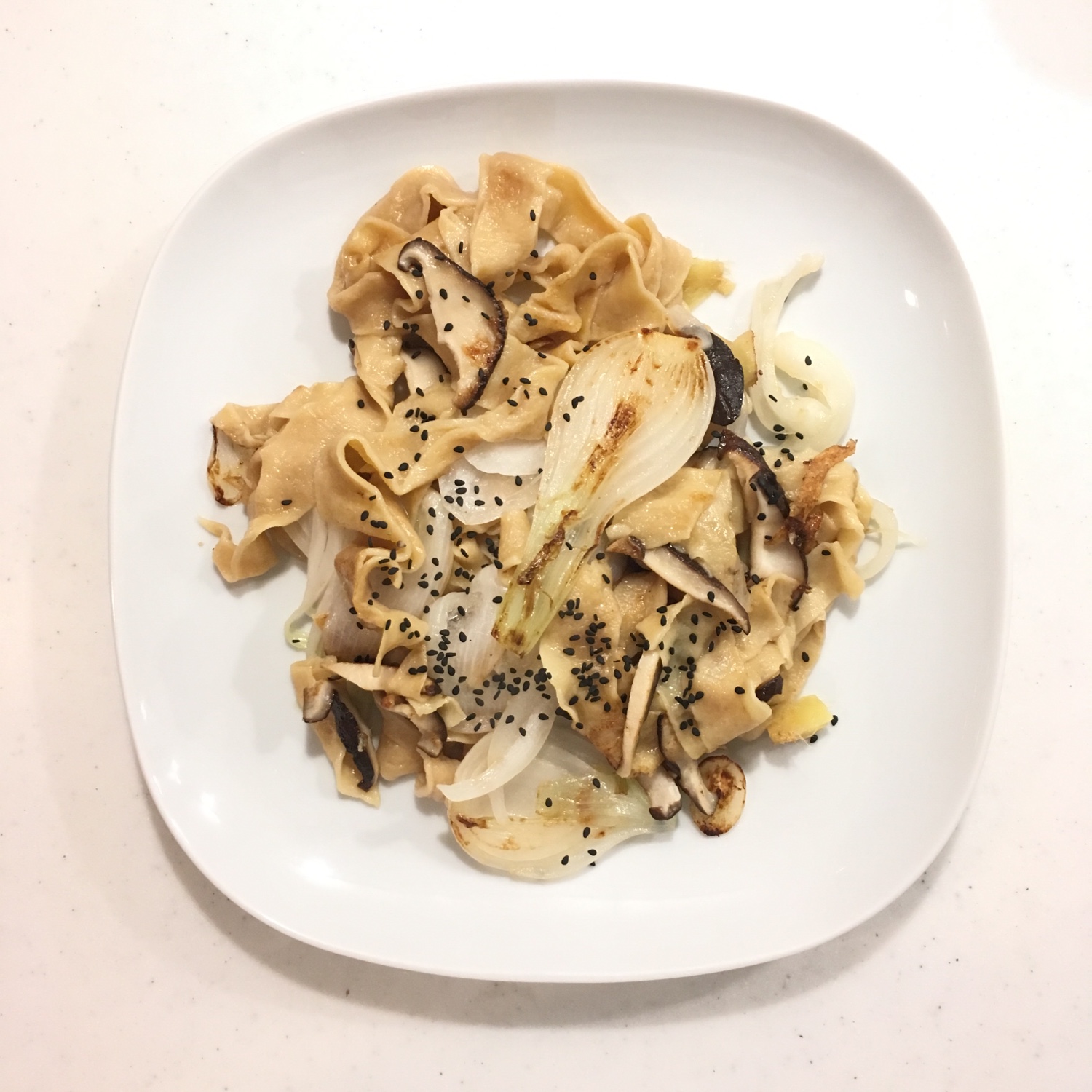
Monday night I came back home around 22:00 and it was really not a descent hour to make ravioli… I knew it… so I decided to roll my pasta manually and make tagliatelle and use the onion just as a topping. The result was so awesome that I am now thinking of making it a new entry to the Soya sauce contest…

Here is what I did:

Soya sauce pasta

– 1egg

– 120g of flour

– 3tbs of soya sauce

– 1 new onion

– 2-3 shiitake

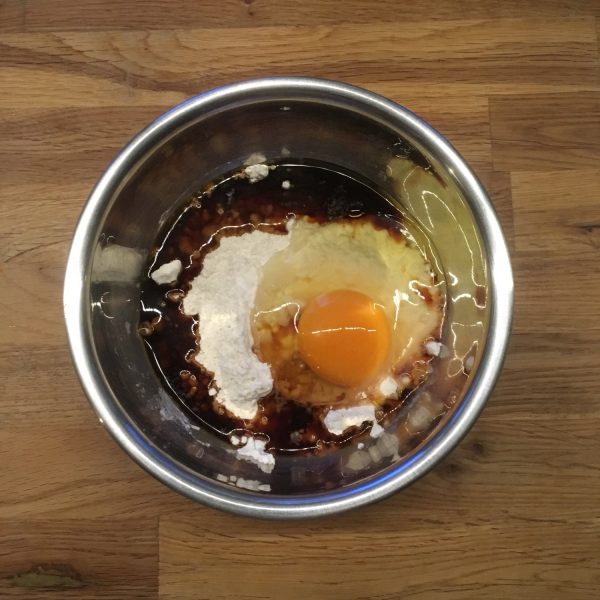
In a bowl knead the flour, soya sauce and egg together to make the pasta dough. Keep for 1h.

Roll the pasta, and make tagliatelle.

Wash the vegetables and slice them. In a pan greased with a bit of oil, throw the vegetables and cook at low heat. Boil the pasta and drain them. Add to the vegetables, stir well, serve and eat immediately. You can add a bit of grilled pork to the vegetables…
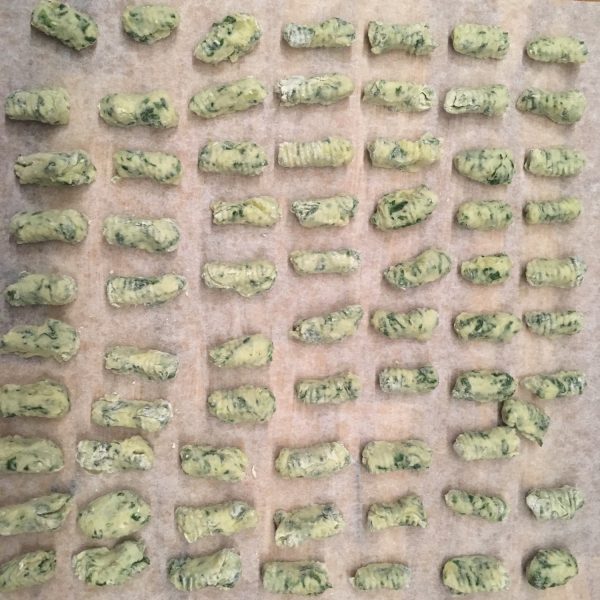
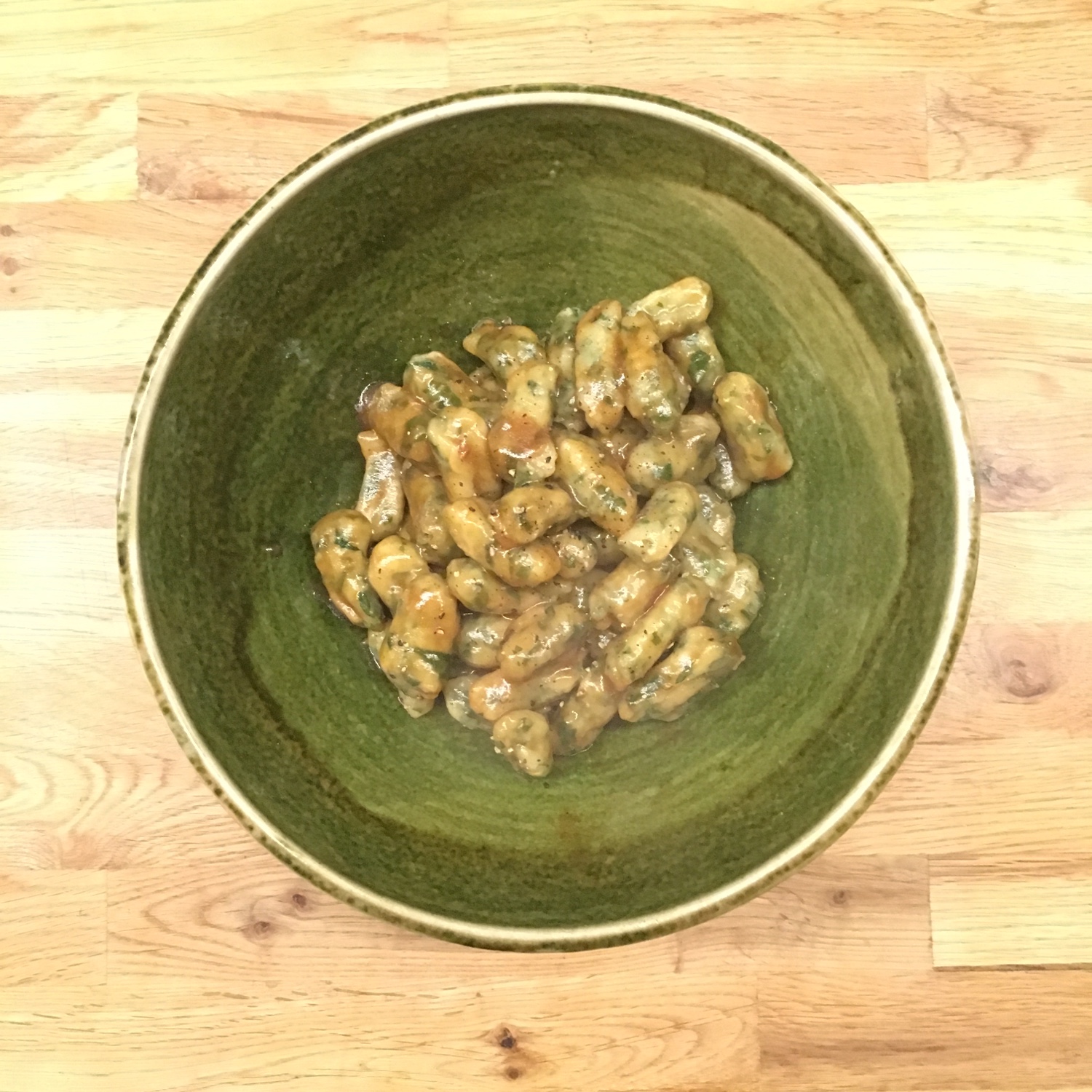
Ashitaba gnocchi

This is far from being the first time I post about ashitaba (明日葉), or if you prefer angelica. I love this herb and the magic combination with potatoes and pork. I know I should be trying new combinations, but you have a solid recipe, it’s great to do it again and again with small variations. This new gnocchi recipe is even simpler than the previous one I posted a couple of years ago and as delicious! I served with pork filet cooked in olive oil and use the cooking juice as dressing for the gnocchi, with just salt and pepper. Of course olive oil is enough!

Ashitaba gnocchi (4 servings as side)

– 3 large potatoes

– a bouquet of ashitaba

– flour

– salt, pepper, olive oil for the dressing

As usual boil the potatoes with the skin. When the potatoes are tender, let them cool down a bit, peel them and mash them with a fork. Blanche the ashitaba and drain them very very well (as soon as they are cool enough squeeze them in your hands), then chop them finely with a knife or scissors. Add to the potatoes. The mixture should be creamy. Add flour and knead until the mix is dry enough to shape the gnocchi. As always the less flour the better, hence the need to avoid excessive moisture. When dry enough shape your gnocchi. I usually line them on a piece of cooking paper. Boil them until they float when you want to eat them. Dress with olive oil, salt and pepper or like me this time with pork filet juice.

Sakura risotto

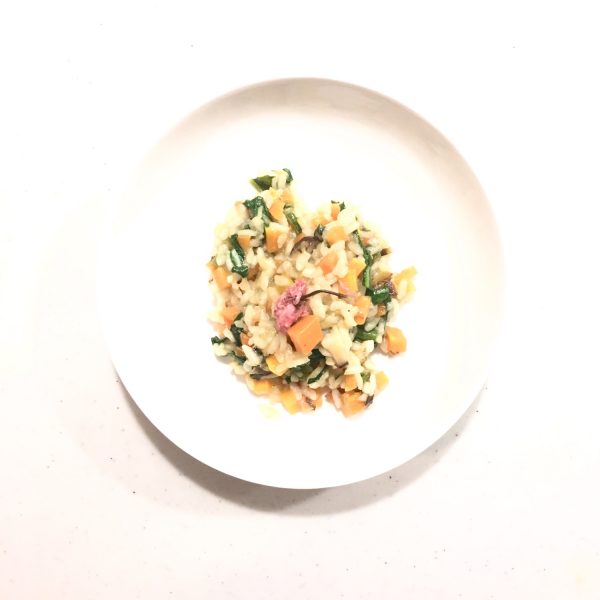
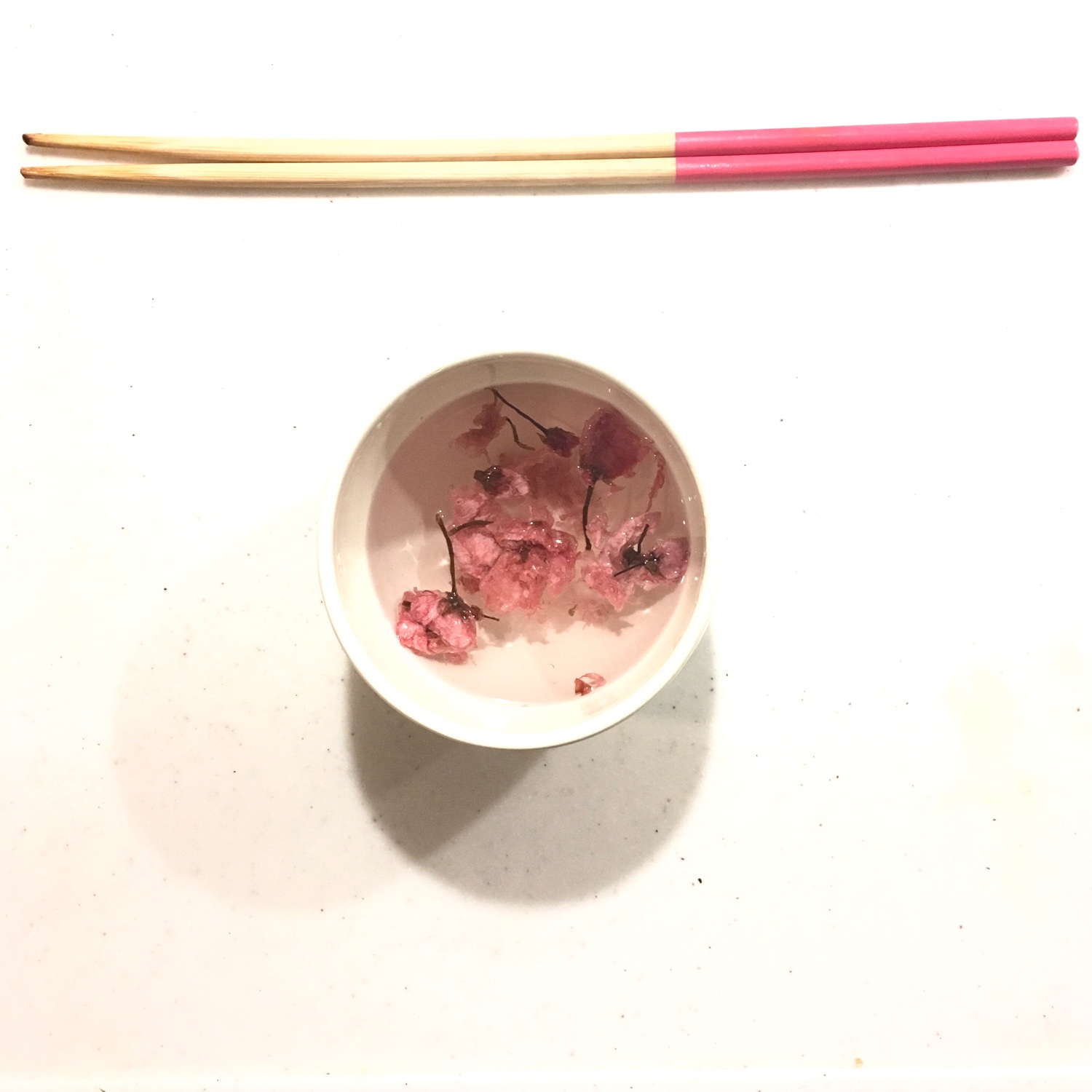
As I was writing last time, it’s just the peak season for sakura viewing. And therefore I thought of using sakura flowers in some recipes again. The classic would be sakura rice or sakura rice balls, but since my parents are staying with us and my dad was crying for a risotto, in remembrance of the first risotto: porcini risotto, I cooked when I was still in high school… So to please him a risotto I cooked, with carrots, a few shiitake and leeks for the base, some turnip tops for the green, and a sakura broth as seen below. Given how quick the plates were wiped, I guess everyone liked it!!! So here is my recipe (below the picture)

Sakura risotto (4 servings)

– 1 cup of rice, either Japanese or Italian

– 2 or 4 new carrots depending on size, mine were big so I used 2

– 2 small leeks

– 2 shiitake

– 12 sakura flowers in dry salt

– olive oil (not too fruity)

– 10 pink pepper seeds

– a bit of ground pepper

Start with the base: wash and cut the leeks and the shiitake in small pieces. In a heated pan add some olive oil and the vegetables and stir once in a while until slightly golden.

In a cup put the sakura flowers in salt and fill the cup with water to make the broth.

Wash and dice the carrots, add to the vegetables in the pan, and add the rice, roast for some time. Add the sakura broth and cook at low heat until the water is almost gone. Add then 3-4 cups of water, the pink pepper, some ground pepper, 8 of the sakura flowers. Cook at low heat. When the water is almost gone add the turnip tops cut in 2cm long pieces. Cook and stir until all the water is gone, but the whole thing is still moist. Serve immediately and use the remaining flowers to dress the plates.

Burdock – 牛蒡

There are a few vegetables that are hard to find in Japan and I really love: fennels, artichokes, salsify…

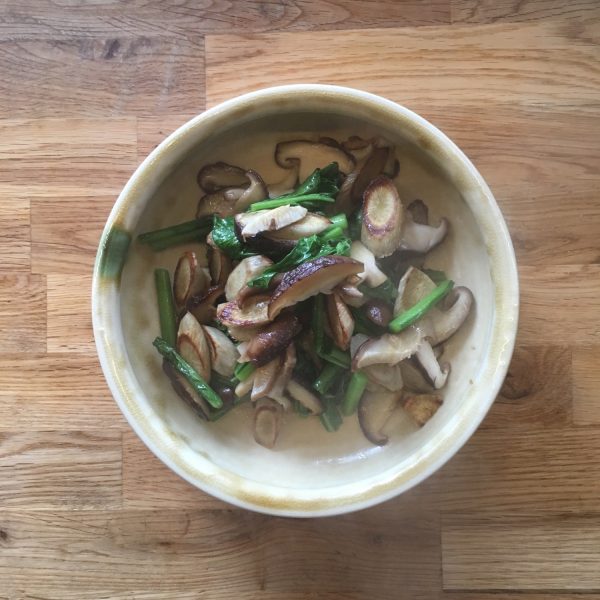
When I first ate burdock (gobo ゴボウ 牛蒡) I was quite surprised with the very peculiar taste, and I realized it was a good alternative for both salsify and artichoke at the same time. This long root looks a lot like salsify, with a lot more fiber and this plus the flavor make them close to artichokes in a sense. I love to cook them, though strangely enough I don’t very often… One of my favorite recipe is in soup, but many recipes are more accessible such as in risotto, or these two very simple recipes today: a mixed sautéed vegetables one and a vegetables soup. Both are ultra simple.

Burdock sautéed

– 1/2 burdock

– 3 shiitake

– 1 turnip top

– olive oil

Wash and peel the burdock, cut in 5cm long and keep in a mix of water and vinegar. Wash and chop the shiitake and the turnip top. Heat the oil in a pan. Add the burdock and cook at high to medium heat until slightly golden. Then add the shiitake and a few minutes later the turnip top. Stir until the turnip top are soft.

Burdock and vegetables soup

– 1/2 burdock

– 1 carrot

– 1/4 cabbage

– 1/2 cup of short pasta (optional). I used stelline.

– a bit of olive oil

Heat a pan of water. Wash, peel and slice the burdock, add immediately to the water. Cut the carrot (I don’t peel my organic carrots), add also. Chop the cabbage and add it, finish with the pasta. When they are cooked serve and enjoy!

Spring is here!

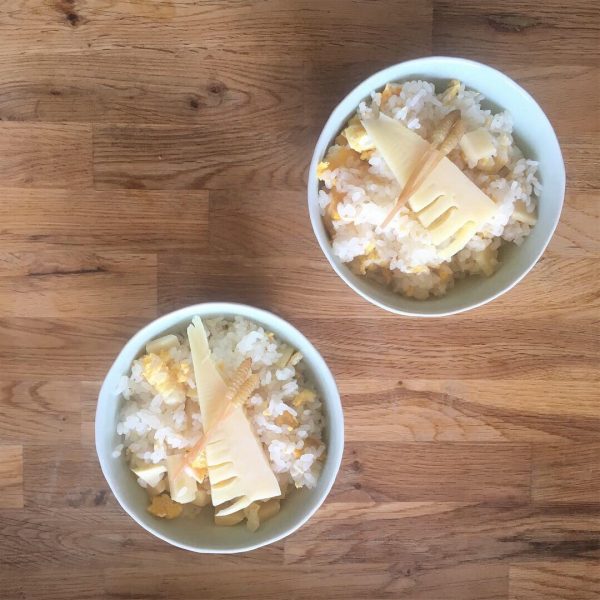
After the fukinoto and the canola which both announce the arrival of spring and the cold unstable weather that usually accompany the plum blossom end, the next step is the real arrival of spring in late March or early April with the famous cherry blossoms of course, Mole’s quince and the jonquils putting beautiful colors in the garden but also the bamboo shoots (takenoko 筍)and the other wild vegetables: fern (kogomi こごみ), horsetail (tsukushi つくし), angelica tree buds (tara no me タラの芽)…

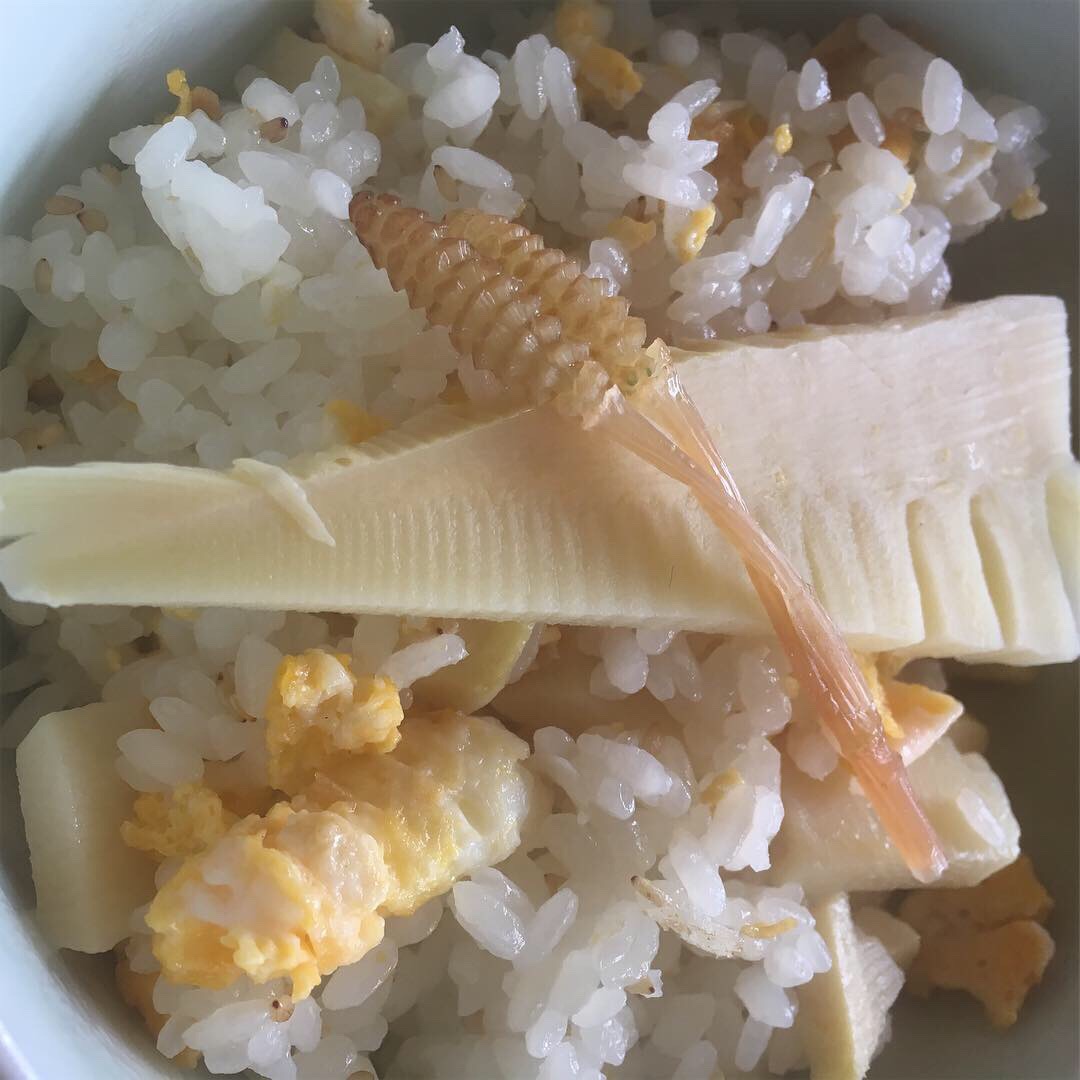
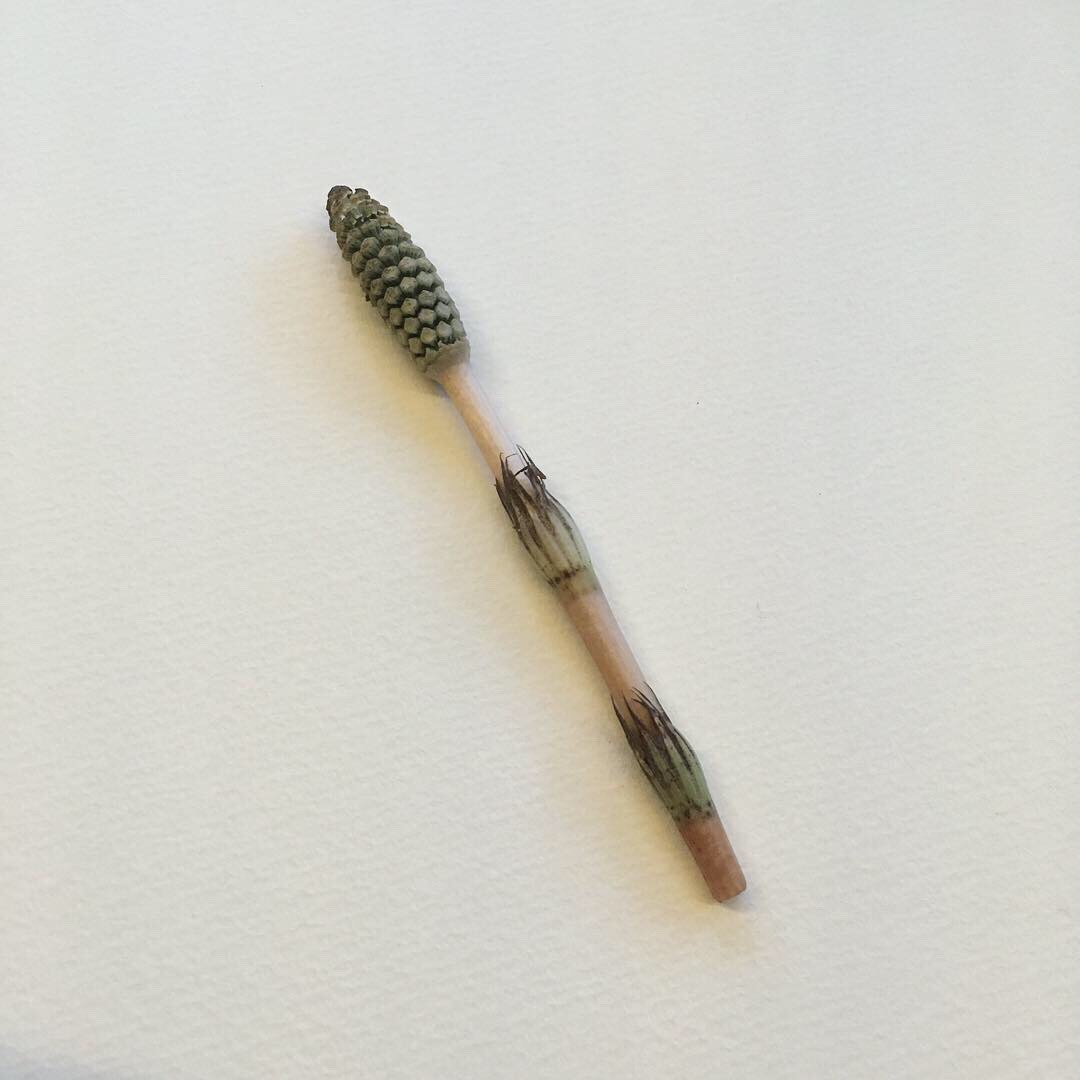
We don’t have kogomi and tara no me in our garden, or not that I know of yet (I discover new things each year!), I found a few tsukushi in the past but never enough or at the right time to harvest them. This year I found really plenty, enough to consider cooking some. Tsukushi are a bit of a delicate plant and their pollen is not very good so it’s better to harvest them early. The one on the picture below is for example a bit too old, this can be seen by the dark color of the head: the pollen is already about to go out! The pollen of tsukushi is blue to black, and looks like mold!!! I have never seen tsukushi in supermarkets, I assume they are too delicate for transport and shelf time. Their flavor is very subtle so I like simple preparations: quickly sautéed, or simply blanched in dashi. To prepare them, simply wash them and remove the corollas parts using your thumb by simply rolling the stem with the corolla on top of your nail. Then cook them in a pan with a bit of butter or as said above blanched them in a regular dashi. Serve them right away with rice, scrambled eggs… nothing too strong.

I my case I made a simple fried takenoko rice with sesame oil, scrambled eggs season with a few drops of soya sauce. That’s it!

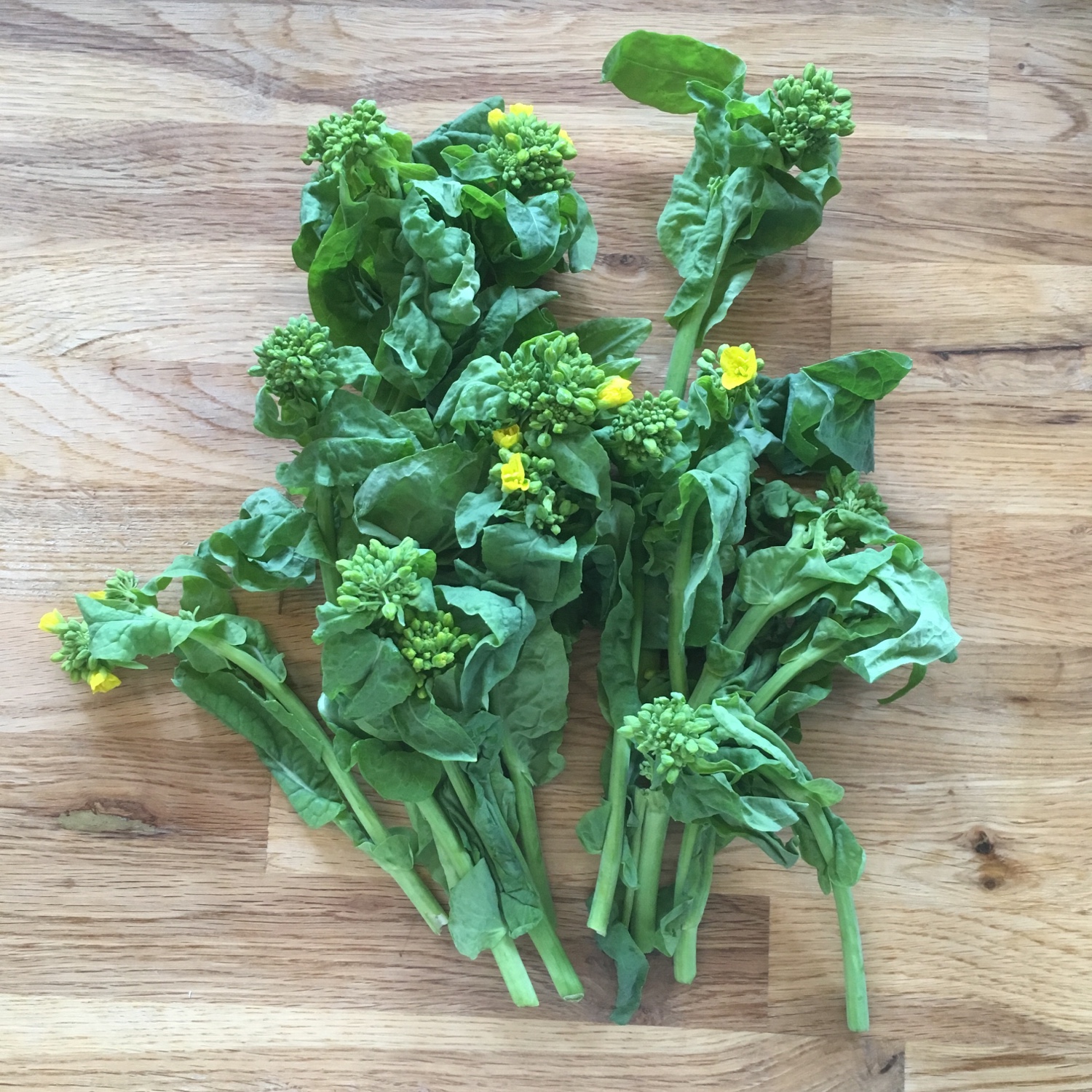
Canola

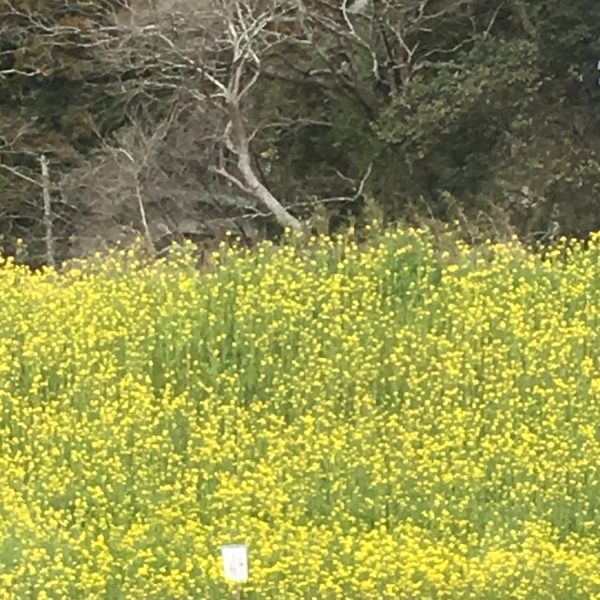
Every year one of the first vegetable that shows the arrival of warmer days and real spring (meaning up and downs in temperatures and unstable weather) is canola.

Not only canola is delicious, it is also beautiful in the nature, with its tall vibrant green leaves and yellow flowers. Isumi and Otaki are quite famous for its sight as they grow along the Isumi line train tracks and make very picturesque pictures for which a lot of people come. Not to say when the cherry trees start blooming, the pink trees bring some more pictural scenes and views, and gather even more people!

I enjoy very much when we ride in the country side at that time, but as you know, I love cooking canola too a lot.

This time, I used it for a very quick recipe, with soba and scrambled eggs. I simply blanched the canola washed and cut with a handful of katsuobushi. I boiled the soba, prepare the eggs, served all in a bowl, added olive oil and soya sauce, that’s it!!!

I’m now flying to Australia for a few days… bye-bye!

Tofu

I am a big fan of tofu… most of you may say that tofu is an insipid, watery, white thing, but it is actually much more than that. I was convinced very quickly when we went to a tofu restaurant near Nezu (we used to live in Nezu) the very first months we lived in Tokyo. There was tofu in every single dish of the kaiseki course menu and it was amazing to discover all you can do with tofu. After that of course we’ve been to many other tofu restaurants, and for the scenery (though they serve not so much tofu actually) Ukai, at the foot of the Tokyo tower is without mistake a great pick. And regarding the preparation of tofu I learned a lot thanks to my cha-kaiseki classes. On thing that is always important is to drain hard tofu (momen tofu – 木綿豆腐) well. But what I realized recently is that a very well drained tofu, when heated in a pan for a short time ressembles ricotta in texture, without the milky taste. Perfect for A. who doesn’t like the taste of cheese and for me who live cheese. We have a compromise!

That’s how I’ve stared using very well drained tofu in many preparation where I may have used cheese. So, how does that work?

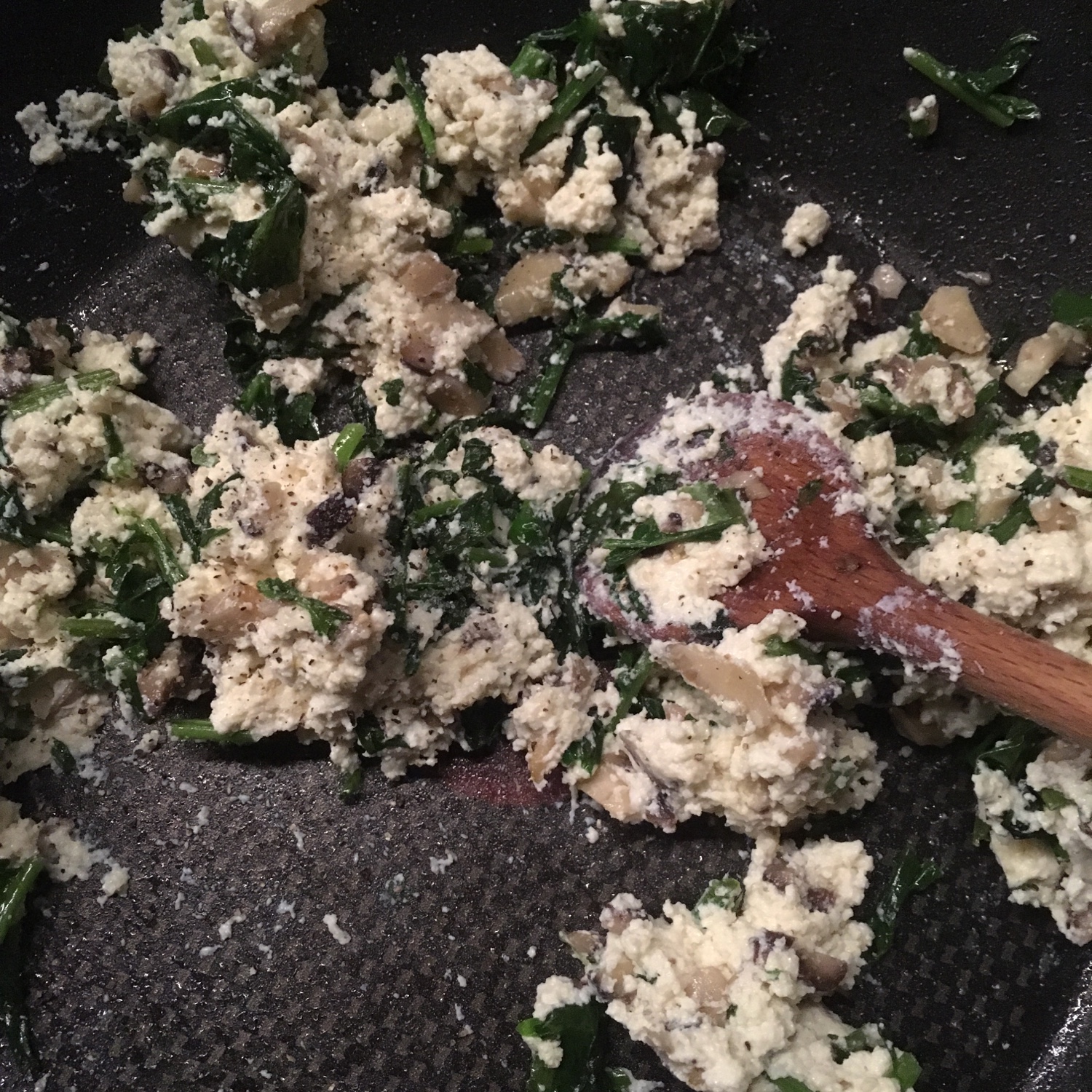
Drained tofu, rucola, shiitake for ravioli filling

You need to cutting boards, and a clean cloth. First start draining the tofu by pressing it between the two boards. Slightly incline the bottom one towards the sink, put the second on on top with a non breakable weight… anything you can find in the kitchen… I use miso packs or flour packs. Leave for an hour or so. Gravity will do the work.

Then put the tofu in the clean cloth and gently knead while squeezing to take the water of. Don’t be scared of squeezing hard. Once done you should obtain a rather dry to creamy texture. That’s it! Now you can use it in traditional Japanese recipes such as tofu balls with vegetables (I’ll post a recipe about that when the edamame season will arrive), or as I do, in replacement of ricotta, in quiches, in ravioli, or in pasta sauce, in salad…

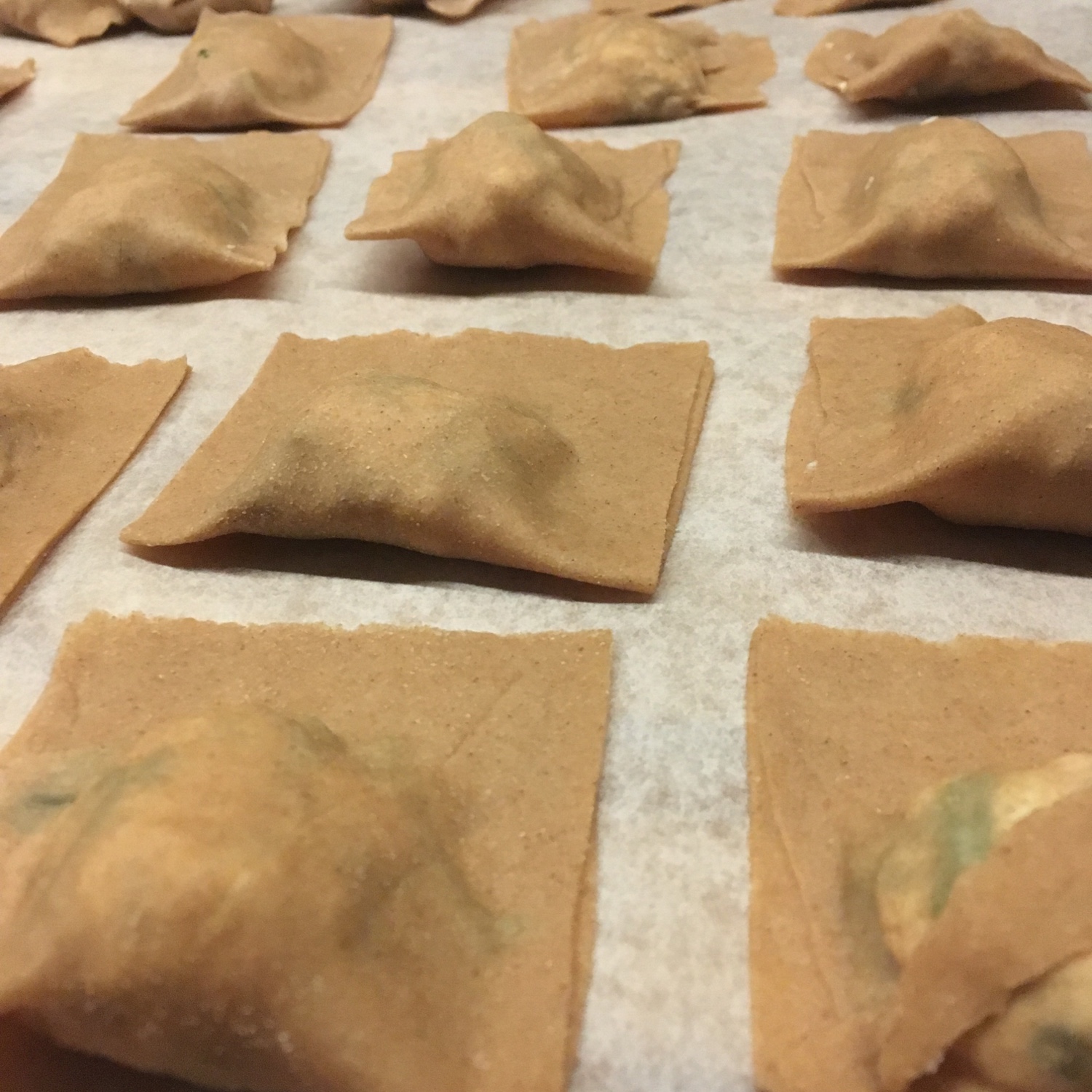
Filled ravioli

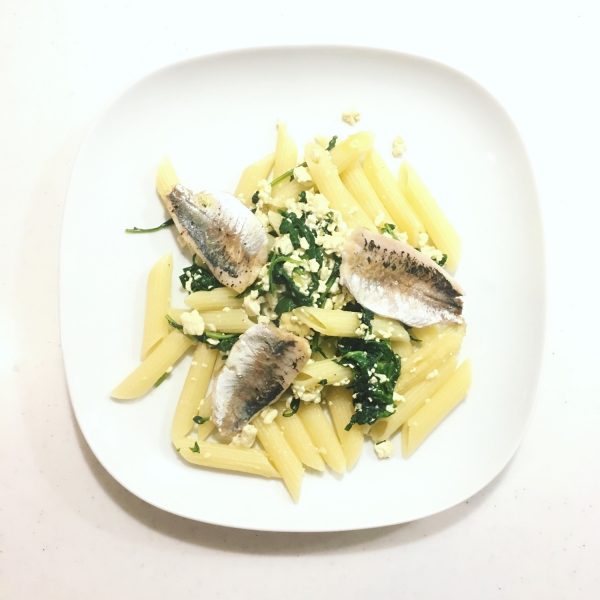
Last night I used the same drained tofu for a simple pasta recipe. I had fresh and tender radish tops, and beautiful fresh anchovies and prepared penne. After draining the tofu and washing the greens I cooked them in a pan at low heat. I boiled the pasta and drained. Add to the greens and tofu, add salt, pepper and olive oil. In a small pan I grill the anchovies, add a few drops of olive oil. Served in the plates and enjoyed. That’s it, simple right?

The only issue is that draining tofu is a bit tedious, and takes time, so if you don’t have much cooking time, I recommend starting draining in the morning, by using a tea pot and a tea filter and leave in the fridge, by night it should be almost perfect.

Cheeses from Chiba

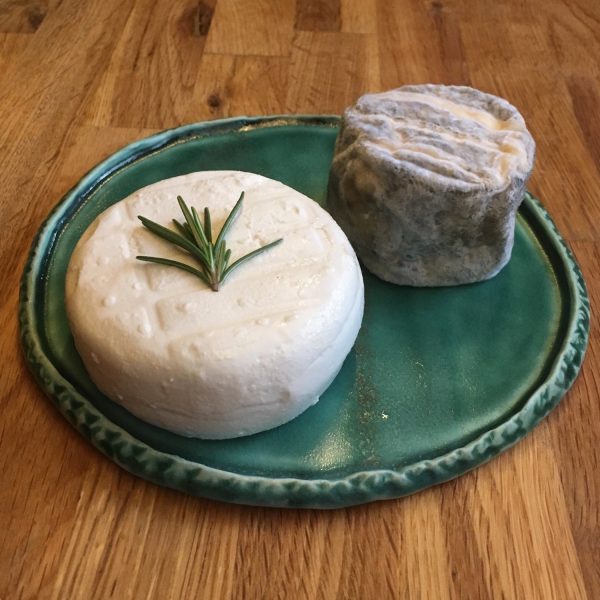
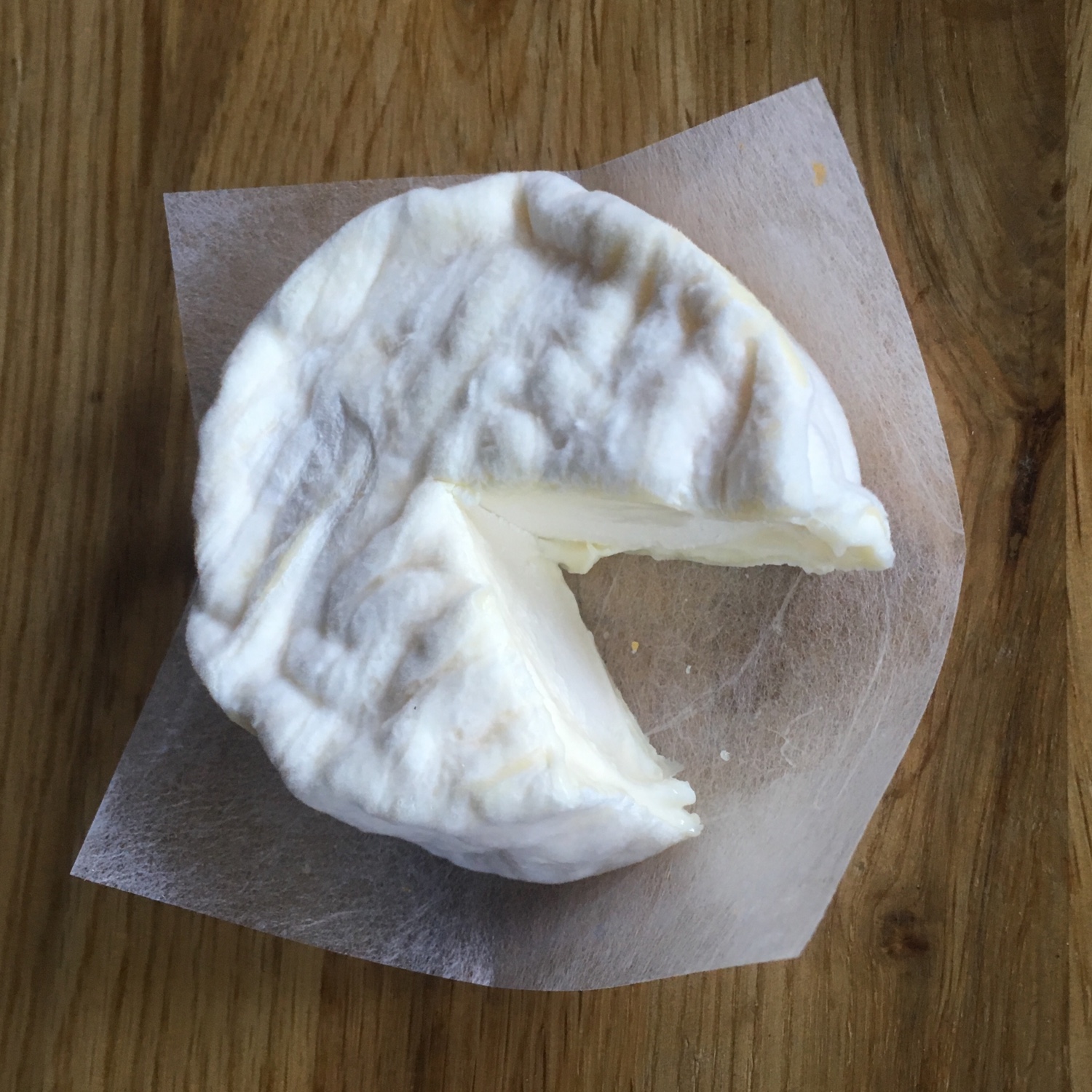
When we first settled in Isumi, and I found a cheese factory right down our valley I was really happy! Soon after that At Ohara harbor market I found Takahide farm and another Yojuemon cheese factory. This was more than enough in a country that doesn’t have a strong milk and cheese culture and I was fully satisfied. To be honest the closest cheese factory: Komagata, was good enough when I knew only that one, but as soon as I found Takahide, I stopped buying cheese there, as Takahide cheeses are so much better. Takahide has three delicious original cheeses: a reblochon style, a small creamy one that recently comes in different maturity (the more matured one on the picture below is just perfect) and a blue cheese, that is so perfectly made that even I who don’t really like blue cheese I love! The plus with Takahide is that they have also mozzarella and fromage blanc, and for those who like ice creams, and what for me is really important, they have their own milk farm. So when going to the cheese shop you can see the cows and how well treated they are. Takahide cheeses won several international awards and have attracted a lot of media attention a few years ago and the shop, which use to be a small counter inside the cheese factory is now a little cafe space where you can drink a delicious coffee and eat a pizza made with fresh mozzarella while looking at the cows.

Yojuemon makes ricotta mainly, or at least that’s what I always buy from them. And it’s a really good one. I usually buy at Ohara harbor market on Sunday morning.

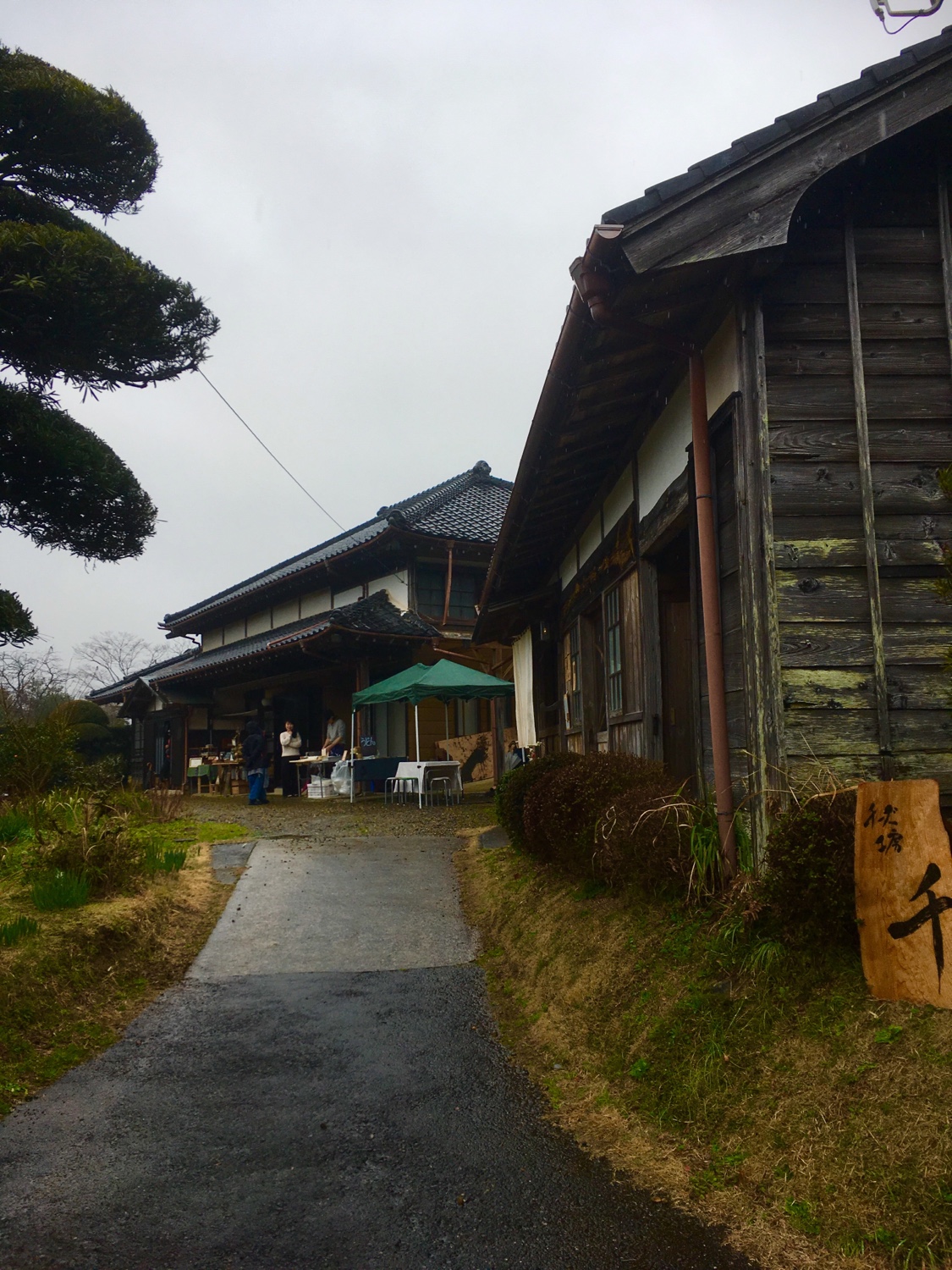
But the whole point of this post is not to review what I already more or less said before… it’s to introduce a new cheese factory. This one is not in Isumi, but in Otaki, on the way to Yorokeikoku. It is called Sen . I discovered it thanks to some people I follow on IG. Sen is open only the first Sunday of the month, but luckily we had no plan but to go to Katsuura to see the Hina matsuri last Sunday, and with the terrible rain we thought that a drive in the country to see plum trees blossoming and early sakura would be great. So we headed up to Sen. The place is really cute, old houses, polish garden on top of a hill. Picturesque.

We were warmly welcome, and the cheese shop offer several varieties of cheese, even raclette cheese!!! I bought one small cheese but when the owner realized we were French we start chatting (in French) about her stay in France to study French cheeses, and the cheese she makes, and she offered me one of her award winning hash cheese. We also took a tour of the old buildings.

Once back home I prepared breads: fougasse with walnuts, and campagne bread and couldn’t wait to try them. Well to be honest, you don’t need bread. They were delicious just like that. It is very interesting because they are very different than Takahide cheeses, with probably stronger milk and cheeses flavors (probably due from her training in France!). The maturity also was great, with a creamy side below the crust. It was a great discovery!!

Now I have one favorite cheese farm and one favorite cheese factory!!!!

Italy meets Japan again

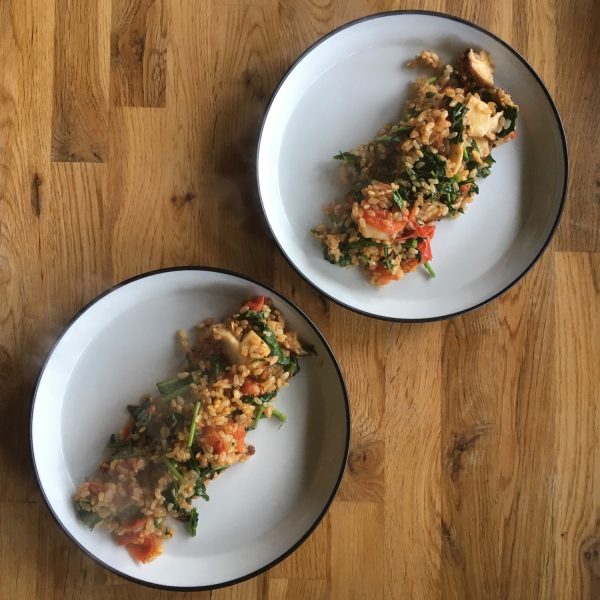
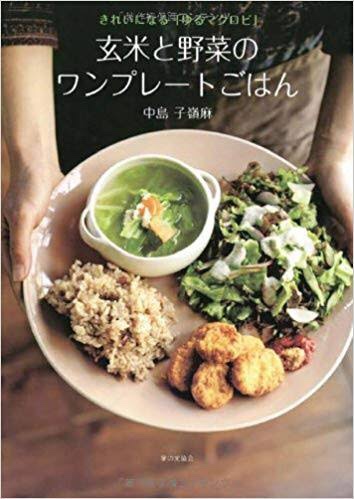
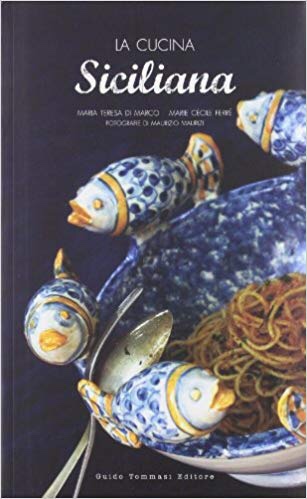
Saturday I spent some time browsing cookbooks, looking at their beautiful pictures and slowly moving from the winter mood to the spring mood. I was focusing on two very different books: a Japanese macrobiotic cookbook from Brownsfield owner elder daughter Shinema Nakajima, and a Sicilian cookbook by bloggers Maria Teresa di Marco and Marie Cecile Ferre. The first one reminded me its been too long since we last ate brown rice, the second one made me crave for tomatoes, fresh anchovies, fennels and artichokes. But from the mix of both came this very simple recipe of a macrobiotic risotto made from Japanese brown rice and fresh local vegetables. Here is my recipe.

Italian x Japanese risotto (2servings)

– 70g of brown rice

– 3 shiitake

– a handful of fresh rucola

– 3-5 small tomatoes, ripe

– olive oil, salt and pepper

First of all cook the brown rice in the Japanese way. Use left over if you have some.

In a large pan heat some olive oil, wash and slice the shiitake and cook them at low heat in the oil. That will make the base of the risotto stock. Add the rice and stir well, add a 2tbs of water. Then wash and chop the rucola and the tomatoes, add and stir well. Cook for a few minutes while stirring. Add salt and pepper. I served it with daikon pickled with yuzu, that was perfect!!

Proudly powered by WordPress | Theme: Baskerville 2 by Anders Noren.

Up ↑

Verified by MonsterInsights