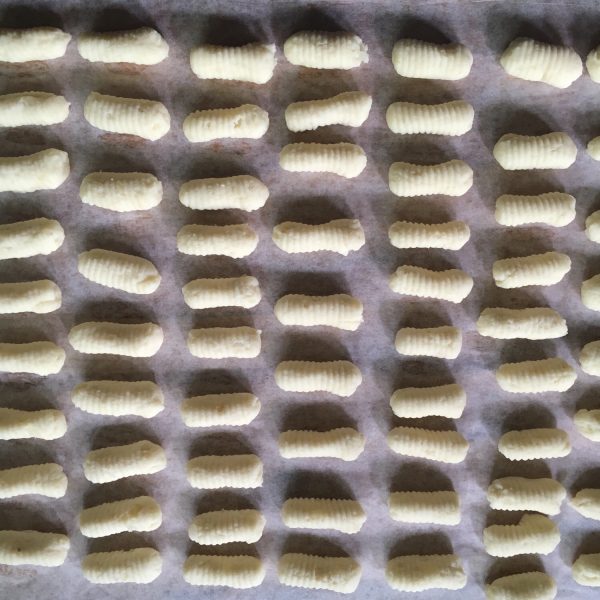
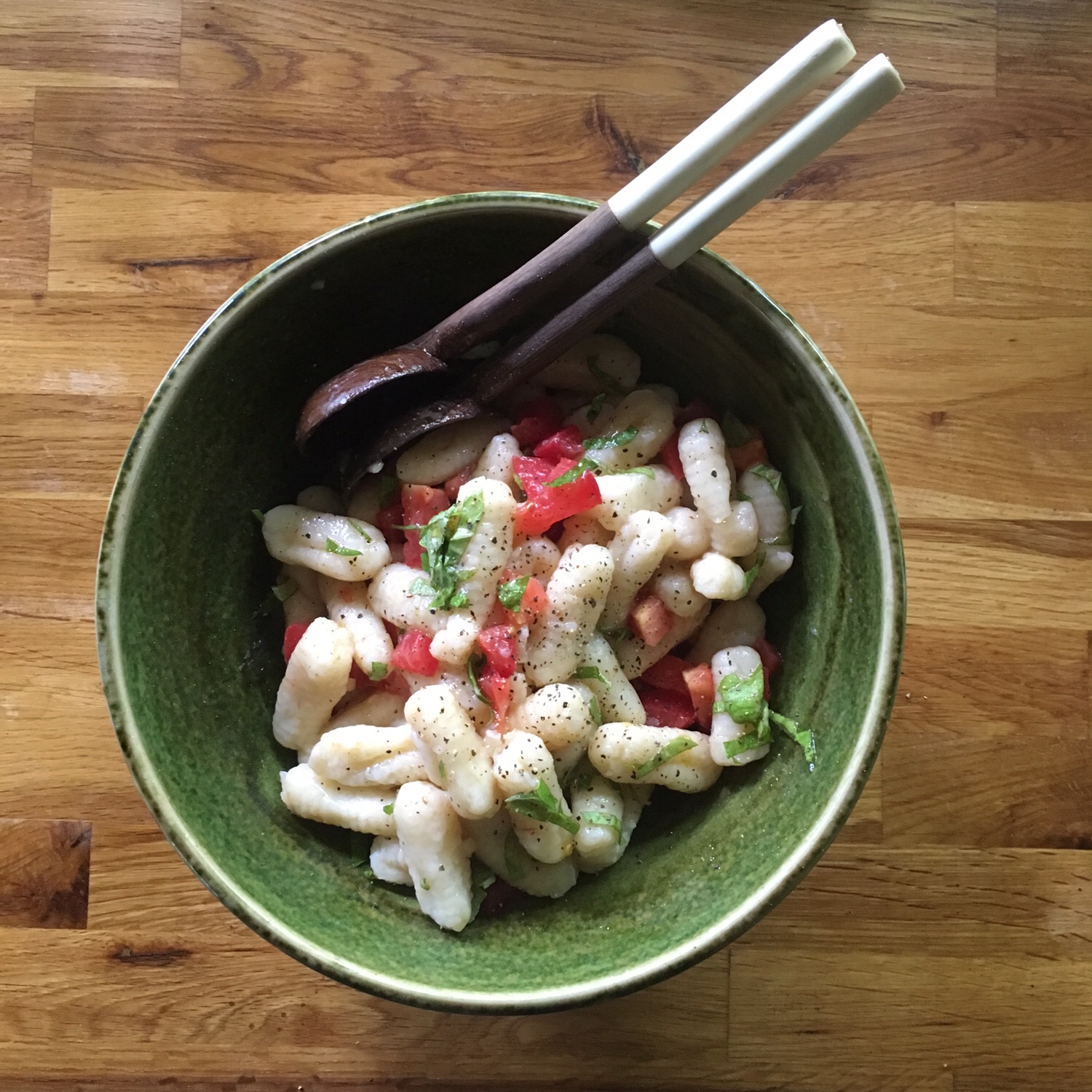
Potato gnocchi x olive oil

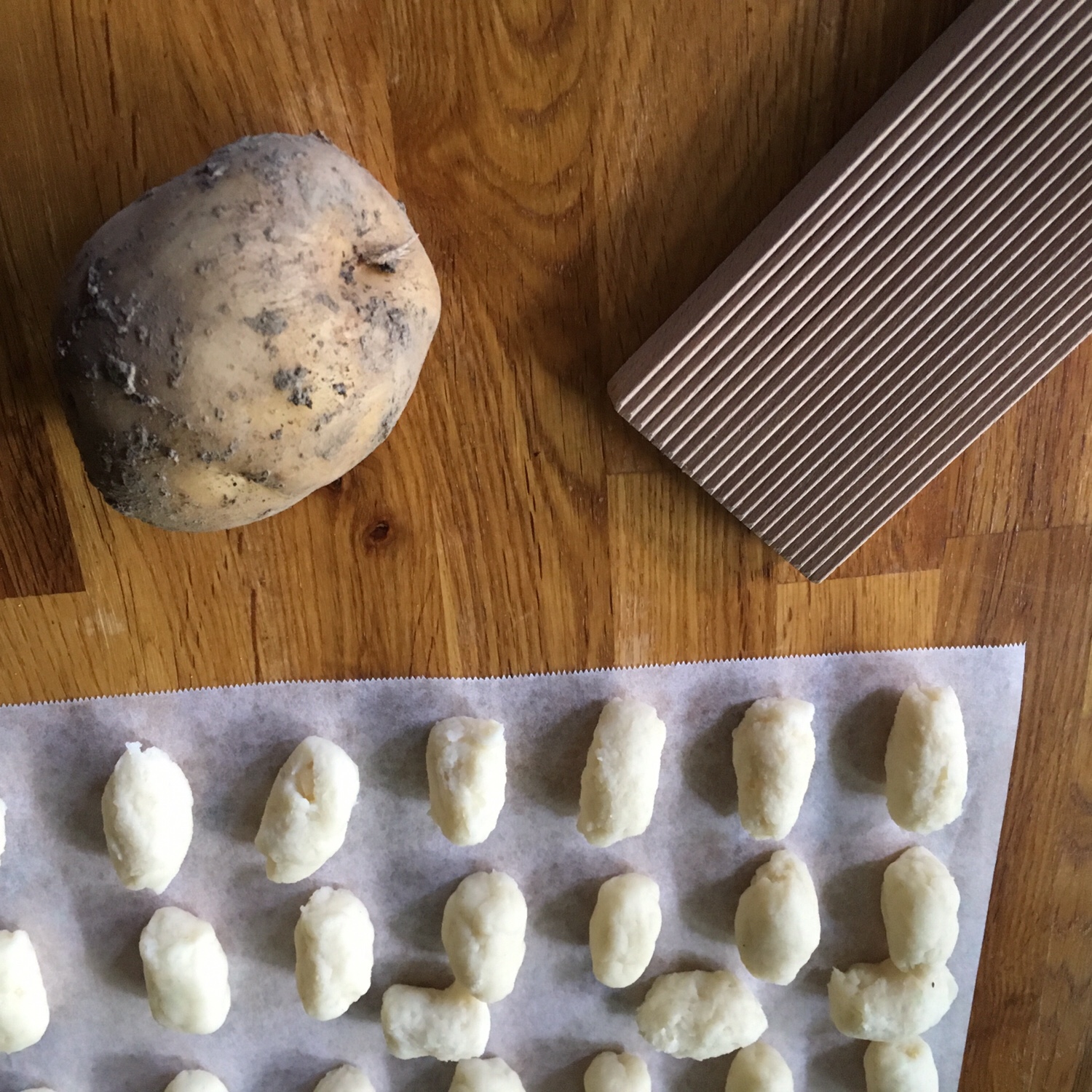
I’m a great great fan of potato gnocchi. I love them just boiled with olive oil, or with tomatoes and basil. I love them grilles in a pan with olive oil and salt. I love them in more complex dressings (all my gnocchi recipes here!)… I also enjoy preparing them a lot, the texture of the potatoes and the flour together is quite unique and enjoyable to knead.

So when one our neighbor gave us a dozen of large potatoes, my first idea was to make gnocchi!

My first gnocchi recipe had egg in it, but once I tried without and discovered after discussing with an Italian friend that sone Italian recipes of gnocchi don’t have eggs in it.

So it’s really just potatoes and flour, and as little flour as possible makes the taste of the gnocchivery potato like which I kind of like.

I serve them most of the time simply with fresh tomatoes and basil from the garden. What I realized recently is that to be perfect, a tasteful olive oil, a bit of salt and pepper are mandatory. Last time I made gnocchi I only had some “regular” very mild virgin oil and it didn’t work well. The flavor of the olive oil was too bland, just an average olive oil, and it didn’t highlight the taste of the potato. For gnocchi you want an olive oil that has a good backbone, a strong olive taste without being bitter or too blazing either. That’s the key to enjoying gnocchi!

Parmigiano is optional…
Malabar spinach

I discovered this green last year at our local market, called tsurumimurasaki ツルムラサキ in Japanese, and had a crush for it… then the season passed and it was the season for other greens… and then this week Malabar spinach was on the market shelves… and I was happy to find it again, with its very grassy taste its unique texture and its beautiful color. And again I have used it intensively in the past few days.

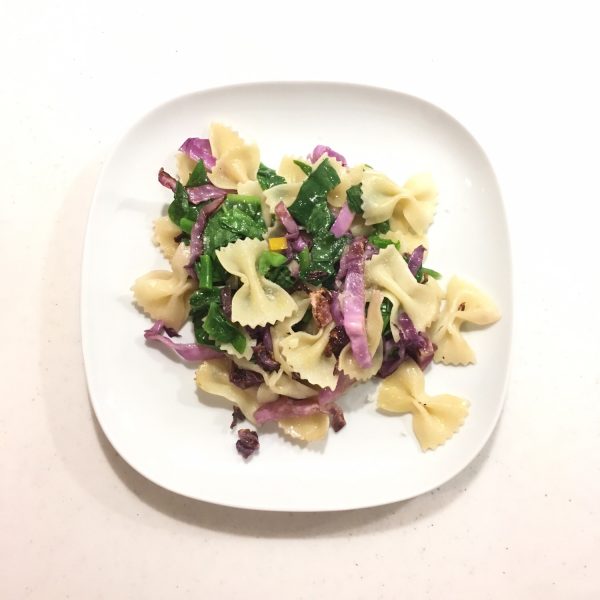
One of my two favorite ways of cooking it is by simply sautéed it. I realize that this is mainly how I like most of my vegetables: a fry pan, a drop of olive oil or nothing and the vegetables just washed (not even dried) and cooked in their water. Malabar spinach goes well with other vegetables, potatoes, kohlrabi, tomatoes… for this recipe it was simple, just red cabbage shaved and Malabar spinach cut in pieces, a bit of olive oil, and some farfalle. A but of pepper and a bit of salt. And it was an amazing dinner.

Do you cook Malabar spinach? How do you like them?

Kohlrabi and edamame salad

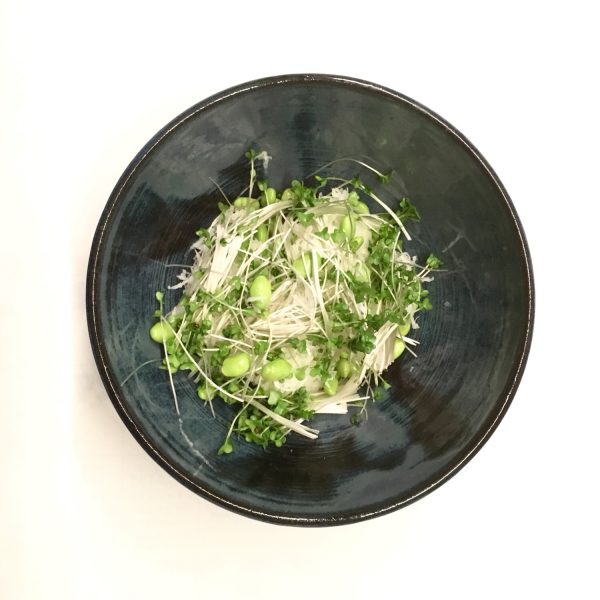
As I was telling you, kohlrabi is my new best cooking ingredient. Sautéed it is great with other vegetables, pasta… but kohlrabi is also delicious raw. Many recipes I saw on the internet inspired me while looking for ideas how to cook it. And if the weather is called one day it is warm and sunny the next, so a simple salad with raw kohlrabi is always a great option. When the kohlrabi is juicy and crunchy and very refreshing. As I said in my previous post, it is really nice with olive oil, so no headache about the dressing. To make the salad a little Japanese style I added boiled edamame (the season is just starting), some brocoli sprouts and a bit of sesame. For the kohlrabi I grated it with a mandolin and remove the extra juice by gently pressing it. Simple and super delicious…

The next thing I am wondering now is with which herbs and spices to try it… If you have any idea, please share with me! I’ll be happy to try.

Sansho

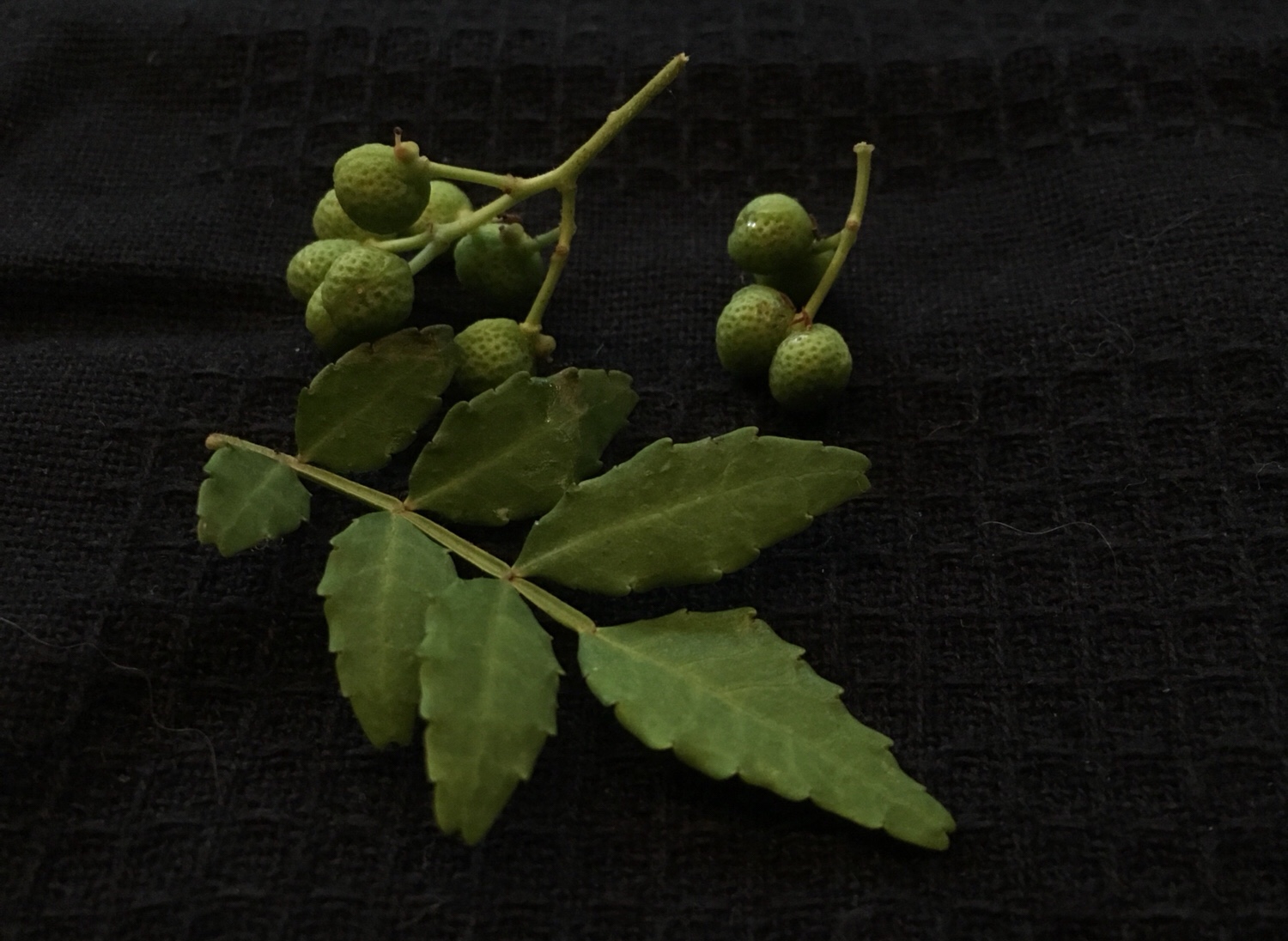
One of the first thing I planted in the garden 6 years ago was herbs: rosemary, mint, sage, parsley, basil and a sansho shrub. I wanted to be able to go down the garden when I was cooking and puck whatever herb I needed. The rosemary and mint did really well, and they are still there, growing and spreading! The basil and the parsley never survive the winter so I replant some every year. The sage survives the the mild winters but not the cold ones. The sansho? It grows at a pace I didn’t imagine! Actually after a while I realized there was already a sansho shrub in the garden but at a very inconvenient place so I took it and gave it to our neighbor. Sansho is great because you can use both the fruits and the leaves.

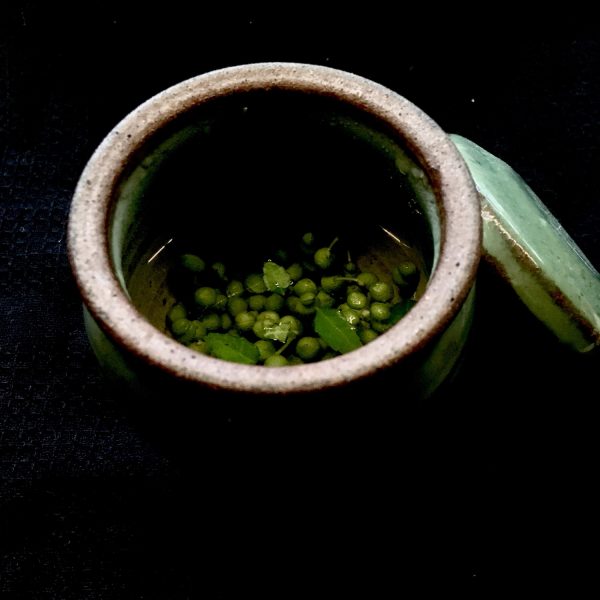
After trying a few recipes of simmered sansho with konbu… I decided to prepare them in a manner that will allow to keep them longer and eat them all year round. Indeed, the shrub is growing and the number of fruits too, but it is difficult eating more than four of five grains at the time because it is really very fragrant. I found a recipe of saumure for sansho so I have decided to try it. It was awfully simple to prepare but it needs to be kept 3 months before eating… so we’ll see in September…

More zucchini!!!

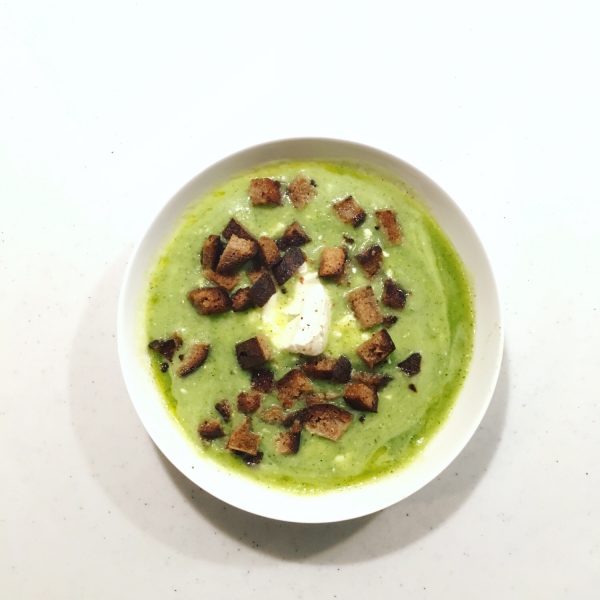
I could have totally go with an other zucchini week worth of new or modified recipes in the last 7 days… to add to the existing collection of zucchini recipes! I’ve been preparing most of our meals using zucchini because it’s just the season and now they grow plenty of zucchini in Isumi! So again last Saturday I got plenty… yellow, green, small and big… later there will so round ones… And with the typhoon coming and the sudden drop in temperatures, a warm soup was very welcome, so I prepared a … zucchini soup of course!!!

Zucchini naked soup

– 2 large zucchini

– olive oil

– salt and pepper

– optional: 2tbs of cream cheese

– optional: bread croutons

In a large pan filled with 1l of water boil the zucchini washed and cut in rough pieces. When tender blend and add olive oil, salt and pepper. That’s it!!! Serve warm and eat right away!

You can add the cream cheese directly in the plate. Stir a bit when it has melted. Add the bread croutons if you want a richer experience.

Summer teaser

Last weekend and today were really giving a taste of summer. Harvesting from the garden: locats, plums, herbs, sansho, eating in the garden at night, playing tennis and going swimming or bodyboarding right after in the chilly water of the ocean to cool down the body… and now a typhon is coming, it rains and it is cold. It was just a teaser for the coming summer… I didn’t harvest enough locats to make more than fruit salad. But I harvested again about 15kg of plums this weekend and it’s a great time to do some plum job: ume jam, umeboshi, ume syrup…

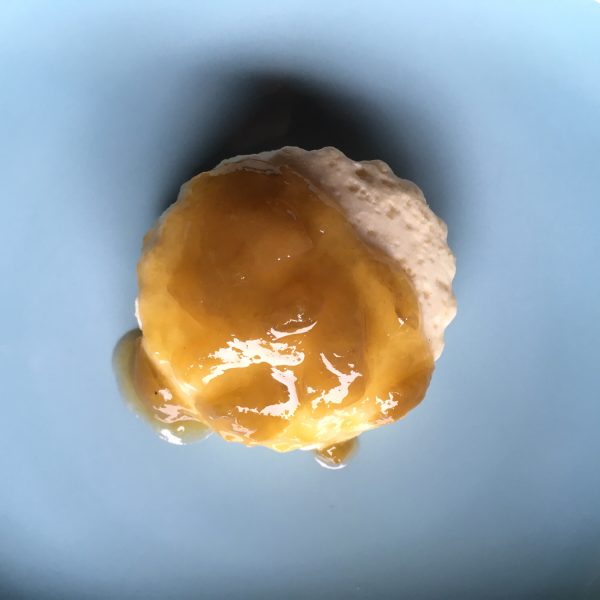
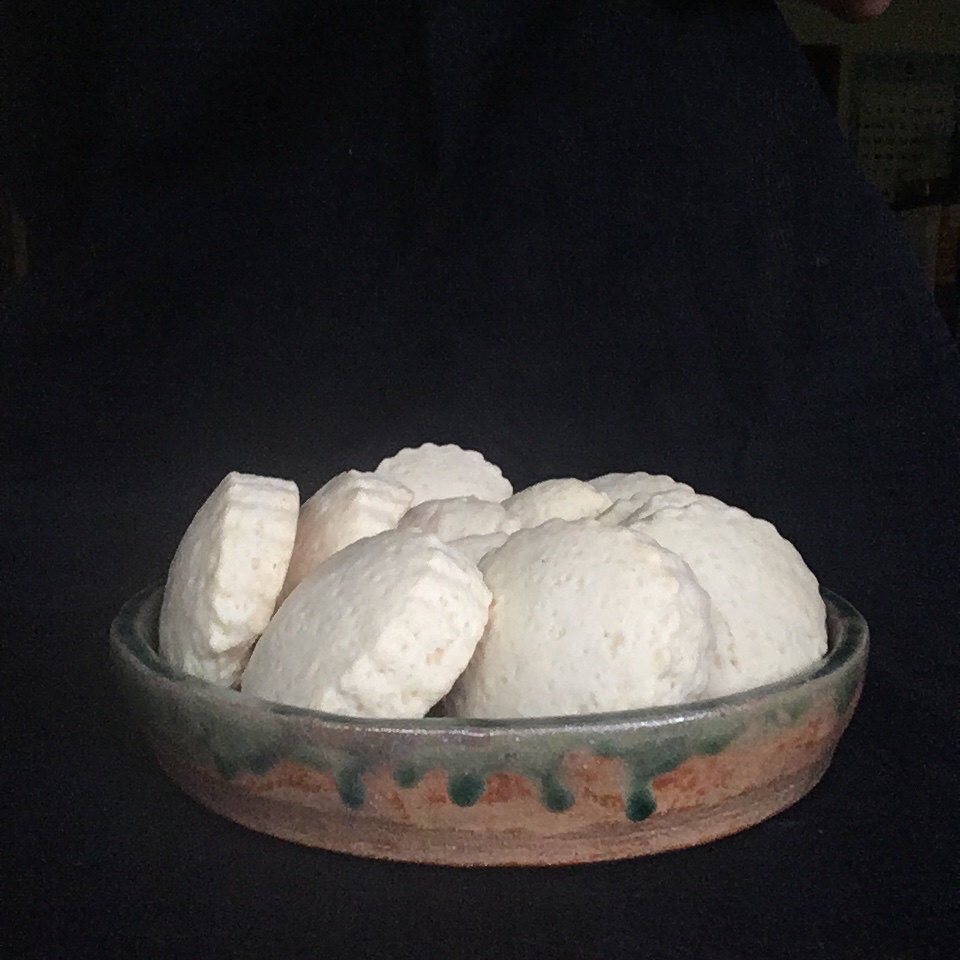
I like particularly ume jam because it can be eaten right away. All the other you have to wait between one week and one year… and ume jam is perfect with a batch of English scones!!!

The recipe is really simple. The same base as plum jelly except that you don’t use agar agar but instead I put the seeds of 2 apples in a tea bag and cook further, before pouring into boiled glass bins and closing.

Rainy season?

Just back from Australia to Tokyo, and I find that the rainy season is getting near. The air is already quite humid and temperatures are mildly warm or hot. Soon it will be time to harvest the plums in the garden, even hopping it is not too late already… It’s been 3 weeks we haven’t go to the country house… I can easily imagine how green and lush the garden is and the hydrangeas will be all ready to bloom soon.

One thing I like to prepare with plums, other than ume-shu, ume-syrup and umeboshi is plum jam and plum jelly, something that you can enjoy right away and doesn’t have to sit for weeks or months. I am not very good at making jams and preserves but I keep trying. Jelly or yokan (ようかん) is much easier for me… but it uses only a little bit of fruits compared to all we have…

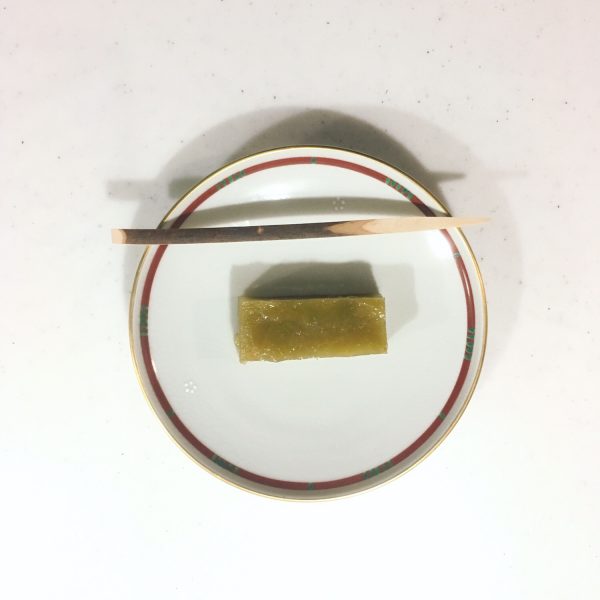
Japanese plum jelly – ume yokan

I used about twenty green large plums, sugar to your liking, agar-agar, and about 2/3L of water.

First wash and remove the stems of the plums, boil the water and add the plums, cook under cover at low heat until the plums are soft and the skin and flesh detach easily. Then add the sugar and the agar-agar (quantity will depend on how hard you like the jelly and how much liquid remains in your pan. Cook at medium heat for 5-10min and then pour in a dish. Wait until it cools down to refrigerate. After 2-3h you can serve, by cutting blocks out of the jelly. That’s it!

Fava beans and wakame

I’m a great great fam of greens such as asparagus, green peas, green beans, snap peas eda mame and fava beans. I could eat them all the time! Unfortunately the season for each is rather short but luckily they follow each other and overlap a bit so from March to August there are always some nice greens to eat!!!

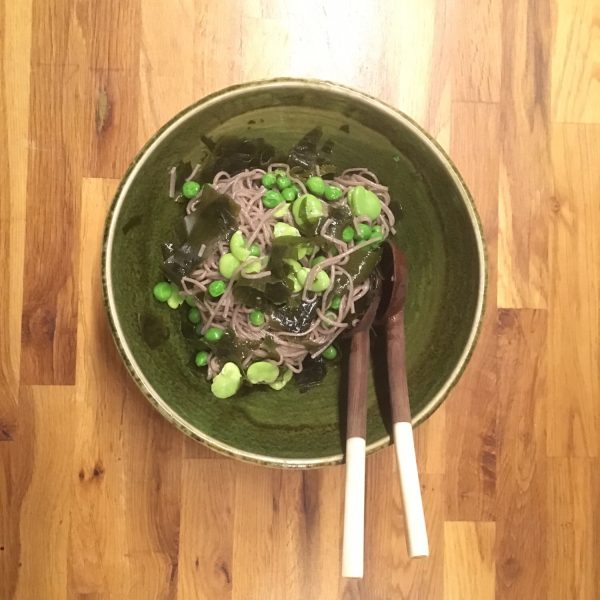
Now is the season for fava beans and green peas and I cook them quite often. A classic Japanese preparation of fava beans in Shojin cuisine is with wakame, and I really like the association of the melting soft bean with the more slimy and crunchy seaweed. In the books normal recipe the fava beans and the wakame are simmered with soya sauce and sake. I chose a lighter version in taste and I prepared them as a sauce for soba noodles and added also some green peas. It’s almost a classic for me since I often cook something similar at that season! Here is my recipe:

Fava bean and wakame soba

– a handful of fava beans

– a handful of green peas

– a bit of wakame (I used new wakame)

– soba noodles

– olive oil and salt (or soya sauce)

Shell the peas and the beans. Peel the beans (I realized recently that it is no need to blanch the beans to peel them, raw they are easy to peel too). Boil water in a small pan to blanch them. Add the wakame cut in small pieces and then drain and reserve. In a large pan boil water for the soba. Cook as instructed. Then rinse in fresh water and drain very well. In a bowl put the soba, pour some olive oil, add salt or soya sauce, then the vegetables. Stir gently and serve.

Brown rice and curry double-tap

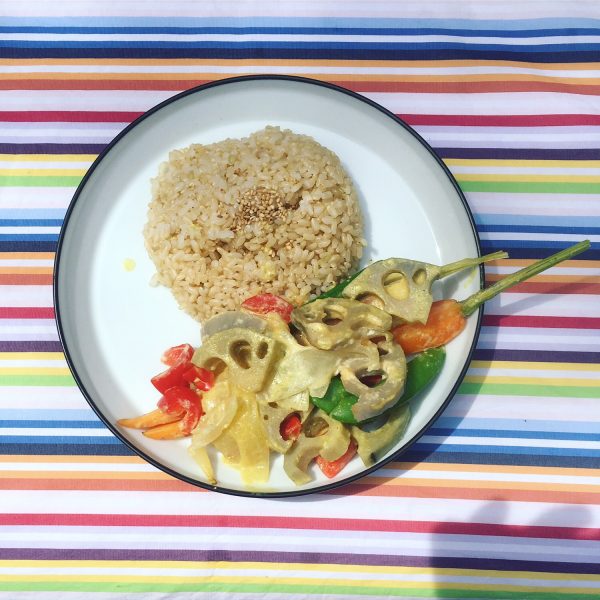
With all the fresh spring vegetables now available, in particular carrots, lotus roots, snap peas… and the weather changing quickly from sunny and warm to windy and chilly, a warm curry is always nice, accompanied with brown rice.

And with friends around I cook always much more than we can eat so I often have left over and brown rice makes a great base for a crunchy pie crust. So here are my recipes.

Spring coconut milk vegan curry:

– carrots

– lotus roots

– snap peas

– new onion

– red bell pepper

– coconut milk

– curry powder

– salt

– brown rice

Cook the brown rice in a rice cooker or in a pan at low heat under cover with twice more water than usual.

Was and peel the vegetables and cut them as pleases you. In a large fry pan or wok start by cooking the onion at low heat to soften them a bit, then add the lotus root, the carrots, the coconut milk and a tsp of curry powder, a pinch of salt. Cook at low heat for 10min. Add the red bell pepper and finally the snap peas. I like my vegetables crunchy so I try to avoid over cooking. Serve the rice and the curry together.

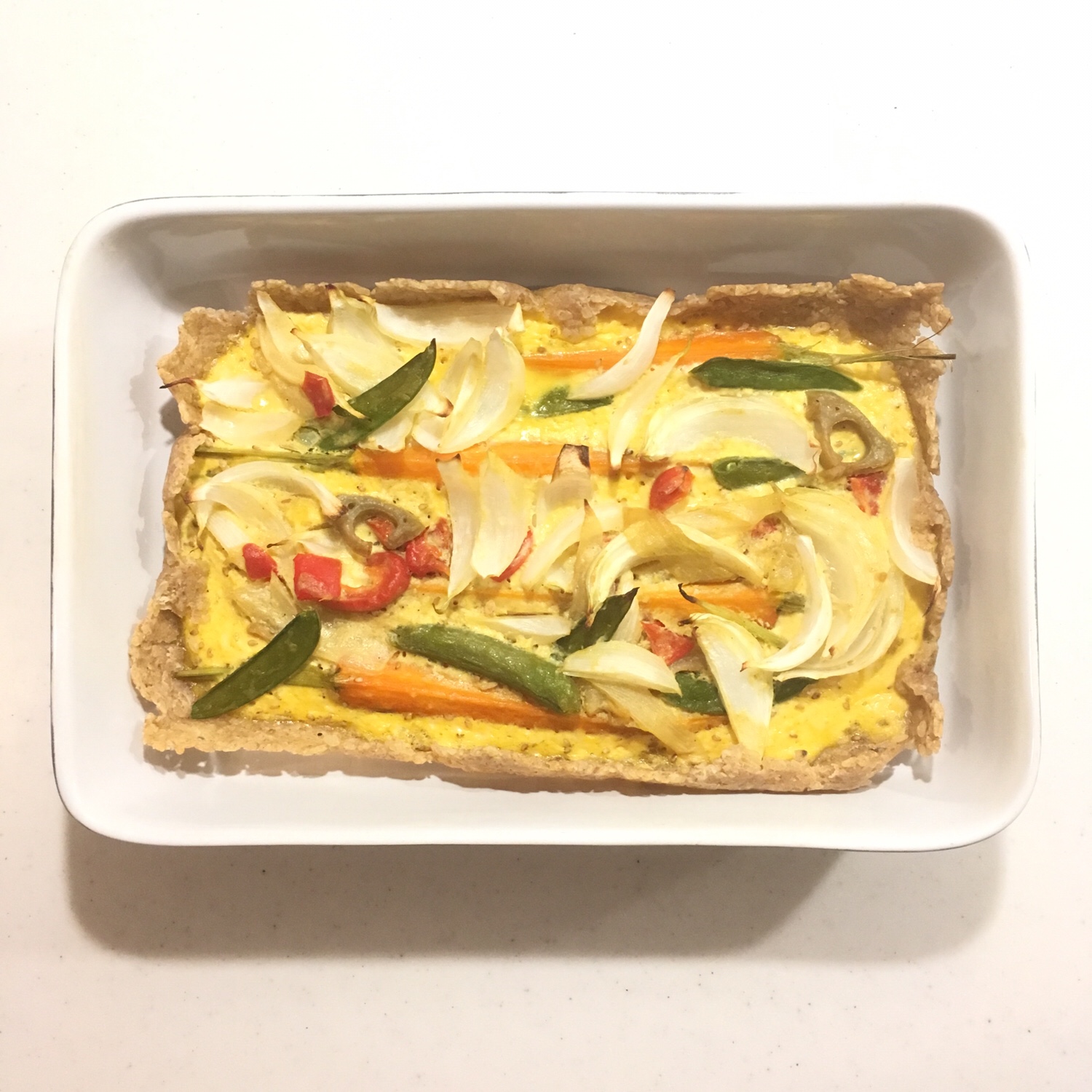
Brown rice quiche:

The base of this recipe is the left over from the previous, but you can start from the scratch.

– cooked brown rice

– flour

– vegetal oil

– sesame oil

– new onion, snap peas, and any other vegetables of your choice

– tofu

– eggs

For the pie crust, in a bowl mix the brown rice, flour and add a bit of water and vegetal oil and sesame oil to obtain a very granulated dough. Roll it on cooking paper to a thin layer the size of your pie dish, plus the sides.

Drain the tofu. Wash and cut the veggies (if using the leftover then it’s all set). Mix the tofu with the eggs, the vegetables and pour everything in the pie crust. Cook at 180deg for about 25 min. If you didn’t use the leftover you can still add coconut milk and curry to the tofu-egg batter.

Have a great week!!!

Proudly powered by WordPress | Theme: Baskerville 2 by Anders Noren.

Up ↑

Verified by MonsterInsights