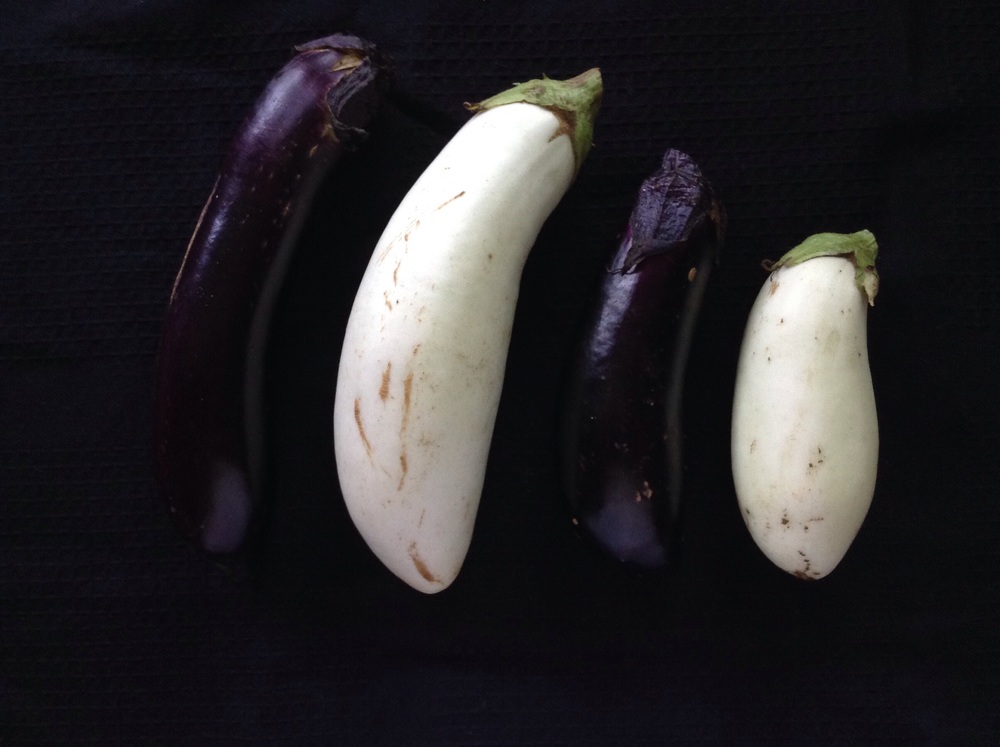
Let’s reiterate a vegetable week! I could have chosen grean beans, but I realize I’ve already posted many recipes involving green beans, so I’ve opted for one other summer star: the eggplant. Funilly eggplants are as much used in Japanese cuisine than in Provence cuisine, though in Japan the eggplant species are slightly different, smaller or thin and long.
They are also used in summer together with cucumber to make horses and oxes than the spirit of dead people ride to come back to the human world during the Obon period, which is either July 15th or August 15th depending whether one follows the new solar calendar or the old lunar calendar.
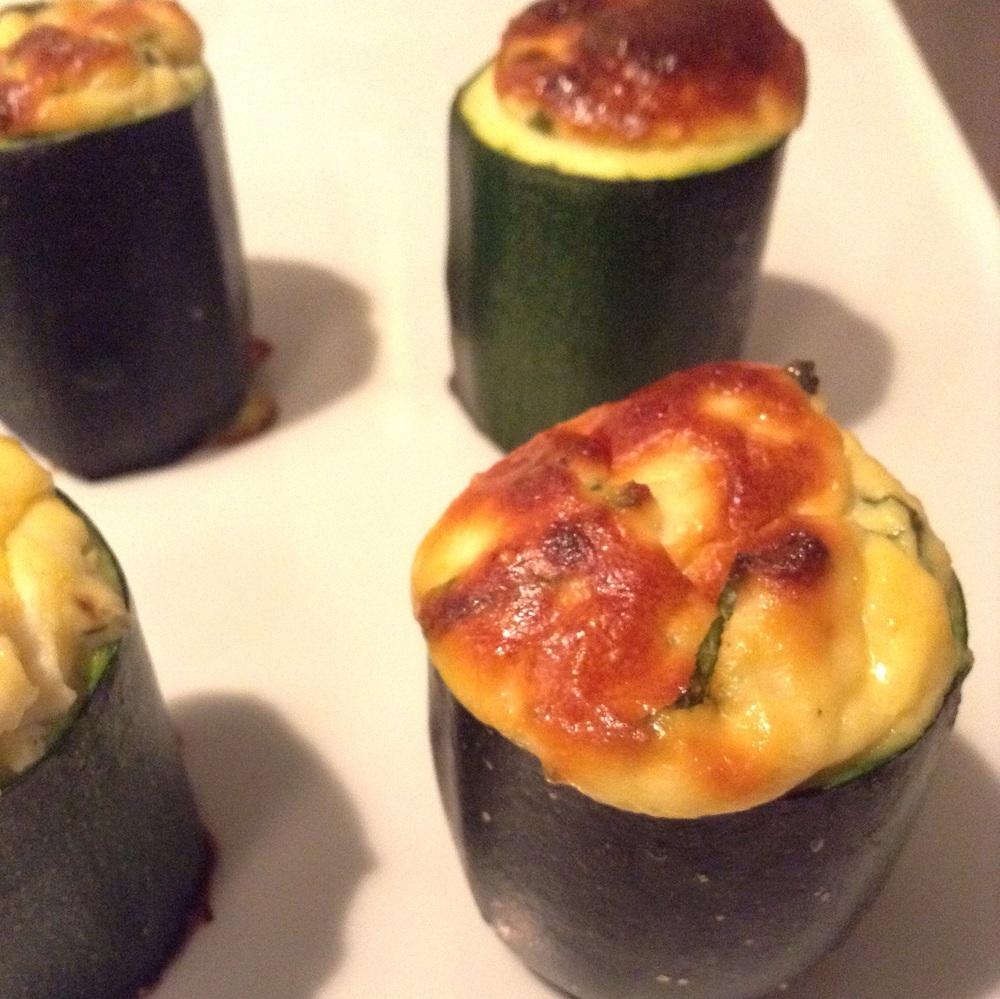
Here is an other recipe of stuffed zucchini, but vegetarian this time. For me it’s a classic because my mother has been preparing it for decades and I find this recipe perfect for hot summer days. In her original recipe my mother was using “brousse” or “bruccio” a white fresh cheese from the south of France or from Corsica, since I cannot find easily this cheese in Japan I replaced It by ricotta and it works very well. This recipe is lovely also in small round zucchini, but I couldn’t find any today.
The stuffing is really simple: it’s a mix of ricotta cheese, egg, fresh mint, salt and pepper. Stir the ricotta with an egg, chop the mint and add it to the mixture, season with salt and pepper, stir well. Cut the zucchini, remove a little of the seeds, stuff with the mixture. Line the zucchini in an oven dish and bake at 180deg untill the top is golden. Eat warm or cold.
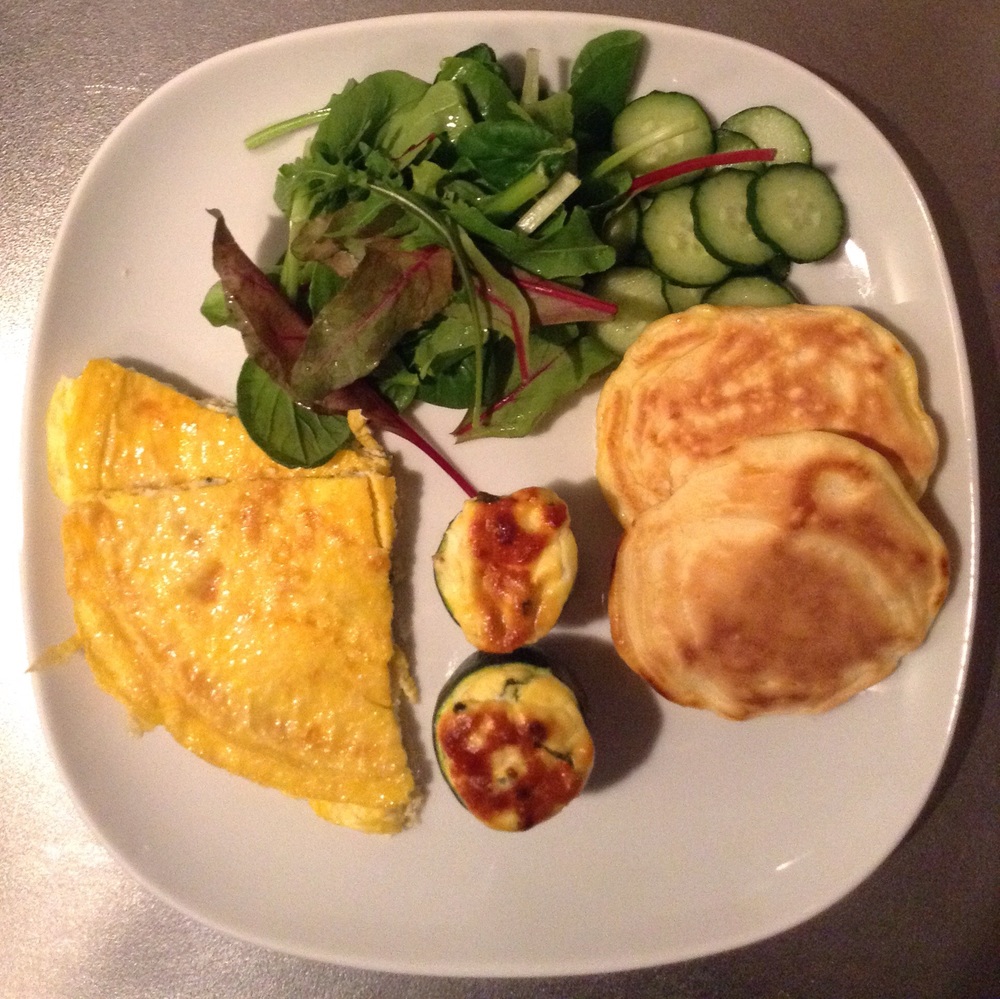
It is perfect as starter or to accompany a main dish. Here I served it for dinner in a one-plate with a little omelet, home-made pancakes and greens.
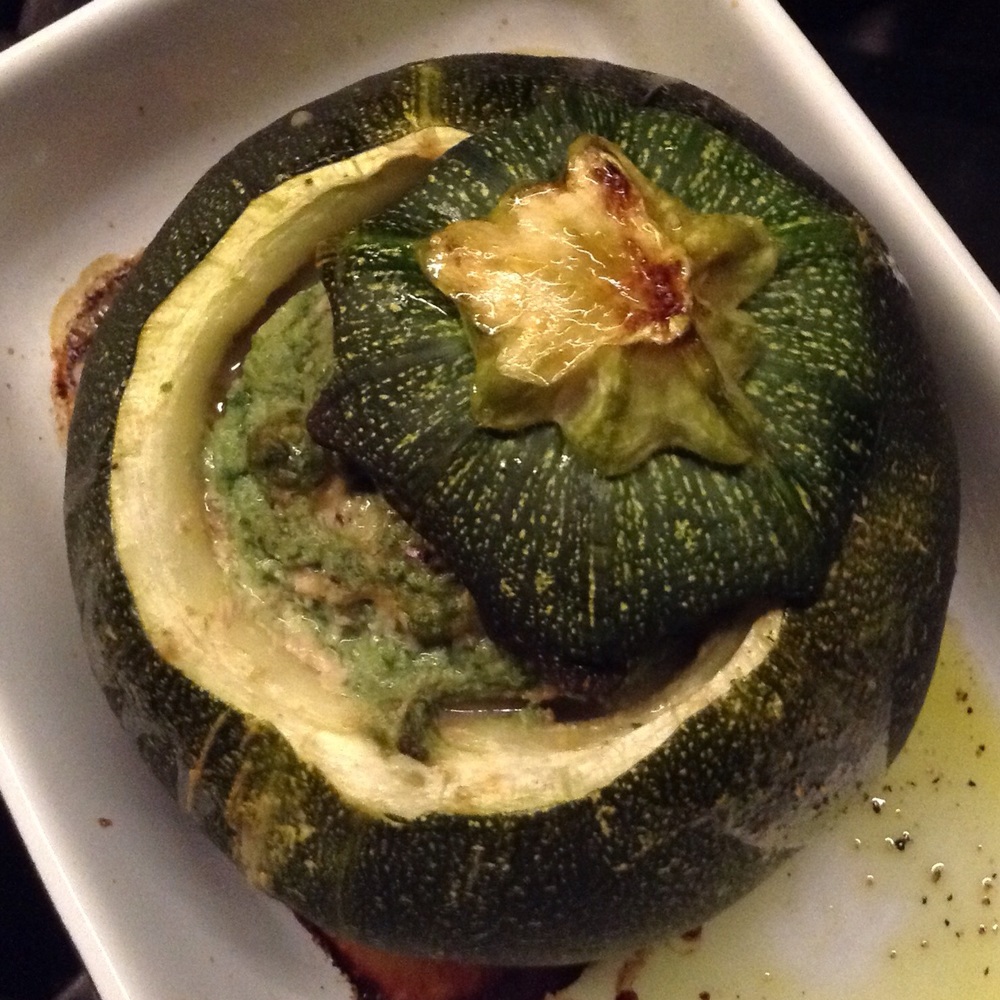
My grand mother had this wonderful way of making “farcis provencaux” or Provence style stuffed vegetables. This is a traditional summer preparation using the best of summer vegetables, stuffed with meat. Among the vegetables is the zucchini of course, and with it my grand mother would prepare tomatoes, potatoes and onions. What made hers special is the stuffing. Where a lot of people use sausage meat or just plain minced pork meat, my grand mother used a lot of more delicious things, and always non fatty meat: her stuffing is composed of grilled pork filet left over, ham, boneless pork cutlet… all minced together, and then she would add greens (see on the picture how green is the stuffing): tons of fresh parsley, the big green leaves of a lettuce, and finish with one egg, a bit of gratted gruyere, salt and pepper. Actually this base can also be used for cannelloni and hachis parmentier, two other preparations she was masterizing. I’ve seen her preparing that many times, she tought me and I’ve helped her many times too, but I can never reach that taste her stuffing for farcis had. But I keep trying. So this time I prepared stuffed zucchini, actually, usually she would use long zucchini, but I found these lovely round zucchini anc decided to try again, this won’t affect much the taste of the stuffing. So once the suffing is ready you just need to remove the seeds of the zucchini and stuff them, bake them in the oven for at least 90min. Farcis can be eaten hot or cold, you can keep them about 2 or 3 days in the fridge, and are always better the days after being cooked! Enjoy!
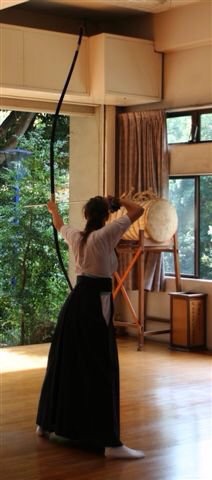
Me practising, a few years ago (picture taken by my uncle Bernard when they visited)
It’s been a long time I wanted to talk about it, but recently work kept me so busy that I felt bad writing about something that I had no time to do. Now that I have little business trips scheduled I can practice again more steadily and talk about it without having the impression that I should be in the dojo rather than writing about it. To make long stories short, I’ve practicing traditional Japanese archery, or kyudo, since I moved to Japan. Kyudo 弓道 that literally means “the way of the bow” is an ancient Japanese practice that as evolved as an art, where performance is less important than the form, and require a perfect balance of body and mind. Obviously this is not an activity to burn your extra energy and your anger from work, for that kendo must be more appropriate! But rather a meditative physical activity where breathing and body inner strength are crucial. The bow is much longer than a classic archery bow, mine is a long bow, so about 2.3m, and the strength adapted to it’s owner own strength. Same for arrows, their size and weight depend on the archer, when I started I had a 8K bow, now I have a 13K.
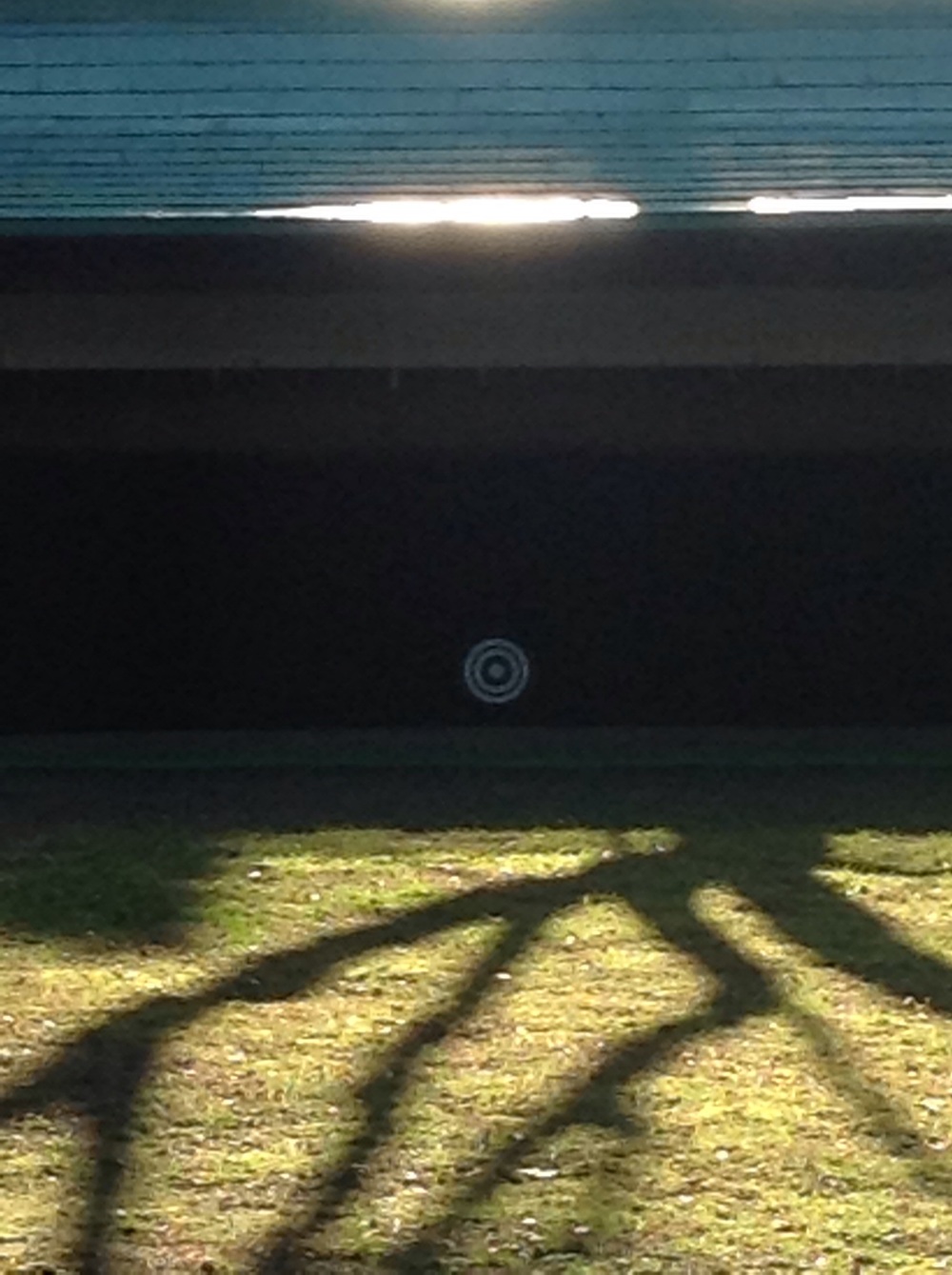
Target accross the yamichi
There are several things I love about kyudo. I guess the place where to practice is an important choice, and I am lucky enough to practice right in the middle of Ueno park, in the middle of ancestral trees and a quiet oasis in the city (except may be when it is hanami season). Actually, I practice it in a shinto shrine, actually, and it has been a great source of knowledge and understanding of Japanese culture to go so often there. Second it is not strictly speaking an indoor activity which I don’t really like: the dojo is wide open to the “yamichi” 矢道 and it is not heated nor cooled o you can clearly feel the seasons! Though you can practice any time, day or night, rain or sunny: no excuse not to go! I also like this balance you need to have between a clear mind and a strong yet relaxed body and I can clearly see the differences when I’m preoccupied or managed to totally clear out all thoughts that could impede my performance.
As any Japanese practice there are tons of cute goodies you need (OK, may be not really NEED, but that you can have!) like the under gloves in many different colors and patterns, the glove cover, the bow cover etc… And of course, the regular outfit to practice is a hakama 袴 like in kendo, and for ceremonial shooting kimono and similar. There are many places in Japan where to practice and now it’s becoming a popular practice among Japan fan in Europe and America, with dojo in many cities. For more information I recommend to check the International Kyudo Federation web site.
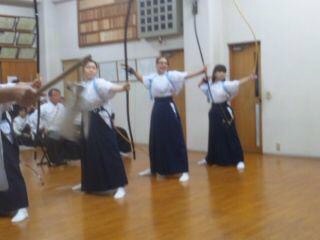
Ceremonial shooting (picture taken by dojo member)
“La soupe au pistou”, pronounce ” la souuuupopiiiiistuu” (or pesto soup) is a traditional summer preparation in Provence. Like any traditional food each family has her secret recipe and variations are quite Infinite. Shall it include small pasta or king of cut spaghetti, or none; shall it be served with grated Parmigiano or grated Gruyere; how many types of bean should be used etc… Honestly I would say that each version tastes different but cannot be bad. For me this soup is synonymous of summer, holidays, family gatherings… I can’t even recall when I first it it, probably at an age whe it is not possible to recall. The recipe comes from my grand mother that probably came from her mother and so on, my mother is using the recipe. For us the pesto is made of fresh basil leaves, pine nuts, gratted garlic, grated Parmigiano and ollive oil, a lot of olive oil. The soup consists in tomatoes (big, red ripe summer tomatoes), green beans, broad beans, zucchini, white beans and marbled beans. The beans are inserted by cooking time and it’s cooked during a long time at low eat, and it is served with grated gruyere. No pasta… Though I recall some argument about that!
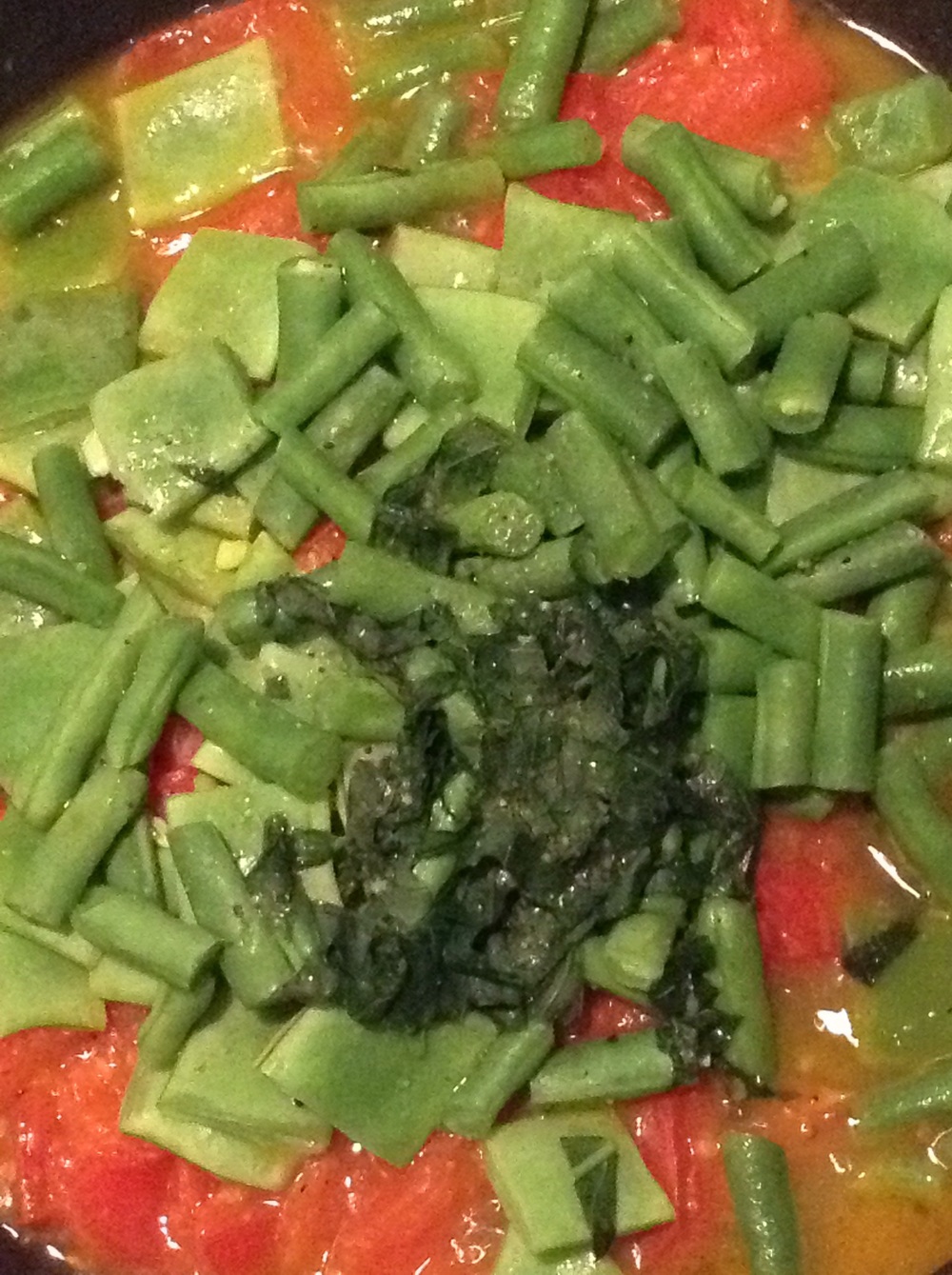
Reinvention of the soupe au pistou in the making
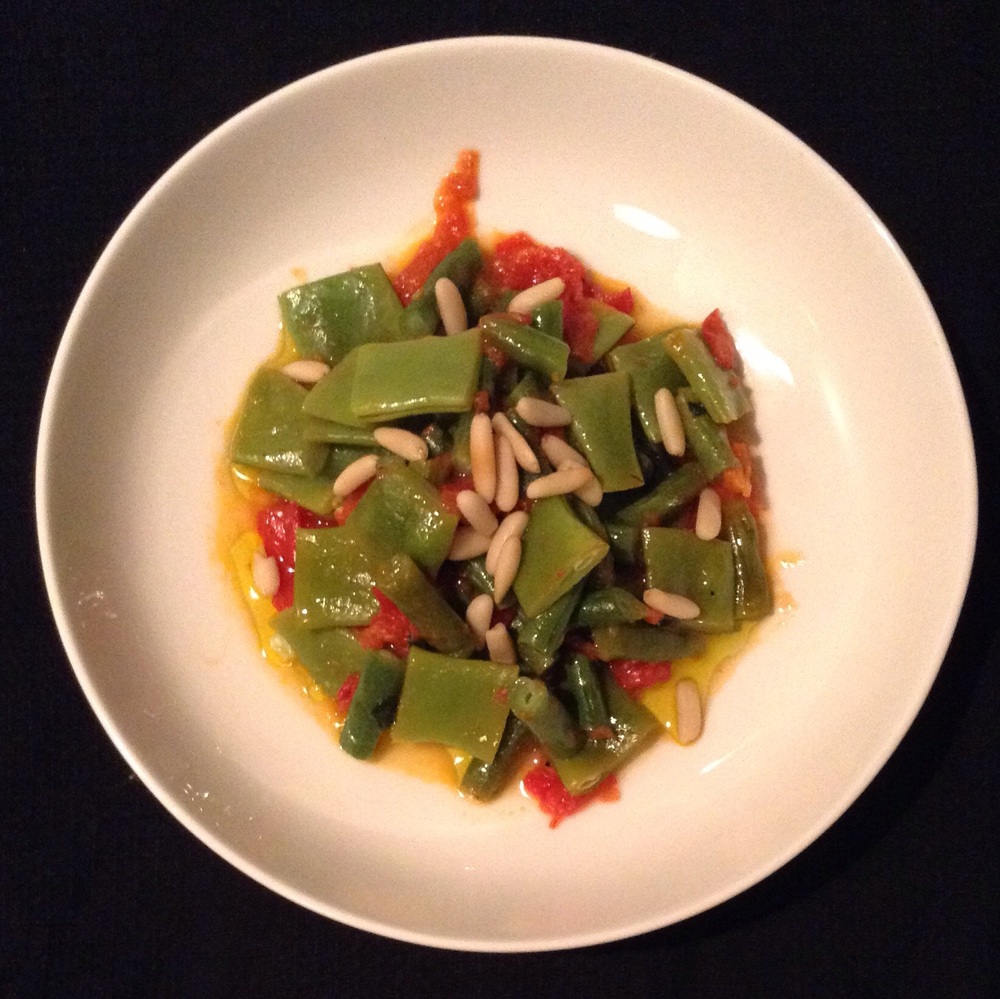
I’ve been preparing a lot of this soup even in Japan, though I can’t find fresh marble beans and white beans, it is easy to have some dry, and broad beans are really easy to find, fresh and delicious. I adapt the recipe to circumstances and when I serve it as a single dish I usually add a few little pasta. I never use garlic, fresh or dry, so I took it off the recipe, and my husband doesn’t like pine nuts nor cheese so usually I take them off as well… hum… well my pesto is just basil and olive oil and just as good! This time I was about to prepare one when I realized I had no white beans nor marble beans and I was not really in the mood to eat soup on my own, since my husband was out for dinner for work. So I decided to treat myself with a recipe that I just invented on the spot (missing ingredients are the best inspiration!) and went for a dry soupe au pistou. In a pan I diced a tomato and cooked it with olive oil, then added the green beans and the braod beans, finally I added the chopped basil leaves, salt pepper and olive oil and cooked under cover 15min. The served it with pine nuts, and finally topped with Parmigiano (which is totally optional). Perfectly delicious though a bit far from the original recipe but that is evolution!
And ready to eat (I spare you the Parmigiano topping!)
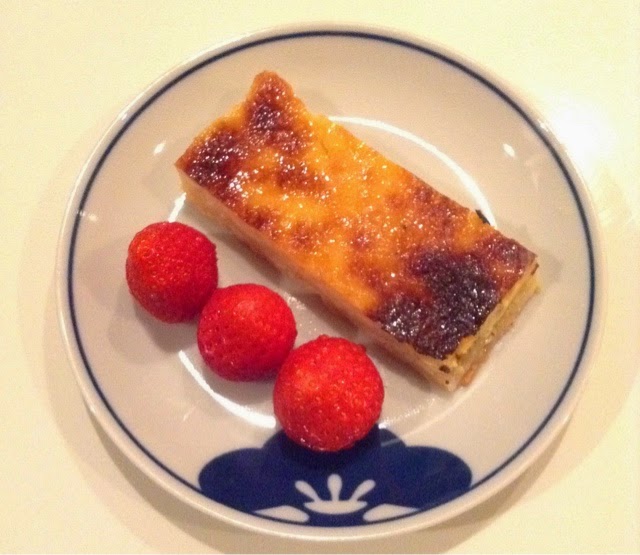
I love this thick and rich dessert called “flan patissier”, which basically is a milk pudding on a dough. It’s been years I haven’t eaten any, and recently I’ve been thinking about making some. Chance was on my side with a special issue of “cuisine actuelle” on homemade cooking, and a lot of classical French recipes, and the one of the flan patissier!!!
It is really easy to make and a delicious dessert or a perfect breakfast served with fruits.
The dough is a “pate brisee”, so just flour, butter and water. The pudding part is vanila flavoured milk, eggs and sugar like for a regular pudding. And it is baked 45min in an oven at 180.