Cold corn soup

As I was mentioning in my earlier post, I didn’t grow in a family where eating corn or cooking corn is a tradition.  I am still quite unable to cook it in many ways, and I usually limit myself to boiled corn, rice & corn, or corn soup. Since the weather is very hot and humid these days in Tokyo I really like to prepare cold soups. And since the corn season is going to end soon, I bought a few more corn and prepared some cold soup. Similarly to the hot one it is simple and very nice as a starter. The only “problem” with cold soups made from ingredients that must be cooked (contrarily to gaspacho) is that you have to plan a bit ahead (2-3h) to have time to cool it.

Cold corn soup (for 2 bowls)

– 2 corns

– soya milk

– salt and pepper  

First remove the leaves and hairs from the corn and boil until soft. Wash under running cold water to cool them. Take all the grains out and blend until smooth (adding no other liquid help obtaining a really smooth texture), add salt and pepper. Add soya milk to obtain the desired texture. Again, when cooled the texture will be slightly thicker, so think about it to obtain the texture you really want. Blend a little longer. Cool in the fridge or the freezer before serving.

Have a nice week! 
Green beans salad

For very hot and humid days like it was today, I like to prepare extremely simple, fresh meals with mainly vegetables. A green beans salad is a classic for me, but instead of preparing it with potatoes like I would usually do I prepared it with hard boiled eggs and fresh ginger and myoga thinely chopped. It gives a very interesting twist to the whole recipe. I guess adding potatoes is still possible.

Cold soup

How is your summer? In Tokyo these days summer looks like the rainy season… and it’s even not too hot! Which is perfect for this first week back to work, except that I was expecting having dinner on the terrace (maybe for the last season since we might move to a new place without a terrace) with our guests but rain didn’t stop for the last week more than just a few minutes. Anyway, this doesn’t affect much my cooking! And after eating out in so many cafes I really enjoyed having a little soup to start with and a cold one for the summer. So for our guests last night (one allergic to lactose) I prepared a potato-leek soup. You know this all-time classic that is so warming in winter… but in a cold version. The only problem with cold soup os that you need to prepare them at least 6h before eating so that they really are really cold when eating. 

Vegan cold leek-potato soup:  (4 servings)

 – 1 leek

– 2-5 potatoes depending on the size

– olive oil, salt, pepper

Wash and chop the leek. In a pan, heat some olive oil and add the leek. Peel the potatoes and cut them. Add to the pan and cook at medium heat until slightly golden, stir every once in a while. Cover with 1L of water and cook until the potatoes are really soft. Blend to obtain a creamy soup (add first the vegetables and then the water little by little in the blender to be sure to have the right consistency. It must slightly more liquid than desired since the cooling will densify the mixture). Add olive oil, salt, pepper. Cool in the fridge for a few hours. Stir the mix before serving to make it homogeneous. Enjoy!

Lotus root sushi – 蓮根寿司

When we were in Fuefukigawa, our ryokan had a very nice library where we enjoyed spending some time. It’s very nice to go to someone else library because you can discover many things through others books. That’s how I discovered a little cook book with some inspiring recipes. And I tried one of the inspiration as soon as we got back home. It was a recipe of lotus root sushi. So basically vinegared rice and vinegared lotus roots, served with ginger and sesame.  It’s been many years I haven’t made sushi rice so I was happy to prepare some again. Since it was served with the vinegared lotus root I didn’t make it too sour, and I served it with some ginger-pork sautéed.

So here is the lotus-root sushi recipe. It is quite simple if you can find fresh lotus roots (which in Japan is obviously very easy) and it has a very Japanese flair. 

Lotus-root sushi: 

– 1 cup of Japanese rice (I always use Koshihikari but choose your favorite one) 

– 1 large lotus root, fresh

– a bulb of fresh ginger, not too big

– 2 or 3 myoga

– 3 tbs of golden sesame

– 3 tbs of white vinegar

– 1 tbs of natural sugar

– 1 tsp of salt

– 2 tbs of sake (optional) 

First wash the rice, and cover with 1cup of water, the sake and cook as usual. While the rice is cooking, peel and wash carefully the lotus root. Cut in very thin slices (I used the mandolin for that). Set in a bowl, add some water to almost cover, but don’t put too much. Add most of the sugar, the salt and 2tbs of white vinegar. Stir with the hands, and let rest. Stir once in a while. Peel and cut thinely the ginger and the myoga. In a frypan roast the sesame until it starts to smell. Once the rice is cooked and has cooled down a bit add the remaining 1tbs of vinegar and the remaining sugar, stir well. Add the ginger, the sesame to the rice, stir; add the lotus root drained. Add the myoga. That’s it!!!

Nakasendo, Magome juku – 中山道・馬籠宿

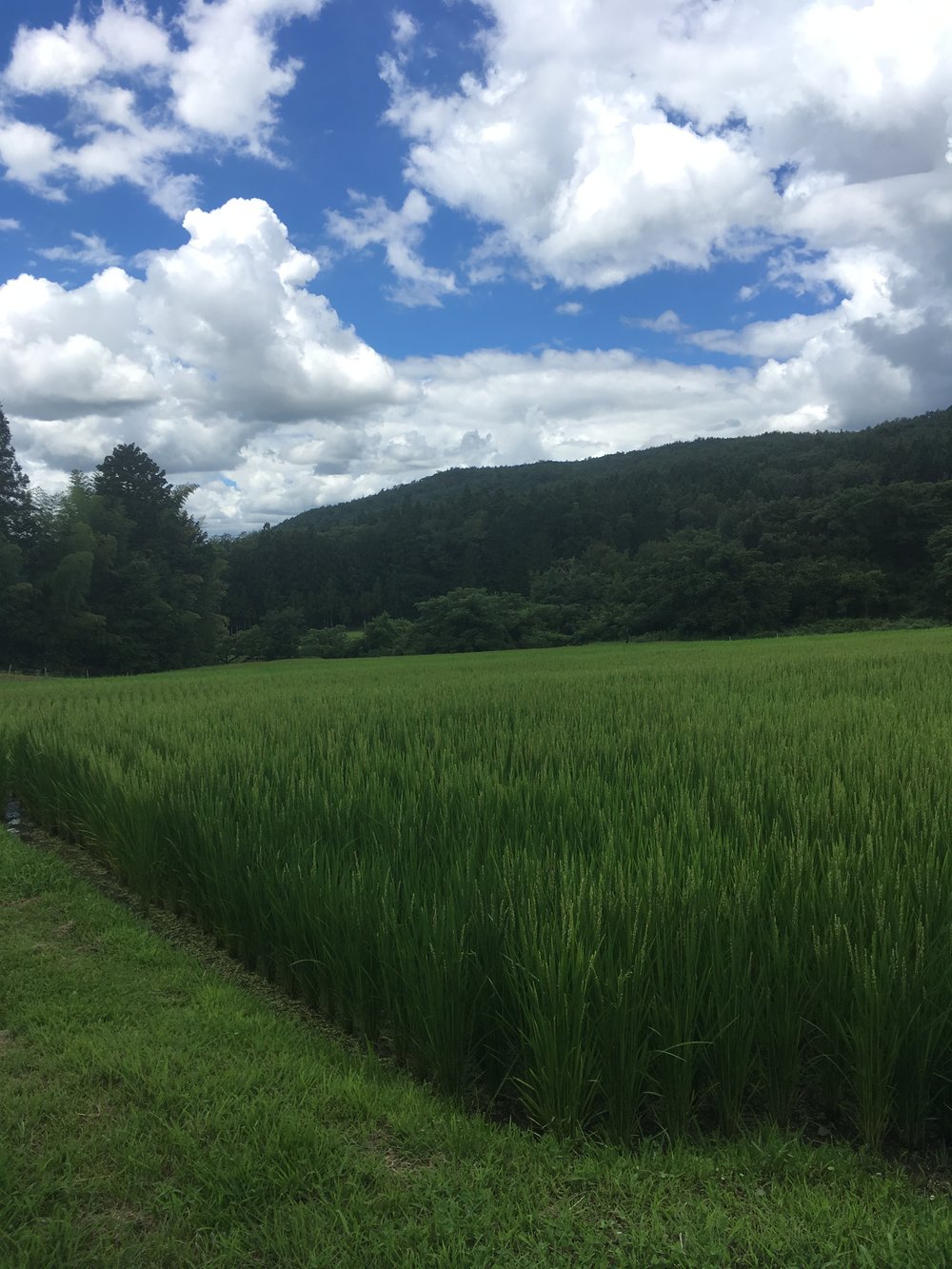
 Terraced rice fields along the hike to Magome
Terraced rice fields along the hike to Magome
 Magome juku
Magome juku
 Yakimochi
Yakimochi

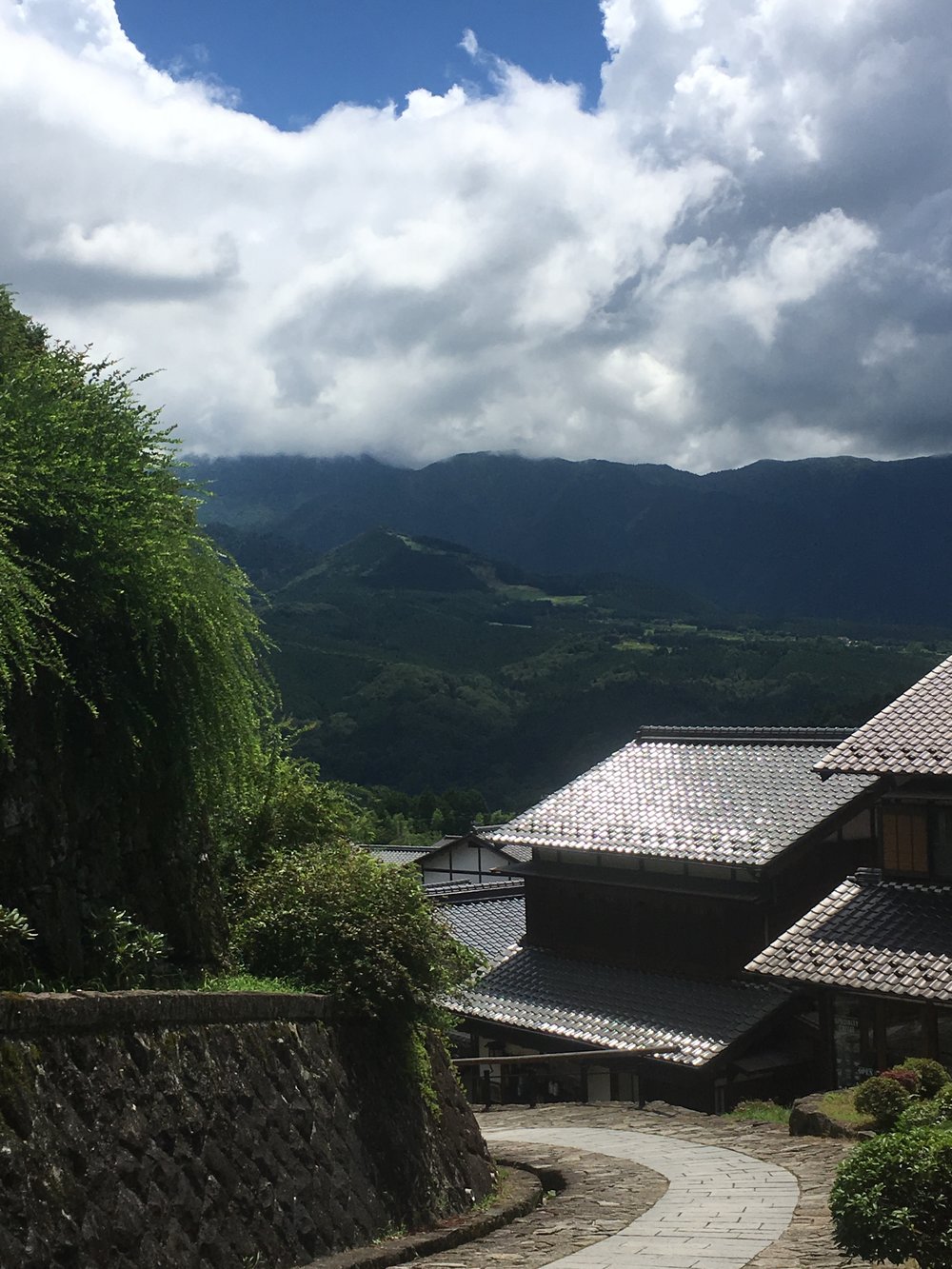
We are still on the road both by car and by foot with A. And after Tsunan, Hakuba, Azumino, Matsumoto, Kamikochi, Takayama, Gero, Ena we are now in the Kiso valley, or rather on the old road Nakasendo, in a very nice little inn where we are the only guests and very well taken care of. Our hike today, shortened by the heat has taken us to Magome juku, an old post town on the Nakasendo, one of the roads widely employed to travel between Kyoto and Tokyo in the past, a still very well preserved place with very picturesque views and old houses. Back at our inn: Shinchaya, our host had prepared a huge dinner as could be expected in every minshuku and ryokan. What is great with minshuku compared to ryokan is that it is more homemade-like food and easy to get recipes directly from the cook! For addresses and tips about traveling in the Kiso valley, please leave a comment!

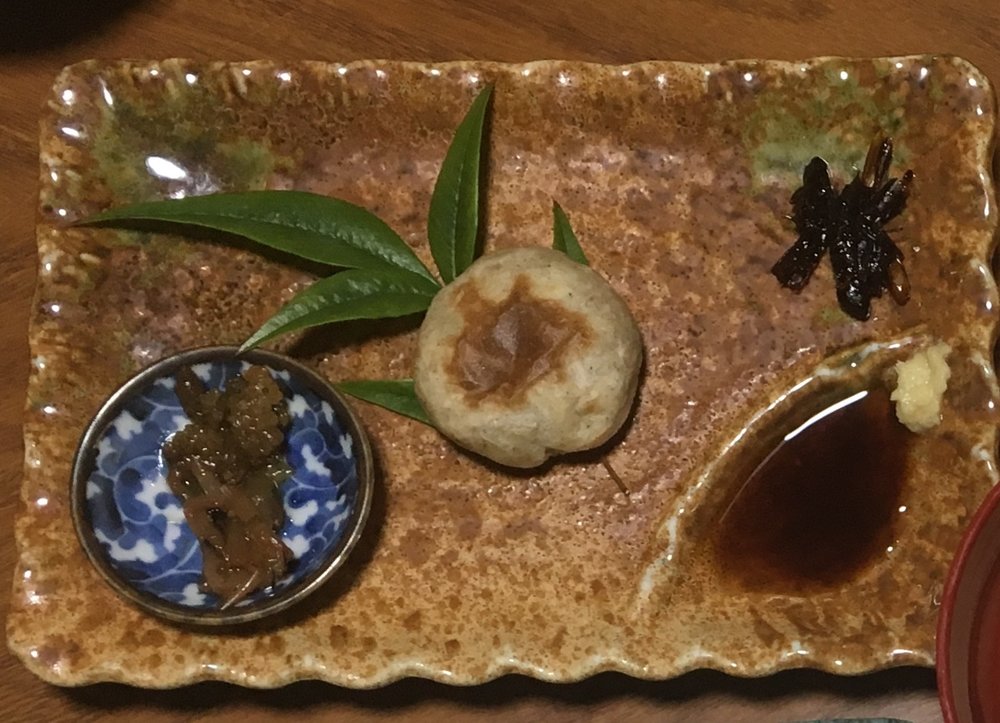
This time the nice surprise was what is called yakimochi – 焼き餅 but it is not made of rice! The recipe is quite simple and the results quite delicious!

 Yakimochi – 焼き餅 from Shinchaya

– a few taro – 里芋

– buckwheat flour

– salt

– soya sauce

– fresh ginger

Boil the taro, and peel them. Mash them with a fork, add some salt and the buckwheat flour to obtain a smooth mix. Make paddies with the mix and grill them (oven, pan…). Peel and grat the fresh ginger. Serve the grilled paddies with soya sauce and the ginger.

Summer butternut squash

If two or three years ago it was not so easy to find butternut squash (see my previous post about it), now it is almost on possible to find it all year round at the farmers market… and since it is so easy to cut and peel and so quick to cook I’ve thought that it would be perfect even in summer. Of course no pumpkin spice or warm and rich preparation in summer, but rather a very simple one: cold soup.

Butter cold soup:

– 1 butternut squash  

– water

– salt

– pepper black and pink

– curcuma  

Simply peel and cut the butternut and remove the seeds. Boil it in water until very soft. Remove the water to have the butternut just covered. Smash and stir with a spoon or a fork until almost smooth (or blend). Add salt and curcuma. Cool in the fridge before serving. When dressing the plates add some black and pink pepper. 

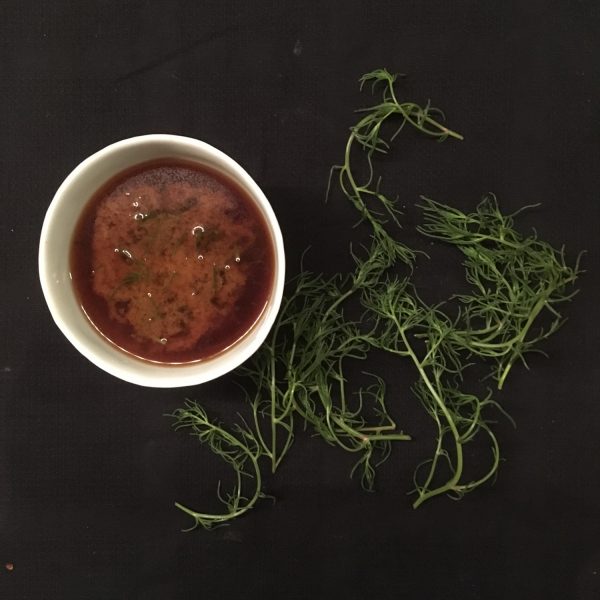
Salsola – okahijiki

Trying new vegetables is always fun! In particular when you can easily imagine how to prepare them! So when we went to the farmers market and I found okahijiki-おかひじき  I simply couldn’t wait to cook them. And with the super hot weather I thought of a simple Japanese meal again with rice, grilled fish and umeboshi, and I wanted to have some miso soup with red miso (the one more appropriate for the summer). And to make it more country-like I didn’t use katsuo bushi but rather niboshi from sardines -鰯 for the soup base. I simply added the okahijiki after washing them and removing the hardest parts to the broth and cooked them 2min. I added the red miso as usual in the end, just before serving.

Have a beautiful week!!! 

Simple Japanese meal

With friends at home for the whole weekend I ended up not cooking Japanese at all, and since Friday I was still craving for some simple Japanese taste. Finally last night I got it done! A. is good at preparing Japanese rice, which saves a bit of time when I am finishing work rather late, and I had some perfect fresh Japanese vegetables for a simple meal: onion for Shirako, white carrots and new lotus roots. I simply wash/peel and cut all the vegetables, heat a bit if oil in a pan and cook them under cover until almost done (the onion being probably the most critical) then I remive the cover, add some soya sauce and cook at high heat for 2 minutes, and serve with the rice. It’s not very elaborated but it tastes perfectly Japanese!

Plum syrup

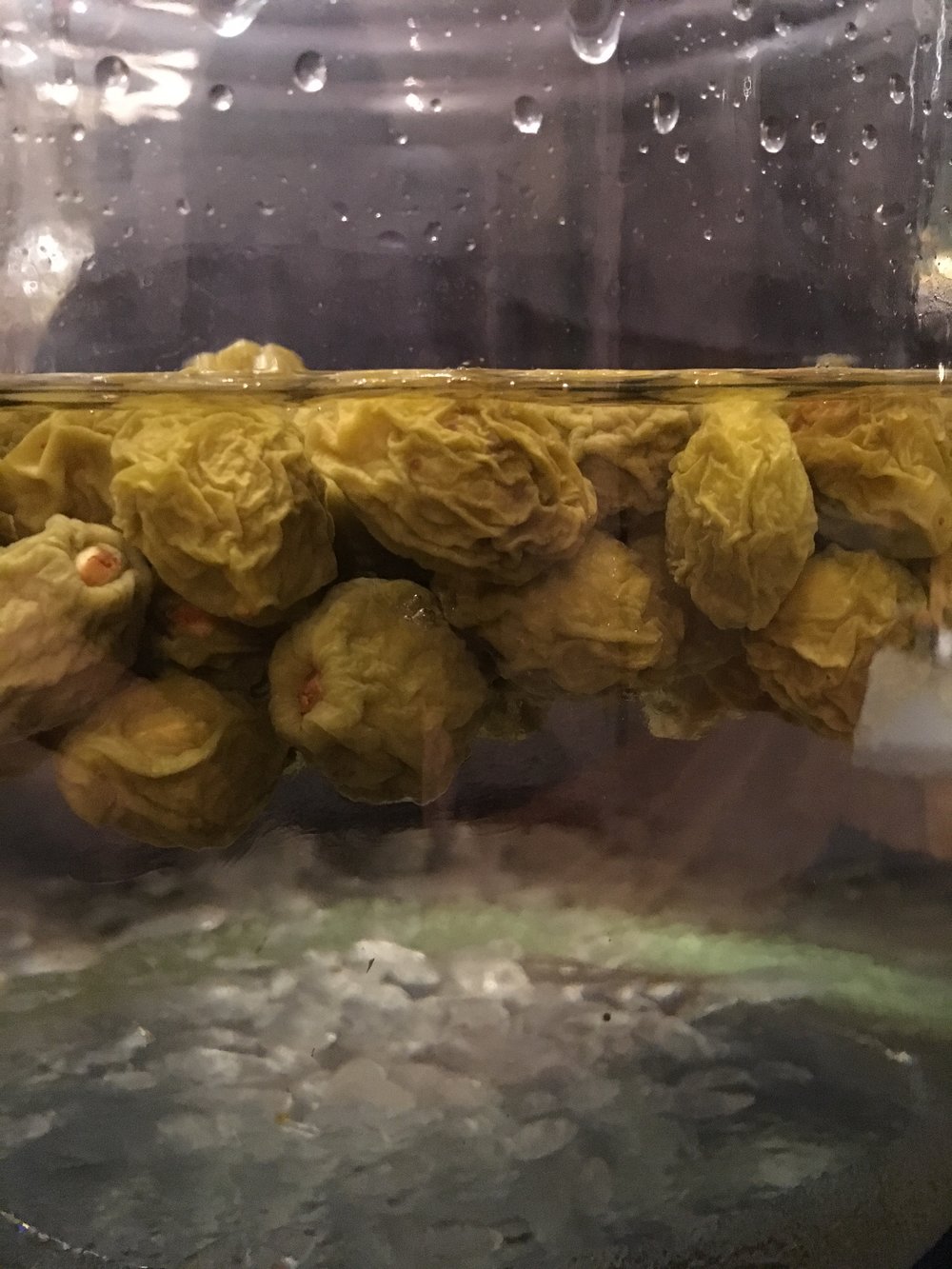
When I harvested the plums this year I used them mainly for umeshu for my family and plum syrup for me. Indeed, I love to prepare myself some fancy drinks using homemade syrups. They are so much better than anything that can be found of the shelf. Last year I made some strawberry tree (bay berry) syrup and it worked very well. And our neighbor gave us some plum syrup last year and I totally loved it, so it was not an option not to try making some. Since we harvested a real lot of plums this year (30 or 40kg may be… and I didn’t harvest 2 trees because we had too many already!!) I made plenty of syrup and I could try it finally. It’s funny with the syrup making how the plum shriveled which does not happen with the umeshu making. The taste is perfectly sweet and sour. Perfect with sparkling water and ice for a chill out drink, and with just tap water for a light energy drink after workout.

Fruits syrup: 

– 1kg of fruits

– 1kg of candy sugar  

Wash thoroughly the fruits and dry them well with a clothe. For fruits with stem, remove the stems. For fruits that may have tiny bugs, dip them in salted water for 2h before preparing the syrup. In a large bin that is much bigger than the volume of fruits+sugar, lay the washed fruits, add a layer of sugar than fruits, sugar, and finish with a thick layer of sugar. Close the bin tight and wait for a few weeks. That’s all!

Proudly powered by WordPress | Theme: Baskerville 2 by Anders Noren.

Up ↑

Verified by MonsterInsights