A week in the clouds – yogurt cake

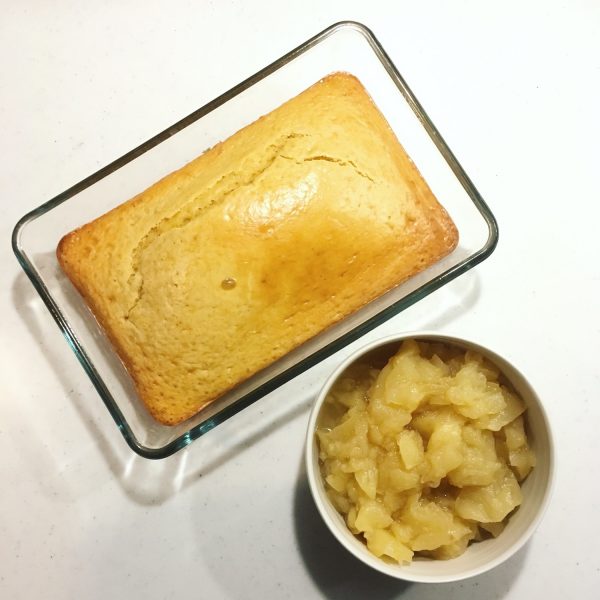
December is going in a flash this year… busy days leave room to busier days and the gloomy and cold weather adds to the impression of being overwhelmed. The weather reminded more of Parisian winter than that of Tokyo, giving an awkward feeling, and missing the fireplace very much. My head has been in the clouds lately, a lot to think about at work, the plan for constructing something on our new plot of land, the cat that we haven’t seen in 3 weeks and who haunts my dreams… but finally today the bright sun, the Mount Fuji fully covered with snow now, and the crispy morning air seem to remind me that we are in Japan and that things ought to be taken as they come. Nonetheless, a healthy, warming and nourishing breakfast is always a great way to start the day, and with all the big apples I had seating on my kitchen counter I wanted to use them. After debating about an apple pie, an apple tart or an apple cake, I finally opted for a lighter and healthier option: an apple compote and a yogurt cake. The compote with me is easy, I peel and chop the apples, put them in a pan with a very little bit of water and cook at low heat until they have soften. I don’t add sugar, sometimes a bit of vanilla or spice, but I was in the mood for simplicity, so added nothing. The yogurt cake is like the pound cake, of of this recipe that I have learned at primary school and I have kept making ever since. It is so simple and so easy to eat and it keeps well, I love it for breakfast when in a rush. Here is my recipe as I remember it… the units are the yogurt packaging.

Yogurt cake

– 1 yogurt (100-125g)

– 3 units of flour

– 1 unit of sugar

– 2/3 unit of vegetal oil

– 3 eggs

– 1tps of baking powder

– vanilla

In a bowl stir all the ingredients until creamy. In a greased pue dish pour the mix. Preheat the oven to 140, bake at 140 for 15 minutes, than raise to 160 and bake another 15min or until a knife comes out clean. That’s it!!!
Simmered kabocha

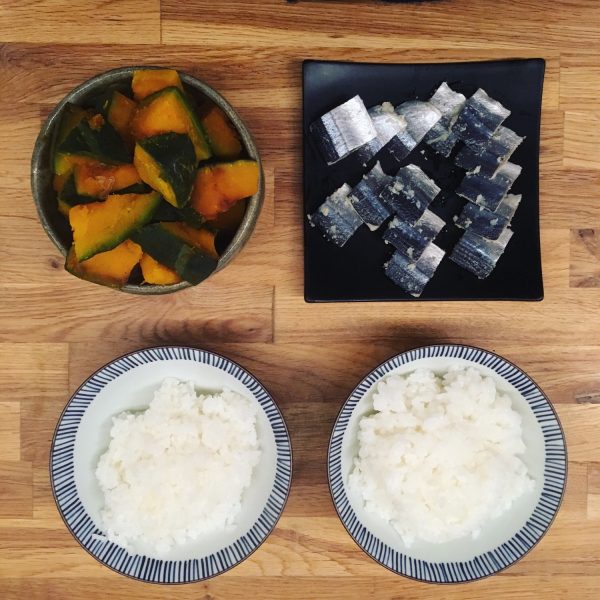
All a sudden it has become very cold and warm food, rich and tasty is more than necessary. During the autumn I have used a lot of butternut squash, leaving the little Japanese kabocha on the side for a while, knowing that they would be right there when needed in the winter, as the season for kabocha is much longer (though you may find it year round when grown in green houses). And now the time has come to use it. kabocha, like most squashes and pumpkin is versatile and easy to cook. The great part with kabocha is that it actually doesn’t need to be peeled and cooking time is rather short. One of my favorite traditional Japanese recipe is to prepare it with dashi and soya sauce. It can be eaten hot, cold or reused after in other recipes. It is very simple to make and often found in bento boxes. Here is my recipe for the simmered kabocha.

Simmered kabocha (4 servings)

– 1/2 kabocha

– 40g of katsuobushi in flakes

– 2tbs of soya sauce

Wash the skin of the kabocha, remove the seeds (you can keep them to grill them to make snacks… or plant them)

Cut the kabocha in large bites with the skin on (only remove parts of the skin that is brownish or hard, usually the part that was in contact with the ground).

Put the kabocha in a pan and cover with water. Add the katsuobushi flakes in a tea bag, and cook at low heat until the kabocha is just soft (test with a bamboo toothpick). Do not over cook, you’ll end up with purée. Remove all liquid and the bag of katsuobushi. Add the soya sauce. Eat right away, or when cold.

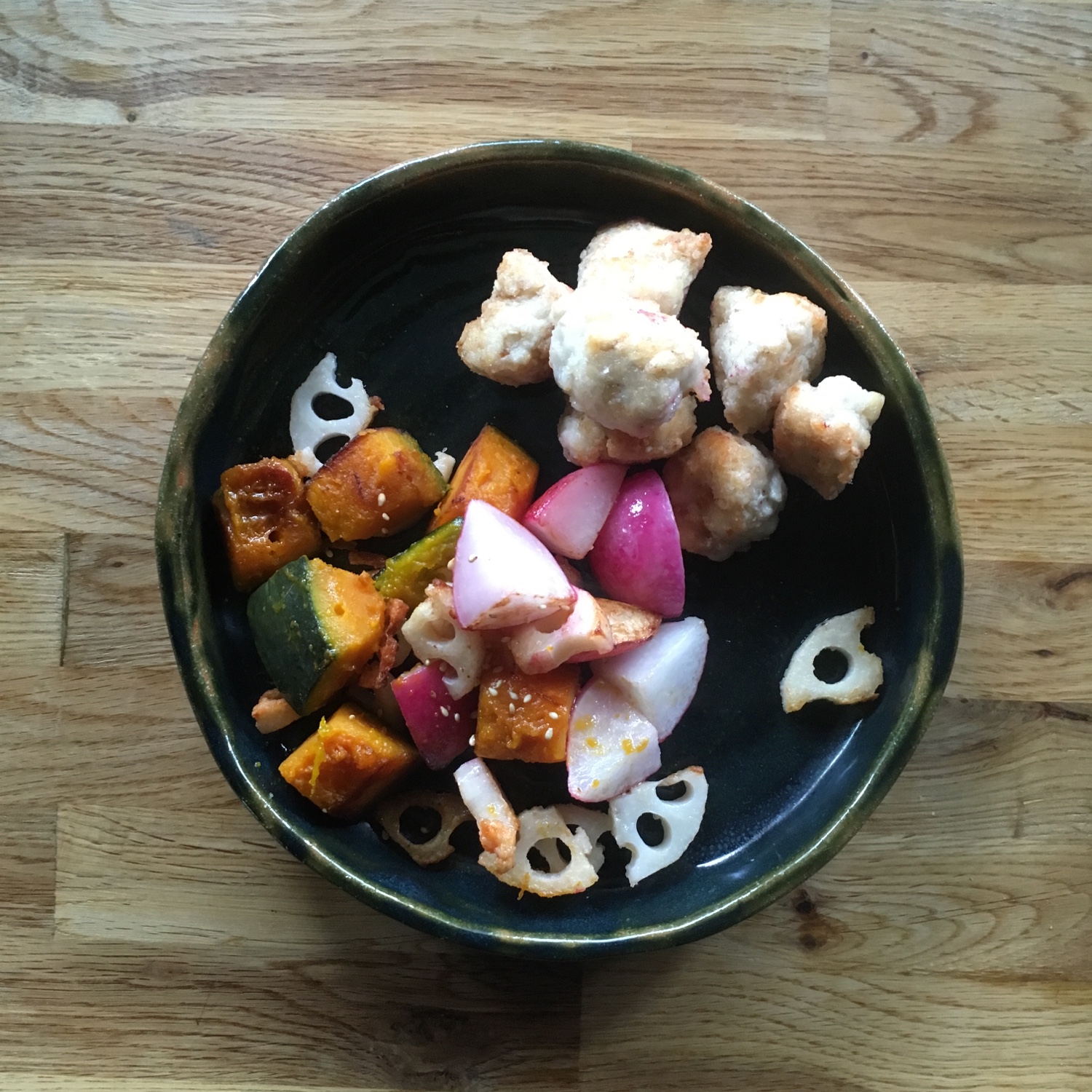
I used the leftovers in a sautéed vegetable dish. With a bit if oil, the kabocha becomes golden and even more delicious.

14

Last week we celebrated thanksgiving but also 14 years in Tokyo. Time flew so quickly, in particular this year with all the ups and downs and the business that it seems almost yesterday we arrived with rudimentary knowledge of hiragana and katakana, Pimsleur lessons fresh in our heads and one suitcase each…

Timing was perfect to celebrate with the new acquisition of a little plot of land adjacent to our property and start afresh like we did 6 years ago: pulling weeds and cleaning to see what we can do with it. Plans have overflown our heads from the simplest to the craziest… time will tell.

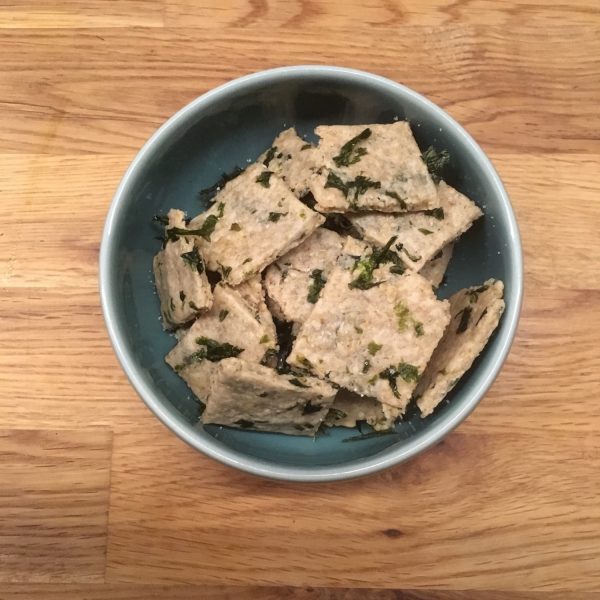
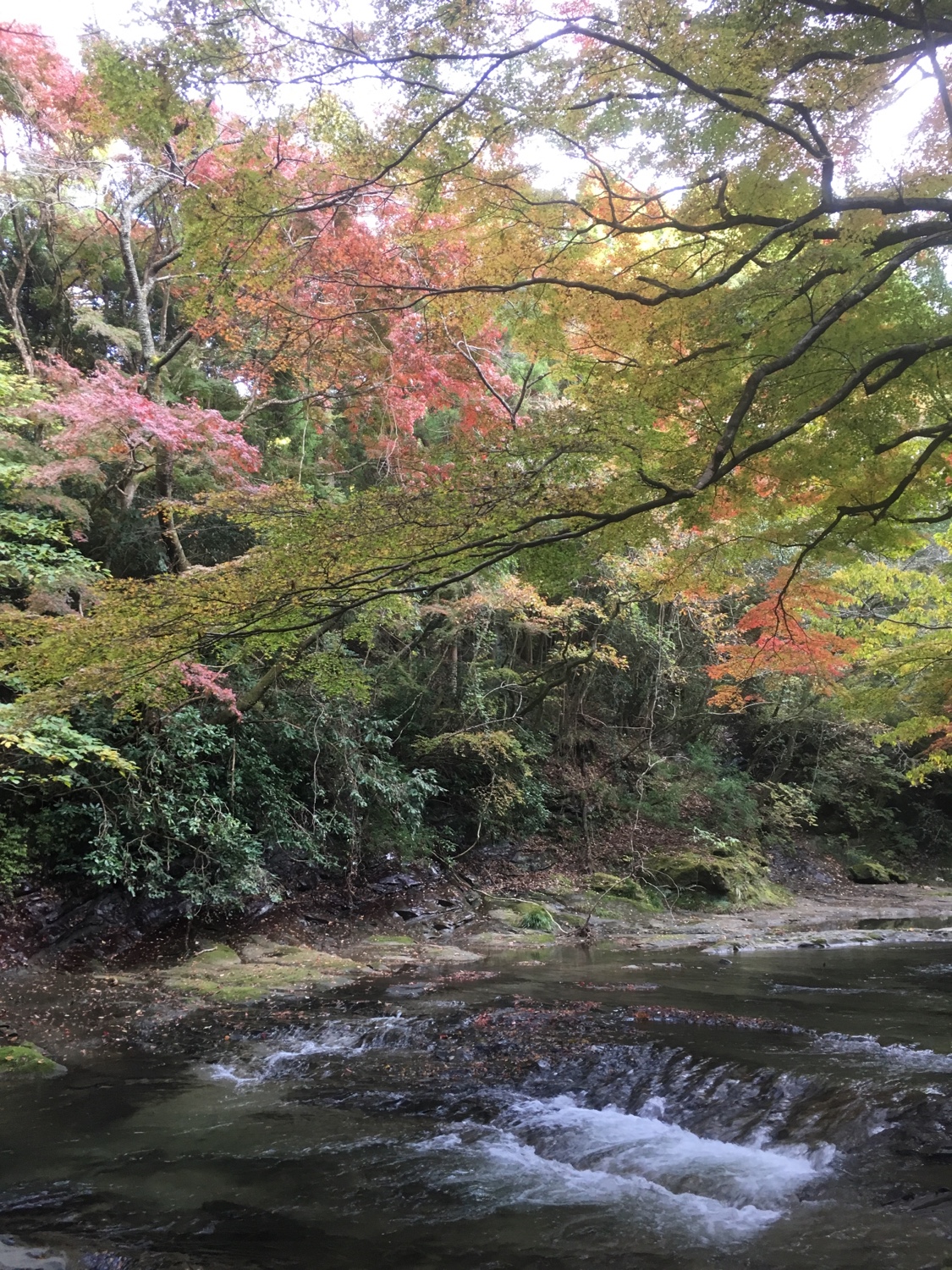
We also celebrated with friends visiting us. And cooking for friends is always a nice moment, recalling when we last meet, what I cooked then, what I will cook this time and what we will do. For this time I prepared a brocoli quiche with katsuobushi and iwanori. But since I had leftovers of the pie crust dough I decided to make some iwanori crackers, and it was really a great match. We took them to Yorokeikoku to see the fall colors and even enjoyed seeing wild monkeys!!

Here is my recipe:

Iwanori crackers

– 100g of flour of your choice, I used whole wheat

– 50g of butter

– a bit of water

– 20g of oat bran

– 50g of iwanori or just nori roughly cut

– 5g of salt

Mix the flour, the butter, the water and the oat bran to obtain a smooth dough. The quantity of water will vary, so as usual add little by little and knead well in between. Then add the iwanori and roll. Sprinkle the salt on top and roll once to fix it. Cut into bite size and bake at 180deg until almost golden. Don’t over cook them. Eat as snack or with a salad.

Vegetables quiche

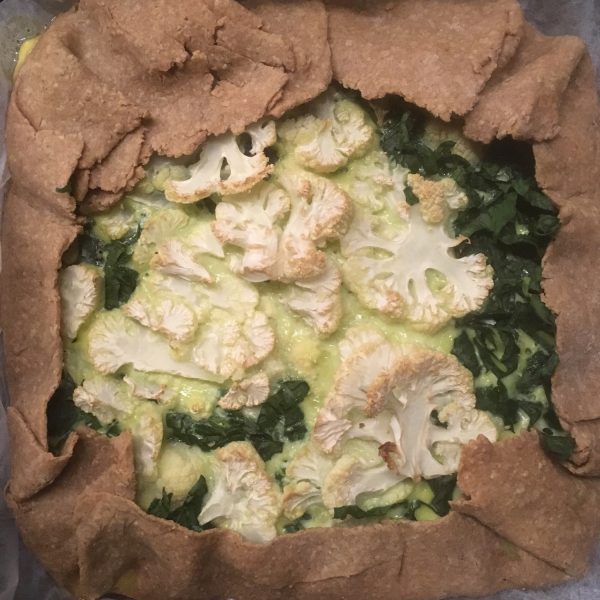
Every season has its delicious vegetables and every season has therefore a possibility of cooking quiches that is infinite. For this autumn or early winter version I used all the vegetables I love for their déclinaison of white to green: cauliflower, leek and spinach. Coupled with a rich pie crust made of soya bean flours, whole flour and wheat bran it gave the perfect balance of flavor and texture, and of colors.

Tell me about what you like on IG!

Radish tops and salmon ravioli

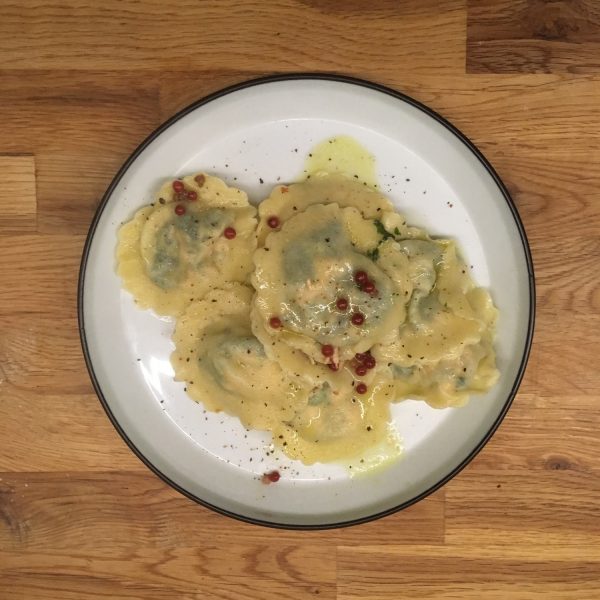
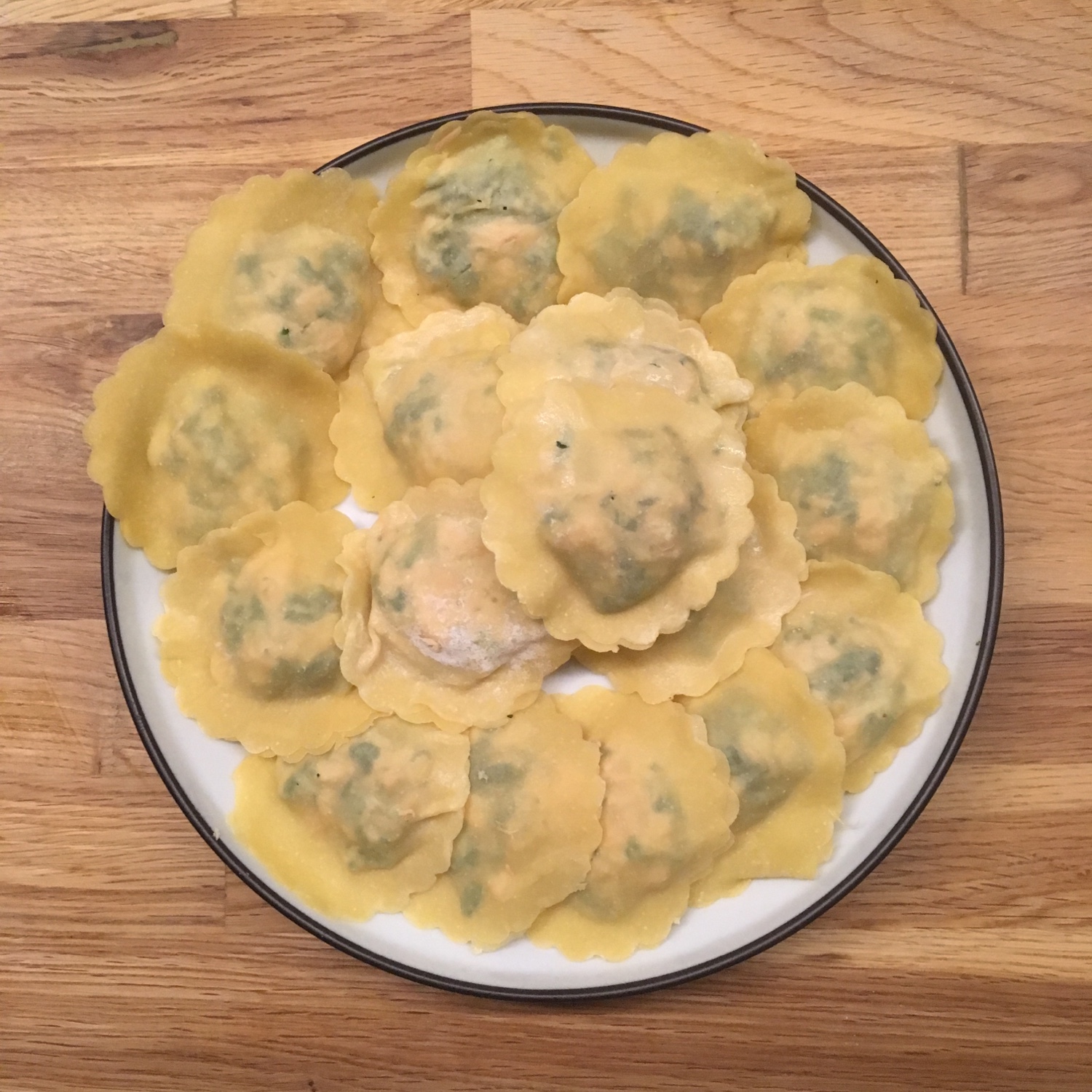
Ravioli have always been in the very top of my preferred dish ever both to eat and cook. For me to enjoy them, they have of course to be fresh and with a green and tasty filling. Ricotta spinach are of course a classic that I enjoy all the time, but seasonally filled ravioli are always something I like to prepare and enjoy. With the autumn salmon in peak season and the beautiful radishes also, I decided to use super fresh and tender radish tops, simply blanched with grilled salmon as filling. The radish tops have a nice flavor that is very different from other greens. I already tried with spinach and dill in the past. And because it is nice for the final cooking and the final plating to have a little of a sauce I prepared a butter and pink peppercorns sauce. Here is my recipe:

Radish tops and salmon ravioli

For the pasta I used my usual recipe (1 egg for 100g of flour), but I used half of “semolina di grano duro” instead of regular flour.

For the filling:

– 100g of radish tops

– 100g of fresh salmon

– pink peppercorns

– 15g of butter

– salt and pepper

I first grilled the salmon and blanched the radish tops. Then once they had cooled down I chopped the tops thinly and crumble the salmon together, stir well, add a bit of salt.

Then I make the ravioli, rolling the pasta as thin as possible. I didn’t use a ravioli rack, but cut the dough with a medium round shape and used two to make one ravioli. In your left palm hold a small round of pasta, with the right finger, moisten in a glass of water moisten the edge of the pasta. Set half or more tea spoon of filling, then take an other round of pasta and close tight removing the air as much as possible.

Then I boiled the ravioli. In the meantime in a large pan I melted the butter, added the pink peppercorns and when the ravioli were coming out to the surface I catch them and add them to the pan. It is fine if there is still some cooking water with them. At hight heat I finished cooking them in the pan and served with a little of salt and pepper added.

The small things

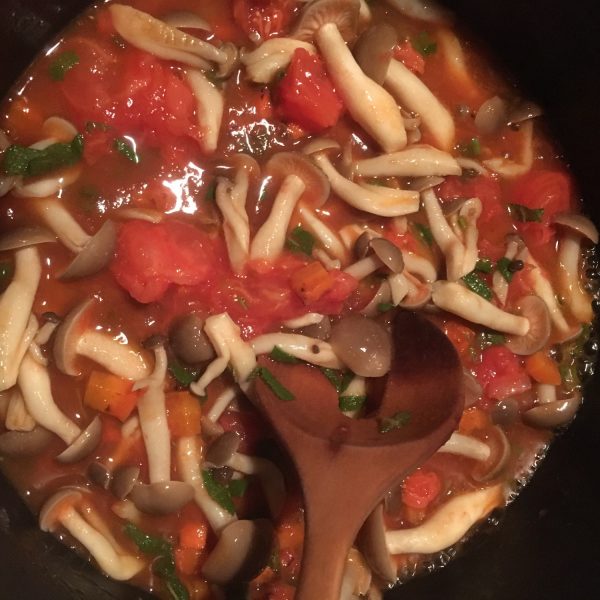
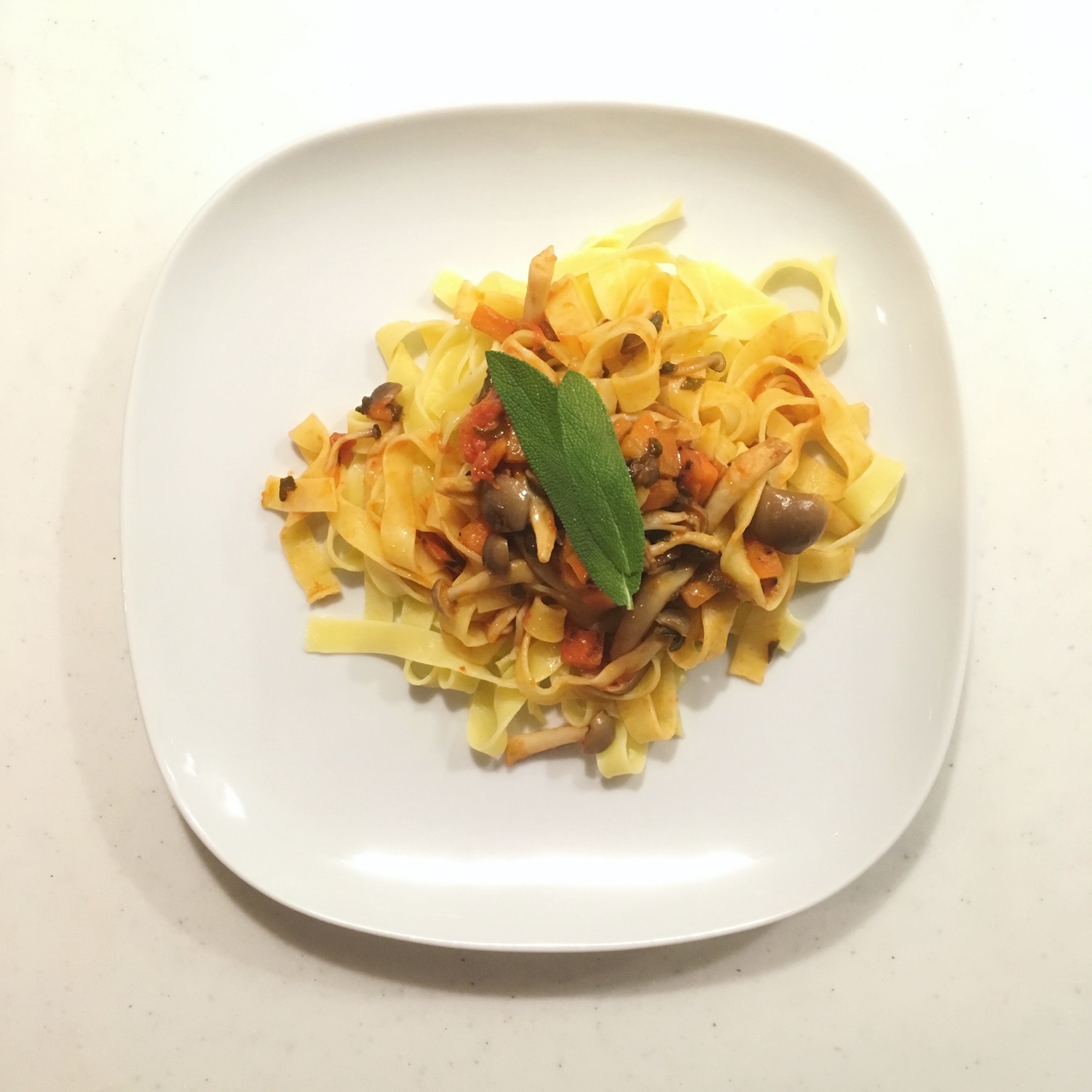
Tonight I’m back home at 21:30, that’s the earliest I got home in quite some time. Though it’s only Wednesday our fridge is almost empty already: obviously I didn’t shop enough this weekend in the countryside. Yet I have a last one of these late summer giant and very ripe tomatoes, so I decided to make some tagliatelle with a tomato base sauce, shimeji and sage. And because it is early and A. won’t be back until the usual 22:00 I can work a few details: adding a carrot cut in small dice to the sauce to add more flavor, peeling the tomato to only have the creamy and juicy parts, cooking at low heat for a longer time to get the sage to perfume the sauce more profoundly. All these small things that I have a tendency to skip and that actually are important to obtain a better result in the plate and for the palate…

The little cubes of carrots and the mushrooms and the sage goes very well together I find. But to eat them with pasta I also find that the carrots shouldn’t take the first place, and therefore should be cut in tiny cubes. The sage thinly cut add a nice touch, but is better when the vegetables are slowly cooked until they almost caramelized, and then are deglazed in the final stage with a fragrant olive oil. Regarding tomato, there is indeed nothing more annoying than cooking tomatoes and ending up with small rolls of skin half attached or floating in a tomato sauce in particular. And tonight peeling the tomato had the bitter taste of sadness because I got used to do it while I was cooking with my friend K. when we visited her and her husband in the Tsunan mountains in Niigata, and this morning we just learned that S. has past…

Shojin cuisine

As I was questioning myself about Buddhist cuisine in China regarding these Chinese beancurd noodles, I decided to do a bit of search and reopen my Shojin cuisine book. I was right, until the 18th century in China buddhist and taoist temples would only serve vegetables soup and tea to pilgrims, the same thing monks were eating. Only it started to be a more elaborated and widespread cuisine during the Qing dynasty (late 17th to 20th century). In japan shojin cuisine was of course imported from China together with Zen by Dogen during the Kamakura period in the 12th-13th century. All the basic about Shojin cuisine were actually written in the 典座教訓 (Tenzo Kyokun) itself inspired by Chinese writings. It has evolved regularly from the early 17th century during Edo period to become shat it is now. Next time I go to China I’ll try to eat in a temple and try local buddhist or taoist cuisine for sure!

But back to my kitchen I decided as I said to reopen my Shojin cuisine book from the Sanko-in past abbess. I always have a lot of pleasure opening a cookbook I haven’t opened for a while and this one is no exception. One thing I love with that book is that it actually tell not only how to cook but also how and how long you can keep the food you have prepared, something that I find extremely useful. Browsing the book, I found plenty of autumn recipes I wanted to try and luckily I had all the ingredients needed to proceed. I tried two recipes one of kabocha and one of burdock. Both extremely simple. And I was very happy with the result, being back in my kitchen and preparing delicious locally grown vegetables. Here are the two recipes, not the way they were in the book but the way I actually cooked.

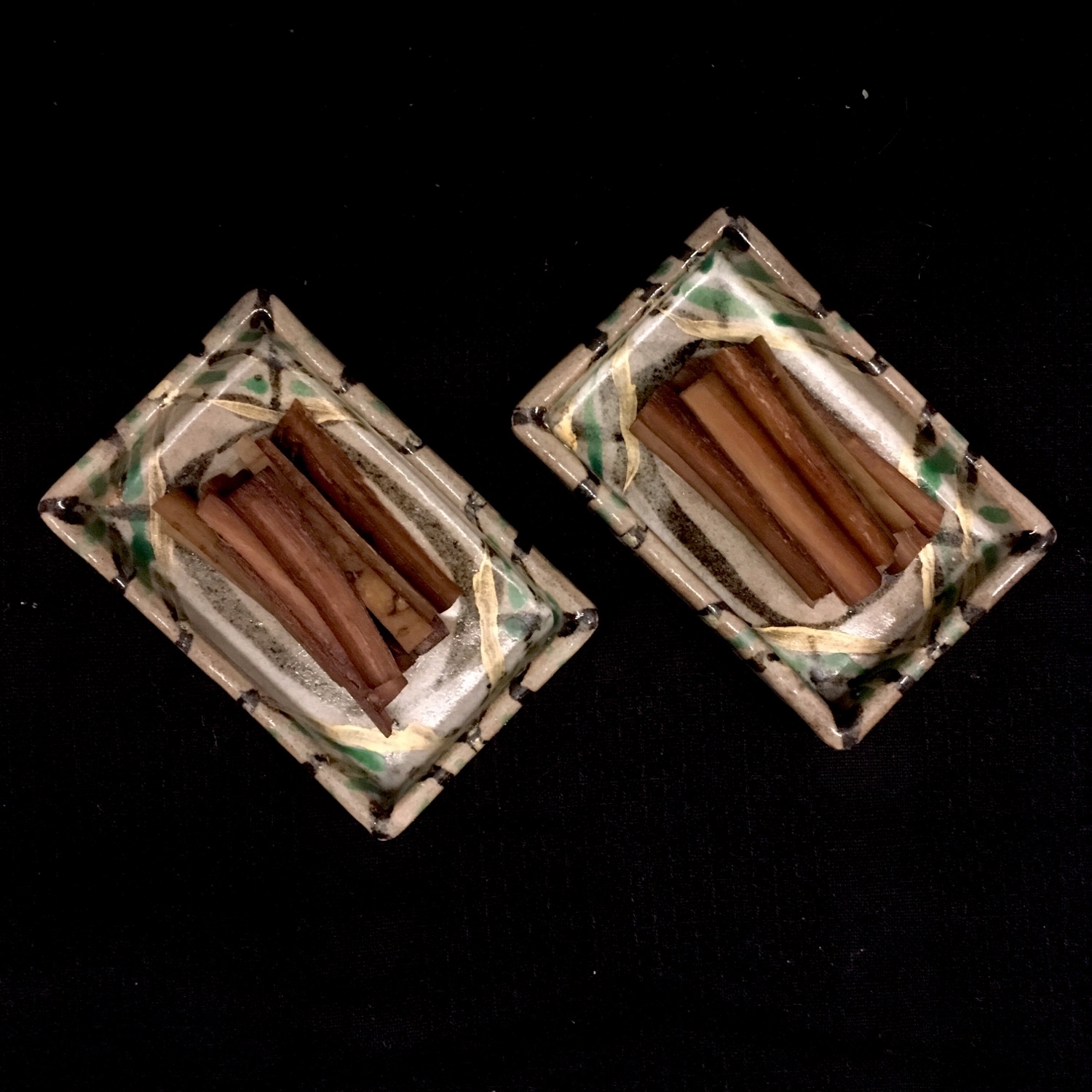
Burdock:

– 1/2 burdock

– 3tbs of sake

– 3tbs of soya sauce

Wash and cut the burdock in 4cm long sticks. Cut each piece in the length in 4 to 10 depending on the diameter.

Place in a small pan with water and boil 10min. Drain and the in a little pan add the sake and soya sauce and simmer for 20min at low very heat under cover. Eat warm or cold. Keeps one month refrigerated according to the book but it was so good we ate everything at once!!!!

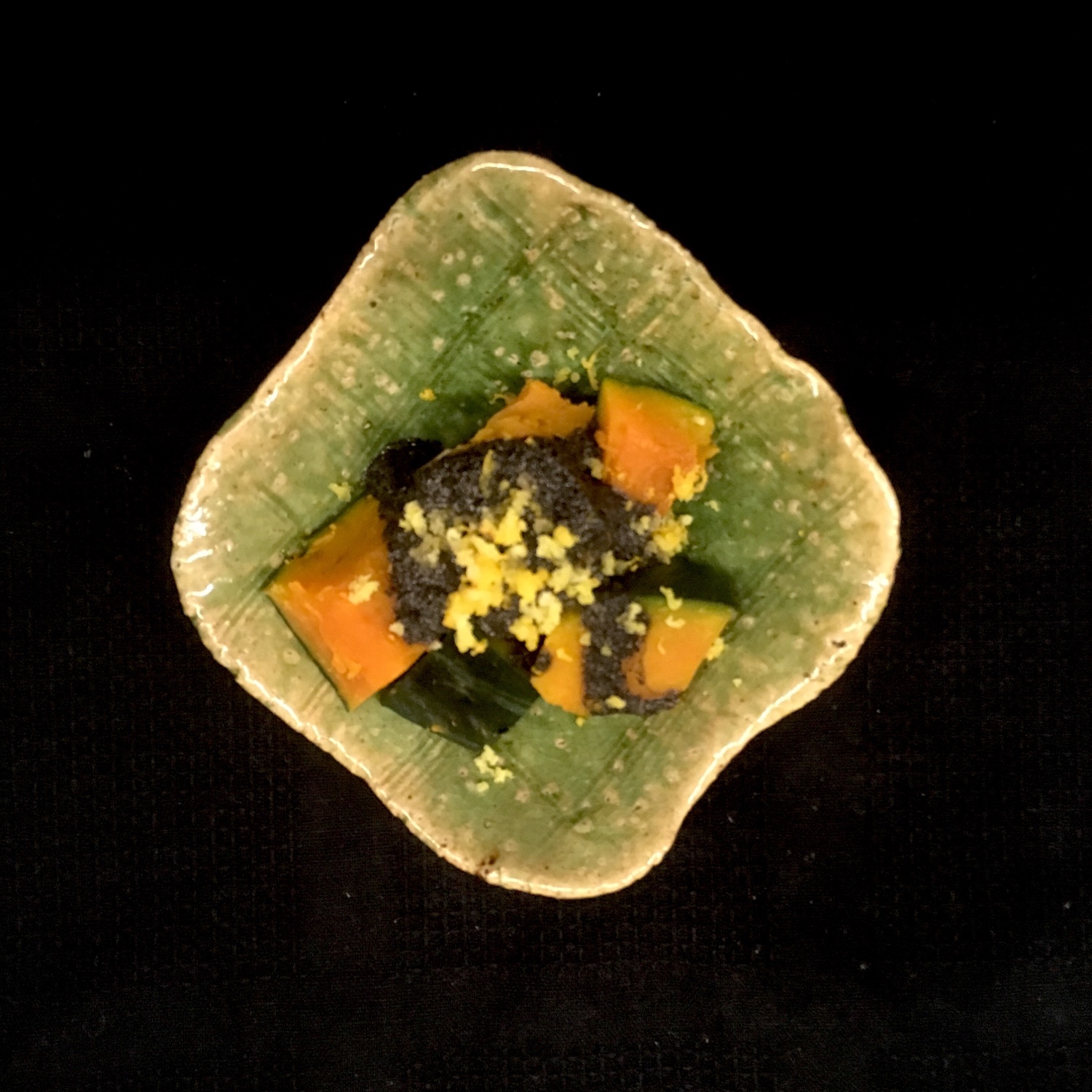
Kabocha with black sesame and yuzu:

– 1/4 of kabocha

– 4tbs of black sesame

– 1/2cup of sake

– 3tbs of brown sugar

– grated yuzu peel

– pinch of salt

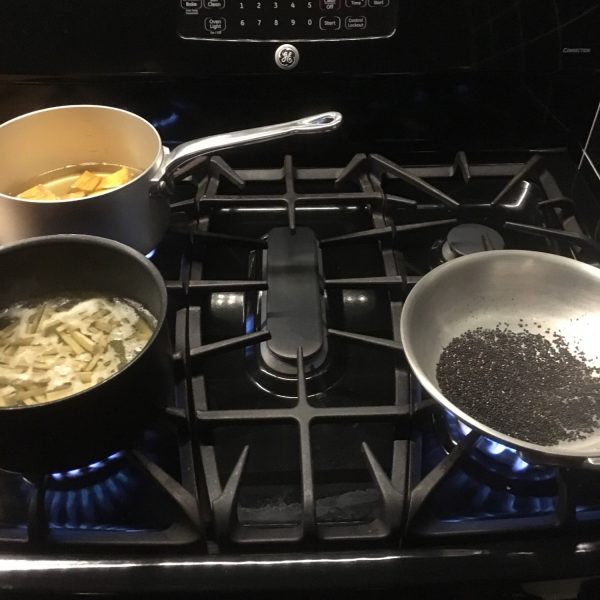
Cut the kabocha in bites keeping the skin of course. In a pan put the kabocha and cover with water. Add the sake, and sugar and bring to a boil, cook until kabocha is soft but not mushy. Grill the sesame in a pan and grind finely in a suri bowl. Add 2tbs of the cooking broth of the kabocha, add the salt. Remove the kabocha from the broth, set in a plate, add the sesame mix and finish with grated yuzu peel.

Before leaving

In a few hours I will be in Beijing for work, giving talks, meeting with new students and new research partners, attending a conference and presenting proposals. Well a very tight schedule for less than 72h. Usually eating is not central to these trips, even less cooking, if I ever find time to grab something I’ll be happy! Even more in China, as I am not a big fan of Chinese cuisine: too spicy, too weird, and too sticky-sweety-juicy… I’d love once to find a great Chinese restaurant that does vegetarian or vegan cuisine and not dimsum (i love dimsum). So before going I wanted to prepare food I like and that is very satisfying for the palate.

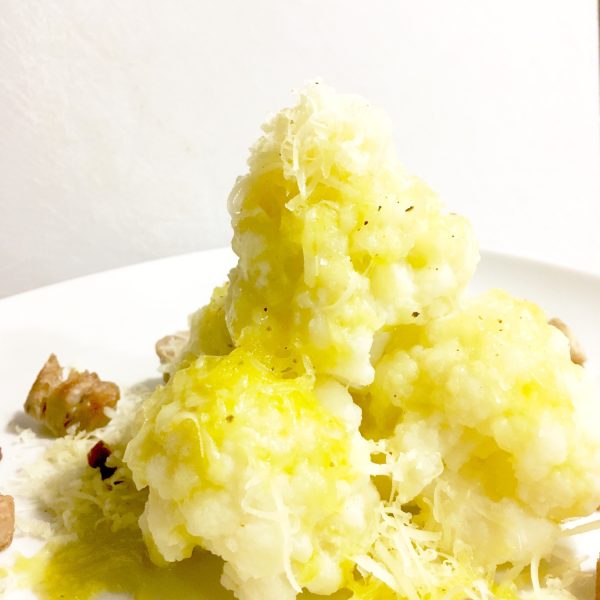
With my sister visiting last week, I was happy she had thought of bringing something not easy to find here: some fresh cantal cheese. A cheese I particularly love, that is always delicious both straight or in preparations, just like Parmigiano is. So I didn’t eat the whole piece in cubes and slices, rather I kept it to put in a simple recipe made of leftovers pork filet mignon, and a whole blanched cauliflower. I cut the cauliflower in fleurettes and heated the filet in a pan with a bit of oil. Added the cauliflower, salt and pepper, a few drops of olive oil and topped with grated cantal cheese… melting on the hot cauliflower… so delicious and a so perfect combination.

See you on Saturday when I an back Beijing!!! Have a good week!!

Autumn…

November has arrived in a flash… and with it the first chilly evenings that make you want to roll yourself under a plaid with the cat and drink hot yuzu with honey. It’s also the perfect time for long walks to the beach, gardening and receiving guests. This time guests were my sister, her husband and my nephew. In order to have plenty of time to go to the beach I prepared a very simple grilled vegetables with mustard dish inspired by a photo I saw on IG (recipe below) and because my nephew wanted to eat some tonkatsu I ordered a few pieces of filet-katsu at our favorite local meat shop Genji.

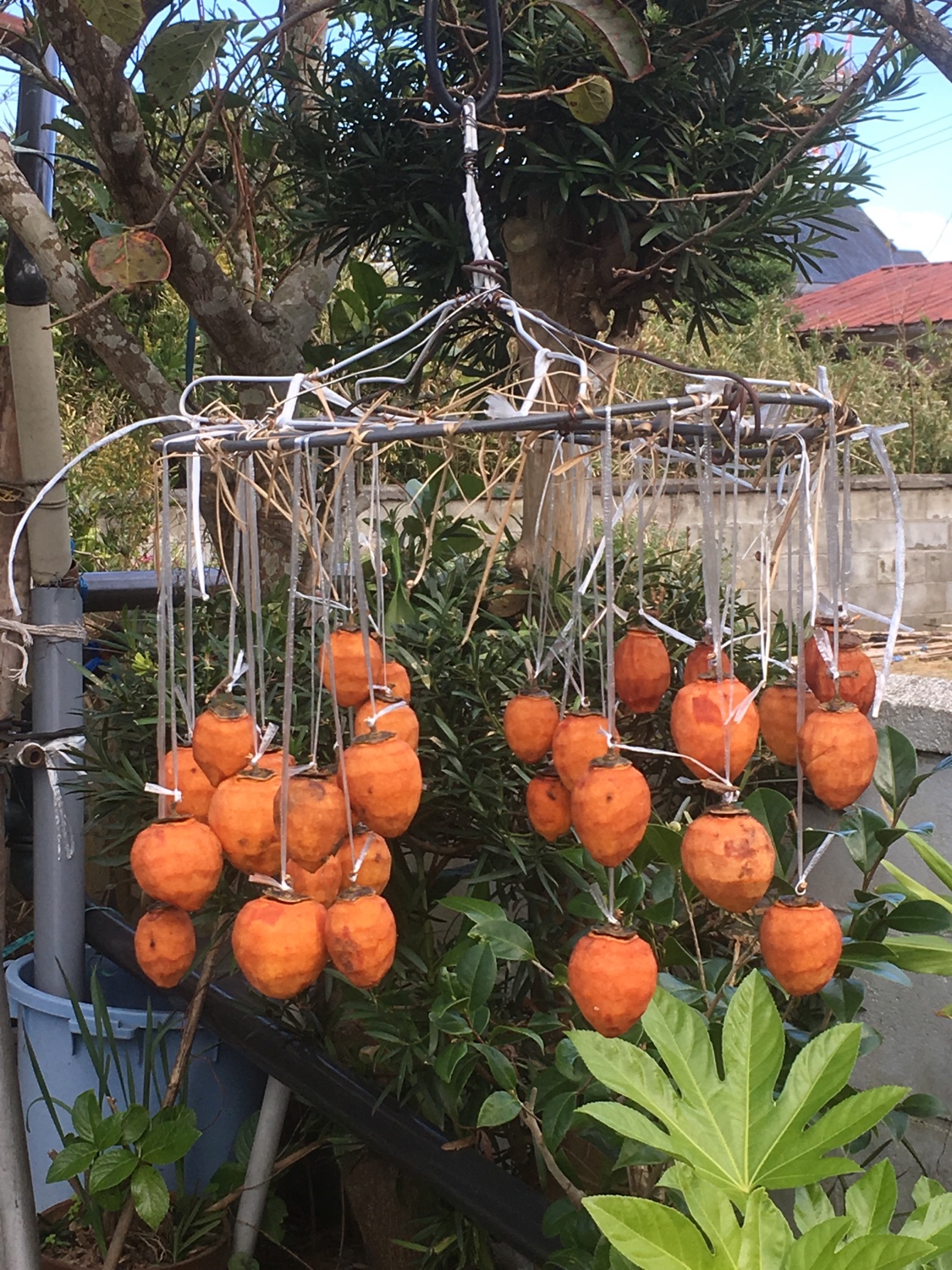
Walking to the beach we could enjoy seeing the persimmons on the trees and those prepared for drying already. Something I want to try to prepare once, but this year there was only a few fruits only on our tree… maybe next year…

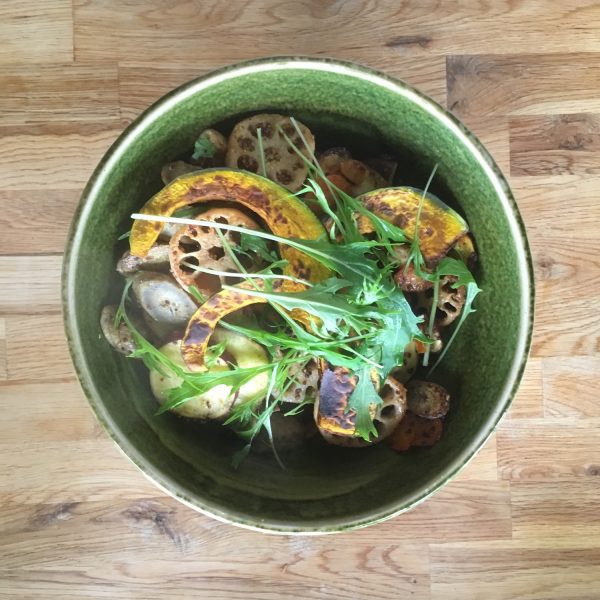
Autumn vegetables grilled with mustard

– 1 sweet potato

– 1 lotus root

– 1/2 burdock

– 1 carrot

– 1/4 kabocha

– 4 shiitake

– a bit of mizuna

– 2tbs of seeded mustard

– 1tbs of olive oil

Wash, peal when necessary the vegetables, and cut them as you wish, except the kabocha, slice it. In a large pan heated add the olive oil and the carrot, the lotus root, the burdock. Cook at high or medium heat and stir often. Add then the sweet potato, the shiitake, cook at high or medium heat to roast the vegetables add the mustard and stir well yet gently not to break the vegetables. In a pan or in the oven roast the kabocha slices. In a serving bowl add the vegetables then the kabocha slices and top with the mizuna. Enjoy!!!

Proudly powered by WordPress | Theme: Baskerville 2 by Anders Noren.

Up ↑

Verified by MonsterInsights