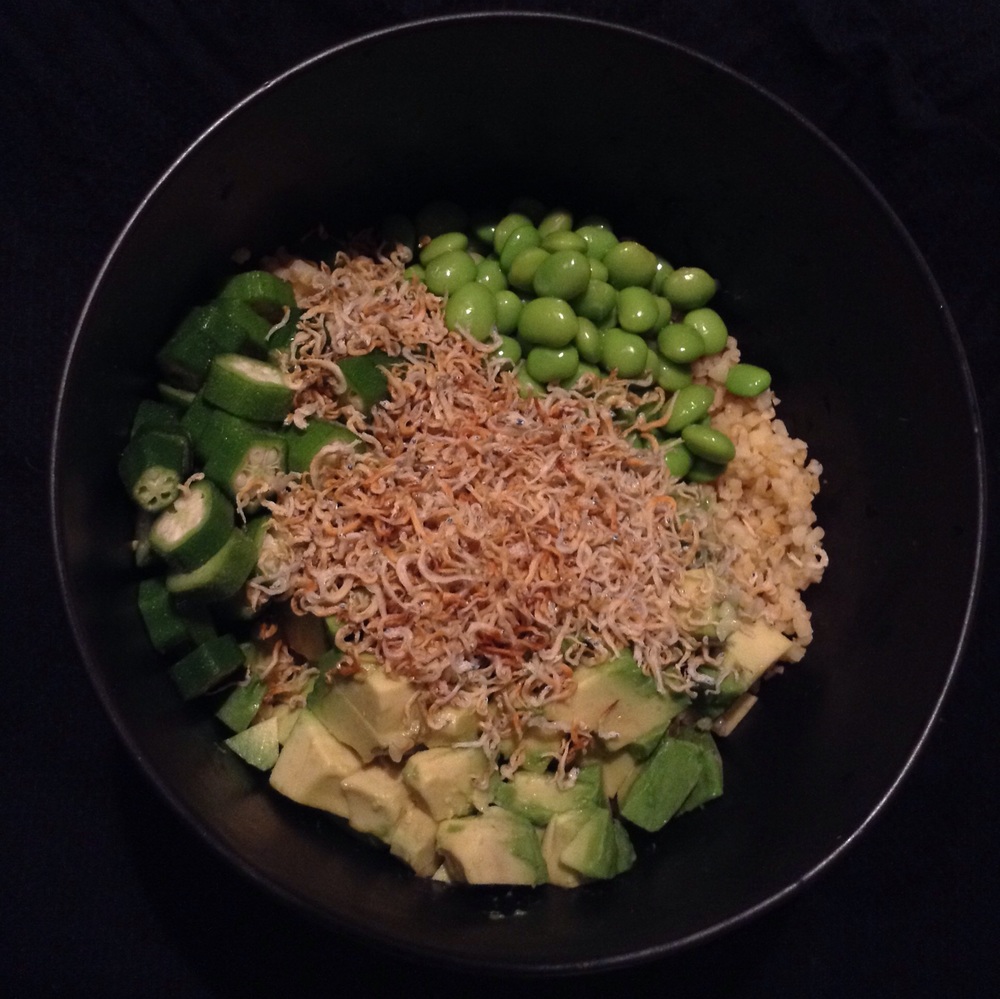
In my search of the perfect summer salad I’m making a lot of trials, never twice the same. Of course as I was writing in my earlier post all have in common a cereal or carb base: bulgur, rice, pasta, couscous… Tons of fresh vegetables: mainly tomatoes, ocra, cucumbers, a very light or non existing dressing. My salad today ressemble more a donburi for two, with Japanese style accomodation. I boiled some fresh edamame, added some sliced ocra and a perfectly rippen avocado, and a finish with grilled chirimen (very tiny half dried and a bit salty fishes). A perfect combination of softness and crispiness, of sweetness and saltiness. A really delicious mix and a great variation from regular rice donburi.
This fruit is always considered as an awkward thing by foreigners in Japan because the nashi has the shape and size of an apple with the skin of a pear and the flesh of something like a pear but munch more crunchy and juicy, with a mild and fresh taste. So basically nothing to compare really neither to apple nor pear. Nashi is the utmost fruit of summer with watermelon. When eaten cool it is so fresh and juicy that it is the perfect snack for hot summer days. It is also a good match for busy breakfast because it is so easy to peel and prepare. Well, you’ve understood I simply love nashi! And I’m awfully lucky because Isumi is a great region for nashi, with a lot of nashi orchards and tons available at the farmers market and local farmers cooperative.
In the past I did some trials such as nashi tart, nashi compote… It was good, nashi supports well being cooked but the taste which is originally very mild due to the high quantity of water doesn’t reveal much in cooking as apple or pear do. So now my recommendation is to eat it just raw, accomodated with other summer fruits, or just alone. So perfectly simple and so delicious!
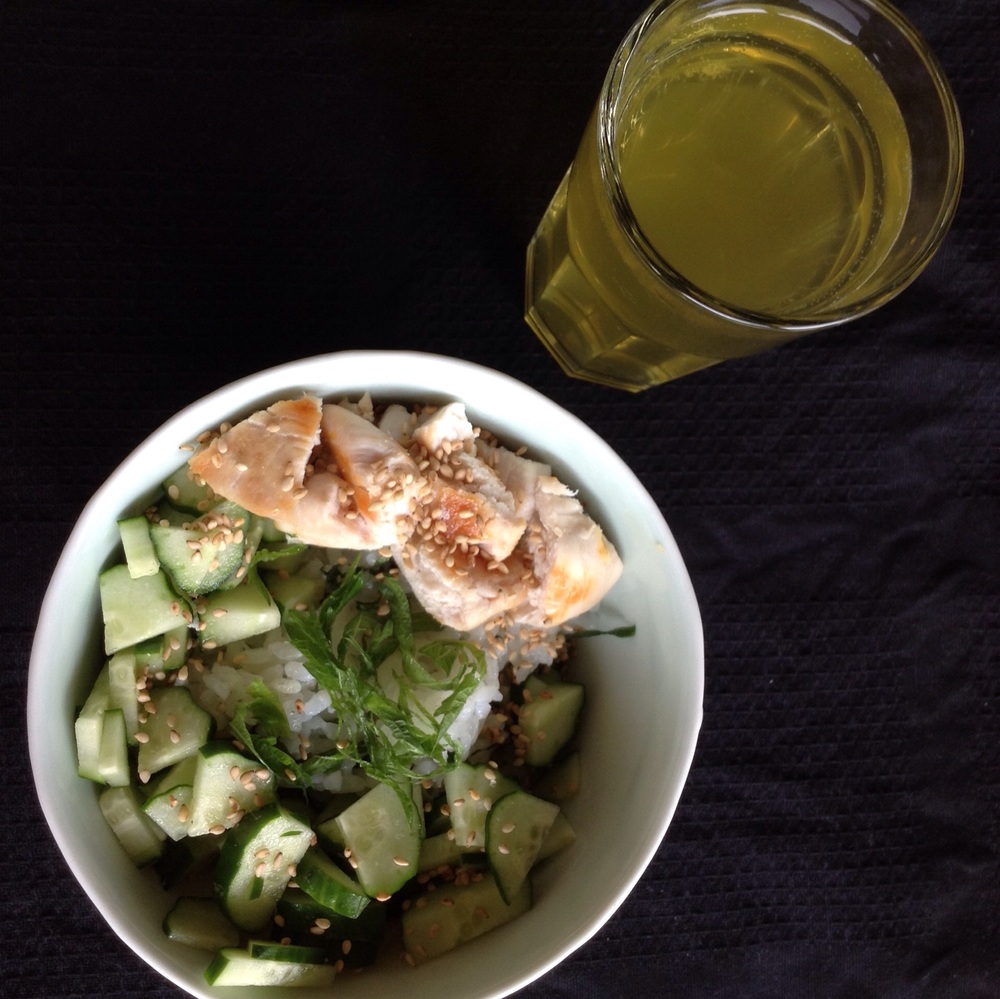
When the temperature exceeds 30deg day and night I only can eat very simple food. Japanese rice is really delicious when it’s hot, and it suits very well simple preparations, without any fat nor dressing. Donburi is always a good and simple way to prepare a rice based perfect meal. This time you can’t imagine something simpler: plain white Japanese rice, fresh cucumber, grilled chicken breast chopped, and a lot of shiso leaves finelly cut, a few sesame seeds for perfection. Served with a glass of cold green tea. How do you cook when it’s hot?
My husband and I usually play tennis together every Saturday morning for aboug 2h, and sometimes the stakes are really high: we play for the color of our new car, its model, the options, and sometimes even what we’ll have for lunch. That’s how my husband win his piece of meat ;). After our game we usually head to the beach for a refreshing swim, so once we’re back home we’re literally starving so I need to fix something quick and nourishing. Japanese rice is always a good option because it can be cooked unsupervised and gives me enough time to drop by the shower! Cucumbers, tomatoes and all other vegetables that can be eaten raw, Japanese pickles, scrambled eggs… are also very handy. Finally, leftover and tofu make our lunch look like something awesome.
This time it’s a mixture of all that. Plain white rice topped with some sesame seeds, sesame-tofu from Mount Koya, miso green beans, and raw cucumber.
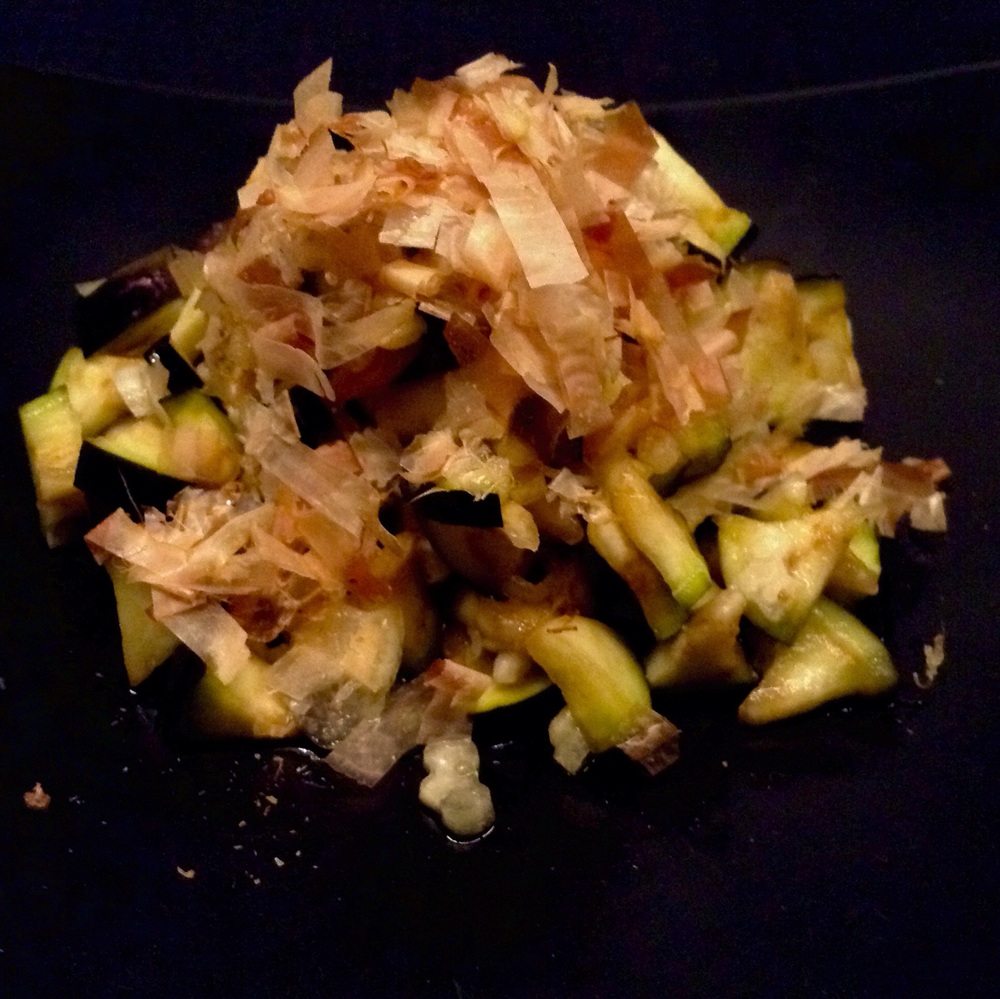
The first time I came across a recipe with raw eggplant I was quite suspicious, but then tried it and realized it was really good. So in this “eggplant week” I’ve decided to prepare a raw eggplant salad rather than offering you the more than classic stuffed eggplant, or mozzarella grilled eggplant…
For two as a side dish I used 1 Japanese eggplant, 1 sprout of myoga (wait a little there’s a post coming very soon about it), a little of katsuo bushi, soya sauce. You can add shiso leaves if you have some, I didn’t this time. I cut the eggplant in small bites and drain the water with salt (like you may do for cucumbers), then I slice the myoga finely, (and the shiso if any). Then mix the eggplant and the myoga (and shiso). Serve on a plate, add a bit of soya sauce top with the katsuo bushi and it’s ready to eat!
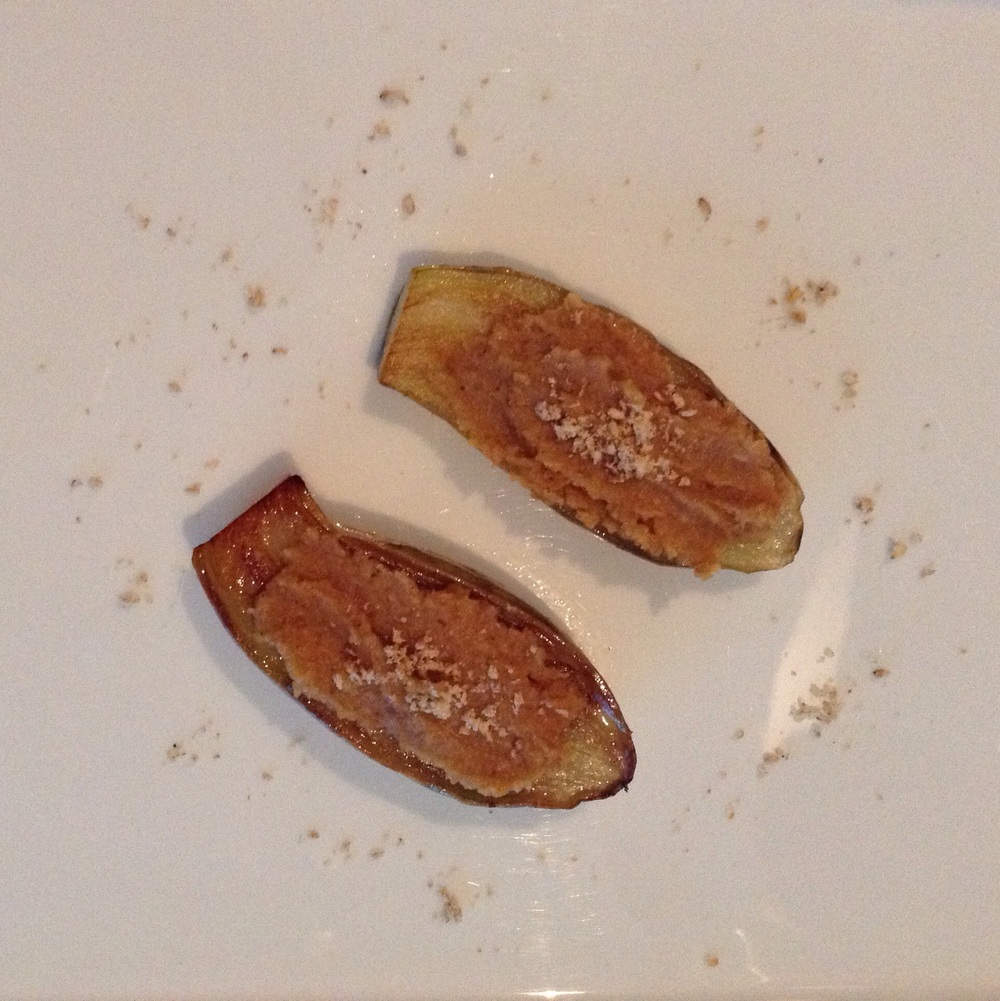
This quite simple Japanese recipe is really delicious and I like it very much now, but for sometimes I hated it because the first time I tried to prepare it, it was a terrible failure. The first and only time I prepared something to eat that ended up in the trash because it was not edible. I surely made a mess of this delicious recipe! Probably a problem with the mastering of Japanese ingredients at the timeand the proportions! Indeed when we arrived in Japan, cooking was a quite interesting task and grocery shopping an even more startling! Almost every evening we would go to our local supermarket and starre at what at that time we found strange mushrooms, awkward fruits and unknown fishes. So after a few weeks I decided to buy a beginners Japanese cooking book and to try most of the recipes to get familiar with techniques and basic products. The book I picked was in English of course and was clearly written for foreigners, so it was really helpful! However most of the recipes in this book make use of mirin (together with sugar), a Japanese cooking ingredient that I find unify the taste and is not very interesting (a bit like glutamate in Chinese cuisine). So I will give you my version of miso eggplant, the one that is just perfect and doesn’t use mirin.
For two as a side dish I use 1 or 2 Japanese eggplants (they are quite small); a spoon of miso; a tea spoon of grounded sesame or “surigoma”; a little of vegetal oil. After removing the stems and cutting in halves the eggplants, fry them in a very very thin layer of oil. In the mean time, mix the miso the sesame and a very little of oil if necessary to obtain a paste. Once the eggplants are cooked, set them on a serving plate and delicately spread the paste to obtain a thin layer. Decorate with a little of sesame. You can also set the eggplants on a cooking shit, spread the miso, and grill them 3 min in the oven to obtain a roasted miso thin crust.
When we have visitors from Europe for dinner and it’s there first time in Japan I usually cook Japanese for them, but I cook what I call “soft Japaanese”. I don’t try to impress them with my skills in cha-kaiseki cuisine with elaborated tofu mixes, plain white rice and strongly miso tasting fish and Japanese sweets for example. I prefer to introduce them to flavors their palate can identify and distinguish if they don’t. And if they come on week day, since I don’t have the luxury to spend more than 2h for grocery shopping+cooking, I need to be very organized.
This time our guests have been in Tokyo for a few days already, and travelling the world before arriving there so I crafted a menu where they can enjoy Japanese food while still feeling the casual home made touch:
somen with a chicken meat ball as a starter, ginger grilled pork (buta shoga yaki) with white and whole rice, miso soup with silky tofu and mitsuba. for dessert, just fresh summer fruits in salad: Japanese grape, Japanese plums and Japanese green melon.
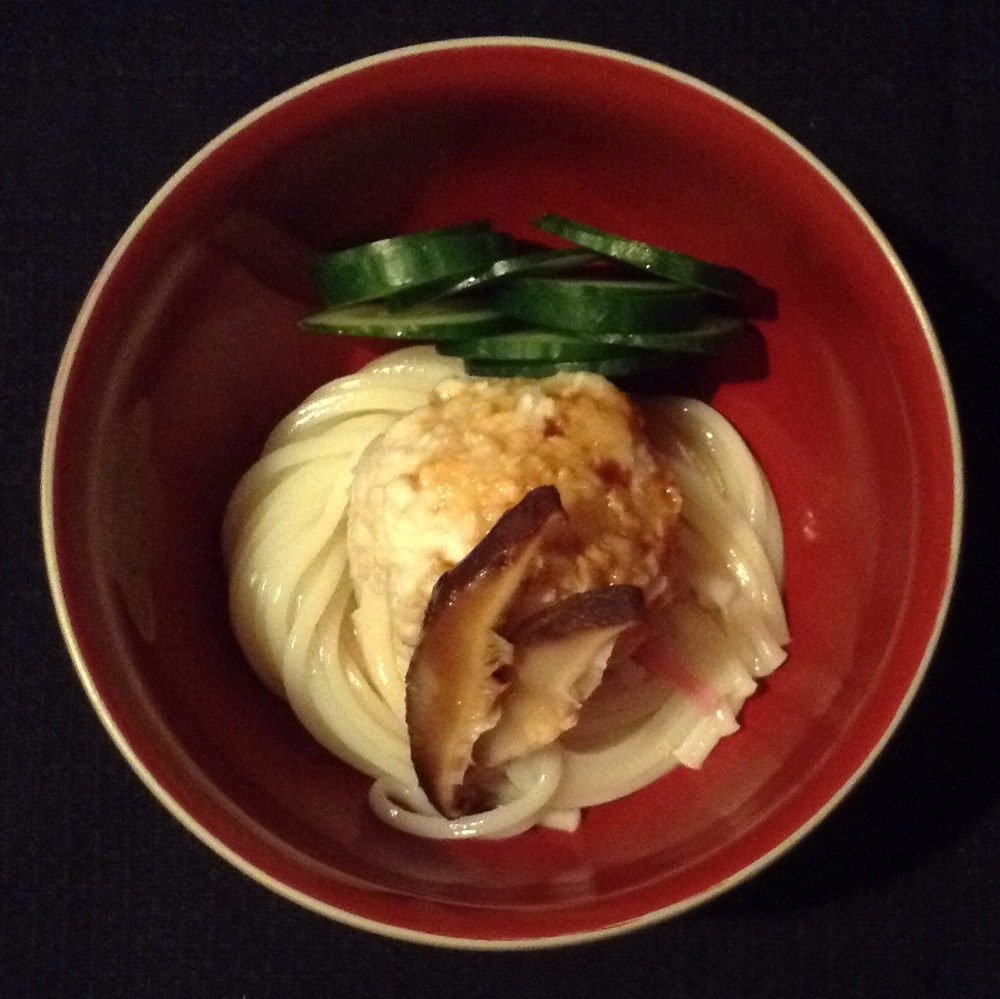
If the main dish and dessert are quite common, for the starter I composed a recipe from cha-kaiseki and adjusted it to the market. The original recipe is using snapper and togan, a kind of summer gourd; but I couldn’t find neither so I replaced the fish with chicken meat balls made out of grinded chicken breast and startch, boiled in konbu dashi, and the togan was replaced by thinly sliced cucumber. The whole thing seasoned with a few drops of soya sauce. And I added two slices of dried shiitake. Since it is almost summer I chosed somen and served the whole refregirated. Bonus: since It is refrigirated you can prepare the bowls and just take them out of the fridge to serve!
The starter: somen with chicken meat ball and cucumber
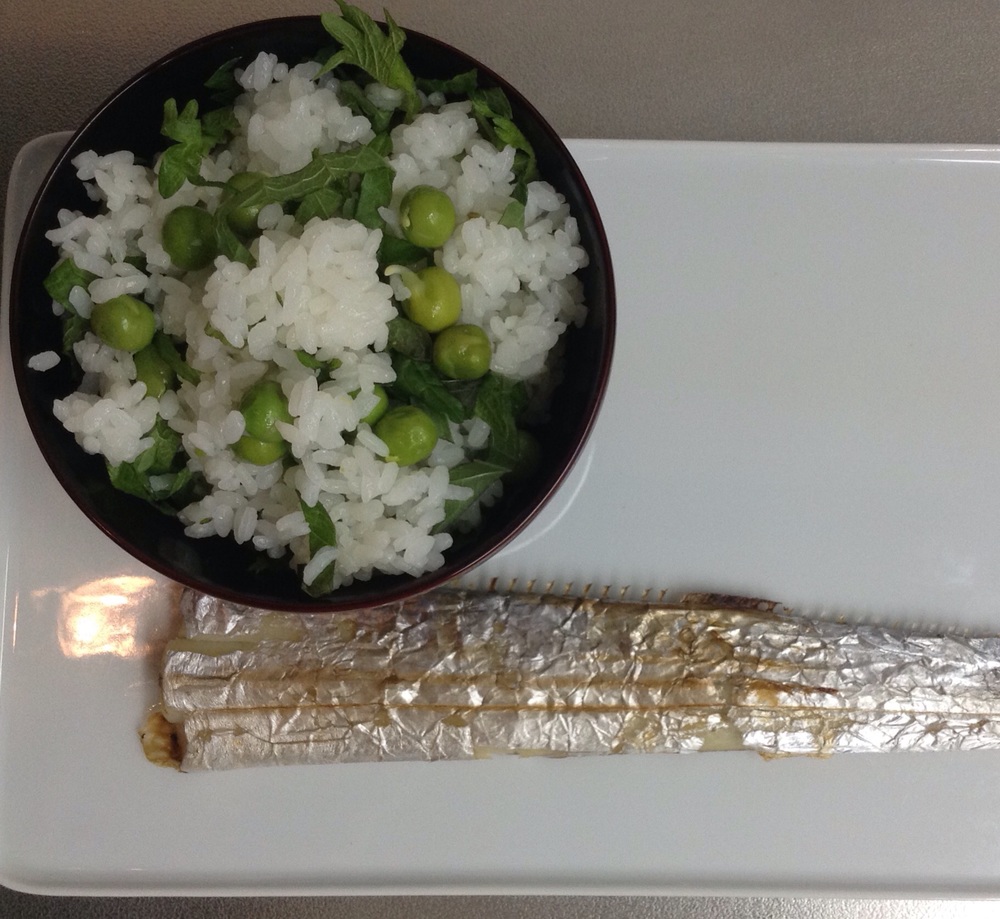
After a whole week in the US, I was cruelly missing Japanese rice and Japanese food. So I fixed this little dinner with rice, green peas and green shiso and shoyu-grilled Tachiuo fish (beltfish). Simple and perfect!
The rice is just steamed, in the last few minutes I add the fresh green peas, and just before serving I add chopped green shiso leaves. The fish is grilled in the oven with a bit of soya sauce and served immediately.
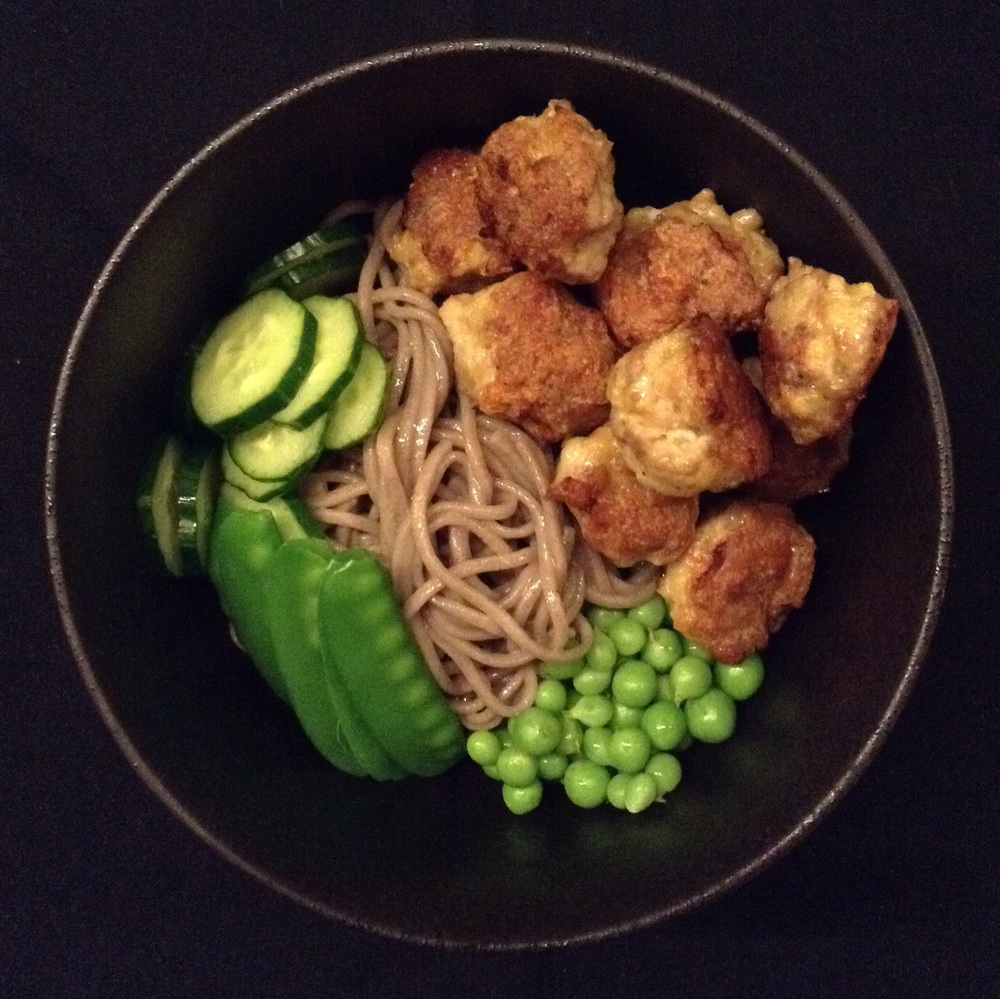
Soba is the Japanese word for buckwheat and by extension buckwheat noodles. You can find soba-ya: restaurants serving soba pretty much everywhere and there are several places accross the country famous for the production of soba that it makes them something really common. I wanted badly to mske my own noodles but on that day I realized I had no buckwheat flour, and couldn’t find some around. So I bought dried soba noodles, which are basically like dried pasta. And I prepared a cold buckwheat noodles salad with seasonal vegetables: snap peas, green peas and cucumber and served with some pork meat balls.
I just boiled the noodles, quickly boiled the peas, sliced the cucumber.
For the additional balls it can be made out of tofu or okara for a vegan dish. This time I promised some meaty dish to my husband, so I mixed some pork meat with and egg and bread crust, salt pepper and then cooked them in a frying pan under cover until golden.
For the overall seasoning I mixed a little of ponzu and sunflower oil.