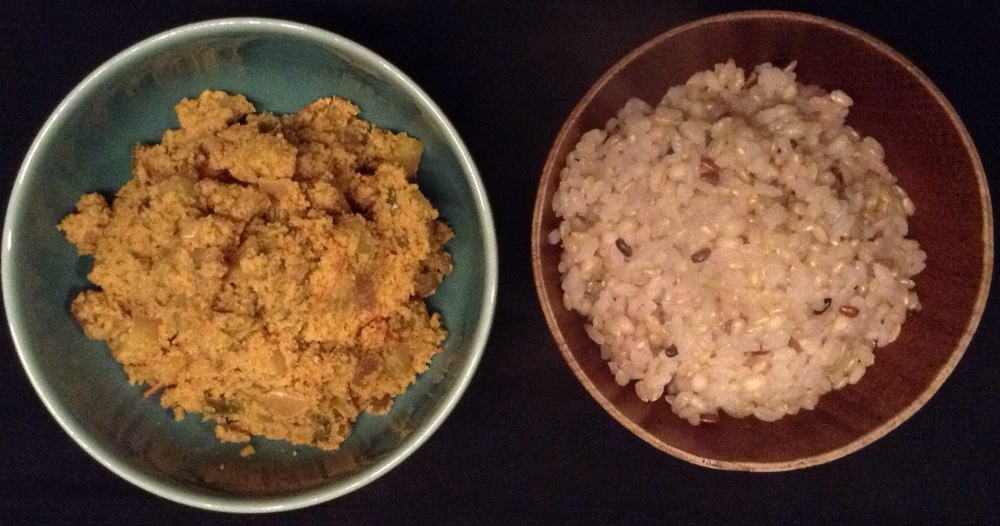
Macrobiotic dry curry

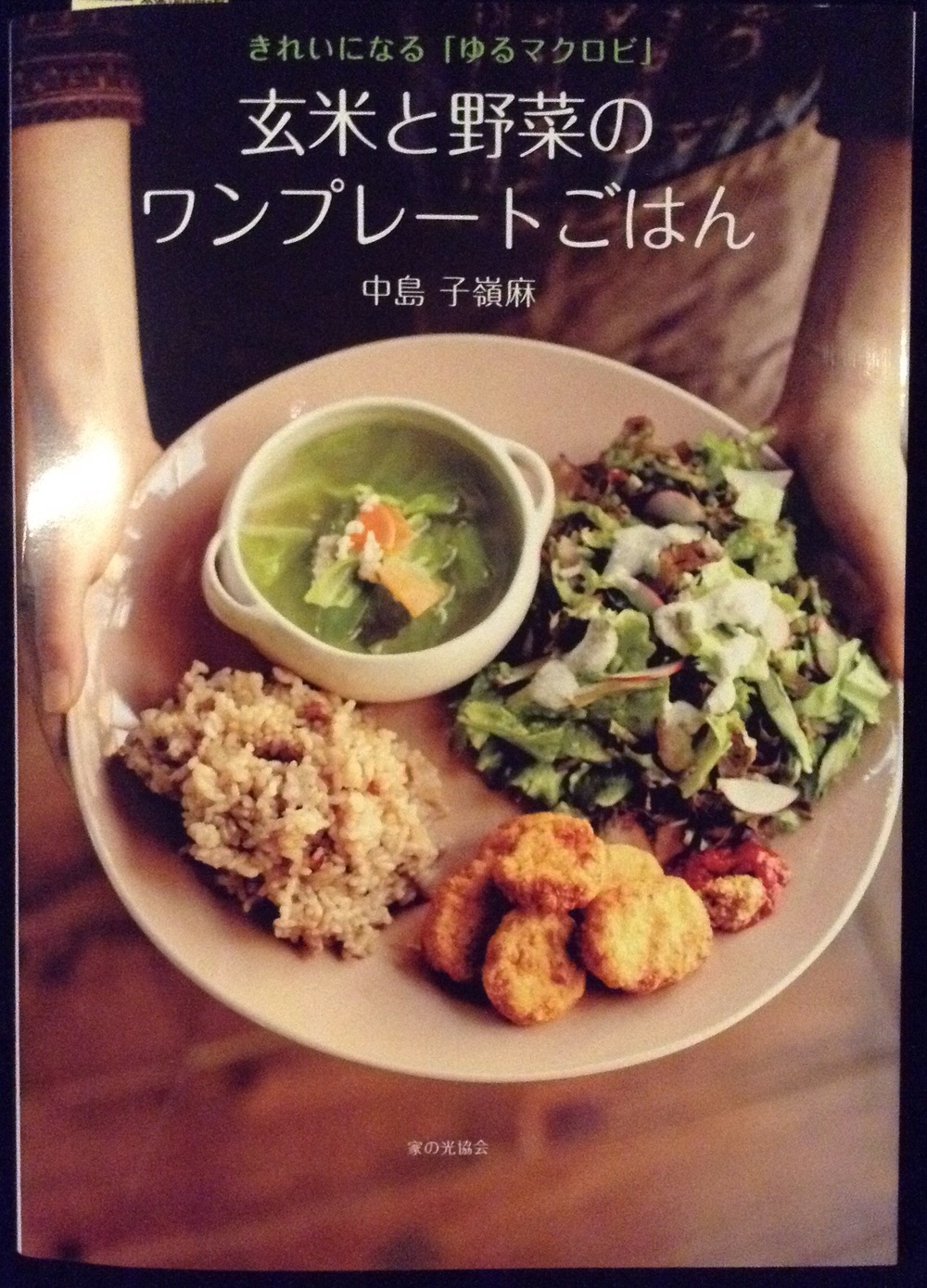
As I was mentioning earlier, we found close to our home in Ohara, a macrobiotic local kind of small community where they have a cafe and a tiny shop. We had lunch there and it was delicious, and after we went to check out the little shop and I found this book: “whole rice & veggies on plate meals”, which was written by people from the community, and which presents seasonal recipes all gegan and somehow macrobiotic, or what they call “soft macrobi”. Perfect for me who enjoy the vegan food but don’t becessarily adhere to macrobiotics: I hate imposed rules in particular when it comes to food. I have my own, I like them and I think they suit me well. Well, this book is a treasure trive of midern Japanese recipes and I really enjoy looking at all the recipes and in particular the ones using ingredients I seldom use or buy. Coincidently, some time ago, a friend traveling to Koya brang us back some Koyadofu, a kind if dry tofu that can be rehydrated and used in several preparations. So I jumped on the occasion to prepare the first recipe I found with Koyadofu: vegetables dry curry. Dry curry mesns that there is no thick sauce like in regular Japanese curry.

The recipe is awfully simple, I had most of the ingredients but not all, so I replaced them and interpreted my way. For 2 You need 2 blocks of Koyadofu, 1 green pepper, 1 potato, 1/2 onion (I used a red onion), 1 tomato, curry powder, carvi seeds, cinnamon powder, salt, pepper, 1 tbs of miso, 1 tbs of apricot jam (I used kaki jam), a bit of soya sauce and s bit of oil. First cut all the veggies in 5mm cubes, the tomato can be cut in large chuncks. Rehydrate the tofu in hot water, drain roughly. In a pan with oil, cook atlow  heat the veggies, but the tomato, add the carvi seeds and the curry powder, the cinnamon. In a mixer, mix the tofu, the jam, the miso, salt pepper, soya sauce. Add the mixture to the veggies, cook until almost dry. Serve with rice. I serve with a mixture I made of whole rice, black rice, red rice, barley and white rice. Super delicious, but not very picturesque I reckon!!!!
Lotus root – 蓮根

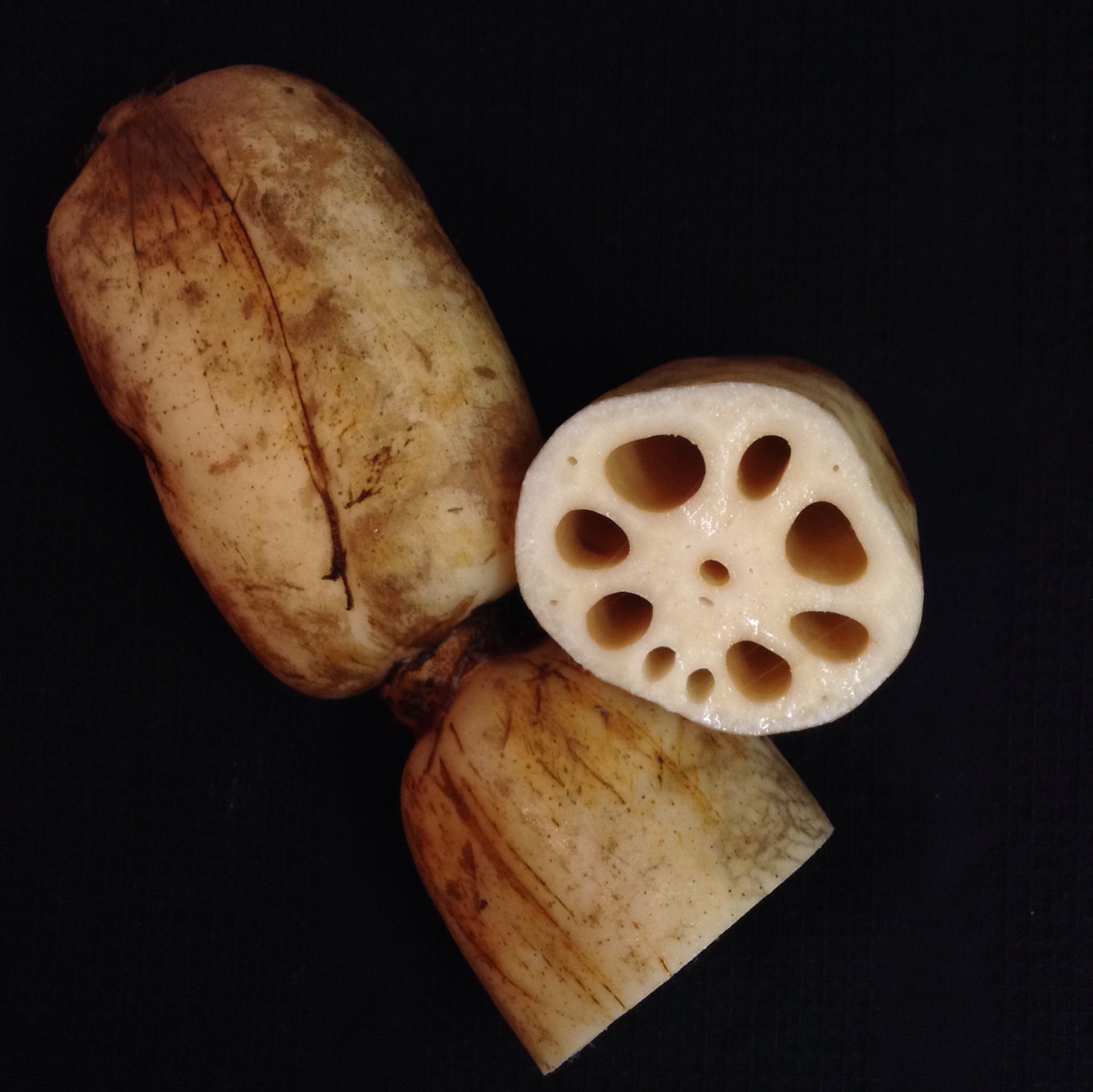
 Lotus root, raw
Lotus root, raw

As you may have noticed already I really love to cook lotus roots (renkon-蓮根) . They have a beautiful white color that goldens when cooked, a very crispy texture, a nice shape and a delicious taste. And practicaly they’re super easy to peel and cut, and don’t require a lot of cooking time. It’s quite simple to find some all year round but spring for tiny ones, and autumns for larger ones seems the best periods. They grow in many places in Japan so  local lotus roots are also easy to find, though the best I’ve ever had came from Kanazawa, which is famous for lotus roots.

Lotus roots accomodate very well with other veggies and I like to cook them with carrots, shishito, kabocha… I also love them in homemade chips. This week I’ve been working late pretty much every day, so fixing dinner in a short time was quite a must. So for this recipe I simpl cut and wash the peeled lotus root, stir fry in a bit of oil, added some shishito, and in the mean time cooked some rice with sweet potatoes. I served the rice, topped with the lotus roots and shishito, added some sesame seeds and a bit of salt. Dinner’s ready!

Deal!

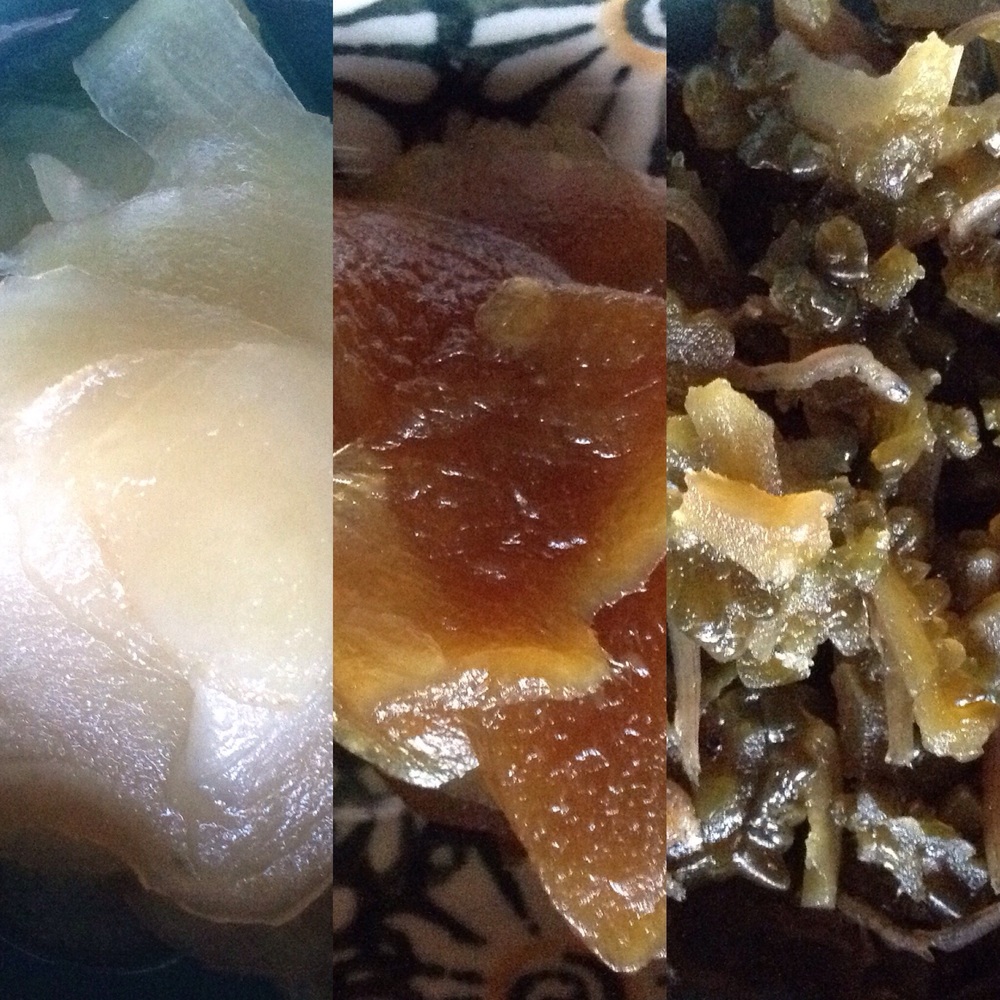
 From left to right: ginger in vinegar, candied ginger, gono
From left to right: ginger in vinegar, candied ginger, gono

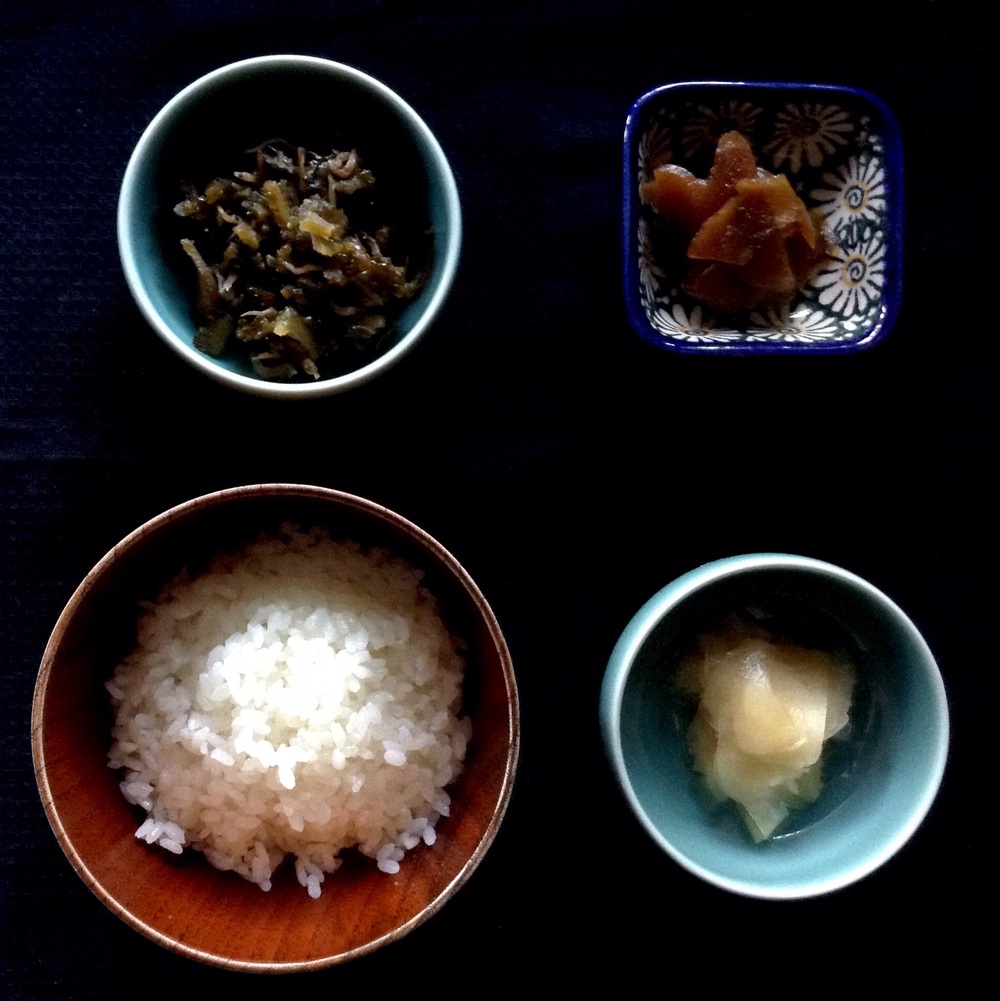
You may remember that I gave away to my neighbors my gingko nuts because there were really too many.  So to thanks us our little 84 years old neighbor prepared us some nice Japanese traditional condiments and brang them to us timely just before lunch, so I just had to cook some rice. There were three different preparations: ginger in vinegar, candied ginger in soya sauce, and gobo simmered with mirin, sake, soya sauce, sugar and small fishes. All of them were really delicious and now I want so badly that she teaches me how to prepare these!!!!

 Perfect lunch! 
Perfect lunch! 

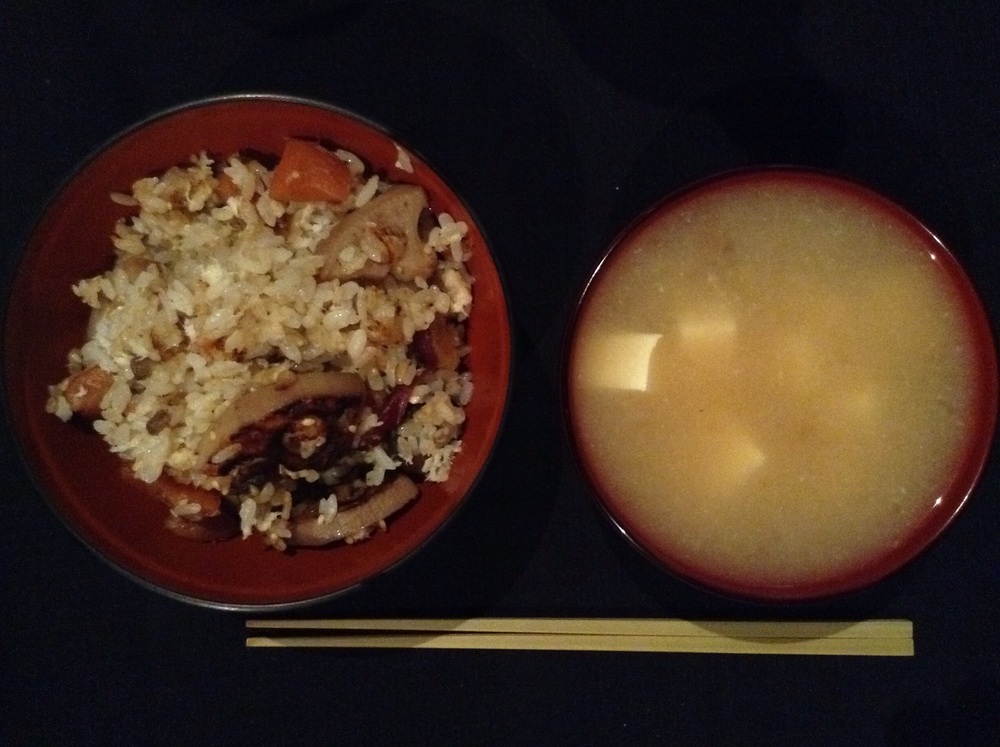
Left over diner

We had friends at home for diner the other night, and I over spec the diner portions, so, rare enough, I had enough left overs for a second diner. But because I don’t like eating twice the same thing I arrange it in completely different maner.

The original dinner consisted in plain white rice, Japanese autumn veggies (sweet potatoes, litus roots, carrots, eringi mushrooms, turnips…) in dashi and sake, salt-grilled sawara, and a mushrooms and tofu miso soup.

The new version was a cha-an (sauteed rice)  with sawara and sauteed veggies, with sesame. For that I fried the rice in a bit of oil, added a table spoon if sesame seeds, added the veggies, and stirred often. I removed the skin and bones of the fish and crumbled it in the rice, stirred again and served. A super delicious diner, ready in 5 min, just perfect after a long day at work!

Gingko nuts rice

There are several ways to use gingko nuts in cuisine. The simplest is probably to grill them, for that you just beed to break the hard shell roughly, grilled them in a pan and serve with salt. It’s the easiest because no need to remove the hard shell, everyone does while eating. Perfect as a snack. But definitely not the most elegant way. So first if all renoving the shell without breaking the nuts is important. It’s not too difficult. Then there is a brownish skin that you don’t want to serve. To remove it it’s easy, boil a dew minutes the nuts then roll them in a metal net or drainer. The peel will go away with the friction. Now you have the perfect yellow nuts that you can use for any recipe. One of my favorite use issimply with white rice, to accompany a Japanese dinner. Jusr add the nuts in the rice after it is cooked. Count 3 to 7 nuts per person. Finish with a bit of salt when serving to enhance the taste of the nuts.

Ginkgo nuts – 銀杏

The ginkgo tree is a symbol of wisdom and it is particularly beautiful in late november when it turn a vibrant yellow. Its leaves have also a very pretty and typical shape, symbol  of Tokyo University.

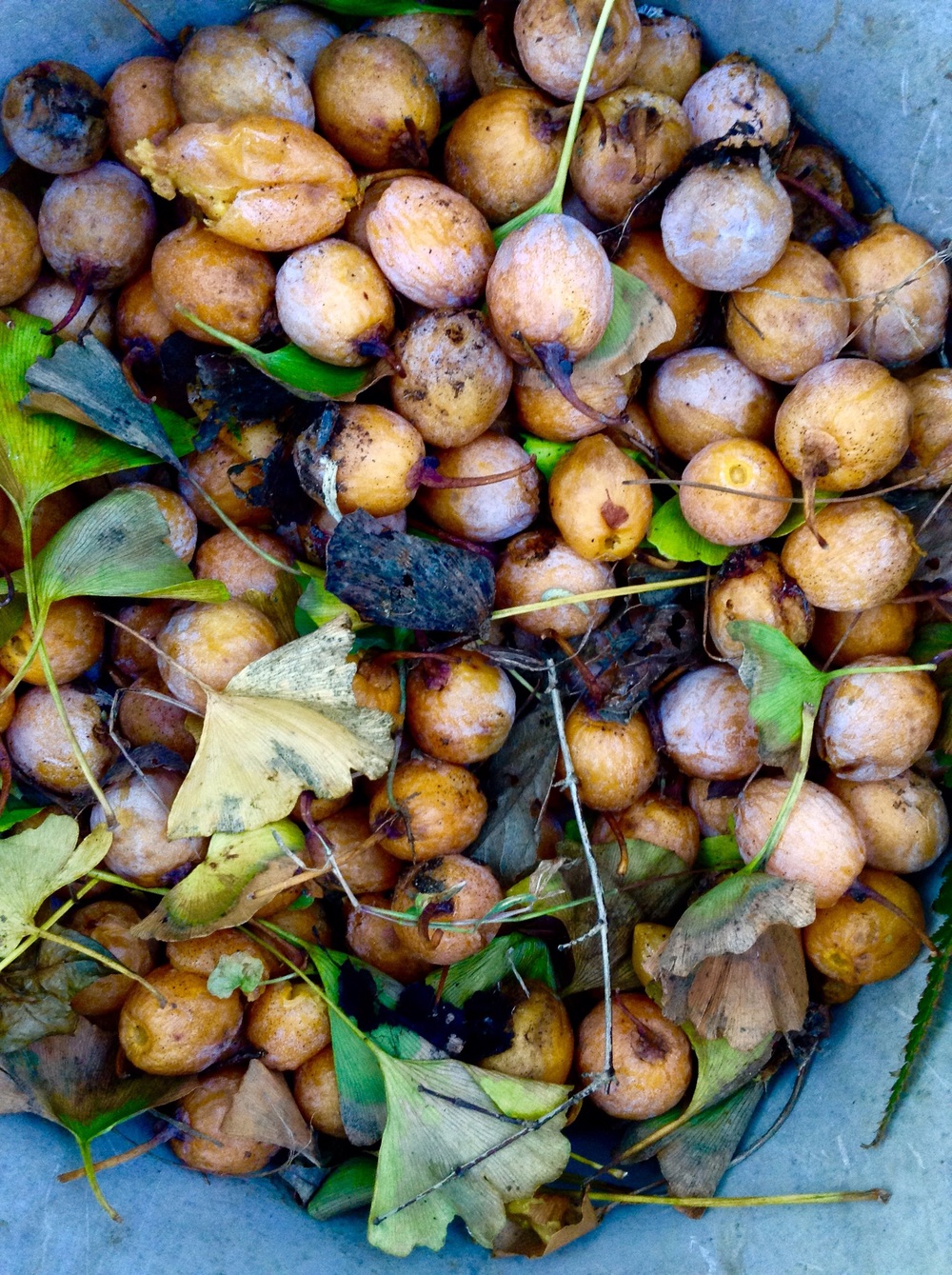
 Fresh ginkgo nuts, just harvested
Fresh ginkgo nuts, just harvested

But ginkgo are doomed because they bare the most ignominious fruit: the ginkgo nut. If you have ever tasted ginkgo nuts you probably can’t imagine where it comes from; if you have ever been close to a ginkgo tree in autumn you probably can’t imagine that the ginkgo nut is actually edible. The ginkgo nut is protected by a yellow-orange thick and watery skin that when broken generate an extremely nauseous smell. The nuts have the bad habit of falling on the ground and get smashed by pedestrians, cars… in town and to rot in the country, still smelling so bad that the tree is a real nuisance! Yet gingko nuts are delicious! 

The nuts are usually collected once they’ve fallen. Luckily the little typhoon that passed over Kanto last week, blown down all the nuts and I managed to collect them before they rot and stink. Always use gloves when collecteing the nuts!!!
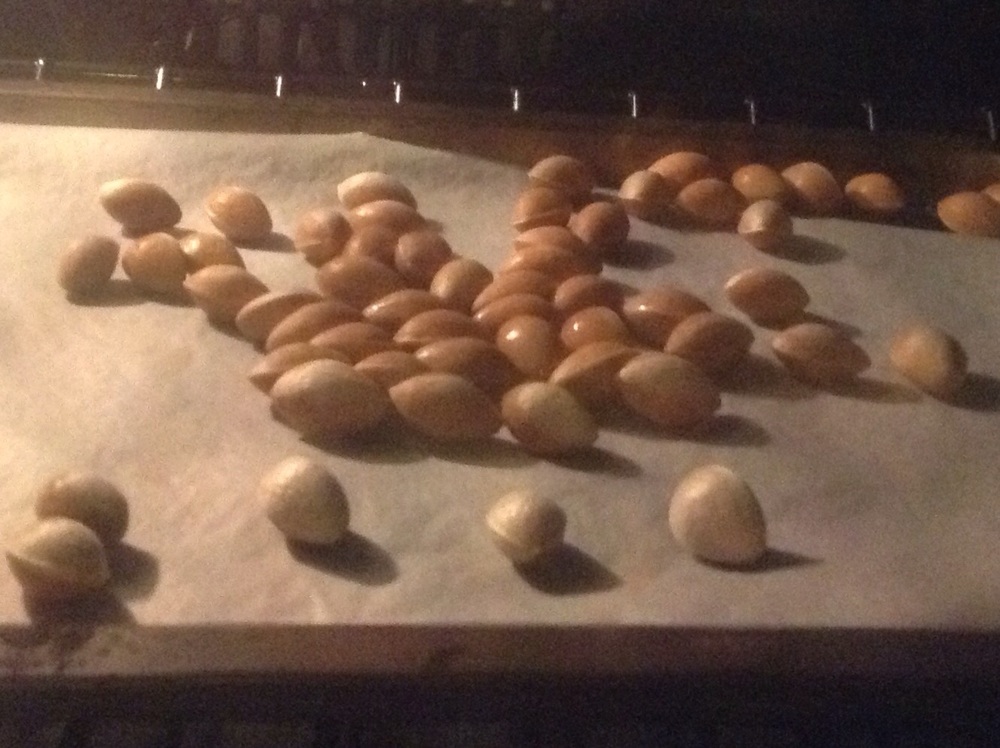
The next step is to remove the stinks. For that plunge the nuts in a bucket of water for a few hours. The soaked skin is easy to remove (again, use gloves). And brush and wash the nuts until none of the flesh is visible. Finally dry the nuts in the oven at low temperature for about 2h, while shaking them once in a while. This year I collected so many nuts that I gave away most of them to my neighbors because I didn’t have the time to peel and wash them all.

Now the nuts are ready for cooking and harvesting!

 Nuts drying in the oven
Nuts drying in the oven

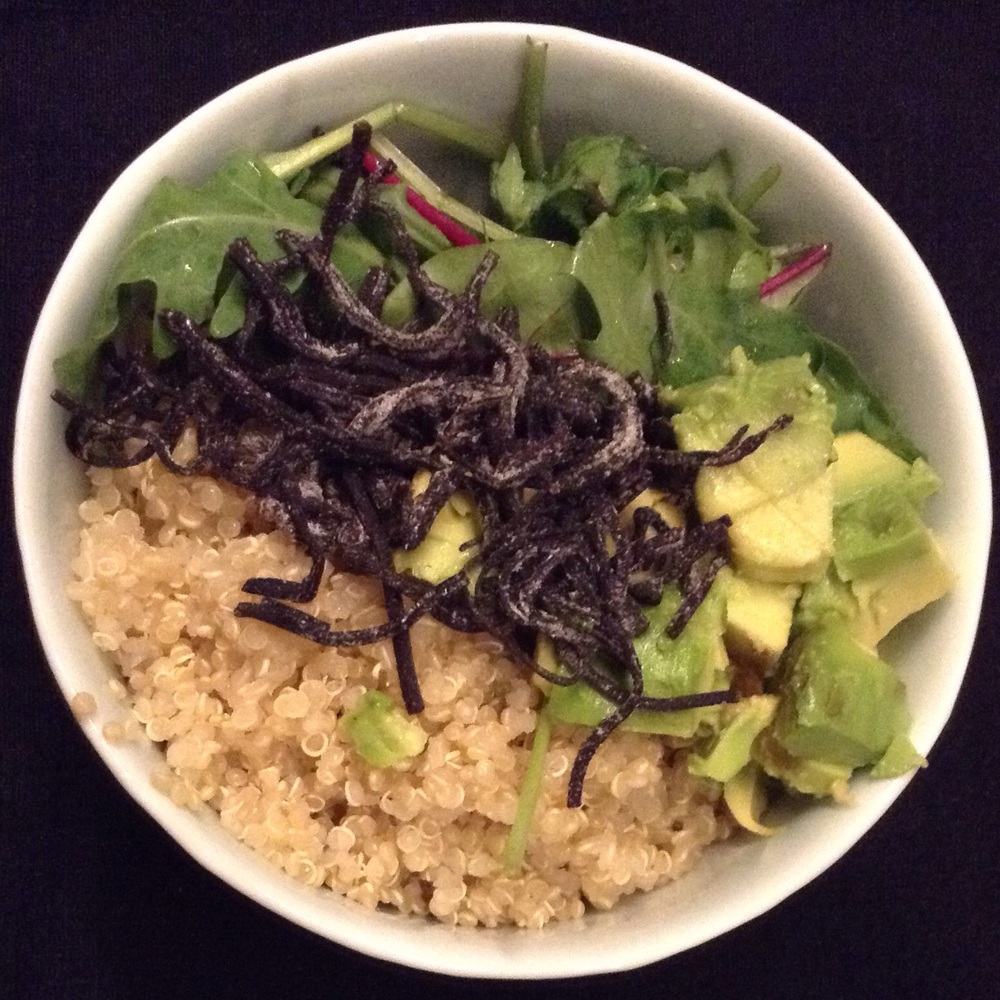
Quinoa bowl

A pure bowl of yumminess! With quinoa simply boiled, baby leaf salad, diced avocado and dried salted konbu (shio konbu – 塩昆布), and the juice of a local lime for a late Friday evening dinner in the country. I love shio konbu, it accomodates very well with Japanese and non Japanese dishes. It tastes slightly like salted licorice, and I am still imagining ways to use it in my recipes.

Back to my kitchen!!!

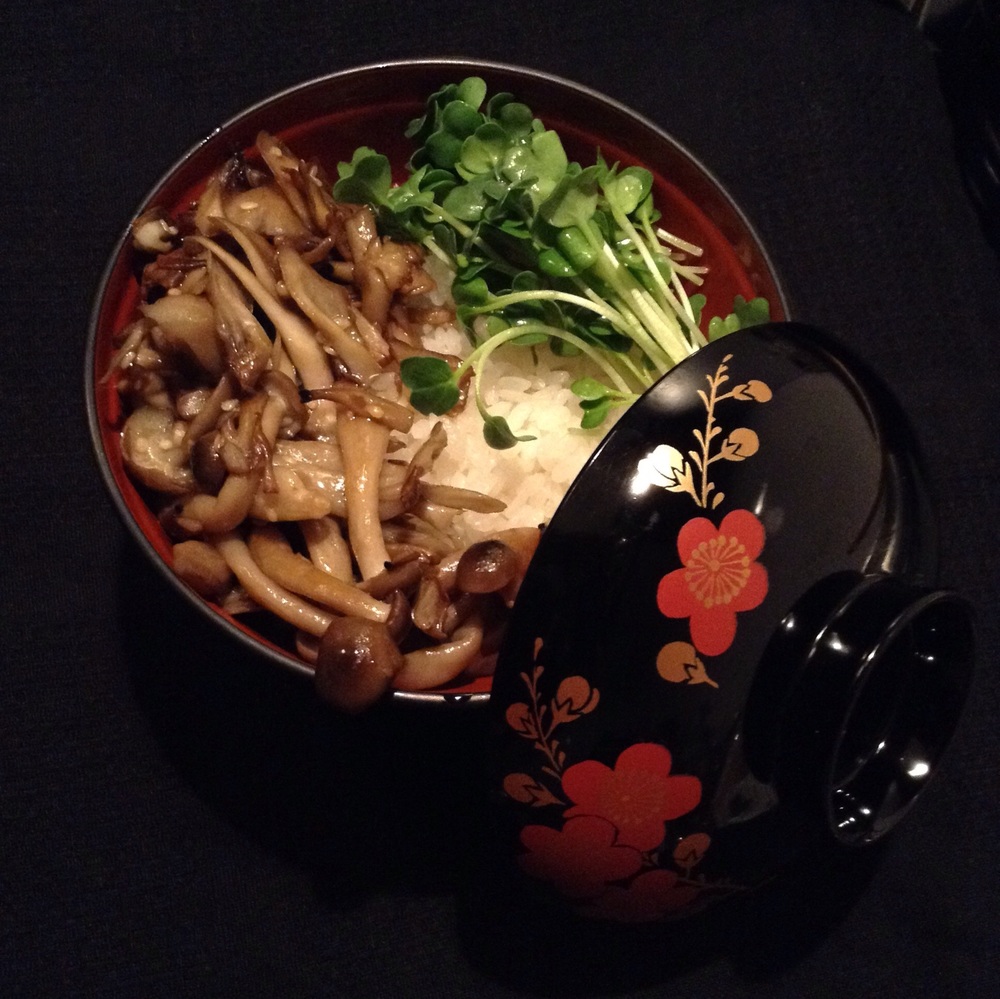
After being away from home for more than 10 days I’m really happy to be back to my kitchen. After eating out a lot (even though recently it’s been easier to find simple food in restaurants in France) I really need to get back to my basic diet. As soon as we were done with unpacking, I went down for grocery shopping, grabbed some fresh Japanese mushrooms: shimeji and maitake (kind of oyster mushroom), and some sprouts. I cooked some plain rice, grilled the mushroom in a pan with a bit of butter, add just before serving some sesame seeds and a drop of soya sauce, and served the whole as a vegan donburi.

 Mushrooms and sprouts donburi
Mushrooms and sprouts donburi

In the following weeks you’ll see that while in France I packed a few ingredients I love and still can’t find easily in Tokyo, some herbs from my parents’ garden in Aix, some flour for baking bread, tones of quinoa… and  I’m really looking forward to using them!

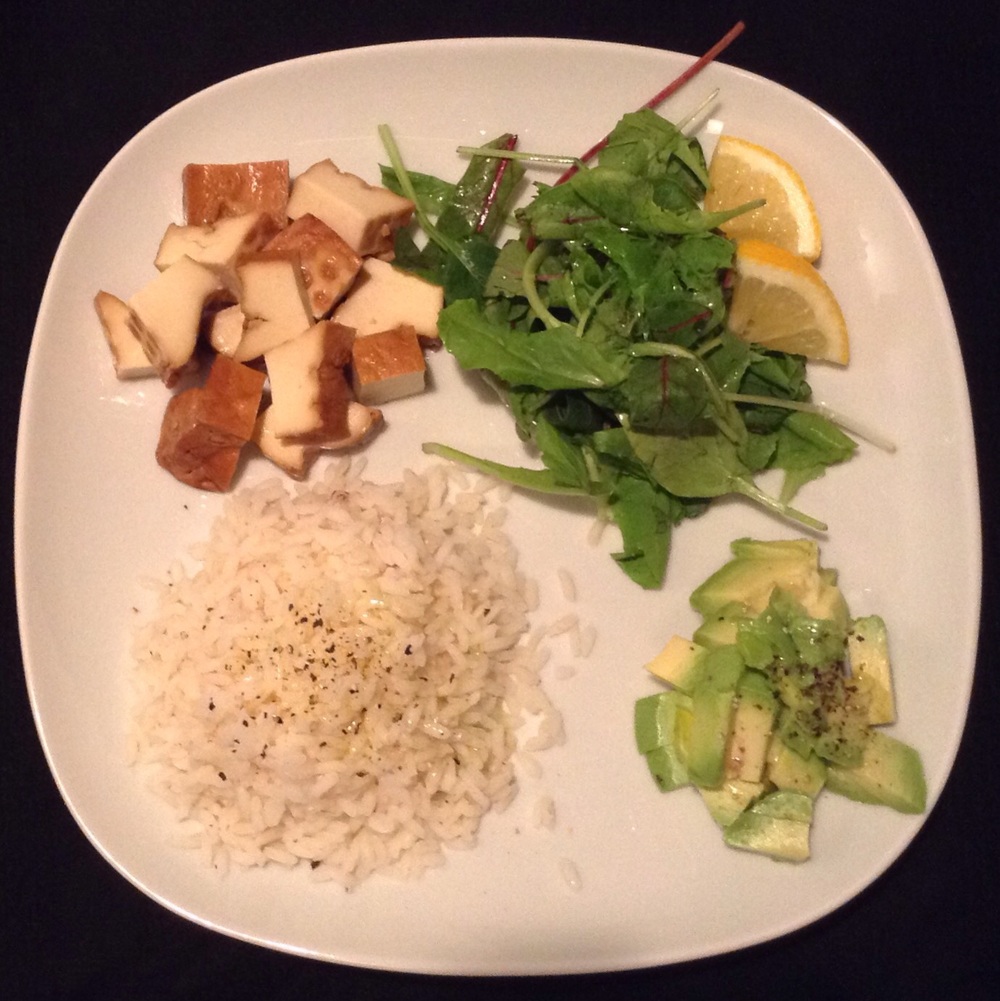
Smoked tofu one-plate

I was about to buy momendofu (firm tofu) for this one plate dish when a pack of smoked tofu attracted my sight and I ended up with it. All the way back home I was wondering when I had smoked tofu last and how it was, but I couldn’t really reacall. Probably in a vegan preparation back in France, but I wasn’t even sure. Since I had in mind a one-plate with half-brown rice from Camargue, avocado and salad, I decided that I would just dice it and add it to the plate. Well, it was a nice combination, smoked tofu has a very strong and particular cheesy taste which suited well the other ingredients. I still think it would suit better smaller quantities or different preparations. Fresh tofu in Japan is so delicious that the smoke version doesn’t make too much sense I felt.

What are your recipes with smoked tofu? 

Proudly powered by WordPress | Theme: Baskerville 2 by Anders Noren.

Up ↑

Verified by MonsterInsights