Wasabi – 山葵

 At work
At work

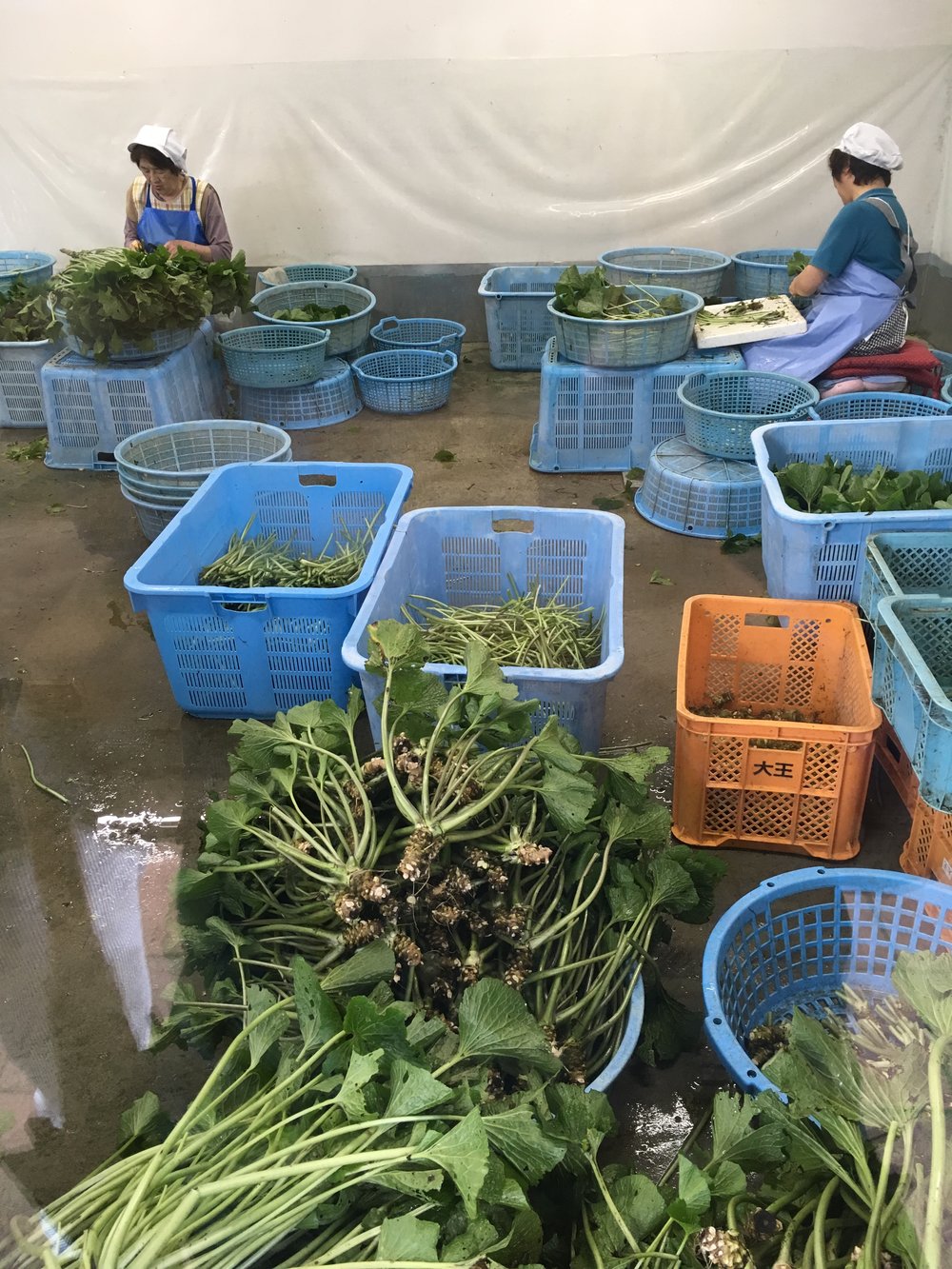
Wasabi is an important ingredient in Japanese cooking. It is of course used for sushi, but also with tofu, soba noodles… It is an autochthonous plant that grows naturally nearby clear streams. Historically it was first used as medicine in Nara period (700AD) before being popularized as food during the middle age: Muromachi period (1300~). And probably with the sushi boom in the early 1900’s wasabi has been more in demand and a few farms were created. That’s then that the now world biggest wasabi farm started. Daio farm started in 1910 but it took about four decades to become a decent wasabi farm and what it is now. One can easily imagine the landscape transformation such an installation has provoked and how intensive production to meet demand and keep price low affects the rural and natural areas. Yet Daio wasabi farm is an interesting place to visit and it is quite beautiful. The super pristine waters needed for the culture of wasabi, the little plants in the rock bed and the curvy lines of the field bordered by leafy willow trees are really quiet and peaceful. It is a very different landscape from those usually seen in Japanese. Picturesque like a Seine and Marne village cherished by the Japanese painters in the 1900’s or the japonism painters (top picture). Visiting Daio farm is a really nice stroll. It is also possible to see people at work to extract the stem from the plant (upper picture), visit the little history museum and try some wasabi food (we had ice cream). Since they also sell fresh wasabi at the farm I was looking for a cookbook or something to learn more about how to use wasabi, but none was available. An other time…
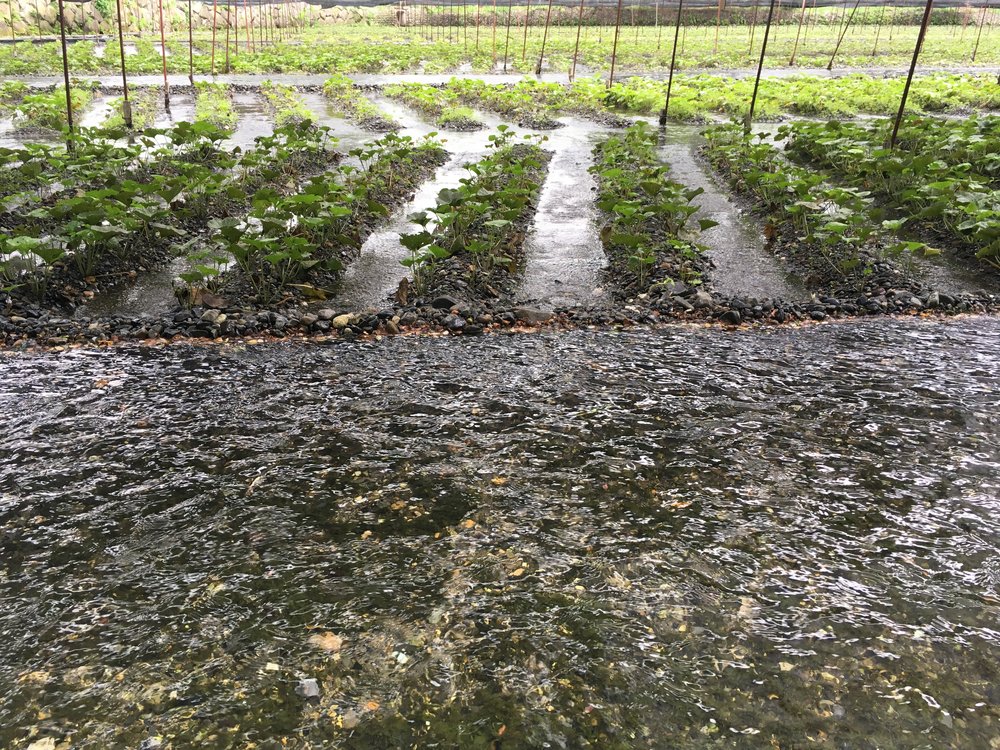
 Wasabi fields and pristine water  
Wasabi fields and pristine water  

Daio wasabi farm: free entrance, open all year round from 9:00〜17:20, count 1-2h stroll


Special guest: cooking in Tsunan

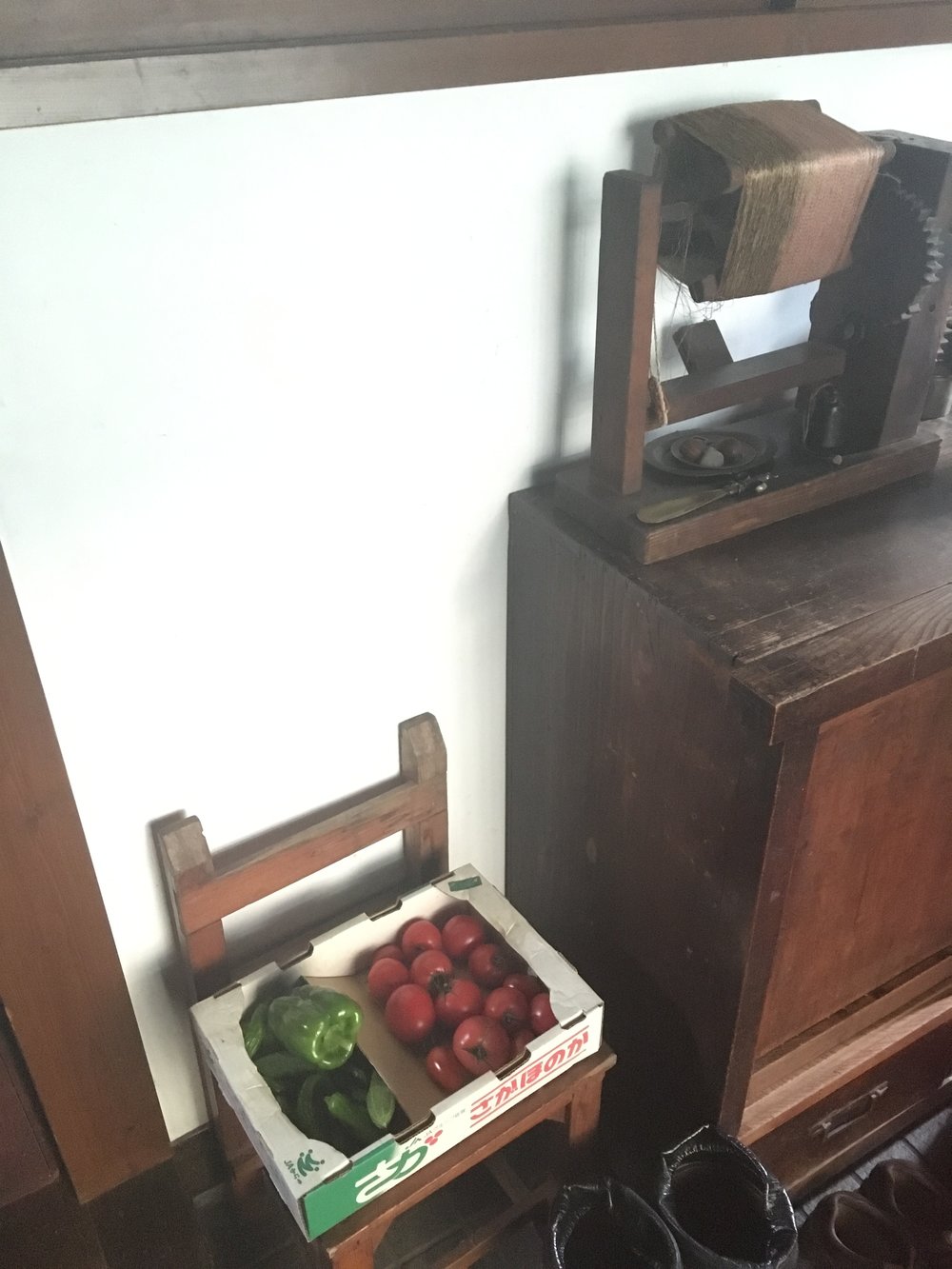
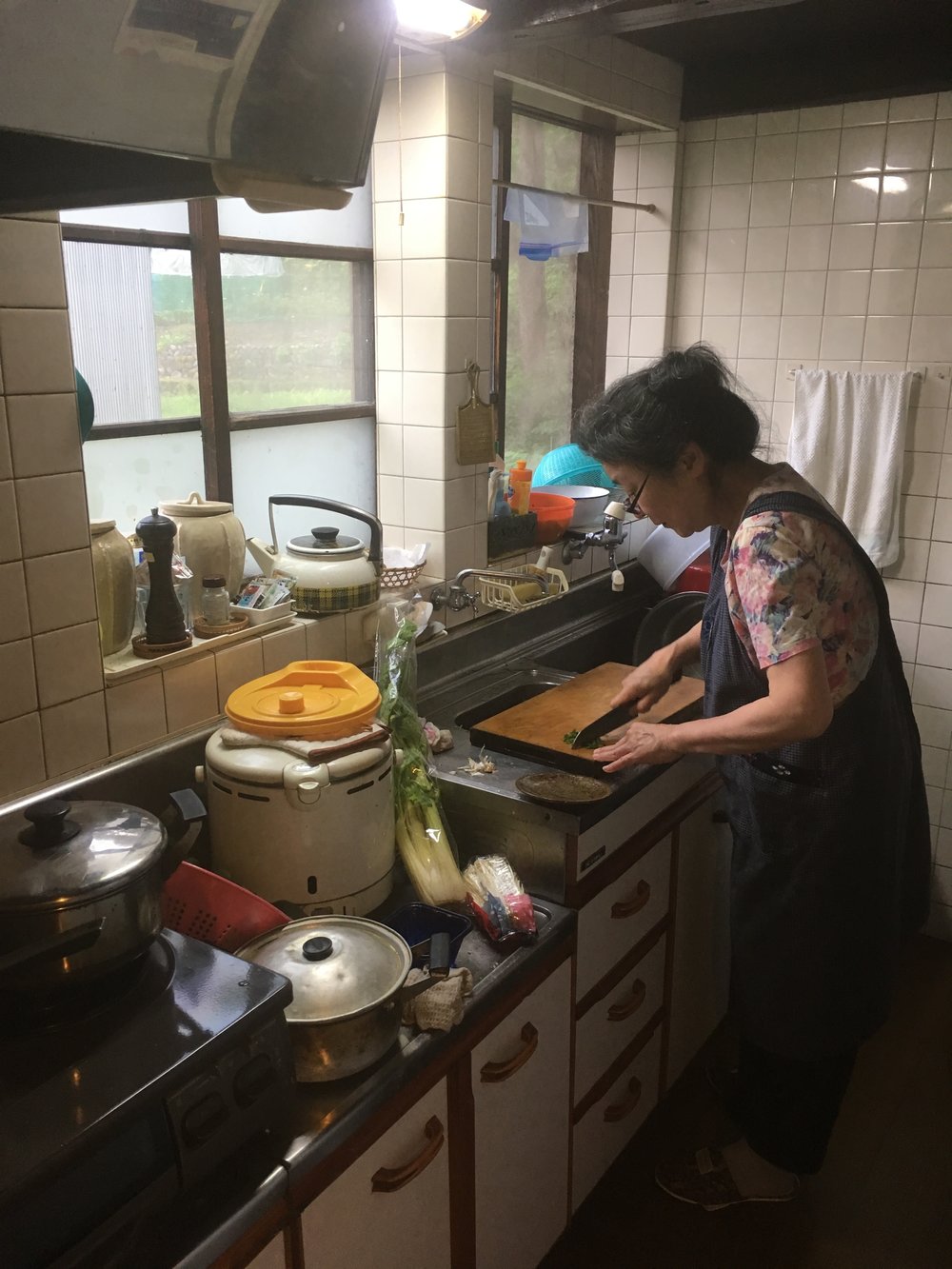
We are back to our friends’ place in Tsunan for a few days and as usual having fun cooking with K. the local products and vegetables from their kitchen garden. In the summer they grow a lot of tomatoes that are always super delicious, a lot of eggplants and cucumbers too. K. is very good at cooking, she knows a lot of different inspirations from their travels and she mixes it quite well to Japanese traditional cooking and Japanese ingredients. Cooking with her is always very inspiring for me, and I learn a lot helping her in the kitchen. But I also cook for them some dishes, this time a blueberry tart.

Even if there is often some meat in many of her recipes, she uses a lot of fresh vegetables from their garden and she always make a twist to Japanese traditional recipes. This time she prepared shabu shabu, but served it with celery, fresh lettuce, sprouts, mizuna, pickled cucumbers, snap peas and soya sprouts… the vegetables only where so delicious. And of course there was as always, one of her wonderful tomatoes salad. K. always peels her tomatoes for the salad and serves them with many different dressings: sometimes just black pepper and salt, or just green shiso (perilla) sometimes with more complex preparations. This time she prepared a sesame dressing with roasted and grinded sesame (about 4tbs), soya sauce (3tbs), rice oil (3tbs).

 K. in her kitchen
K. in her kitchen
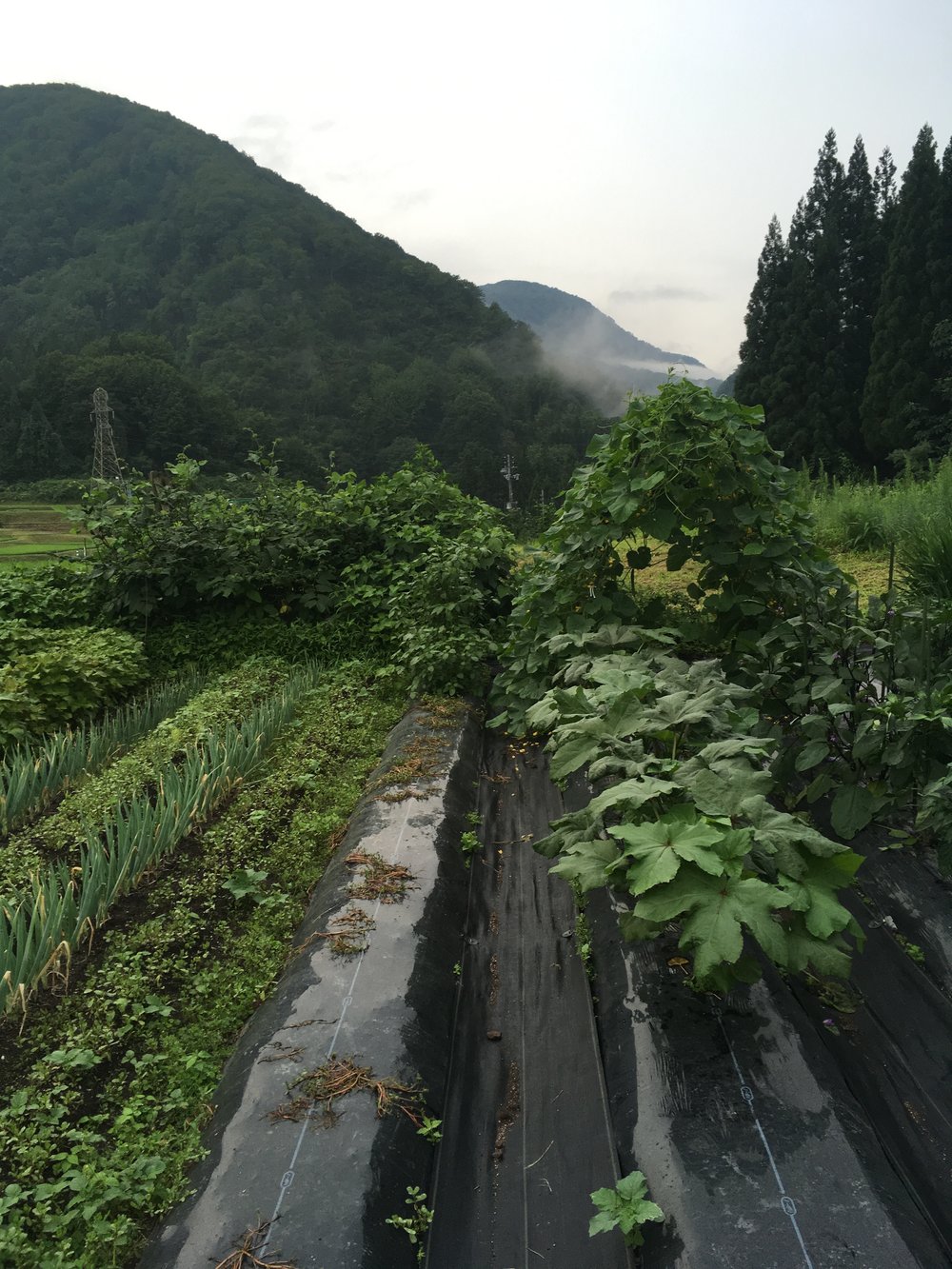
 S. kitchen garden  
S. kitchen garden  
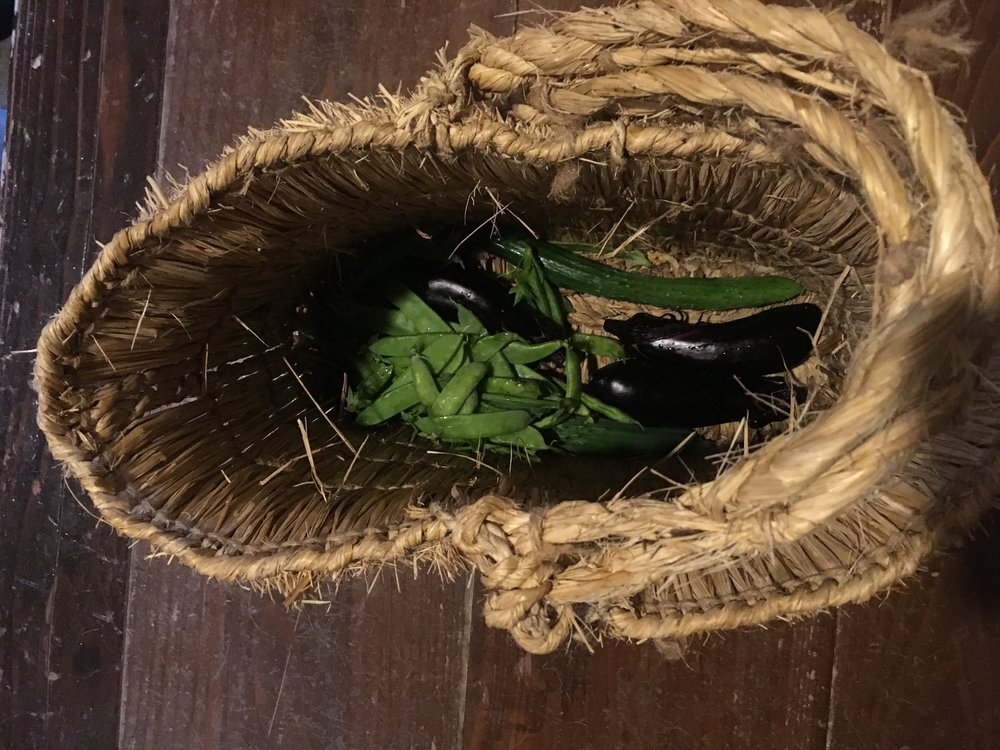
 Modest harvest of the day
Modest harvest of the day
 Modest harvest of the day
Modest harvest of the day

Wind of change

As crazy as can be it’s the first time we are taking summer holidays!!! Back when we were leaving in Paris we usually would take holidays in the end of September, and since wéve mived to Tokyo holidays mainly rimes with business trip of one or the other, except for Christmas. But this year I was finally relieved of any summer duty at the university and A. could take some vacations easily, so we decided to took off. After investigating several options: Belize vs Buthan vs Road trip in Japan, we opted for the latter. Enjoying Japan in the summer, visiting some friends in the mountains and discovering places we’ve always have had on our bucket list convinced us. Also the attraction of no plane/no jetlag was very strong. Free to go at anytime. It seems that a bit of wind of change is blowing right now with our first summer holidays (actually second, when we were still students we once went to Berlin for a week in the August), and we’ve decided to ride on! Enjoy the present! For those in holidays, have fun, and those still working in emptying cities, enjoy! Summer is too short to let it go!

Before going, a last oneplate dinner, with just a few things: rice, pickled radishes, tomatoes, okras, and some satsumaage (fish paste fried) with some burdock.

Salsola – okahijiki

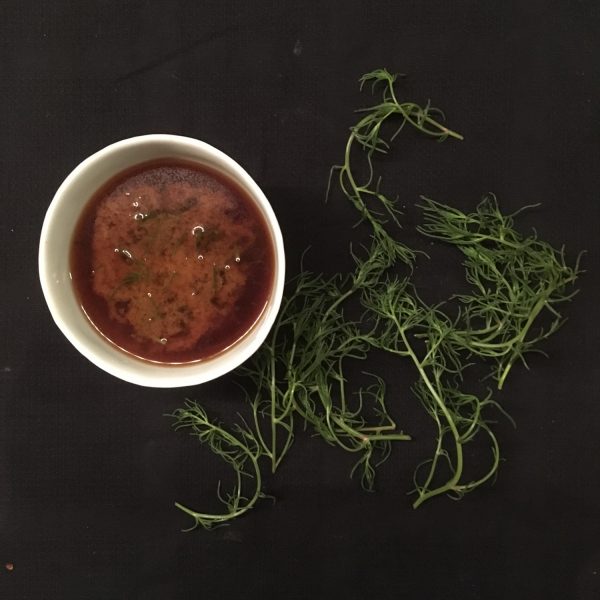
Trying new vegetables is always fun! In particular when you can easily imagine how to prepare them! So when we went to the farmers market and I found okahijiki-おかひじき  I simply couldn’t wait to cook them. And with the super hot weather I thought of a simple Japanese meal again with rice, grilled fish and umeboshi, and I wanted to have some miso soup with red miso (the one more appropriate for the summer). And to make it more country-like I didn’t use katsuo bushi but rather niboshi from sardines -鰯 for the soup base. I simply added the okahijiki after washing them and removing the hardest parts to the broth and cooked them 2min. I added the red miso as usual in the end, just before serving.

Have a beautiful week!!! 

Simple Japanese meal

With friends at home for the whole weekend I ended up not cooking Japanese at all, and since Friday I was still craving for some simple Japanese taste. Finally last night I got it done! A. is good at preparing Japanese rice, which saves a bit of time when I am finishing work rather late, and I had some perfect fresh Japanese vegetables for a simple meal: onion for Shirako, white carrots and new lotus roots. I simply wash/peel and cut all the vegetables, heat a bit if oil in a pan and cook them under cover until almost done (the onion being probably the most critical) then I remive the cover, add some soya sauce and cook at high heat for 2 minutes, and serve with the rice. It’s not very elaborated but it tastes perfectly Japanese!

Plum compote

You remember probably that I bottled my plum syrup last weekend and I wasn’t sure what to do with the plums. Trashing them was such a waste, and after they had macerated so long in sugar and their juice they’ve lost a lot of sourness and were quite sweet. So I decided to make some compote. I simply put them in a pan, covered with water, boiled them until the water was gone, and magically my completely shriveled plum came back to fleshed ones. I just removed the pits, and that’s it. You can add some kanten to make plum yokan also. In both cases the seasoning is perfect and the taste very mild. Delicious recycled food!!!!

Japanese summer noodles

In the summer, it is very common to eat chilled or cold noodles in Japan. Cold soba, cold udon… but one of the most popular is probably cold somen. These are thin wheat noodles that are very quick to boil, and very quick to cool down. They are served with a lot of different items and dressed with some soya sauce based tsuyu. Now that it is hot in Tokyo, making somen is a really perfect idea for a rapid dinner preparation. I didn’t use the classic soya sauce base dressing, rather olive oil and a few drops of soya sauce. And I served them with simply grilled fresh bonito and okra, cucumber and lettuce. Light, fresh and well-balanced for a hot summer evening.

Two way meal

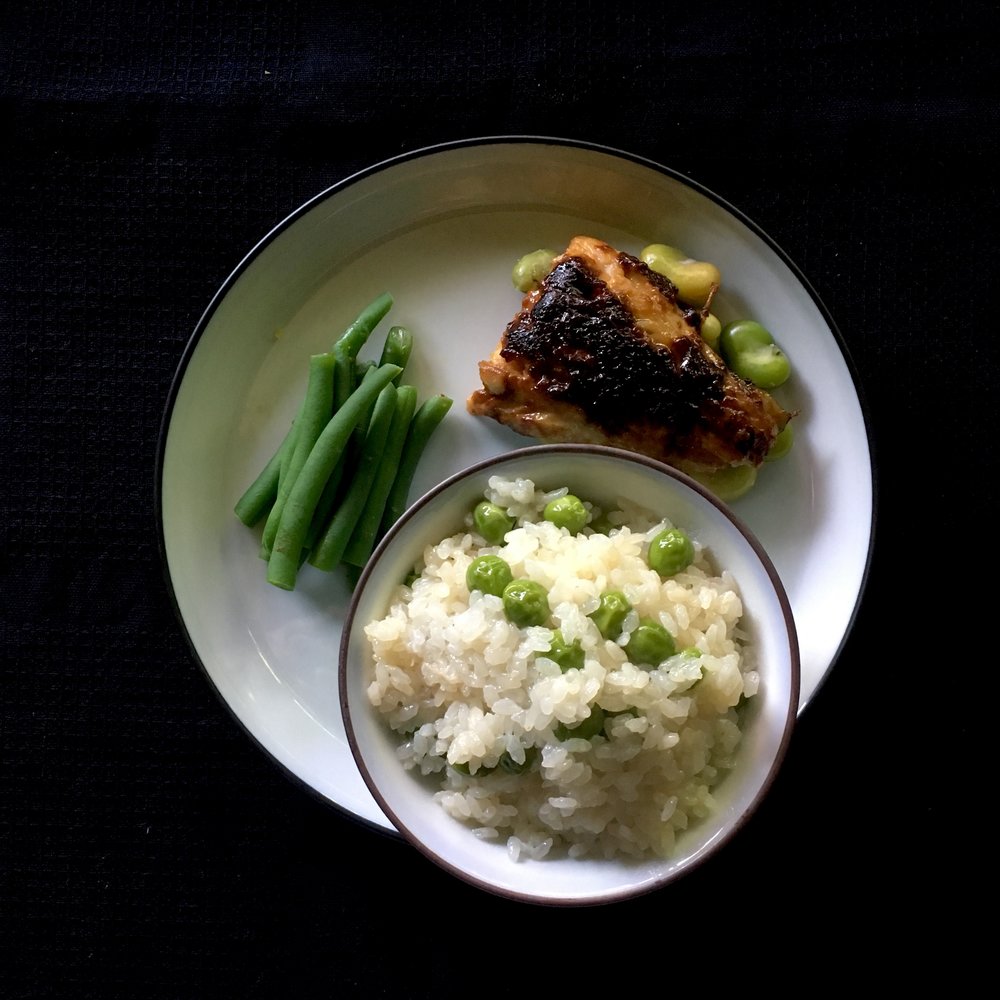
Or two recipes with the same ingredients. One the original version and the second a leftover version. Both delicious and easy to prepare.  The original recipe is a Japanese one: rice with green peas and red miso grilled cod. This recipe is made with simple and easy to find fresh ingredients. You need fresh cod filet, red miso (work with other miso if you can’t find red one), Japanese rice, a handful of green peas. Additionally I served also horse beans and green beans just blanched, but optional. Cook the rice in a rice cooker or in a regular pan. Add the green peas about 7min before the end of cooking. With a flexible knife spread 1tbsp of miso evenly on the fish (opposite to skin side). In a heated pan or in the oven grill the miso side of the fish. Serve when cooked to your liking. I served the fish on top of the horse beans and the green beans on the side.

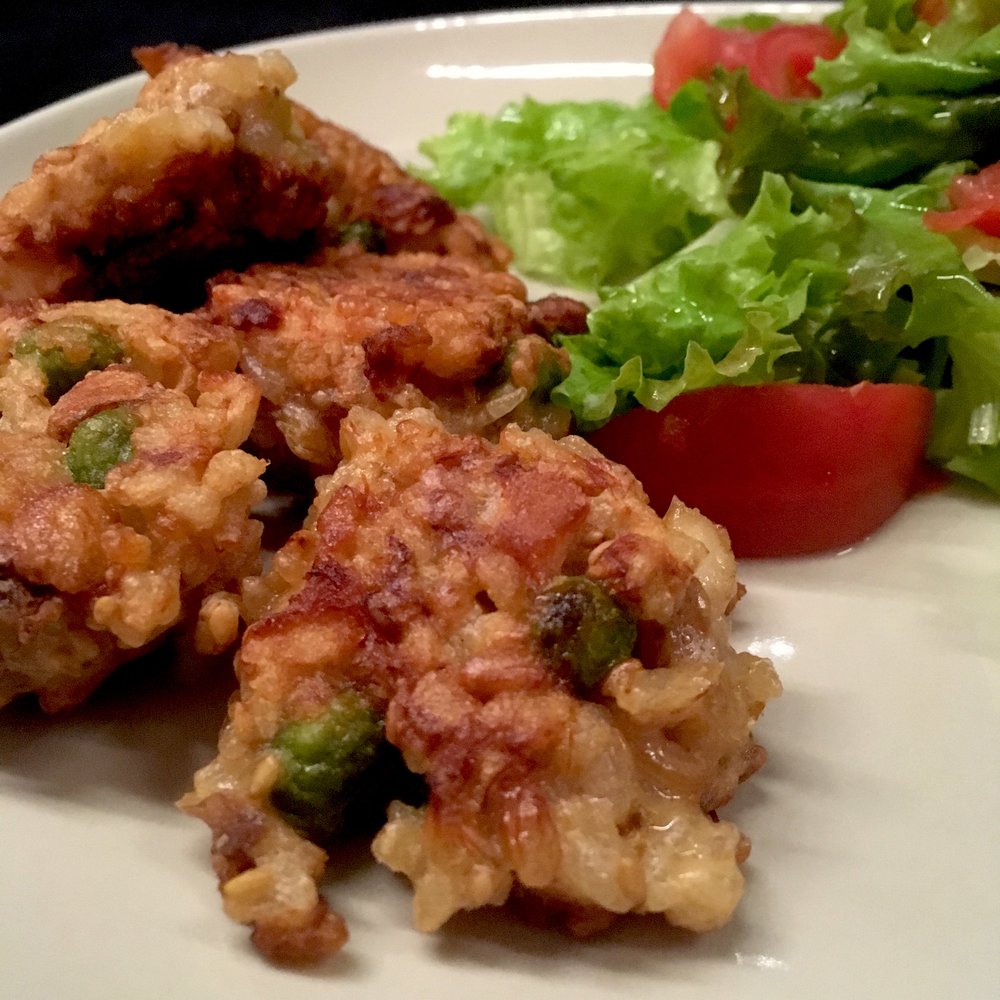
With the leftovers of rice and fish I decided to make some rice croquettes, something between arancini and accras. I mixed the rice with green peas with the fish, added one egg, a little of flour and pan fry them until golden. Served with a fresh lettuce and tomatoes salad.

Have a great weekend! 

Rolled asparagus

I discovered this very simple preparation of asparagus in Japan, I don’t know if it is anywhere else as popular as it is here, but it is for sure an extremely simple recipe that goes very well for barbecue or for very quick dinner fix. It consists in rolling green asparagus in thin slice of pork. In Japan it is simple there are 4 main pieces of pork at the butcher: filet mignon, thick boneless cutlet, thinely sliced boneless cutlet, and boneless ribs or belly. For this recipe usually a fatty meat such as ribs or belly (豚バラ) is used but I prefer a less fatty meat so I use thinely sliced cutlet. You just need to wash the asparagus, I remive the hardest part, then roll them in the meat (from which I remove the fat if I don’t have time to cook them for a long time) and then grill in a pan without any grease. I serve that with rice, it is good too to had umeboshi. It it is so simple and so delicious!

Proudly powered by WordPress | Theme: Baskerville 2 by Anders Noren.

Up ↑

Verified by MonsterInsights