Japanese delight

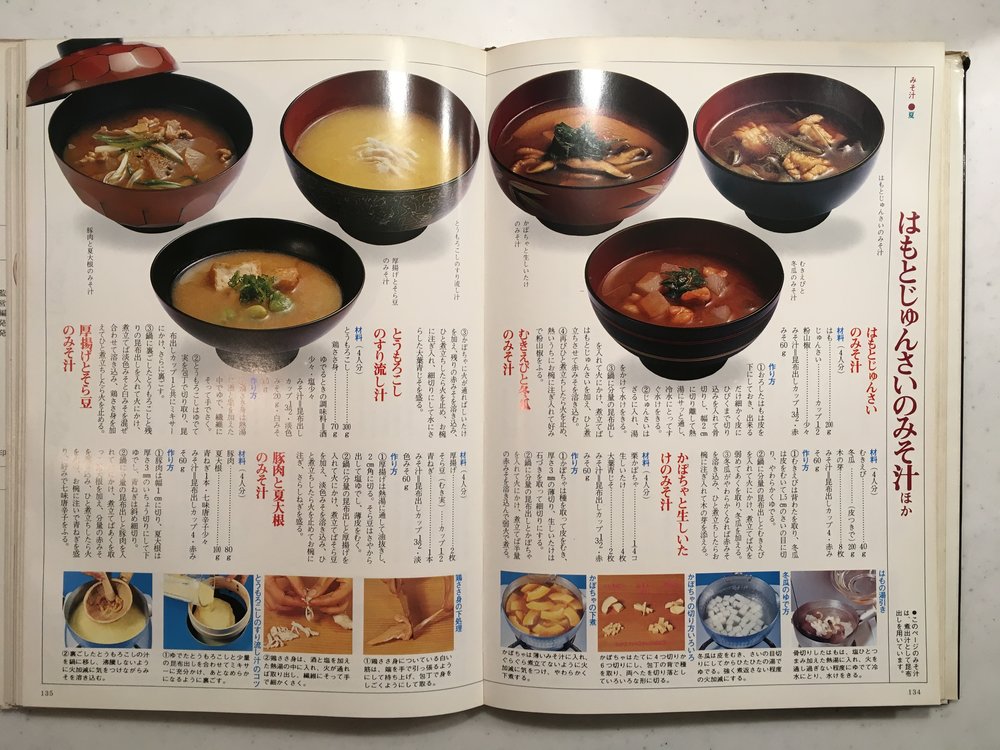
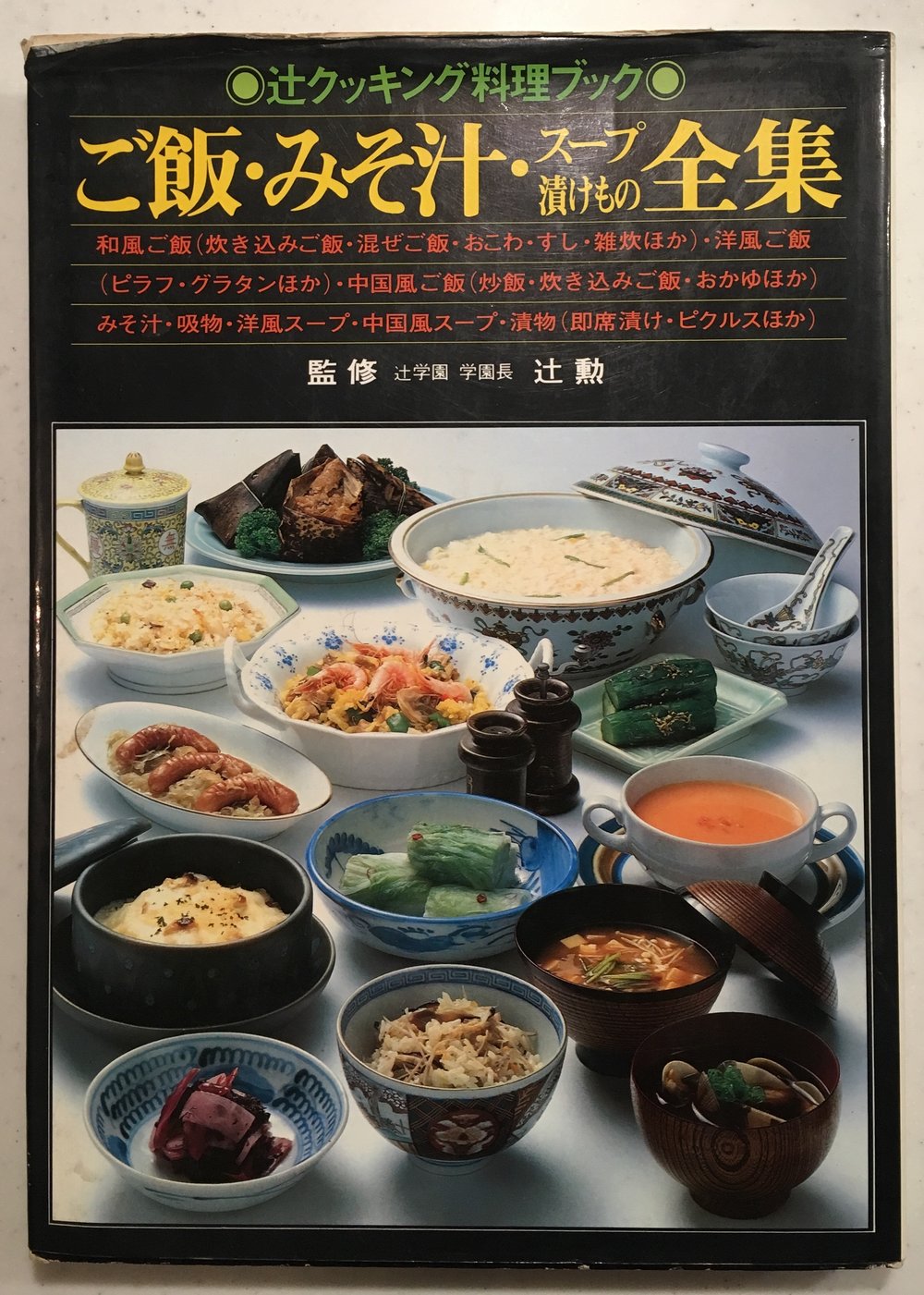
I finally tested a recipe inspired by the cooking book I bought last week on my way home at a bouquinist in Jimbocho. It’s an old book from the 1970’s or 1980’s and it has a lot of very beautifully presented food. Plating changes with time and they certainly had some nice one at that time too!! Though a few a bit crazy… bubble time… The recipes that attracted me much were the miso soup and other clear bouillons. I mean I didn’t actually read much of the recipes, rather I enjoyed reading the explanations about how to choose a good rice and how to cook it very interesting. But the soup section pictures inspired me a lot. One recipe I wanted to try was daikon miso soup. Actually, after years of living in Japan, I finally start to really enjoy cooking daikon. May be because the most often we find is gratted daikon, which I find extremely boring, or simmered and over cooked, but there is so much to do with it. I could now totally go with a daikon week of recipes!!! Would you like that??? Let me know and I’ll be happy to share my favorite classic Japanese recipes and my invented ones!
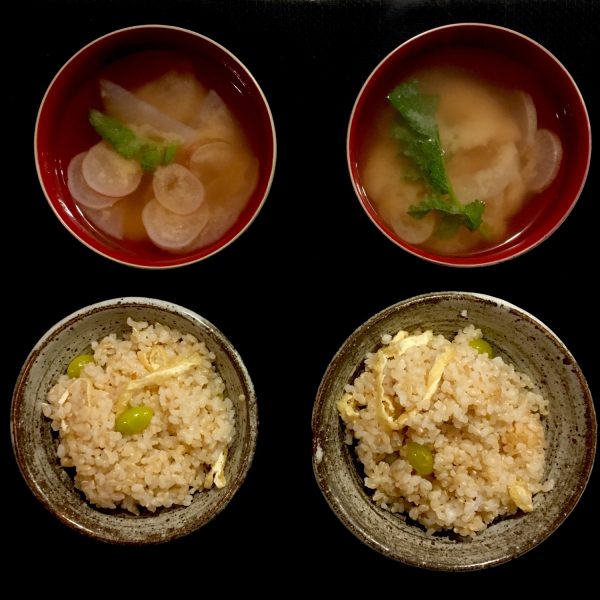
Today, I’ll just share a simple white miso soup with both radish and daikon, but daikon only, or radish only, works very well too. It is extremely simple and delicious and warm form a chilly evening. You need for 4 serving, 1.5L of dashi (I used simple katsuobushi),  a 7cm cut of daikon, 3 large pink radishes, 4 small leaves from the radishes tops (optional), 3tbs of white miso. In a large pan, prepare the dashi. Peel the daikon, cut the piece in half in the lenght to obtain half circle shapes. Cut slices of 1mm in the width. Add to the dashi and cook for 10min. Wash the radishes and slice them. Add to the soup and cook for 4min. Add the washed tops, the miso, stir and serve immediately. If you want to prepare ahead, reduce the cooking time to 7min and 2min. Add the tops and miso after reheating the soup, and serve immediately. I served it with grilles sanma, and briwn rice with fried tofu and gingko nuts.
Shiitake week! Day 4!

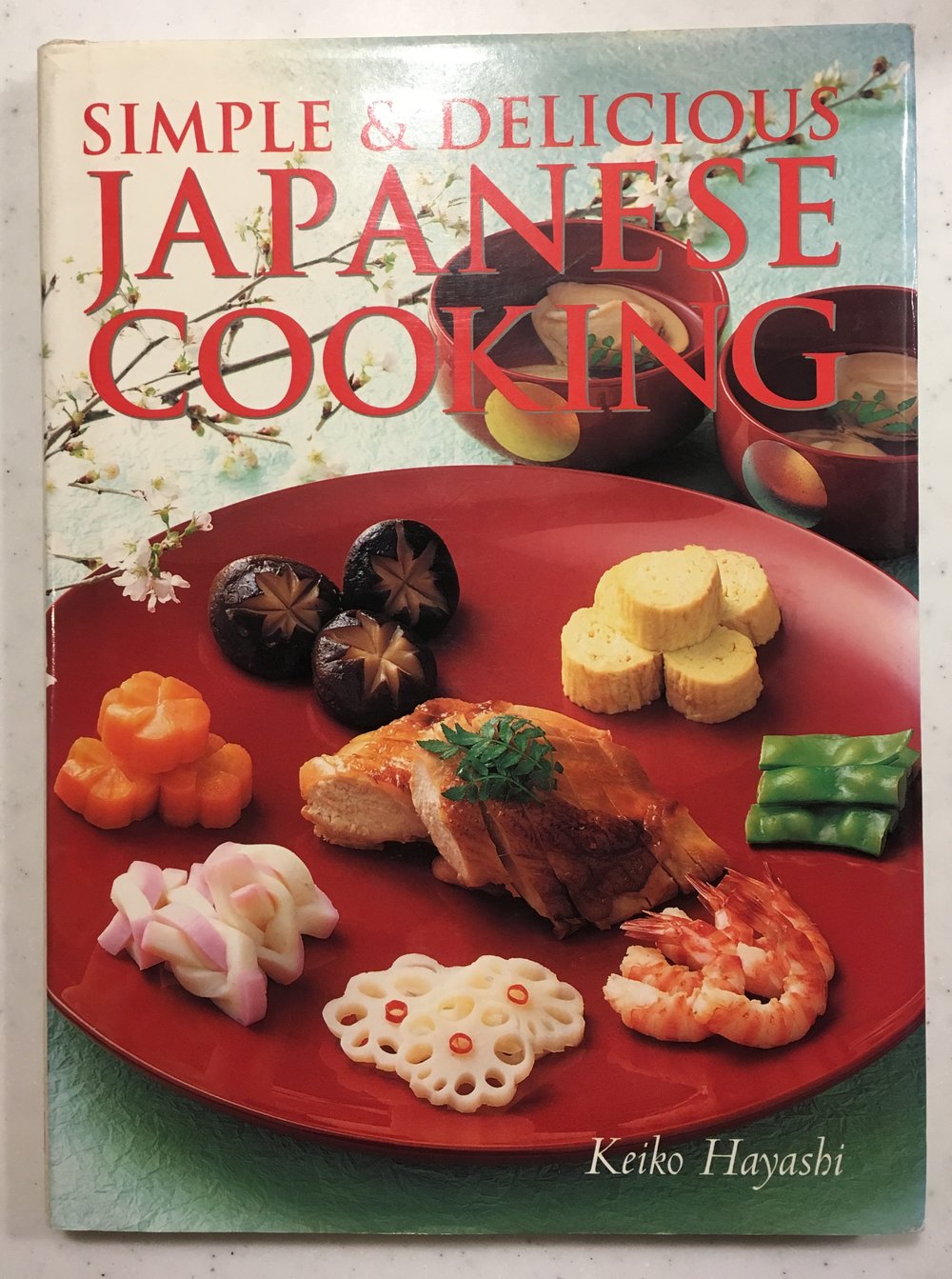
Some time ago I was writing about my worst culinary failure ever when I made my first miso eggplants. The recipe came from the very Japanese cooking book I bought. And this book has been very precious for us when we started to live in Tokyo. “Simple & delicious Japanese cooking” by Keiko Hayashi has been my Japanese cooking bible for almost one year. And the very first recipe I tried was a shiitake recipe: takikomi gohan, it was also the very first recipe I shared on our blog back in 2004, one that everyone can make, everywhere there are shiitake. And if 13 years ago you could only find them in asian supermarkets, now they are much easier to find. 

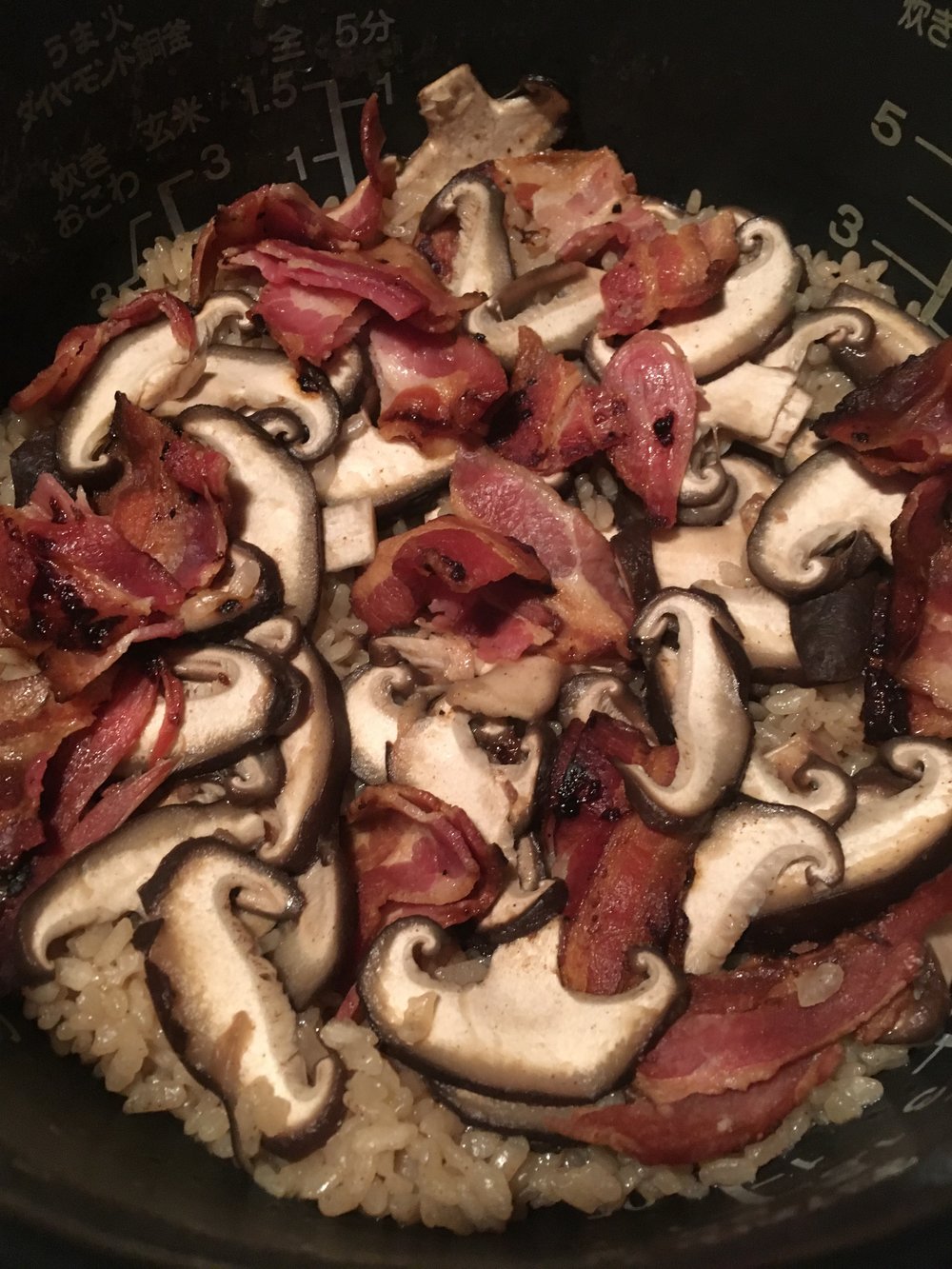
Today I have prepared a new version of the classic recipe that is in the book to share with new. It uses all the basic ingredients for takikomi gohan, and the same technique. It is very simple to prepare and it cooks unattended during 50min in the rice cooker, giving plenty of time for doing something else. Here is my recipe (the original recipe)

Shiitake takikomi gohan (for 2 people) 

– 6 shiitake

– 1 cup of rice

– 1 cup of dashi

– 1tbs of soya sauce  

– 1tbs of sake

– 4 slices of bacon (150g of chicken meat) 

– 10 gingko nuts peeled (4 steamed or boiled chestnuts) 

Wash and slice the shiitake. Cut the bacon and grill it in a pan until crispy. In the rice cooker add the rice, wash it, add the dashi, the shoyu, the sake, the shiitake, the meat the gingko nuts. Start cooking in normal mode. That’s it!!! Enjoy!

New rythm

Pfou… it’s not easy to find a mew rythm when days at work are 13h and one day you start early, the other you finish late… even less easy when A. has meetings until quite late… Cooking dinner past 22:30 when lunch is that far away and you’re starving requires food that can be prepared quite rapidly… but I still want to eat fresh, seasonal, local food. There are a few tricks to do that:

– trick No 1: stock on daikon radish, carrots and miso. It takes 2minutes to peel and cut daikon sticks (even faster than carrots!!) and 3minutes for a carrot or two. Dipped in miso they are the perfect snack!

– trick No 2: pack on food that can be prepared in hot simple pot and don’t need to much time to prepare (no peeling…): kabocha, sweet potatoes, carrots… in 10min they can be cooked and preparing them is simple: wash & cut! 

– trick No 3: prepare your rice cooker in the morning and schedule cooking or cook rice in a thick pan on gaz directly (it reduces cooking time to a mere 20min)

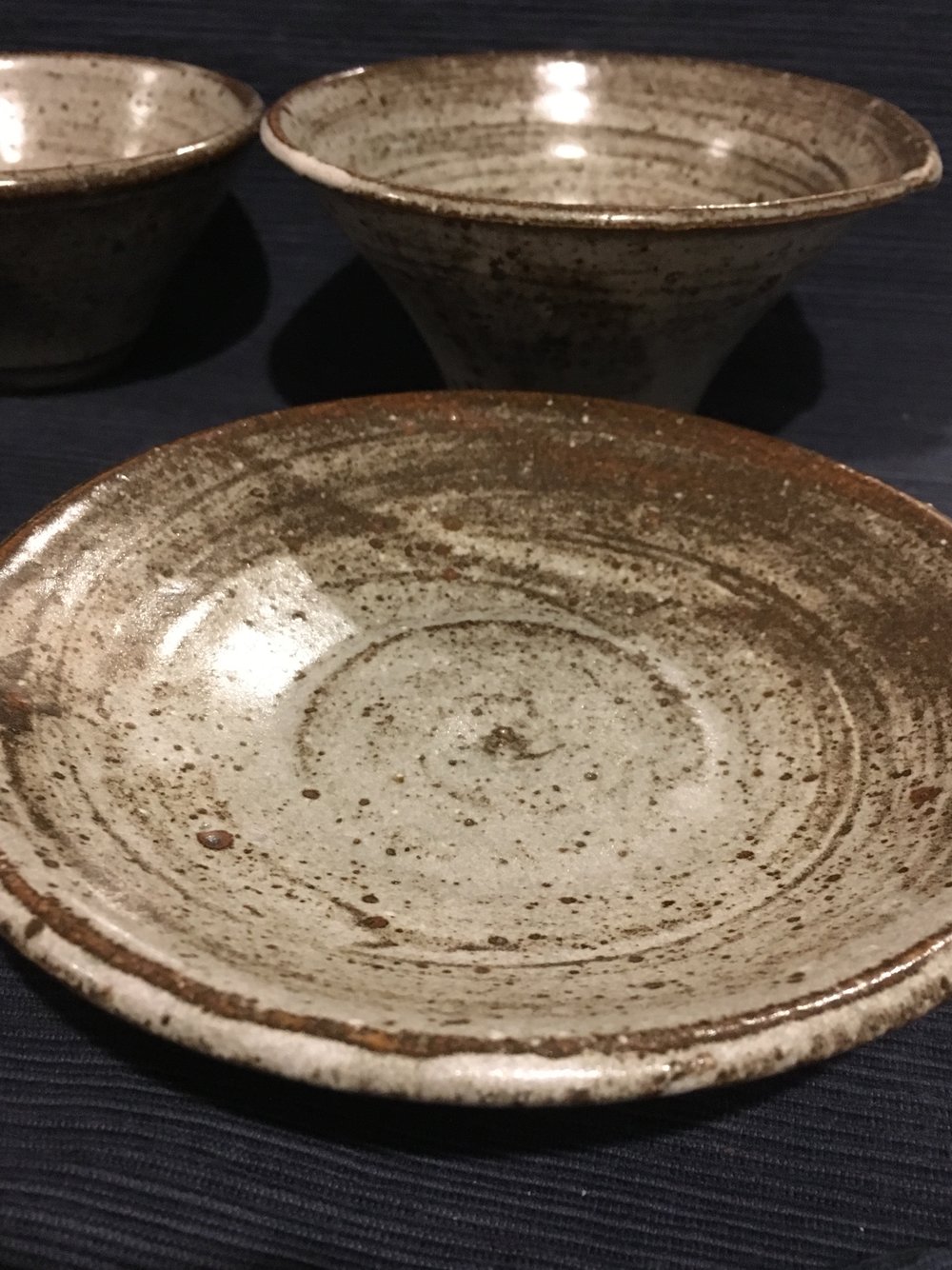
And while you eat you veggies with miso and you smell the veggies roasting and the rice boiling you can open your mail, chat about your day and admire the result of your first experience of making pottery on a wheel!

Curry-rice quiche!

Not enough of the leek tart with some brown rice pie crust, I went further with this curry-rice quiche. All in one dish all in one quiche! Same pie crust as the last post, but this time after half baking it I filled it with a special mix. In a pan I cut roughly a bundle of fresh spinach washed, 2 pieces of chicken breast and cooked at high heat for 5 minutes, then added a block of silky tofu and cooked 10 minutes while stirring, finished with 1tbs of curry powder, some red pepper, nutmeg and salt and pepper, took away from the heat and added 3 eggs. Stirred well and poured everything in the pie crust. Baked for 35min at 180deg, checking regularly after 20min that it wasn’t over cooked but just golden. I served that to friends for dinner with a fresh green salad. Simply delicious and astonishing! 

Yuzu season: start!

The autumn is here for sure now, and despite the lot of rain, the typhoons etc… there are a few very beautiful sunny days like today. And it is great to enjoy yuzu in the recipes with the fruits starting to appear at the farmers market. I love to use the skin of the yuzu in many recipes and this uear I have been totally in love with Malabar spinach (ツルムラサキ) and I’ve been cooking some a lot. The yuzu goes very well with it and so dowa the lorus root. So naturally I prepared this little dish with grilled lotus roots, blanched Malabar spinach and fresh yuzu peels. A perfect combination to eat with rice of course. And stay dry in Tokyo since the rain is back again!

Two simple Japanese recipes

With some guests from France at home this weekend I cooked some simple Japanese recipes that they could reproduce back home. And because the weather was really terrible I could take all the time needed to chop thinly the vegetables and prepare recipes I usually don’t.

The two recipes I prepared were daikon and miso, and some kinpira gobo (without the red pepper). 

Daikon and miso: 

– 1/2 daikon

– 2 tbs of miso of your choice

– 1/2L of dashi of your choice: konbu, katsuo, niboshi… 

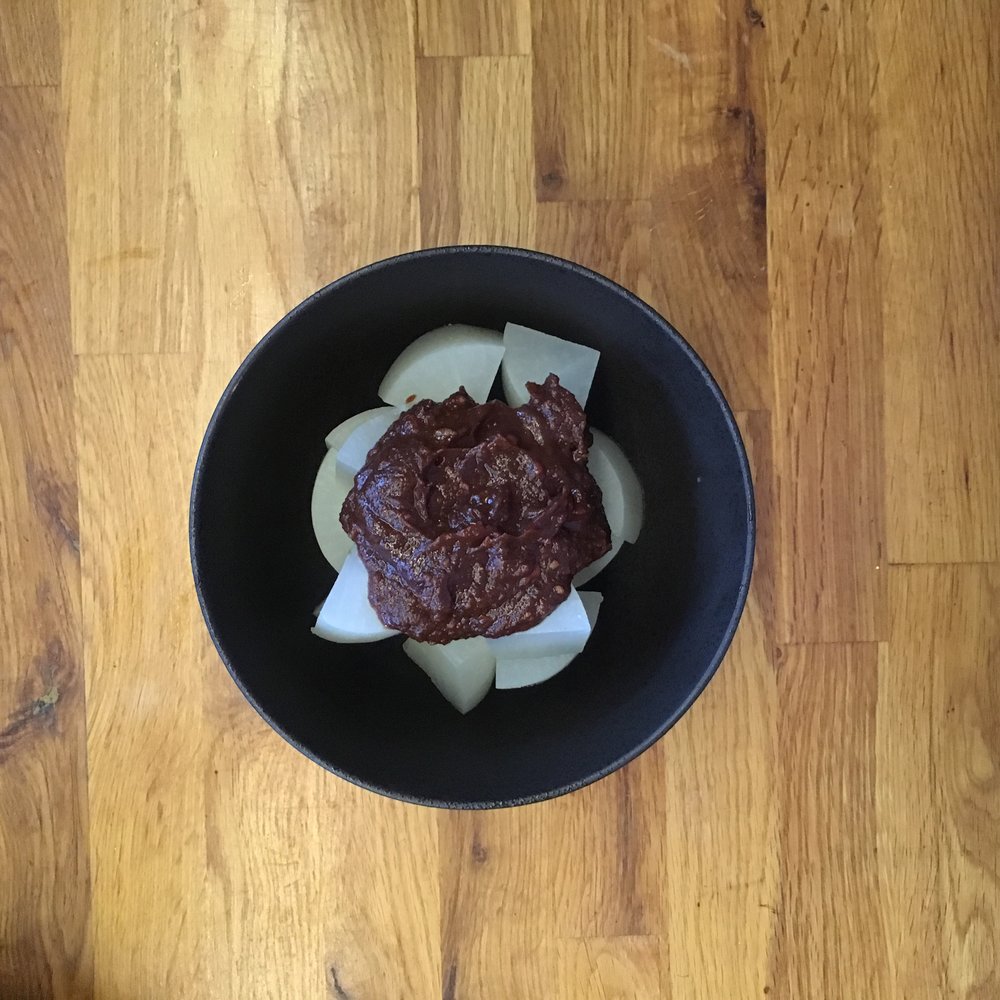
Cut the daikon in 3cm slices, peel them. Prepare the dashi and when boiling cook the daikon. It is ready when a toothpick enters smoothly. In a small bowl put the miso, add 2 or 3 tbs of dashi and stir to obtain a creamy paste. At this stage you can add yuzu peels… for a slightly enhanced version of the recipe. One the daikon is cooked, drain and top with the miso preparation. Eat while still warm.

Kinpira gobo :

 – 1 burdock

– 1 carrot

– a small piece of lotus root (optional) 

– 300ml of dashi of your choice

– 1tbs of soya sauce

– 1tbs of sake

– 1tsp of sugar

– 1 red pepper  

Peel the vegetables. Cut the burdock and gobo in thin matches sticks. Cut the lotus root and the red pepper in thin slices. In a pan boil the vegetables in the dashi. When reduced, add the sake, the red pepper, the sugar, and the soya sauce. Cook until almost dry. Add a few sesame seeds to decorate eventually.

Simple food

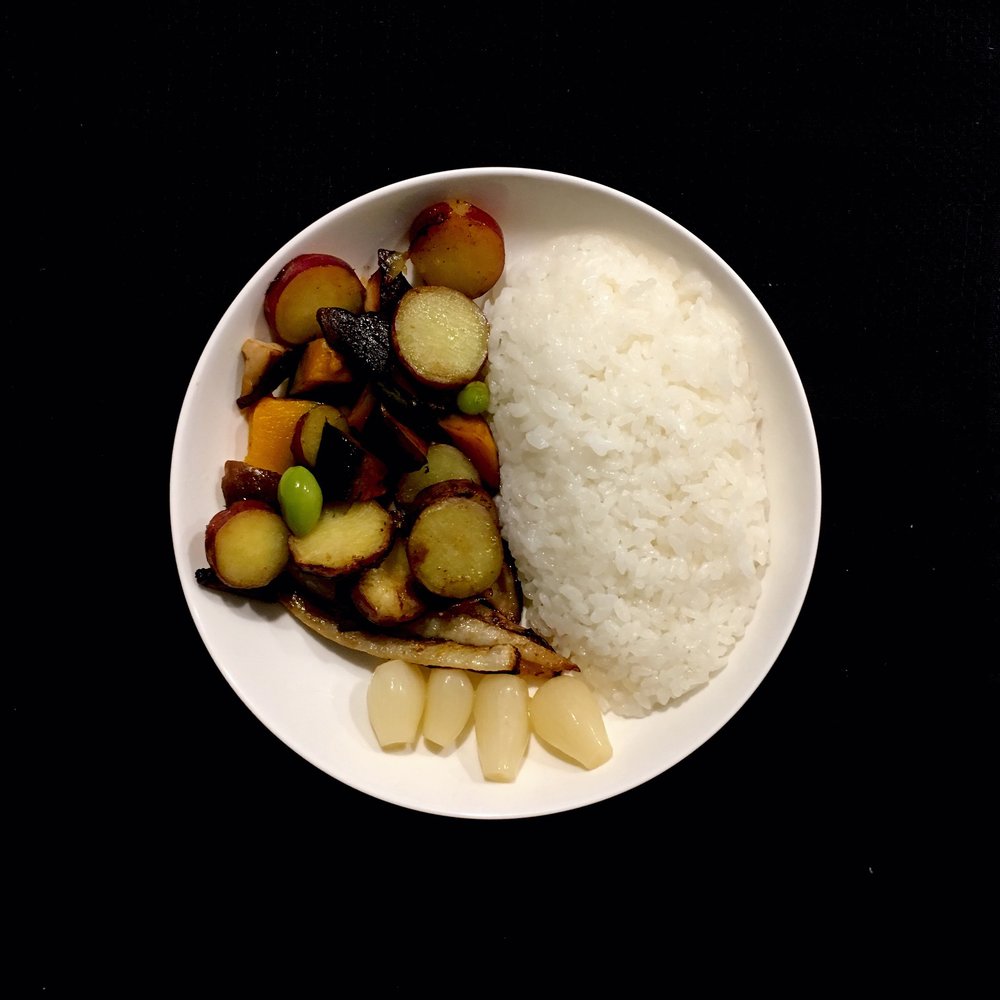
There is one thing that I always think about cooking when in a rush to prepare our meals and want to eat some Japanese food, it’s simple seasonal vegetables sautéed, deglazed in a bit of soya sauce, served with rice and pickles. It is so very simple and yet so delicious that it beats any other recipe. It requires no thinking, a very short preparation for the vegetables and then everything in a pan with a few drops of oil, under cover, just stir once in a while. Which frees the hands to do something else! Perfect when the week is super busy with many deadline at work, friends and family visiting, a weekend away in preparation and A. leaving for Europe for 10 very long days…

Autumn version of sautéed vegetables (one plate dish for 2 people)

– 1 Japanese sweet potato

– 3 shiitake

– 2 little turnips (long or round) 

– any other seasonal vegetables: a little piece of kabocha, a few green beans, gingko nuts, shishito, eringi…

– 2tbs of soya sauce

– some vinegared pickles: I love rakkyo (Chinese onions) which are served with curry.

– 1 cup of Japanese rice

Star cooking the rice. Wash and cut the vegetables. In a pan greased with a bit of oil add all the vegetables (except if some have very short cooking time like green beans) cook at high heat for two minutes and stir. Lower the heat and cover. Cook for 12min and stir once in a while. Add the soya sauce, and stir for one minute. Serve all together.

Persimmons harvest

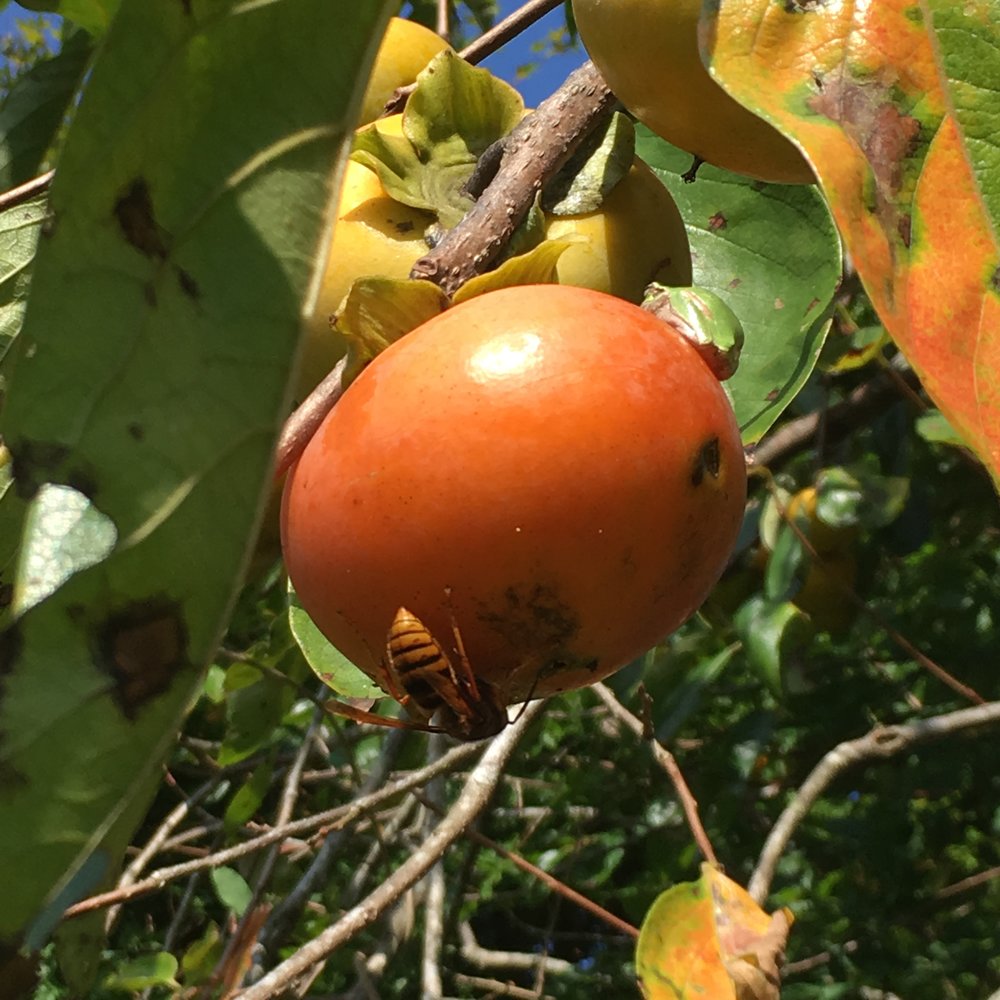
Together with the gingko nuts, the season for persimmons has also started, and our two trees in the garden are literally covered with fruits this year. Since this is way to much to eat them all, that pretty much everyone has a persimmon tree in their garden, contrarily to gingko nuts, they are difficult to give away. I tried jam but it was not a huge success, and I run out of ideas on how to preserve them. These are not really persimmons you would dry, like shibui kaki… So I harvest a few, give a few to friends who don’t have a garden, and usually offer the rest to the birds, bees and butterflies who seems to be loving their sweetness and juiciness. 

One of my favorite recipe with persimmons is in salad with cucumber, turnip, sesame and tofu. This time I had no turnip so it was just persimmon and cucumber. 

Persimmon, cucumber and tofu salad: 

– 1 persimmon still a bit hard

– 1 Japanese cucumber  

– 1 small block of drained hard tofu

– 1tbs of sesame seeds, or sesame powder

– a bit of salt

Peel and dice the persimmon, sluce the cucumber. Grind the sesame seeds, mix with the tofu and the salt. Add the persimmon and the cucumber. Stir well and it is ready to serve.

 persimmons on the tree, with giant bee and tiny frog!
persimmons on the tree, with giant bee and tiny frog!

Gingko nuts – 銀杏

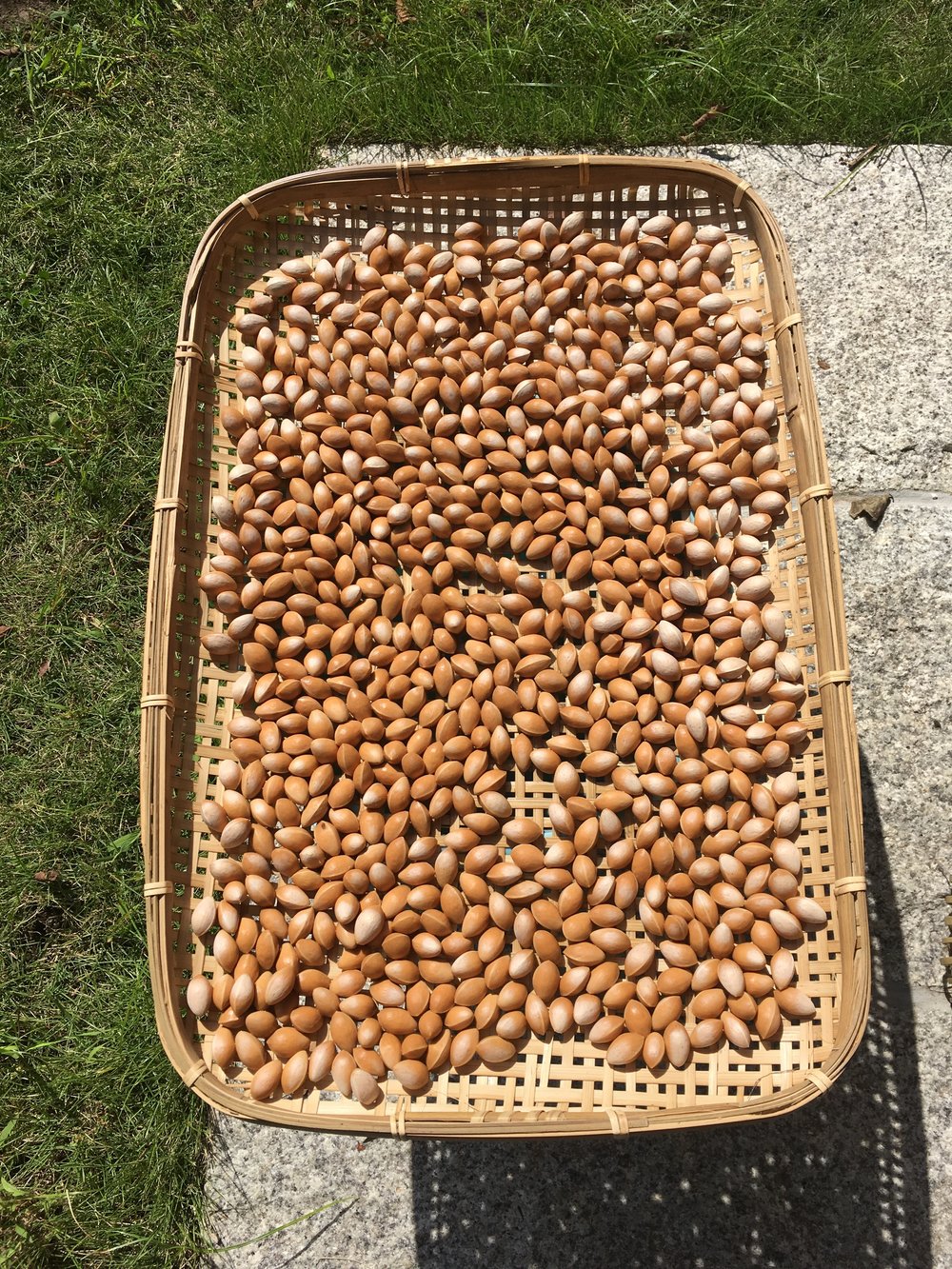
So, we have a gingko tree in our garden. The first few years it didn’t give fruits and we thought we won’t have the pleasure to eat fresh gingko nuts but also not the nuisance of the horrible smell. But then… it started to bear fruits and we started to harvest them, or sometimes it was more just to clean and limit the smell in the garden!!!! So the season has arrived again to collect fallen gingko nuts (about a bucket every day!), and to give away many (most) of them to our neighbors, but this year we also prepared some for ourselves with an enhanced technique! I remember having the nauseous smell in my nose for days after preparing them last time. So we came better equipped: masks with a drop of tea-tree essential oil. Then to remove the small bits of skins we used stones in a bucket and water and it was really easy. And dried them in the sun rather than the oven. Finally it was a bit long but not at all as terrible as I remember it was!!! Next is the cooking, but for that I know for sure we’ll have rice with gingko nuts, grilled gingko nuts, and probably vegetables stew!

 Gingko nuts drying in the sun
Gingko nuts drying in the sun
 The gingko tree in the garden, covered with fruits yet to harvest  
The gingko tree in the garden, covered with fruits yet to harvest  

Proudly powered by WordPress | Theme: Baskerville 2 by Anders Noren.

Up ↑

Verified by MonsterInsights