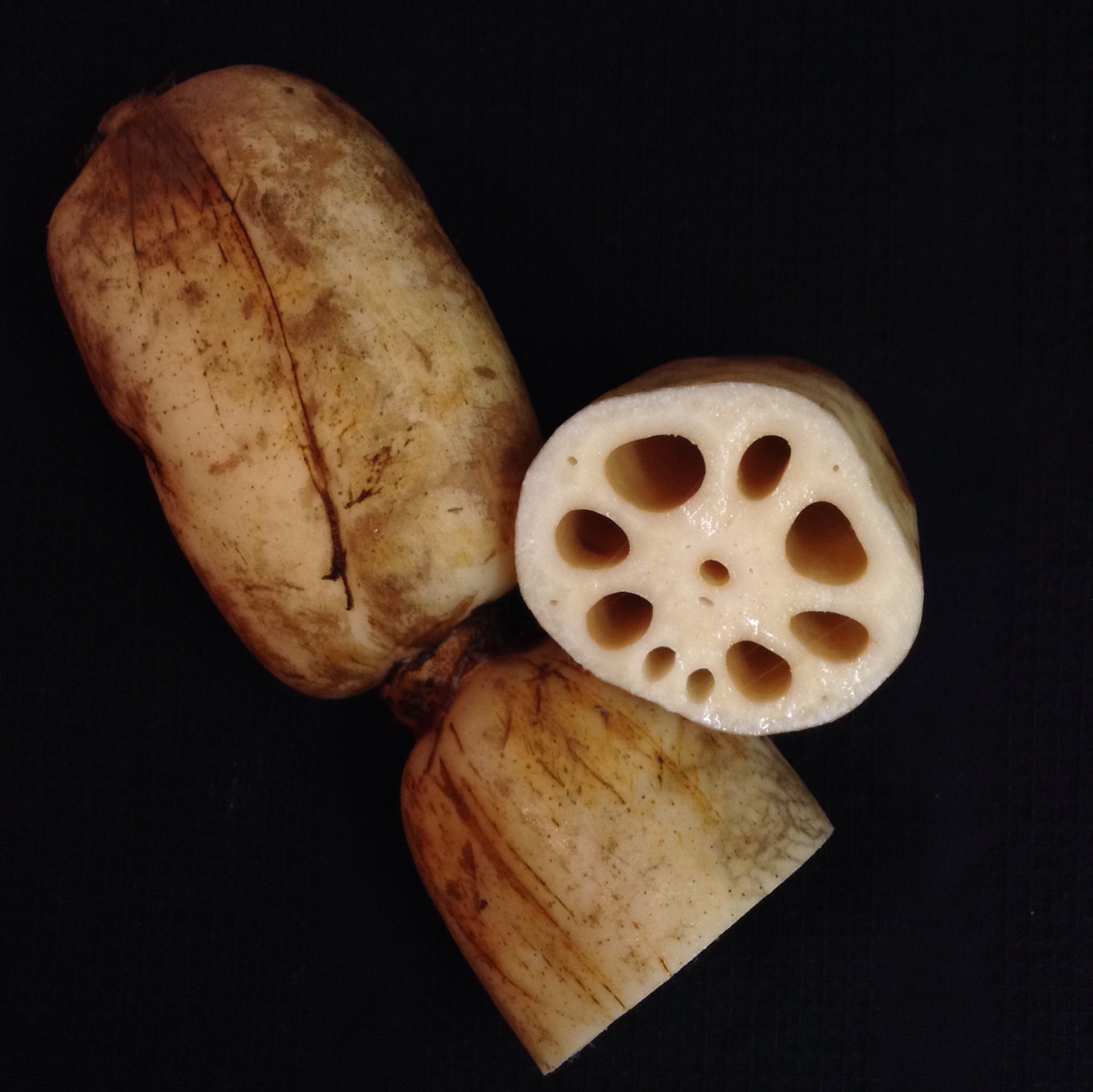
As you may have noticed already I really love to cook lotus roots (renkon-蓮根) . They have a beautiful white color that goldens when cooked, a very crispy texture, a nice shape and a delicious taste. And practicaly they’re super easy to peel and cut, and don’t require a lot of cooking time. It’s quite simple to find some all year round but spring for tiny ones, and autumns for larger ones seems the best periods. They grow in many places in Japan so local lotus roots are also easy to find, though the best I’ve ever had came from Kanazawa, which is famous for lotus roots.
Lotus roots accomodate very well with other veggies and I like to cook them with carrots, shishito, kabocha… I also love them in homemade chips. This week I’ve been working late pretty much every day, so fixing dinner in a short time was quite a must. So for this recipe I simpl cut and wash the peeled lotus root, stir fry in a bit of oil, added some shishito, and in the mean time cooked some rice with sweet potatoes. I served the rice, topped with the lotus roots and shishito, added some sesame seeds and a bit of salt. Dinner’s ready!
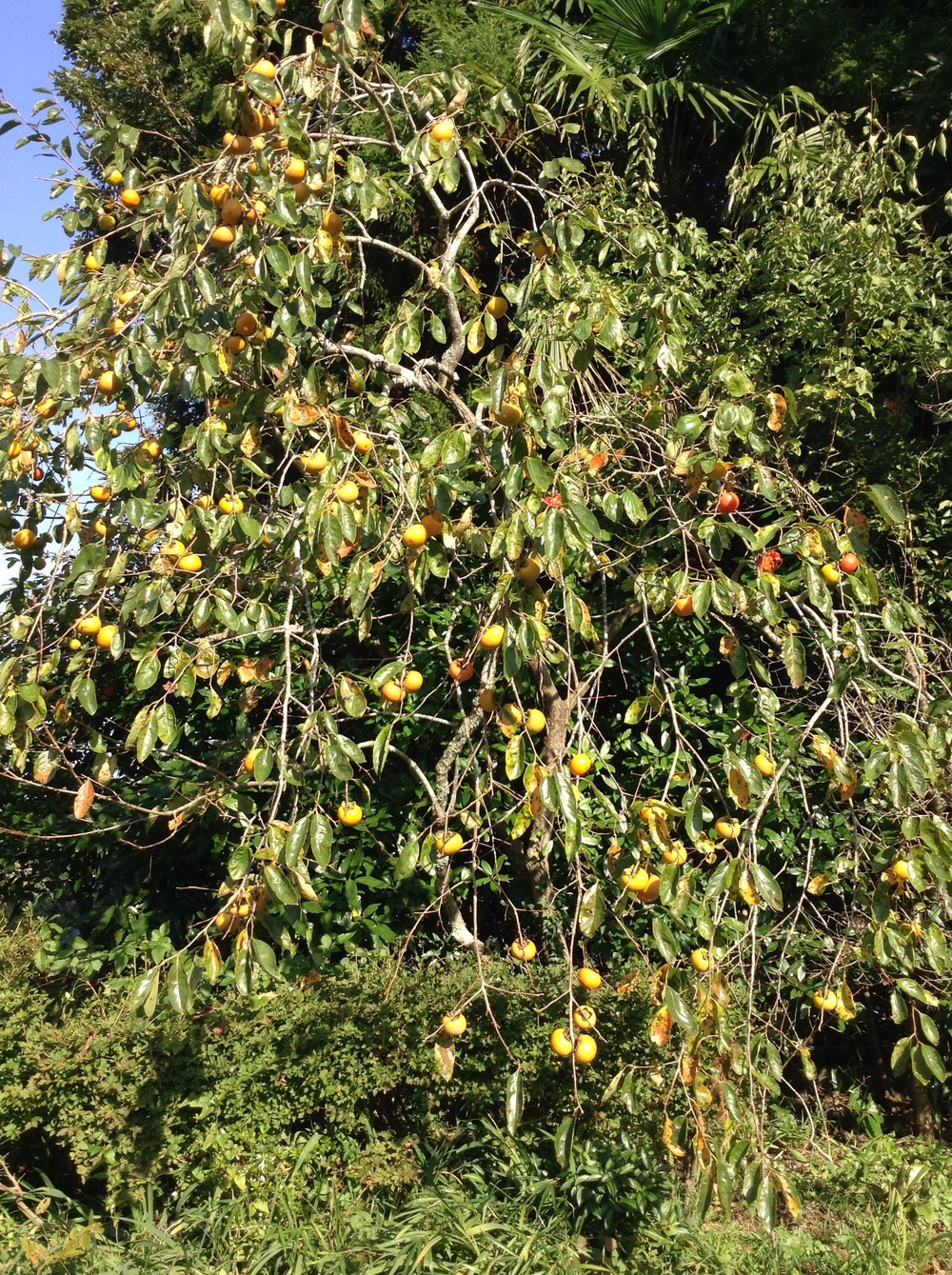
In Japan, persimmons are quite popular and common. Everywhere in the country at that season you can see their trees with little or no foliage, just magnificent orange fruits against the blue sky. And this year there are so many fruits on each tree that it is really amazing! There exist a few varieties from the very sweet used in different recipes more often in salty versions, to the sour ones (shibui kaki – 渋いカキ) used dried: hoshi kaki (干しカキ). Since the season is just starting there’s going to be many opportunities to prepare persimmons.
In our garden we have three persimmon trees, two sweet and one quite old sour one. I don’t use the sour ones I leave them to the birds, because old ladies from area told me that Ohara is too warm to dry kaki properly without them rotten. But I use the sweet ones in several recipes. And this year because there are so many I’ve decided to make jam and jelly. I used only persimmon, brown caster sugar and a bit of agar agar. I peeled a dozen of persimmons, cut them in pieces, remove the seeds, add a bit of water, brown caster dugar and cooked at low heat for 1h. In the last few minutes I added a bit of agar agar because I had no natural pectin to really make it jelly like.
I then prepared the bins and and wait until cold to try on my original bread! I’m not very much used in making jam and preserves so I’m still learning, but the persimmon jam is nice, but as expected the taste is very subtle. I may have tried to add some flavor with vanilla beans may be. I made two variations: one pure jelly, and one with large chunks of fruit as on the picture. So if like me you have plenty of persimmons that could be a good manner to use them, if not I wouldn’t buy any to make jam with, unless you have a better recipe than mine, which I’ll be very happy to try because I’ve only harvested a 10th of our persimmons yet!
The ginkgo tree is a symbol of wisdom and it is particularly beautiful in late november when it turn a vibrant yellow. Its leaves have also a very pretty and typical shape, symbol of Tokyo University.
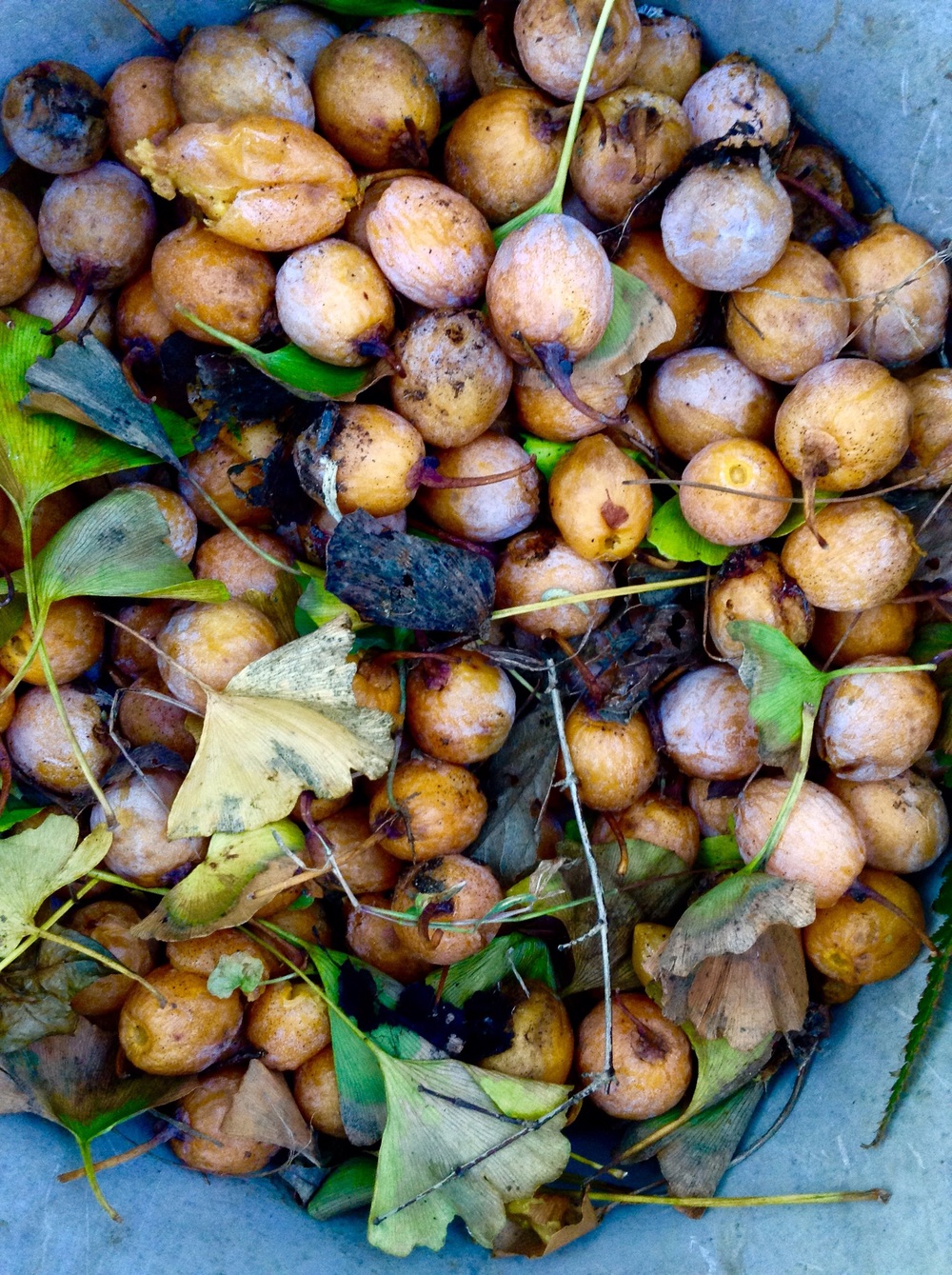
Fresh ginkgo nuts, just harvested
But ginkgo are doomed because they bare the most ignominious fruit: the ginkgo nut. If you have ever tasted ginkgo nuts you probably can’t imagine where it comes from; if you have ever been close to a ginkgo tree in autumn you probably can’t imagine that the ginkgo nut is actually edible. The ginkgo nut is protected by a yellow-orange thick and watery skin that when broken generate an extremely nauseous smell. The nuts have the bad habit of falling on the ground and get smashed by pedestrians, cars… in town and to rot in the country, still smelling so bad that the tree is a real nuisance! Yet gingko nuts are delicious!
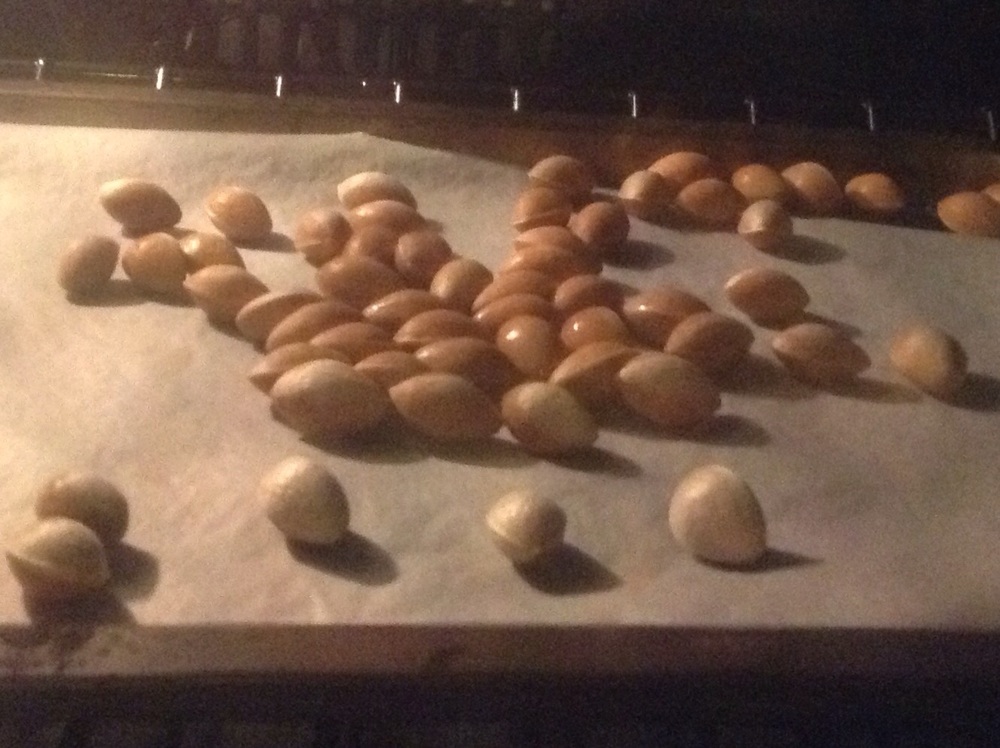
The nuts are usually collected once they’ve fallen. Luckily the little typhoon that passed over Kanto last week, blown down all the nuts and I managed to collect them before they rot and stink. Always use gloves when collecteing the nuts!!! The next step is to remove the stinks. For that plunge the nuts in a bucket of water for a few hours. The soaked skin is easy to remove (again, use gloves). And brush and wash the nuts until none of the flesh is visible. Finally dry the nuts in the oven at low temperature for about 2h, while shaking them once in a while. This year I collected so many nuts that I gave away most of them to my neighbors because I didn’t have the time to peel and wash them all.
Now the nuts are ready for cooking and harvesting!
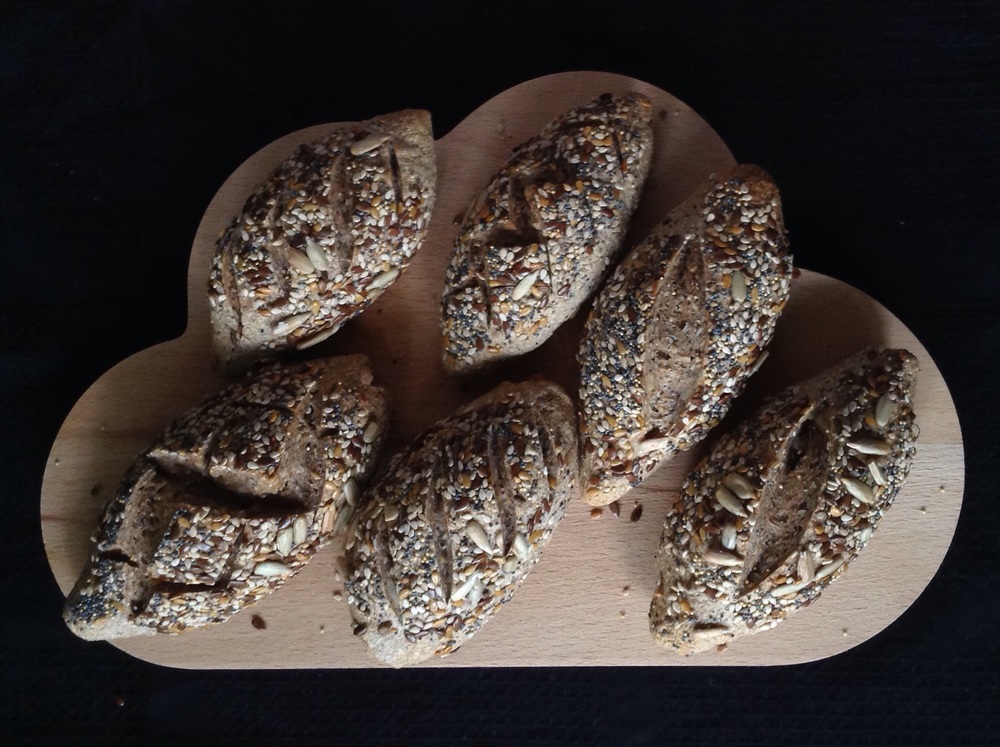
Multi grain and whole wheat little bread made for breakfast
At first when I started to bake my own bread I didn’t know much about it and I didn’t know how to chose the ingredients. As in any preparation the quality of the ingredient is crucial and it is not easy to understand what is a good flour and what is not, and also there are so many types of flours and bread that it took me some time. More over as I access information about bread mainly from French sources adapting to the Japanese available products was a hard task!
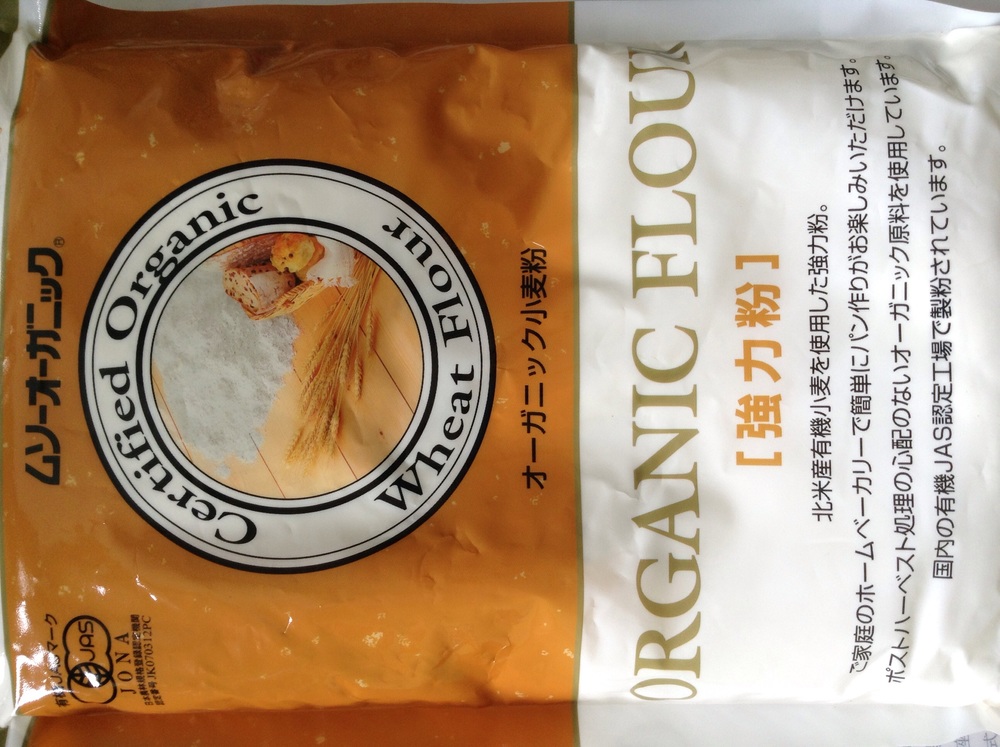
After using a lot of French organic products and random flours I could find in Japan, I think I have found a good set of resources locally. My main source of ingredients and in particular raw yeast is Cuoca. They have a wide selection of products, you can order on-line, but for me the best is that they have a shop that covers half a floor at Mitsukoshi Nihonbashi. My favorite flour there is the “Tradition Francaise” by Viron, perfect for every white bread, and in particular baguette. For most of the bread now I use the organic flour I can find in the supermarket. It is not a local product but the whole wheat flour and the hard flour are really perfect for my breads. For the seeds, I haven’t find yet something that satisfies me fully in Japan. A lot of the seeds are not organic or comes from China, which I must say worries me because of pollution problems. Right now I use seeds that I buy in France in any organic shop such as Bio C Bon, Naturalia etc… but I hope I’ll find something suitable soon in Japan!
Happy week-end, for me it’s going to be a lot of baking I know!!!
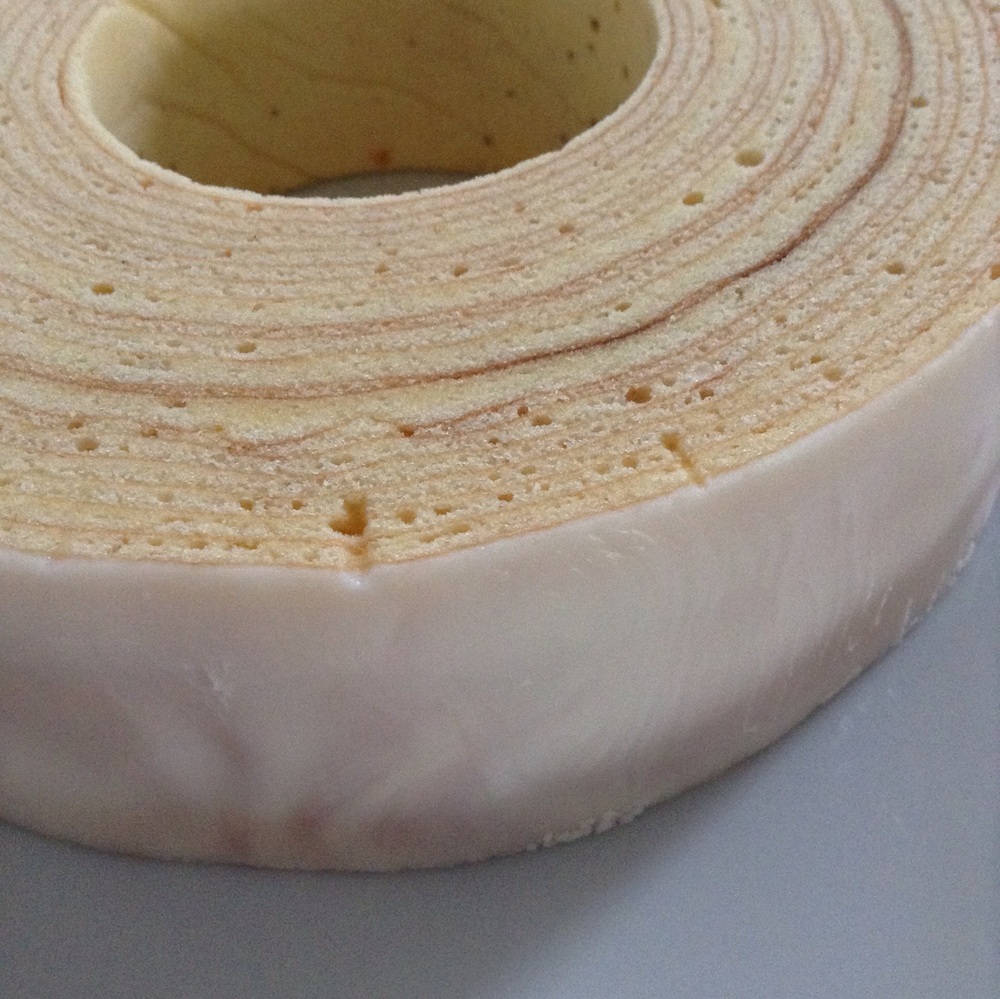
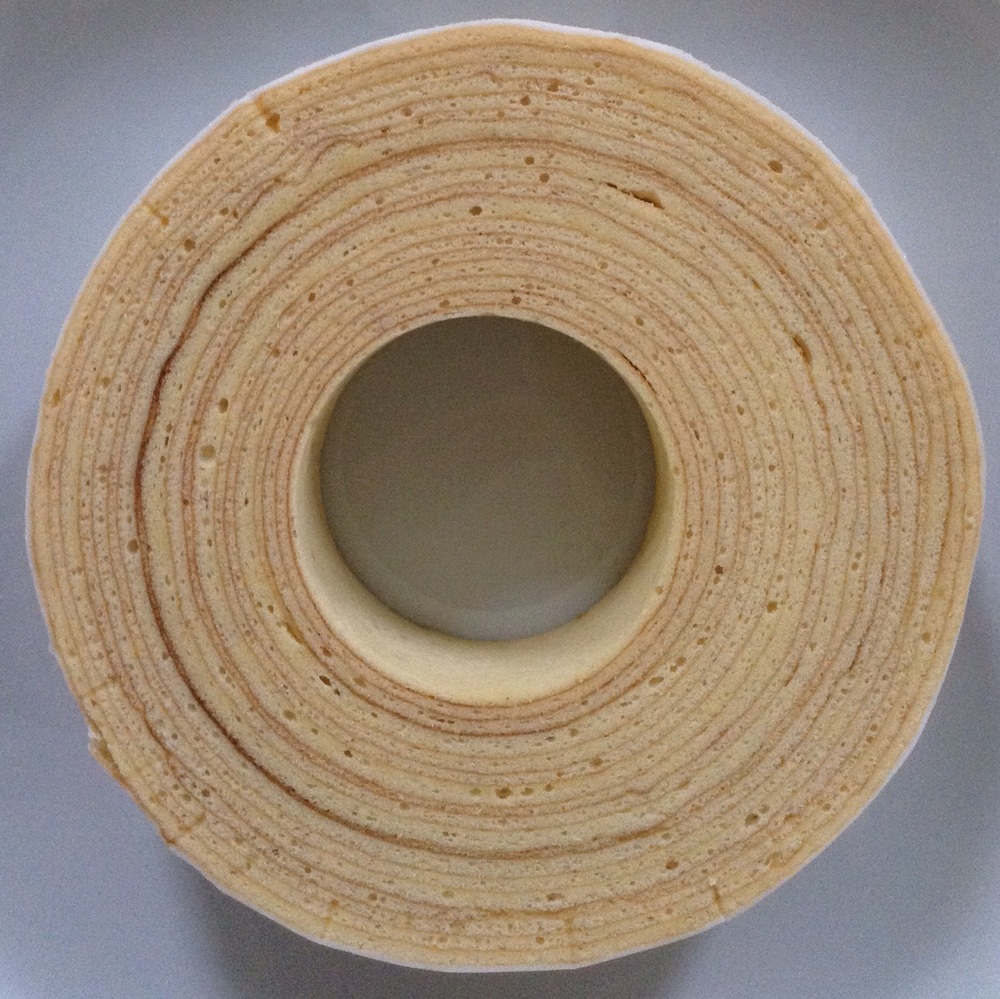
I just travelled one day to Kobe, which means that I’ve spent half of the day in the train. You could imagine that working seated in my office most of the day or working seated on a train is the same but actually the feeling is completely different. In the train I can’t open the windows to breath fresh air nor change the settings of the aircon/heater, neither the neon over lighting. So I feel dry, cold and oppressed, my eyes hurt and I feel exhausted… Anyway… The good thing, except that work was good, is that Kobe is famous for a delicious and somehow strange German cake: the baumkuchen. It’s a layer cake baked while rolling. The kind of thing hard to try at home. And the famous brand Juchheim (the first to introduce the cake in Japan) has plenty of shops in the city and of course at the shinkansen train station. So I couldn’t help but bringing back a little souvenir for our breakfast and some for my students (the tradition of bringing some food souvenir or omiyage in Japanese (お土産) is one important tradition at work).
There are many different brands of baumkuchen of all quality, you can even find some in supermarkets. There are also different flavors of cakes, the most common are plain, macha, chocolate… There is also a number of limited seasonal editions such as yuzu… My favorite for breakfast is the plain one, and I like the one from Juchheim more than the others because of it’s thin outer layer made of ice sugar and butter, which a lot of other brands don’t have.
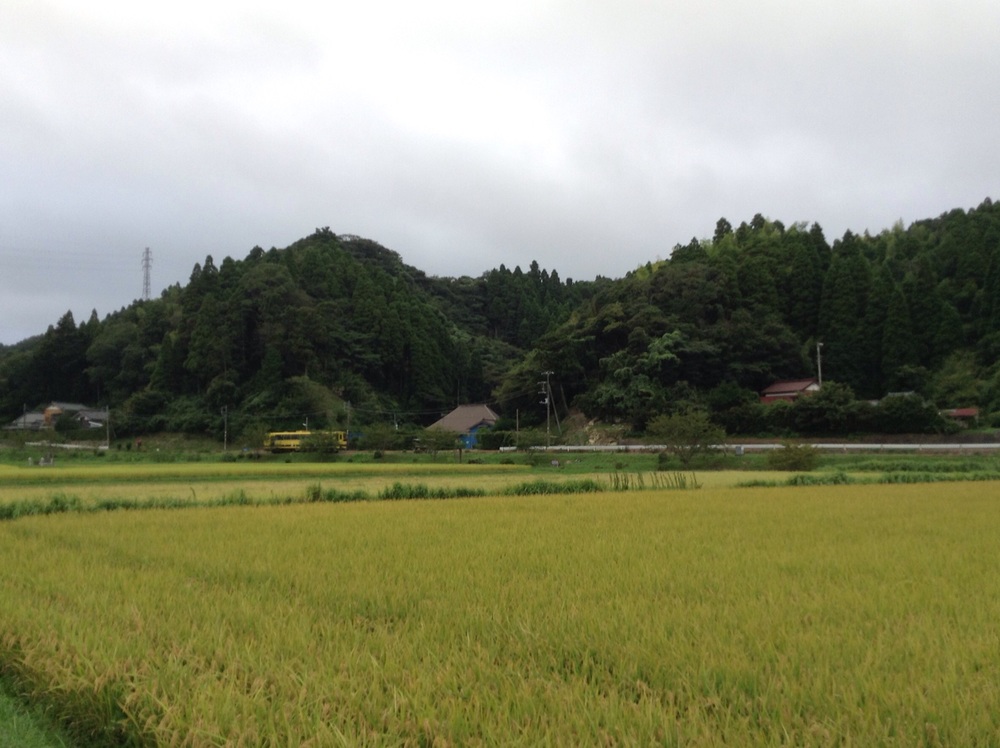
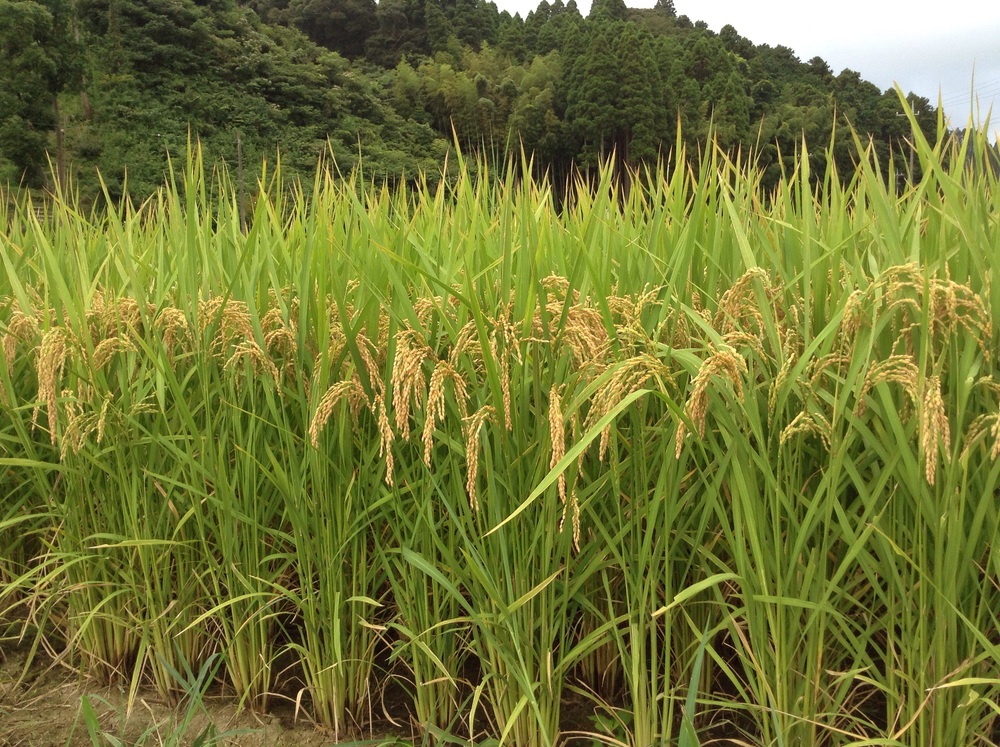
Today I’m traveling to Kobe for work and most of the way from the train window iT’s just rice paddies. Actually, the season for harvesting rice has started a few weeks ago in Isumi, but not everywhere yet in Japan. The beautiful yellow-green rice paddies that undulate in the wind are one by one being cut short. The smell is also changing. When this season starts it is also the end of summer, and this year it’s pretty bad with a lot of rain. Really a lot! And it is also the season for new rice or shin-kome (新米). As new tea in spring, new rice is an important ingredient for Japanese. The taste of new rice is subtle and more refined than usual rice, but it is as much for its gustative properties than for its signification as a the mark of the beginning of autumn, which in Japan is usually long, warm and beautiful.
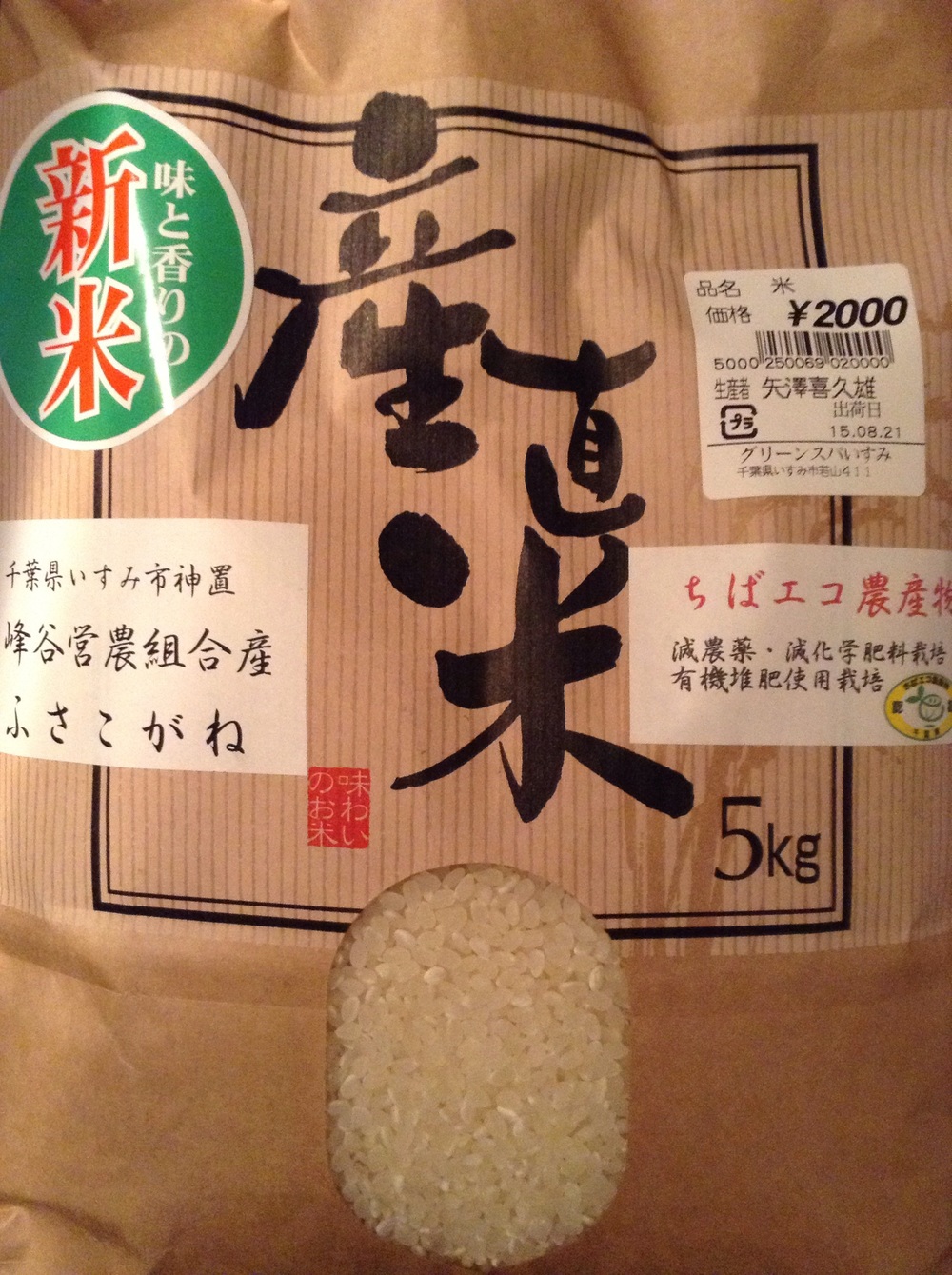
Almost every year I buy a bag of new rice that lasts pretty much a year in Ohara. I only buy organic rice or Eco rice (the yellow Eco mark on the right side of the bag on the picture). There are also many types of rice (kind of breeds) depending on regions, usually I like Koshihikari type (an habit I got from traveling to Tsunan where they mainly grow Koshihikari), but this time I picked a different type since it seems the Koshihikari has not been harvested yet. When still very new I use it mainly for plain white rice or little preparation, after a few months, I don’t bother anymore.
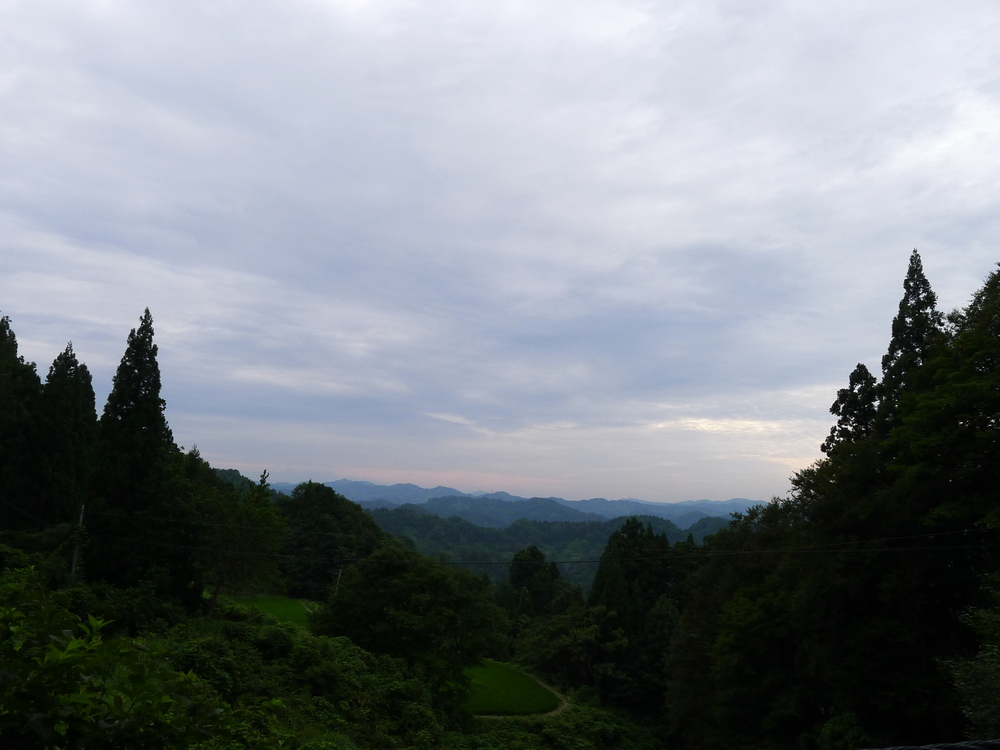
In the summer of 2006 while browsing the internet to find some nice contemporary art event and exhibition I found information about the Echigo-Tsumari art triennale (ETAT) and some special performances that would be held on the week end, so we jumped in a car and drove up there with no plan but our “triennale passport” and triennale catalog. We completely felt in love with the concept of the triennale, the with the beautiful mountains and rural area. We also met there some unique people: S. and K. that have become very good friends and that work in Tokyo and live up there most of the time n their beautiful house by the forest. Since 2006 we’ve made trips there more than a dozen times, we’ve been there at every season, went snowshoeing in deep snow, attended new year ceremony in the local shrine, went to pick wild vegetables and herbs in spring, young wild bamboo shoot in the beginning of summer, seen traditional bull fight, the red leaves in the mountains in autumn and we have never been disappointed. This area of Japan is truly beautiful with a strong personality.
After some time when we couldn’t go because of too mush work on week ends and because of our new house in the country that needed some maintenance, we finally went again, and it was again the triennale. And again it was a perfect stay. Our friends always welcome us in their beautiful old house (that is not completely innocent in the choice of our own house in the country), they feed us with delicious local products and a lot of fresh vegetables from their potager garden, I usally cook with K., and then we drove all over the countryside small roads to visit the art space and see artworks. And we’ve came back to Tokyo with tones of delicious products. I have my shopping list ready anytime we go there: natural honey and pollen from Akiyamago, 2-5-8 to prepare my own salted pickles at home, Koshikari rice, buckwheat flour from Tsunan… Plus our friends always treat us royally with tons of gifts from their own garden which vary depending on the season. Though very short (we stayed only 2 days) the perfect summer break!
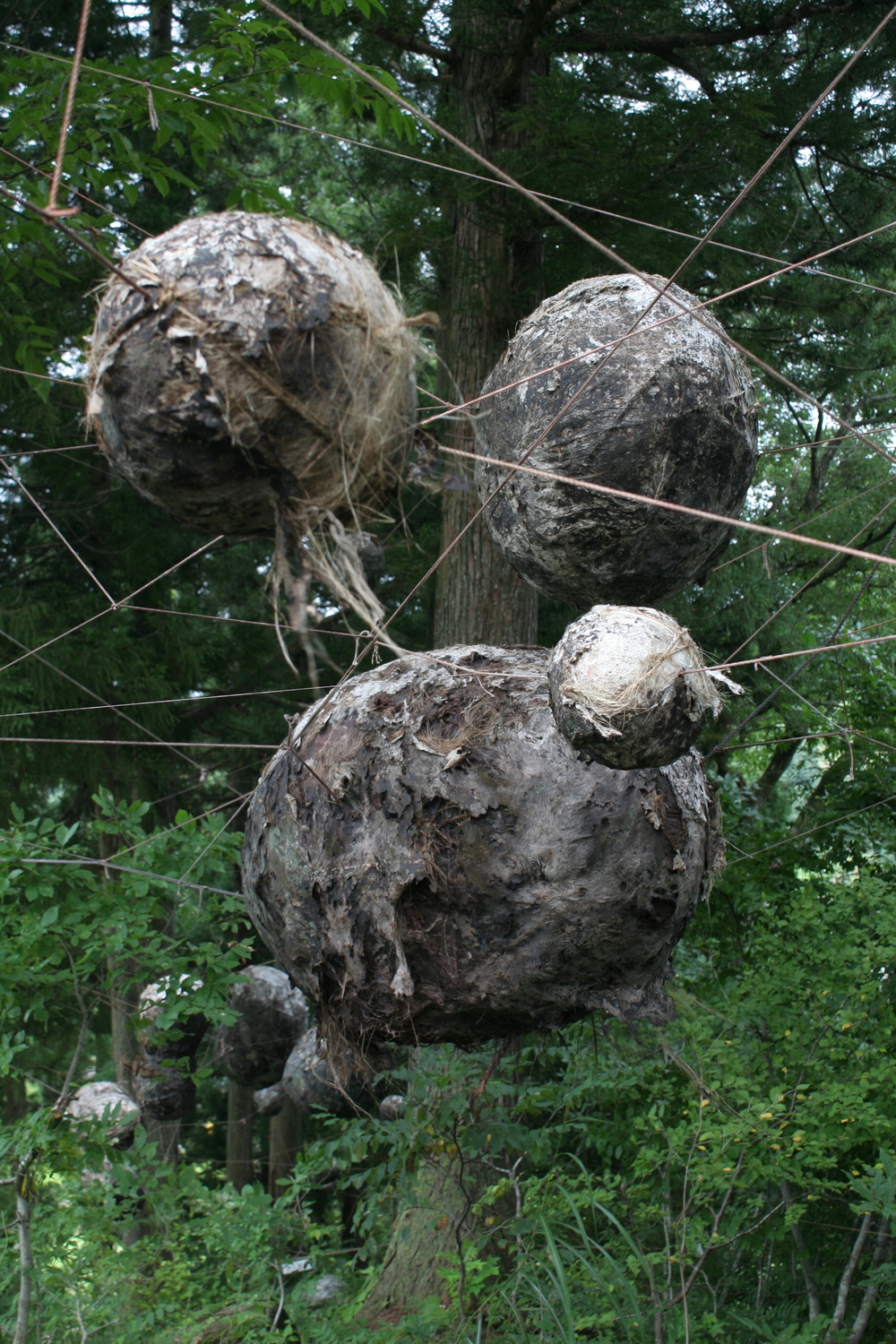
Installation from ETAT 2009
The concept of the triennale is quite simple, it is a contemporary art event that tries to boost this rural area that is depopulated and where there are many empty old houses, farms as well as unused schools because of the lack of kids. So a few houses and schools each time, and some outdoor spaces in the rice paddies, in the forest are also used for installation, exhibition, landscape art… Some of them also use traditional craft of the area, or local history. Since the very first edition in 2003 they’ve called for some famous artists such as Botansky, Turell, Kusama, Guo-Qiang… and mix with younger less known artists and art students. Of course the quality of the artwork is also very wide, but there is always very very nice discoveries. The art works span over an wide area, so driving is the most recommended, distances are not huge but roads are small and can be quite busy with beginners/paper drivers on week end so it takes time and it’s not a fun drive, week days are better for a more intense experience. There is also a number of performances: music, theater and experimental work almost every week worth checking.Since the triennale seems to be quite a success and drains a lot from of people from the city the event is slightly evolving and this time there were lot’s of temporary cafe in the main art spaces promoting local food (mainly for penniless urbanites so expect a lot of curry-rice). Local people are also selling local products, so it’s good to pack with an icebox in your trunk to bring back the country freshness to Tokyo!
Tokyo summer is hot and often humid but it’s an amazing season and it’s usually short (too short), with the peak of summer starting from the second half of July until usually the first typhoon of August. During the summer there are two things really important: summer festivals (夏祭り-natsu matsuri) and fireworks (花火大会-hanabi taikai). Recently we haven’t beeb to often to summer festivals, they’re often too early during weekdays (they usually start at dusk and last only one or two hours), too crowded on weekends. For fireworks, well, it’s a bit the same actually. There are a lot of huge fireworks all around Japan, and we’ve seen plenty. In Tokyo: Arakawa hanabi, Sumidagawa hanabi, Edogawa hanabi, Tokyowan hanabi… are probably the most famous. We are lucky enough to live by the Sumida river and have an ideal view on Sumidagawa hanabi taikai so usually we would watch it from home. But this year we had the chance to watch also seaside hanabi taikai: the one from Ichinomiya, and the small one from our village Ohara. Big hanabi drain a real lot of crowd and require a real organization if you want to attend and see them properly, you need to secure a place to park your car/bike/bicycle, to secure a spot with a good view, and a return route. Taking the train is usually not an option, most stations around are either closed or just so crowded that it’s almost insane. How many times did we get caught in traffic, in crowd flows of drunken people, for me it spoils the whole event… Smaller hanabi taikai in the countryside are shorter, less impressive, more confidential but much easier for logistics and with a local family atmosphere that beat largely the the huge ones. Now, I definitely like that one better. The one in Ohara for example lasted only 30min, but we could easily access to the beach and find a nice and quiet spot to enjoy it. There are many all around Japan, I can only but recommend you to try!
And if you don’t have the chance to see a big one at least you can buy fireworks in any konbini and have your own little firework at home or on the beach) and that is a lot of fun!!!
I discovered passion fruits while traveling to the Seychelles when I was 6. On Bird island I ate my first one and immediately loved the juicy, sour, sweet, crunchy little fruit.
Back in France I’ve eaten passion fruits but nothing to compare with the one that haven’t travel so long.
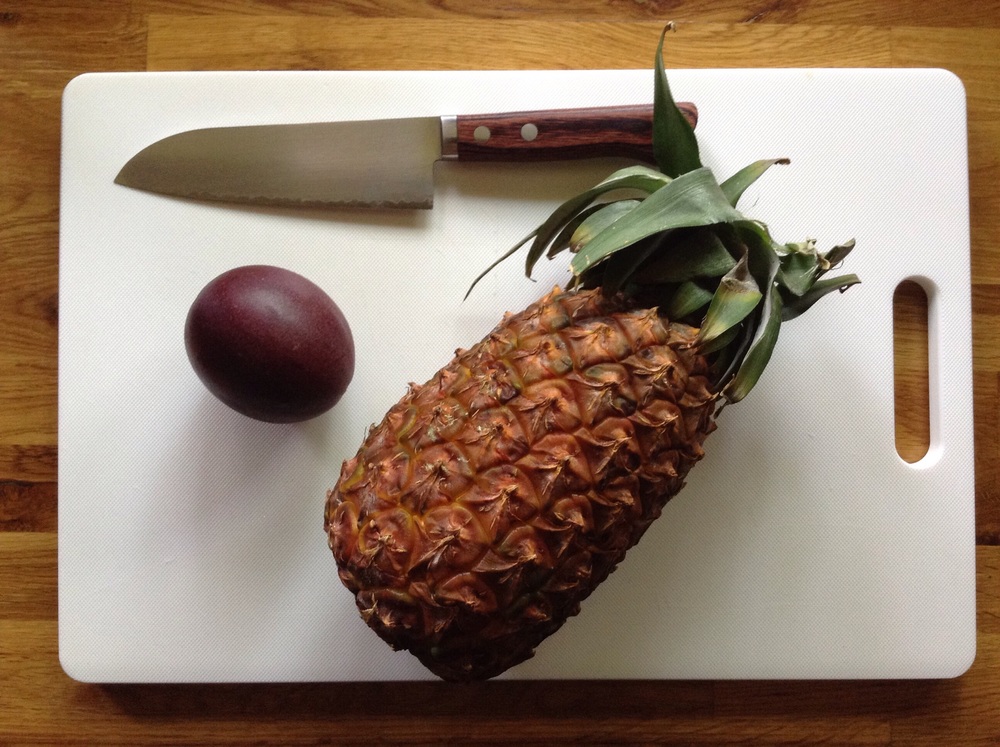
Japan islands span over such a long North-South axis that Okinawa offers delicious tropical fruits and it’s only A a 2h-flight away from Tokyo. When we travelled to Ishigaki three years ago we fojnd several farms growing pineapple, passion fruits, mangoes, dragon fruits… That also offer to send to Tokyo anytime you want. It’s a very nice manner to have super fresh fruits from Okinawa in Tokyo. The other way is to go to Ginza Okinawa’s shop. (Each region of a Japan has a sort of antenna shop where you can by local products, most of them are located in Nihonbashi-Ginza area)
The shop sells Okinawaian products of all sort, and the visit was originally motivated by my husband needed some accessories and parts to repair his sanshin (Okinawa’s traditional music instrument). And so it was a good opportunity to get some delicious fruits and in particular perfect passion fruits!! There is nothing as such to start a day than a little salad with pineapple, passion fruits and blueberries!