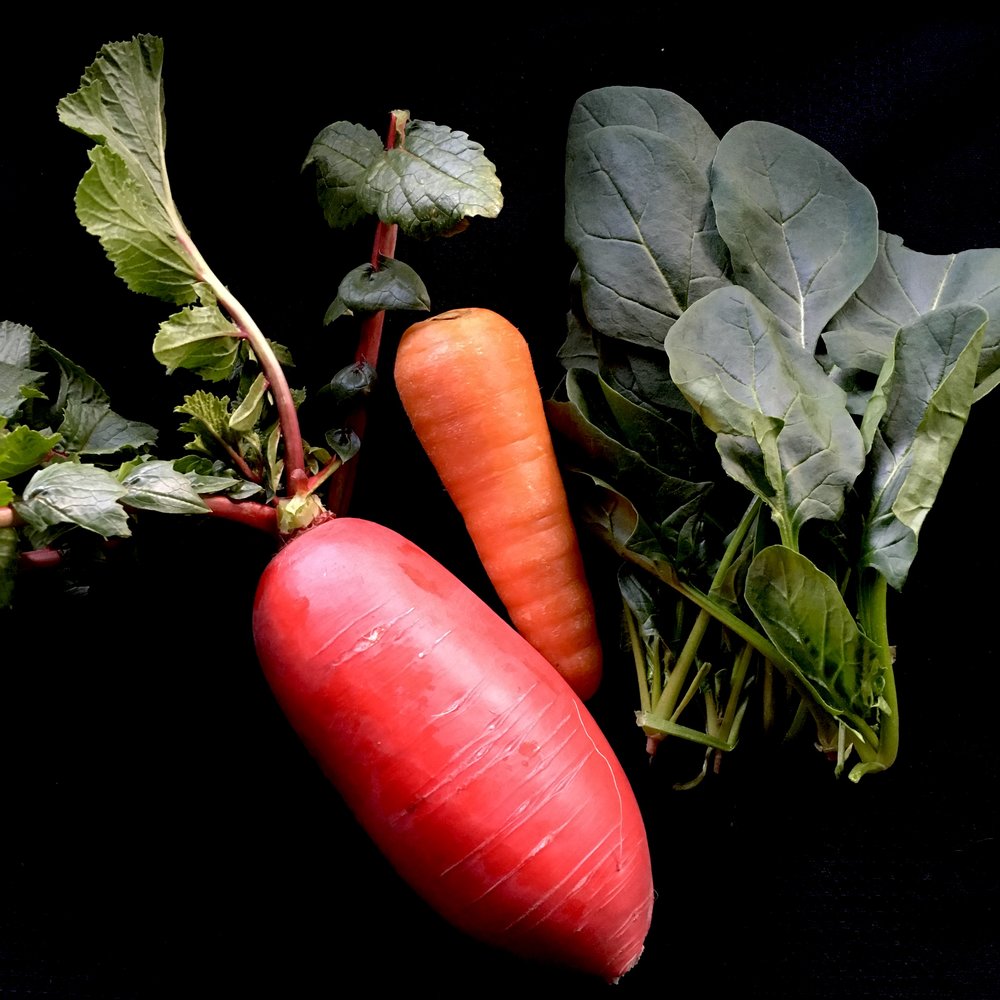
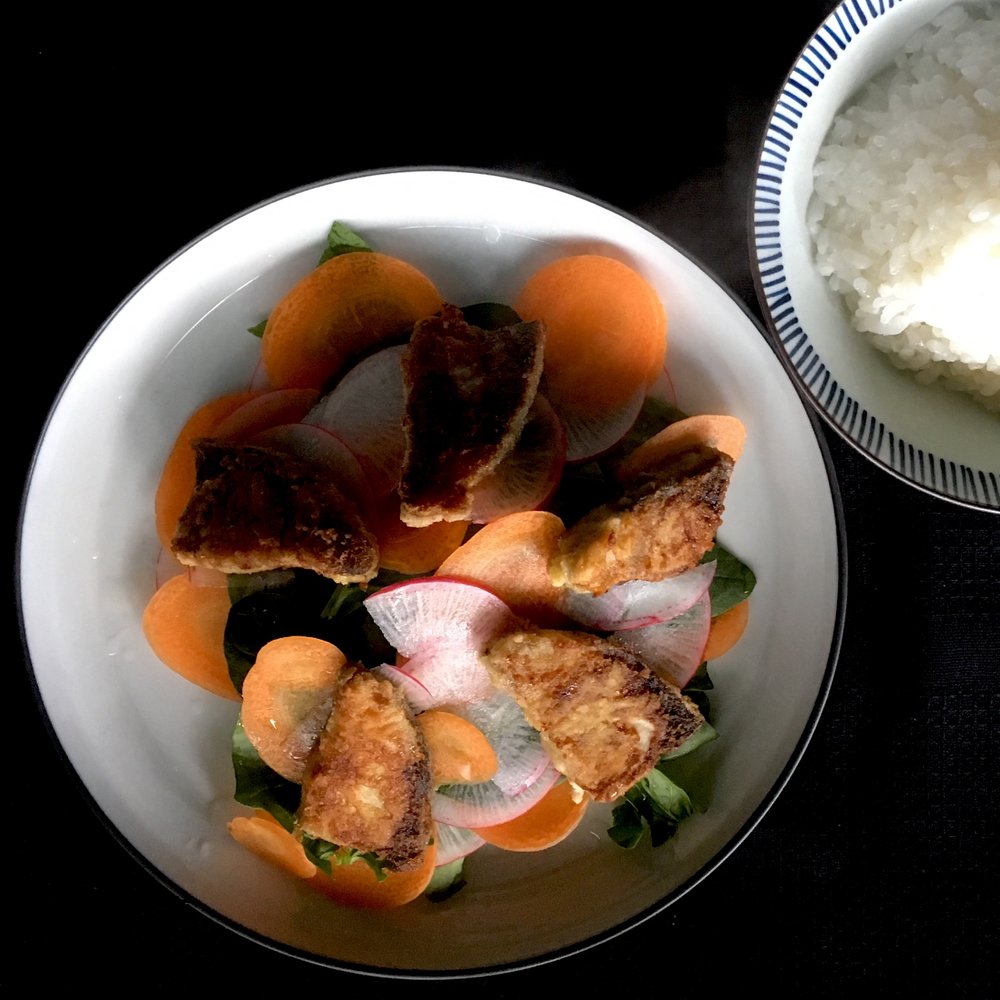
After our tennis game turned short because of a sudden snow fall, we went grocery shopping (beautiful radishes, carrots, spinach, cauliflowers and the first of spring veggies: na no hana (colza flowers) and fuki no to) and then back home for lunch. I was frozen and was about to prepare a warm curry or soup. But then the sun came out and the sky cleared again, so I changed my mind and went for a light radish, carrot and spinach salad, served with bonito sautéed in a crispy chickpeas flour crust. I just sliced the radish and carrot with a mandolin, washed and drained the spinach and removed the hardest parts. For the bonito I used a puece of a filet for sashimi and sliced it. I dipped the slices in chickpea flour, and then cooked them on both sides in vegetal oil. Dressed the plates and serve with a bowl of rice. Have a nice weekend!
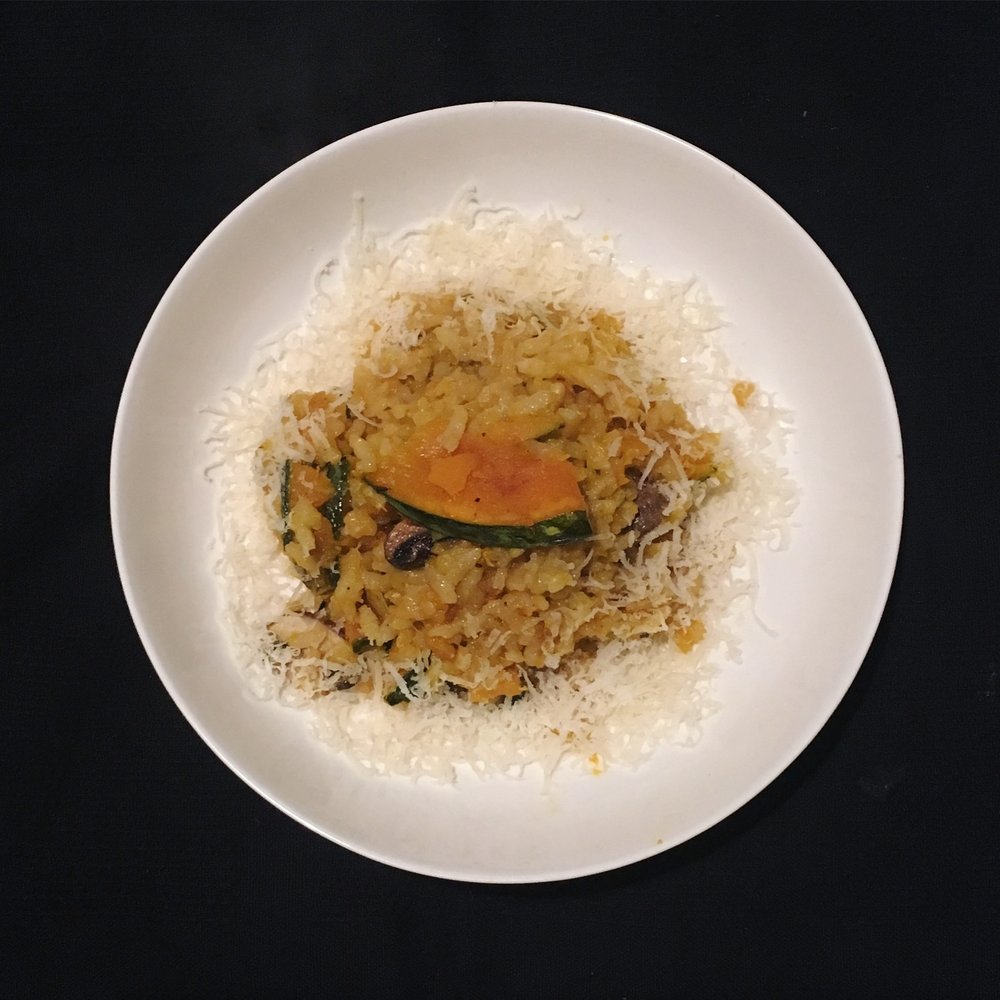
This is the perfect winter dish for a busy evening! Super simple to prepare in a short time and you can prepare it before and reheat it just before eating. For two people I use 1/6 of kabocha, 5 mushrooms, risotto rice of your choice, olive oil, salt and pepper and I finished my plate with freshly grated parmigiano, but it is optional. I sliced thinly the kabocha and the mushrooms. In a fry pan I heated a bit of olive oil and through the vegetables and roasted them until golden and crispy. Then I add the rice and grilled it a bit before adding water and salt. Let cook at low heat until the water is almost gone. Remove from heat and keep until you want to eat. Before eating add a bit of olive oil, re-heat in the pan and stir softly if needed. Serve, add pepper, et voila!
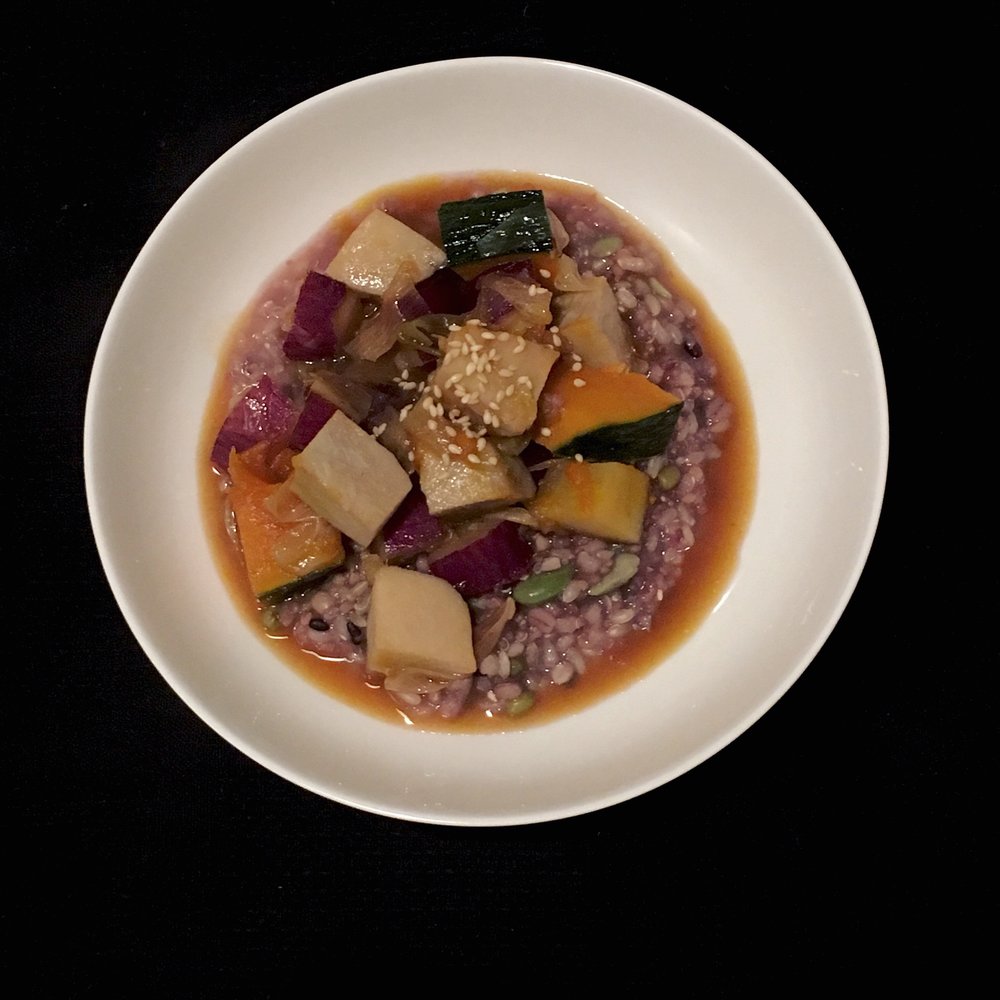
Largely inspired by the quinoa soups (winter and autumn) I made, I wanted something more Japanese. So I cooked in a pan: one sweet potato, one large sato imo, a piece of kabocha and a leek in a bit of olive oil, and in an other pan I cooked a mix of seeds and beans together with brown rice, I cooked them as you would cook regular Japanese rice. I didn’t cook the veggies and the rice together to avoid over cooking the veggies, to keep their beautiful colors (black rice has a tendency to color a lot) and limit the stickiness of the rice and seeds. Just before serving I added a bit of boiling water to the rice mix to make it soupy, and I deglazed the veggies with a large table spoon of soy sauce. I served the rice mix, the vegetables and topped with golden sesame seeds. A rich and tasty soup for a winter evening.
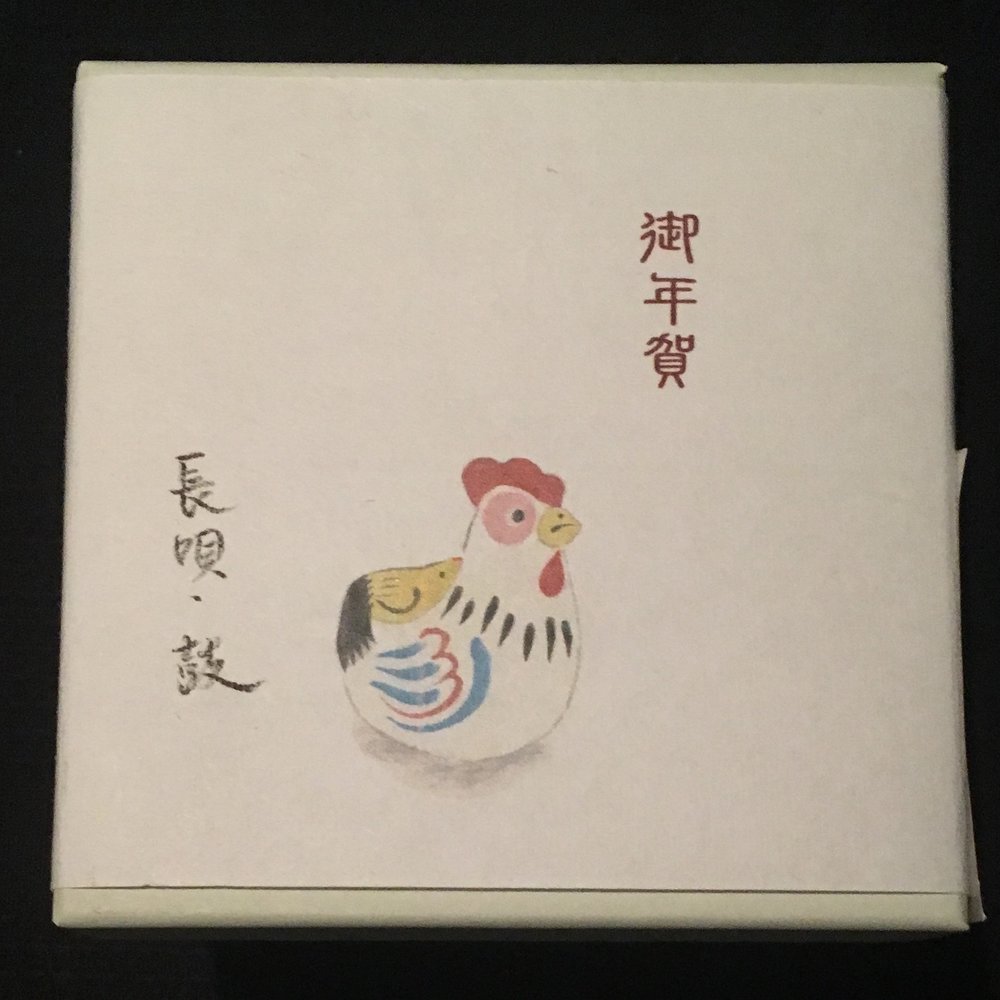
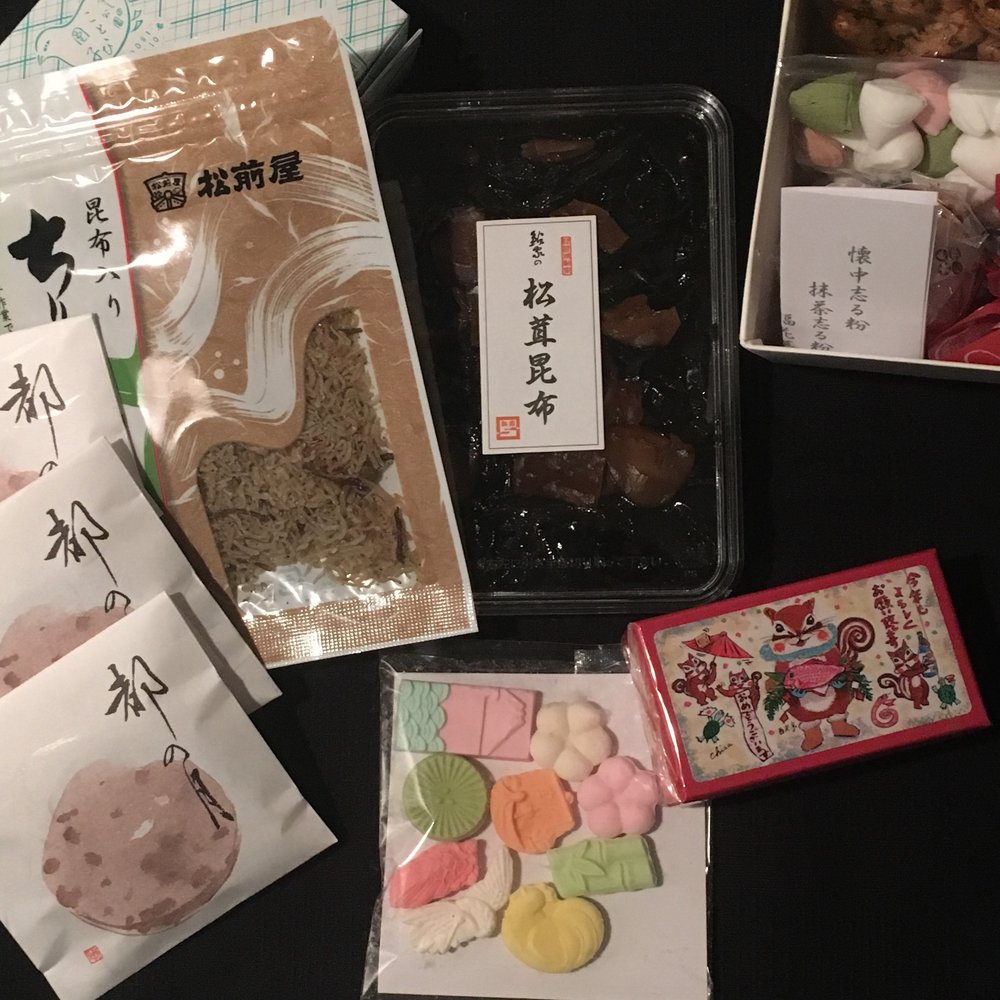
It is a tradition in Japan to exchange small presents at the beginning of the year (these mist be inexpensive presents of about 500yens), and these small presents are usually food. It is of a great variety and most department stores or food shop offer to prepare such items. They must be wrapped and have the proper 御年賀 paper on them. Only paper, no ribbon or other decoration, and eventually the name of the person offering it written (to make it easier to identify from whom it comes from and return the gift). Yesterday at the yearly shamisen’s concert we have exchanged many 御年賀 and it is always fun and nice to discover what we have received. Classic gifts are rice crackers, dry fish, taukudani (seaweed or small fishes cooked in soya sauce), sweets of all kind… I really love this custom, finding what to offer and opening all our presents and thinking about how to eat them. It’s a good occasion to discover products we don’t usually eat since I don’t usually buy prepared food, and then to learn how to cook them!!!
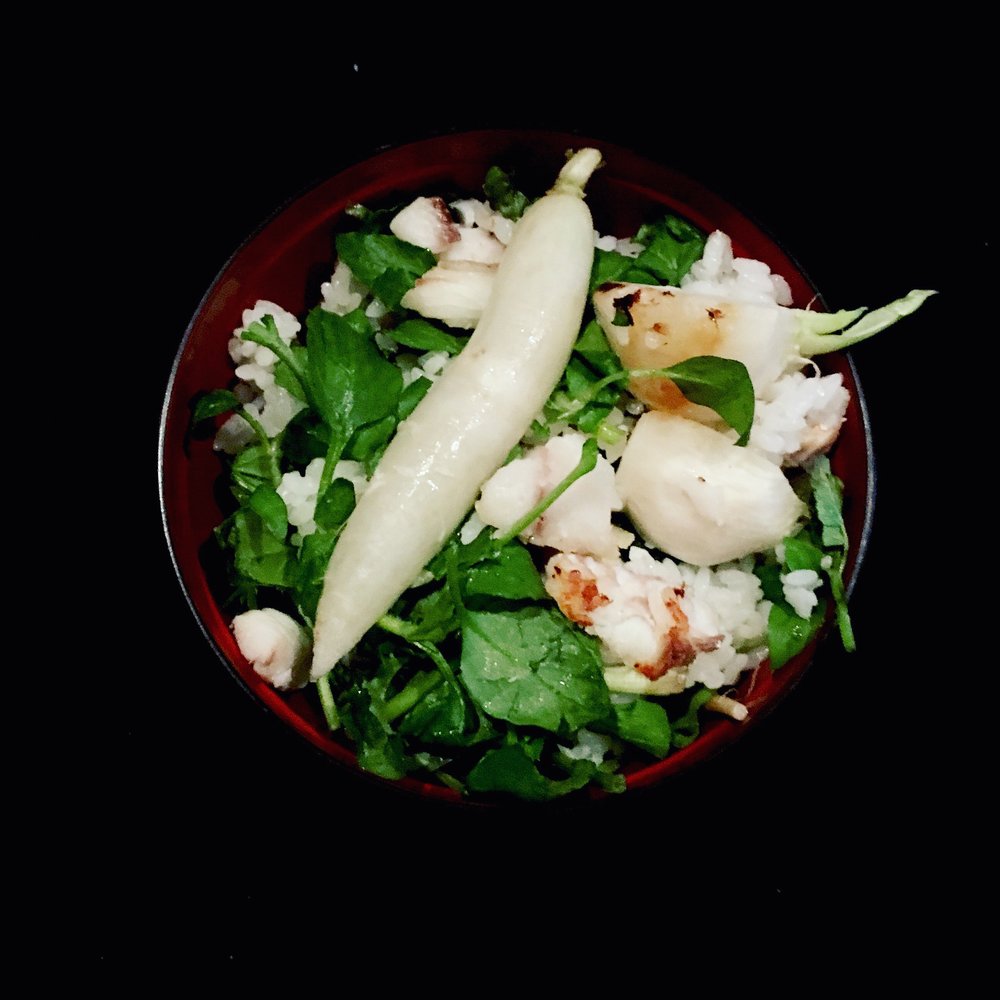
Every year in Japan, on January 7th it is a custom to eat 7 herbs rice porridge おかゆ. Since I am not a huge fan of rice porridge I develop a new recipe every year (other recipes). Last year I prepared a 7 herbs rice omelet. This year I prepared it with grilled cod. I cooked some plain white rice. I grilled some fresh Hokkaido cod cut in pieces, and the turnip, then I simply washed the herbs and chopped them roughly and add both the cod and the herbs to the rice. Simple, tasty and delicious! How do you eat your 7 herbs???
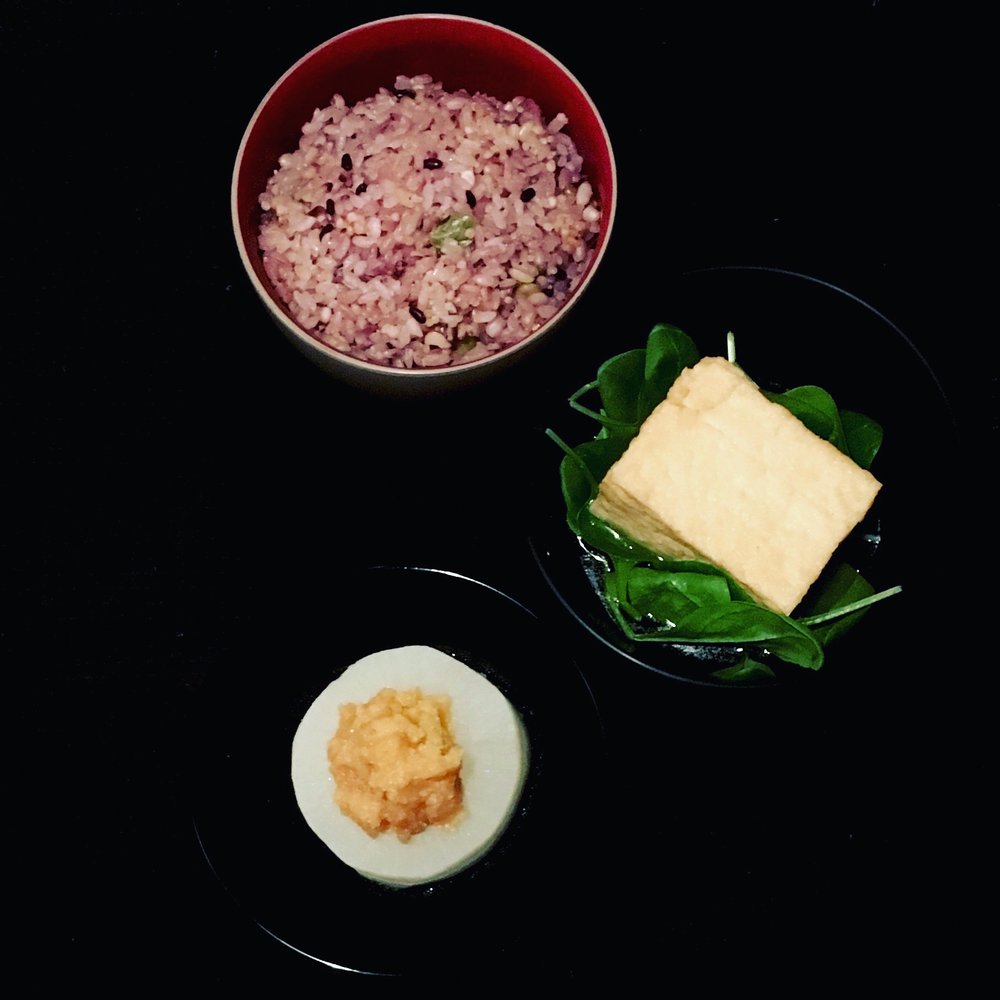
Cooking Japanese is not necessarily difficult and it can be really quick. In winter I love daikon cooked in konbu (kelp) dashi and served with white miso, but this is not a whole meal so I prepared also in the same dashi some warm thick fried tofu served with little raw spinach and for the energy a bowl of rice mixed with 16 types of beans and seeds.
Prepare a konbu dashi with a piece of konbu in 1l of water, bring to boil and keep under cover. Cut 2-3cm high slices of daikon, one pr person is usually good, and cook them in the dashi. Check with a toothpick and remove them when soft. Serve in a bowl with one tsp of white miso on top. In the dashi still heated, add the thick fried tofu (atsu-age 厚揚げ) and cook for 5min, it washes away the oil from the deep fry. If you cannot find thick deep fried tofu you can warm momen (hard) tofu. When warm serve with baby spinach and a bit of soya sauce or a bit of ponzu sauce, or just a bit of the warm dashi. For the rice, I use a mix of seeds and beans that can be found in any organic supermarket or similar (if you cannot find some leave a comment I can help providing with some). That’s it. Keep warm and have a good weekend!
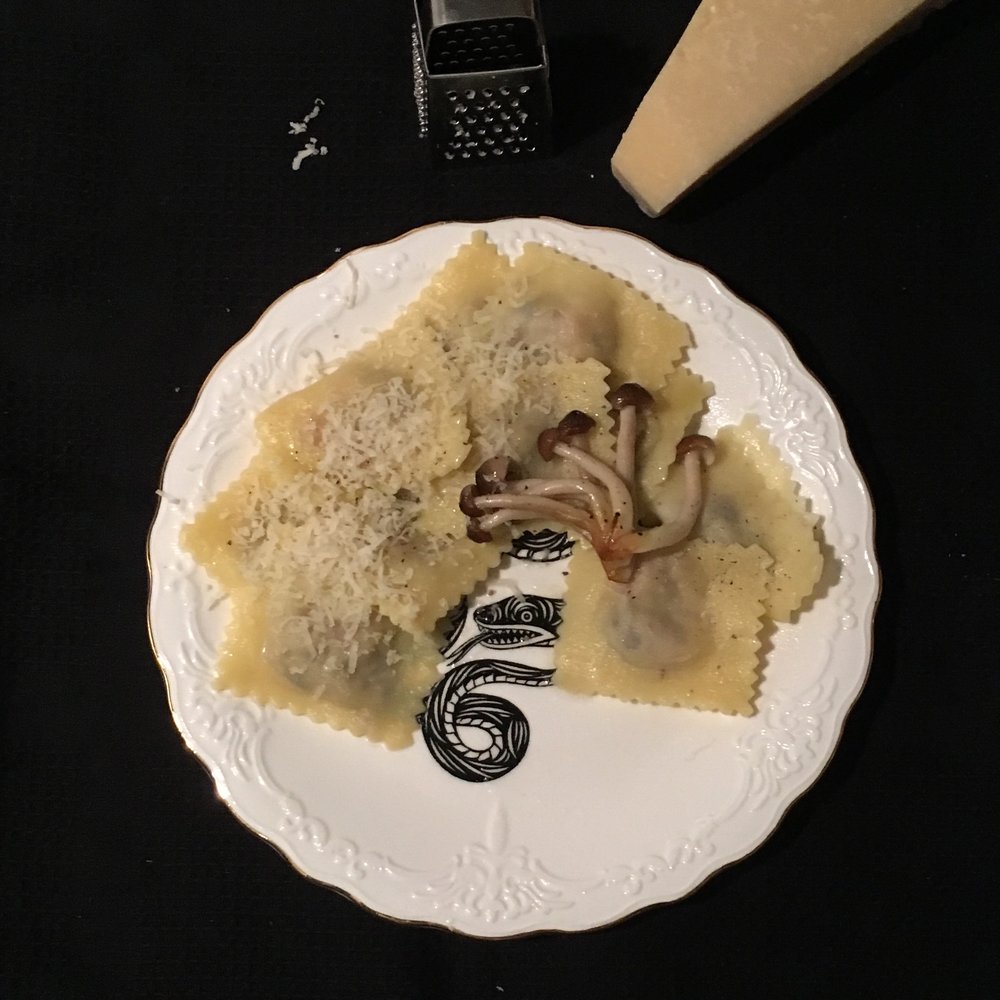
When Japan meets Italy and Gentiane is cooking, it gives a new recipe of ravioli. Now well equipped with my new ravioli rack for large pieces I can prepare ravioli with more granulous and rough filling. The first thing I tried back in Japan was speck and shimeji. Shimeji are a very Japanese type of mushrooms with a typical taste, speck brings in a salty-smoky note. I prepare the filling first and always wait until it has cooled down to make the ravioli, otherwise the pasta dough melts with the heat and moisture and the ravioli break. I chopped thinly a bundle of shimeji and a little piece of speck, and cooked them in a heated frypan. Add salt and pepper to your taste. No need to add fat, you want the filling to be rather dry. Once it is well cooked, let cool down. In the mean time I prepared the pasta dough with my classic recipe (100g of flour, 1egg, a pinch of salt, a litlle of olive oil), rolled it. If the air is dry, like in Japan in winter, you can moist it a bit, otherwise by the time you’ve rolled it, it is dry and cracks. Then I made the ravioli. Finally, when diner time has come I boiled them and served with freshly grated parmegiano, olive oil and grilled shimeji.
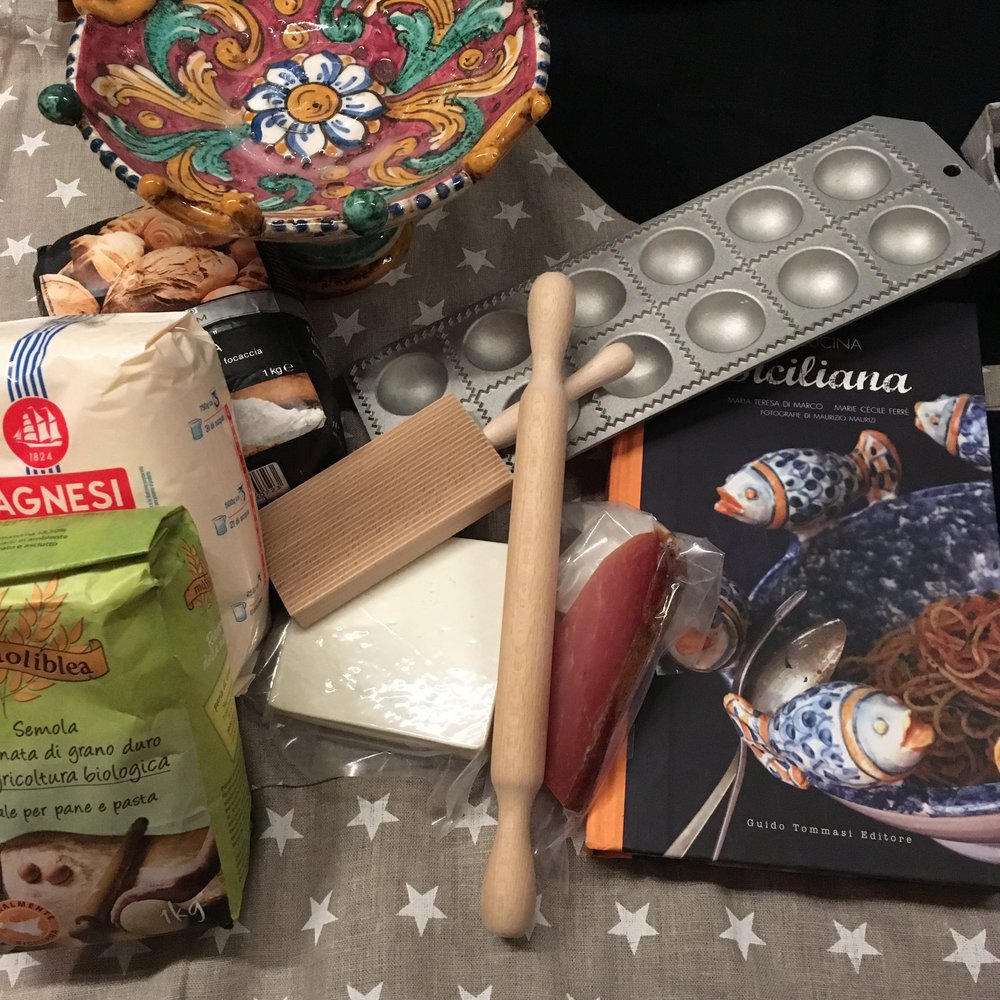
After one week in the south of Sicily trying local products and visiting historical sites, it was obvious I would not come back to Japan with empty hands. And with both Christmas and my birthday I was spoiled. Here is a bit of the Sicilian delights and gears I took back with me. Starting from the top right corner and going clockwise. First a new ravioli rack and the wooden roller, for large ravioli this time. I already tried it for the foie gras ravioli and for the ricotta ravioli, amazing! Very easy to use, larger ravioli seems much easier to make than smaller ones! Then a cooking book of Sicilian cuisine: “la cucine Siciliana”. My rusty Italian has gotten much better this year, so reading in Italian would not be a problem. Then some speck, some fresh ricotta salata. A little gnocchi rack to shape my gnocchi instead of using a fork! Sicilian flours for bread and pasta, polenta. A ceramic fruit plate from Caltagirone, I am totally in love with these ceramics, but I had a hard time finding some vintage ones. And in the background a new apron! So, very soon on Tokyo-Paris sisters some recipes using all these! And you, what do you bring back when you travel?
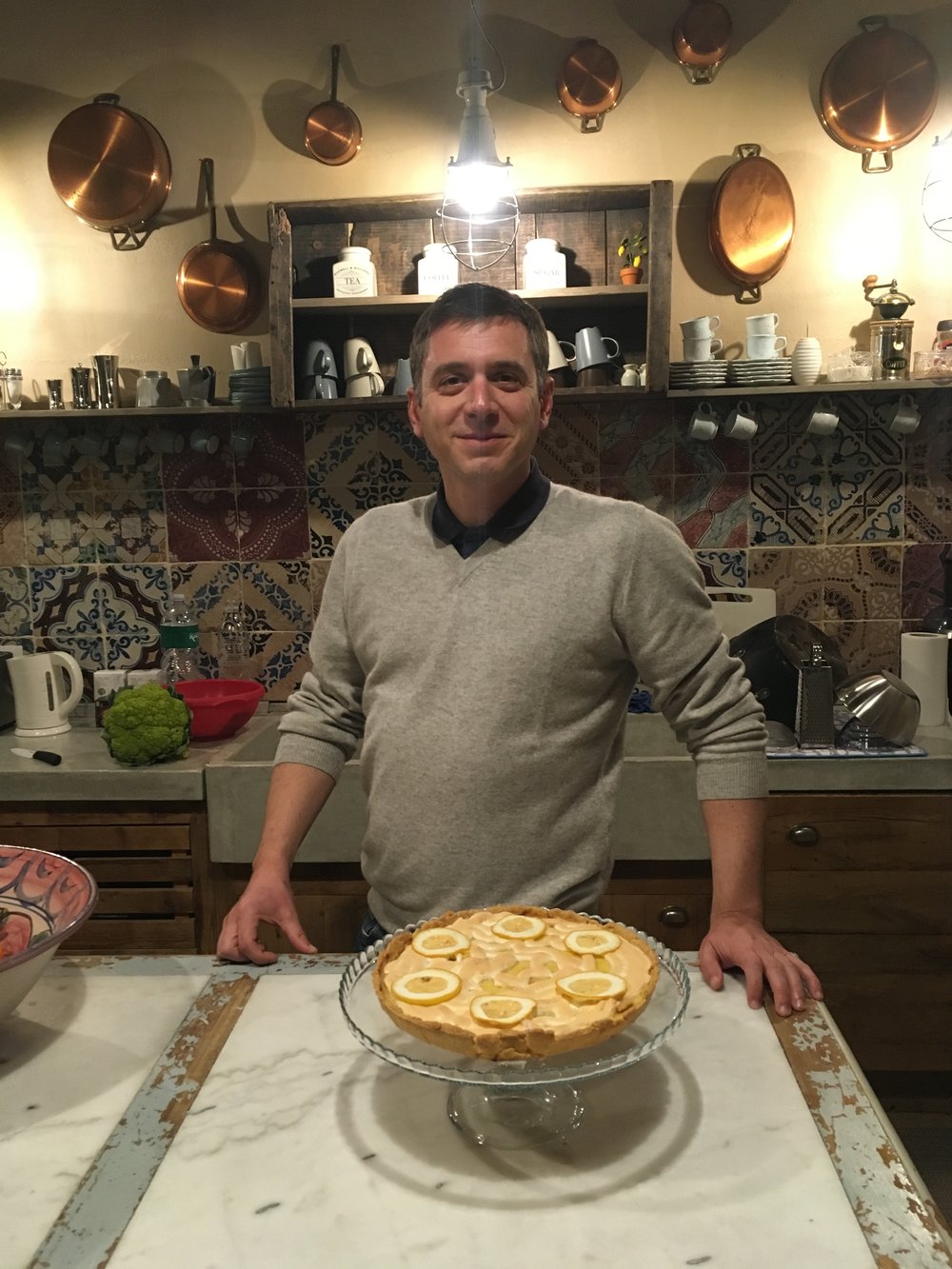
A. cooks once a year and it is for making my birthday cake. I like to have it with tea, because then it all about the cake rather than having it for dessert. Every year I choose the cake I would like to eat and he makes it the way I like it. He usually searches for recipes on the internet, and from this base adjusts it to the gears and ingredients we have, and to my taste. Since he has little experience he usually gets a bit of help or some advises from who is available around. This year, since we were in Sicily, country of citrus fruits, I chose a lemon tart with meringue. But I like my cakes not too sweet, not too buttery, not too creamy, so my mum and I helped him a bit. The result was amazing. So here is what he did for a 25cm tart: first pre-heat to 180deg ghe oven.
for the dough: a classic sablé dough with 200g of flour, 1 egg, 75g of butter. Mix all the ingredients and roll the dough to the size of your pie dish. Bake for 10min, the dough must not change color too much.
for the lemon filling: instead of preparing lemon curd we opted for something easier. The zest and the juice of 2 lemons is mixed with 2 egg yolk and 1 egg, 120g of brown sugar, and 4tbs of fresh ricotta. Mix all the ingredients to obtain a smooth creamy texture. Set in the dough. And cook in the oven at 180deg for 30min.
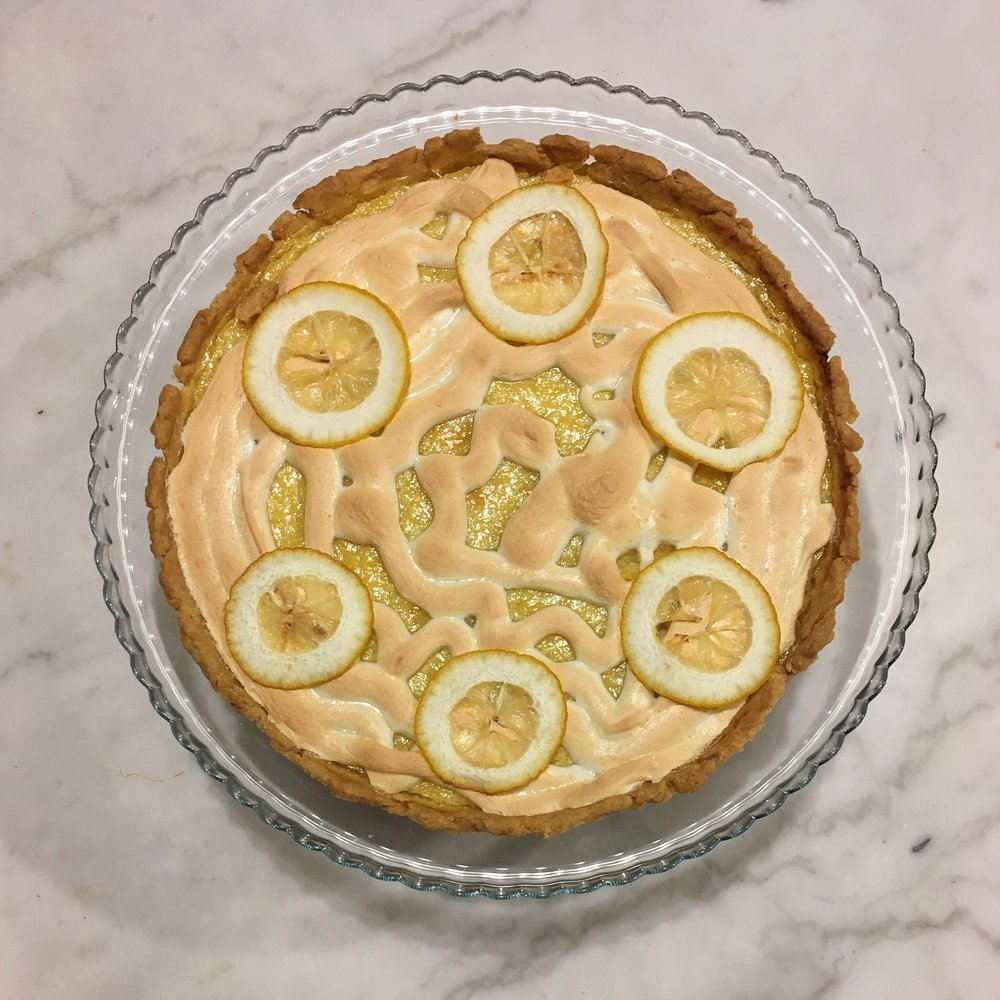
for the meringue: 2 egg white, 70g of icing sugar, a pinch of salt. Beat the egg whites and the salt until firm, continue beating and add the icing sugar slowly until all is smooth, shiny white and firm. Put the mix in an icing bag and decorate the tart as you like. Bake at 180deg for 10min. Check to be sire the meringue doesn’t burn.
We finished the decoration with some very thin slices of Sicilian sweet lemon grilles on the oven for a few minutes.