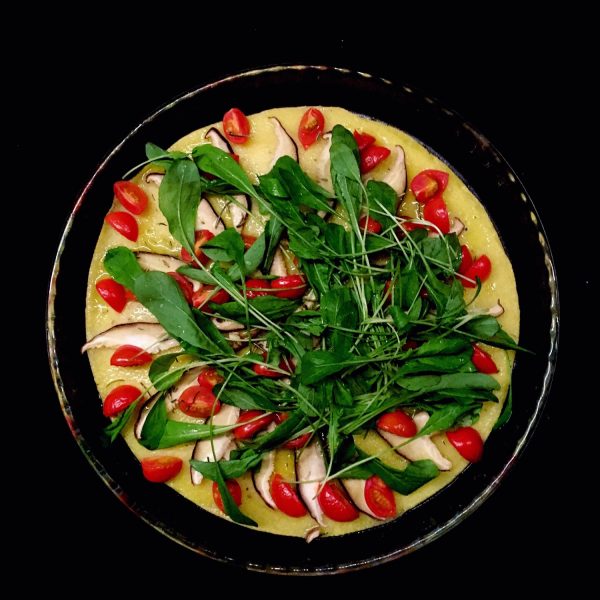
Polenta “pizza”

Maybe it’s because we’re going to Italy soon, maybe just because I love it, but there are two things I am craving for: Italian food and Japanese food. So I alternate Italian inspirations and Japanese ones, and sometimes mix the two. When you need a rapid base for dinner polenta is much better than rice. It cokks in no time and it is very versatile and fun to arrange with many vegetables. One of the things I like to prepare it with are mushrooms and tomatoes. Somehow very classic. But you can give it a twist and prepare it like a pizza (vegan, gluten free). Here is my recipe!

Polenta pizza (4 servings)

– 100g of polenta (more or less depending on the size of your pie dish, the thickness of the polenta you want etc…)

– 2 large shiitake or 5 small

– a bundle of rucola

– a hanful of cherry tomatoes

– a branch of rosemary

– olive oil

– salt and pepper

First cook the polenta, you want it slightly dry to hold when it is cold but not undercooked.  Then pour the hot polenta in your olive-oil greased pie dish to obtain an even layer. Since I’m making a “pizza” I don’t want it to be thick, but neither too thin. 5-8mm is the right thing for me. Let it chill. Wash the vegetables and cut them. Add a bit of olive oil on top of the polenta, rosemary, salt and pepper. Then add the tomatoes and shiitake. Pre-heat the oven 30min before serving to 180deg. and cook the polenta and vegetables. Finally when done, just before serving add the rucola. That’s it!
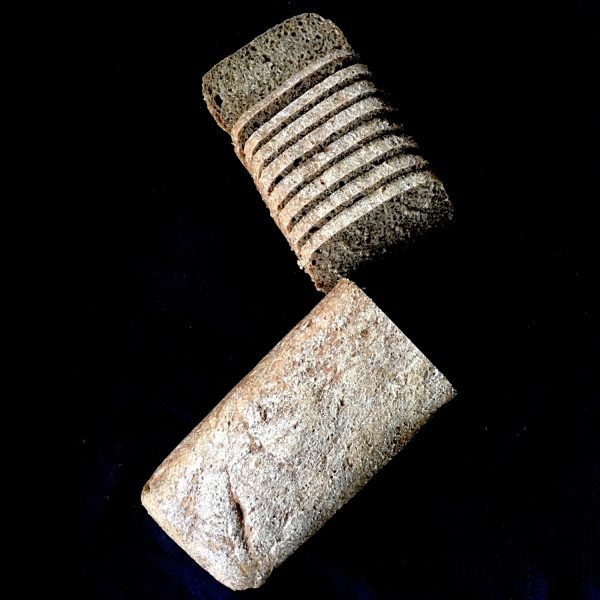
Last bread of the year?

The last week in Japan for this year is just starting. As usual before traveling, the last week is a marathon: squeeze in all the appointments, meetings that require me to be physically here, prepare for packing, and here on top, prepare for Xmas presents, since we’ll follow directly with a visit to our family and friends in France. I’m quite excited to go to Florence, first because I’ve never been there yet, and A. will show me around, there will be cooking opportunities with sone local products; second because these five days there are meant for me to work on a book (not an scientific one, neither a cookbook…). A very new activity, something I don’t know where to start and how to organize myself, it is very challenging for me… I write this book with a philosopher who is used to that so that will probably help a bit… we’ll see. That said, it means that I have less time in the morning to prepare pancakes… so yesterday I baked a big black bread that would be our breakfast for the next three days. I used 1/3 of black wheat flour and 2/3 of whole wheat flour for it. It is very nutritious and tasty. And to slice it more easily and evenly, I baked it in a rectangular bread mold, something that makes it resemble pumpernickel. Simple and delicious. Have a great week!!

Double almond pancakes

The last weekend we spend in the country before traveling for a few weeks in Europe: Italy and France, and it is perfectly cold and sunny, just how like the mornings it this season. To warm us up before going outside play tennis and garden, a rich breakfast is now needed and this morning I chose to make rich pancakes, but not muesli pancakes, since A. is not a big fan of muesli. But almond in cakes he likes very much. The recipe is really simple, they are fluffy, warm and nourishing.  The recipe is vegan, but you can add eggs if you want them even richer. So here is my recipe with proportions that are about, adjust slighty if needed! Enjoy the weekend!

Double almond pancakes  

– 200g of flour

– 1 glass of almond milk

– 80g of almond powder

– 1tsp of baking powder, and a pinch of salt

– 2tbs of sugar (optional) 

– 1/2 vanilla bean

In a large bowl, add the flour, the baking powder, the salt the sugar. Stir and add the almond milk. Then the almond powder and the vanilla. The dough must be creamy thick. If it is too hard add a bit of almond milk or water, if it is too wet add a little bit more almond powder or flour.

Heat a anti-adhesive fry pan, don’t grease it. Cook the pancakes on both sides for a few minutes. Eat warm!

Mackerel – 鯖

In France we don’t eat a lot of mackerel, in particular in the south of France or at least in my family… we usually eat more Mediterranean fishes such as tuna, snapper, Peter’s fish, pilchard and sardine, anchovy… so mackerel was very rarely on the table. Here in Japan, of course there are a lot of fishes as the above mentioned but to eat grilled, mackerels, and they have so many different types, are some very easy to find and delicious fishes. Though I am always a bit reluctant to cook some because it smells a lot, I am always happy to eat some! I find it very versatile and simple to prepare with many different types of vegetables in either Japanese style or more western styles. This time I prepared it in 3 different options, two being very close to each other: 1. pan grilled on the skin; 2. in croquettes; 3. to stuff lotus roots. 2. and 3. are actually made with the same base. and both start with 1..
The first thing (top picture) I did was to grill the fish on the skin side until it is well done and the skin is crispy (though I don’t eat the skin). I served half of it for one dinner with blanched baby pak choi, yuzu and a bowl of rice with an umeboshi.
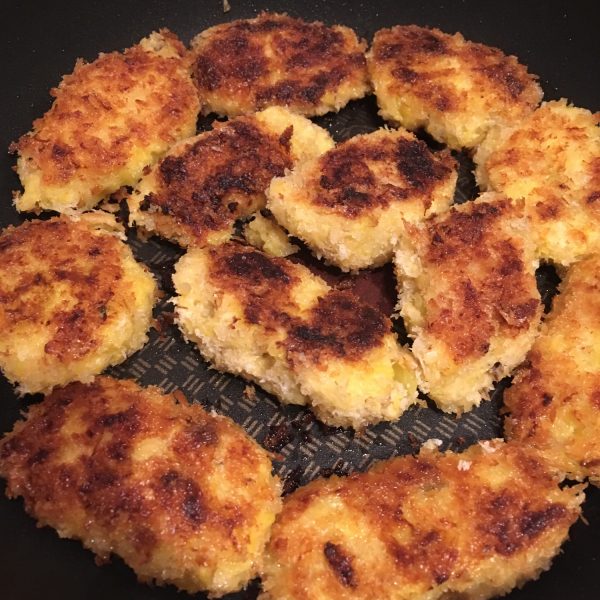
The second thing (bottom picture) I did with the second half was to remove the bones and skin and mix it with one egg and a piece of steamed butternut squash to obtain a thick paste. I then make small ball of the paste and rolled in panko and fried in a greased frypan both sides for the croquettes. Finally I also used the mix to stuff some lotus root that I then steamed. Unfortunately my lotus roots blacken a lot more than I expected due to oxidation, and the result wasn’t up to my expectations presentation-wise and  color-wise. Good to know that it is really important to add a little of vinegar when you wash and cook the lotus roots to keep their perfect white color. Taste-wise though both were really nice!

3 days without cooking!

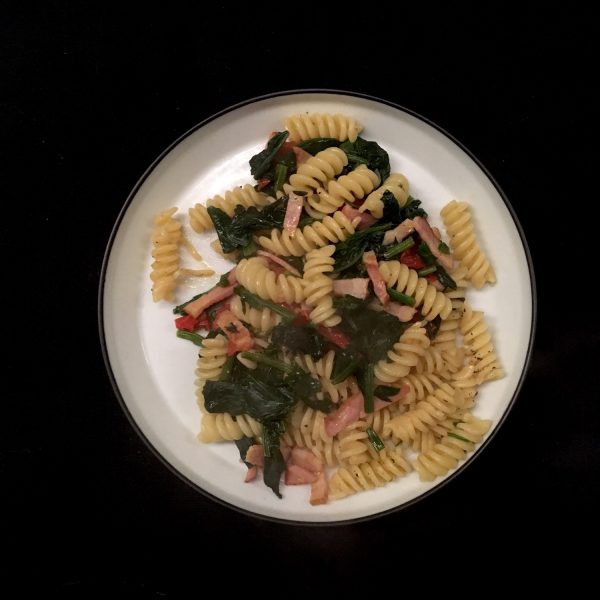
I was in France for work for the last 3 days and I didn’t have a chance to cook while away, so I was very excited to go to the country right after getting of the plane. A. came to pick me at the airport and we drove straight to Ohara. Even if it was already late, there is a family mart shop on the way that sells additionally some local fresh vegetables and fruits, very handy because all the other shops close between 20:00 and 21:00. So we stopped to pack on a few staples for dinner: spinach, tomatoes, bacon. And the dinner was all decided: pasta. I first cook the bacon in a fry pan, then add the washed and chopped spinach with still some water in it, and finally add the cherry tomatoes cut in quarters and a bit of olive oil. I then boil the pasta and afrer draining them I add them to the bacon-spinach-tomatoes, add a little of olive oil if needed, salt and pepper. And serve.

I wish you a great Sunday! For me there is nothing better than being outdoor all day to recover from jetlag.

Muscovado scones

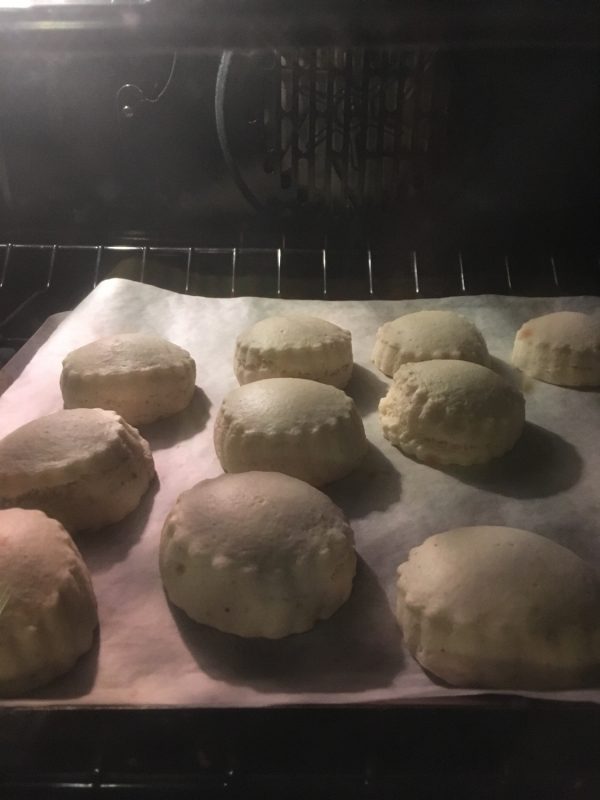
We are lucky to have a friend whose parents live in Okinawa and send regularly some delicious, organic products from there. One of the famous staple from okinawa is muscovado sugar (黒糖 こくとう kokuto) . Muscovado sugar is basically unrefined sugar cane, rich in minerals and with a distinctive dark color and a strong taste. Though it sweetens like other sugars, the taste is not neutral and then cannot be used everywhere. But for recipes like plain scones this is a perfect use, and it is nice to keep a few blocks so that it melts when baking. So for this recipe I simply replaced the milk in the scone recipe by a handful of mucovado sugar melted partially in a bit of hot water. Then I simply prepared the scones as usual and eat them with some butter or rose bud jam from Miyakojima too.

Spinach and miso

Last week I had a food shopping spree at Wakuwaku in Otaki, and I bought different types of miso. I love miso, in soup of course, but also as a dip, or in many recipes as an ingredient. This time I used it in two spinach recipes. White miso with spinach and chrysanthemum and regular granulous miso in the egg base of a spinach and ham quiche. It’s the season for chrysanthemums and I like to use them for tr bright yellow and the very distinctive taste they have. They are perfect in a chutney with onions, as an addition to roasted vegetables or here with spinach. So here are my two recipes, both very simple, but if like me you love miso and spinach, they should make you happy.

Spinach and miso quiche:

– a bundle of spinach,

– 3bs of miso (white or regular)

– 3 eggs

– a bit of ham diced (optional)

– flour, butter or olive oil, water for the pie crust

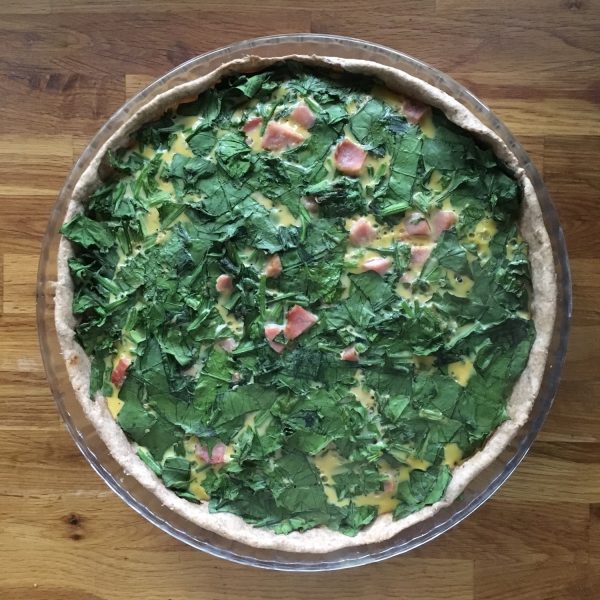
Prepare the pue crust as you like it. I used spelt and whole wheat flour. Roll it to the size of your pie dish. And set it. Wash and chop the spinach, in a bowl beat the eggs with the miso, add the spinach, and the ham, set in the pie crust. Bake at 180deg for 25min. Longer if your pie dish is deep. No need to add salt since the miso is already salty enough.

Spinach and white miso:

– 1 bundle of spinach

– 1 cup of dashi

– 2 flowers of chrysanthemum

– 1tbs of white miso

Wash the spinach a boil them in dashi. In the last minute add the petals of the chrysanthemum flowers. Drain them well, add the miso and stir with the hands. Serve and enjoy with a Japanese meal: rice, grilled fish…

Have a great Sunday!!

Japanese delight

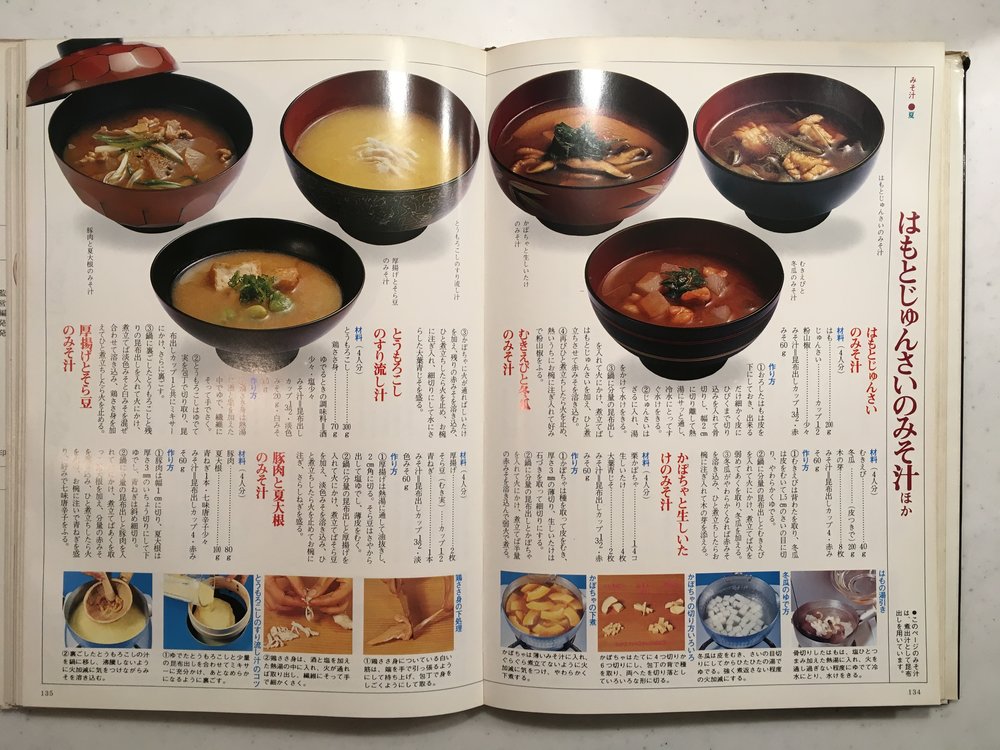
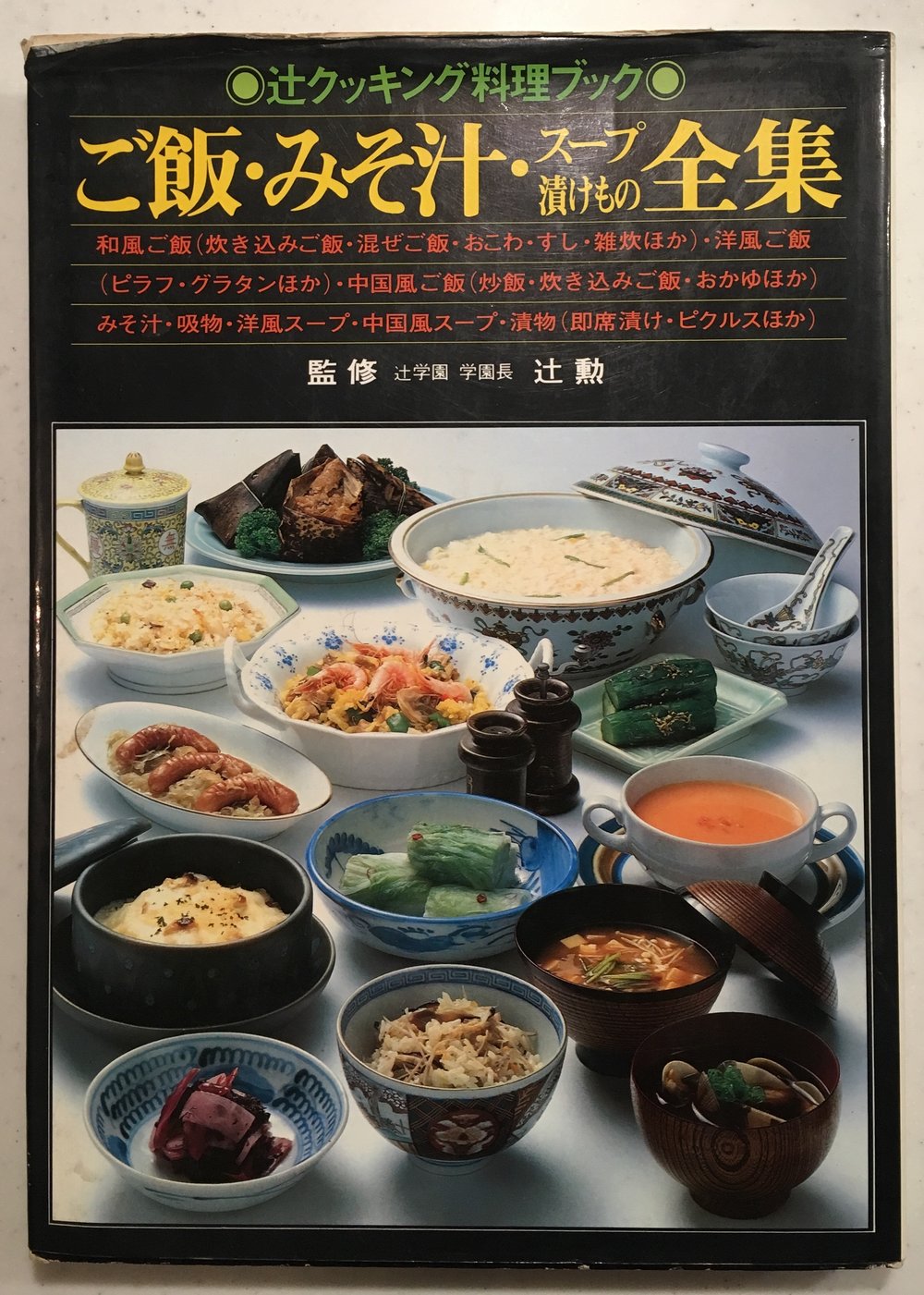
I finally tested a recipe inspired by the cooking book I bought last week on my way home at a bouquinist in Jimbocho. It’s an old book from the 1970’s or 1980’s and it has a lot of very beautifully presented food. Plating changes with time and they certainly had some nice one at that time too!! Though a few a bit crazy… bubble time… The recipes that attracted me much were the miso soup and other clear bouillons. I mean I didn’t actually read much of the recipes, rather I enjoyed reading the explanations about how to choose a good rice and how to cook it very interesting. But the soup section pictures inspired me a lot. One recipe I wanted to try was daikon miso soup. Actually, after years of living in Japan, I finally start to really enjoy cooking daikon. May be because the most often we find is gratted daikon, which I find extremely boring, or simmered and over cooked, but there is so much to do with it. I could now totally go with a daikon week of recipes!!! Would you like that??? Let me know and I’ll be happy to share my favorite classic Japanese recipes and my invented ones!

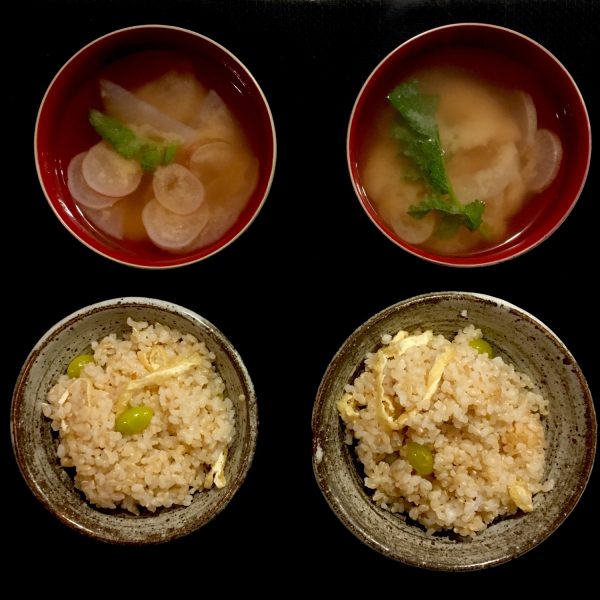
Today, I’ll just share a simple white miso soup with both radish and daikon, but daikon only, or radish only, works very well too. It is extremely simple and delicious and warm form a chilly evening. You need for 4 serving, 1.5L of dashi (I used simple katsuobushi),  a 7cm cut of daikon, 3 large pink radishes, 4 small leaves from the radishes tops (optional), 3tbs of white miso. In a large pan, prepare the dashi. Peel the daikon, cut the piece in half in the lenght to obtain half circle shapes. Cut slices of 1mm in the width. Add to the dashi and cook for 10min. Wash the radishes and slice them. Add to the soup and cook for 4min. Add the washed tops, the miso, stir and serve immediately. If you want to prepare ahead, reduce the cooking time to 7min and 2min. Add the tops and miso after reheating the soup, and serve immediately. I served it with grilles sanma, and briwn rice with fried tofu and gingko nuts.

Vegan gnocchi

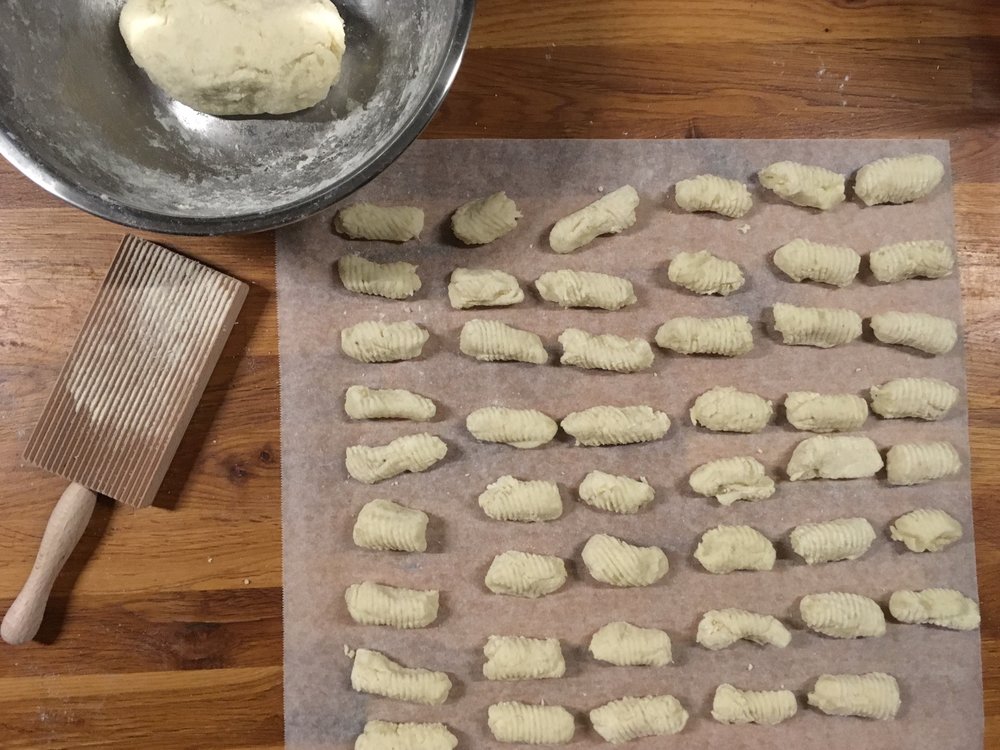
When we travel to Sicily last Xmas I bough a small gnocchi board, and curiously enough I haven’t made gnocchi since I have had it. It was time to change that! And the other day with D. and C. at home we discussed about vegan gnocchi, and I was rather tempted to try. The main reason for me was that I usually prepare gnocchi for two, and one egg in the preparation is way to much moisture. And without egg it work actually very well. I also used semolina instead of regular flour and that was really great. I didn’t measure anything, but they were very soft. What is great also without the egg, is that you can dey your gnocchi or at least keep them longer if you don’t eat them all at once!!!

As for accompanying them, for the first batch I only used olive oil and pepper. For the second, cherry tomatoes, broccoli and sausage. 

Proudly powered by WordPress | Theme: Baskerville 2 by Anders Noren.

Up ↑

Verified by MonsterInsights