DIY lamp in a basket
The other day at Yasukuni Shrine flea market I bought 2 bamboo baskets for 500Y. Usually such baskets are use for flower composition, but I liked so much the bamboo pattern of one of them that I wanted to make a lamp out of one to enjoy the projection of the pattern on the walls.
Oat bran mini pancakes
Sometime it’s nice to have a drink and a few snacks to go with but no junk, no nuts nor cherry tomatoes…
Turnips filled with miso and pork
Sunday as a side dish of the buta shoga yaki I prepared an experimental recipe of some turnips filled with a mixture of miso and pork. This idea comes from two Japenese dishes, one is quite classical: boiled daikon in dashi topped with chicken and miso (for the recipe please contact me), the other is more refined and learned it at the cha-kaiseki cooking class (I’ll write more about that soon and introduce some recipes) I used to take, we once prepared some turnips filled with a mixture of shrimps. Actually I wanted to repriduce that dish, but I find it extremely difficult to find good shrimps (by “good” I mean wild shrimps that haven’t grown in shit-pools, sorry for being gross!). Being unable to find what I was looking for I decided to take the safe path and go with some Isumi pork (again…). That being decided the recipe needed to be adjusted.
Crepes!!!
22:00, I’m just from work and from my pilates class, my husband won’t be back from work before 22:30. Just enough to time to prepare crepes!!! I couldn’t resist walking in the cold wind thinking about warn buckwheat crepes!!!
Chandeleur
Today is French “crepe day” called Chandeleur. I’m not sure I’m gonna make any tonight because I’ll be back from work quite late tonight. Yet I cook crepes and pancakes very often recently and in many different versions: changing the flour type, egg/no egg, milk/water…
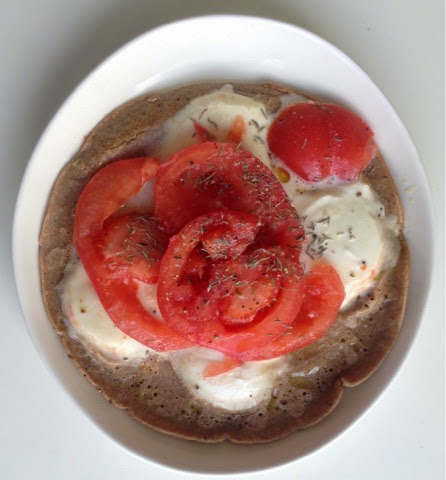
This recipe is one I like to prepare for myself when I manage to have lunch at home.
I use a mix of chesnut flour and of corn starch, some baking powder, one egg and a bit of water to make the dough for the pancake. I baked it in olive oil in a small fry-pan on one side only, thick enough and covered the top side with 1/2 fresh mozarella, 1/2 fresh large very riped tomato. Seasonned with thyme, salt and pepper. And ready to eat in less then 10min!
Ginger and pork
Isumi in Chiba (where we spend most of our week-ends) has very good pork meat. It is not as famous as the one from Miyazaki in Kyushu, but it’s as delicious and local, which for me is enough. I don’t eat much meat anyway, only pork and chicken breast, and only when I know where it comes from.
One of my favorite Japanese recipe to cook thin slices of pork cutlet is the “buta shoga yaki” (grilled pork with ginger). It’s one of the basic Japanese recipes. It’s also a standard in lots of Japanese style cafes. It’s usually served with rice.
Today I had nice thin slices of pork cutlet and a piece of fresh ginger, a good opportunity to make some grilled pork with ginger.
My version is simple: I grat (I use the daikon oroshi type gratter) the fresh peeled ginger on top of the pork slices in a container. Then I add a bit of soya sauce and a little of cooking oil. I close the container and shake well before I leave to rest for 5-10minutes (time to start cooking the rice). Then I heat a frypan and delicately put the slices to grill. Since I’ve put already a bit of oil in the mixture there’s no need to add more. I like my pork to be golden brown, so I cook it until it has the desired color.
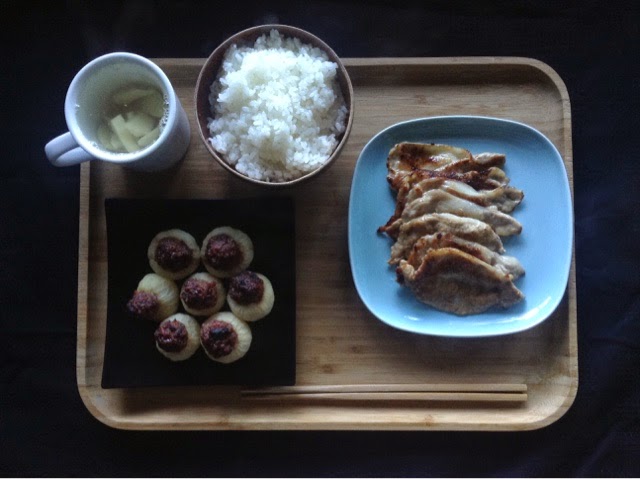
And since I really like ginger, I also used the fresh ginger roughly sliced to treat myself with a “hot ginger”. For that I just top the ginger slices with boiling water and a spoon of honey!
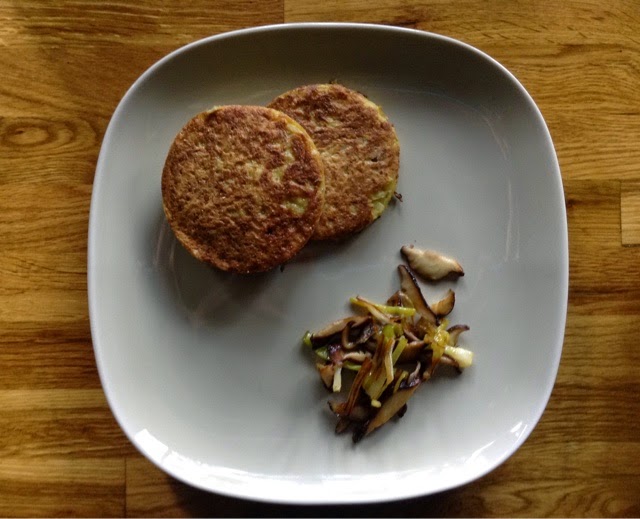
The dish on the bottom left are some turnips filled with miso and grinded pork. An experimental recipe that was really nice.
Croque-monsieur
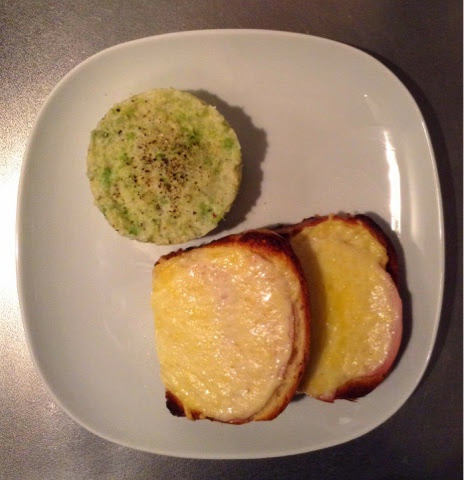
I know it’s the easiest meal to cook and it requires actually not a single cooking skill, but it’s always delicious and simple to accomodate with a lot different side dishes depending on the season.
Taisho style
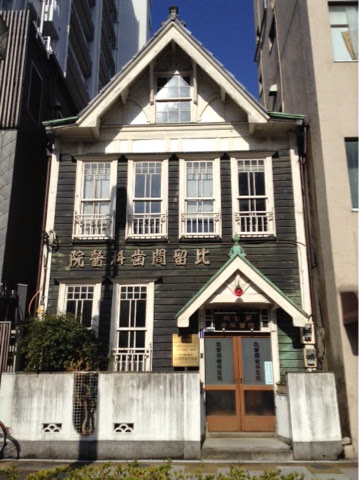
At first when we came to Japan I couldn’t get used to these Japanese-Western (wa-yo) style things: buildings, clothes, food… Everything looked like a pale copy of something we have in Europe or there is in the US, but with something wrong. The most significant period of that style is probably the Taisho era (around 1910-1925), after the many trials in the Meiji period, when the style started to be more stable and much established.
In terms of food my favorite is probably om-rice (オムライス), even it started in late Meiji. I’ll give you my recipe very soon!
There are fewer and fewer examples of Taisho architecture in Tokyo now because of a total lack of consciousness of these jewels (or maybe trying to ignore them for profits) and they are replaced one by one by ugly plastic prehab houses. But in areas such as Taito-ku north of Ueno, Ya-Ne-Sen between Taito-ku and Bunkyo-ku, or in Arakawa-ku around Senju and Kita-Senju it is still possible to see some along with some early Showa buildings.
![]() |
||
| Ukiyoe by Yumeji Takehisa present of the shamisen group |
![]() |
| Dentist office in Ueno established in 1900, and re- built in Showa 3/1928 |
An other excellent example is the Yasuda mansion near Sendagi (unfortunately rarely open to public) where it is possible to also enjoy interior design and original furnitures. More accessible yet less typical is the Asakura Chosho museum in Yanaka. Other options for a condensed viewing are open air museums where such houses have been moved to. There are two excellent places, the first is Meiji Mura near Nagoya in Inuyama, the other is the Tokyo Oedo Museum of Architecture in Koganei. It has a few exemplars that have been moved there for preservation.
The music that I’ve had the chance to be introduce to by my husband shamisen group of ha-uta has also given an interesting insight about customs and women liberalization at that time.
Regarding graphic arts, I really like ukiyoe from Yumeji Takehisa and Goyo Hashiguchi, and paintings from Kunitaro Suda for example. The museum of modern art in Hayama, besides being ideally located on Hayama beach, hosts many exhibitions during the year of Japanese painters covering that period and each is worth seeing.
But it is only very recently that I came across a fabulous book: Taisho chic, about the aesthetic of Taisho period that summarizes very well the trends at that time (architecture is not covered though) and I really recommend it if you want to understand this period of Japanese history.