Burdock soup, grilled mochi and na no hana scrambled eggs

Though it is slowly getting warmer it’s still not yet spring. A warm soup for dinner is still very much welcome!

This time I made for the first time gobo (burdock) soup with some grilled mochi (rice cake) and accompanied it with a little na no hana scrambled eggs. 
Gobo are long thin roots with a taste close to artichokes but slightly more bitter and are supposed to be rich in potassium.
For the soup after peeling the burdocks I let them dip into fresh water for 15min, then boiled them 30 min after changing the water (it removes the bitterness). I then remove the water and add fresh water again. Blend well until liquid. Finally when eating the soup I added some vegetable consommé, and pepper. Grilled a rice cake in the oven and serve together.
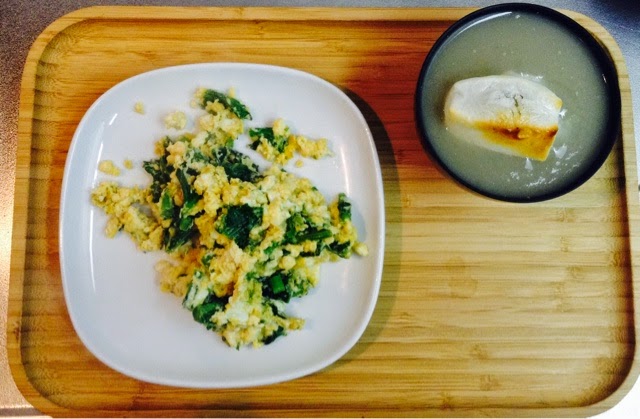
For the scrambled eggs I just put a little of olive oil in a frypan, added washed and cut na no hana, then eggs, and finally soya sauce.

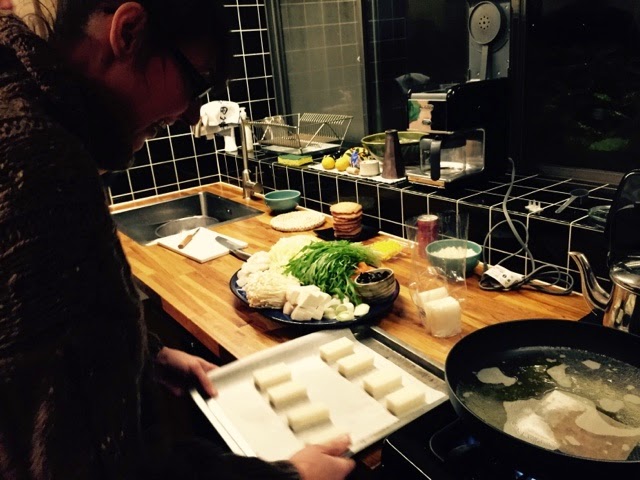
Nabe four hands

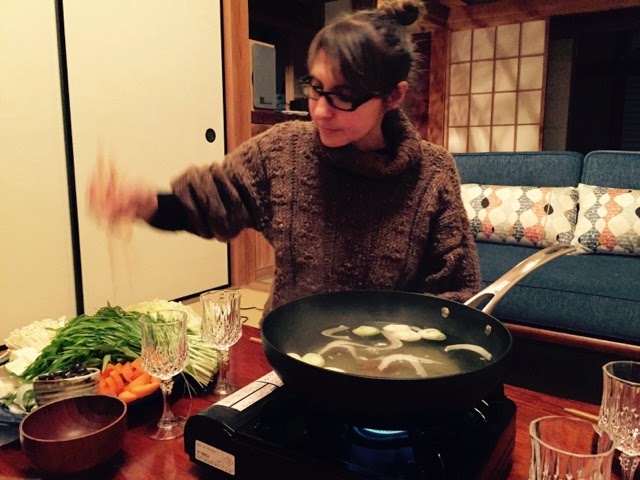
After a cold day walking accross rice paddies, nothing better than a good nabe, home made of course. 

Nabe is a traditional Japanese soup with vegetables (Chinese cabbage, carrots, mushrooms, leeks…), tofu (here we have yuzu tofu), shitaki (white Japanese konyaku pasta) and fish cut in small peaces (or meat, as you like).

In a big pot, on a fire in the center of the table, add the vegetables to the konbu and katsuo dashi bouillon. 
Then, add tofu, pasta and fish (and if you like small shells). You can also go for a 100% vegan version, delicious too.
When it’s cooked, everyone can help himself directly in the big pot. Add a drop of ponzu sauce, if you like you can add grilled mochi, rice to put inside and Bon appetite!
Made together by Prunellia and Gentiane!

Stamped butter cookies

For my birthday, my best friend offered me a very nice present: a customizable cookie stamp. I’ve used it a few time already for tea and we ate the cookies right of the oven so didn’t had a chance to take a pic!!! This time I made some for dessert and I could keep them long enough to take a picture!! These are plain butter cookies, a bit like Britany’s specialty.

The recipe is really simple: 100g of butter,  150g of flour, 40g of sugar, baking powder, salt, vanilla. Of course you can make any variation of your choice!

After baking the cookies until golden at 180 degrees I kept them in a cool dry place before eating them.

Breakfast with twisted orange bread, whole grain bread and smoothie

With Prunellia and Aurore visiting us I’m preparing a few samples of what we like to eat. The rice bowl with salad-acocado-tuna topping (see Prunellia’s post), nabe, cookies, smoothie, breads…

For breakfast I asked them to pick one bread they wanted to eat and they decided for a twisted orange bread. Excellent pick for breakfast!
This bread is a little sweet, with orange peels and orange blossom water. (250g of flour; 155g of water; 12g of dry sourdough; 2g of yeast; 20g of sugar; 5g of salt; 12g of butter; 12g of orange blossom water; 45g sugared orange peels. Mix everything together, until smooth, then prepare like regular bread, only in the end you twist the dough and bake in a buttered pan with a lid for 30min at 220deg.)

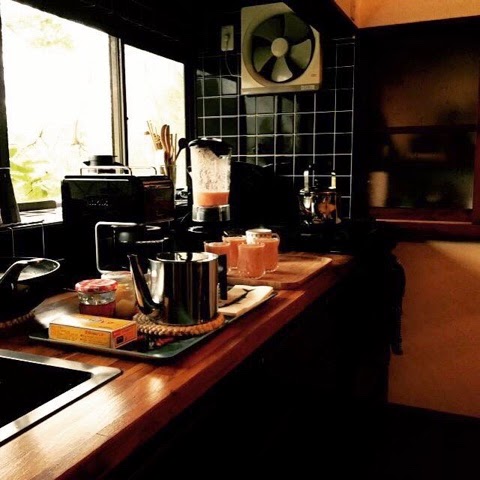
I also made a whole grain bread too (see previous post), and a green melon-pineapple-strawberry smoothie.

We ate the breads just out from the oven with homemade marmalade and butter. Deliciously warming on a rainy Sunday morning! 

Lunch at home

With Prunellia at home it means a lot of going out for dinner, little sleep, and busier than usual so for lunch I need my dose of cereals, fresh vegetables and home cooking. Today I prepare a mixture of cereals, with one egg and cheese that I bake in a frypan in circles, accompanied by grilled leek, shiitake and tomatoes, a little of olive oil and laurel. A power balanced lunch to get a lot of work done this afternoon!

Steamed whole cabbage

In winter, when it’s cold and dark I really love to eat cabbage based recipes. One of my favorite yet simplest is steamed cabbage. Basically I steam a whole cabbage so that the inside is still a little crunchy while the outside melts in the mouth. I usually accomodate it with only a fruity olive oil, thyme from Aix garden and salt. Today on the plate I’ve added a few slices of crunchy grilled bacon, but it’s optional.

Plum – 梅 – Prune

In February the first trees to bloom in Japan are the plum trees. They’re not as famous as the Japanese cherry tree, but I like them much more for the vibrant colors of their flowers from white to dark pink and for their beautiful round petals and because people are much less silly than when the cherry trees start blossoming.
Plum tree blooming in our garden
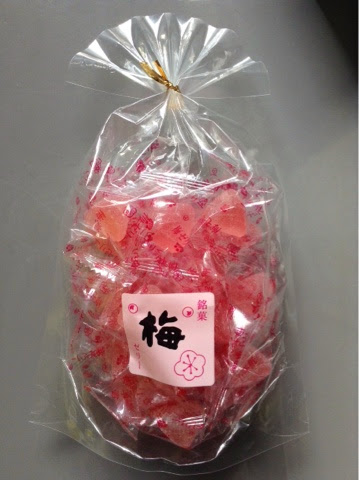
In Japan plums are used in many ways. The most two famous are probably umeshu (plum wine) and umeboshi (kind of pickled plum) made out of the fruits harvested in June. But they are also used to make some sweets, mainly jelly that I love!
Sweet plum and red shiso jelly
The plum flower is also largely used for decoration for Hina-matsuri, the dolls festival literally, or festival for the girls on March 3d.
Hina-matsuri sweets decorated with plum flowers

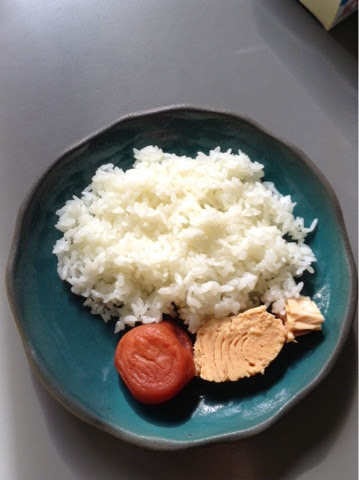
Let’s talk umeboshi! The season for making some is far ahead, but since it is a preserve method they are eaten all year round, and known to be good against fatigue among other virtues. For many non Japanese people it’s an infamous sour thing that is often found in lunch boxes: small and hard, or in onigiri (rice balls 🍙): soft and juicy. I personally find it extremely delicious when home-made or of very good quality, but I wouldn’t recommend any of the cheap things from conbini. My favourite are the large and soft ones with a lot of juicy meat. It is often prepared with red shiso and is delicious eaten with plain white rice, with grilled chicken breast or with canned tuna (my lunch plate today).
Oh! And Prunellia arrives tonight in Tokyo!!!

My umeboshi favorite lunch plate


Fukinoto – ふきのとう

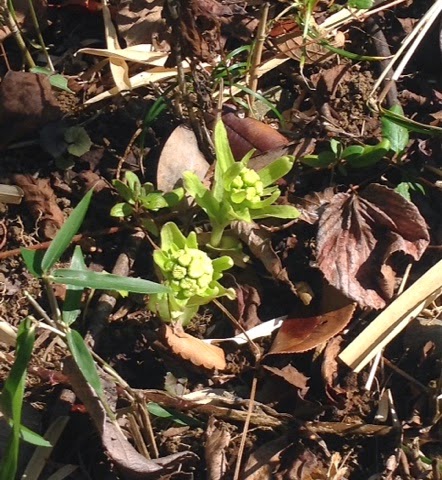
Fukinoto growing in our garden
As a lot if places, Japan is full if wild plants that are edible. A lot of them come as a set called 山菜 (pronounce that sansai, literaly the “mountains vegetables”). It includes kogomi, tara no me, warabi and fukinoto. Most of them are great fun to pick, just like mushrooms. Depending on places they are more or less abundant and they grow at different times. For example fuki no to grow in January-February in Chiba prefecture, while in the Niigata mountains they are snow piercer and grow in May.
The first time we ate fukinoto, we actually went to pick them in Tsunan machi area with some friends connoisseurs. Later, I realize that we have some in the garden!! Fukinoto are delicious, with quite a strong taste easy to identify. They are better eaten while still at the bud stage (not as opened as the picture show them). They are often prepared in tempura (I skip this since I don’t deep fry at home), in a mixture with miso: fukinoto-miso which allows to preserve them longer, and in miso soup.
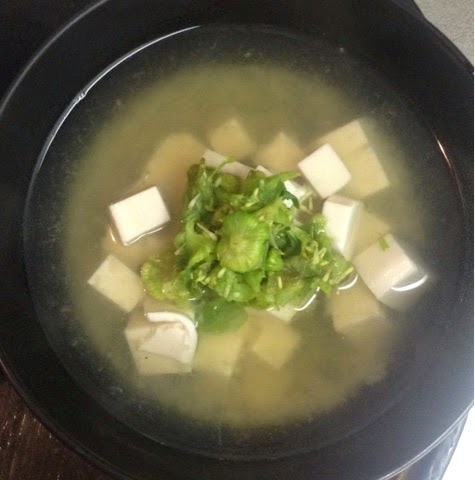
Today I tried the miso soup with tofu!

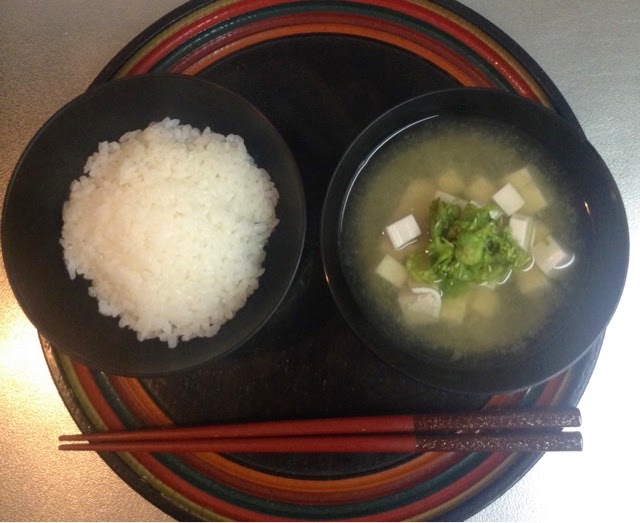
For that you need a good katsuo dashi, or konbu dashi for a vegan experience (I promise to prepare something about dashi soon), some miso (I prefer white or light colored miso for miso soup, which is also what is used for winter miso soup in cha-kaiseki), a piece of silky tofu, and some fresh fukinoto. Once you’ve prepared the dashi, mix in a spoon of miso per person. In the bowls put a few dices of tofu (after draining it), top with the finely chopped fukinoto (for a softer taste of fukinoto you can boil them once chopped in a net for 30s) and finally add the miso soup. Et voila!
Plain rice and fukinoto miso soup

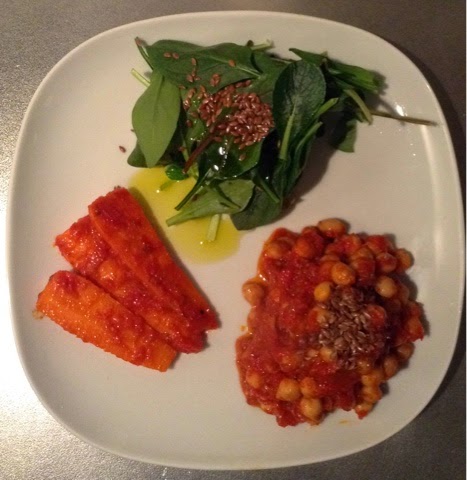
Even faster fix for dinner: tomato-carrot-chick pea raggu

This is the end of the year at the university and it is a busy time for both professor and students. Recently, I’m coming back home later and later in particular because this no excuse not to go to the gym. Last night after my pilates class I needed a very quick fix for dinner so that it allowed me to have some time to prepare the apartment for my sister’s visit later this week (yes! Prunellia is flying to Tokyo very soon!).

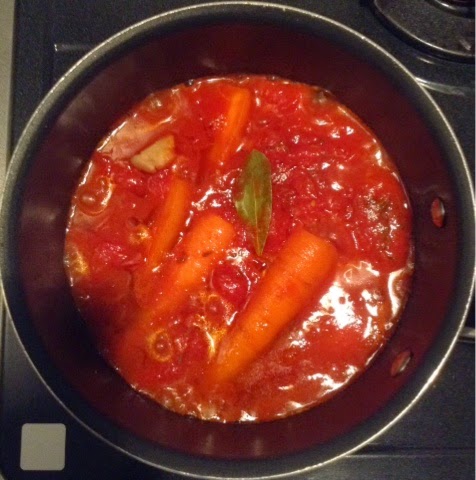
Chick peas are really handy when it comes to prepare something in 5 minutes! Dinner menu tonight: tomato & chick peas raggu with carrots.
I first roughly cut tomatoes and cooked them in olive oil, add laurel, ginger, carvi seeds, salt and pepper and small carrots halved. 

I left it on low heat, time to do the other tasks I had to do. Then once ready to eat I added a can of drained chick peas and served with baby leaf salad, olive oil and linen seeds. Delicious, warm and slightly spicy!


Proudly powered by WordPress | Theme: Baskerville 2 by Anders Noren.

Up ↑

Verified by MonsterInsights