Kintsuba

Sorry for the delay! I was hoping to publish it much earlier but then I got busy with work and I am struggling with wordpress and jetpack… technical issues that are getting more and more annoying.

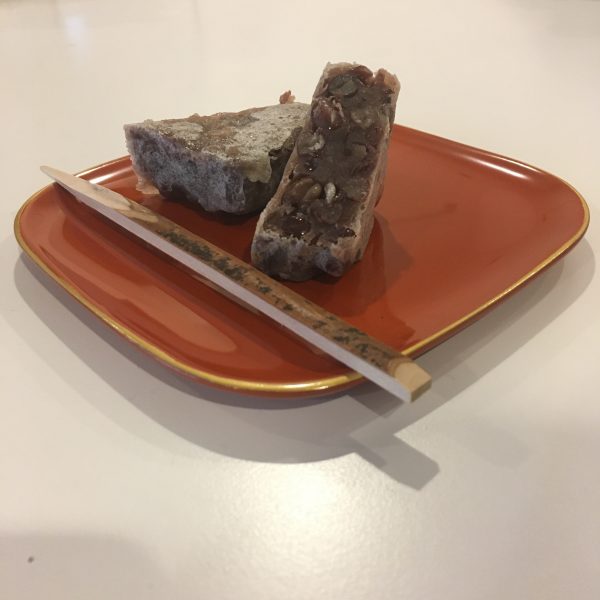
So to continue with adzuki, there are a few more recipes I would like to share, and as promised on IG, kintsuba was one of them. It’s a slightly more elaborated recipe of wagashi than those with just anko and mochi or shiratama. I like it very much for the variations that exist, it can be with sweet potatoes, including walnuts etc… so many options… I like it also for its very graphic visual. It’s a little square “cake”. Kintsuba consists of a soft and melting jelly and a thin cooked skin. Making kintsuba is simple but takes a bit of rest time as it uses agar agar and it takes 2h for it to solidify. Then there is a frypan cooking step to finalize them. But they are really delicious and worth trying.

Kintsuba also uses an ingredient that is often used in Japanese sweets: shiratamako. It’sa kind of rice flour but made from cooked mochi rice.

Kintsuba (4 pieces)

For the beans jelly

  • 100g of tsubuan or anko
  • 25ml of water
  • 1g of agar agar

For the skin

  • 25g of wheat flour
  • 5g of shiratamako
  • 60ml of water
  • A bit of cooking oil to grease the pan

First of all the jelly. It’s quick to make but as I said it takes about 2h for the agar agar to stiffen so better do this step ahead. Once you have the rest is rather quick.

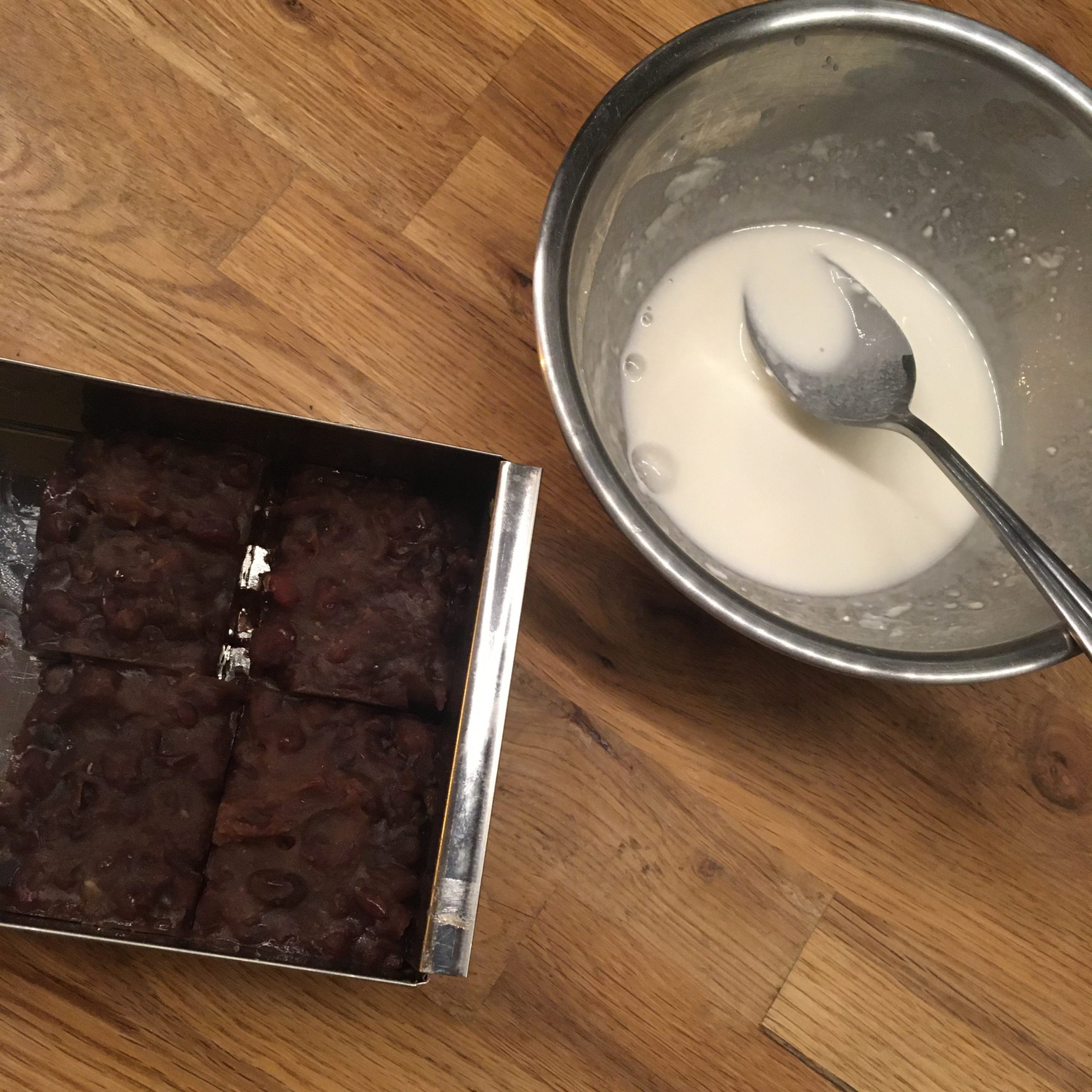
In a pan heat the water and the agar agar, stir well, when it comes to a boil lower the heat and continue stirring for 2min. Add the anko or tsubuan prepared before hand as in the recipe here. Continue stirring for 5min at low heat. Then move the paste into a dish that is square ideally. I use a Japanese tofu and jelly stainless steel dish for that specific use (see below picture). The jelly should be 1-2cm thick in the dish. Let cool down and refrigerate for 2h. That’s it for the jelly. You can eat it once it has stiffen as a jelly.

Once the jelly is stiff, take it out of the fridge, cut it into 4 pieces of 4x4cm approximately. In a bowl mix the ingredients for the skin. If you use shirotamako, you will need to crush it to powder it. It’s very easy. Stir well. Heat a fry pan and grease it. Now dip one face of a square in the skin dough and put this face down in the pan. Cook until that side is dry and no longer sticky. Repeat for each side. If you think your skin is too thin, apply a second layer. You can eat right away or keep a few days in the fridge.
The magic of the little red beans

One thing I have very rarely talked about here is adzuki – 小豆 literally small bean. They are present in many Japanese recipes and in most of the Japanese sweets. In fact beans are an important staple in Japanese cuisine: to name only a few the soya beans or daizu 大豆 literally big beans, the traditional jumbo black beans or kuromame 黒豆 for new year and of course the tiny adzuki!

raw adzuki beans

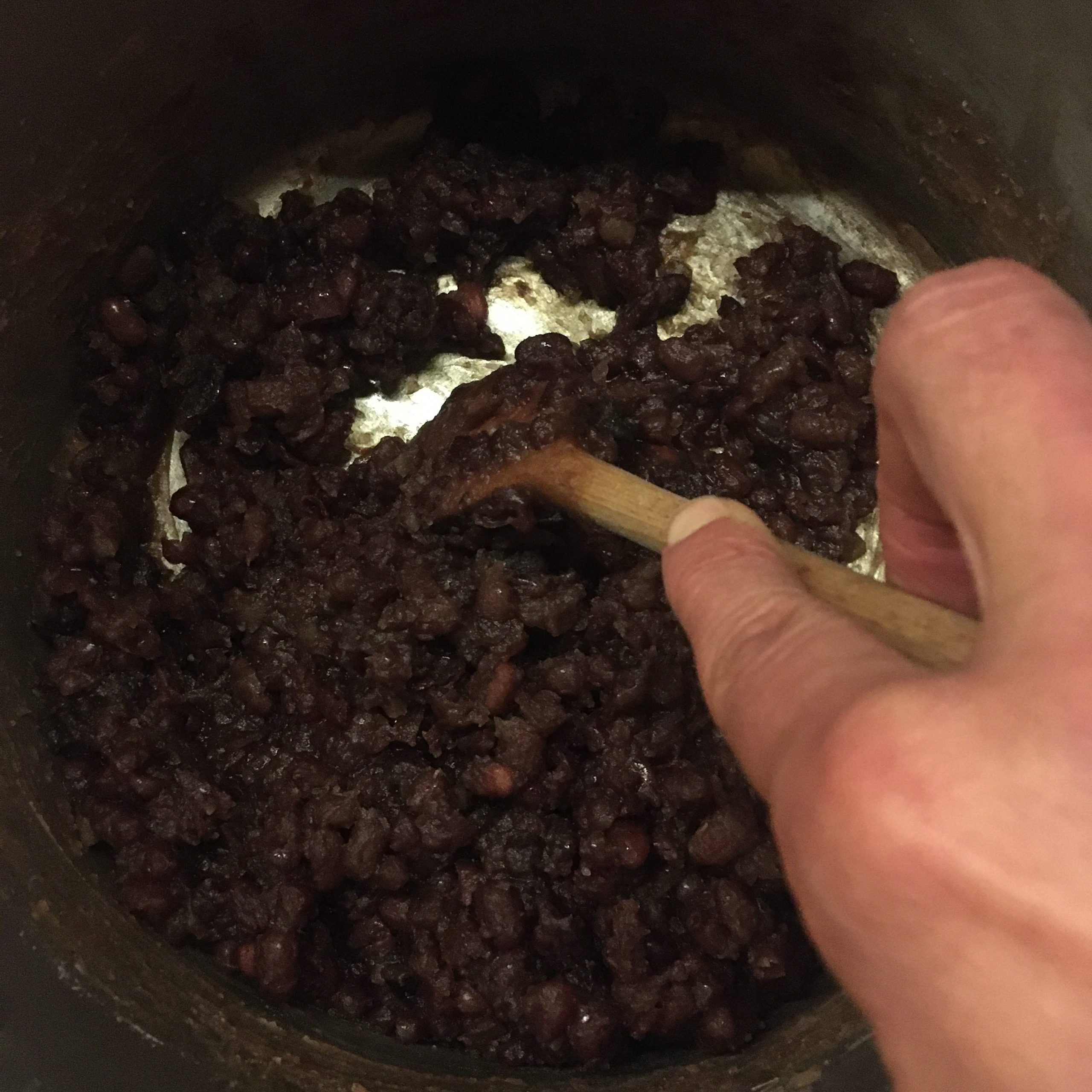
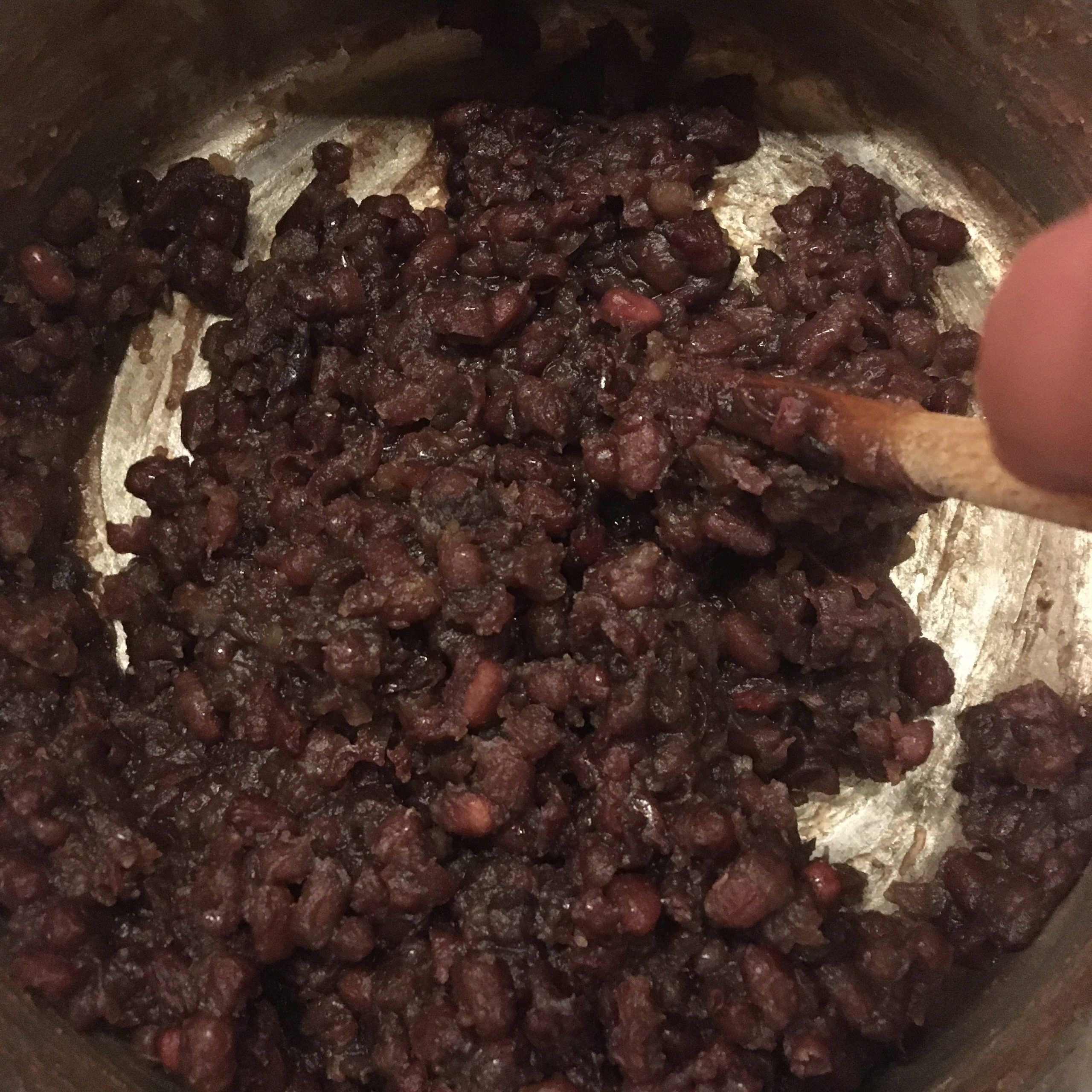
These little beans are usually cooked with sugar and salt to make tsubuan 粒あん when the beans are kept almost whole, or anko あんこ when the beans are puréed into an homogenous paste. The paste of tsubuan and anko is then used in many preparations: yokan, dorayaki, daifuku, ohagi, kintsuba, oshiruko…

Today let me introduce the basic recipe for anko and tsubuan and of oshiruko お汁粉, one of the traditional new year “soup”. Even though adzuki are dried beans they cook in 1h only so they are surprisingly easy to use.

Anko and tsubuan (makes 500g which is a lot!)

  • 200g of dry adzuki
  • 200g of brown sugar
  • Water
  • A pinch of salt

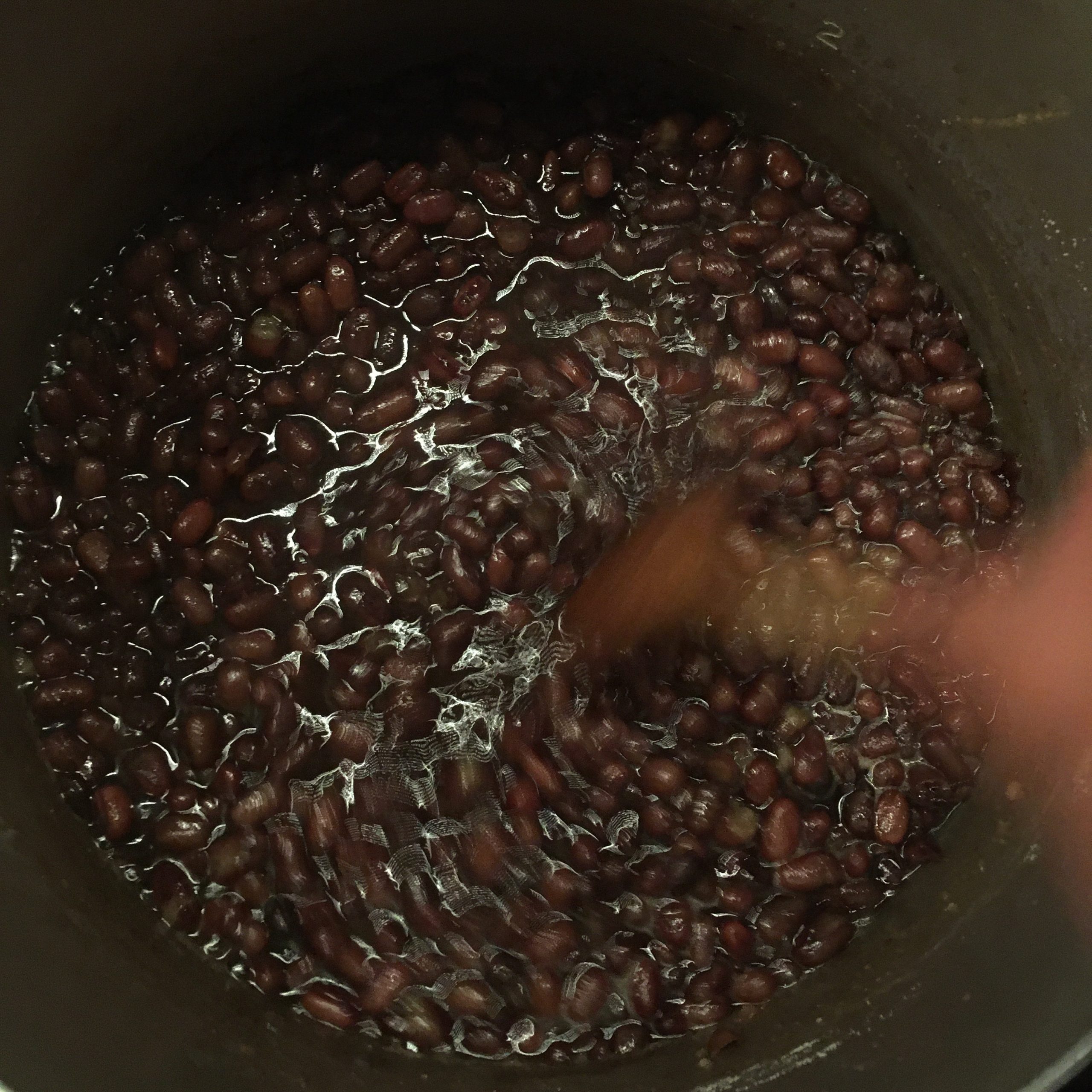
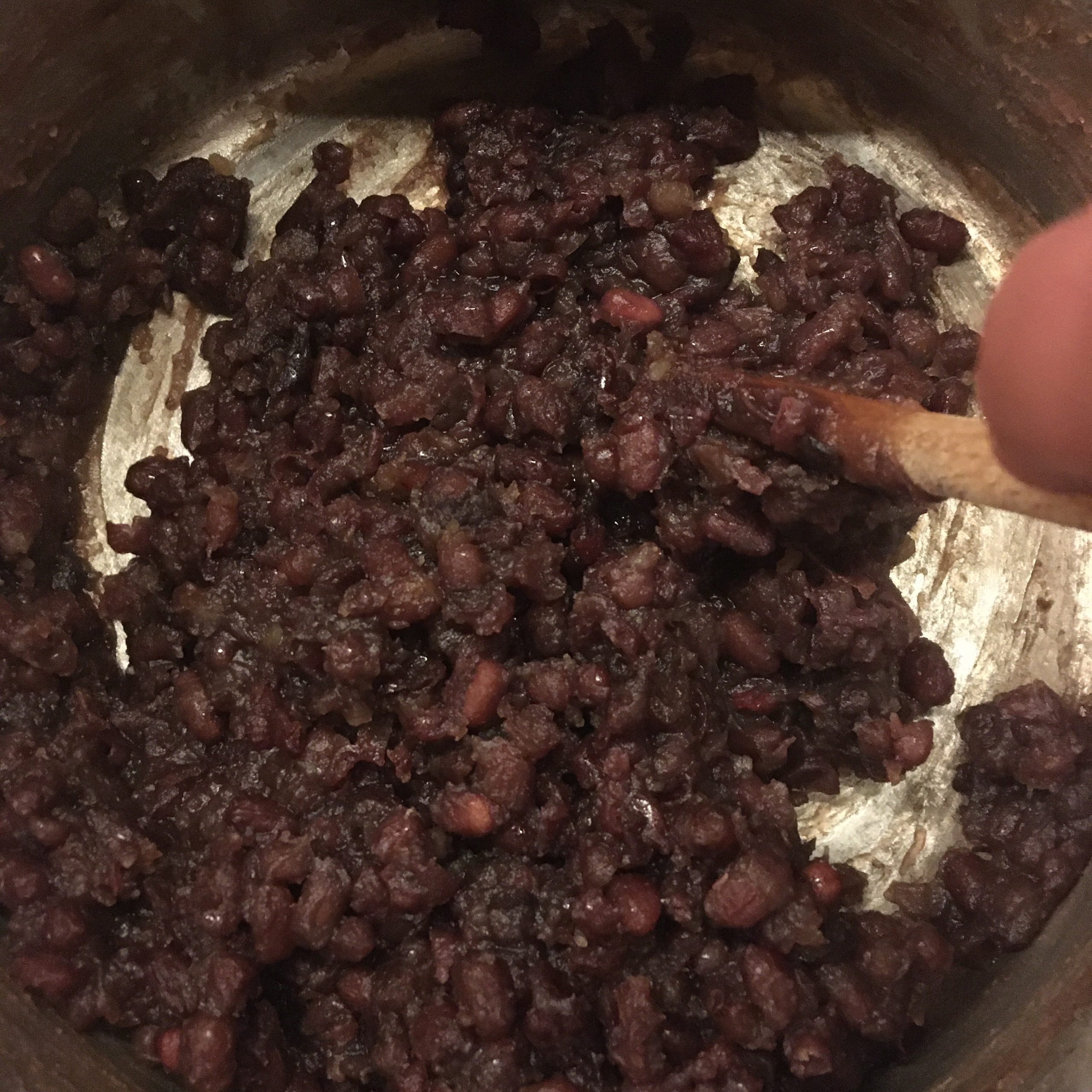
Rince the beans and put them in a pan, cover with water, bring to a boil, then decrease the heat to keep a steady boiling for 5min. Then drain the beans and throw the water. Return the beans to the pan and cover with ample water and bring to a boil again. Cook at medium heat for 40min, until the beans are almost soft. Drain the beans, throw the water, return the beans to the pan, add the sugar and cook at low heat and stir gently until the remaining moisture is gone. Add a pinch of salt. For the tsubuan that’s it. For anko you need to purée to obtain a paste.

Oshiruko (1 serving)

  • 50g of anko or tsubuan
  • 15cl of water
  • A small piece of semi-dry mochi to grill

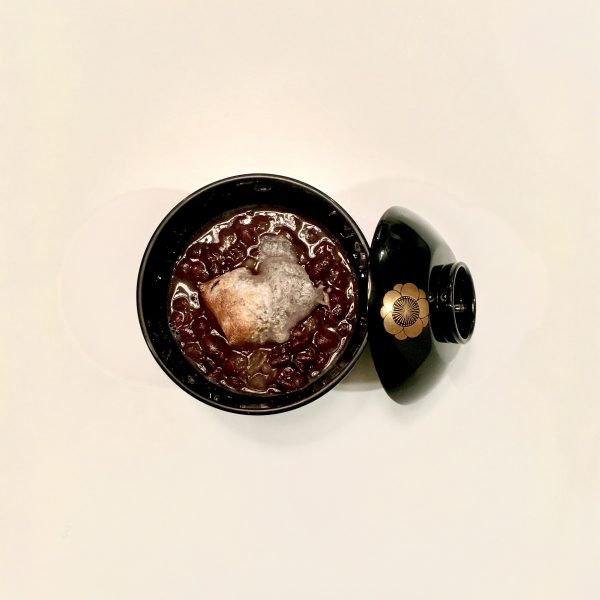
In a pan heat the bean paste and the water to obtain a kind of thick soup. In the meantime grill the mochi. Serve the soup, add the mochi and enjoy!!! Beware that the soup, because of the sugar can be really hot.

Christmas crazy, no more…

The frenzy of Christmas leaves me more and more perplexed and this year, having the opportunity (if one can says so) to spend it at home, just like a normal day off was actually more than welcome. Since we’ve been in Japan, rare are the years we haven’t spent Christmas with our families in Europe. While a family reunion is nice, Christmas is a time I dislike being in Paris, it’s dark, gloomy and cold. We are always suffering from jetlag, waking up at 5:00am when it’s pitch black outside and it will stay so for another 3 hours… better yet when we spend Christmas in the south of France, or even better in Italy. I love so much better the Italian spirit… But jetlag and dark mornings are not the only reason why I dislike so much this period, what I fear the most about Christmas are the long dinner and lunch that go with it, the sudden abundance in food like it were the only day we can eat and we have to eat them all from the appetizers to the mignardises… in magazines, instagram and wherever else… giant turkeys, creamy cakes, chocolate overdosed buches…

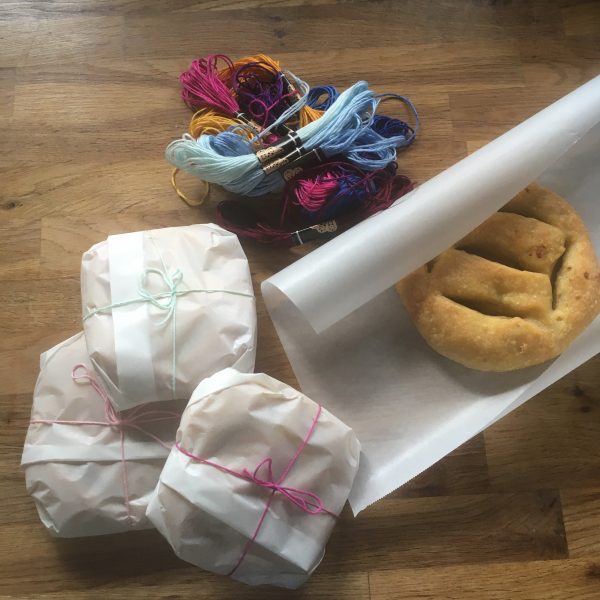
This is millions miles away from my conception of good food and good eating. Why shall you wait for Christmas or new year eve for champagne, caviar, foie gras and truffle and presents??? For fine chocolates and treats??? Why on earth would you get them all on one day??? For me, everyday is a cooking feast and every day is worth a present, I love the concept of unbirthday we should have an unchristmas too! I can’t wait 365 days and then just have to take it all in a snap! This is too ridiculous. Maybe also because my birthday is so closed from Christmas. Also, for me, a festive good meal doesn’t need to have fancy ingredients (actually I dislike most of them…), it just needs love in the kitchen and at the table and a few basic products. So the very best part of a European Christmas is undeniably the breakfast, really early, in the kitchen overlooking the garden still in the darkness: pieces of pompe a l’huile or slices of panettone dipped in a cup of hot black tea and tangerines peeled carefully and eaten slowly🍊 is what makes me the happiest. When all is still quiet.

Pompe a l’huile and tangerines

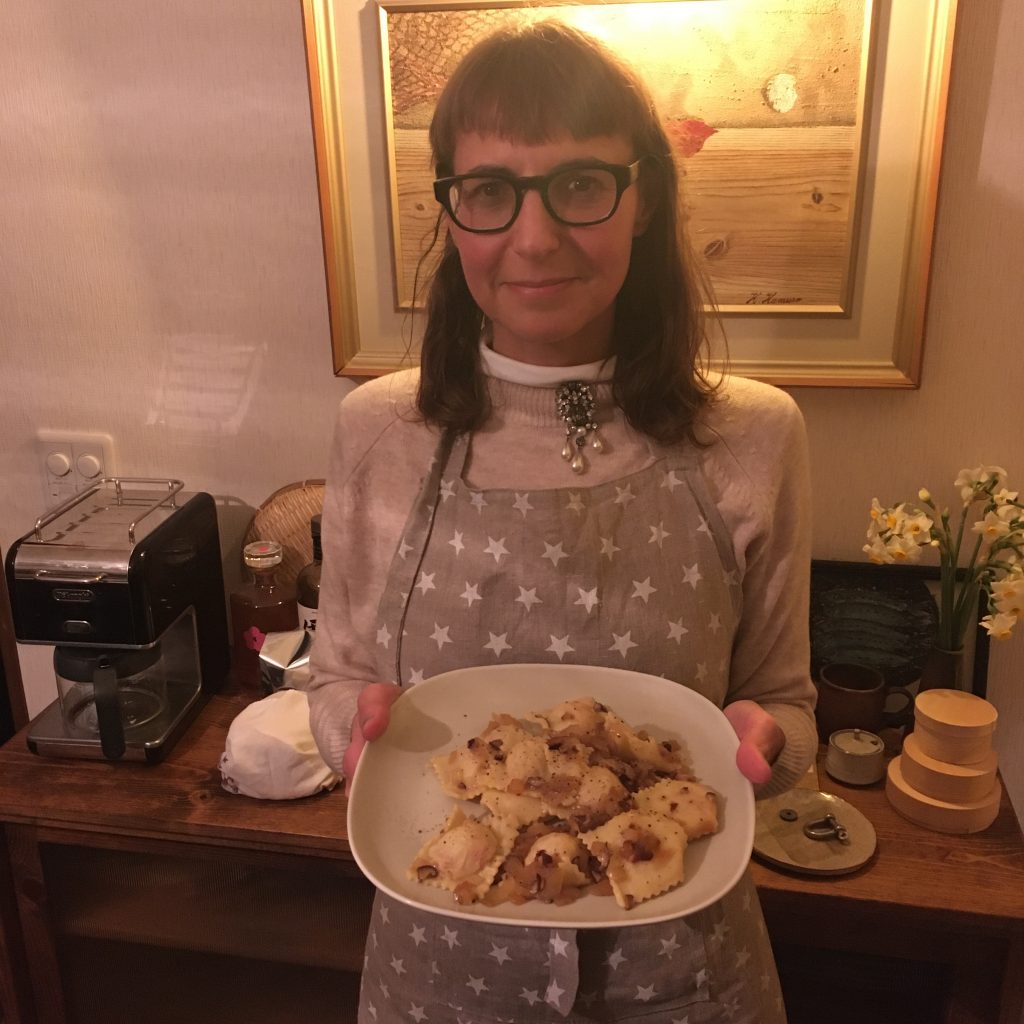
This year, no travel, no jetlag, no dark morning , no family reunion, and no Christmas party with friends, it was just the two of us in our country house. Perfect. I prepared rustic potatoes and smoked ham ravioli for Christmas eve, and pompe a l’huile for the morning breakfast, which wasn’t dark as in Japan the sun sets early, and early enough to catch up with family still on Christmas eve. Luckily Isumi is well stocked in tangerines groves, so it’s really easy to find some good ones… ours from our tree are long eaten! And that was a perfect Christmas.

I wish you all a happy holiday season!

Christmas ravioli, just the usual ravioli filled with smoked ham and potatoes, dressed with onion and shiitake

Koyadofu simmered with winter vegetables

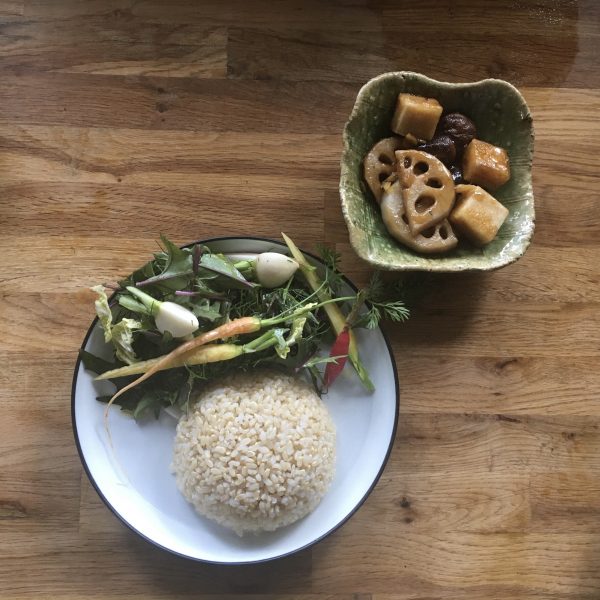
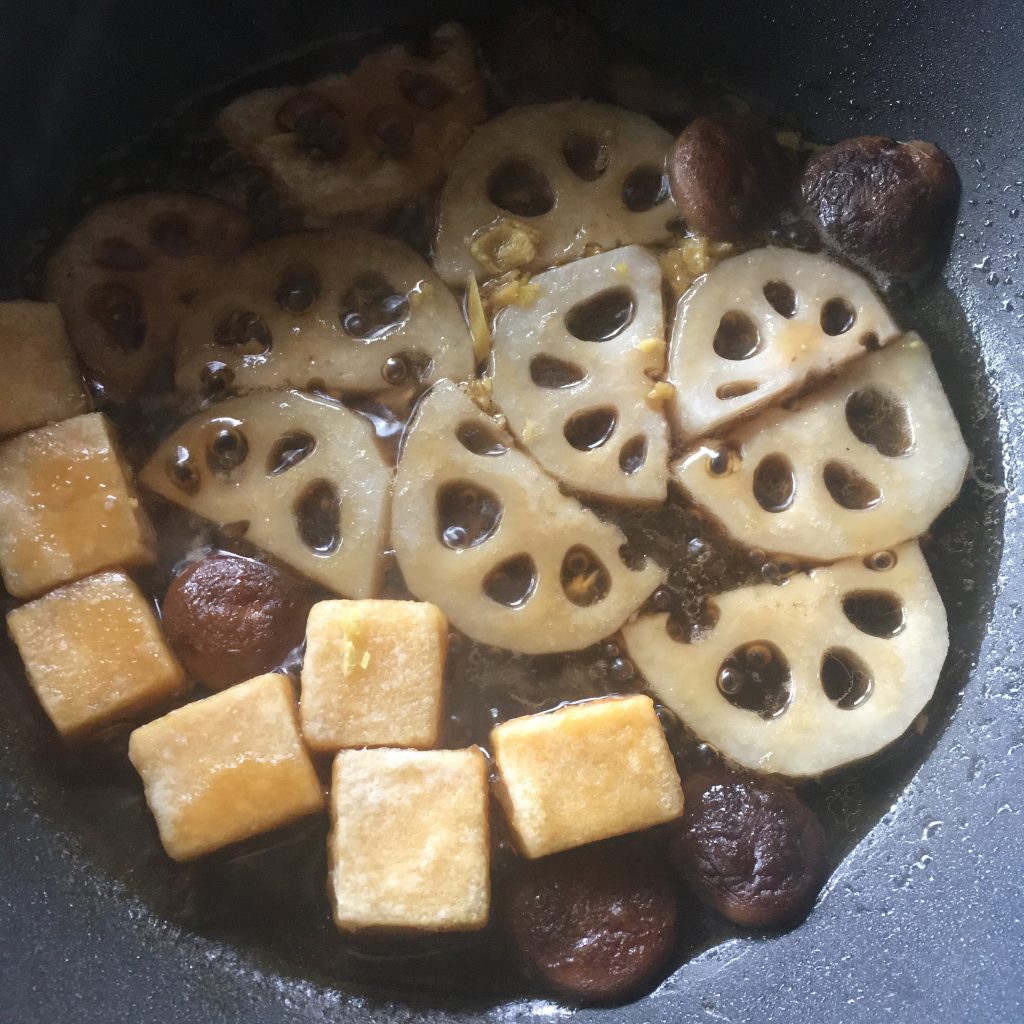
You may remember that in October I introduced a very Japanese ingredient: Koyadofu-高野豆腐 in a post with a very simple recipe of curry. This was just one of the many examples of using koyadofu. Some may definitely claim that it is spongious and tasteless, I wouldn’t argue much, but I could also say that it is packed with proteins and it adds a very interesting texture to many preparations. The recipe I want to present today is a very simple recipe of Koyadofu first slightly fried and then simmered. It is basically a preparation that could be done with hard tofu as well. The vegetables I chose for the recipe are those I had around but you can also change slightly and add greens or vegetables of your choice. I must admit that lotus root and shiitake are really perfect for this preparation: the fresh shiitake are soft and a bit chewy, the renkon is crunchy, and the koyadofu just perfectly spongy, but the prior frying avoids it from sucking all the juice.

So without further delay, let me share this recipe, that is really simple but holds all the best Japanese flavours.

Simmered Koyadofu (serve 2 people as a side of rice)

  • 5cm of lotus root, a bit big
  • 10 cubes of 1~2cm of koyadofu. If you use large blocks of koyadofu 2 should enough
  • 10 little shiitake, or 5 large
  • a 1cm piece of fresh ginger
  • 3tbs of soya sauce
  • 3tbs of cooking sake
  • 1/2 of water
  • some katakuriko 片栗粉 or potato starch
  • a bit of oil for frying

First of all return the koyadofu to a soft texture by bathing it into water for a few minutes. Drain well by squeezing it like a sponge. If you use large blocks cut them in 1~2 cm cubes. Roll them in the katakuriko. In a oiled and heated frypan fry the cubes until white golden.
Peel the lotus root and cut in 5~10mm slices, cut in 2 if the root is really large. Add to the pan and cook in the remaining oil. Wash the shiitake, remove the stem, cut them in 2 or 4 if large. Add to the pan. Grate the ginger, add to the pan, add the soya sauce, the sake and the water and simmer for 10min or until the liquid is almost gone. Serve with a bowl of rice for example.

Kwarezimal… again and perfect!

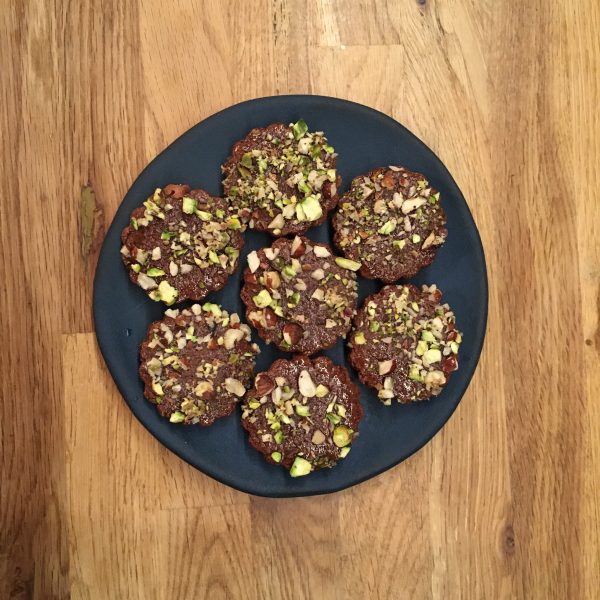
A few months ago I made Kwarezimal and posted the recipe. Kwarezimal are these Maltese vegan treats usually for easter that we had in Valetta last year when visiting. My first attempt at recreating these delicious sweets was tasty but I wasn’t quite happy. The recipe posted reflected the slight modifications needed to improve it but I haven’t tested it fully: a little overcooked and not enough moist from the honey. Also a slightly too strong taste of almond compared to what I wanted and the other ingredients. As these treats are rather rich and nourishing they are perfect in winter with a hot tea after working outside in the cold in the garden or after playing tennis, or both. So I decided to prepare them when the thermometer hit the 5degrees in the house in the morning. What best than working in the kitchen near the oven while the house warms up. I used the recipe posted earlier this year with a few modifications in the process, the shaping (made a smaller double bite size, faster cooking) and the topping: honey dip + hazelnut + pistachio. And made one slight change in the ingredients amount: double tap of cocoa powder. So here is the new recipe. To be honest it was perfectly delicious. Hard to stop eating them!!!

Kwarezimal (makes 18 double-bite size pieces)

  • 150g of almond powder (or hazelnut powder)
  • 100g of flour
  • 60g of brown sugar
  • 1tsp of orange blossom flower
  • 2tsp of cocoa powder
  • 1tsp of cinnamon
  • 1tsp of clove
  • 1/2tsp of cardamom
  • the zest of half an orange or any other citrus fruit (I used yuzu this time)
  • a bit of water

For the topping:

  • a small handful of pistachios
  • a small handful of hazelnuts
  • 3tbp of fragrant honey

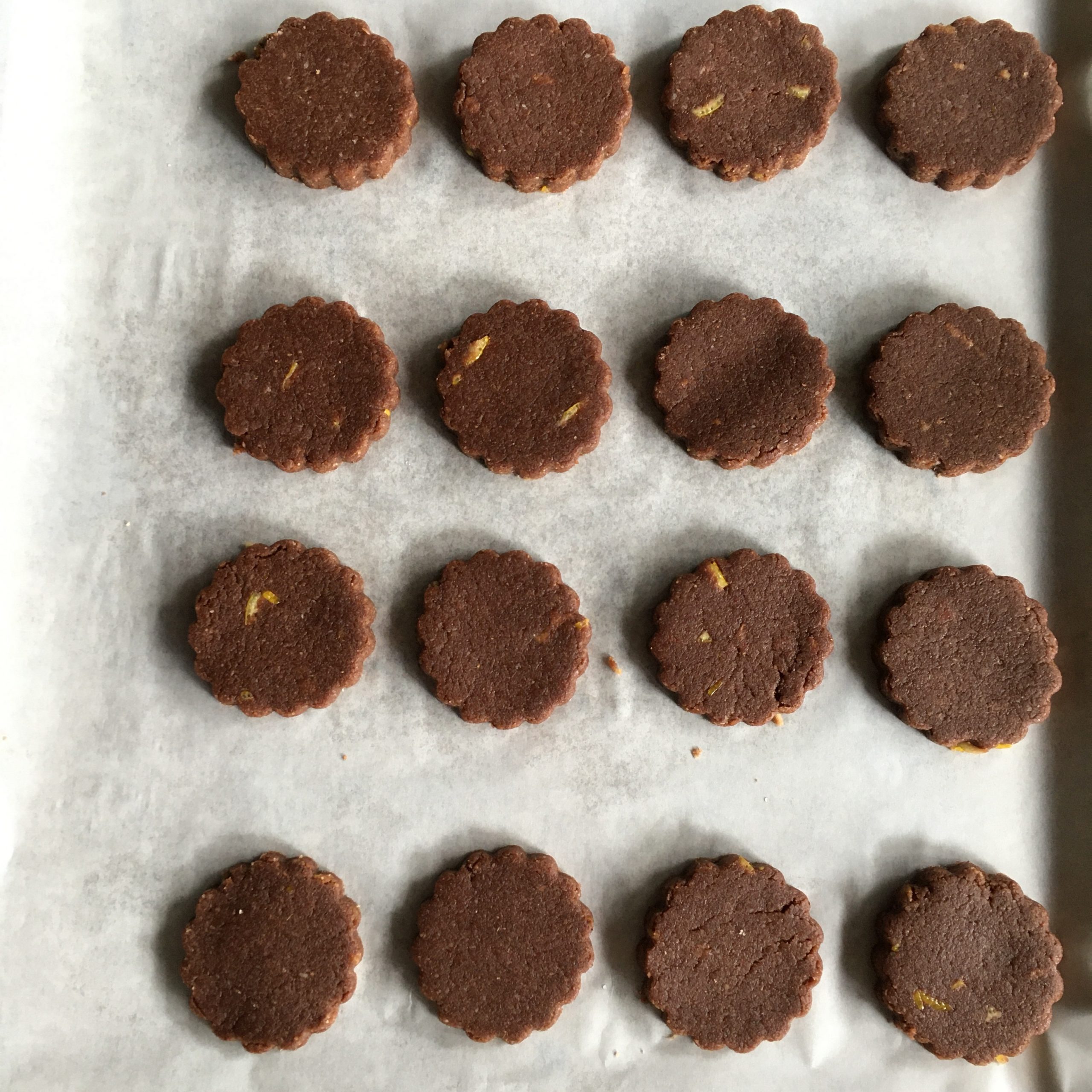
Pre-heat the oven to 180 while mixing all the ingredients (but those for the topping) together. Add a bit of water and knead until you obtain a dense but not sticky dough.

Roll the dough to a 5-7mm thick and cut the double-bite size with a shape or with a knife. Other option is to take small balls and shape them the way you want. A flat surface is better for the topping. Set on cooking paper in the oven for 15minutes.

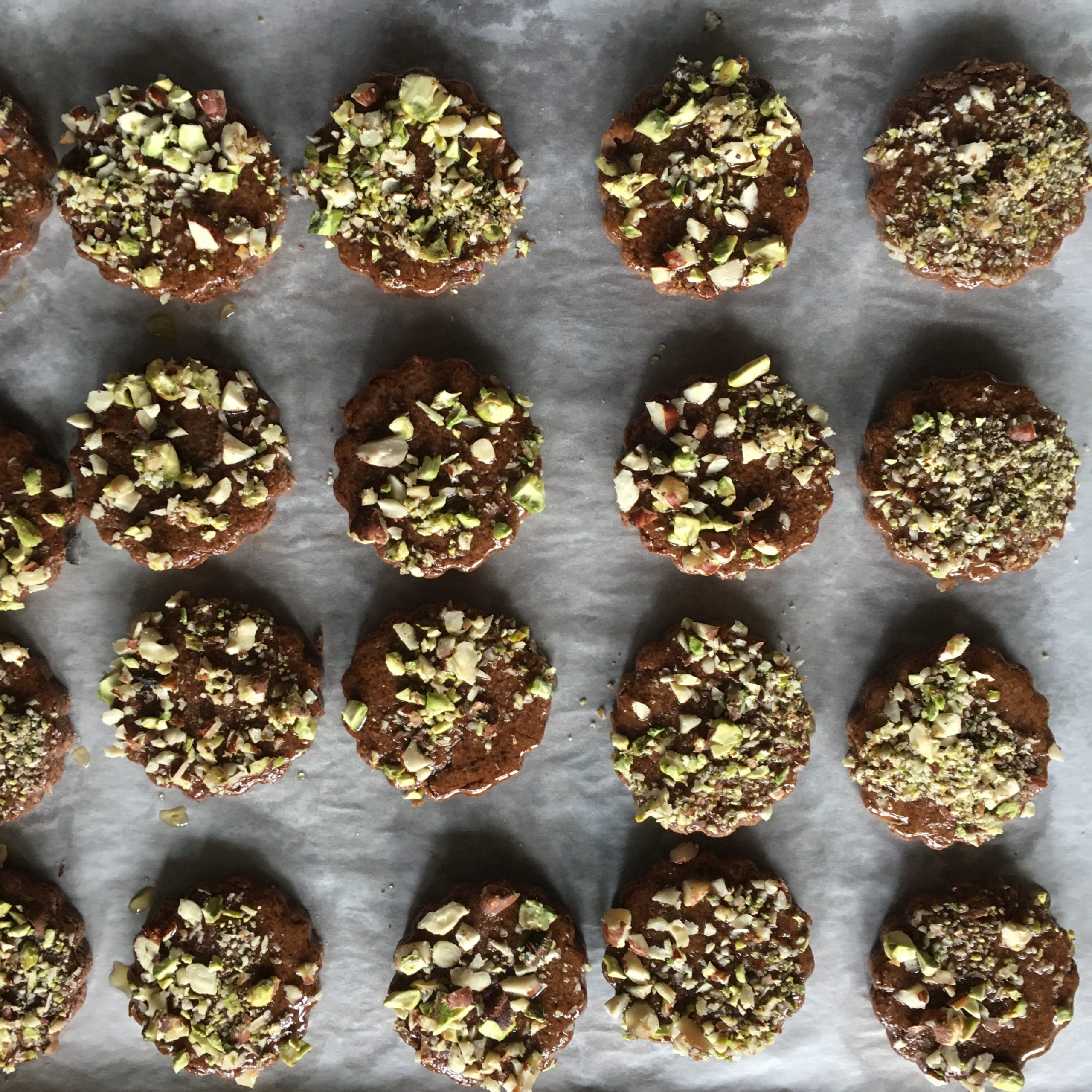
In the meantime, crush the pistachios and hazelnuts of the topping, and set in the plate. In another plate a bit deep, put the honey. As soon as the Kwarezimal are baked and out of the oven, flip a few of them in the plate with the honey, and leave for a couple of minutes. Then dip the sticky side in the pistachio-hazelnut mix and flip on a dish or back on the cooking paper, repeat with the others and let cool down before enjoying!!

Wafu pasta 和風パスタ

If you’ve been following me for a bit you are no stranger to the fact that I LOVE pasta. All kind!!!

Wafu pasta are a common thing on our table, even if for Italian people I reckon this is a terrible thing. But honestly… it is delicious, and since it mainly involves spaghetti or capellini, one could almost consider them as noodles… sorry if I make a big leap here!!!

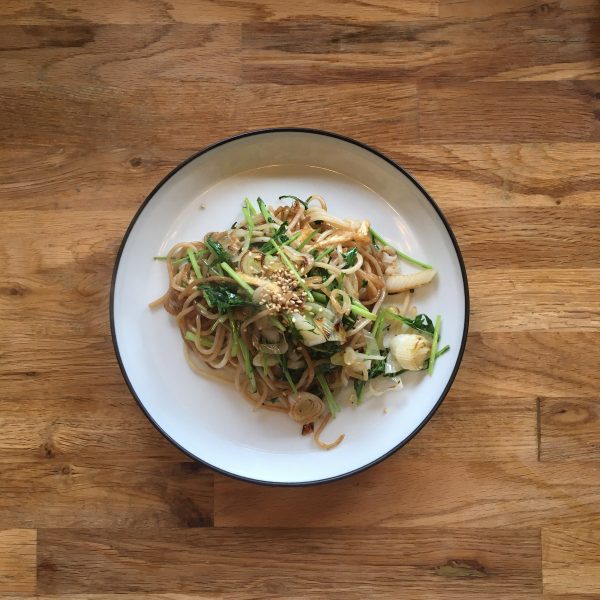
Wafu pasta to me are a mix of Japanese vegetables, soya sauce, sesame oil, sesame or nori topping etc… this time my recipe is super simple and really tasty: leek, mizuna, sesame oil, sesame seeds and a good doze of soya sauce, with half whole wheat spaghetti. That’s how much simple lunch can be!!

How do you like your wafu pasta???

Little forest’s walnut rice

It is rare enough for me to talk about what I read (except cook books) or watch here, but once in a while I stumble on something that I find inspiring (cooking wise I mean).

Every evening while we enjoy a simple meal we watch a movie (or more often half of one, as we just collapse on the sofa, exhausted of our day). Finding a good movie that matches our mood is not always easy and after a bad match with an American movie two days ago, and a British movie the day before, we opted for a Japanese movie. While I was cooking dinner, A. told me let’s watch “little forest”, I said “yes, why not” without any clue about what it would be about. I trusted his judgment. So we sat with a hot plate of potatoes and cabbage, flavored with thyme and bacon and got on a trip in time with the movie: summer in the Japanese countryside. The sounds, the color… but what caught my attention was in the opening title credits a mention to “food presentation”. Then I understood that this will not be just a movie… and it is not at al, no plot, no story. It is organized around a few seasonal recipes (there are two movies: summer/autumn and winter/spring) based on local products mostly from the garden or foraged in the nearby woods. Amazake, gumi jam, simmered wild vegetables, kuri no shibukawa ni (I was mentioning in my previous post)… and this recipe of 胡桃ご飯 kurumi gohan walnut rice. When I heard the word I wasn’t sure I got it right, but I did indeed. And the recipe seemed really lovely so I had to try it! Of course I didn’t go to Iwate countryside (where the movie was shot) to forage walnuts, the season has past anyway, but I just wanted to give it a try as it is something I had never heard about, so I used the walnuts I had.

Walnut rice 胡桃ご飯

  • 1 go of Japanese rice (I always use Isumi grown Koshihikari)
  • 1 large handful of shelled walnuts
  • 3tbs of soya sauce
  • 2tbs of sake
  • 1tbs of sugar

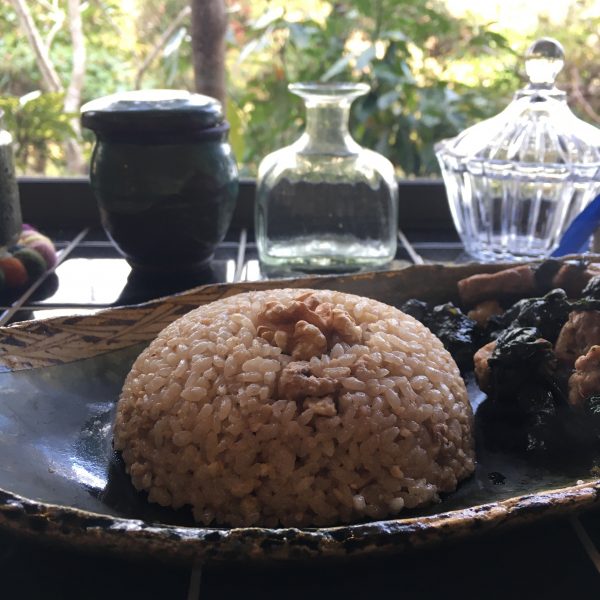
In a mortar (ideally a suribachi) crush the walnuts until you obtain a mix of coarse and fine parts (in the movie she crushed them to a paste, but I prefer having some coarse pieces left). Wash the rice and set in your cooking recipient with the normal amount of water for cooking Japanese rice (rice cooker, pan with lid, donabe…). Add the walnuts, the soya sauce, the sake, the sugar and cook as usual. That’s it. Serve warm or keep to eat at room temperature.

I served it with spinach and pork sautéed, it is rather easy to accommodate with anything seasonal too: pumpkin, cauliflower…

If you want to watch the movies, I recommend the first one (summer/autumn) much more than the second (winter/spring). There is no story, just a slice of life, and many recipes. The movie is inspired from a manga which I haven’t read. Not a big fan of mangas…

There is a Korean remake as well…

Chestnut flour pancake 2-ways

Funnily Japanese are very found of chestnuts 栗 kuri, and the fall comes with all sort of chestnut preparations savory and sweet. The most famous is probably 栗ご飯 kurigohan (rice with chestnut) or 栗の渋皮煮 kuri no shibukawa ni (boiled chestnut in syrup). The use of chestnut flour though is more restricted, and often limited to some mochi preparations. So finding chestnut flour in Japan is not an easy task… luckily my parents once in a while send me a package from France, and chestnut flour, and green lentils are often on my order list!!! To be honest, I’ve never seen chestnut flour in any of our trips to the mountains in Japan, or in regions where they might produce some, though I always stop at local shops and markets or farmers cooperatives.

So this recipe may not be the most local one, but for me it is something that I really love in autumn. It is naturally very sweet, yet flavorful. It reminds me of Cevennes, Corsica or Tuscany. It is rustic yet refined because so rare now.

Chestnut pancakes

  • 100g of chestnut flour
  • 50g of wheat flour
  • 1tsp of baking powder
  • 1 egg
  • water

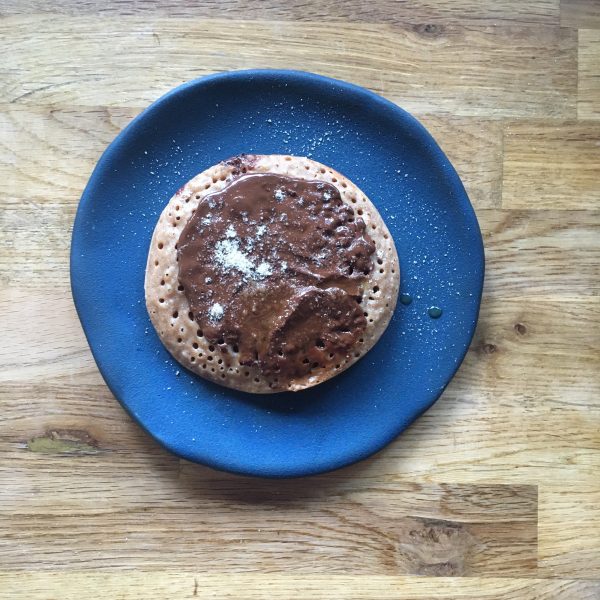
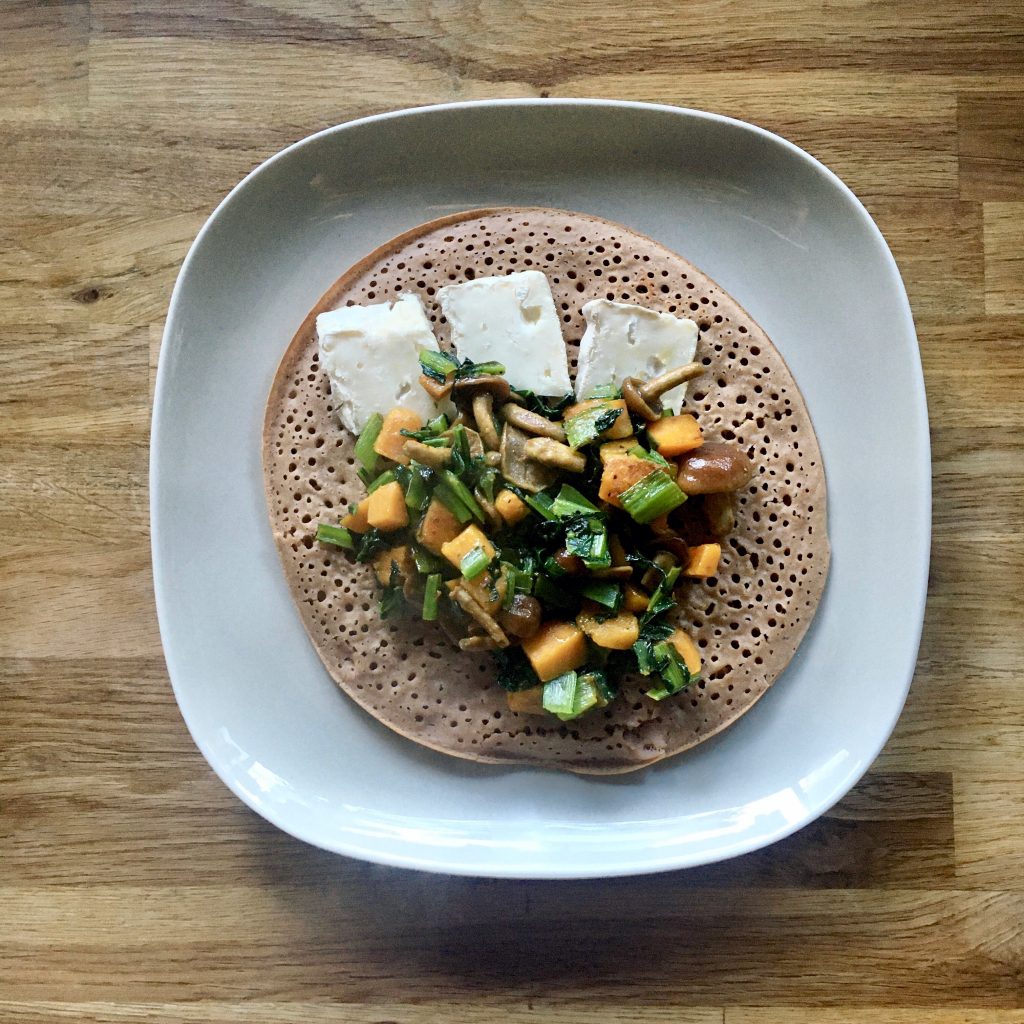
Simple as it is to make pancakes… simply mix all the ingredients to obtain a silky but thick dough by adding water little by little. Cook in a non-sticky fry pan. I use a small-medium one and made one at a time for the savory ones, and made two at once for the sweet ones.

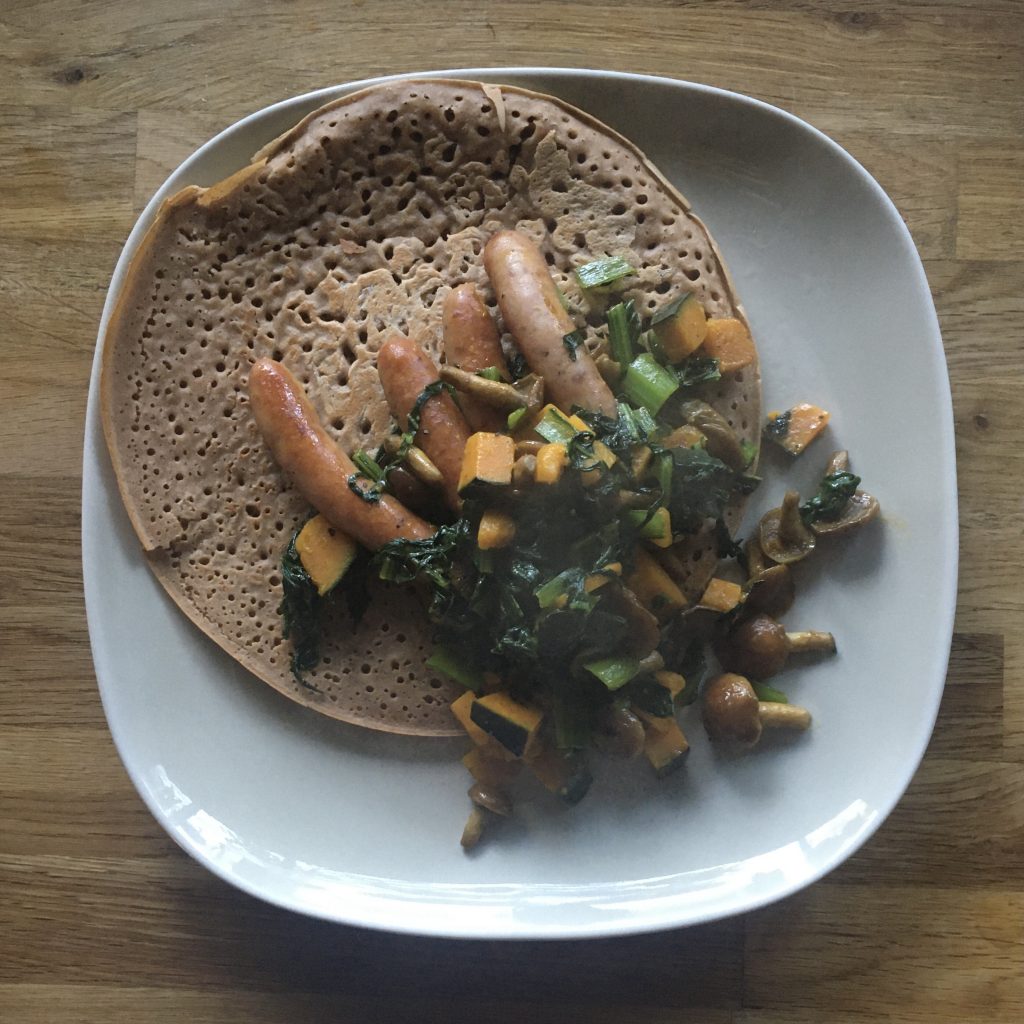
For the savory ones, I cooked in a pan with a bit of olive oil: mushrooms (nameko for their beautiful color!), kabocha and komatsuna. Add cheese from Takahide farm for me and sausages from Isumi for A..

For the sweet ones I topped with dark chocolate, melted in the last minute of cooking, a sprinkle of brown sugar and a splash of olive oil.

Cheese version for she
Sausages version for he

Burdock – 牛蒡

With the fall, burdock 牛蒡 gobou is back in season. This long root that looks like a salsifis but is firm and ressembles in texture artichokes, and a bit in taste too… is a classic flavor in Japanese cuisine. Probably because of a rather country style strong flavor and its fibrous texture, it often appears in simple recipes with other strongly flavored ingredients: chilly pepper in kinpira for example, or in very small quantities. Given that a burdock root is quite big, and one can keep for rather long, it is a very handy vegetable!!!

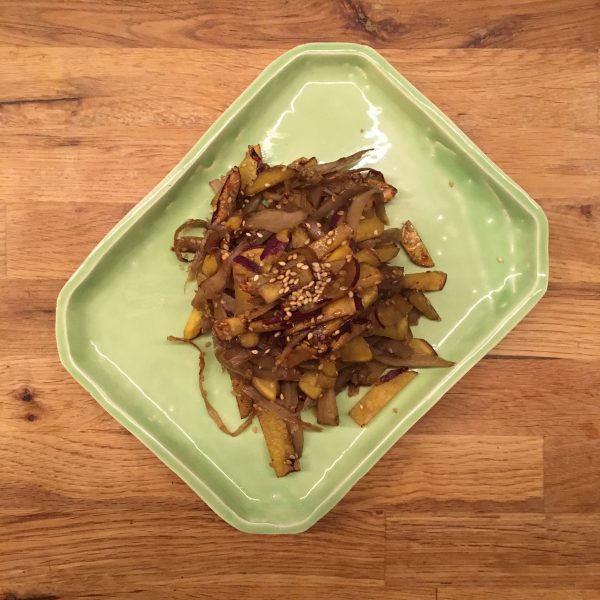
I love to cook it in different preparations. Creamy soup is one of my favorite but it takes quite some time and requires a blender. Last night I came up with a simple recipe that mixes daigaku imo recipe inspiration with gobou in a light version. I’ll talk about daigaku imo later… The recipe with burdock is really simple and super tasty. It is perfect with a bowl of rice or whatever you like.

Burdock & sweet potato (2 servings)

  • 1/2 burdock
  • 1 sweet potato not too big (fits in the palm)
  • 2tbs of sesame seeds
  • 1tbs of sesame oil
  • 2tbs of soya sauce
  • 1tsp of sugar

Wash and peel the burdock. With a peeler make kind of gobou flakes. Boil in water until it softens. About 15min probably. Drain. Wash the sweet potato and cut in sticks not too big.

In a pan greased with the sesame oil, start cooking the sweet potato. Add the burdock drained. Stir well. When the sweet potato changes to darker yellow or golden, add the sugar the soya sauce, and the sesame seeds, stir well again. Cook another 2 minutes while stirring. And serve. Eat warm or chilled.

Proudly powered by WordPress | Theme: Baskerville 2 by Anders Noren.

Up ↑

Verified by MonsterInsights