Pickling

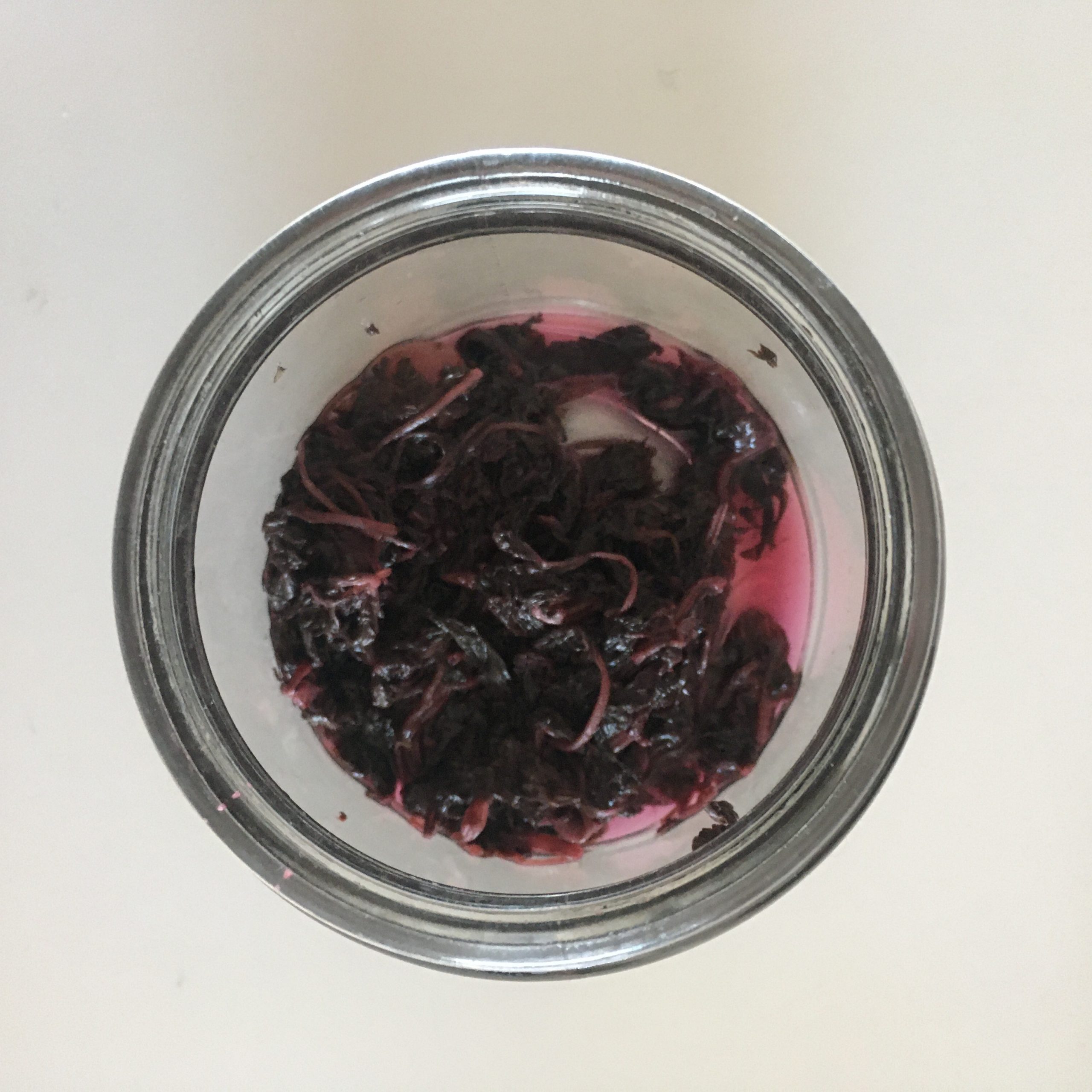
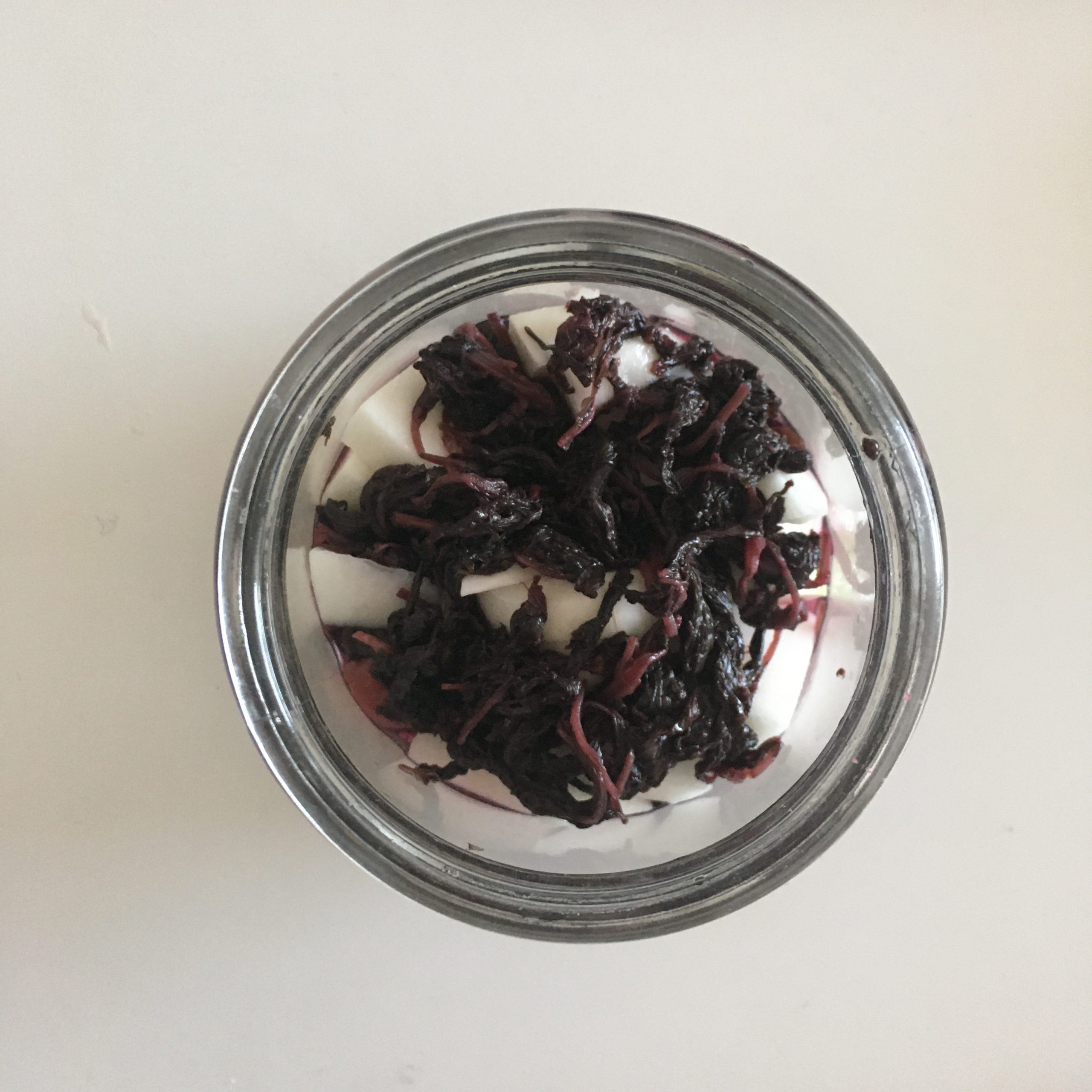
I don’t know if it’s because of the sunny and warmer days, the abundance of vegetables that I love, or seeing the rapid growing of the plums on the trees that are the prospect of a new harvesting season and making plum fermented syrup 梅シーロップ, and salt fermented plums uneboshi 梅干し, but I’ve recently been in a mood for pickling. I think it is also because I realized I need to clear space for the new bins that will populate the shelf and the fridge soon, so it means emptying all almost finished jars and bottles. Rather than just tossing the precious ume zu in the drain, or the beautiful red shiso (parilla) leaves after they have served for the plum and their conservation I thought of a recipe I was taught by our Hakuba’s favorite restaurant owner and cook which consists of pickling cucumber in ume zu. I then extended it to red shiso leaves too. So my pickling repertoire is rather simple. Nothing about nuka, that stinks and is sometimes a bit difficult to control. As I said, I use the simplest pickling methods: salt pickling 塩漬け shiozuke, ume zu 梅酢 pickling called shibazuke 柴漬けand red shiso ume zu pickling. It is really quick to make if you do asa zuke 浅漬け which a rapid and “shallow” pickling and the result is always a nice add-on to a Japanese meal. I pickle only a small amount at a time and to make the process faster I usually cut the vegetables (otherwise the pickling time is longer and I forget that I had pickled something!!!). So simple and delicious that I’m not sure why I don’t pickle much! Anyway… here are a few very simple recipes to make your own Japanese pickles. You can adjust the amount of salt to you liking.

Salt “shallow” pickles 浅漬け

  • 1 Japanese cucumber
  • 1/2tsp of salt

Wash and pat dry the cucumber. Slice thinly. In a bowl, put the cucumber slices, sprinkle the salt on top. Put a weight on the cucumber slices to slightly squeeze them. What I would usually do is cut a piece of cooking wrap or similar and put a tinier heavy bowl on top. Keep for 2-4h at room temperature depending on the season and the pickling level. Beware, the amount of liquid in the bowl may increase quite dramatically, so either use a large enough bowl, or put in a tray to avoid overflow catastrophe! After 4h the pickles will be ready to eat. The longer the softer. Keep in the fridge after 12h and eat rapidly because it is already sliced.

You can use the same recipe with other vegetables that contain less water, in that case you may want to do a 5% salt brine with 5g of salt and 100g of water, and use the brine to just cover the vegetables. You can also pickle for longer, or not cut the vegetables and pickle the whole vegetables (pickling time would be 8-12h). In that case the weight to apply on the preparation is about twice the weight of the pickled vegetables and once pickled they apparently keep for a few days in the fridge, in a airtight container without the brine. Honestly I pickle just the quantity I want us to it, so never keep them!

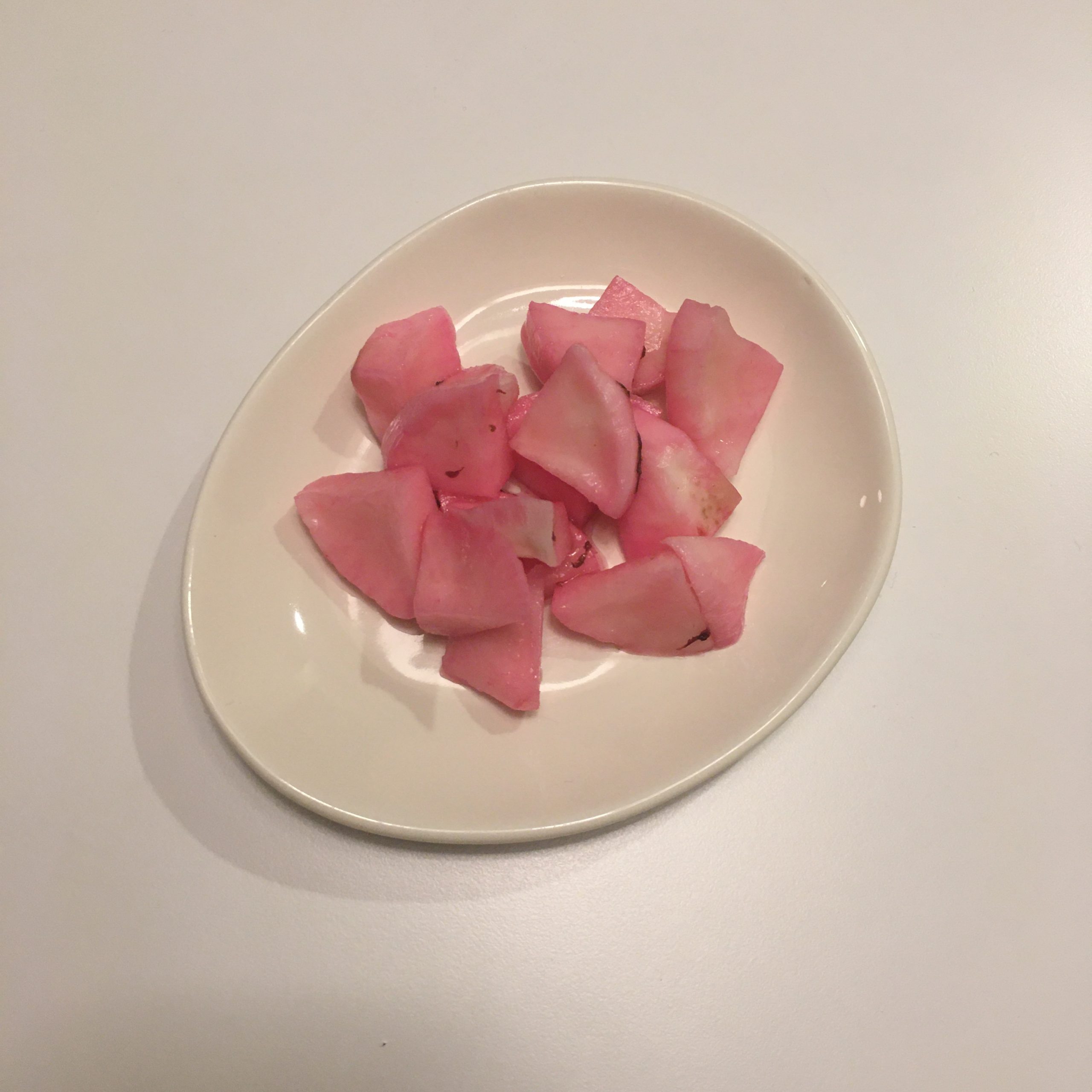
Ume zu pickles shibazuke 柴漬け

  • Cucumber, turnip, daikon…
  • 2tbs of ume zu

While this recipe requires ume zu, the salty juice produced by the plum when pickling them, it is a very delicious and simple recipe. Ume zu can be bought in local farmers markets in Japan or at cooperative. I use the one I kept from my plum pickling.

For rapid pickling I wash and cut the vegetables, pour the ume zu and then put a weight on top.

Red shiso ume zu pickling

  • White vegetables of your choice: daikon, turnip…
  • Red shiso leaves that have already served to pickle plum

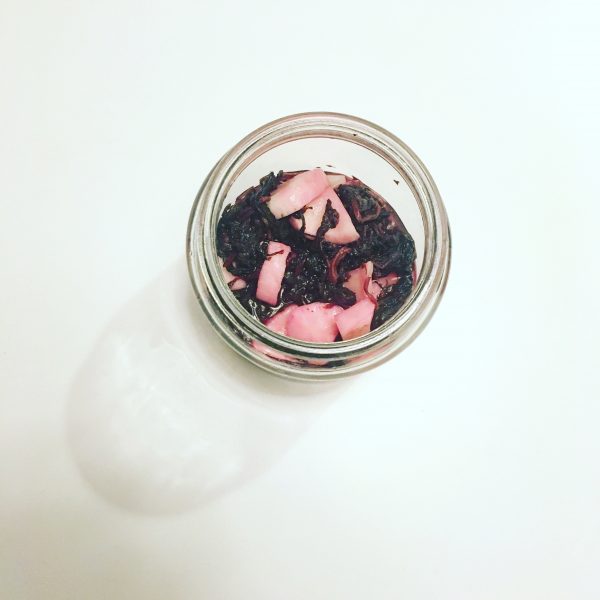
Same as above, this recipe uses a by-product of plum pickling: the red shiso leaves that are added to plum to add flavor and color. This may not be easy to find of the shelf. But next time you pickle plums think about reusing it!

Same here, wash and cut the vegetables. Set them in a container top with the shiso leaves. Apply a weight on it for a few hours and enjoy!
Eagle fern – わらび – 蕨

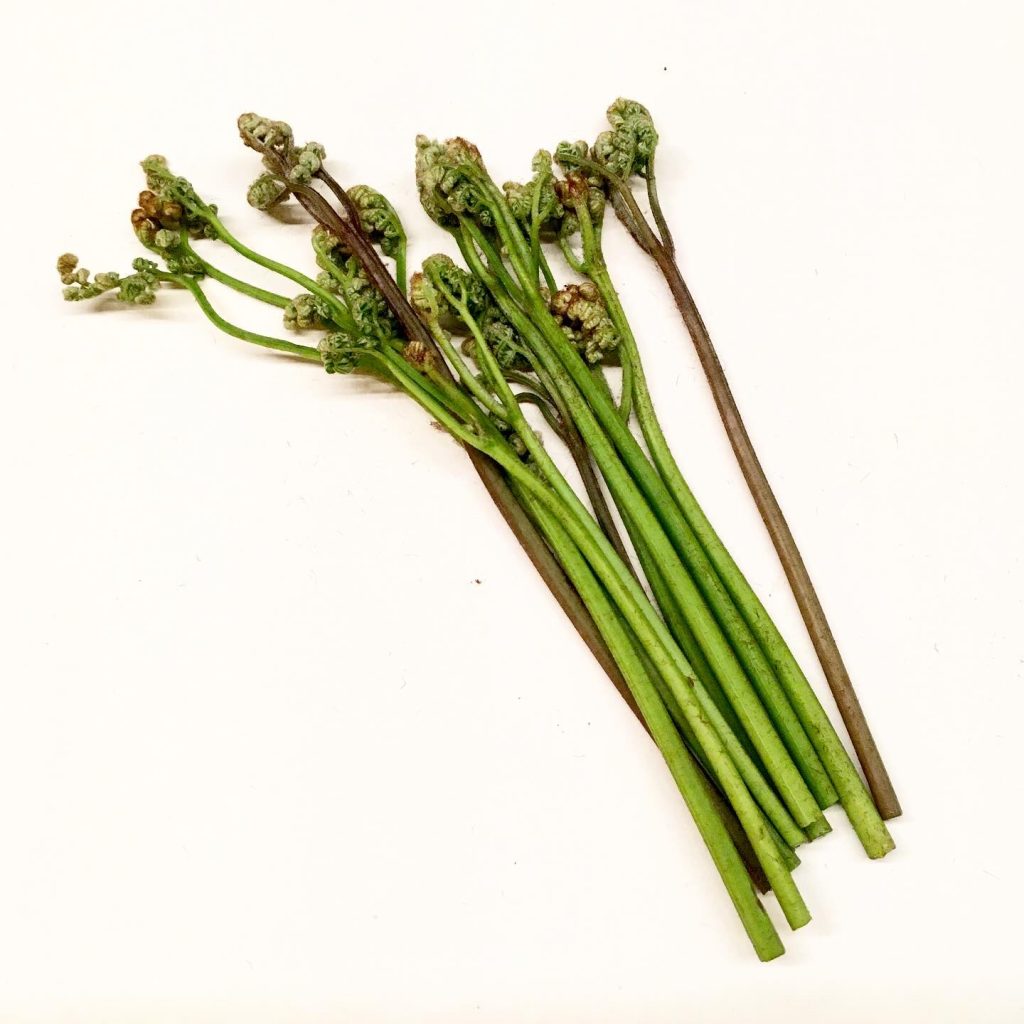
When we go with our friends in Tsunan to forage spring wild vegetables, we would for sure also pick some eagle fern – warabi – わらび 蕨. But because it takes a bit of time to prepare (I’ll come to it later) and we have so many other things to eat, we would usually leave without eating them. So, despite the fact that I knew how to prepare them, I couldn’t recall having eaten any fresh ones… and while we were picking bamboo shoots I was looking at fern and picked a few kogomi – こごみ as these are among my favorite sansai – 山菜… but then I grew uncomfortable with the idea of eating them as I have never picked any in Boso before and there are so many varieties… I was worried one may be poisonous… I realized I need to study (a bit) more. I know that it is impossible almost to find kogomi at the farmers market, so either none are locally good or found in tiny amounts that people keep them for themselves. On the other hand warabi can be found at the farmers market!! So I decided to try cooking some in place of kogomi.

As it was my first cooking them I browsed a few cookbooks, and reminded myself of K. in the kitchen parboiling them while stirring them vigorously with chopsticks and then leaving them to rest overnight by the window. A quick reading on kogomi made me understand why this process was so important. It isn’t to remove the bitterness of warabi, it is to remove a toxin from it that is carcinogenic. So don’t try to eat warabi raw or simply cooked. The parboiling, the stirring and the overnight wait are paramount to removing the toxic component. That said and done, eating warabi is totally safe! As a first try I decided to go by the book. I simply prepared them in soya sauce. So here is my recipe, nothing fancy but deliciously simple as I live a recipe to be.

Warabi

  • A handful of warabi –
  • A tsp of baking soda
  • A tbs of soya sauce

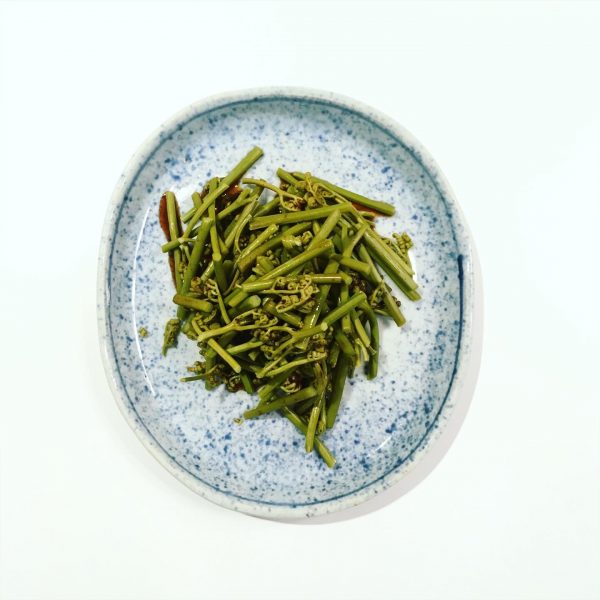
Remove the bottom of the warabi, and wash them. In a pan boil sufficient water. Add the warabi and stir energetically. At this stage you can add a tsp of baking soda. Then keep at room temperature for the night. You can prepare them now.

The simplest is to drain the amount desired, cut in 3-4cm pieces, heat in a pan and add at the very end the soya sauce. It can be eaten as it or at room temperature. Enjoy!!

Picking bamboo shoots

Here we are, spring is here, cherry trees are finishing blooming in a snap. Last week it was pink all over, now it’s new green 新緑 shinryoku everywhere. Everything is so early this year that it feels like it took me by surprise. And spring means not only flowers everywhere in the garden, the jonquils, the snowdrops, the peach trees, and all the others, it means also the spring vegetables and with them the incomparable bamboo shoots or takenoko 筍.

Cooking them is fun and I love creating new recipe with bamboo shoots. I have already posted many recipes in the past and love rediscovering them or testing some others. But beware, the season is short so it’s not like you can take all the time you want. They’re here and in a snap they are way too high and big and no longer good to eat.

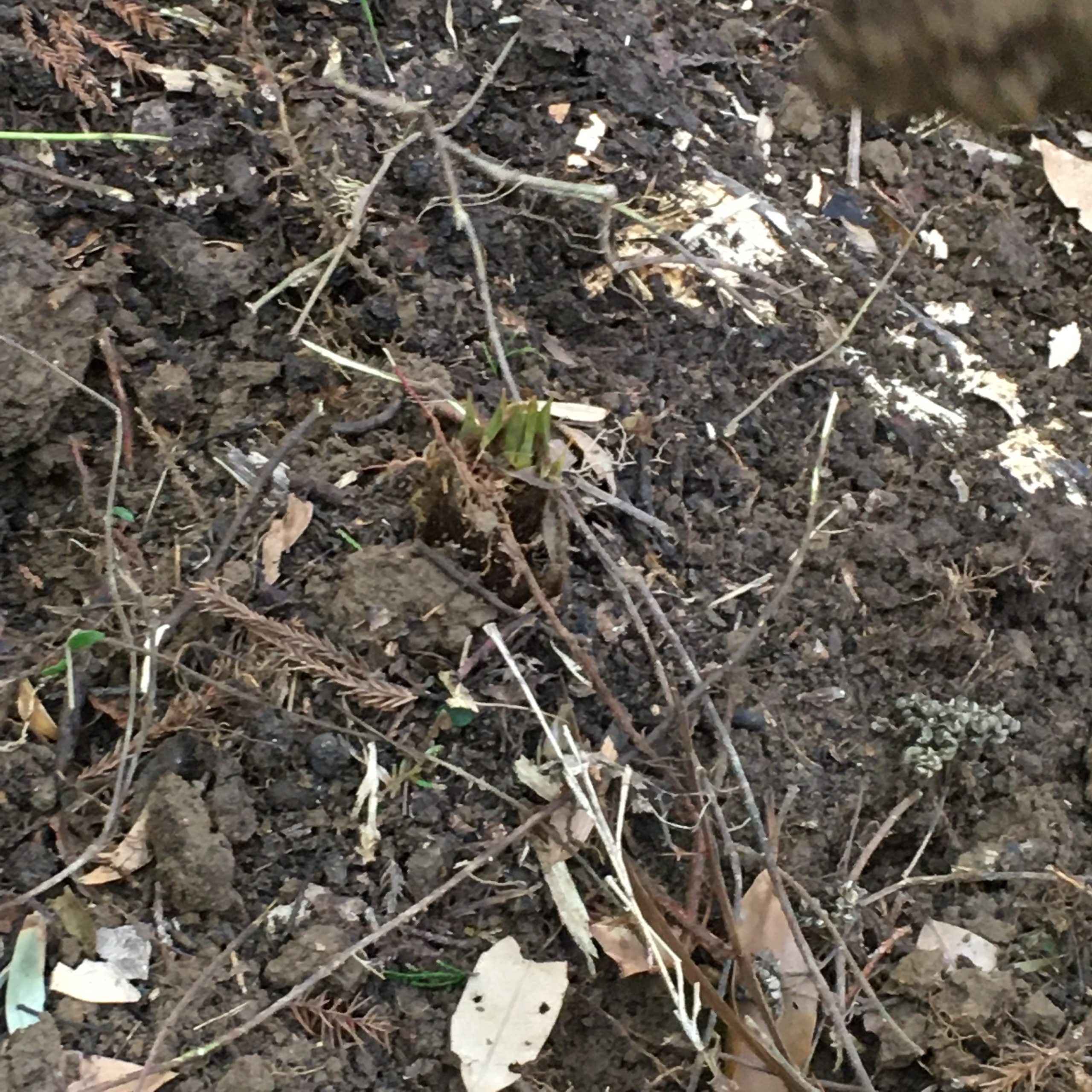
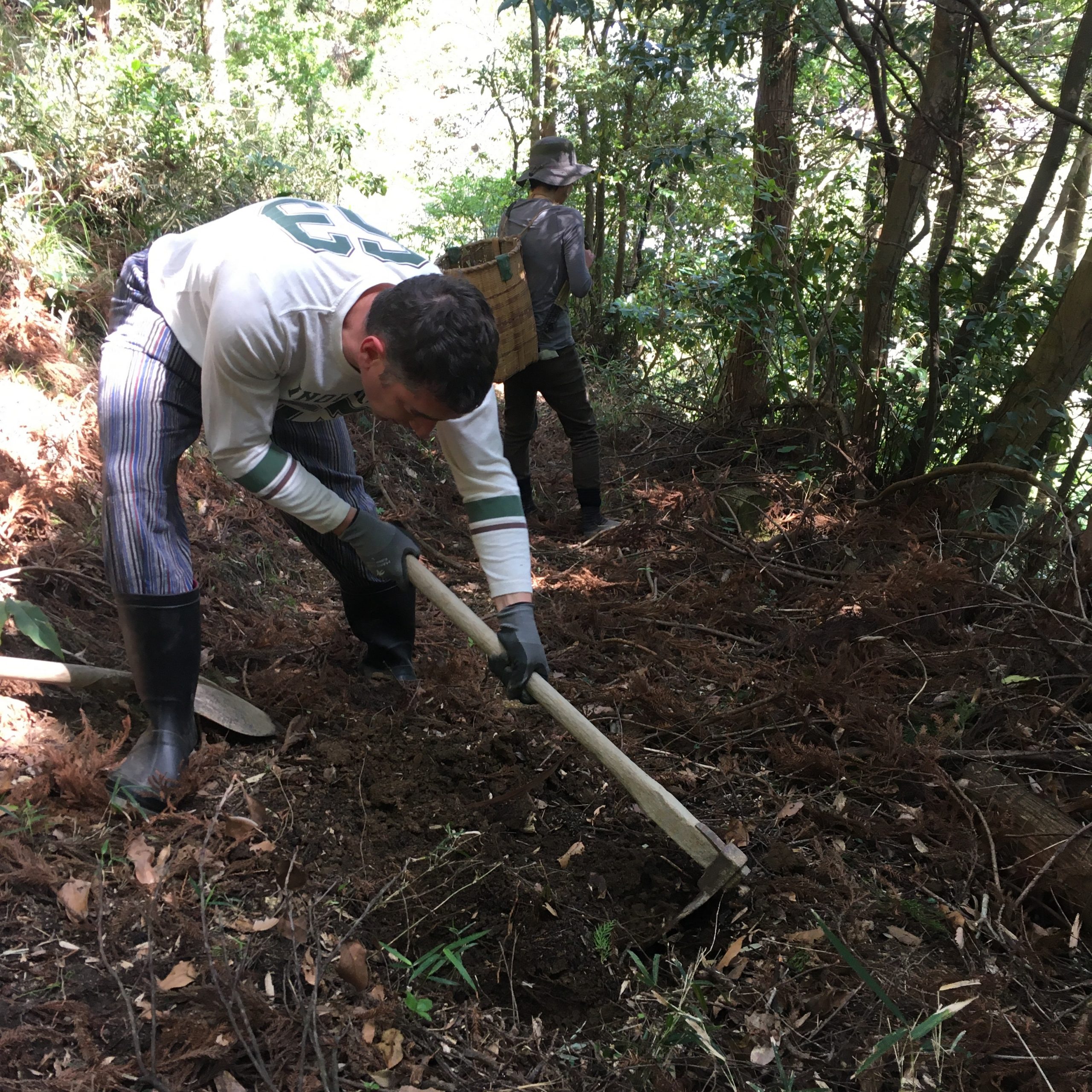
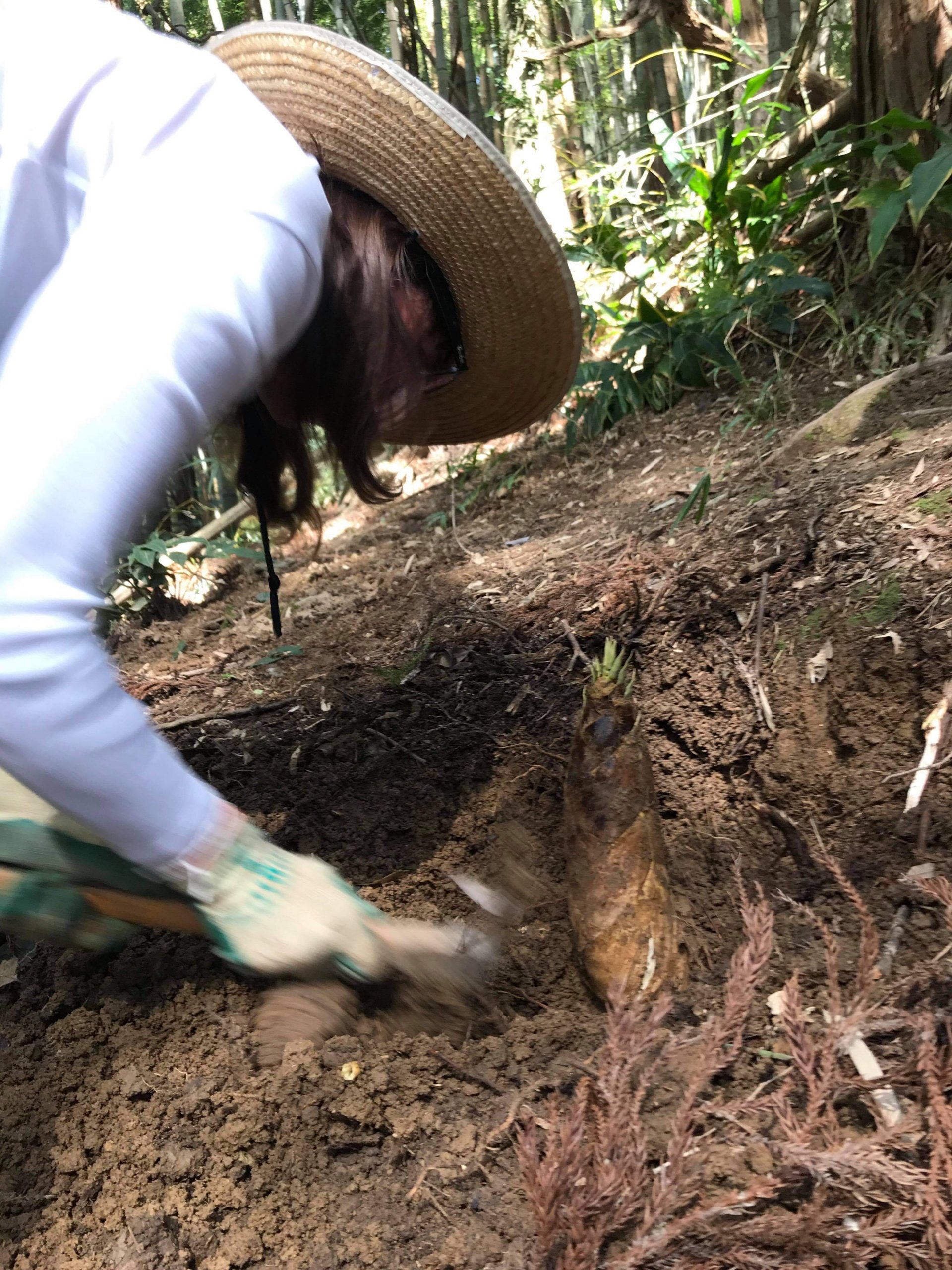
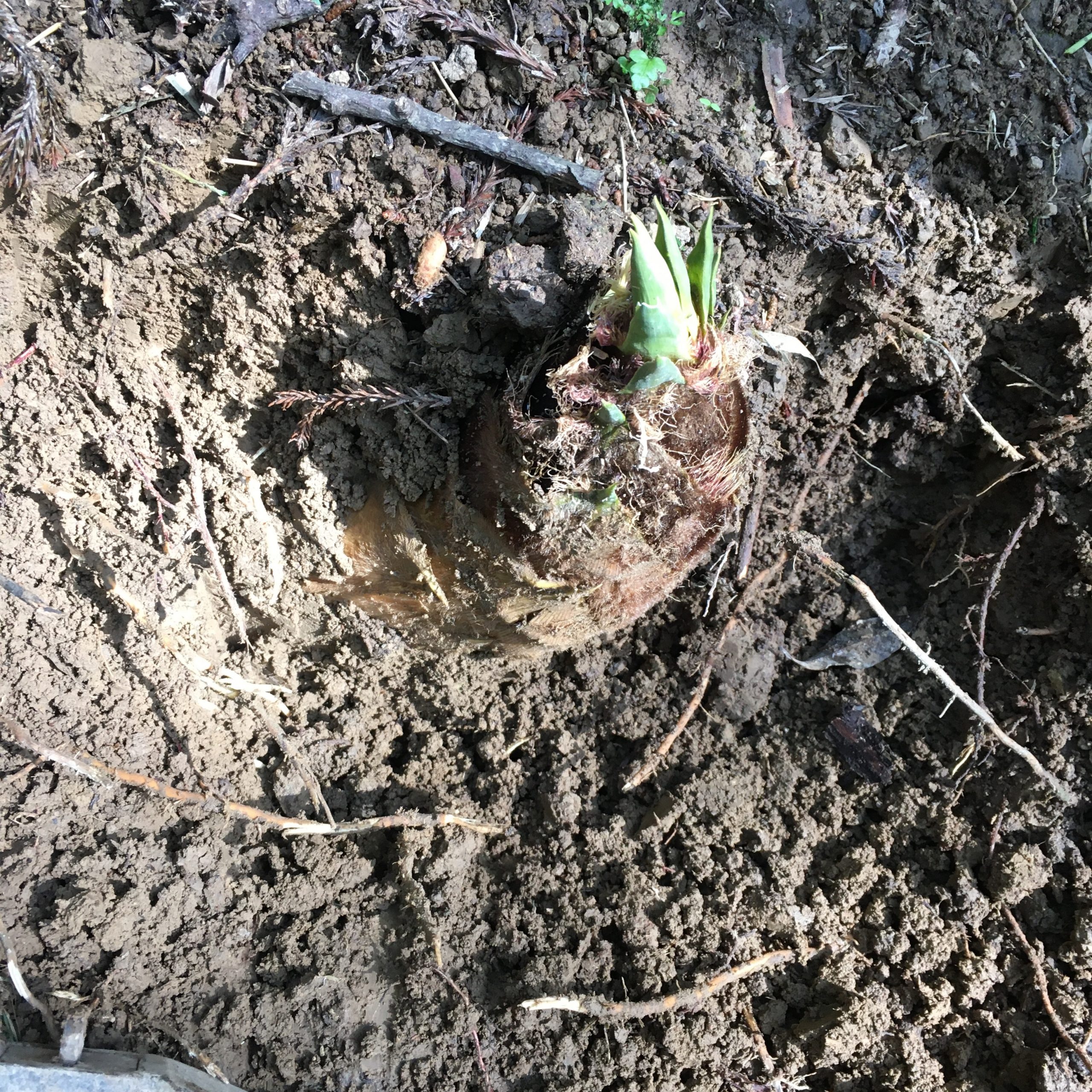
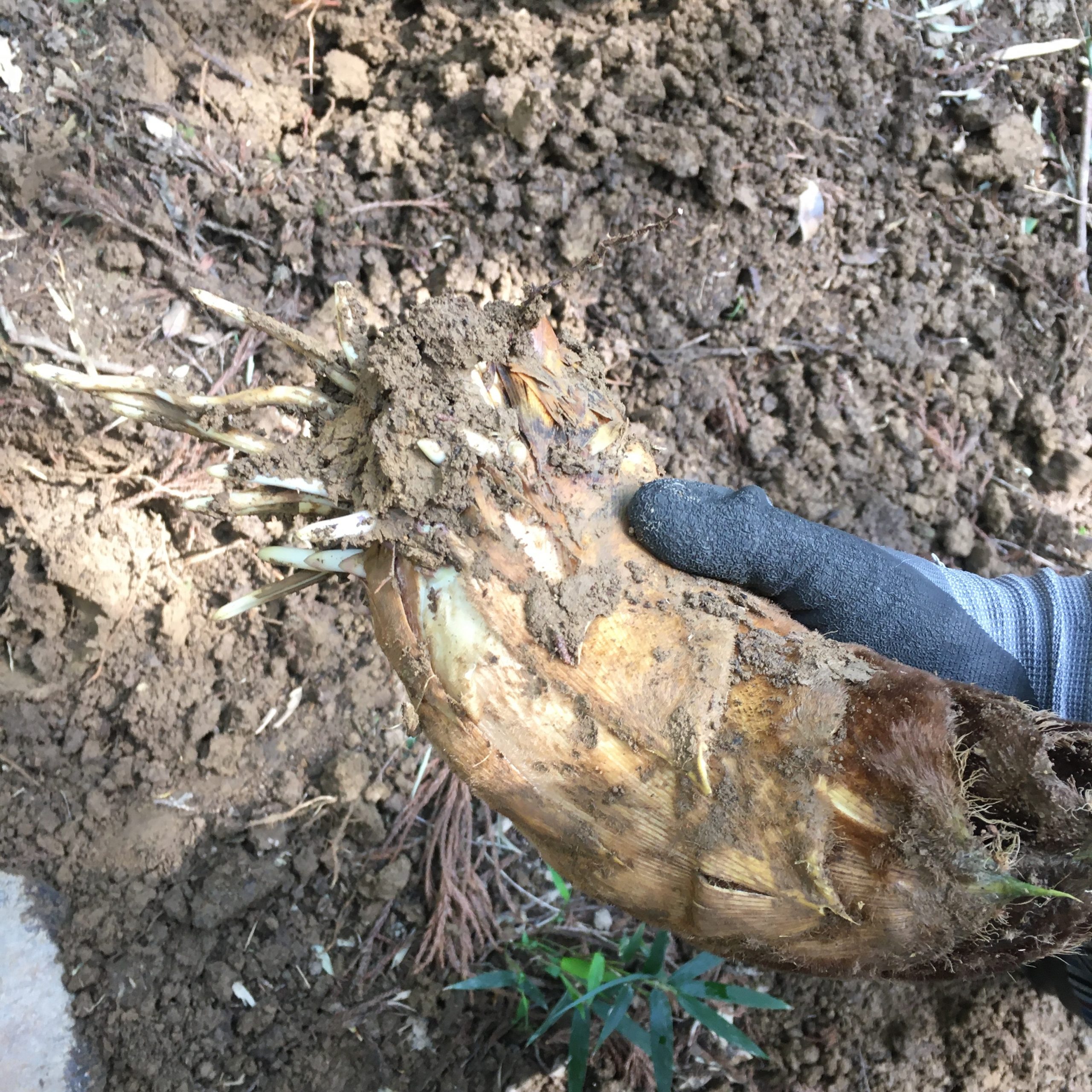
What is fun with bamboo shoots is to go and pick them. Bamboos grow pretty much anywhere and in abundance so picking bamboo shoots is rather easy. The point is that you want fresh and soft ones that have pointed out so it looks like a little green/brownish plant so eyes need to get used to spot them, but them accommodate really quickly. Once spotted with pickaxe and a shovel you need to clean around to uncover the hidden part until the very first red spots on the root. And then cut with a firm and clean cut. Return the soil in place and search for the next one.

Of course said that way it’s rather simple, but you compete in finding bamboo shoots with wild boars and they are really greedy! So they only leave those hard to find, under monticules of earth and fallen leaves, on the steep sides etc… Then the bamboo shoots are often entangled with other roots that you don’t want to damage making it really a puzzle to find where to dig and cut. But that’s part of the fun!

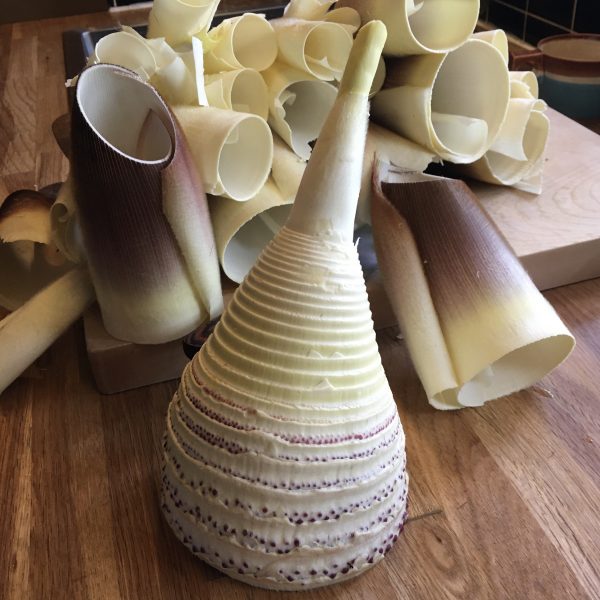
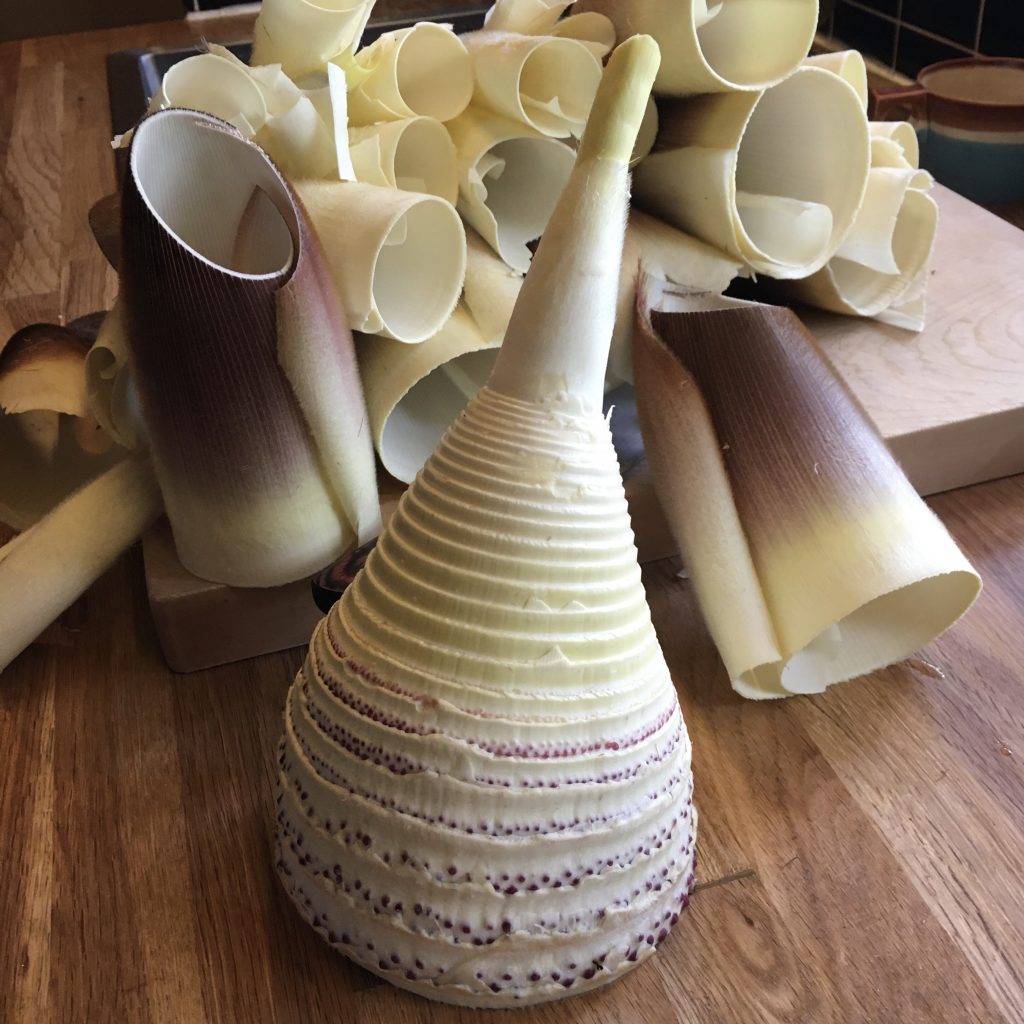
Once you have a nice bamboo shoot to prepare in the kitchen, the first thing to do is to remove the many layers of the soft and furry skin that wrap delicately the shoot. It’s a bit tedious but still important. Then boil your shoot in ample water added with rice first wash water or nuka. Boil at low heat until soft… it can take up to 2 or 3 hours. Pick with a tooth pick to test. And then only you have a bamboo shoot you can prepare for the many recipes. I am working on a few new and a few classic recipes right now, so hopefully in the coming days you should discover some!!!

Peeled bamboo shoot ready for the first boil

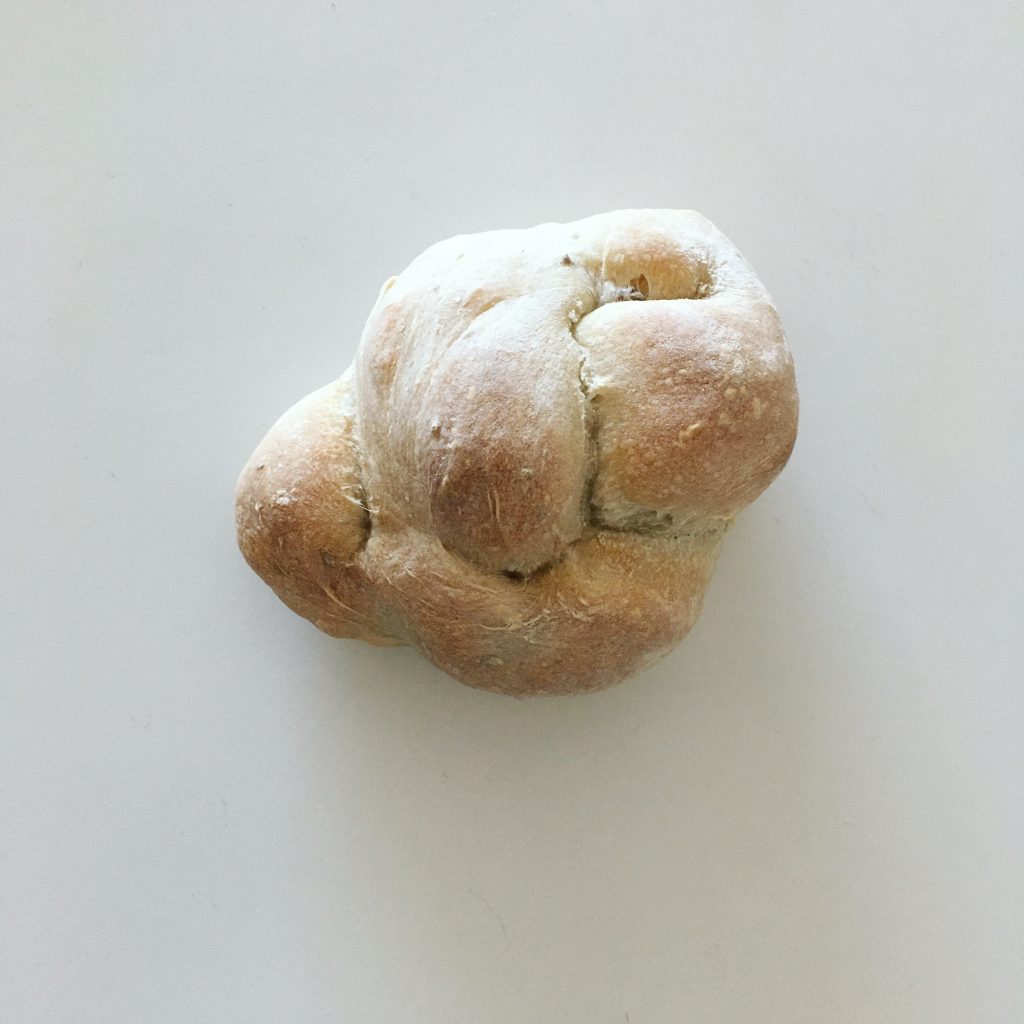
Anise bread

Anise, fennel, star anise, and also cumin, carvi seeds and caraway seeds are some of my favorite seasoning seeds. Maybe because I grew up in the south of France where fennel grew everywhere on the path sides and it was so easy to harvest while admiring the beautiful shape of the flowers and the little white snails that would gather on the stems, that I used to call “colimaçon” but are in fact “caragouille rosee”, and chewing a piece of flower… or because of my grand mother homemade pastis, this very distinctive drink made from anise and also typical from the region. My mother would use ample fennel to stuff a fish we would have fished, and bake it with potatoes and tomatoes. A dish every one loved very much.

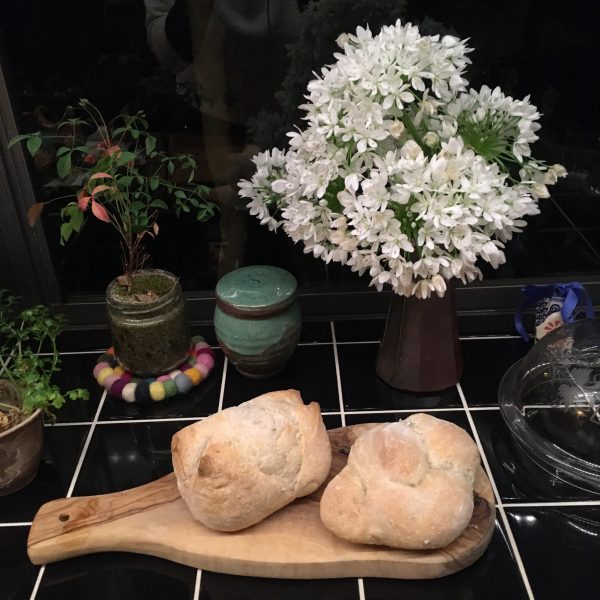
Funnily, in Japan this is not something so common. And I hardly have seen fennel growing anywhere in the wild. Maybe some areas do have some, or my eyes haven’t been opened enough. So most of the fennel and anise I use is either coming from my parents, or bought from the grocery. Recently I have bought quite a bit more often than usual, probably since we’ve been to Malta, to make Qagħaq tal-Ħmira… so I decided to use them to make straightforward anise seeds breads. Less elaborated than the Maltese breads and I was very very much please with the result. I must say that it is thanks to a very healthy sourdough and warmer temperatures. It goes like below for the recipe and I hope you will enjoy!

Anise breads

  • 300g of flour
  • 80g of sourdough
  • 1tsp of salt
  • Water
  • 1tbs of anise seeds

The recipe is simple as can be. In a large bowl mix the sourdough the flower, the salt. Add water little by little and knead to obtain a smooth dough. Add the anise seeds and knead a little further.

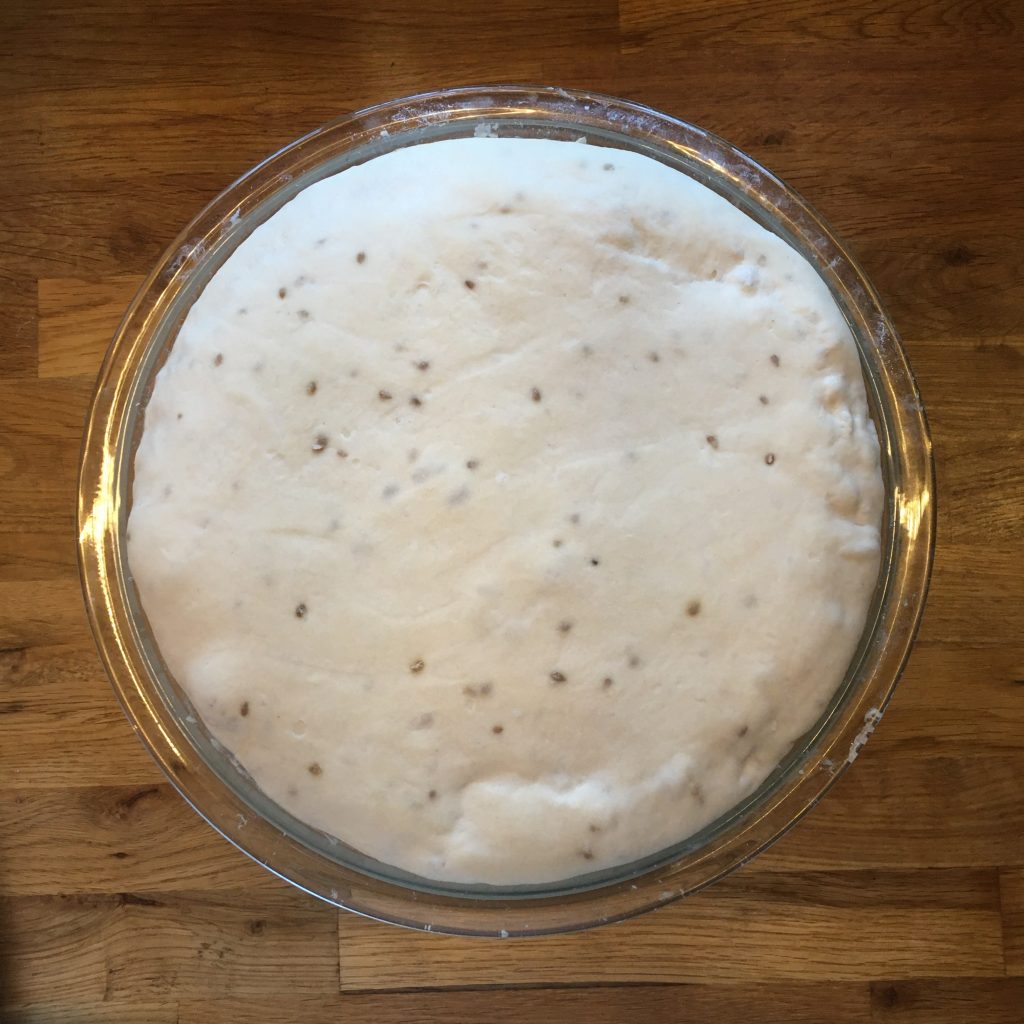
Let rest under a wet clothe until the dough grows. Mine was really growing happily.

When quite fluffy move to a flat surface dusted with flour. Flatten the dough gently with your palm. Cut into 6 pieces. Make 6 balls. Then flatten and cut three ribbons and braid then. Leave to rest for an hour then bake at 240deg until golden.

Definitely in love with wafu pasta

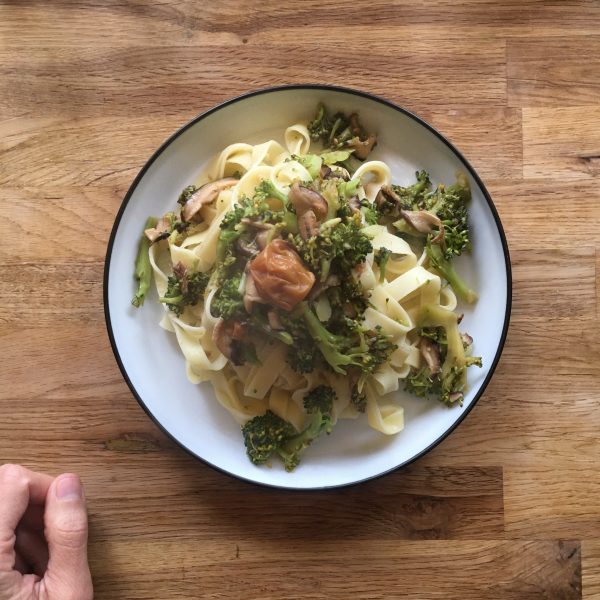
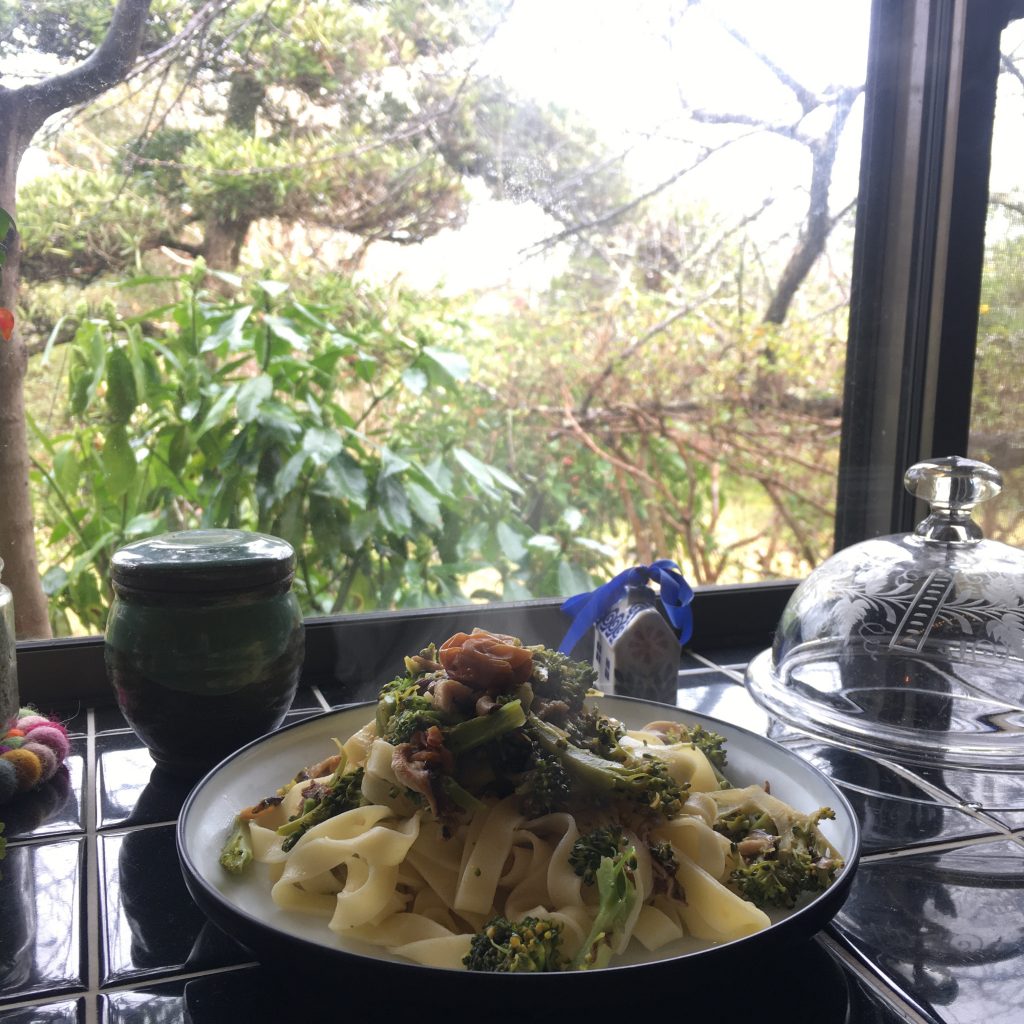
As I was reading the Japan times the other day I discovered they have a monthly column called Japanese kitchen with some cooking tips and recipes and found an old recipe of natto and umeboshi pasta. Neither A. nor I are fans of natto but it was time to prepare lunch and I was planning to make tagliatelle but I wanted to eat umeboshi, so wafu pasta naturally, and the recently read recipe made me create this super simple version: replacing natto by seasonal vegetables, and using some soya sauce for dressing the pasta. As I mentioned in my earlier post on the topic, wafu pasta are something of their own kind that may be ignominious to the purists but once you have tried them they are quite exquisite and the mariage of flavors can be exceptional. I loved the one of this recipe. I hope you will too.

Umeboshi, nanohana and shiitake tagliatelle (serves 2)

  • 180g of fresh tagliatelle
  • 5 nanohana
  • 3-5 shiitake depending on size
  • 3 plain umeboshi medium size
  • 1tbs of soya sauce
  • A ponch of sesame seeds

Wash and slice the shiitake. Wash and cut the nanohana in 3. In a large pan slightly greased (I used sesame oil, but anything works) start cooking the vegetables under cover at low heat. In the meantime boil the pasta. Drain the pasta and add to the pan. Stir well. Add the soya sauce, the sesame seeds, the flesh of one umeboshi, stir again and serve. Top each plate with an umeboshi, enjoy!

More Wafu pasta

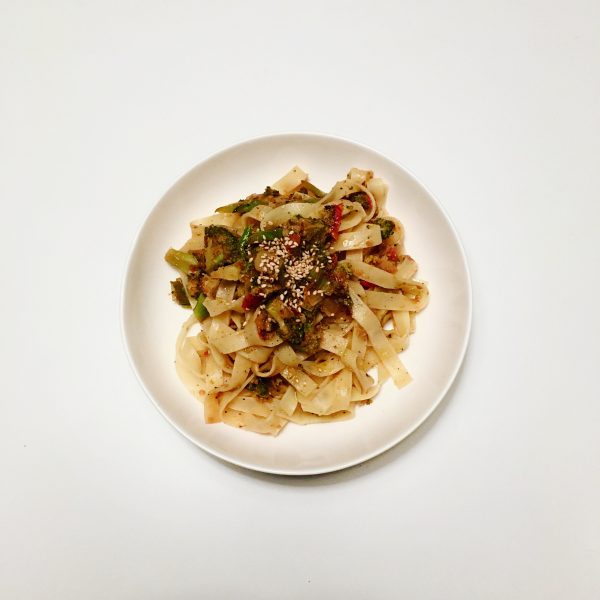
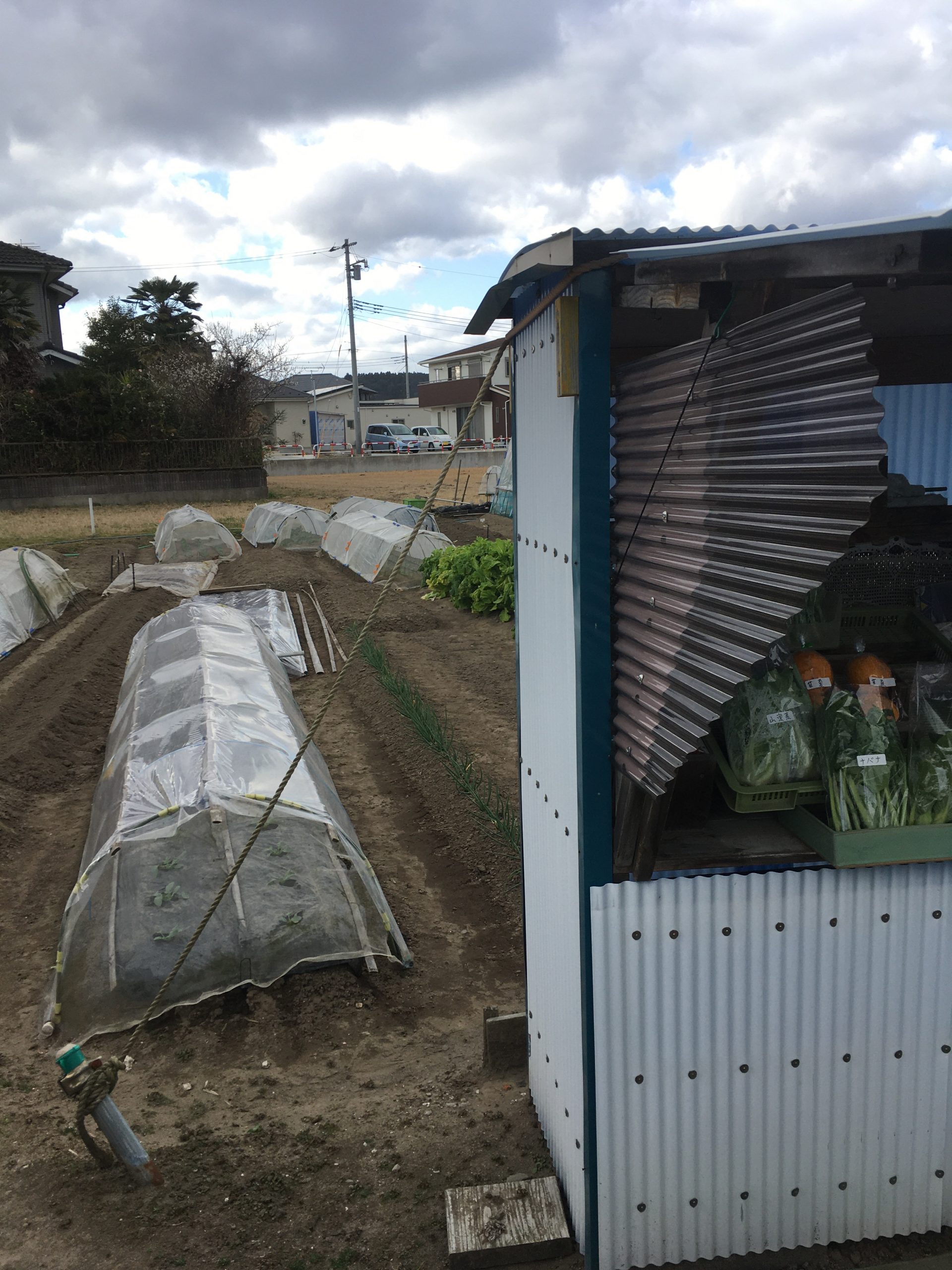
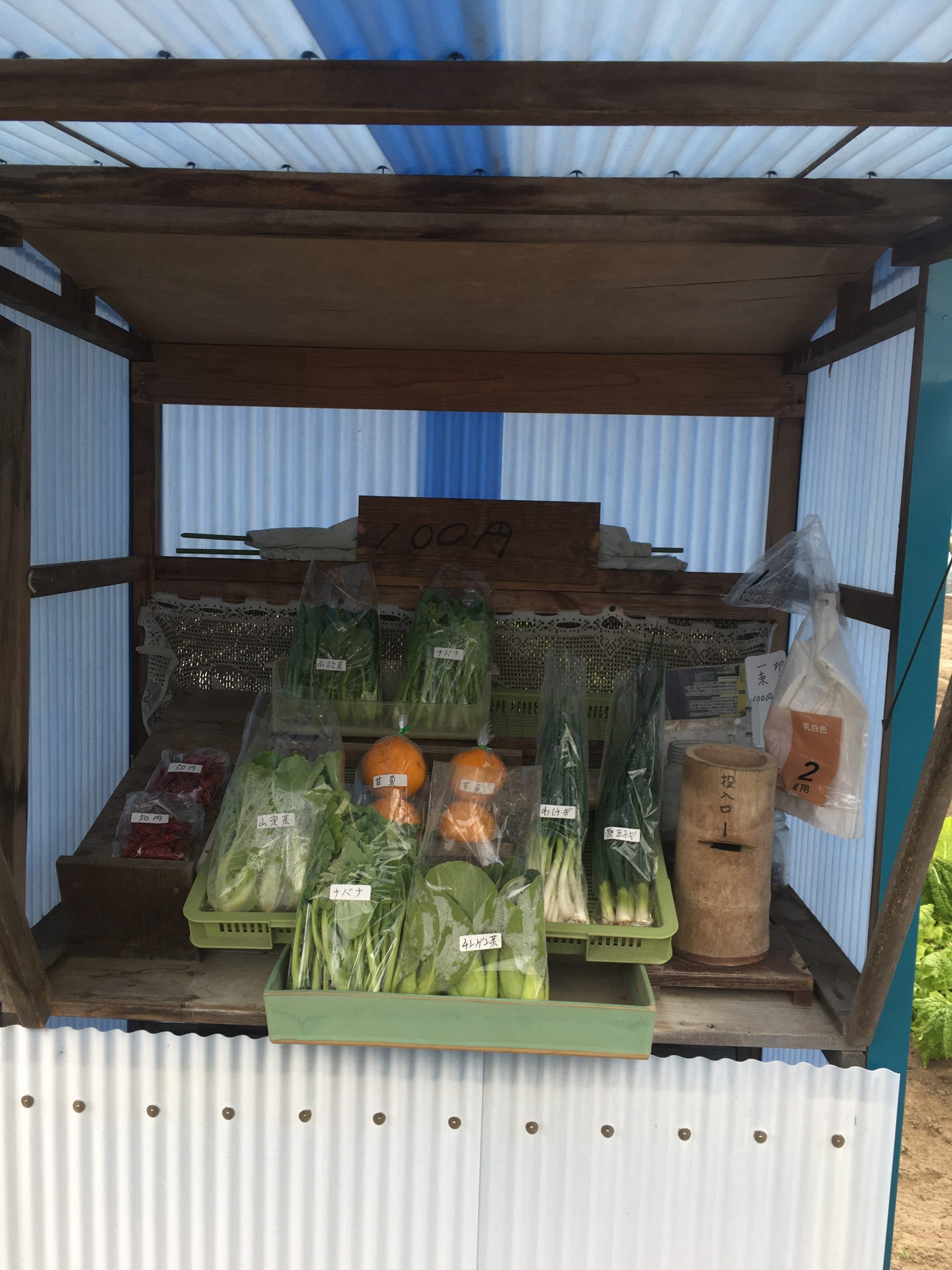
I have a principle that I apply for pretty much anything and even more when I cook or think about cooking, it’s to be always flexible and opened to opportunities, or see change in plans as one. Nothing is definite. A recipe evolves and comes to life as ingredients are mixed together, taking the mood and the time into consideration… This is exactly how this wafu pasta recipe was created. It all started with a bicycle ride to go diy shopping. On the way back, if we take this road, I like to stop at the little stall that sells local fresh vegetables grown right on the spot. Sometimes the shelves are empty, and sometimes they have little treasures. They just had many little treasures this day. In particular a big bundle of tiny sweet leeks appealed me. I just picked it, slid a 100yen coin in the box and off we went.

But what to do with them… I had no plan… until a few days later when time for dinner came and it was decided we would eat pasta. Tagliatelle. A bit of sesame oil was remaining in the pan from some little rice crackers I made, so I decided to use it. Chopped the little sweet leeks, coated them in sesame oil, added a very ripe large tomato (that can easily be replaced by a good tomato sauce or preserved tomatoes), and cooked at low heat until I obtained a creamy tomato sauce with the delicious flavor of the fragrant sesame oil, slightly confit. Added the boiled pasta, stirred well and added a bit of sesame seeds before serving. A new version of the wafu pasta…

How do eat your pasta Japanese-style? Have you ever tried???

Warming up!

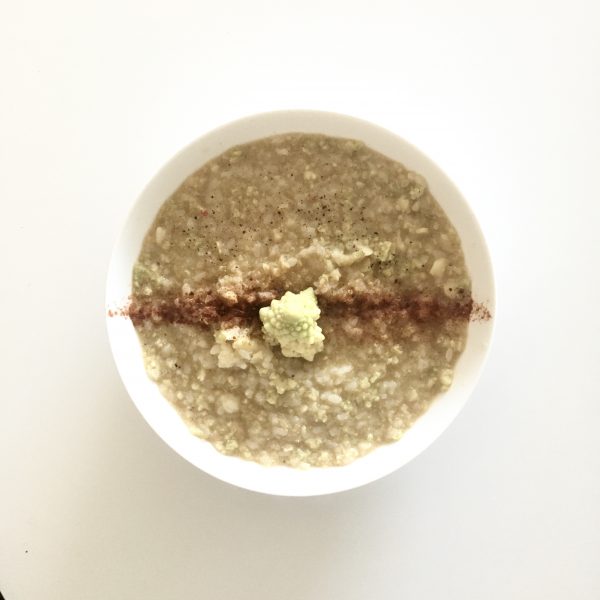
Sunny but cold days follow each others this week, so a warming and rich soup is always good, isn’t it? I had rice ready for lunch and a romanesco in the fridge, and I wasn’t sure about how to eat them together, when the idea of combining them in a soup came to my mind. I was a bit worried about how it would turn, but with a few well chosen spices it was really a great idea! Not very photogenic though… so let me share the recipe here with you. I hope you’ll like it and test it!

Rice and cauliflower soup

  • 1/2 cauliflower or romanesco
  • 1 cup of rice (cooked)
  • 1 pinch of nutmeg
  • 2 pinches of paprika
  • salt and pepper
  • 1 little pinch of red pepper (optional)

If your rice is not cooked yet, cook it, you can use leftover rice too.

Wash the cauliflower or romanesco and steam it. Then mash it roughly adding a bit of the cooking water, to obtain a rather liquid but not too though, mixture (blender works too). In a pan heat gently, add the rice, salt and pepper, the nutmeg, the paprika and if you like it a little spicier the red pepper. Stir and serve hot.

Yam, the long potato or the mountain potato?

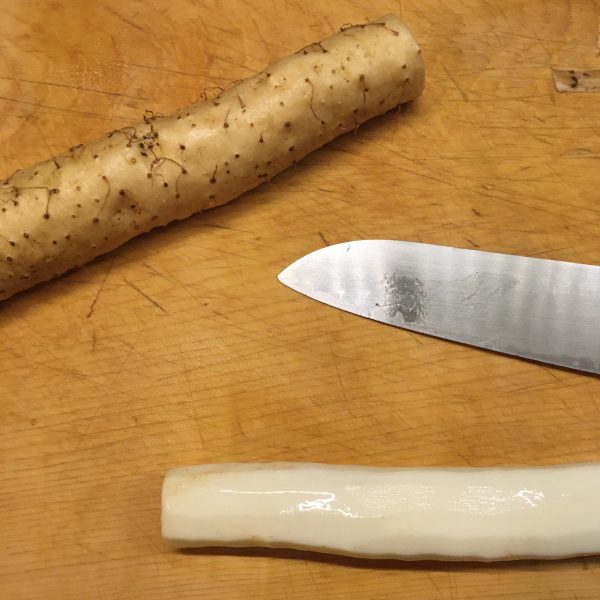
It’s been now 6 years now that I have been keeping steadily this food diary of ingredients and recipes I loved, and some of my culinary failures too. And in 6 years I never talked about (Japanese or Chinese) yam, the Japanese yama imo 山芋・大和芋 or naga imo 長芋, also sometimes called tsukuneimo つくね芋. While they are supposed to be slightly different in shape and size, they basically have the same properties and taste. It is true that I rarely buy it because A. is not such a big fan and I hardly know how to prepare it to make it really tasty. Indeed yam taste is very very mild, but its texture, slimy and crunchy is very interesting. It is most often used in a preparation called tororo とろろ which is just grated yam that makes this very specific white and slimy “thing” used in tororo-soba とろろそば for example, or in other preparations, such as in surimi’s classic recipes (you can add some to mine) and in salads. And yam salad was one of the first genuine Japanese cooking experience I had with our friend S. when we moved to Japan and came to cook at home with us. We prepared two dishes for dinner together: a yam and cabbage salad and a snapper takikomigohan 炊き込みご飯. How did I come buying yam again is the kind of stupid mistake you wish you do more often. I simply couldn’t read the third kanji in 自然薯 when I saw it at the farmers market, and just bought it. As soon I was home and looked at this root more closely I realise it was a sort of yam. Jinenjo 自然薯 is in fact wild yam. It is in season during the winter (December to February) and for some reasons, it is also a lot more pricy than regular yam. Anyway, I ended up with it and was quite excited to cook it! The menu fo the dinner was all set: a wild yam meal with this salad of our very beginnings in Japan and a simple bowl of soba with tororo. It’s been a while we didn’t have soba!

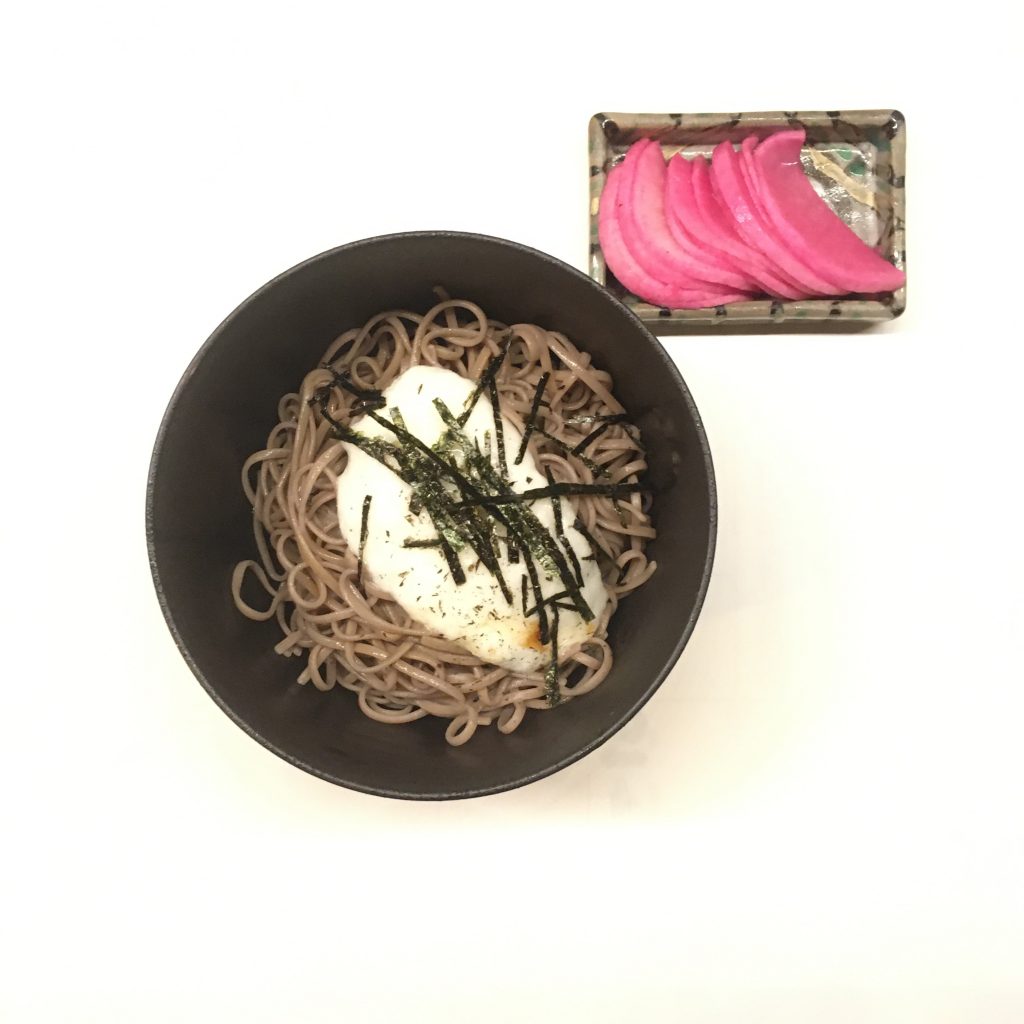
Tororo soba

For the soba I guess there is no need of a recipe, just cook your soba as usual and prepare your dressing, grate the yam and top the soba with the white slime you have obtained. Add some nori. For the salad, I will share this 16 years old recipe!

Oh! and by doing a bit of reading to prepare this post I realized that the skin of the yam could be irritating so it is recommended to wear gloves when peeling it. Personally, I didn’t know and I never add problems touching it.

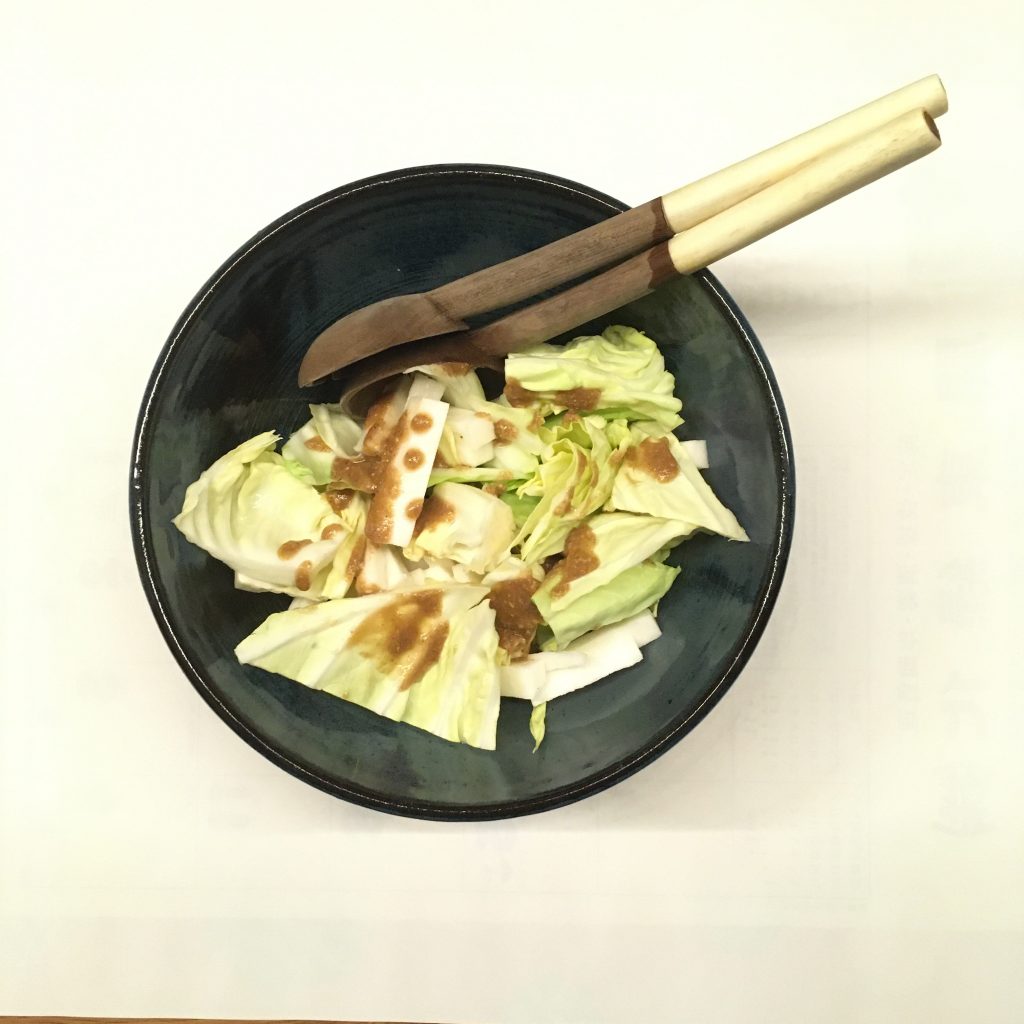
Yam and cabbage salad (2 servings)

  • 20cm of Chinese or Japanese or wild yam
  • 1/4 cabbage
  • 2tbs of sesame seeds
  • 1tbs of sesame oil
  • a pinch of salt

Peel and wash the yam and cut in 4cm sticks. Wash and cut the cabbage in big chunks. In a suribachi squeeze the sesame to obtain a smooth paste, add the sesame oil, the salt and you have obtained a nice homemade sesame dressing. In a bowl set the yam sticks, the cabbage, top with the dressing and that’s ready!!!!

Yam and cabbage salad with sesame dressing

More of the little red beans!

I hesitated in doing an adzuki week but thought I would come dry of ideas quickly except from the many sweets… but we don’t eat so many. But discovering more and more recipes, maybe I should have had… another time!

So to change a bit from sweets I wanted a savory recipe to test and when browsing a Japanese cooking website I discovered recently I was immediately convinced that it was a perfect recipe for me: brown rice, sweet potato and adzuki! The simplicity of the ingredients, the seasonality of sweet potatoes 🍠 and the timeliness of me buying and cooking adzuki for the first time. (Really!! Can you imagine it took me 16 years to buy dry adzuki and cook with them!!!!)

The most common and popular recipe of savory adzuki is probably sekihan 赤飯 or literally red rice. The rice used for this preparation is usually mochi rice (sticky rice). It is served topped with black sesame and salt. It is often served for special occasions, but I think the most often I have had it was in bento bought in Tokyo or Ueno station… so for me it’s associated with train travel! 😉 That could still count as special occasions, more now that we haven’t traveled for a year, neither plane nor train… As I don’t buy normally mochi rice (but that too may change soon…) this option of recipe was excluded. Of course using regular Japanese rice would work too by slightly steaming longer… but the idea of adding sweet potatoes was just too tempting, I love sweet potatoes so much!!! So here is the recipe, easy as can be and each ingredient perfectly balanced and the flavors harmoniously enhanced. You can replace the brown rice with white rice, but it will change the texture balance of the overall. Taste will still be ok of course!

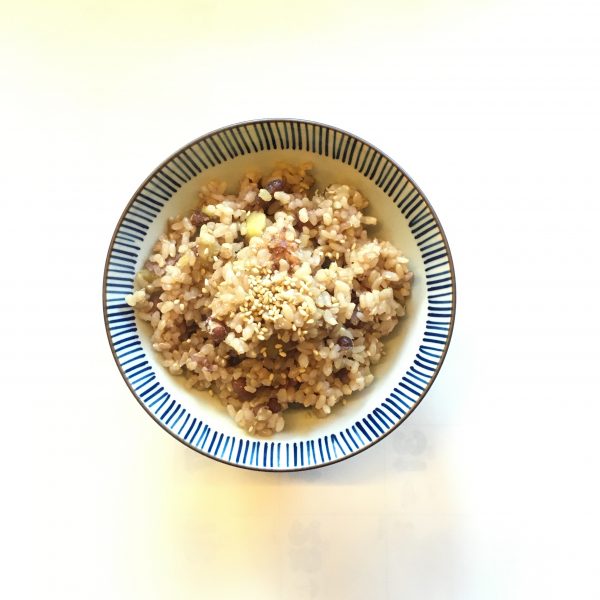
Sweet potato and adzuki rice (2 servings)

  • 1go (150g) of brown rice
  • 10-15g of dry adzuki
  • 1 sweet potato (not a big one!)
  • a pinch of salt
  • a pinch of sesame seeds

Rince the adzuki, set in a pan (that can be used for cooking the rice as well, so non sticky is nice), and cover with 1.5cm of water, bring to a boil and boil at medium heat for 5min. Wash and dice the sweet potato. Add the brown rice and the sweet potato and the salt to the adzuki pan, stir a bit and cover with water to obtain enough liquid to cook the brown rice (that will depend on your pan, your cooking range and the lid you are using. I usually add water to double the height in the pan, plus a bit for brown rice, but I do every thing about). Cook under a lid at low heat until the liquid is all absorbed and the rice is soft. Serve and top with a bit of sesame seeds.

Proudly powered by WordPress | Theme: Baskerville 2 by Anders Noren.

Up ↑

Verified by MonsterInsights