Japanese cucumber with miso

Japanese cucumber are really tiny compared to the huge one in Europe or America. Their diameter is usually between 1 and 2 centimeters and they are 12 to 20 centimeters long. There are few seeds and the the skin is not too thick so you just need to wash the and can eat them.

In summer we eat cucumbers every day and I realized I should have started a cucumber week! I buy them either in Koganei or in Isumi at the local farmers, and this week I have a load of cucumbers from K. And S. From Tsunan. 

I love cucumbers in cold soup and salad, I also love them as pickles. I will soon present you my delicious pickles made in the 2-5-8 but so far I’ve been too busy with work to prepare any. 

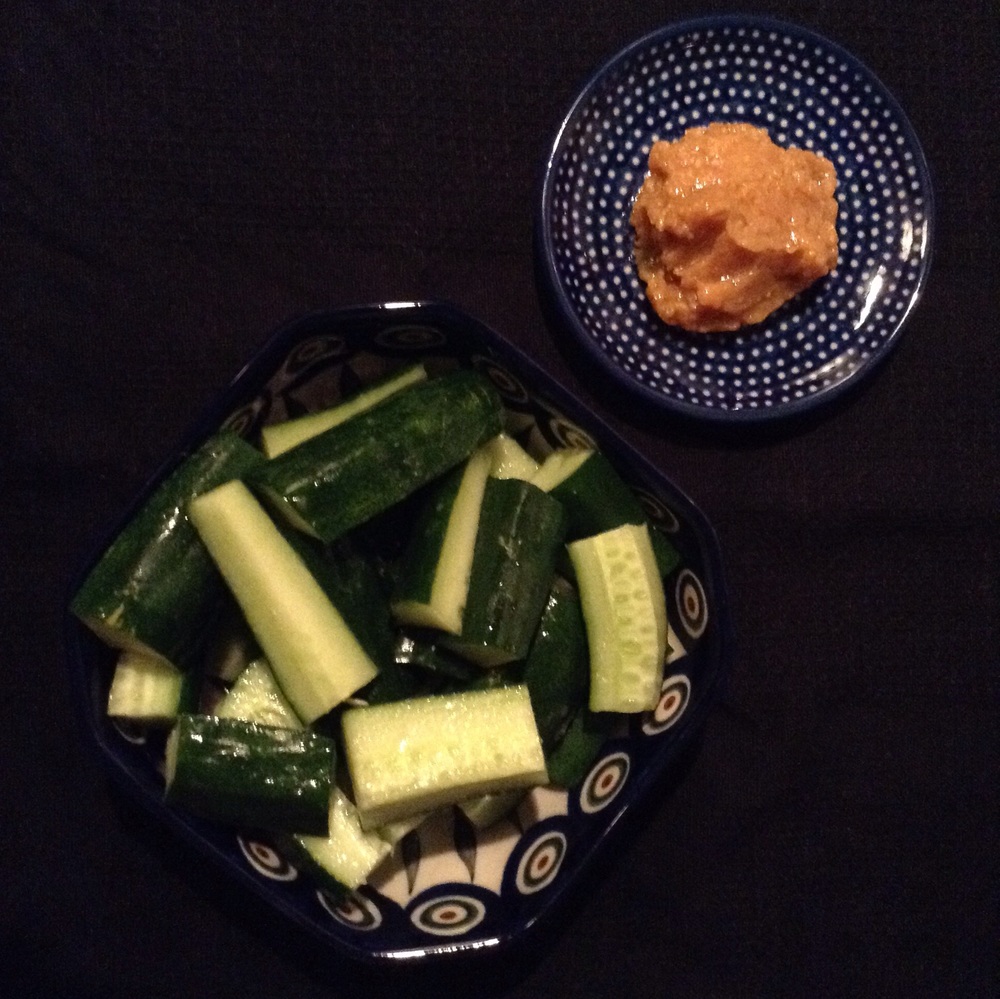
But my favorite way to eat them is as a snack while dinner gets ready because it takes 3s to be ready: wash, dry in a cloth and cut in 4 sticks and cut the sticks in 4. And when I have an extra 2min I prepare a dip of miso paste. I use fresh organic mild miso but it works with red miso too, to which I add a little of vegetal oil and stir until creamy.
Ultimate simplicity

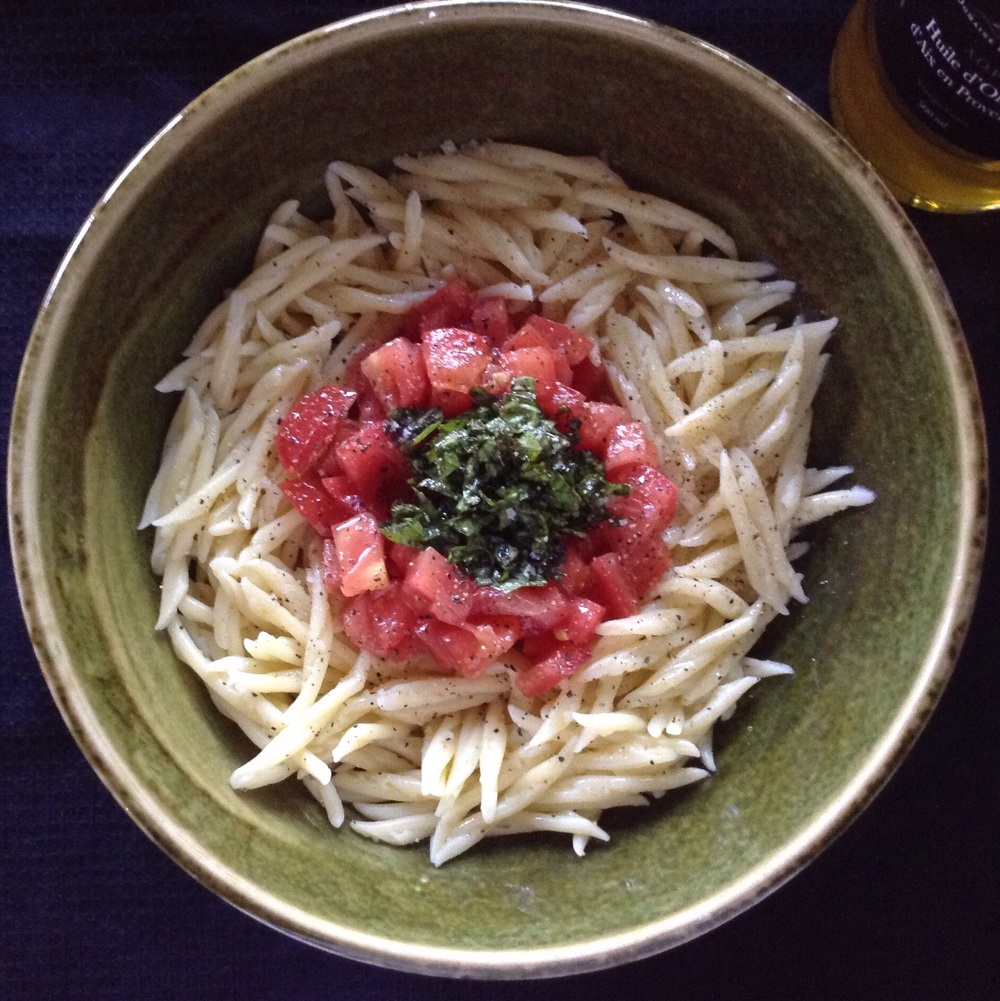
There are evenings when I don’t really have time to cook because I’m late from work or workout and I’m starving. Inicidently these evenings would coincide with a rather empty fridge (for some standards my fridge is always empty!). When this happens I need to fix dinner in less then 10min and I need carbs (no carb diet is definitely not for me). 10min is just the time it takes to boil some trofie, dice two large, super rippen fresh tomatoes, go outside to cut some fresh basil, seat back and snack a little cucumber. 

This ultimate simplicity seasonned with a delicious olive oil, for instance from my hometown in France, Camargue salt and grind pepper is just the perfect dinner! 

Pasta is just wonderful! 

My smoothies

I love to eat fresh fruits for breakfast every day, and when seasonal fruits are not too good (autumn and winter) or I have some fruits that got a little too rippen for a fruit salad I prepare a lot of smoothies. My idea is not to have a “super drink” with a whole week of veggies in it, but rather a tasty and delicious drink for breakfast or snack. My rules for delicious smoothies that keep the taste of each fruit are simple:  

 – always fresh fruits (I don’t use frozen food). At least one very juicy like pineapple, melon, watermelon… The rest depending on the market: strawberries, blueberries, passion fruit, kiwi, nashi, peach, pear…

– 3 or 4 fruit types at max (usually I stick to 3) for better taste of each of the fruit, after more all the tastes are just blended and it’s hard to say what is in.

– no bananas, they thicken the smoothie too much.

– only add water if needed, no other complement.

It gives super easy to drink smoothies, very tasty and always different.  Sometimes I top it with a few chia seeds.

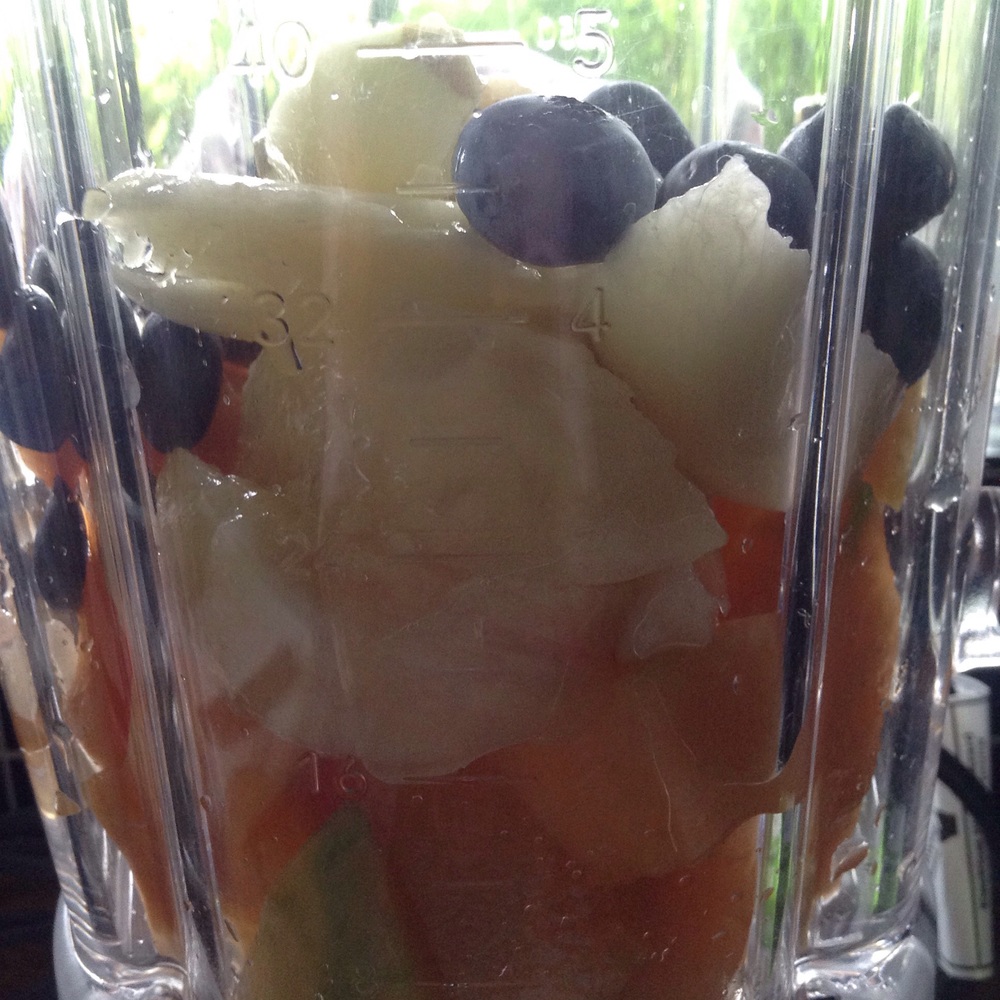
 Blueberry-cantaloup-green melon
Blueberry-cantaloup-green melon
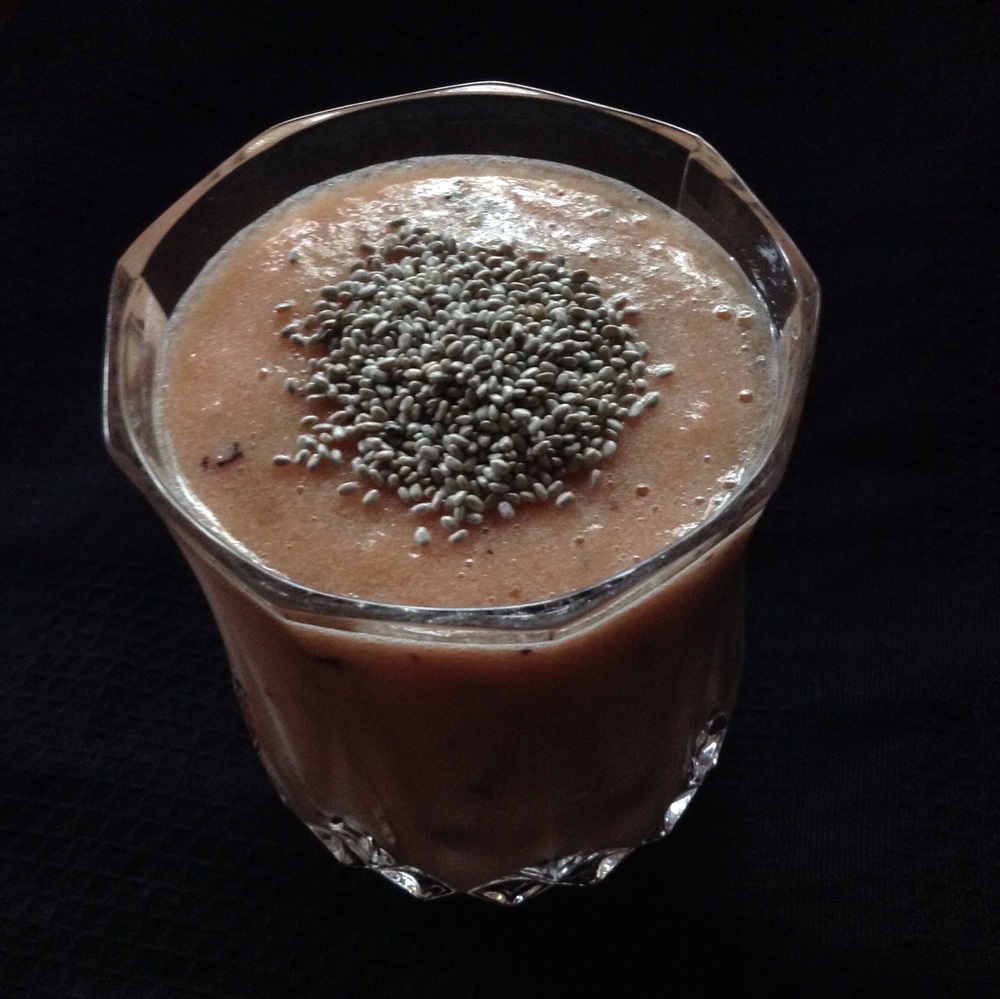
 Watermelon-peach-blueberry
Watermelon-peach-blueberry
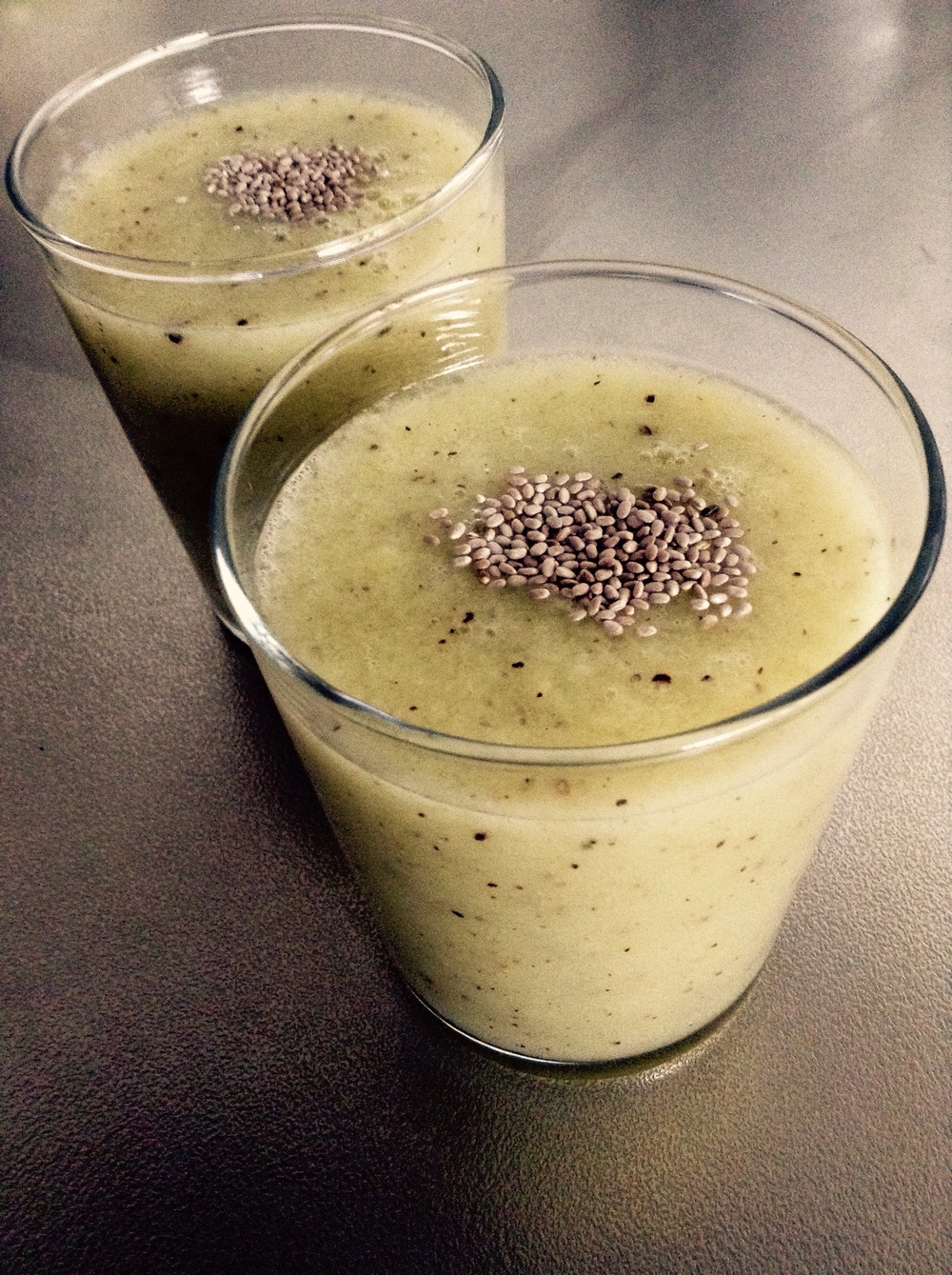
 Kiwi-green melon-bluberry
Kiwi-green melon-bluberry
 Strawberry-pineapple-green melon
Strawberry-pineapple-green melon

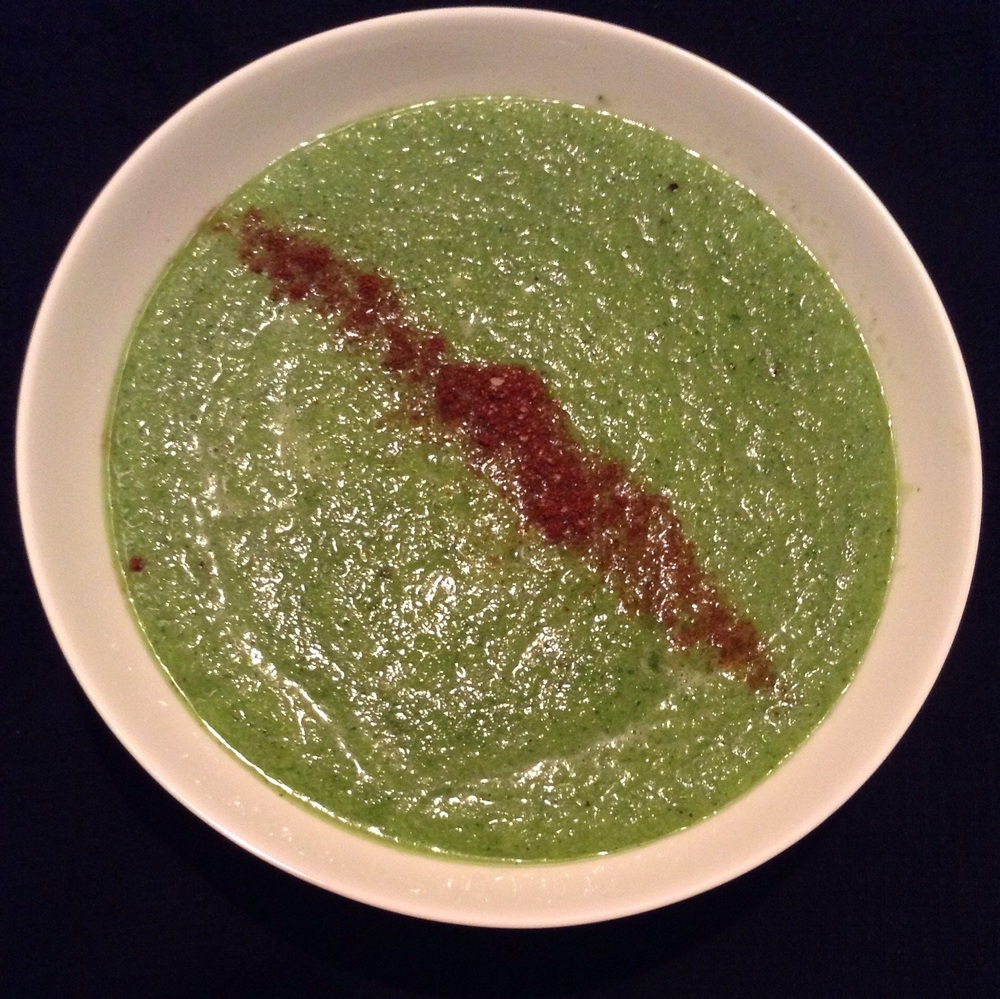
Cucumber cold soup

With all the nice cucumber I got from K. I imagine I should try to use as many as possible quickly. We usually eat a lot of cucumbers just raw cut in stick as snack while I cook dinner. This time to use a little more cucumber I prepared a cold soup by just blending 3 cucumbers with a bit of cold water, olive oil, salt and pepper. I finish it with a line a paprika.

Okinawa fresh products

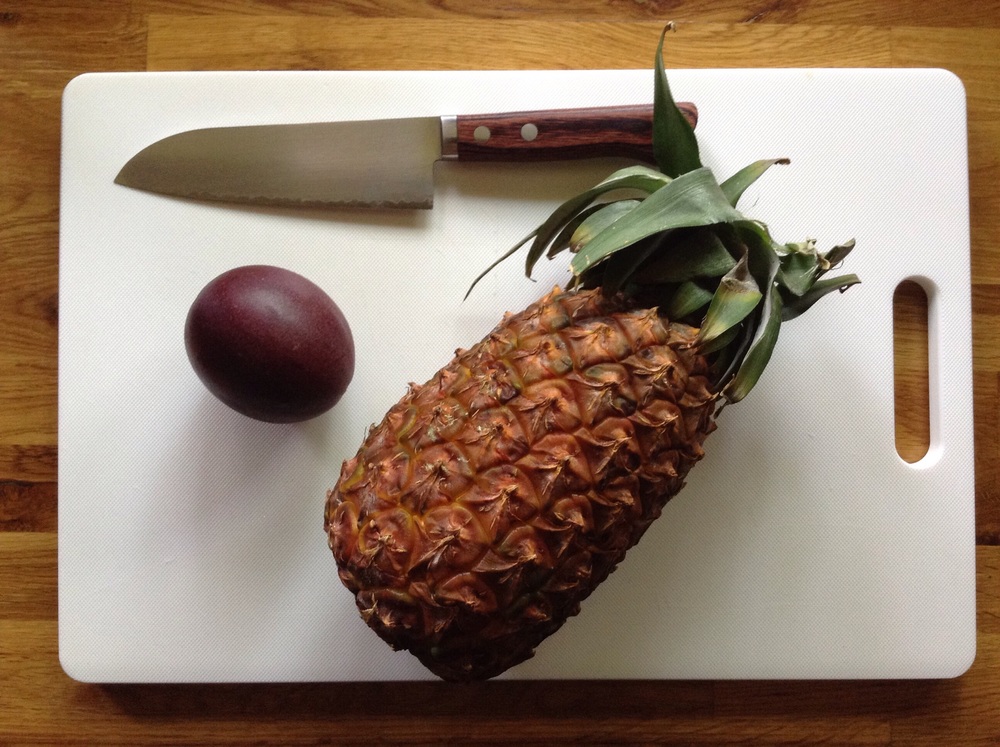
I discovered passion fruits while traveling to the Seychelles when I was 6. On Bird island I ate my first one and immediately loved the juicy, sour, sweet, crunchy little fruit.

Back in France I’ve eaten passion fruits but nothing to compare with the one that haven’t travel so long.

Japan islands span over such a long  North-South axis that Okinawa offers delicious tropical fruits and it’s only A a 2h-flight away from Tokyo. When we travelled to Ishigaki three years ago we fojnd several farms growing pineapple, passion fruits, mangoes, dragon fruits… That also offer to send to Tokyo anytime you want. It’s a very nice manner to have super fresh fruits from Okinawa in Tokyo. The other way is to go to Ginza Okinawa’s shop. (Each region of a Japan has a sort of antenna shop where you can by local products, most of them are located in Nihonbashi-Ginza area)

The shop sells Okinawaian products of all sort, and the visit was originally motivated by my husband needed some accessories and parts to repair his sanshin (Okinawa’s traditional music instrument). And so it was a good opportunity to get some delicious fruits and in particular perfect passion fruits!! There is nothing as such to start a day than a little salad with pineapple, passion fruits and blueberries!

Nashi – 梨

This fruit is always considered as an awkward thing by foreigners in Japan because the nashi has the shape and size of an apple with the skin of a pear and the flesh of something like a pear but munch more crunchy and juicy, with a mild and fresh taste. So basically nothing to compare really neither to apple nor pear. Nashi is the utmost fruit of summer with watermelon. When eaten cool it is so fresh and juicy that it is the perfect snack for hot summer days. It is also a good match for busy breakfast because it is so easy to peel and prepare. Well, you’ve understood I simply love nashi! And I’m awfully lucky because Isumi is a great region for nashi, with a lot of nashi orchards and tons available at the farmers market and local farmers cooperative.

In the past I did some trials such as nashi tart, nashi compote… It was good, nashi supports well being cooked but the taste which is originally very mild due to the high quantity of water doesn’t reveal much in cooking as apple or pear do. So now my recommendation is to eat it just raw, accomodated with other summer fruits, or just alone. So perfectly simple and so delicious!

Salad, salad & salad

With the heat in Tokyo it’s hard to spend to much time in the kitchen in front of the stove or with the oven on. So recently I’ve just been preparing a lot of fresh vegetables salads with all sorts of accomodation. I usually bake some rice, bulgur, pasta, cheak peas for two meals to reduce the heat up of the kitchen, and then accomodate in a different manner each time. I will introduce a few this week.

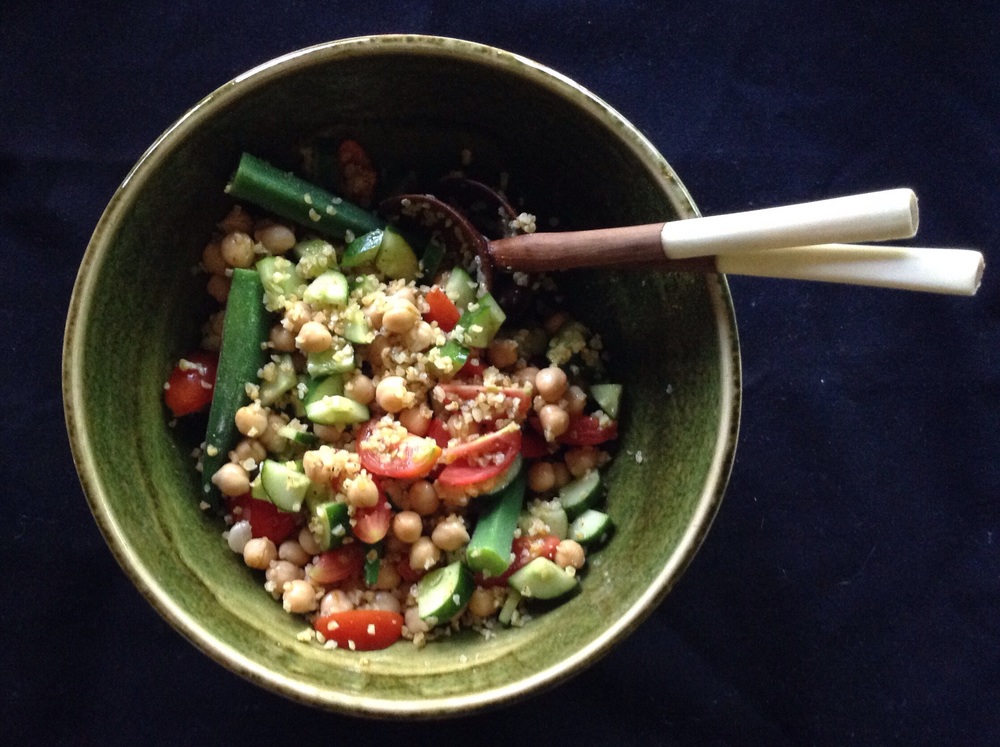
Today is a simple chick peas and bulgur base with tomatoes, cucumbers and ocras, all with a bit of olive oil and a mix of north african spices. 

Red lentils patties

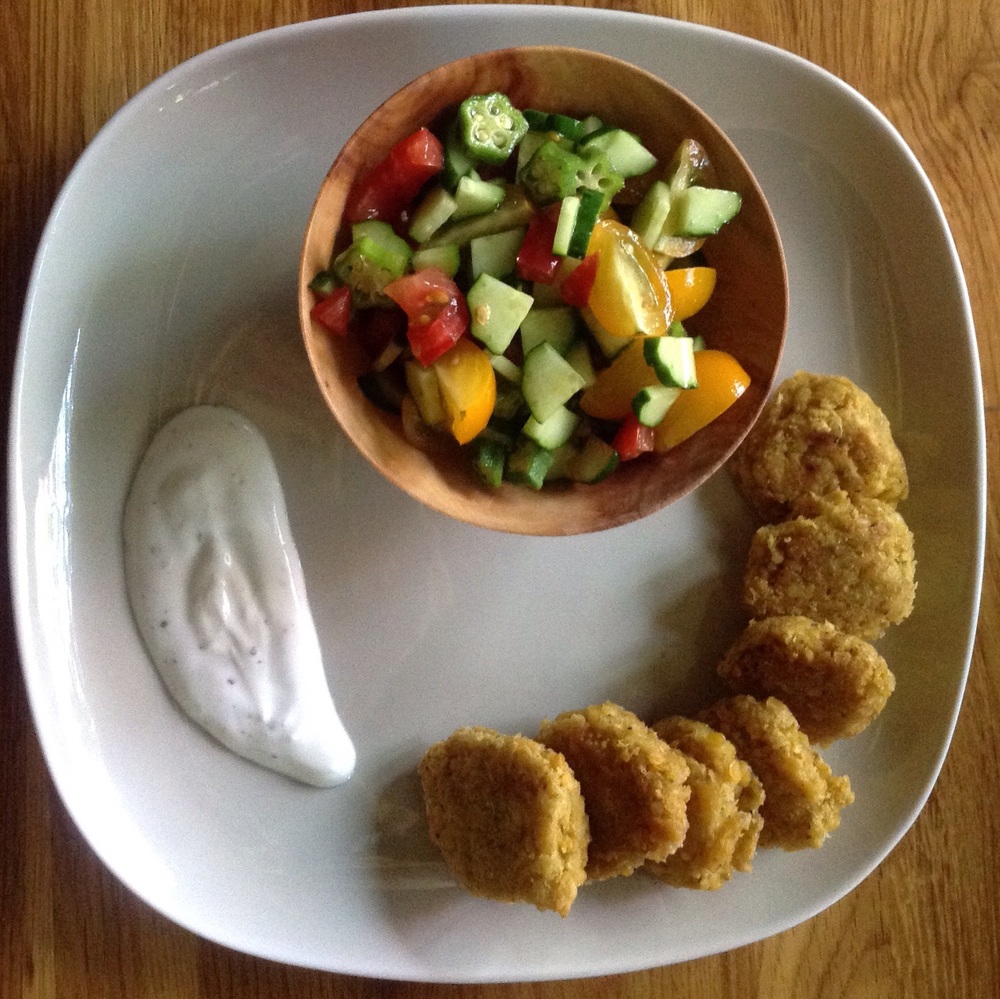
There are days when I am desperate to find something new to prepare with what I have in the fridge and in my cupboards that goes beyond the usual vegetable tart, the fresh vegetables salad or the pasta with sauteed vegetables. And there are days when you find instantaneous inspiration, when ideas just flow naturally. Today was the former. But hopefully there is instagram and some of the people I follow gave me the perfect inspiration I needed to use these red lentils I had. So thanks a lot cearaskitchen for your post and the delicious idea! Of course I hate to follow recipes so I had to change it and adapt it to what I wanted to eat and it ended up with these delicious 99% red lentils patties, that I accompanied with a tomato-cucumber-ocra salad with no dressing and a little black pepper drip yogurt. For the patties I just boiled the red lentils then drained them, add a little curry powder, a little rice flour to form them and then baked them in a pan with a little of olive oil. So easy! Thanks again cearaskitchen!

Black olive fougasse

What’s better than a delicious fougasse to go with local cheese from Takahide farm? I’ve already talked about classic fougasse, this time I just added a little of black olives in the preparation. It gives a nice aspect to the bread and a subtle additional taste and texture. So delicious that my fougasses at home don’t last long. 

Proudly powered by WordPress | Theme: Baskerville 2 by Anders Noren.

Up ↑

Verified by MonsterInsights