A French basic

One things that is a bit my Proust’s madeleine as we say in French is a cery simple skillet if spinach with cream ir béchamel, poached eggs and bread croutons. A large part if the good memories about are the croutons. For some reason (probably because we have very little bread leftover) I very rarely make fried croutons, but these are so delicious with a cauliflower soup, a pumpkin soup or with spinach. Now I almost bever cook with cream or béchamel but spinach and croutons are always a good combination. I served them with pan grilled flounder and shiitake. 

Fried croutons: 

– a piece of bread, it doesn’t have to be fresh, but you still need to br sbke to cug it!  It can be white, whole or whatever, it’s slways good!

– 2tbs of vegetal oil

Cut the bread in 5mm to 1cm dices. In a frypan hest the oil. Add the bread and turn regurlarly at medium heat, until each side of the bread is golden. Simple and delicious! 
Japanese style pasta

In Japan there are plenty of Italian restaurants but many serve not a genuine Italian company cuisine, but rather pasta, or more spaghetti, with a strong Japanese touch. The much classic would be mentaiko – 明太子, some kind of poutargue, or spucy fish eggs, with nori. But it goes much beyond that. At first it is a bit strange to eat spaghetti with Japanese flavours, but there are some really nice combinations. In particular, I find that the nori goes very well with pasta. So I prepared some Japanese style pasta for lunch. I didn’t have spaghetti, so I used penne. And because I had some pickled Chinese cabbage to finish, I prepared some tomato sauce and serve the whole thing together. Deliciously confusing!

Penne Japanese style: 

– 200 of penne

– 3 tomatoes very ripe

– 1/8 of pickled Chinese cabbage, if not pickled, you will need a little of white vinegar of your choice in addition, and a pinch of salt 

– 1tbs of rice oil, or vegetal snd neutral oil

– 1 handfull of thinly cut nori

– black pepper  

Boil water for the pasta, in the meantime in a saucer set the tomatoes diced. Cook at medium heat until it reduces. Cut the cabbage in bite size and add to the tomatoes. If you are using non-pickled Chinese cabbage do the same but add 1tsp oc vinegar and a pinch of salt. Add the ground black pepper to your liking. Once the penne are cooked, deain and serve in the plates. Add the tomatoes-cabbage sauce and complete with a topping of nori. Serve immediately.


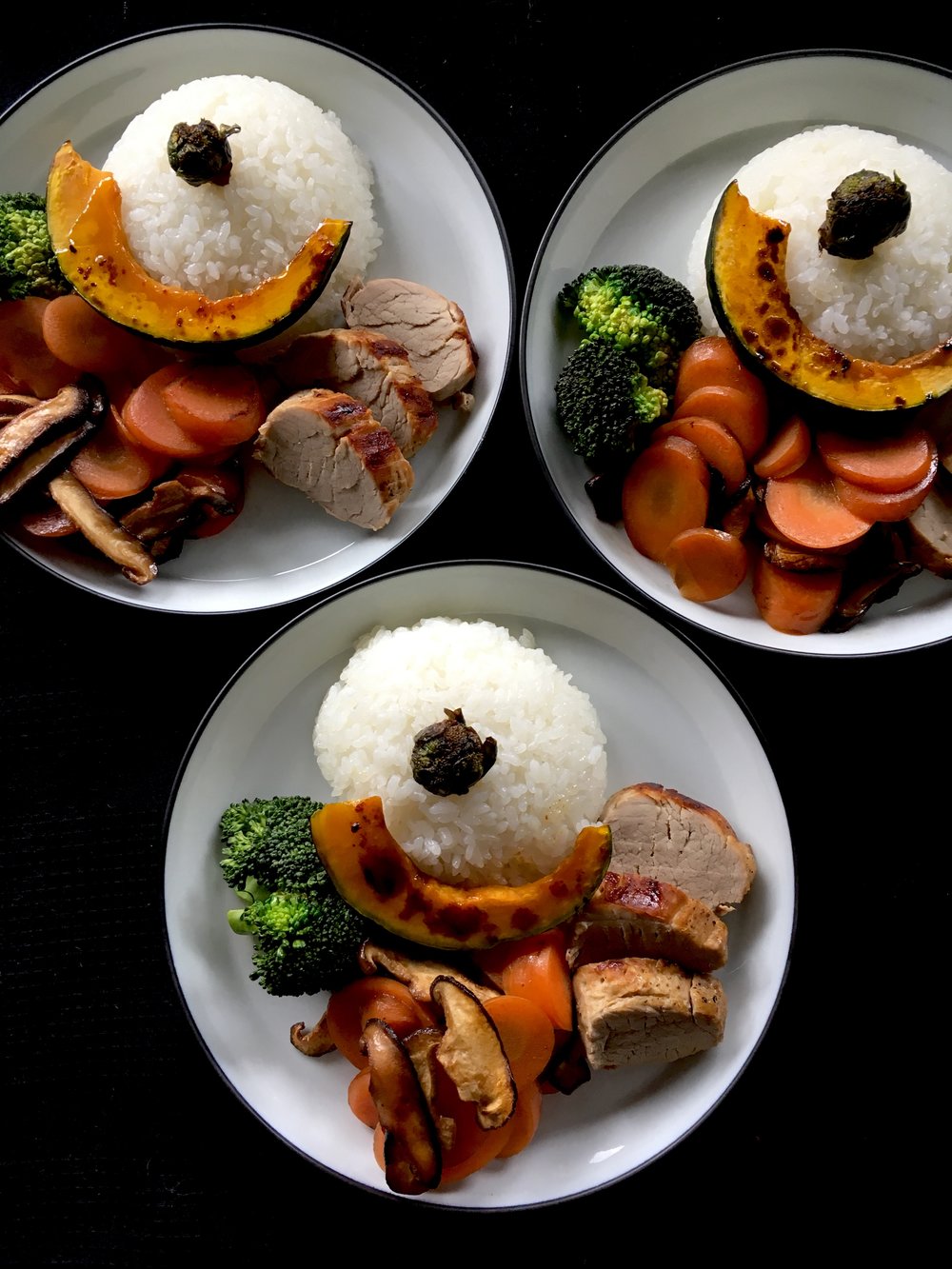
One-plate lunch from the country

I love to prepare one-plate for lunch, in particular when we have friends visiting. It is easy to prepare and to serveat anytime because the vegetables can be cooked very quickly and the rice, the meat etc… can be kept warm or re-heated very easily. So when the time comes to eat I just need a few minutes to prepare the plates. So simple with some seasonal vegetables grilled and deglazed in soya sauce, a piece of pork filet for the meat eaters, rice, and of course some umeboshi, some pickled Chinese cabbage…

Petits sablés- プチサブレ

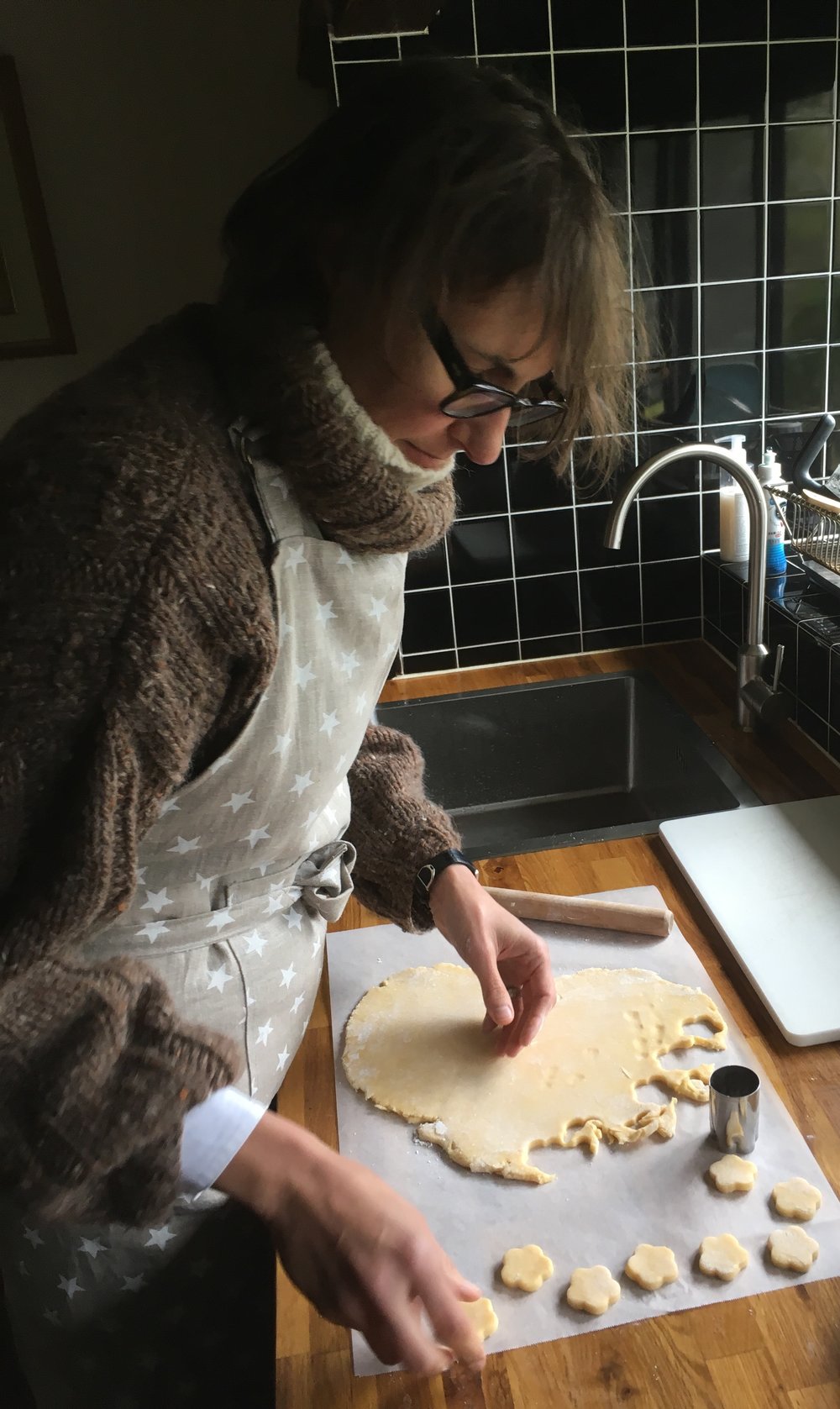
Nothing simpler and tastier than little homemade sablés to go with fresh strawberries and help you combat a cold and gloomy Saturday! I made three variations: plain, black sesame and macha. It takes only a few minutes to make them a few more to bake them and they make everyone happy!!! 

Petits sablés: 

– 180g of flour

– 50g of brown caster sugar

– 40-60g of butter depending on the size of the egg

– 1 egg

– 1tsp of matcha powder

– 1tbs of black sesame seeds

In a bowl mix the flour, the sugar, the egg. Add little by little the butter until obtaining a dough that is dense but doesn’t stick. If it sticks too much add a little more flour. Pre-heat the oven to 170deg. Split the dough in 3. In one of the 1/3 add the matcha powder and stir well, in a second 1/3 add the sesame and stir well, in the last 1/3 do nothing. Roll each of the dough until 3-4mm high on cooking paper and cut with the size and shape you like. Bake until it just dtarts to golden (usually about 10min depending on your oven).


Treasures from Nagano & soba recipe

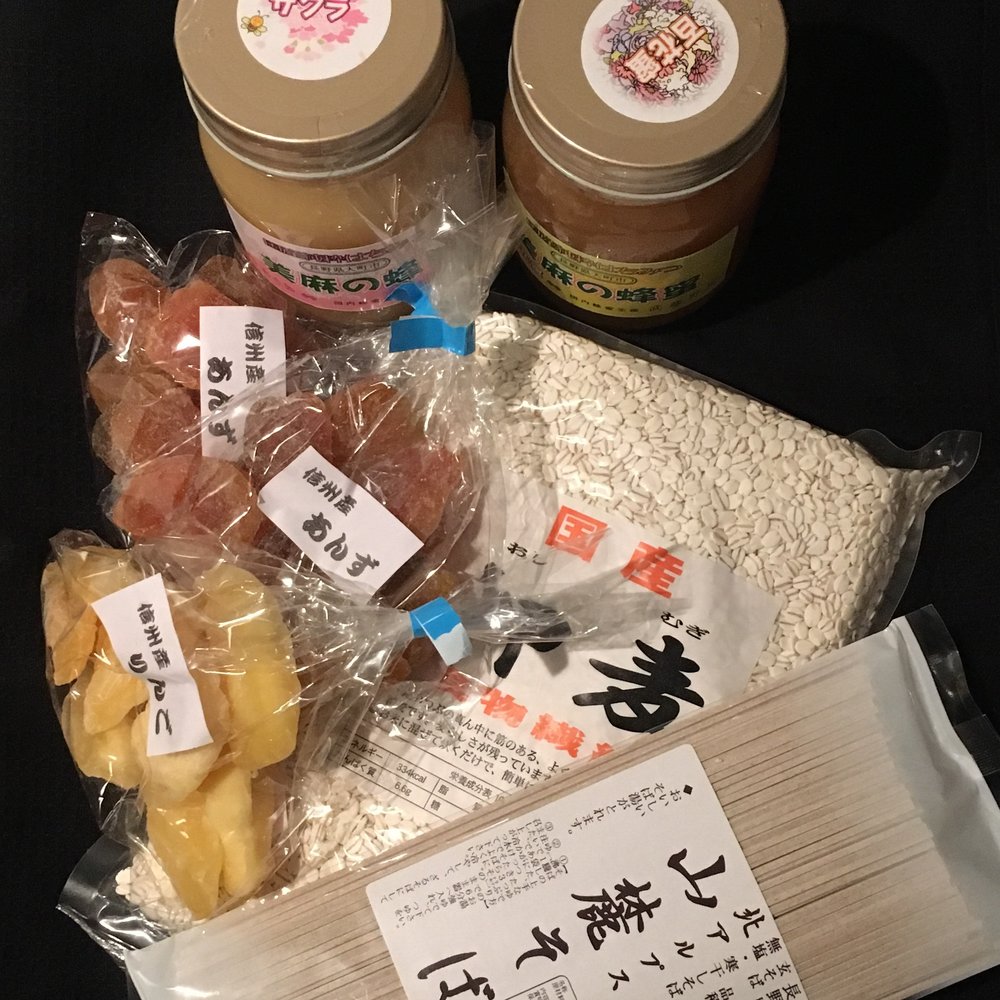
One of the thing I love in traveling is to find new products or locally produced natural products that are not easy to find otherwise. Shinshu – 信州, the region of Nagano, is quite well known for the production of apricots, apple and buckwheat. So after our weekend in Hakuba I could not come back without some of these local products, bought on the way between Nagano and Hakuba (that’s when it comes handy to rent a car!). Of course the season for apples and apricots is way past but I found some dried fruits, which are perfect for breakfast or snacks and will perfectly accompany my Sicilian almonds. I also found some natural honey and some wheat meal. 

Soba (buckwheat noodles) are something I really love but finding good soba is not always easy, so I barely cook some. And I haven’t tried to make some yet. But in Nagano, it is quite easy to find hand made noodles. And since spring is in the air these days I cooked them in a very simple fresh and green manner.

Soba with tofu and spinach: 

– 180g of dried buckwheat noodles

– 1 small bundle of fresh spinach

– 1 pack of baby spinach salad

– 1 block of thick fried tofu – 厚揚げ 

– some broccoli sprouts or some pumpkin or sunflower seeds

– 1/4 of lemon juice

– 1tbs of soya sauce

In a large pan boil water. Wash the bundle of spinach and cut them in 2cm pieces. Add to the boiling water, add the noodles. Cook them until al  dente or as you like them. Drain them.

While the noodles are boiling, cut the tofu and wash the baby spinach. Set the baby spinach in the plates. Heat the tofu in a fry pan for a few minutes at medium heat. Serve the noodles mixed with the spinach, add the lemon juice, the soya sauce, the tofu. Finish with the broccoli sprouts or the seeds.

And have a beautiful Friday! 

Back to the kitchen!!!

After a break away from my kitchen and obviously from Tokyo-Paris sisters, I’m pleased to be back and cook for A. and me. I hope you have enjoyed Prunellia’s posts while I was away and the website renewal just before I left (we’re still open to hear what you think!). I’m starting back in the kitchen with a very simple classic leek and Japanese mushrooms quiche. Nothing difficult, a classic I could say, just added a twist of fresh lemon juice with the mushrooms, and thought afterwards that I should have added a lemon zest in the piecrust sablé dough. So I’m going to give you this recipe without having tried it for resl myself but I’m sure it is delicious since the lemon would fit perfectly the sablé dough and the olive oil. I wish you a happy continuation for this week!

Leek and Japanese quiche with a lemon twist: 

a recipe for 2 as a single main dish or for 4 as a starter

– 200g of flour of your choice

– 4 eggs

– 3tbs of olive oil

– 1/2 lemon

– salt, pepper

– 3 leeks

– oyster mushrooms, shimeji… 

Pie crust: in a bowl mix the flour, 1 egg, the olive olive oil, salt pepper, and the zest of the 1/2 lemon. Knead until smooth, with the olive oil it shouldn’t take long. Roll to the size or your pie dish. It’s nice to have it a bit thick and that the pie dish is a bit high.

Filling: wash and cut the leeks in little half or quarter trunks and set in the dough an homogeneous layer. Beat the 3 eggs with salt, pepper and the juice of the 1/2 lemon. Add on top of the leeks. Wash and cut the mushrooms and set on top. Bake for 25min at 180deg, or until just golden. Serve and eat write away!

Tip: it is never easy to cut leeks cleanly so think of how many pieces you’re going to cut and arrnage them to avoid cuts as much as possible. 

Warm soup for cold day

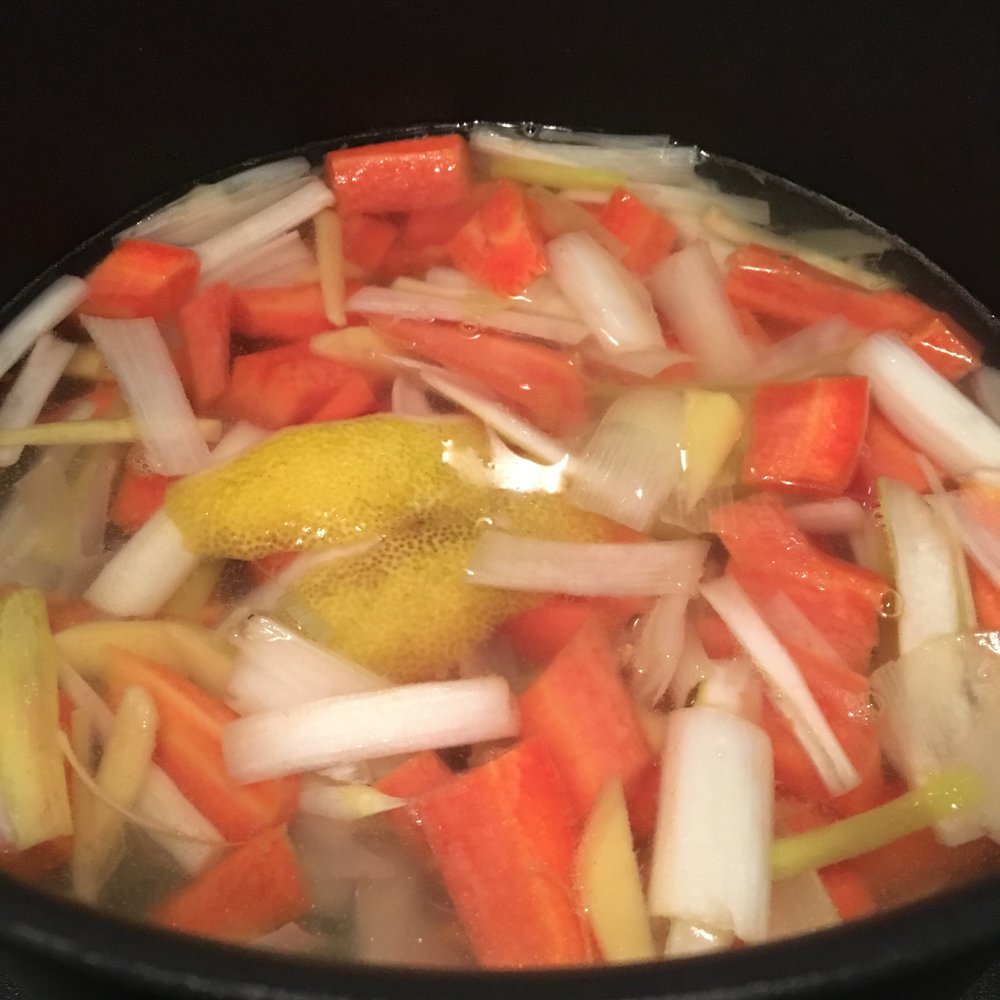
Since I was in France in November when it snowed in Tokyo, today was the first snow of the winter for me. It only snowed to be cold, wet but not white, but I don’t mind because we ste going to the mountains soon and we will have plenty if snow and white there! But damn, how this rainy-snowy weather plus A. Away make me feel cold and gloomy!!! I needed a warm colorful soup to cheer me up before my late night meeting. So after browsing the fridge I decided to prepare a warm soup with some fresh sunny taste. I used coconut oil, fresh ginger and a zest of lemon for the sunny and warm side, together with a red carrot and two leeks for the winter side. And because I’m busy running here and there, I added some green lentil. That’s it! So simple to cook. In a large heated pan I put 1/2tsp of coconut oil,agg the leek cut in small sticks, then add the carrots cut in small sticks too. Then 2 large zest of lemon, and a piece of ginger peele and cut in small pieces. When the water comes to a boil I add 2 small handfuls of green lentils, a pinch of salt. Cook for 10min (the lentils must not be over cooked and too soft, it’s better if they are slightly undercooked). Serve and eat rigt away!!!

Leek quiche with brown rice piecrust

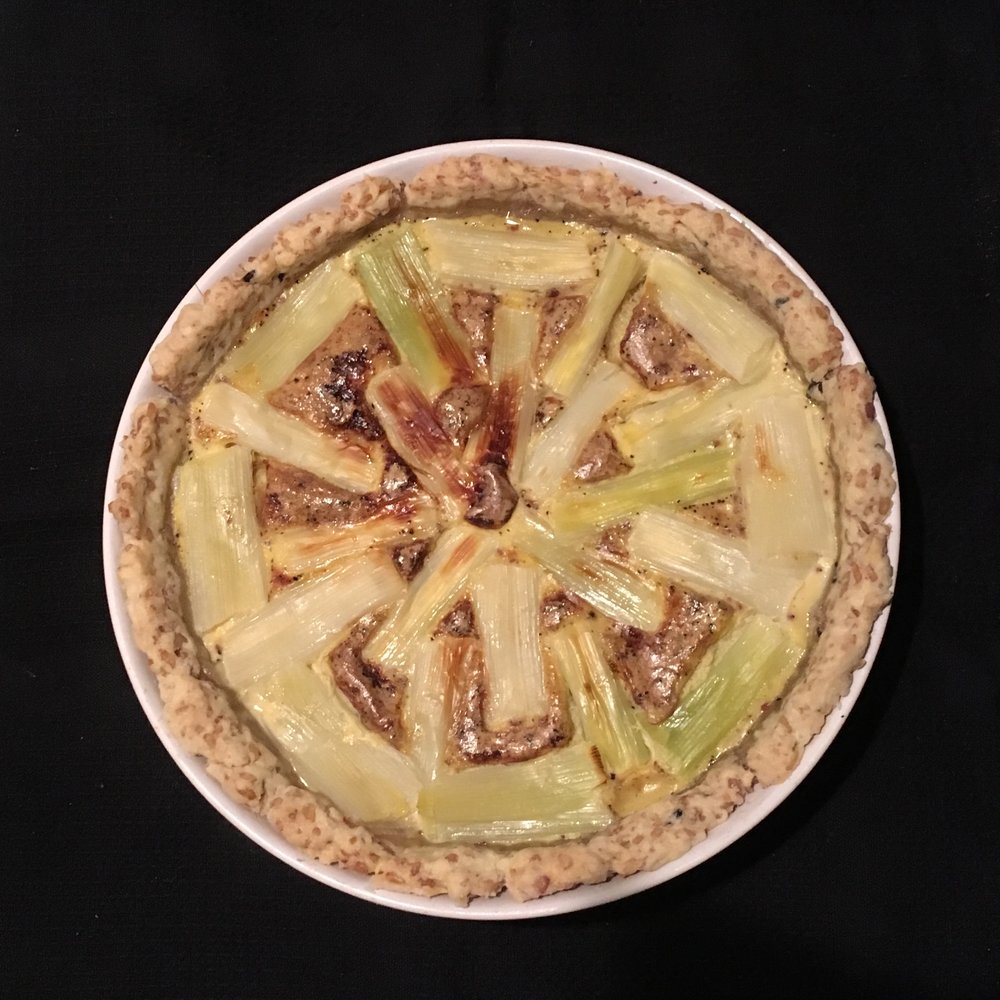
What to do with a handful of cooked brown rice? Not enough to serve it alone, but too much to throw it away. What to do with a bunch of leeks? Well, it’s very simple, just make a quiche with brown rice in the piecrust, and leek as topping. The brown rice in the piecrust brings in some very crusty texture which goes very well with softness of the leeks. From the nutritive point of view, the brown rice also brings in a lot of fibers and proteins. The perfect tasty-healthy-yummy dinner for another evening without A..

Brown rice piecrust quiche:

– 1/2 cup of cooked brown rice, optimally leftovers  

– 2/3 cup of flour of your choice  

– 2tbs of olive oil

– salt, pepper 

– a bit of water

In a bowl, mix the flour, the olive oil, the salt and pepper and a bit of water . Start kneading and then add brown rice. Continue to knead an add if necessary a bit of water or a bit of flour in order to obtain the right texture for the dough, which is neither too dry neither too wet. Set the dough with your hands in a greased  pie dish. No you’re ready and you can put anything you want in the quiche. In my case, I used simply leeks that I steamed before hand, with 2 beaten eggs, salt and pepper.  And then in a preheated oven at 180° I baked a quiche for 20 minutes or until golden.

Even when A. is away on business trip, I continue to cook just for myself. I can’t help continue cooking new stuff. I actually take it as a good opportunity to try new recipes because the only person I can disappoint myself.

Chinese cabbage pickles

Earlier in Autumn you may have seen some recipes with pickled Chinese cabbage that my nice old neighbor gave me. She also promised at that time to teach me how to make some and last Sunday she came suddenly home with all (the four) ingredients necessary to make this delicious pickled cabbage. And we prepared it together. I like her way of cooking very much because it is very intuitive like mine. No need of a scale or precise measurements, just feeling. So my cabbage is now on it’s second day being pressed and I can’t wait to try it tonight!

Mrs K. pickled Chinese cabbage: 

– one Chinese cabbage

– 1/2 cup of salt

– 1/4 of yuzu zest or yuzu peel cut thinely

– 1/2 red pepper (togarashi – 唐辛子) cut thinely

You also need a large tupperware box or dish where the whole cabbage can fit, and a lid to put pressure on it (ideal a cutting bord that fits in the tupperware and a stone) 

The process takes 3 days so don’t expect to it right away!!! 

Wash and dry the cabbage, then cut it in 6 or 8 depending on its size, along the long side. Wash the tupperware and dry it. In a bowl mix the salt with the yuzu peels and the red pepper. Throw some of the sslt mic in the bottom of the tupperware, then lay your cabbage pieces in one row with the outer leaves towards the bottom. All in one single layer. Add some more salt mix a bit everywhere insisting more at the root if the leaves where it’s white and hard. Then top with your cutting board and apply weight on it. After 24h water would have come out. Then flip the cabbage, outer leaves up, and apply some more pressure for another 24-36h. Be careful that the water may overflow! Remove some if it might. It’s impressive how much water can come out! After the 2nd night and during the 3rd day you can start to eat your cabbage. Rinse under water and dry it in cooking paper before serving. Delicious with rice, rice porridge, or pasta soup.

Proudly powered by WordPress | Theme: Baskerville 2 by Anders Noren.

Up ↑

Verified by MonsterInsights