More Malabar spinach

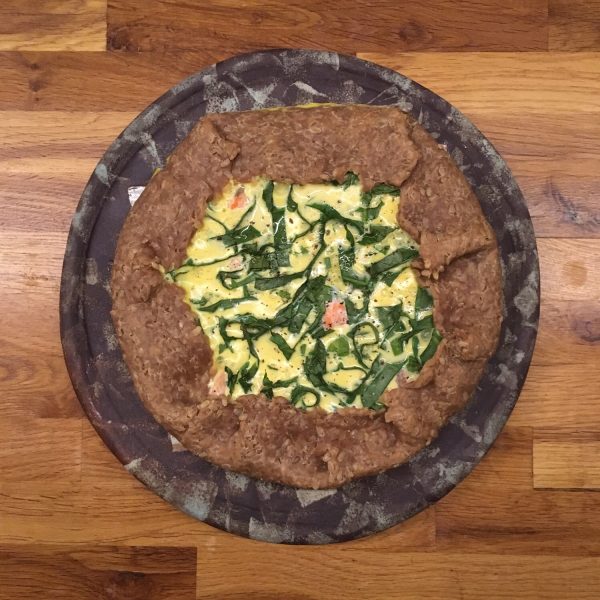
As I was telling you in my previous post, Malabar spinach go very well with a lot of things, and in particular with salmon. This recipe is very simple to prepare and really delicious. It’s just a quiche with fresh salmon (it’s the season for salmon from Miyagi) and Malabar spinach like one would do a classic spinach and salmon quiche. For the pue crust I used whole-wheat flour and olive oil. I really find it very quick to knead with olive oil rather than butter. For the quiche filling, I did an egg and cow milk base (recently I buy locally produced milk). I grilled the salmon in a pan and then removed fishbones and skin, and cut into large bites. I chopped the washed Malabar spinach and add all to the egg base, stir well and pour into the pie crust. Bake for 30min in the oven at 190.

Enjoy!!!

Malabar spinach

I discovered this green last year at our local market, called tsurumimurasaki ツルムラサキ in Japanese, and had a crush for it… then the season passed and it was the season for other greens… and then this week Malabar spinach was on the market shelves… and I was happy to find it again, with its very grassy taste its unique texture and its beautiful color. And again I have used it intensively in the past few days.

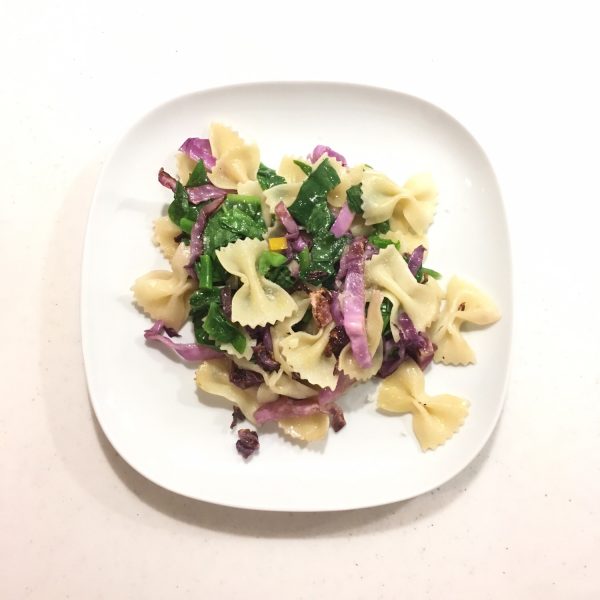
One of my two favorite ways of cooking it is by simply sautéed it. I realize that this is mainly how I like most of my vegetables: a fry pan, a drop of olive oil or nothing and the vegetables just washed (not even dried) and cooked in their water. Malabar spinach goes well with other vegetables, potatoes, kohlrabi, tomatoes… for this recipe it was simple, just red cabbage shaved and Malabar spinach cut in pieces, a bit of olive oil, and some farfalle. A but of pepper and a bit of salt. And it was an amazing dinner.

Do you cook Malabar spinach? How do you like them?

Kohlrabi and edamame salad

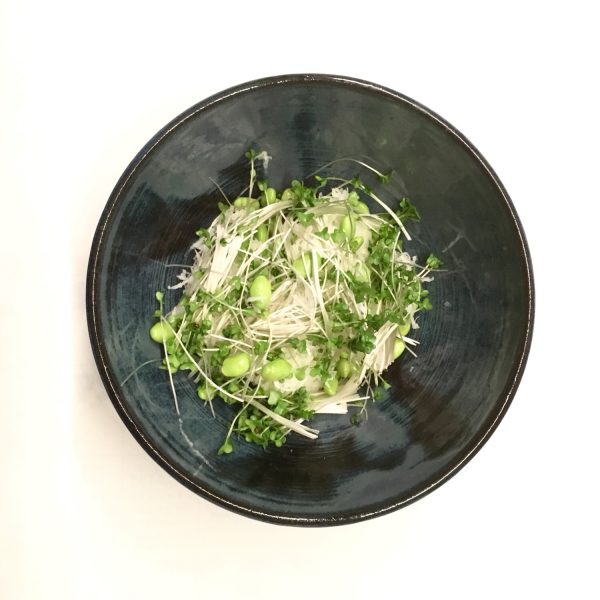
As I was telling you, kohlrabi is my new best cooking ingredient. Sautéed it is great with other vegetables, pasta… but kohlrabi is also delicious raw. Many recipes I saw on the internet inspired me while looking for ideas how to cook it. And if the weather is called one day it is warm and sunny the next, so a simple salad with raw kohlrabi is always a great option. When the kohlrabi is juicy and crunchy and very refreshing. As I said in my previous post, it is really nice with olive oil, so no headache about the dressing. To make the salad a little Japanese style I added boiled edamame (the season is just starting), some brocoli sprouts and a bit of sesame. For the kohlrabi I grated it with a mandolin and remove the extra juice by gently pressing it. Simple and super delicious…

The next thing I am wondering now is with which herbs and spices to try it… If you have any idea, please share with me! I’ll be happy to try.

Kohlrabi

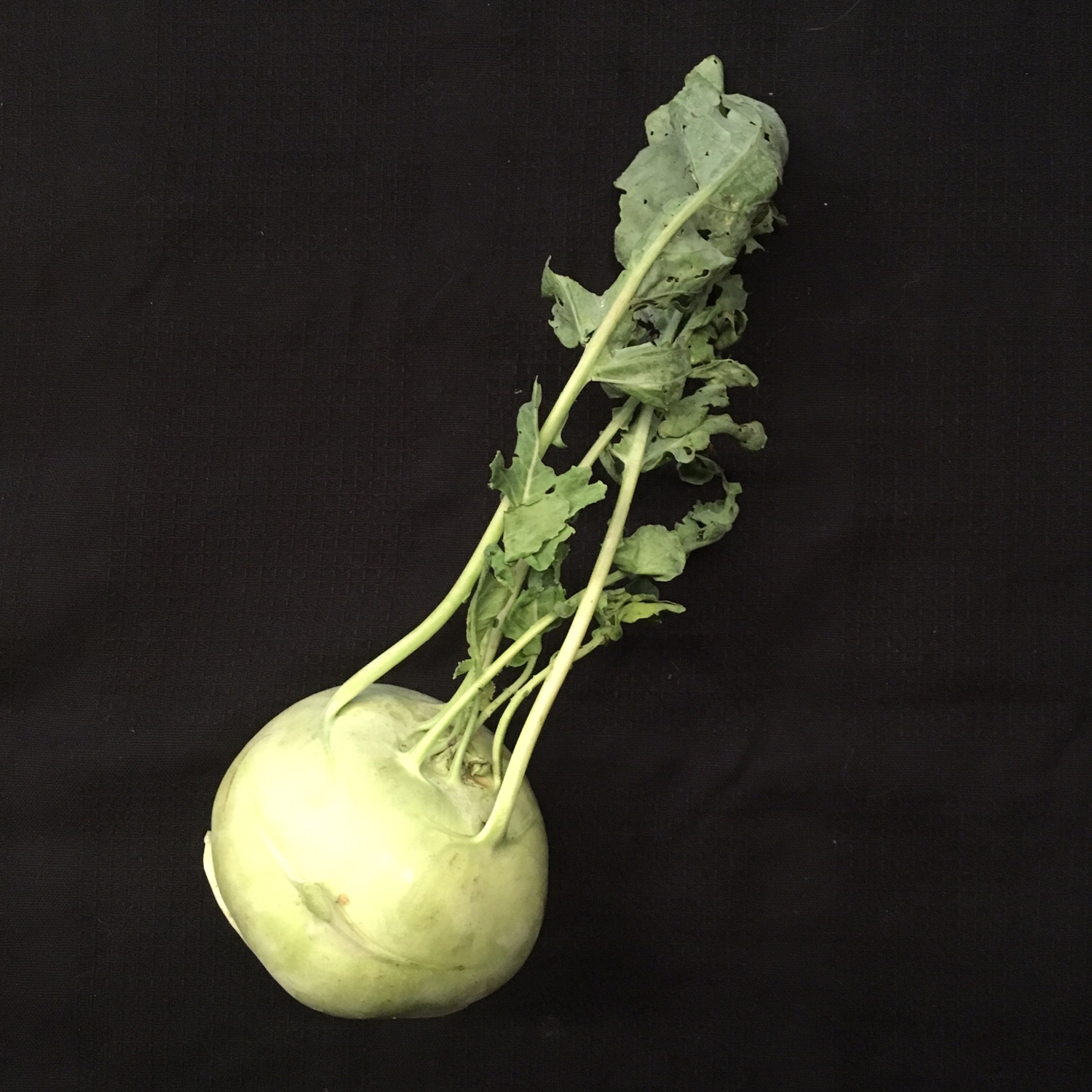
I didn’t remember seeing kohlrabi too often in Japan and I couldn’t remember having actually prepared some anytime in my life. I vaguely remember it was something we would eat in the 80’s when I was little and didn’t eat anything… So kohlrabi (chou rave as I remembered it) was just a name with no associated taste or memory. When I saw it at the local farmers market I found them so cute that I couldn’t resist buying this lonely pack of three kohlrabi. And I didn’t regret it at all!!! Quite the opposite!!

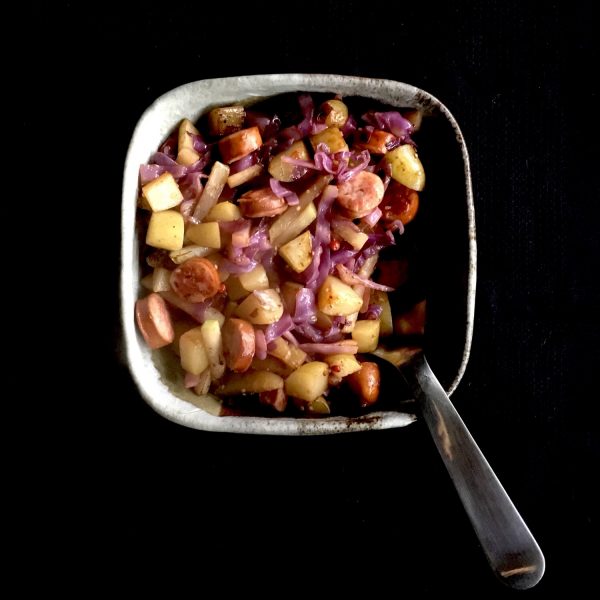
I browsed the net to get a few do’s and don’t, and my first recipe was a simple olive vegetables sautéed with a bit of sausage and potatoes and red cabbage. Really simple but a great way to cook kohlrabi quickly. It adds some crispness and a fresh cabbage taste but more subtle and sweeter than I expected. Really perfect with olive oil too, so I knew we would be good friends!

More recipes with kohlrabi coming soon!!!

Zucchini cake

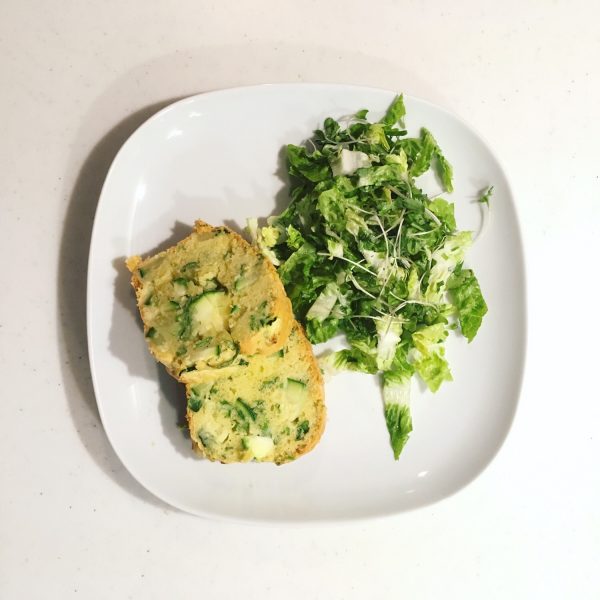
Somehow this week has been a lot about cooking zucchini. There was a few classic things such as “soupe au pistou” for friends coming for dinner. But also a few new recipes such the salsola quiche. And after seeing a few cakes on IG, I thought it was time to make one with zucchini and rucola. The recipe is very simple and the zucchini bring the moisture often missing in savory cakes. I added rucola for a bit of fresh taste, and served it with a simple herb salad. A perfect dinner, all in one plate.

Zucchini cake:

– 1 zucchini

– a handful of rucola

– 150g of flour

– 1tsp of baking powder

– 3 eggs

– 1/2 cup of olive oil

– salt and pepper

In a bowl mix all the ingredients for the dough. Wash the rucola and the zucchini. Cut them. Add to the mix. In a greased cake dish pour the mix and bake at 160deg for 30min, rise the temperature to 190 for the final 5-10 minutes. Check with a knife if ready.

That’s it!! And it’s Friday, so have a good end of the week!

Another quiche…

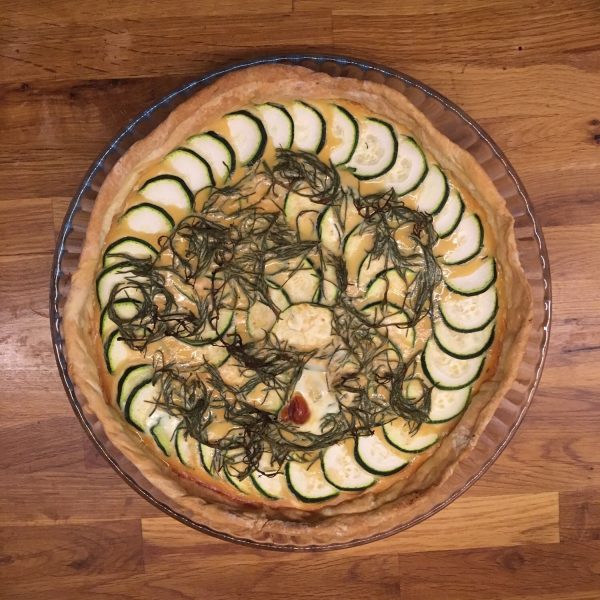
There’s nothing like a good quiche for dinner! I was missing not preparing some for a while, so I had to fix that. With the summer vegetables starting I bought plenty of zucchini at the farmers market because we love them and ones need to enjoy them when they are in season (the season in Japan is rather short and starts early). Zucchini are perfect for summer style quiche. I prepared them with okahijiki (salsola), this little plant I discovered last year. And I used miso in the egg mix to add a bit of texture and flavor. The result was a great one. Oh… and for the dough I went with a bit different recipe, something close to pasta dough, thin and crispy… Indeed while I was kneading the flour with an egg I realized it was the same start as making pasta dough (it crossed my mind to do lasagna for a second then…) but I finally added olive oil little by little to obtain a smooth dough but slightly oily compared to pasta. Something I’ll do again for sure!

Salsola and zucchini quiche

For the filling:

– 1 or 2 zucchini

– a handful of salsola

– 2tbs of miso

– 2 eggs

– some milk (or soya milk)

For the dough:

– 100g of flour

– 1egg

– olive oil

Mix the flour and the egg, add olive oil little by little and knead well. The dough must be smooth, shiny and feel a little greasy but not perspire oil!

Roll the dough into a thin circle and set on the pie dish (I used a low and large one).

Wash the vegetables, slice the zucchini and set them in the dough. In a bowl bit the eggs with the miso and the milk, add the salsola. Pour onto the zucchini.

Bake at 180deg for 30min or until golden.

I served it with some yogurt with herbs in.

Attention: miso is usually very salty so do not add salt in any of the mixes.
Cherries

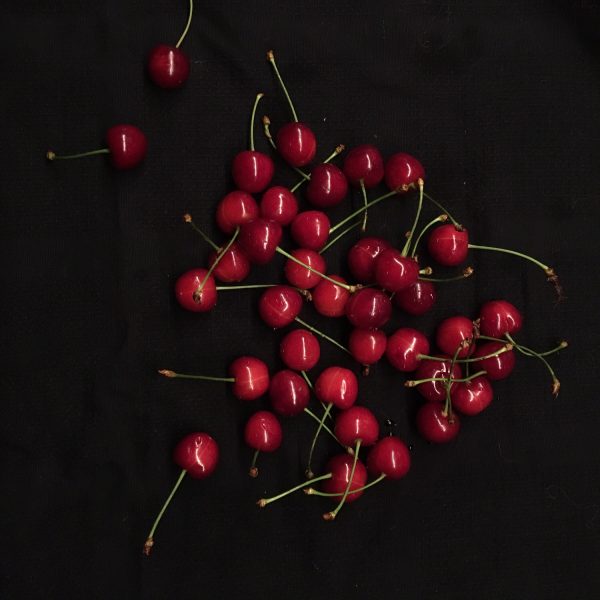
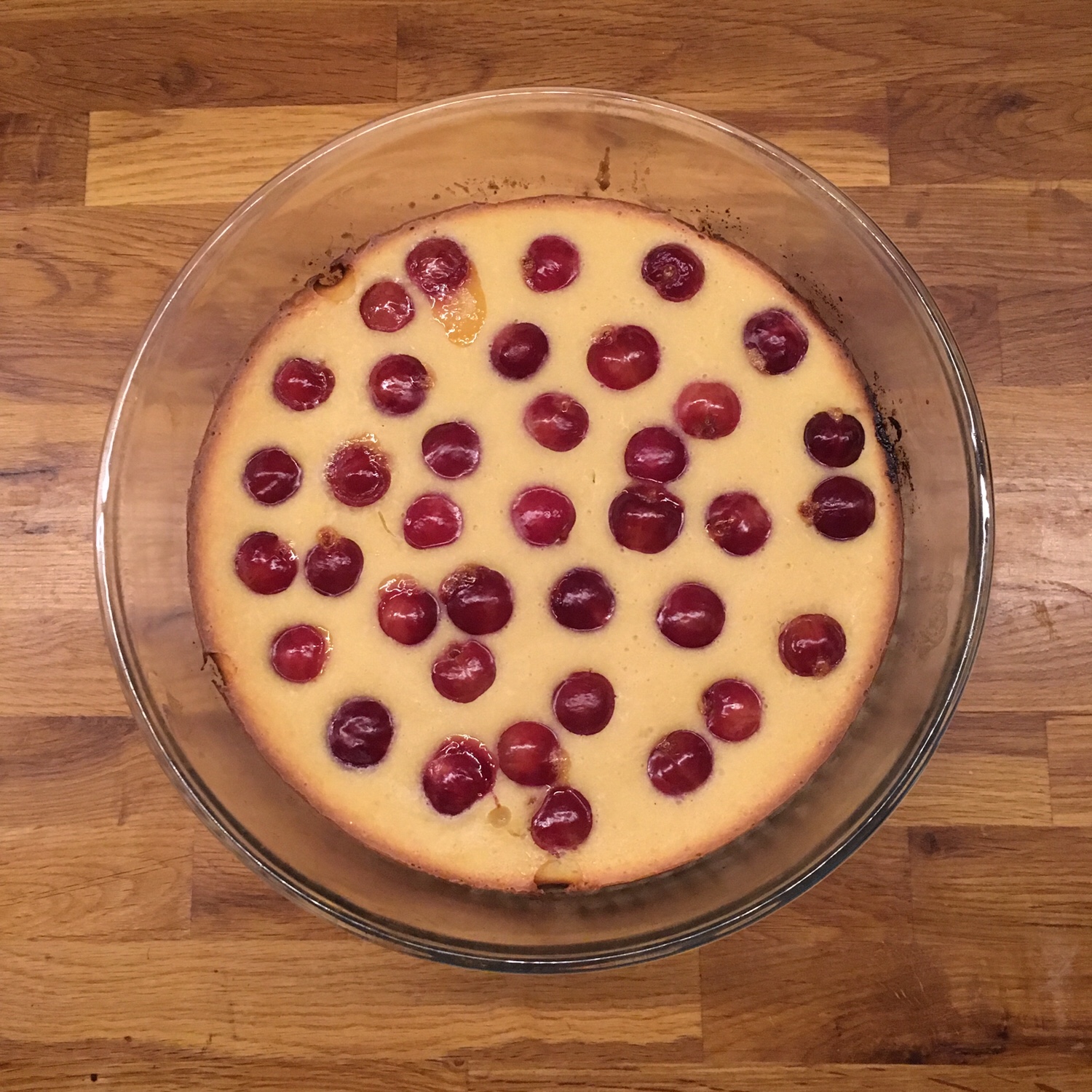
When I was a child, every year for mother day, which in France is at the end of May, we would go to my grandparents country house in Le Castelet to have a family lunch. From those lunches I remember catching tadpoles in the small stream that was running down the garden and picking cherries in the giant cherry trees near that stream. The trees were so old and big that we could spend the whole day in the trees picking and eating cherries, there would still be so many left. For me, cherries are great eaten from the tree, big, ripe and juicy Burlat or from the market stand. I love to keep one seed in my mouth for hours and work it like the sea would work a pebble. Since we’ve been in Japan it’s been quite hard to find cherries, and cherries by kilos like you see them in the south of France or in Italy… the only cherries you can find are from the US, or the local ones are from Yamagata and are sold by the handful, not more. They have different varieties of cherries from dark burgundy to almost white, large or small. I still love them large and almost black! I don’t buy cherry often but when I do I usually prepare them in clafoutis, and when I don’t have enough for one clafoutis I mix them with other seasonal fruits.

I find that clafoutis are the perfect option for breakfast on a rush as they combine both fruits, carbs and protein, and they are easy to eat when not yet really awake when we wake up early. They are also easy to eat on the go because there easy to wrap. Perfect for breakfast on the beach after a morning swim or a bodyboarding session.

I wish you a great week and love to hear how you like your cherries!

Corn

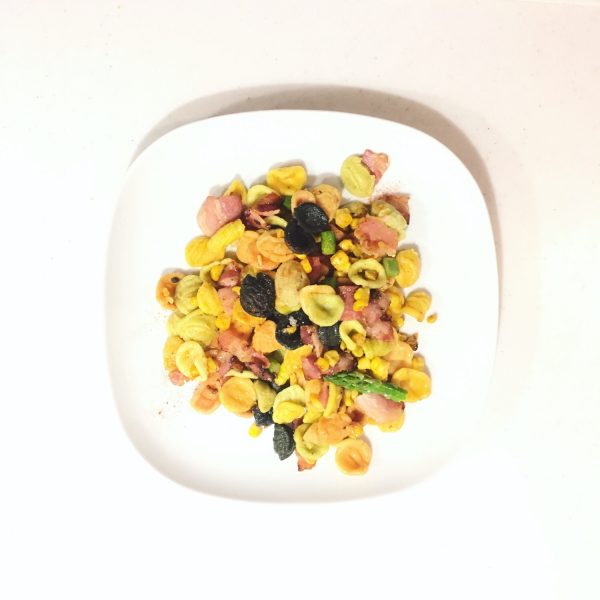
Despite a very busy week at work, I wanted to try preparing some nice food, simple but nice… and because we haven’t been to the country, I still had to adjust to what I could find in Tokyo’s supermarkets. One thing I found that was nice was fresh corn… something I don’t cook to often because I totally lack of imagination when it comes to cooking corn. Luckily I was browsing a cooking magazine in the train and found a nice recipe of a creamy corn soup (one of the classic use of corn), with rolled asparagus in bacon. I had corn, I had asparagus, I had bacon, I didn’t want to prepare a creamy soup… but the combination inspired me for a new recipe of pasta.

Orecchiette with corn and asparagus (for 2 people, main dish)

– 120g of orecchiette

– 1 fresh corn

– 4 slices of bacon

– 2~4 green asparagus

– olive oil

– paprika powder

– chili powder

– salt and pepper

I boiled one corn and then I shuck it. In a pan I simply grilled some bacon cut in pieces, added the corn and when the bacon was golden added some chopped asparagus, a tsp of paprika, a bit of chili powder, salt and pepper.
Then I boiled the pasta, drained them, added them to the sauce and stirred well, adding a bit of olive oil, and served to eat right away!

Rainy season?

Just back from Australia to Tokyo, and I find that the rainy season is getting near. The air is already quite humid and temperatures are mildly warm or hot. Soon it will be time to harvest the plums in the garden, even hopping it is not too late already… It’s been 3 weeks we haven’t go to the country house… I can easily imagine how green and lush the garden is and the hydrangeas will be all ready to bloom soon.

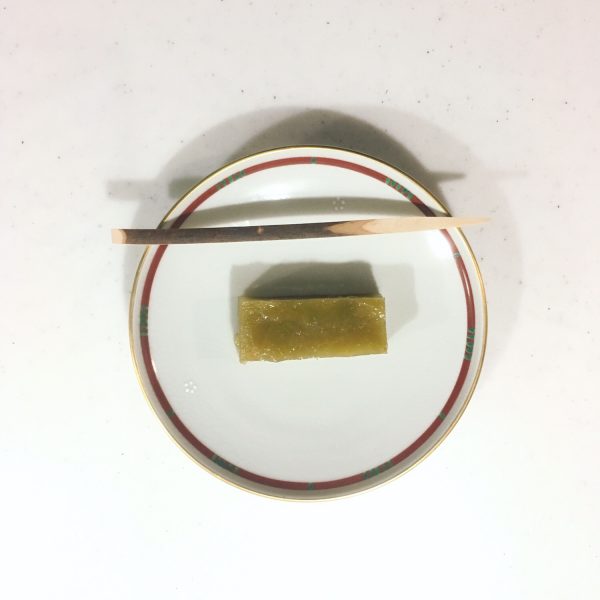
One thing I like to prepare with plums, other than ume-shu, ume-syrup and umeboshi is plum jam and plum jelly, something that you can enjoy right away and doesn’t have to sit for weeks or months. I am not very good at making jams and preserves but I keep trying. Jelly or yokan (ようかん) is much easier for me… but it uses only a little bit of fruits compared to all we have…

Japanese plum jelly – ume yokan

I used about twenty green large plums, sugar to your liking, agar-agar, and about 2/3L of water.

First wash and remove the stems of the plums, boil the water and add the plums, cook under cover at low heat until the plums are soft and the skin and flesh detach easily. Then add the sugar and the agar-agar (quantity will depend on how hard you like the jelly and how much liquid remains in your pan. Cook at medium heat for 5-10min and then pour in a dish. Wait until it cools down to refrigerate. After 2-3h you can serve, by cutting blocks out of the jelly. That’s it!

Proudly powered by WordPress | Theme: Baskerville 2 by Anders Noren.

Up ↑

Verified by MonsterInsights