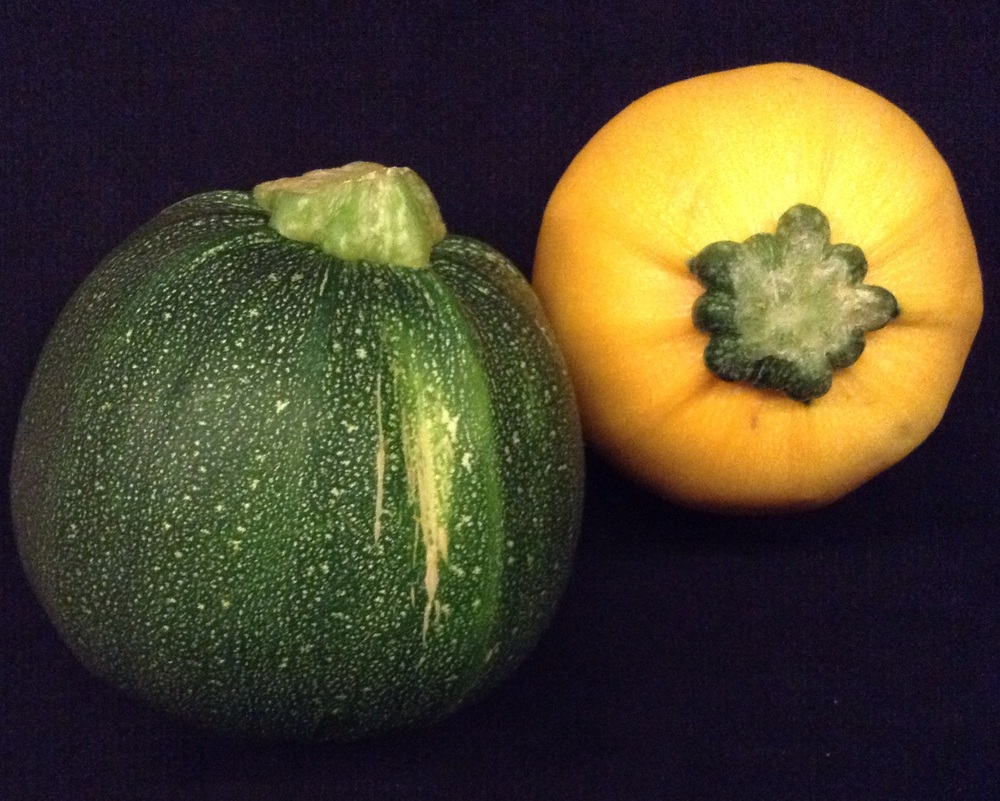
Summer is here and so is the zucchini season. In the first few years we were living in Tokyo I found that it was not easy to find nice zucchini in Tokyo but then I realized that if in supermarket you have pretty much always the same little zucchini in local farmers market and in the country it’s much easier to find some delicious ones. It started with our friend living in Niigata prefecture and growing their own delicious zucchini, then in Ohara, and now in Koganei. The day before yesterday at Koganei local farmers market (Friday evening at Higashi Koganei station, but I am not sure if it’s every Friday because I usually leave work after the shops have closed) I found beautiful round zucchini yellow and green. The season is short, so we’re eating zucchini almost every day now! (Too bad they don’t sell small zucchini with the flowers, but rather large zucchini) And when it’s not zucchini it’s green beans, since it’s the right season now in Tokyo and around too.
There are plenty of ways to prepare zucchini and one can never get tired of them. They are nice with rosemary, thyme, basil, mint, curry, roasted, fried, sautéed, stuffed or just steamed. So this week let me introduce a few of my favorite recipes new and classic using zucchini. I hope you like them as much as I do, and if you don’t try s few of my recipes, you may start to like them!
A few years ago while traveling to Milan I was shopping cooking ingredients and gears to bring back to Japan with me to extend my Italian experience. I may be French in Japan, Italian cuisine is, I think, what I love best. Useless to say that I came back with about a full suitcase of pasta, rice, semolina, dry porcini, olive oil and other magic ingredients. So during this Milanese grocery shopping spree I discovered Trofie. This rolled little pasta is just so good that it has been our favorite since then. I haven’t try yet to make my own, but I soon will for sure. In the mean time dry trofie are my favorite pick for a rapid fix, and they suit very well any time of pesto sauce or vegetables based sauce, or just with olive oil and salt and pepper it’s also perfect. I usually use Barilla trofie Liguri http://www.barilla.it/prodotto-barilla/trofie-liguri, and luckily recently trofie can be found in any good grocery stores worldwide, and Japan is no exception!
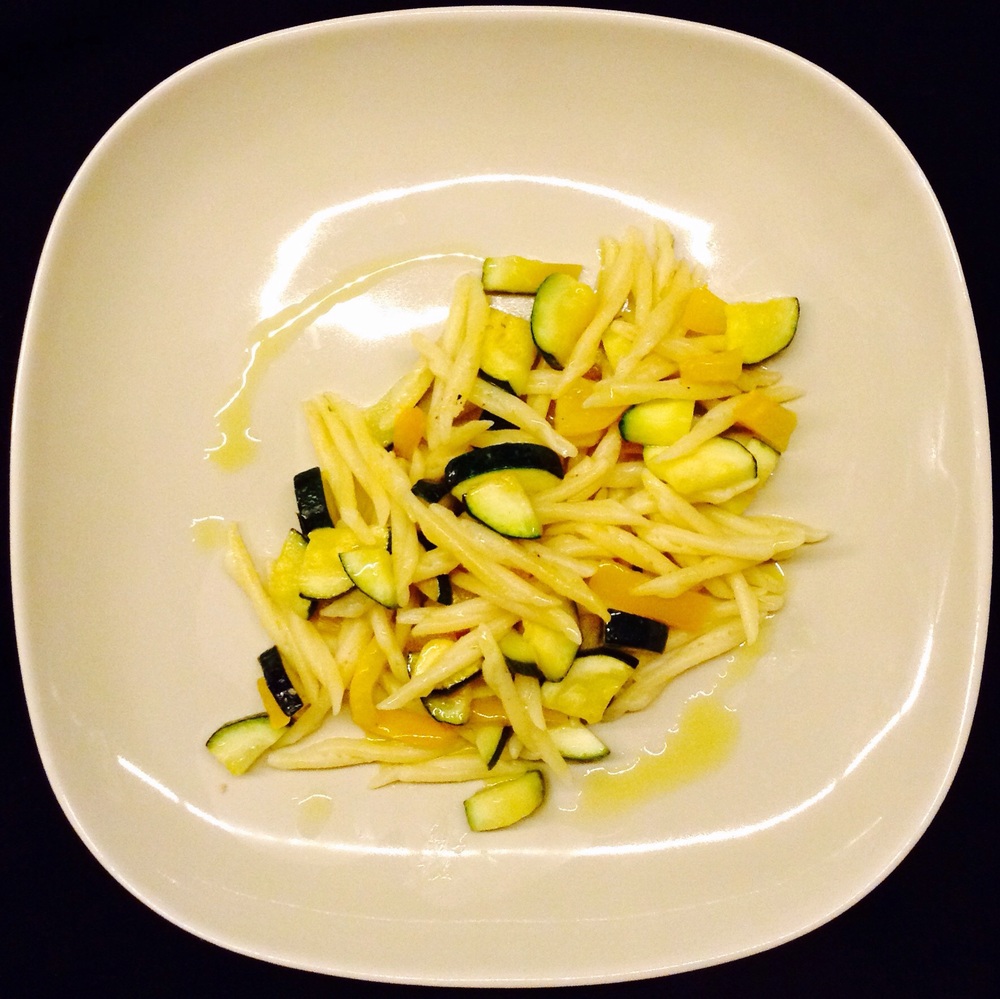
This time I just cut a small zucchini and half of a yellow sweet pepper that I cook a few minutes in a pan and finish with some delicious olive oil. That’s all it takes to prepare a delicious and colorful plate.
Me practising, a few years ago (picture taken by my uncle Bernard when they visited)
It’s been a long time I wanted to talk about it, but recently work kept me so busy that I felt bad writing about something that I had no time to do. Now that I have little business trips scheduled I can practice again more steadily and talk about it without having the impression that I should be in the dojo rather than writing about it. To make long stories short, I’ve practicing traditional Japanese archery, or kyudo, since I moved to Japan. Kyudo 弓道 that literally means “the way of the bow” is an ancient Japanese practice that as evolved as an art, where performance is less important than the form, and require a perfect balance of body and mind. Obviously this is not an activity to burn your extra energy and your anger from work, for that kendo must be more appropriate! But rather a meditative physical activity where breathing and body inner strength are crucial. The bow is much longer than a classic archery bow, mine is a long bow, so about 2.3m, and the strength adapted to it’s owner own strength. Same for arrows, their size and weight depend on the archer, when I started I had a 8K bow, now I have a 13K.
Target accross the yamichi
There are several things I love about kyudo. I guess the place where to practice is an important choice, and I am lucky enough to practice right in the middle of Ueno park, in the middle of ancestral trees and a quiet oasis in the city (except may be when it is hanami season). Actually, I practice it in a shinto shrine, actually, and it has been a great source of knowledge and understanding of Japanese culture to go so often there. Second it is not strictly speaking an indoor activity which I don’t really like: the dojo is wide open to the “yamichi” 矢道 and it is not heated nor cooled o you can clearly feel the seasons! Though you can practice any time, day or night, rain or sunny: no excuse not to go! I also like this balance you need to have between a clear mind and a strong yet relaxed body and I can clearly see the differences when I’m preoccupied or managed to totally clear out all thoughts that could impede my performance.
As any Japanese practice there are tons of cute goodies you need (OK, may be not really NEED, but that you can have!) like the under gloves in many different colors and patterns, the glove cover, the bow cover etc… And of course, the regular outfit to practice is a hakama 袴 like in kendo, and for ceremonial shooting kimono and similar. There are many places in Japan where to practice and now it’s becoming a popular practice among Japan fan in Europe and America, with dojo in many cities. For more information I recommend to check the International Kyudo Federation web site.
Ceremonial shooting (picture taken by dojo member)
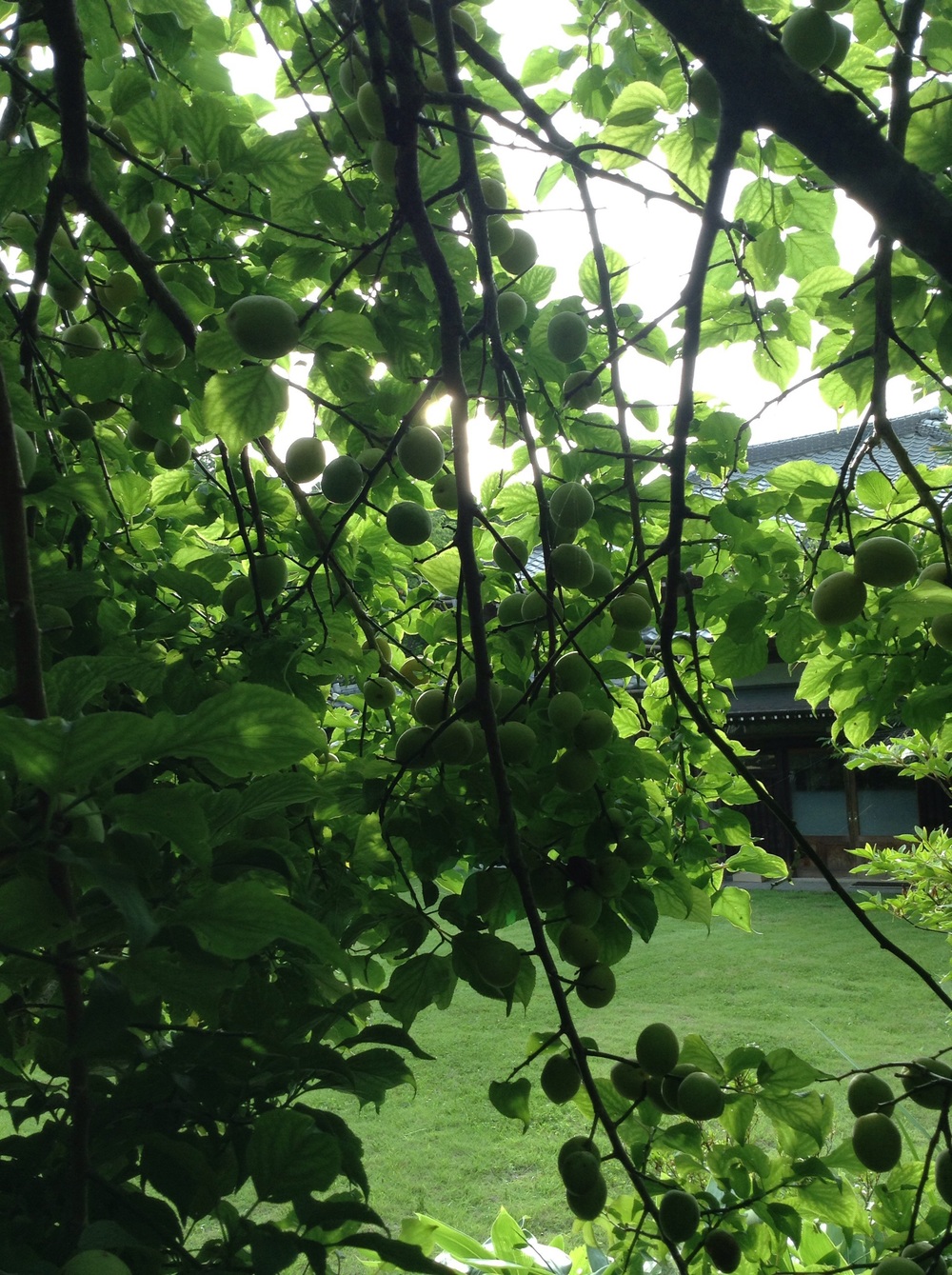
One of the plum tree in the garden, covered with plum
Prunellia’s post on her favorite Japanese drink is timely because it is just the season to harvest plums and to prepare umeshu. In our garden we have a lot of plum trees and each year they produce a lot of fruits. Last year for the first time the fruits were harvested and used to prepare umeshu. As Prunellia mentioned, Umeshu is prepared from still green plums and usually with shochu (a white traditional alcoholic drink made of rice, potato, sweet potato…). The recipe used here to prepare the Umeshu uses nihonshu, which is regular Japanese sake or rice wine and gives a milder taste to the preparation. I’ve got the recipe from a lady living nearby. Actually last year she prepared the umeshu with our fruits, but this year I was very much tempted to prepare some myself, so she gave me her recipe and helped me out for my first time.
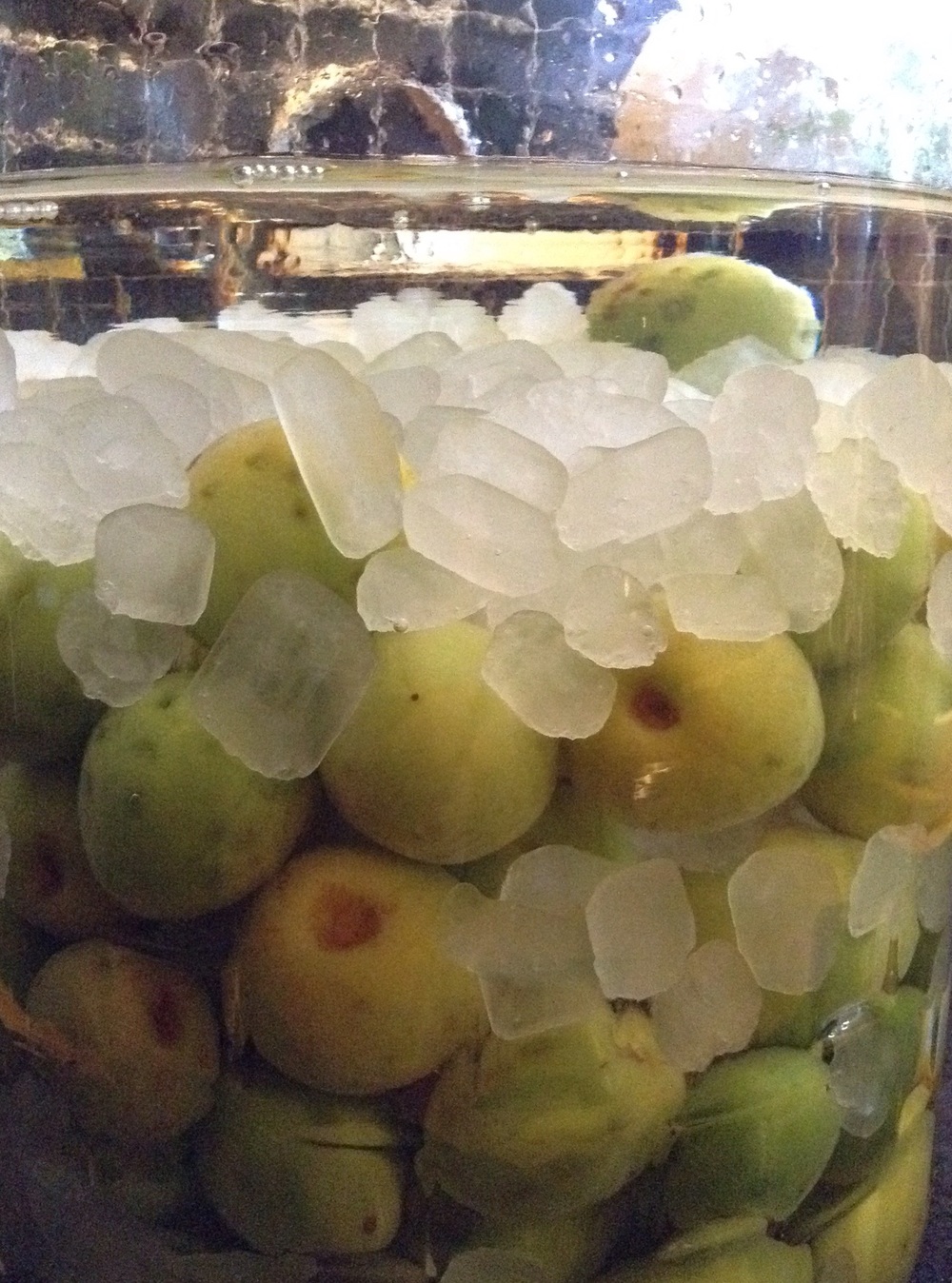
Umeshu from 2014 harvested plum just ready!
The recipe is really simple, but be aware unlike a lot of alcoholic preparations that are ready in 60 or 90 days (peach wine, verbena liquor… that I used to prepare according to my grand mother recipes), this one takes a whole year (you can try earlier but one year guaranties the best taste/color).
You need Japanese hard plums, rock sugar, sake or shochu, and a large jar (usually plastic or glass) with a tight lid and a big mouth to fit the plums in. First wash the plum and remove the stems, then wash again and dry them properly. Weight the plums that can fit 3/4 of the jar, weight the half amount of rock sugar. Clean and dry perfectly the jar and then pick the plums with a fork a few times around and make layers of plum and rock sugar until the 3/4 has been reached. Cover with the sake or shochu up to 2-3cm higher than the level of fruits and sugar. Close the lid tightly, store in a cool and dark place for almost a year. Once in a while you can shake the jar to help the sugar melt.
Prunellia, I’m counting on you to come next spring or summer to try my homemade umeshu with the plums from the garden!
“La soupe au pistou”, pronounce ” la souuuupopiiiiistuu” (or pesto soup) is a traditional summer preparation in Provence. Like any traditional food each family has her secret recipe and variations are quite Infinite. Shall it include small pasta or king of cut spaghetti, or none; shall it be served with grated Parmigiano or grated Gruyere; how many types of bean should be used etc… Honestly I would say that each version tastes different but cannot be bad. For me this soup is synonymous of summer, holidays, family gatherings… I can’t even recall when I first it it, probably at an age whe it is not possible to recall. The recipe comes from my grand mother that probably came from her mother and so on, my mother is using the recipe. For us the pesto is made of fresh basil leaves, pine nuts, gratted garlic, grated Parmigiano and ollive oil, a lot of olive oil. The soup consists in tomatoes (big, red ripe summer tomatoes), green beans, broad beans, zucchini, white beans and marbled beans. The beans are inserted by cooking time and it’s cooked during a long time at low eat, and it is served with grated gruyere. No pasta… Though I recall some argument about that!
Reinvention of the soupe au pistou in the making
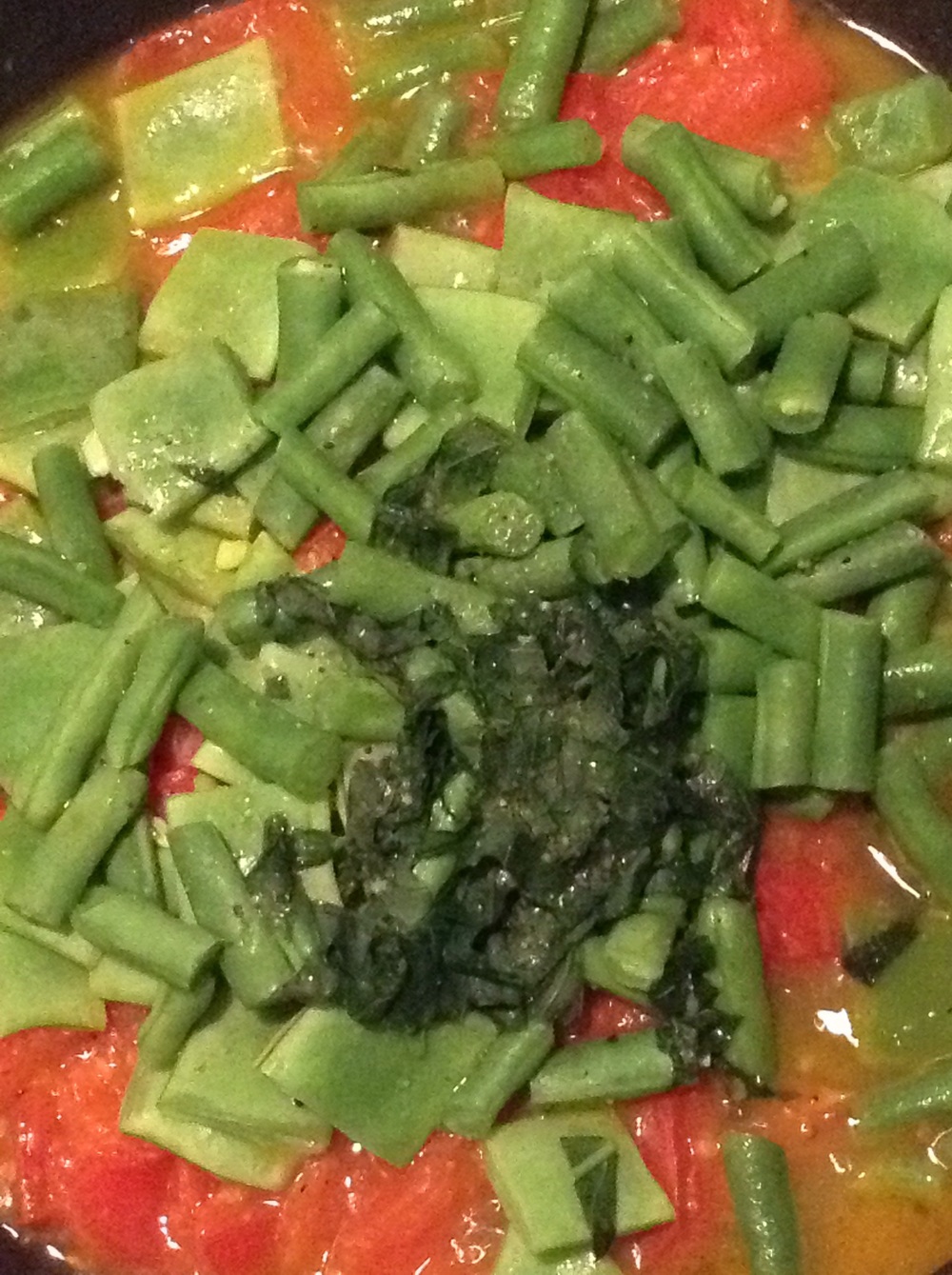
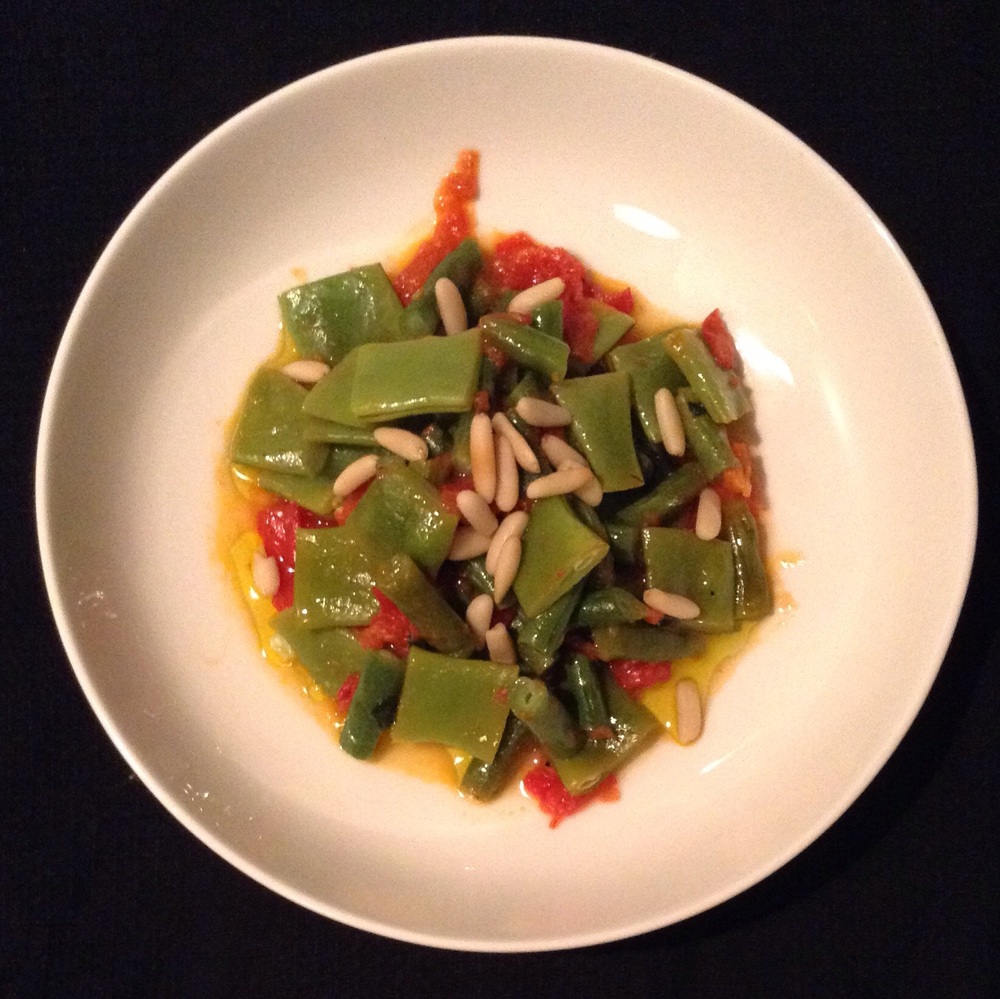
I’ve been preparing a lot of this soup even in Japan, though I can’t find fresh marble beans and white beans, it is easy to have some dry, and broad beans are really easy to find, fresh and delicious. I adapt the recipe to circumstances and when I serve it as a single dish I usually add a few little pasta. I never use garlic, fresh or dry, so I took it off the recipe, and my husband doesn’t like pine nuts nor cheese so usually I take them off as well… hum… well my pesto is just basil and olive oil and just as good! This time I was about to prepare one when I realized I had no white beans nor marble beans and I was not really in the mood to eat soup on my own, since my husband was out for dinner for work. So I decided to treat myself with a recipe that I just invented on the spot (missing ingredients are the best inspiration!) and went for a dry soupe au pistou. In a pan I diced a tomato and cooked it with olive oil, then added the green beans and the braod beans, finally I added the chopped basil leaves, salt pepper and olive oil and cooked under cover 15min. The served it with pine nuts, and finally topped with Parmigiano (which is totally optional). Perfectly delicious though a bit far from the original recipe but that is evolution!
And ready to eat (I spare you the Parmigiano topping!)
For lunch I eat quite often bagels that I buy in supermarket nearby my work. They have one brand that I like quite much but not always. It’s been a long time I’ve been thinking about making some bagels myself but I imagined that making them with a good shape and the boiling+baking kind of stopped me from trying: it’s gonna take too much time I was thinking. How stupid!!!
But recently the itch of trying got more and more important and I finally did. First, it was much shorter and simpler than I thought and quite fun; second, shaping them was easy and fun; third, they are the best bagels I’ve eaten so far, except maybe in NY, but I don’t remember well, it was quite some time ago!! I made only very few, rather small (the proportions were for 4 or 5 bagels, I made 6), plain and multigrain types.
As for the recipe, since it was my first time and it was too perfect, I want to try again with more variety before giving you a recipe. I’m thinking there was a lot of beginners/first timers luck there!!!
In the very back of our garden we have a loquat tree. Most of the time it is impossible to eat any because the birds eat them much faster but this time I manage to save two! Loquats are a little lique apricots, but with a much milder taste and I really love to it them raw or prepare tart with them, just as apricot tart. Since two loquats is not going to be enough for a tart I decided to mix them with an apple and to make small tarts with just a brise dough with very little butter, oat bran, brown sugar and water, and add some apple sliced and half a loquat on top. This ultra simple recipe allows to fully enjoy each ingredient without any addition, the loquat brings a juicy note to the whole thing. The oat bran some granulosity to the dough without having to add an egg.
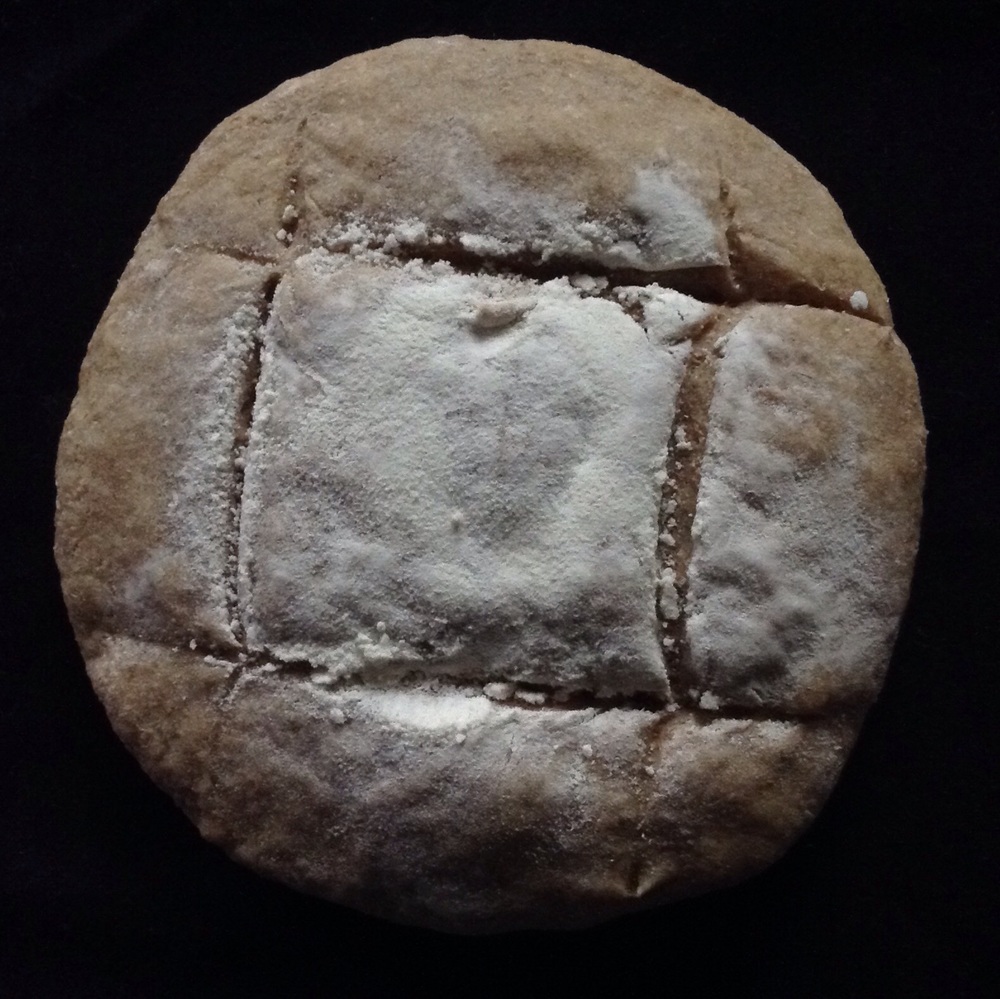
On Saturday evening I often prepare bread to have something fresh and delicious for breakfast on Sunday morning. This time it’s a bread called gâche. I used half whole wheat flour (83g) half white flour (83g) to prepare it, then the usual 8g of sourdough, 2g of yeast, 3g of salt, 100g of water. It takes about 90min for the first rise, 60 for the second, and in between plan about 45min. Baking time is about 18min. If you’r in Japan I would recommend to prepare your bread right before being eaten because the weather is so humid that the crust gets soft very quickly, and originaly the crust of that bread is quite soft.
Well, if this bread was just perfect for breakfast, I then went to Eataly (I mentioned it in an earlier post) . Eataly is my best provider for delicious fresh Italian products, in particular San Daniele ham, pancetta and fresh cheese. They use to have fresh ravioli, but it didn’t last long. This gâche bread with a little La Tur cheese was just stunning!
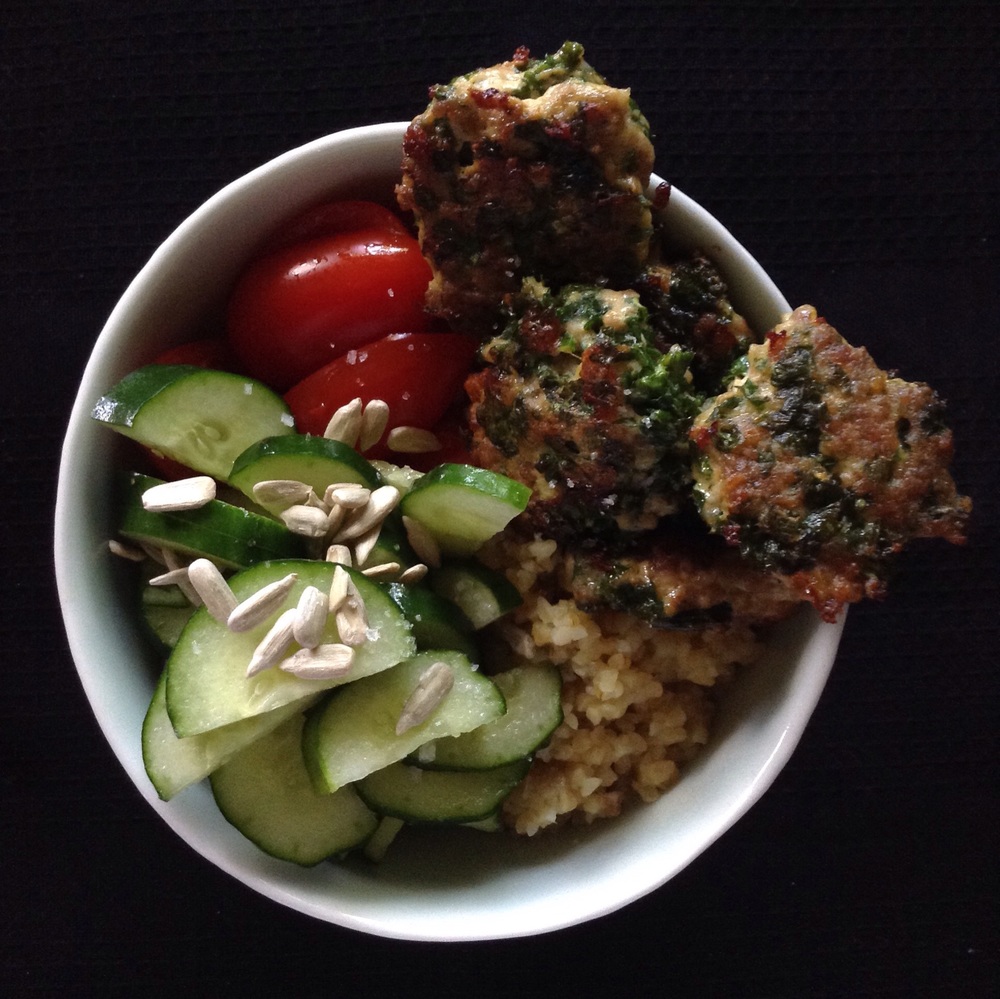
I love bulgur and it’s very handy because it takes little time to cook it compared to rice for example. So I find it very convenient when I want to fix something for lunch after playing tennis. And this time the fix was really quick: pork and parsley balls, mini tomatoes, cucumber and bulgur. For the balls I roughly chopped parsley, mix it with an egg and grinded pork and cook then until golden in a pan. Ready in a very short time, full of energy, proteins and colorful! Yummy!