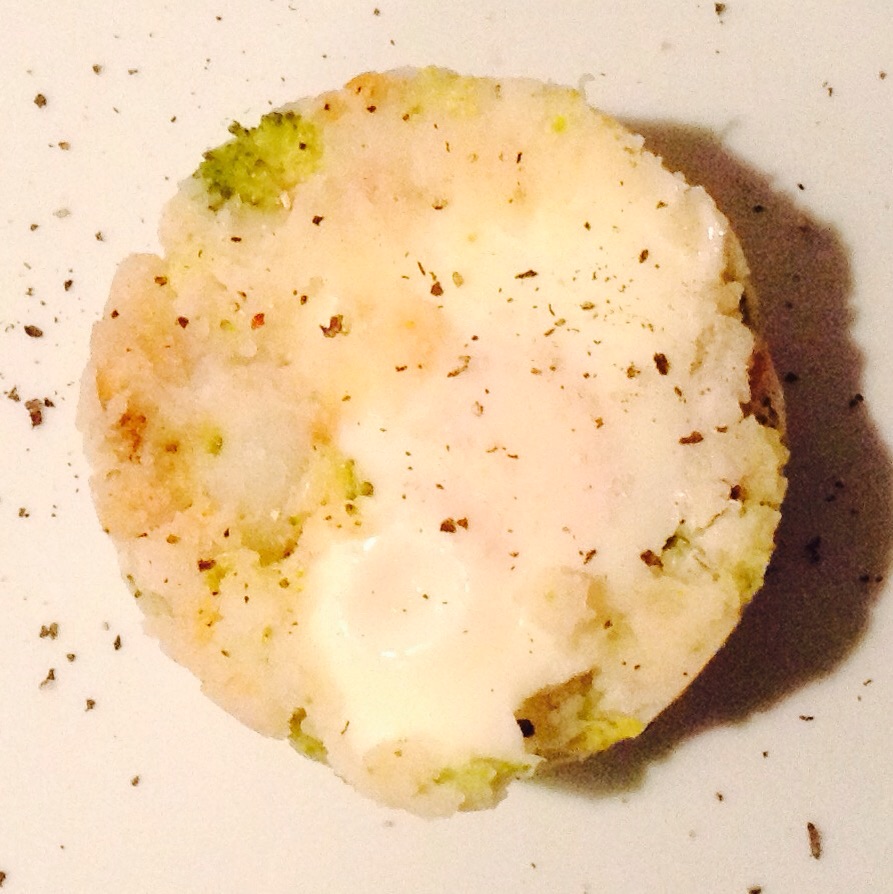
Before and after traveling I feel like needing more than ever fresh fruits and veggies and super simple recipes. So let me share with you a new idea I add. I wanted to eat mashed potatoes, I love them! But I don’t make some too often. So for this recipe I prepared simple mash potatoes with only a bit of butter, then I added some little chunks of broccoli, and finished with an egg, and lot of pepper. Simply delicious!
You know how we like seeds with Gentiane, we use them all the time and can put some of them everywhere.
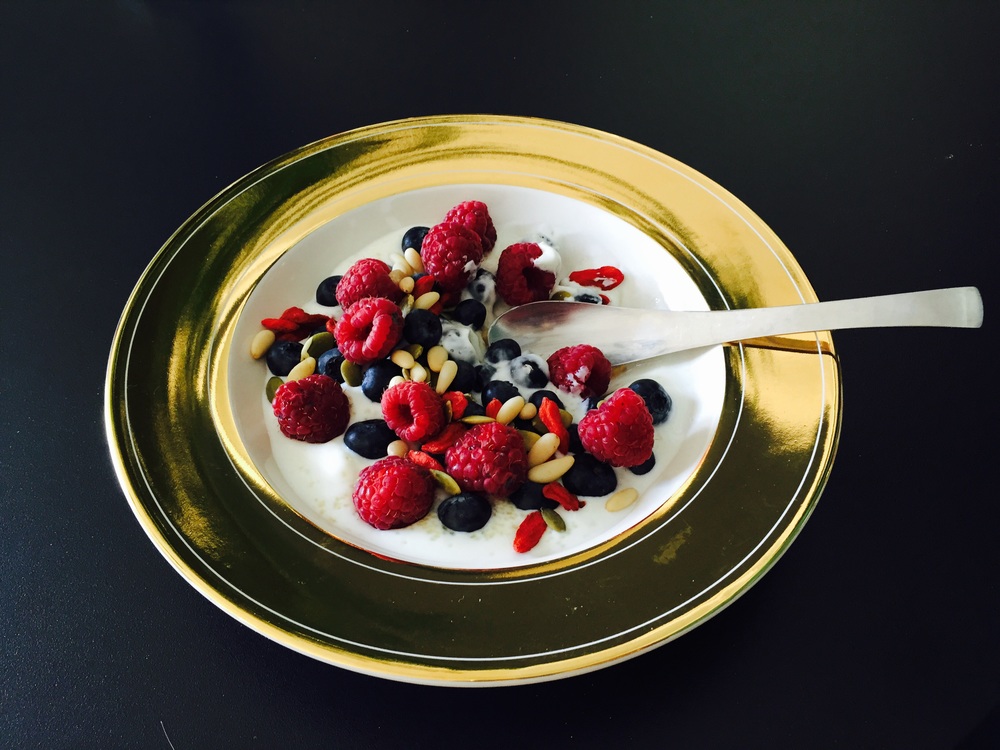
For this quick breakfast, I need yogurt (or creamy fromage blanc), a drop of brown sugar, blackberries, raspberries and of course many different kinds of seeds. I use goji berries, sunflower seeds, pine seeds. You can add some homemade granola. And tada!
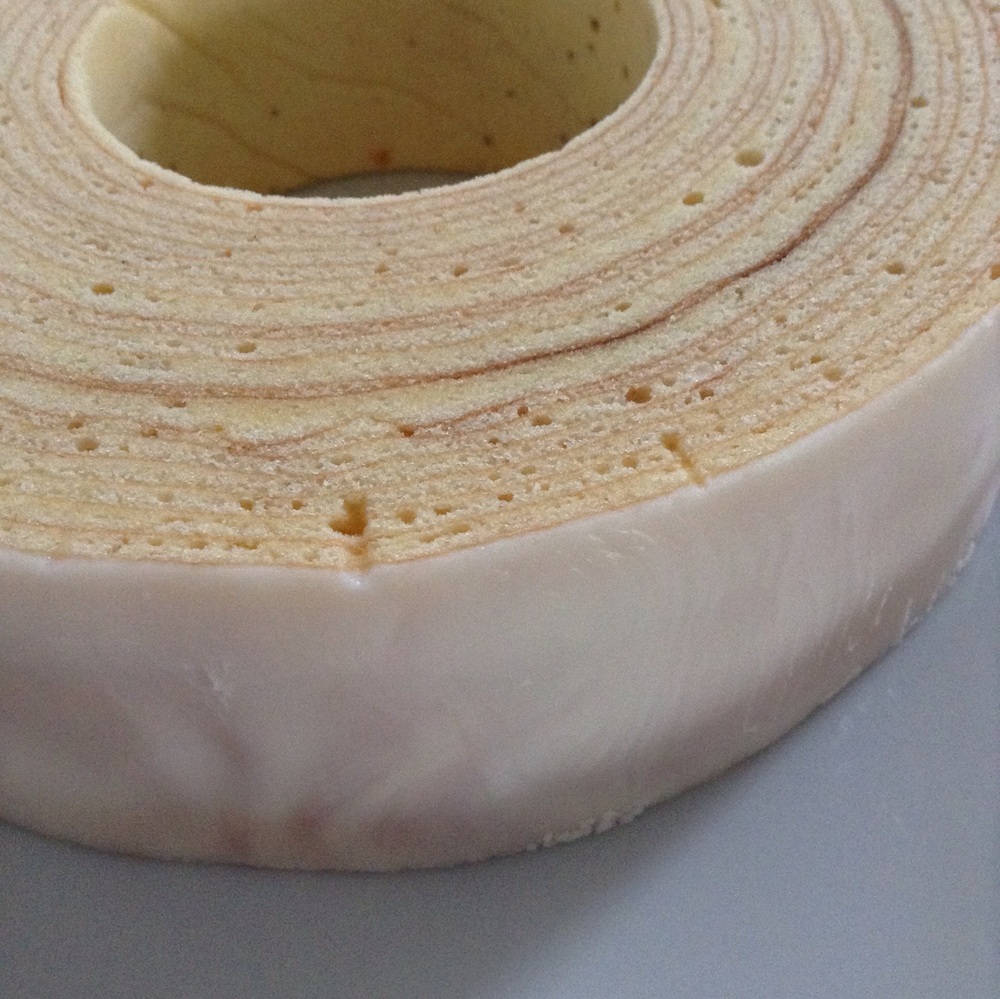
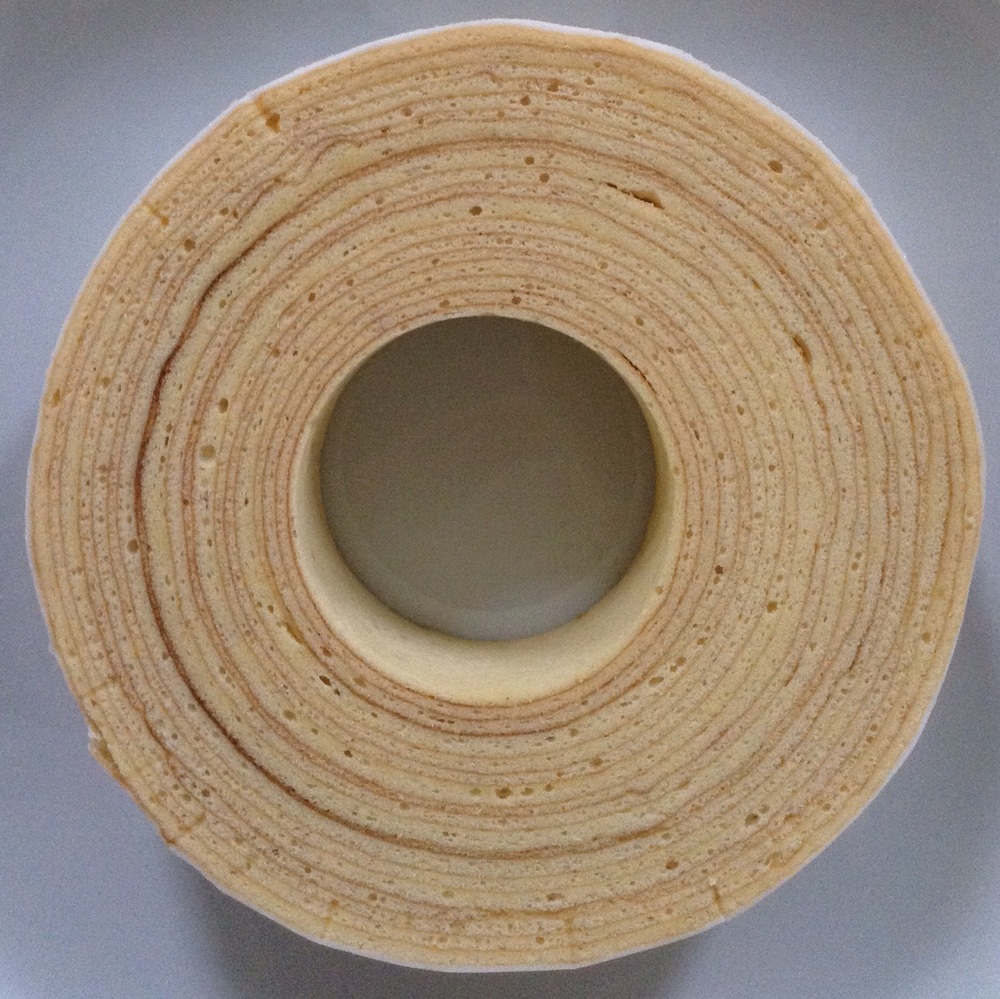
I just travelled one day to Kobe, which means that I’ve spent half of the day in the train. You could imagine that working seated in my office most of the day or working seated on a train is the same but actually the feeling is completely different. In the train I can’t open the windows to breath fresh air nor change the settings of the aircon/heater, neither the neon over lighting. So I feel dry, cold and oppressed, my eyes hurt and I feel exhausted… Anyway… The good thing, except that work was good, is that Kobe is famous for a delicious and somehow strange German cake: the baumkuchen. It’s a layer cake baked while rolling. The kind of thing hard to try at home. And the famous brand Juchheim (the first to introduce the cake in Japan) has plenty of shops in the city and of course at the shinkansen train station. So I couldn’t help but bringing back a little souvenir for our breakfast and some for my students (the tradition of bringing some food souvenir or omiyage in Japanese (お土産) is one important tradition at work).
There are many different brands of baumkuchen of all quality, you can even find some in supermarkets. There are also different flavors of cakes, the most common are plain, macha, chocolate… There is also a number of limited seasonal editions such as yuzu… My favorite for breakfast is the plain one, and I like the one from Juchheim more than the others because of it’s thin outer layer made of ice sugar and butter, which a lot of other brands don’t have.
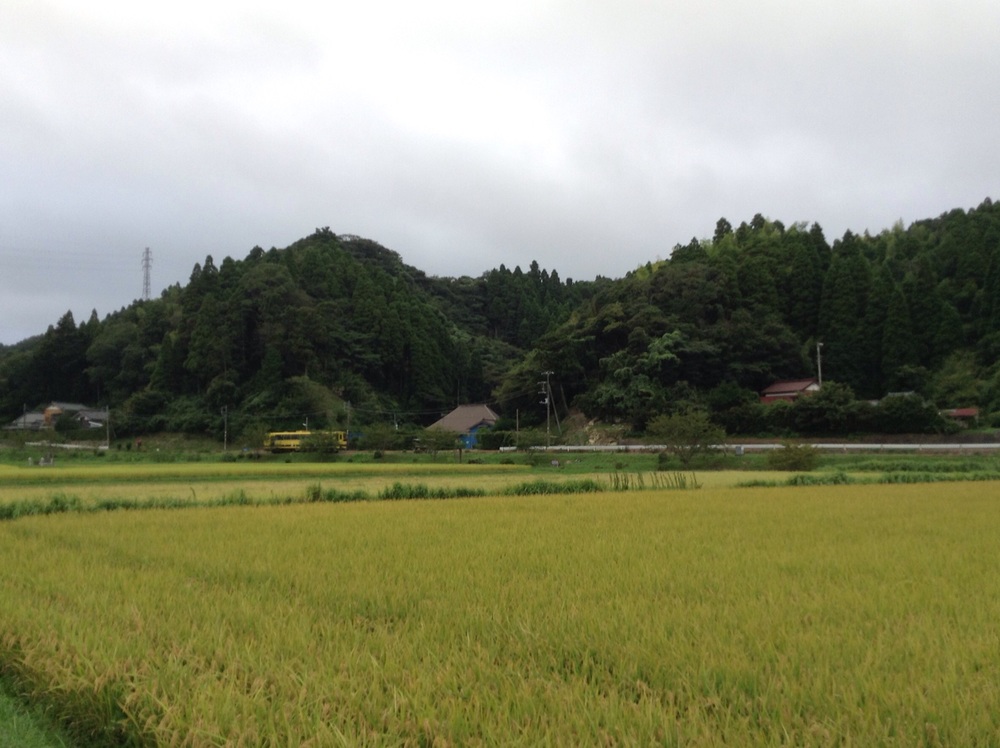
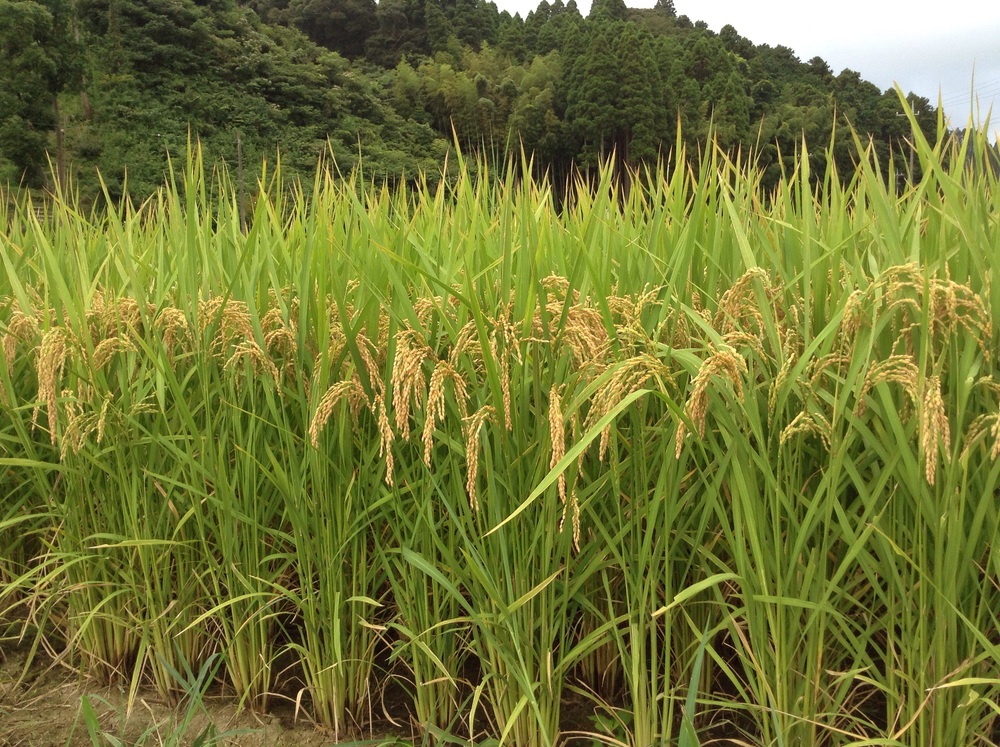
Today I’m traveling to Kobe for work and most of the way from the train window iT’s just rice paddies. Actually, the season for harvesting rice has started a few weeks ago in Isumi, but not everywhere yet in Japan. The beautiful yellow-green rice paddies that undulate in the wind are one by one being cut short. The smell is also changing. When this season starts it is also the end of summer, and this year it’s pretty bad with a lot of rain. Really a lot! And it is also the season for new rice or shin-kome (新米). As new tea in spring, new rice is an important ingredient for Japanese. The taste of new rice is subtle and more refined than usual rice, but it is as much for its gustative properties than for its signification as a the mark of the beginning of autumn, which in Japan is usually long, warm and beautiful.
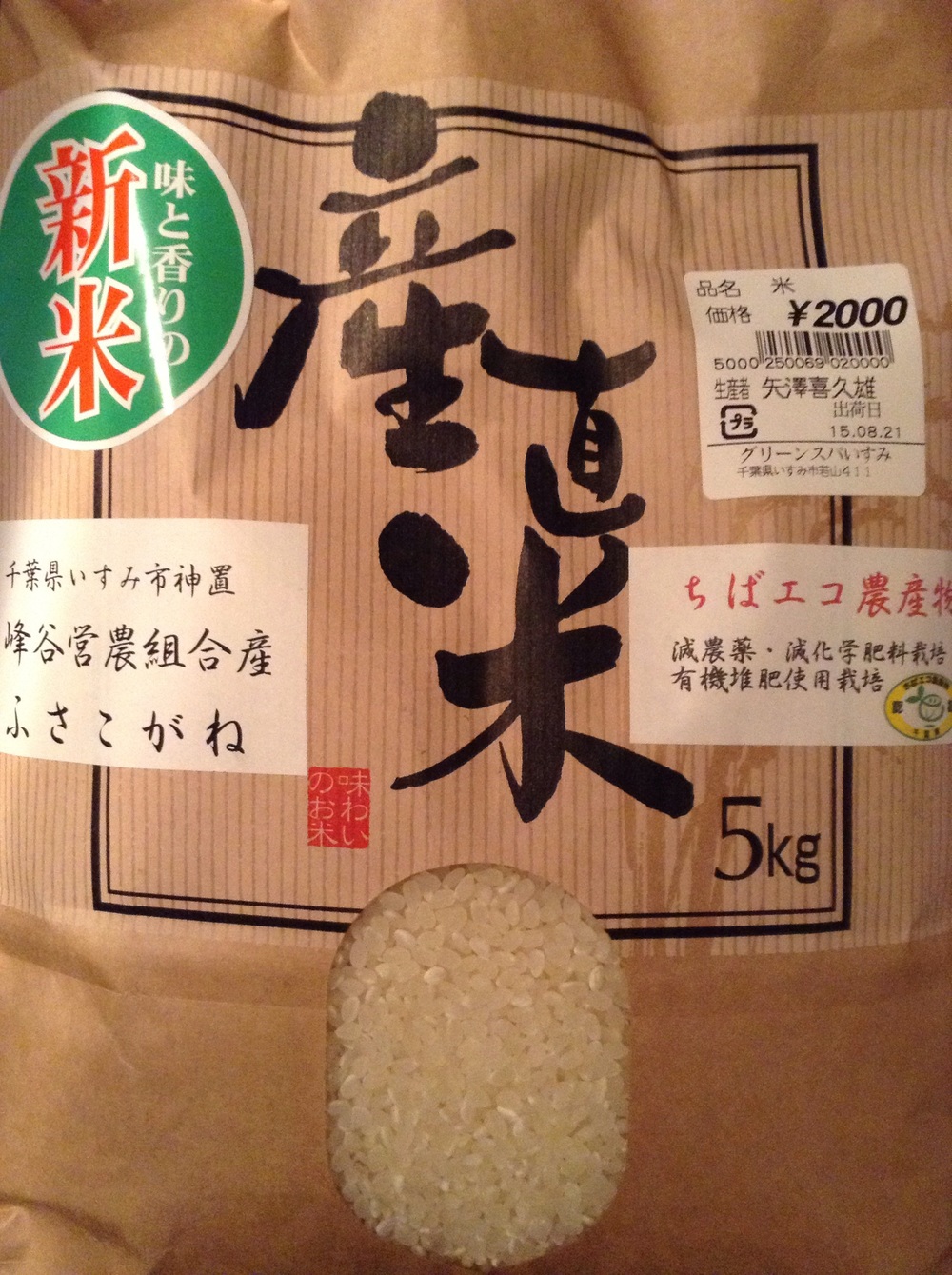
Almost every year I buy a bag of new rice that lasts pretty much a year in Ohara. I only buy organic rice or Eco rice (the yellow Eco mark on the right side of the bag on the picture). There are also many types of rice (kind of breeds) depending on regions, usually I like Koshihikari type (an habit I got from traveling to Tsunan where they mainly grow Koshihikari), but this time I picked a different type since it seems the Koshihikari has not been harvested yet. When still very new I use it mainly for plain white rice or little preparation, after a few months, I don’t bother anymore.
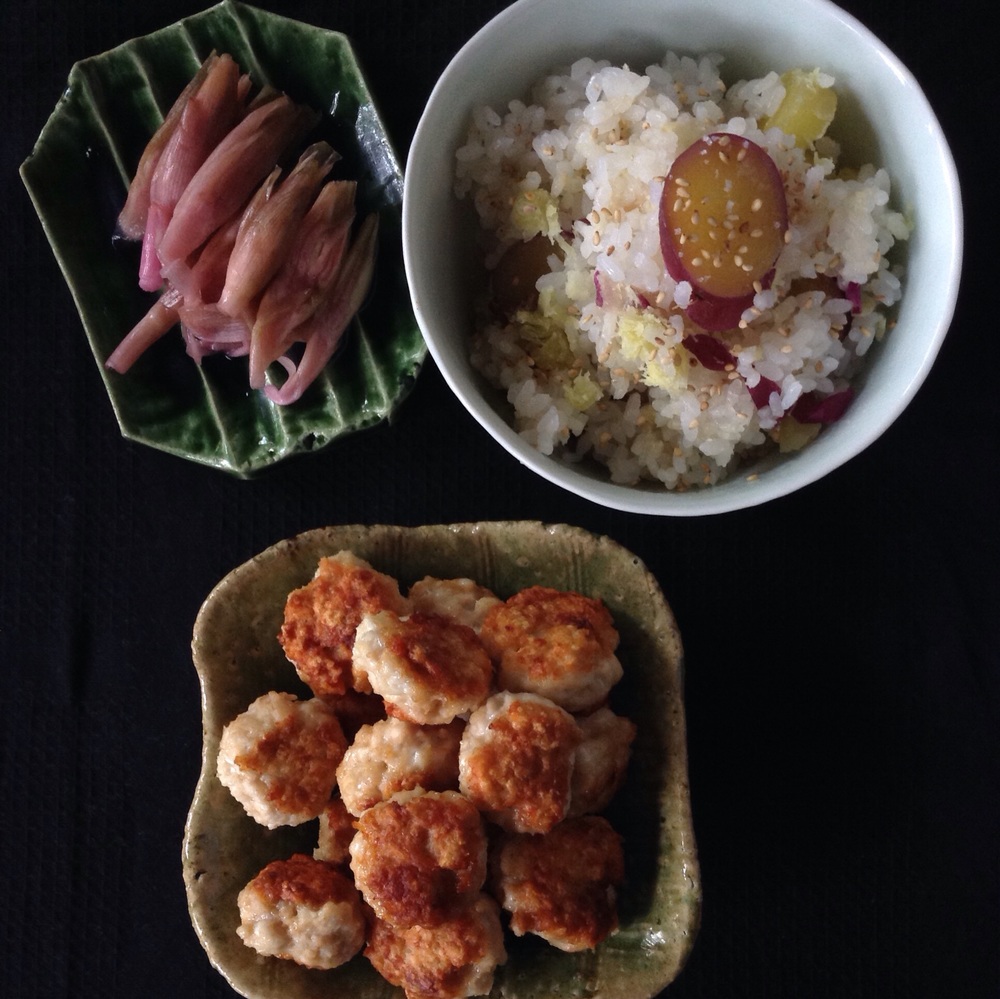
As usual, after our two hours tennis game in the morning we’re just starving and we need a good source of carb and proteins. I love the Japanese combo rice and meat balls. This time sweet potato rice, chicken and soua sauce balls, and pickled myoga in plum vinegar. Perfect!
I bake the rice in a regular pot, add the potatoes sliced at mid time; mix the chicken meat with rice flour and a bit of soya sauce and cook in a fry pan with a bit of vegetal oil. Simple. I got the picled myoga from our local farmers market.
Japanese cucumber are really tiny compared to the huge one in Europe or America. Their diameter is usually between 1 and 2 centimeters and they are 12 to 20 centimeters long. There are few seeds and the the skin is not too thick so you just need to wash the and can eat them.
In summer we eat cucumbers every day and I realized I should have started a cucumber week! I buy them either in Koganei or in Isumi at the local farmers, and this week I have a load of cucumbers from K. And S. From Tsunan.
I love cucumbers in cold soup and salad, I also love them as pickles. I will soon present you my delicious pickles made in the 2-5-8 but so far I’ve been too busy with work to prepare any.
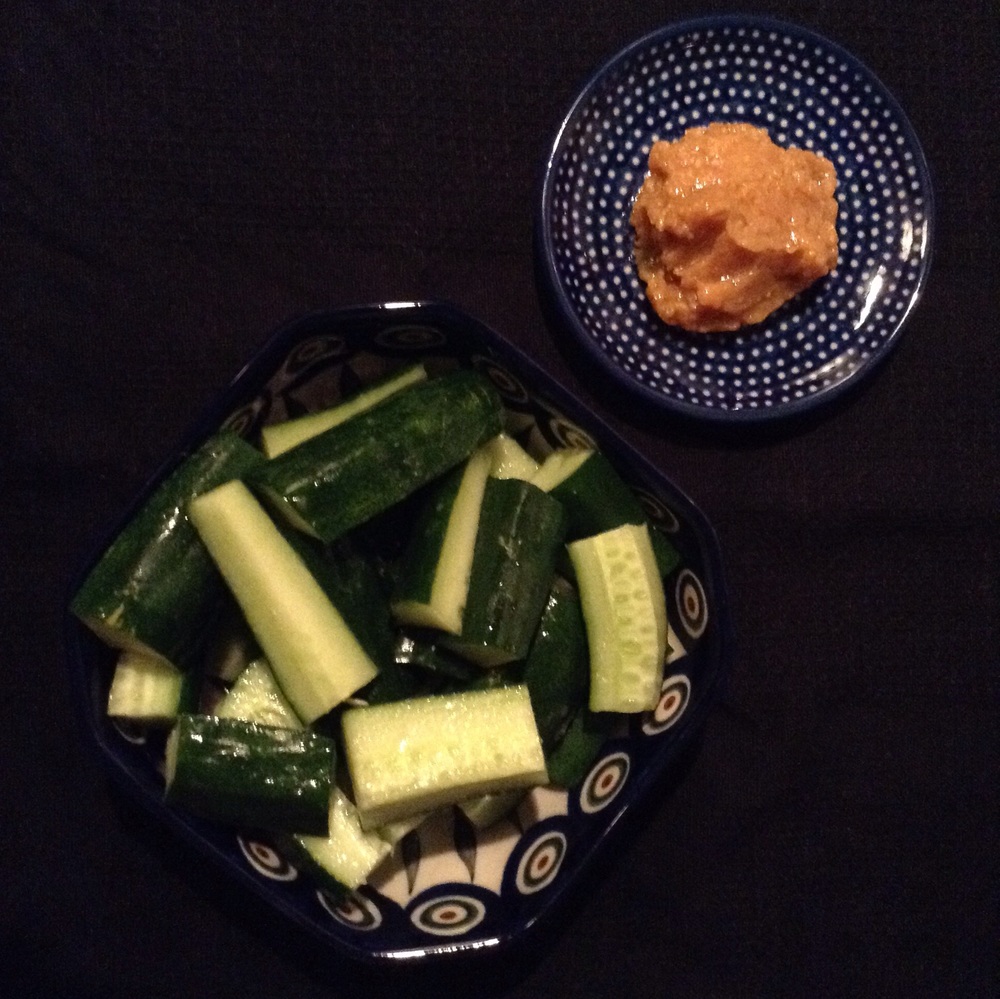
But my favorite way to eat them is as a snack while dinner gets ready because it takes 3s to be ready: wash, dry in a cloth and cut in 4 sticks and cut the sticks in 4. And when I have an extra 2min I prepare a dip of miso paste. I use fresh organic mild miso but it works with red miso too, to which I add a little of vegetal oil and stir until creamy.
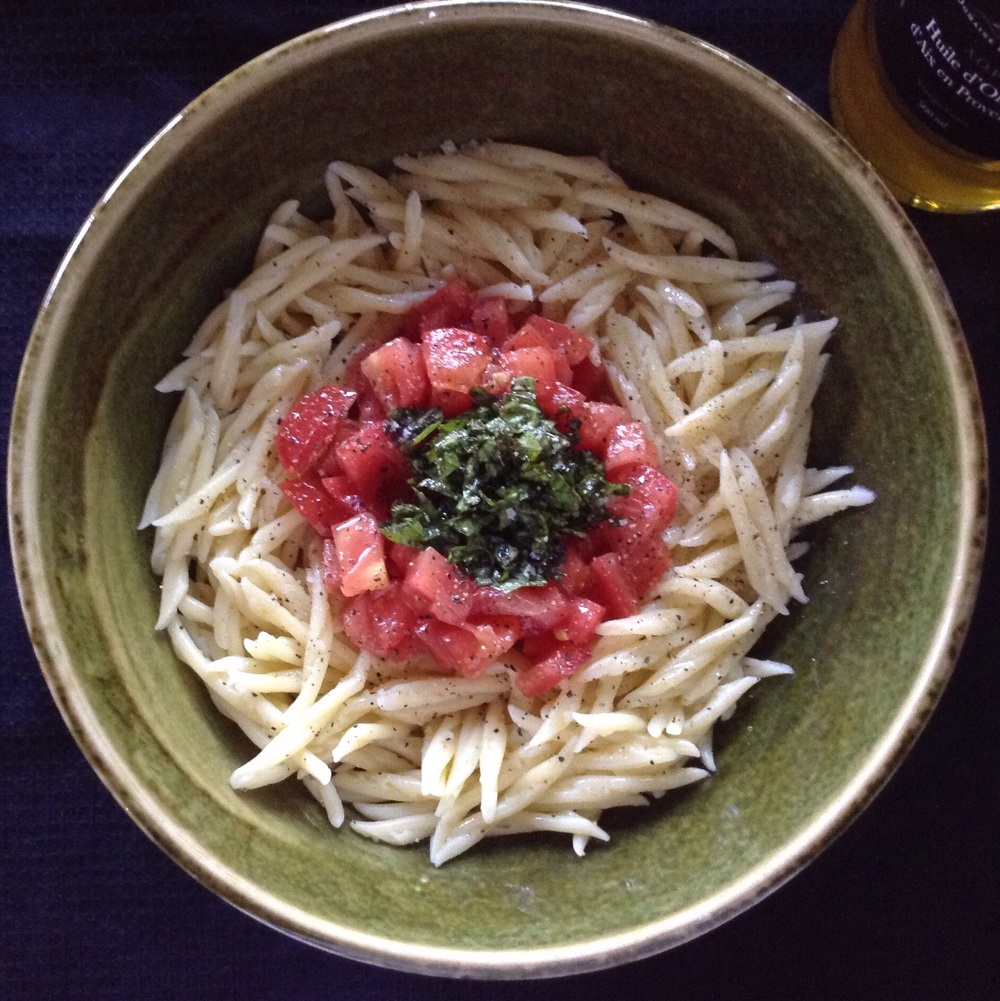
There are evenings when I don’t really have time to cook because I’m late from work or workout and I’m starving. Inicidently these evenings would coincide with a rather empty fridge (for some standards my fridge is always empty!). When this happens I need to fix dinner in less then 10min and I need carbs (no carb diet is definitely not for me). 10min is just the time it takes to boil some trofie, dice two large, super rippen fresh tomatoes, go outside to cut some fresh basil, seat back and snack a little cucumber.
This ultimate simplicity seasonned with a delicious olive oil, for instance from my hometown in France, Camargue salt and grind pepper is just the perfect dinner!
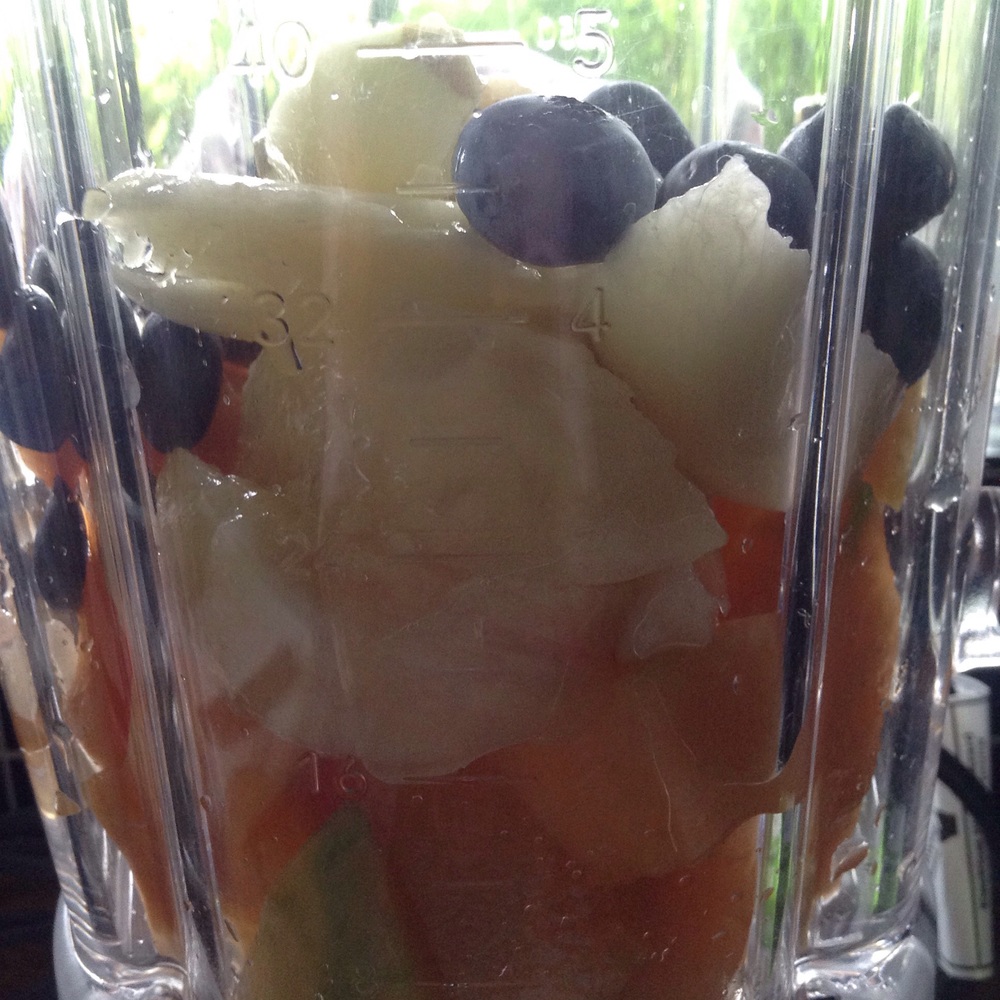
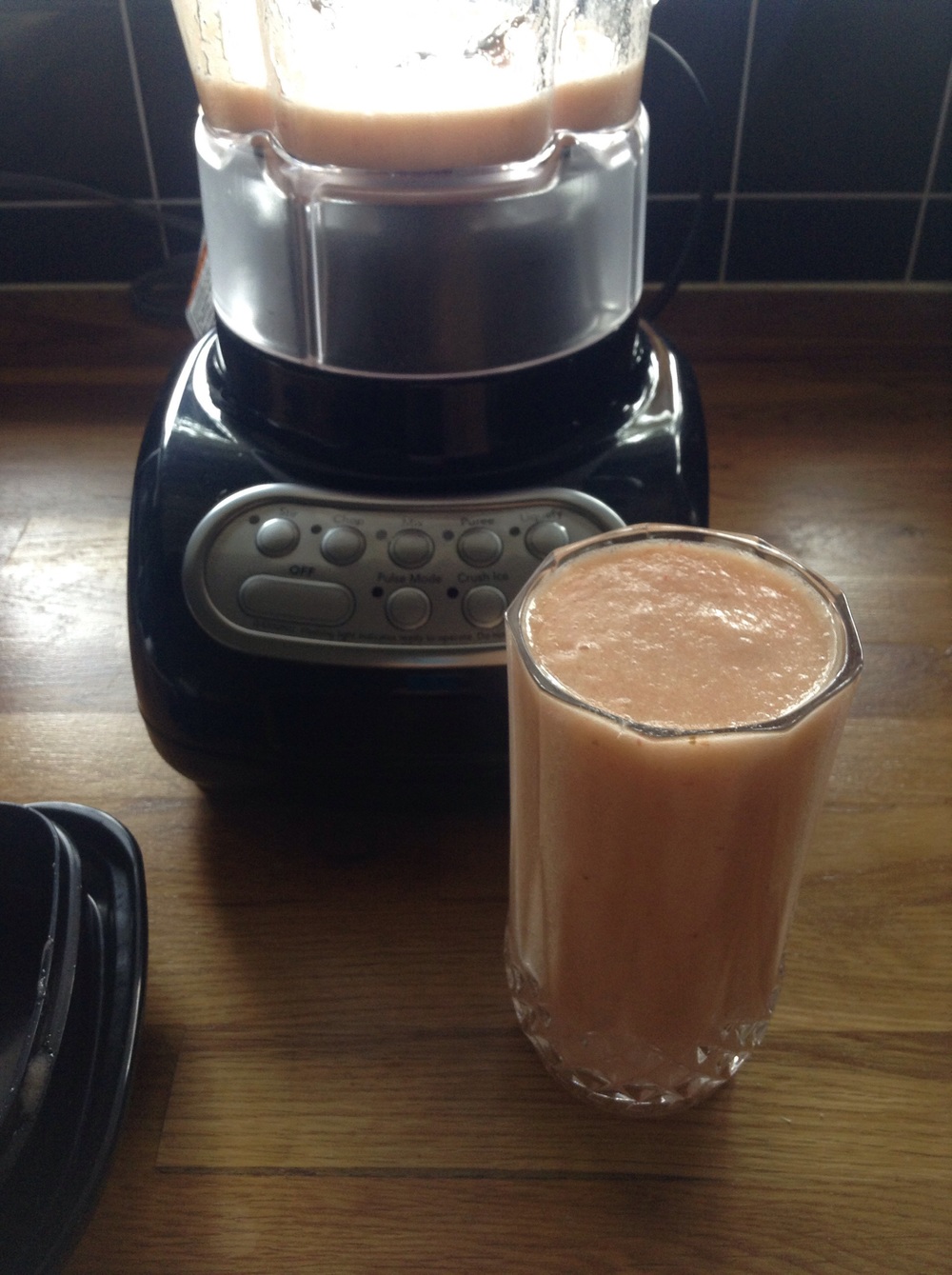
I love to eat fresh fruits for breakfast every day, and when seasonal fruits are not too good (autumn and winter) or I have some fruits that got a little too rippen for a fruit salad I prepare a lot of smoothies. My idea is not to have a “super drink” with a whole week of veggies in it, but rather a tasty and delicious drink for breakfast or snack. My rules for delicious smoothies that keep the taste of each fruit are simple:
– always fresh fruits (I don’t use frozen food). At least one very juicy like pineapple, melon, watermelon… The rest depending on the market: strawberries, blueberries, passion fruit, kiwi, nashi, peach, pear…
– 3 or 4 fruit types at max (usually I stick to 3) for better taste of each of the fruit, after more all the tastes are just blended and it’s hard to say what is in.
– no bananas, they thicken the smoothie too much.
– only add water if needed, no other complement.
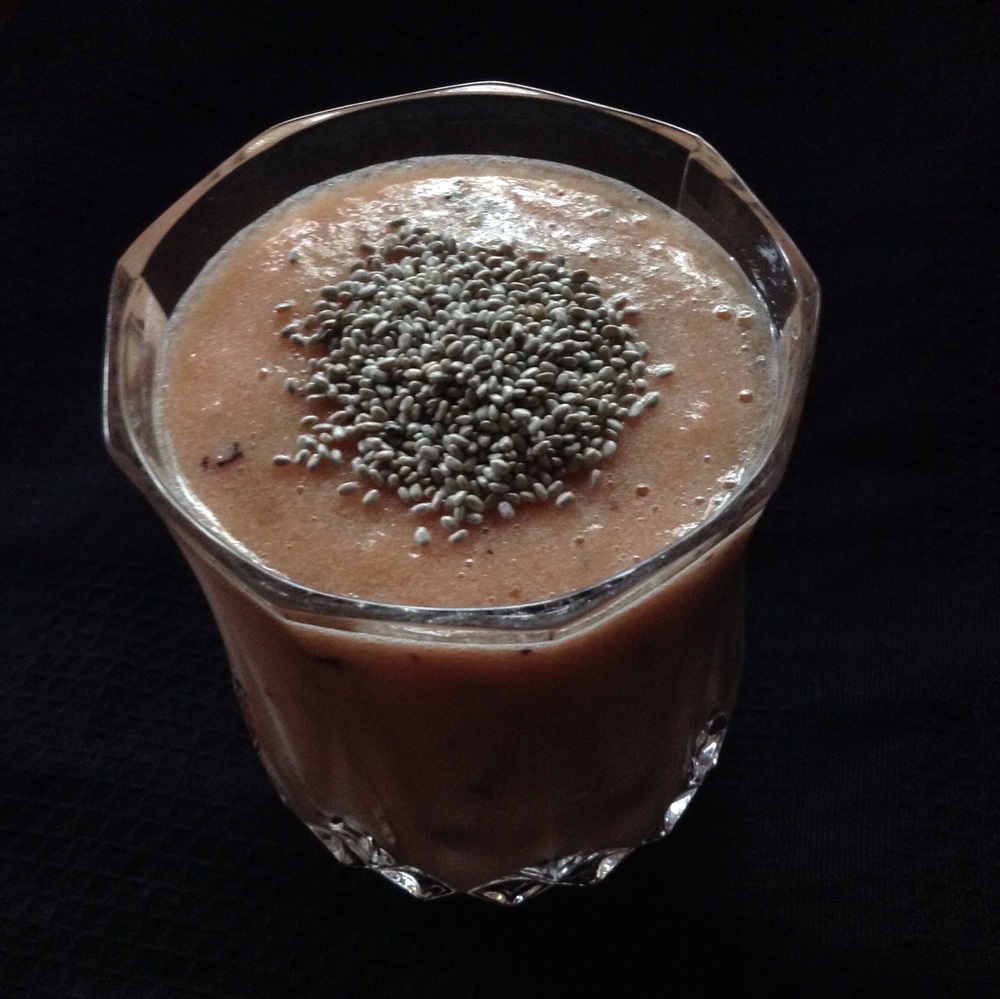
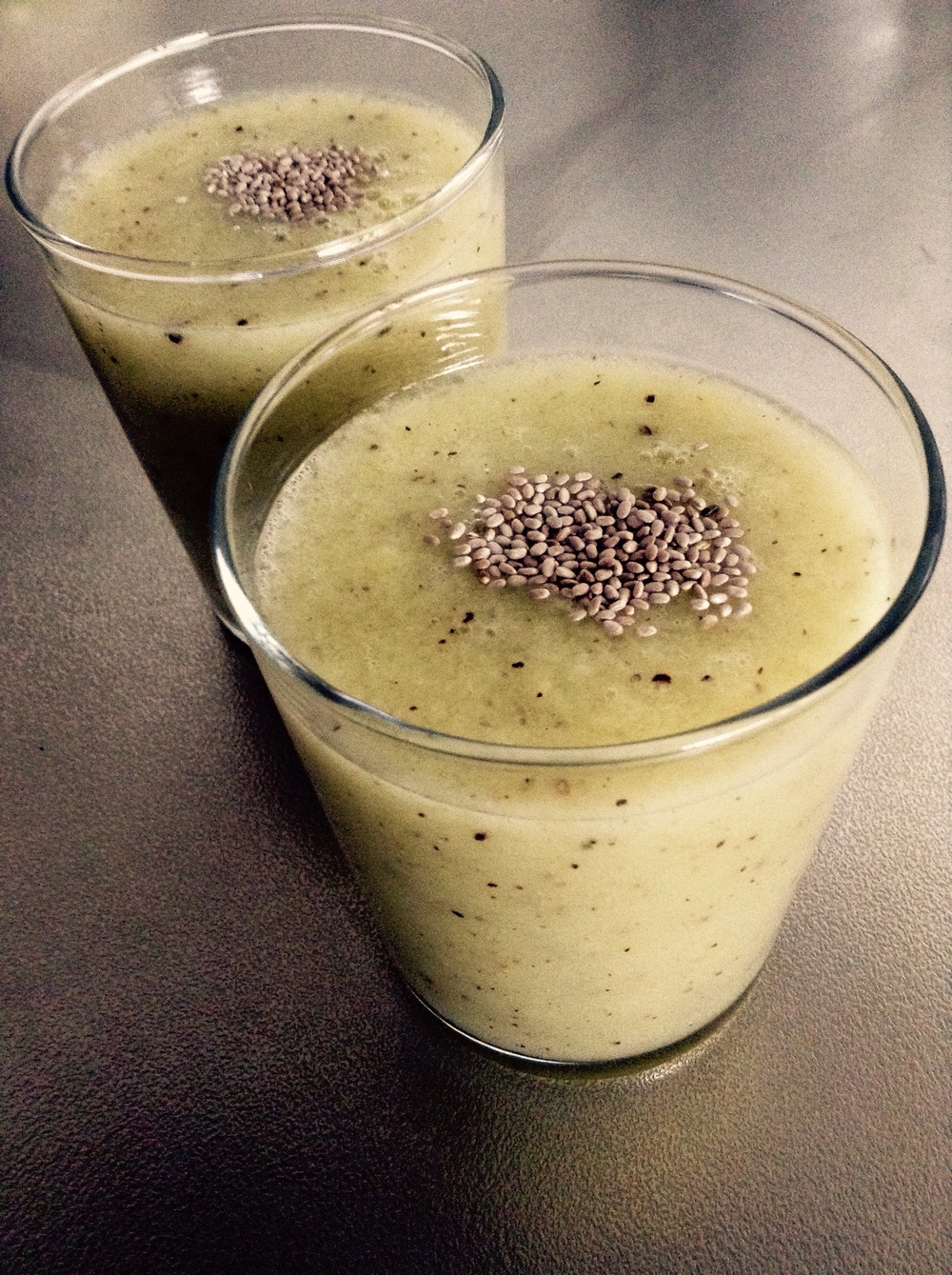
It gives super easy to drink smoothies, very tasty and always different. Sometimes I top it with a few chia seeds.
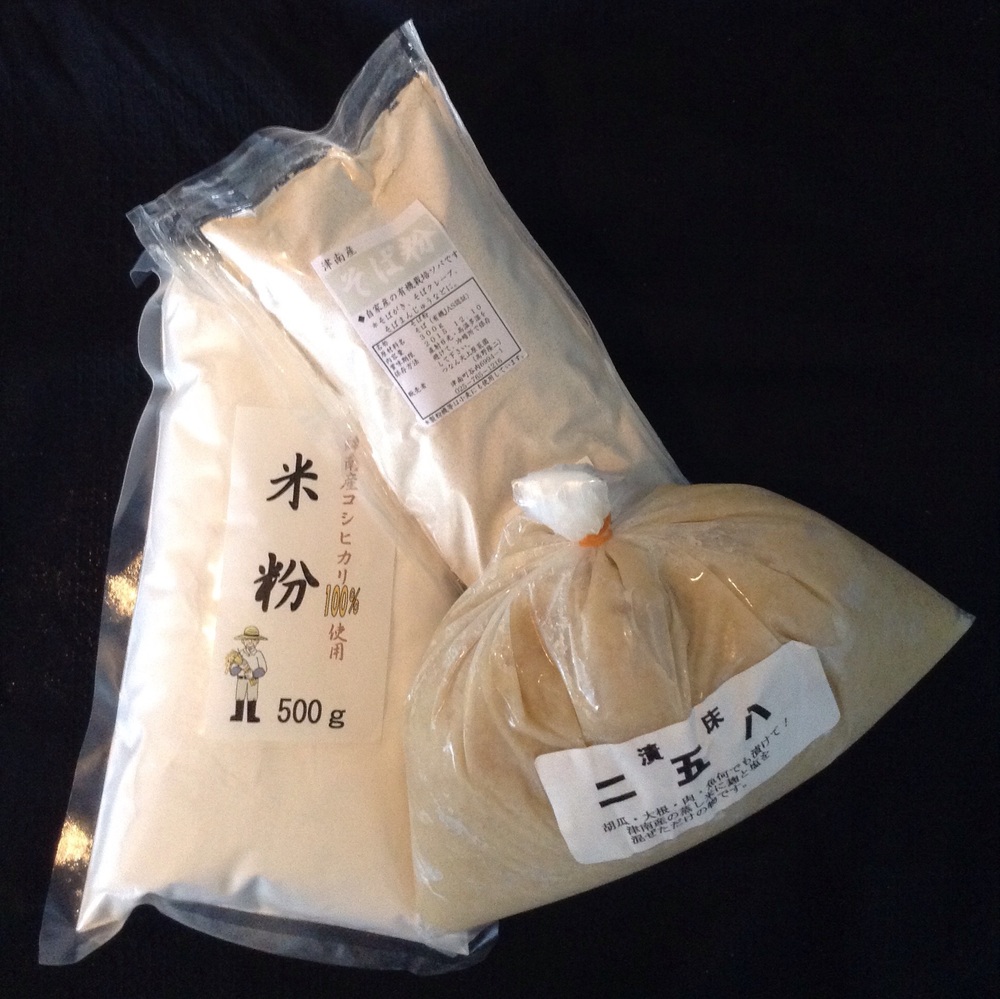
So, as I was mentioning before, I packed a lot of local products from Niigata prefecture and more particularly from Tsunan machi. The area is famous for its rice, a little of buckwheat and since they grow a lot of vegetables there is also delicious pickles, and to make them the 2-5-8, a preparation much easier to use then nuka, and that gives delicious salty pickles. I’ll tell you more about soon.
Rice flour, buckwheat flour and 2-5-8
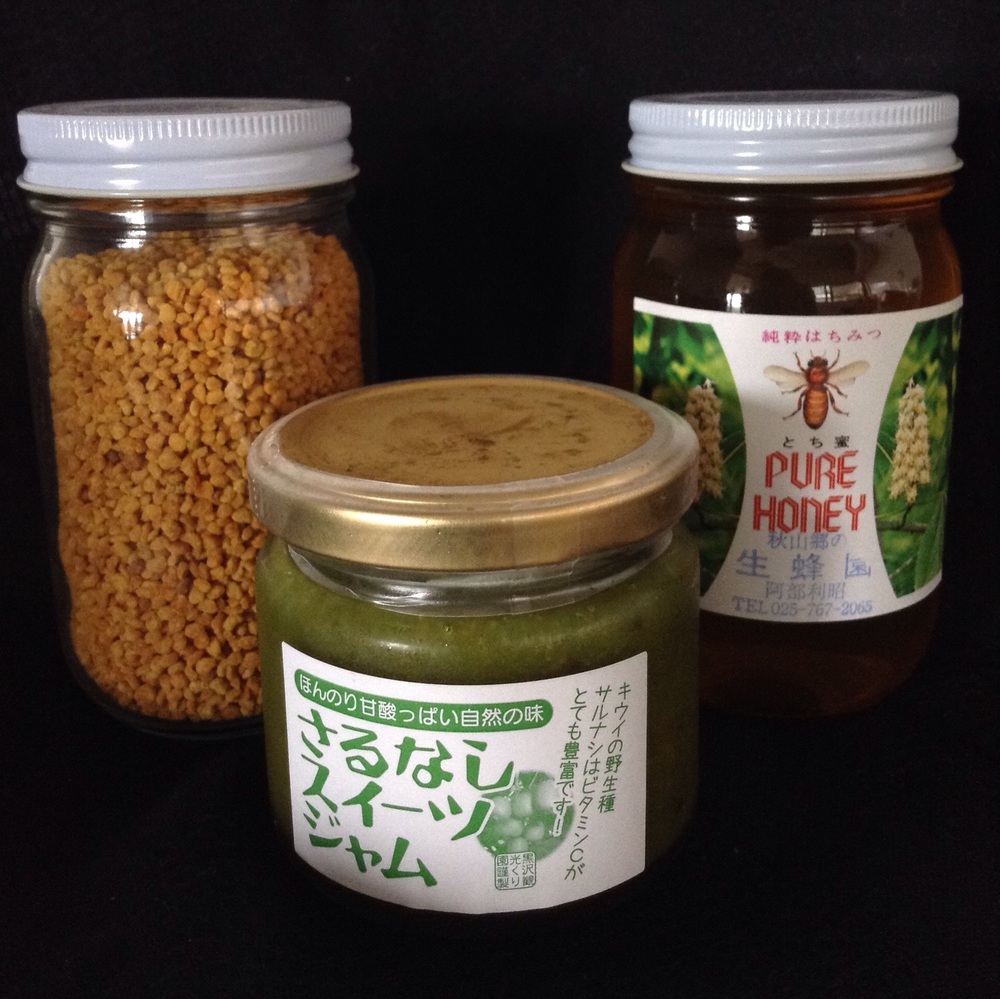
I also like very much the pollen and chestnut tree honey made in Akiyamago by a local producer. And while visiting some artwork we found some nice “sarunashi” (berry kiwi), a sort of wild tiny kiwi, with a taste close to rhubarb, homemade jam.