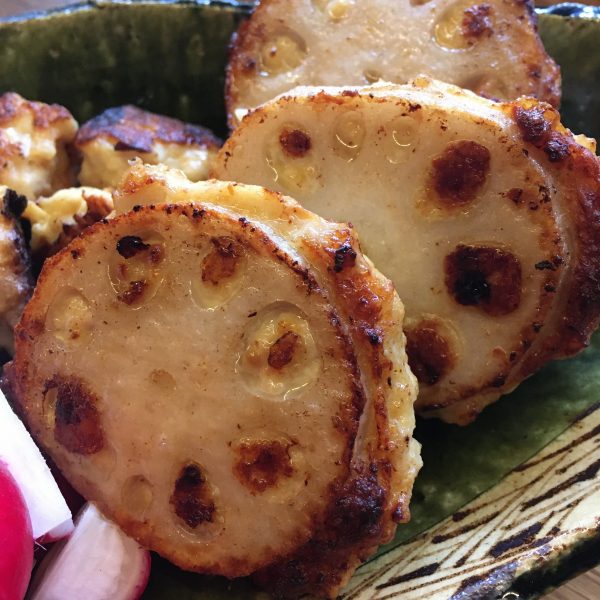
Lotus root burgers

I often talk of recipes with lotus roots. It’s a Japanese staple easy to find when in season and super very versatile to cook and delicious. I love it in Japanese classic preparations such as stuffed or with vinegar, but also in more western style like on pizza or in quiche… lotus root is reaching the end of the season but there are still a few more weeks to enjoy it luckily!!!

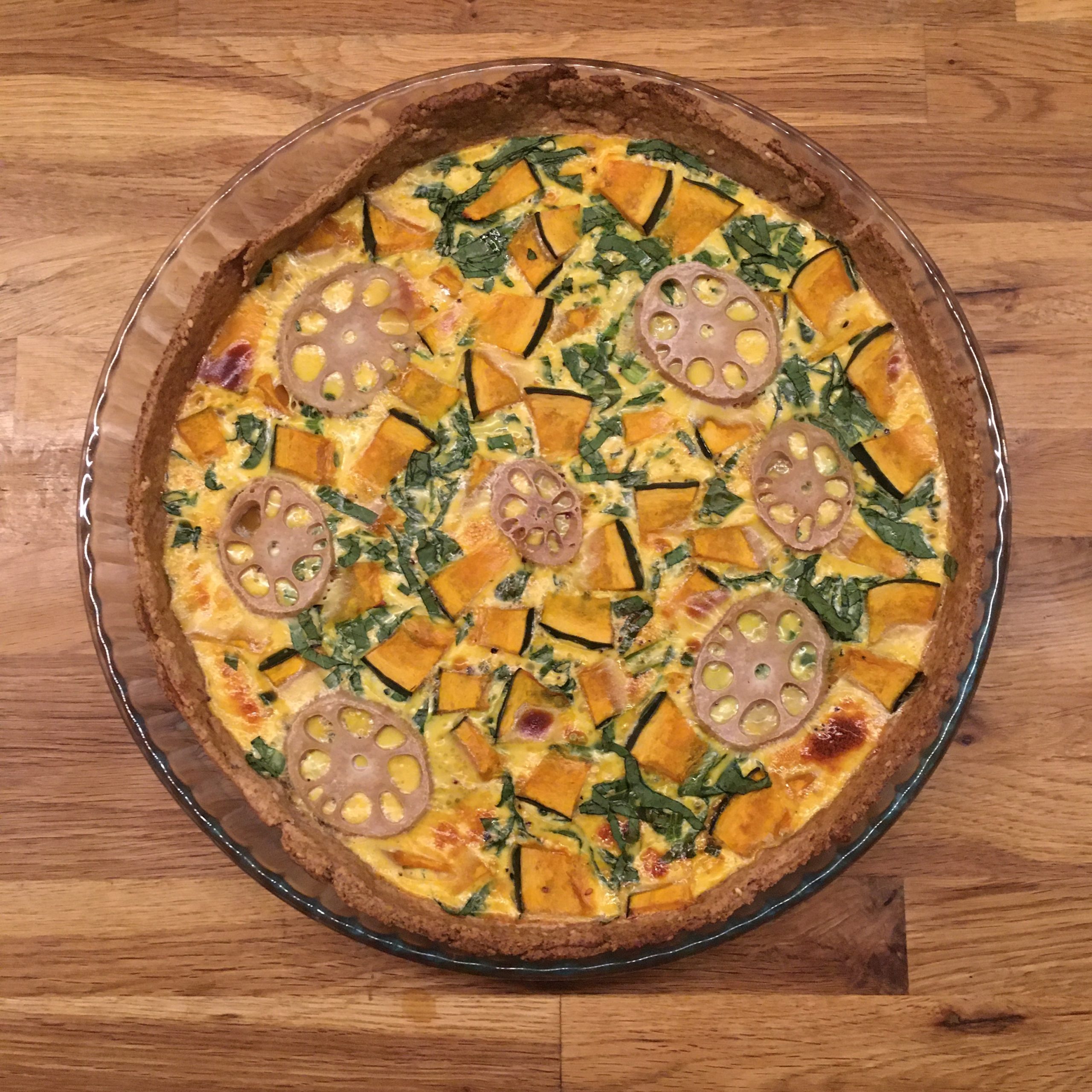
In Japanese supermarkets, you pack your shopping goods after the cashier on dedicated tables that have small bags, tapes and usually a few advertisements for local things or recipe cards. I like to look at these recipe cards, they sometimes remind me of a recipe long forgotten, an ingredient cooked last too long ago or just an idea for a new recipe. That’s how the lotus root burgers came to my mind. The recipe is rather simple and very tasty, it is made with chicken meat but it can easily be replaced by hard tofu for a vegan version. So let me share it with you.

Lotus root burgers (2 servings)

  • 10-15cm of lotus root, about 4-5cm diameter
  • 100g of ground chicken breast or drained hard tofu
  • 2tbs of miso
  • 50g of panko
  • 1 egg
  • A bit if oil for frying

In a bowl mix the meat or the tofu, the miso, the panko, the egg. Stir well.

Peel the lotus root and cut 12 regular slices of 4-6mm. Chop the rest of the lotus root and add to the mix.

Pick one slice in your hand. With a spoon cover with the mix to obtain about a 10mm layer, sandwich with another slice.

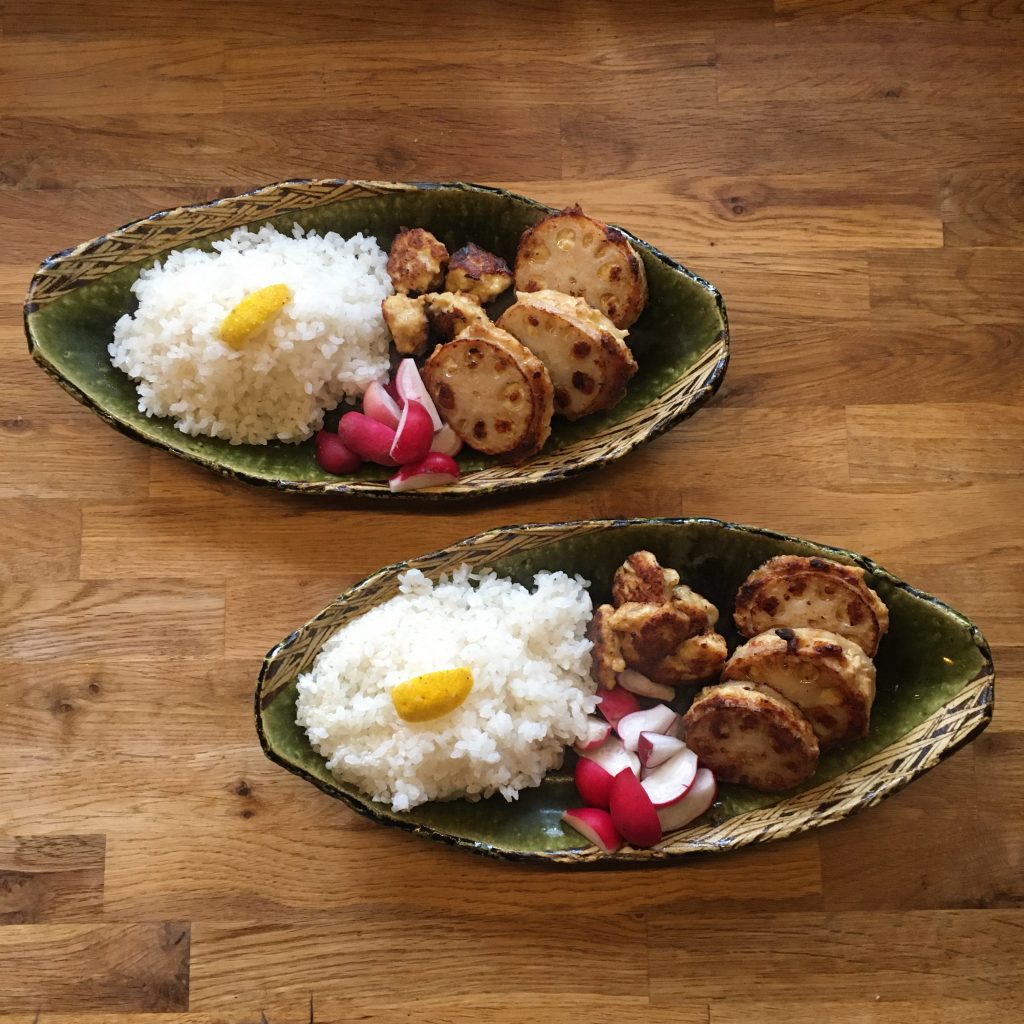
In a non sticky pan slightly greased with oil, fry the 6 burgers in both sides. Serve with rice, and add the juice of a yuzu for an even tastier experience. Et voilà!!!
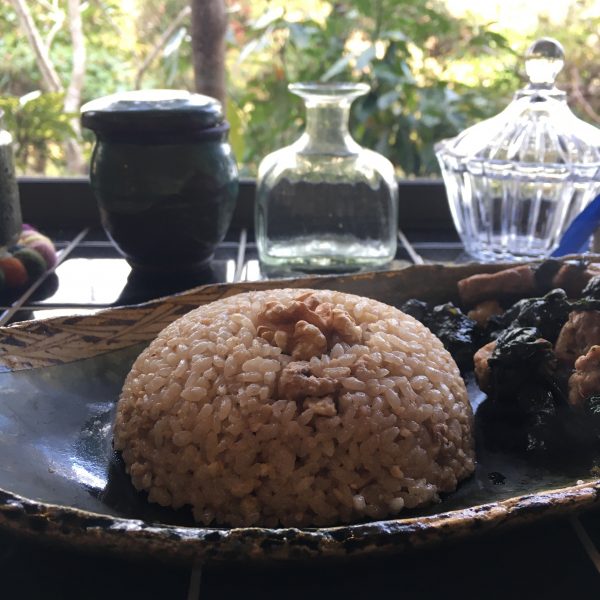
Little forest’s walnut rice

It is rare enough for me to talk about what I read (except cook books) or watch here, but once in a while I stumble on something that I find inspiring (cooking wise I mean).

Every evening while we enjoy a simple meal we watch a movie (or more often half of one, as we just collapse on the sofa, exhausted of our day). Finding a good movie that matches our mood is not always easy and after a bad match with an American movie two days ago, and a British movie the day before, we opted for a Japanese movie. While I was cooking dinner, A. told me let’s watch “little forest”, I said “yes, why not” without any clue about what it would be about. I trusted his judgment. So we sat with a hot plate of potatoes and cabbage, flavored with thyme and bacon and got on a trip in time with the movie: summer in the Japanese countryside. The sounds, the color… but what caught my attention was in the opening title credits a mention to “food presentation”. Then I understood that this will not be just a movie… and it is not at al, no plot, no story. It is organized around a few seasonal recipes (there are two movies: summer/autumn and winter/spring) based on local products mostly from the garden or foraged in the nearby woods. Amazake, gumi jam, simmered wild vegetables, kuri no shibukawa ni (I was mentioning in my previous post)… and this recipe of 胡桃ご飯 kurumi gohan walnut rice. When I heard the word I wasn’t sure I got it right, but I did indeed. And the recipe seemed really lovely so I had to try it! Of course I didn’t go to Iwate countryside (where the movie was shot) to forage walnuts, the season has past anyway, but I just wanted to give it a try as it is something I had never heard about, so I used the walnuts I had.

Walnut rice 胡桃ご飯

  • 1 go of Japanese rice (I always use Isumi grown Koshihikari)
  • 1 large handful of shelled walnuts
  • 3tbs of soya sauce
  • 2tbs of sake
  • 1tbs of sugar

In a mortar (ideally a suribachi) crush the walnuts until you obtain a mix of coarse and fine parts (in the movie she crushed them to a paste, but I prefer having some coarse pieces left). Wash the rice and set in your cooking recipient with the normal amount of water for cooking Japanese rice (rice cooker, pan with lid, donabe…). Add the walnuts, the soya sauce, the sake, the sugar and cook as usual. That’s it. Serve warm or keep to eat at room temperature.

I served it with spinach and pork sautéed, it is rather easy to accommodate with anything seasonal too: pumpkin, cauliflower…

If you want to watch the movies, I recommend the first one (summer/autumn) much more than the second (winter/spring). There is no story, just a slice of life, and many recipes. The movie is inspired from a manga which I haven’t read. Not a big fan of mangas…

There is a Korean remake as well…

Omurice – オムライス

I am lucky to work with one of my students on the development of a system that proposes variations to things someone do depending on preferences… for developing such a system we decided to chose a concrete example, and the first idea that came to our mind was a system that could help you in making new recipes by trying adding popular ingredients. And to do a first real life experiment we needed something easy enough to prepare and with many possible variations. We picked omurice. The whole time we were meeting and discussing it reminded me how much I live omurice, and how little I cook it.

I also remembered that a long long time ago I promised to post the recipe of this popular wa-yo 和洋 recipe. But for some reason it seems I never did… so let’s fix this right now!!!

First of all let’s talk wa-yo food a bit. While Japan opened to the west for many things in the 19th century, it had continually had this very specific way of not copying but adapting to its own taste or resources the cultural elements of another civilization, such that in the end it creates a genuine Japanese part of culture. Food has many examples: curry-rice, castella, dorayaki, and omurice. It seems to be born in a cafe in Ginza in the early 20th century.

The first time I heard about omurice was when reading one of Murakami Ryu‘s novel: “coin lockers babies”. The translation and the way it was presented was that of a rice omelette. In my mind I imagined a batter of eggs with cooked rice in it, cooked in a frypan. How far from the truth I was!!! Omurice is a simple preparation for sure but with many variations. Each place that serves om-rice has its own recipe. It consists in three parts: the rice, the omelette and the sauce.

The rice: usually plain white rice, but can be also sautéed with green peas (my favorite) and small bit of pork… tomato sauce or tomato ketchup can also be added to the rice to give it a nice pink color. Mushrooms, chicken are also other options.

The omelette: it can be a rather straightforward omelette, or a more runny one, or something like very runny scrambled eggs. Usually plain. It is nice to have it a bit runny in any case as it mixes well with the rice.

The sauce: that’s where most of the creativity is, and often too much for me. One popular sauce in fancy om-rice recipe is the demiglass sauce デミグラスソース, made from red wine, beef consommé etc… but my ultimate favorite is just a splash of tomato ketchup. The simplest the better.

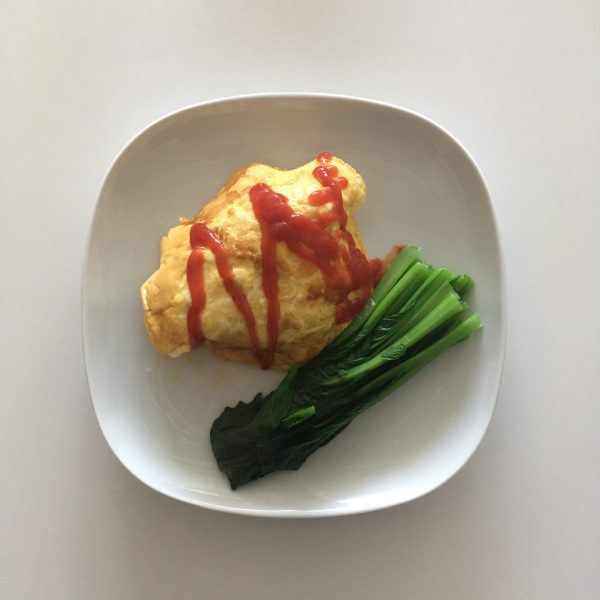
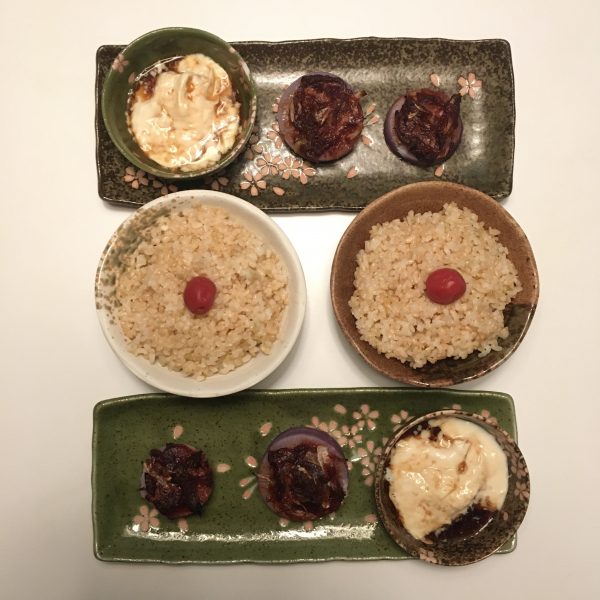
This time, I made omurice with brown rice and that was super delicious. A runny omelette on one side with 2eggs, a splash of tomato ketchup, and a side of blanched komatsuna.

Burdock – 牛蒡

With the fall, burdock 牛蒡 gobou is back in season. This long root that looks like a salsifis but is firm and ressembles in texture artichokes, and a bit in taste too… is a classic flavor in Japanese cuisine. Probably because of a rather country style strong flavor and its fibrous texture, it often appears in simple recipes with other strongly flavored ingredients: chilly pepper in kinpira for example, or in very small quantities. Given that a burdock root is quite big, and one can keep for rather long, it is a very handy vegetable!!!

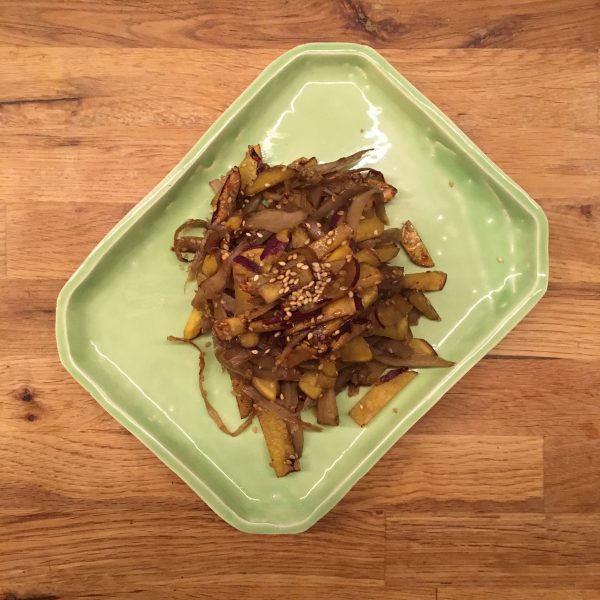
I love to cook it in different preparations. Creamy soup is one of my favorite but it takes quite some time and requires a blender. Last night I came up with a simple recipe that mixes daigaku imo recipe inspiration with gobou in a light version. I’ll talk about daigaku imo later… The recipe with burdock is really simple and super tasty. It is perfect with a bowl of rice or whatever you like.

Burdock & sweet potato (2 servings)

  • 1/2 burdock
  • 1 sweet potato not too big (fits in the palm)
  • 2tbs of sesame seeds
  • 1tbs of sesame oil
  • 2tbs of soya sauce
  • 1tsp of sugar

Wash and peel the burdock. With a peeler make kind of gobou flakes. Boil in water until it softens. About 15min probably. Drain. Wash the sweet potato and cut in sticks not too big.

In a pan greased with the sesame oil, start cooking the sweet potato. Add the burdock drained. Stir well. When the sweet potato changes to darker yellow or golden, add the sugar the soya sauce, and the sesame seeds, stir well again. Cook another 2 minutes while stirring. And serve. Eat warm or chilled.

What is it with new rice???

Japanese are big fans of “new” things. “new” as in newly harvested: of course there is new potatoes, but also new tea 新茶 – shincha, new sake 新酒 – shinshu and new rice 新米 – shinkome. If you are not an aficionado of any of the above products you may not get the point of newly made, brewed or harvested, but with a little palate training you can easily make the difference and see what I am talking about below.

New rice is harvested at the end of the summer until early autumn depending on region. Harvesting of rice is linked to many matsuri to celebrate so it’s always a lively time of year. In Isumi, the harvest usually starts in the 3rd week of August and stretches until early September. The harvested rice is then put in husker where the chaff 籾殻 – momigara is removed, and you can see pile of chaff growing in field. Usually used as it is or burned to fertilize fields and kitchen gardens. And a few days later you start to see new rice bags filling the shelves of the local farmers market.

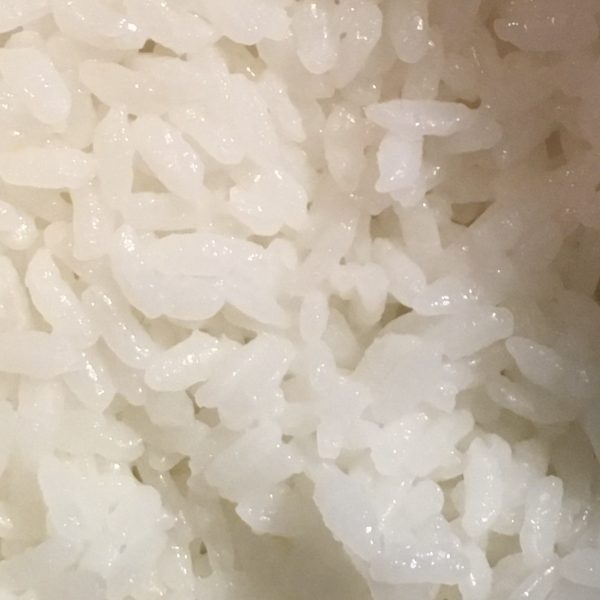
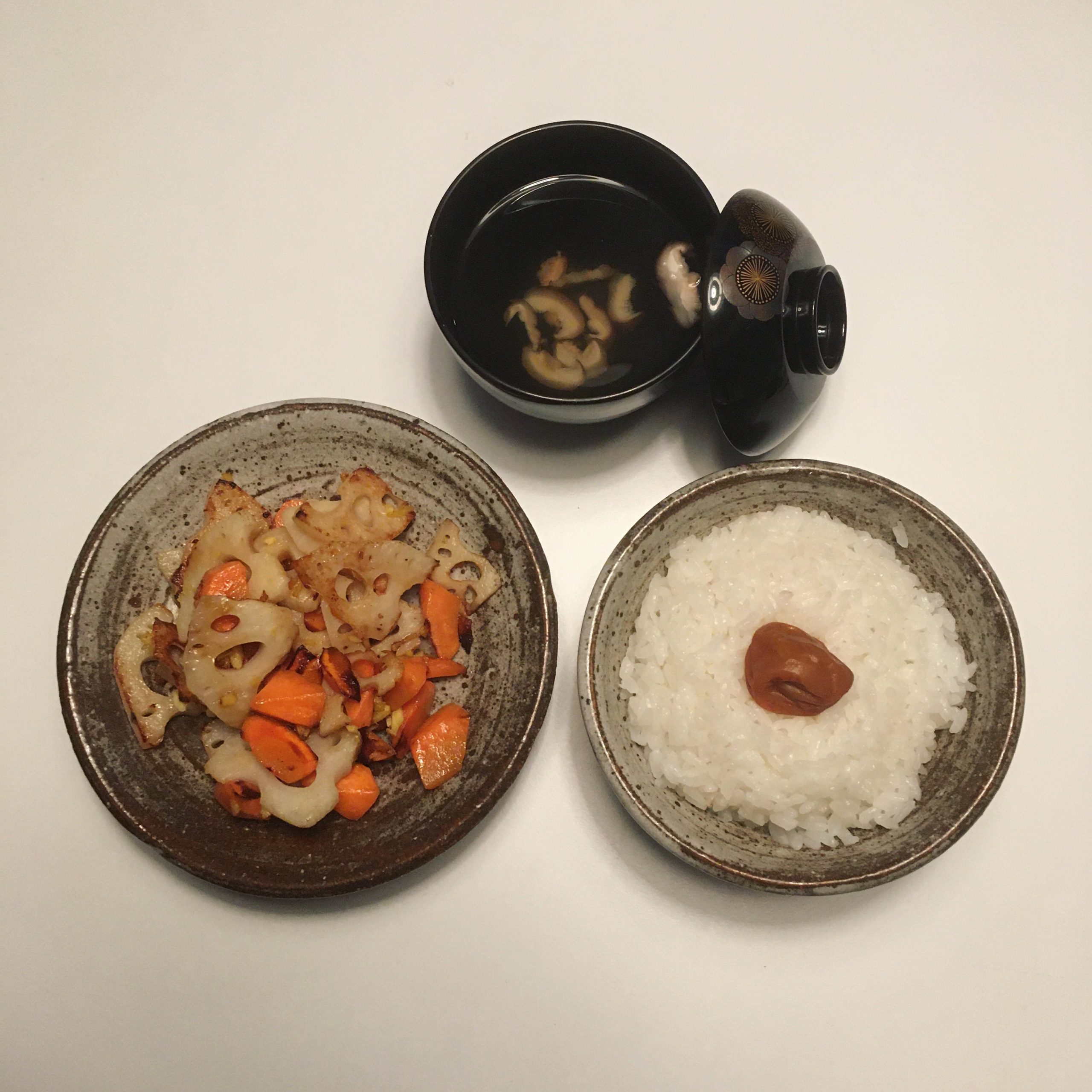
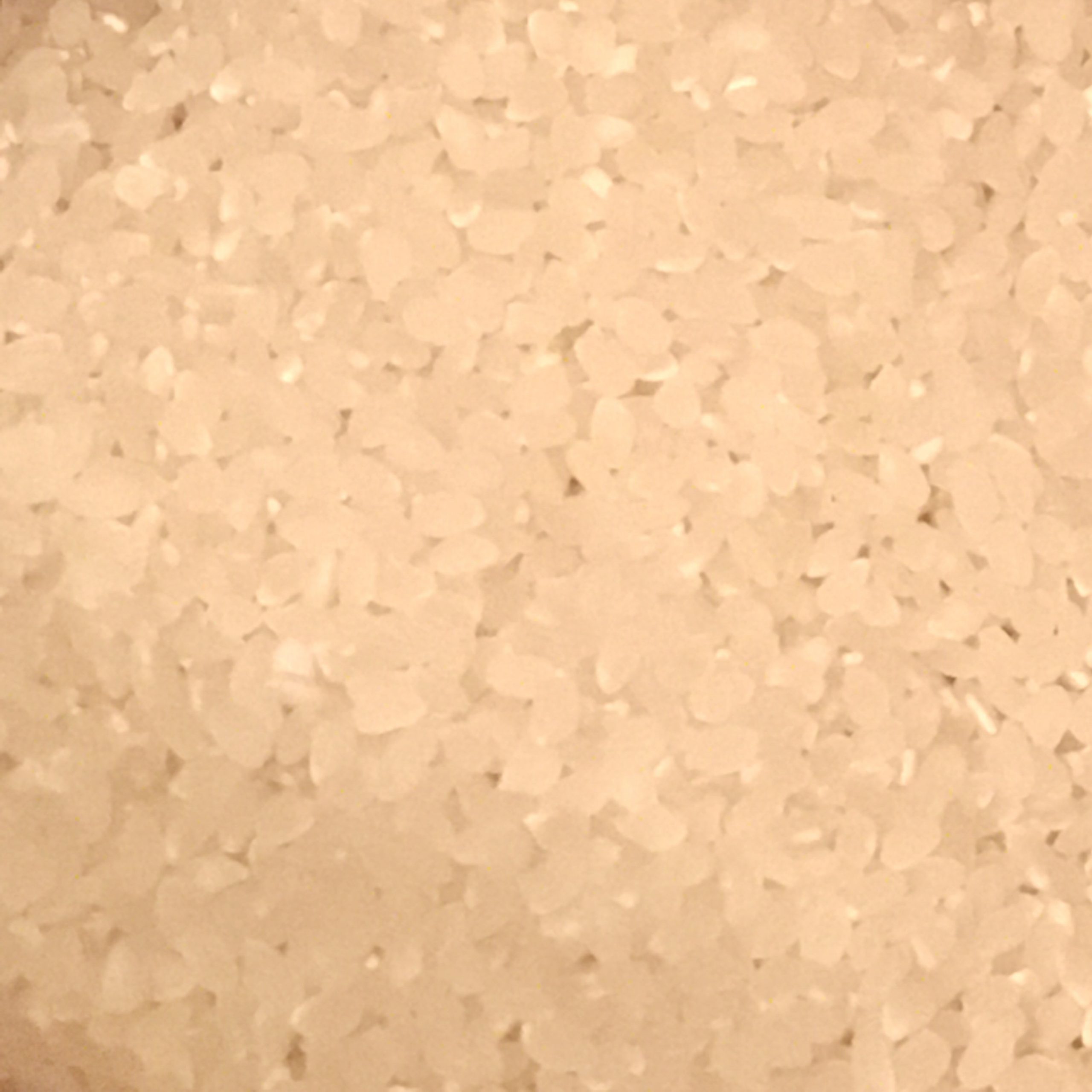
Every year, without fail, I would buy a bag of new rice and enjoy it in the simplest manner. Simply boiled without any addition or a simple homemade umeboshi. New rice when cooked is more translucent and has a beautiful white color and firm texture. The flavor is also more subtle, less plain than when older. The comparison with new potatoes and potatoes is the best I found to explain the difference.

So I encourage you to buy new rice and test by yourself!!! Would you want some new rice from Isumi, post a comment or send me a message and I can arrange shipping of 1kg or 2kg bags.

As I don’t drink I can’t tell much, but for those interested in newly brewed sake I found this article easy to understand.

Negimiso – ネギ味噌

There are plenty ways of eating miso in Japanese cuisine: miso soup of course but not only! I have quite a lot of miso remaining from the past years I made some and in 2-3 months the miso I made last year will be ready, so it is time to start emptying a few pots.

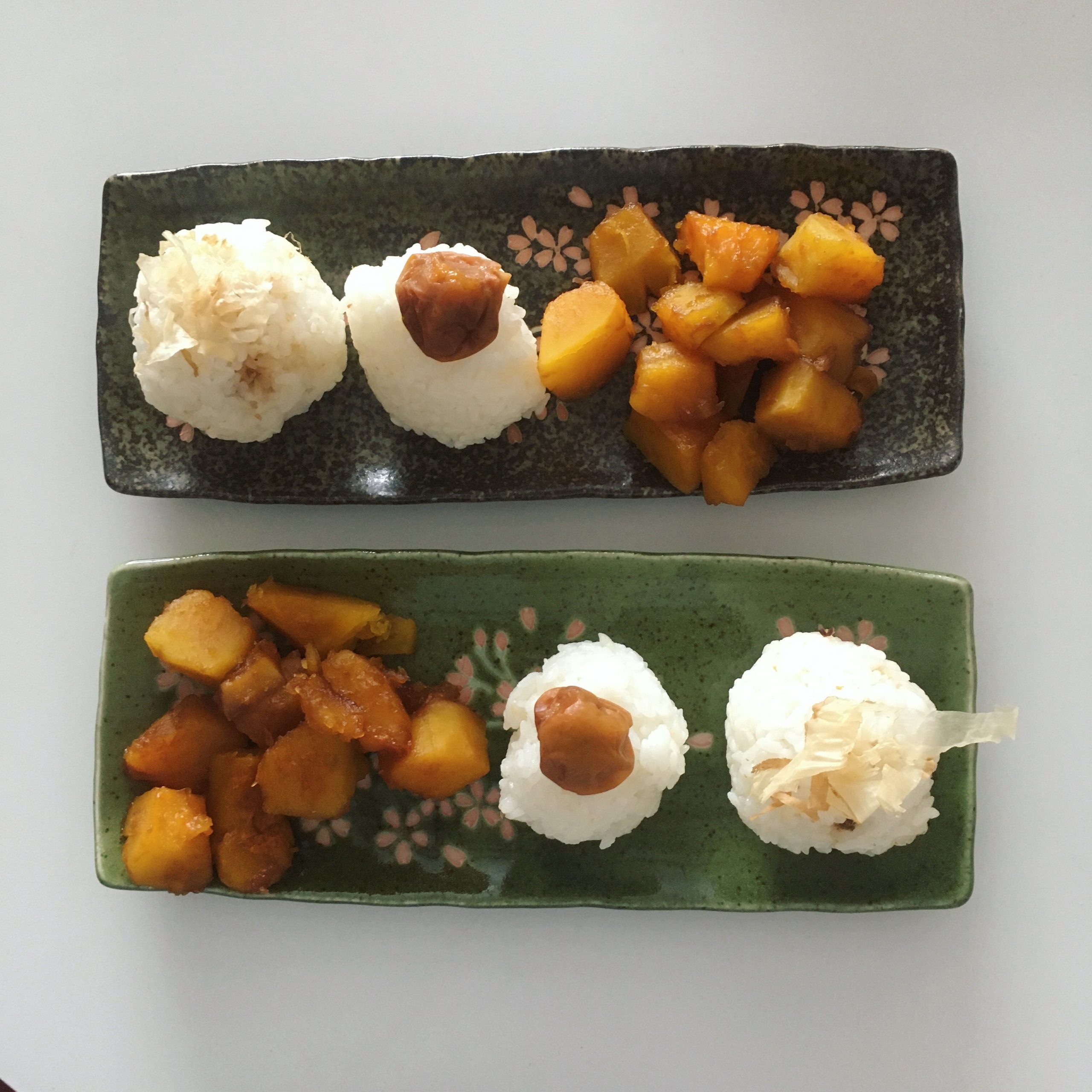
One thing I like very much is grilled miso, either on onigiri or on vegetables. Turnips and daikon are great for that, and the season is now starting. So when I bought a cute purple daikon at the farmers market, I decided it would be eaten with miso. Normally it would have been plain miso but I happened to have bought also leeks, and it reminded me that there is a nice recipe called negimiso ネギ味噌 of miso with leek, and I decided to make some. Negimiso can be eaten as a dip, or as I did here, to be grilled with rice or vegetables. It is really delicious and easy to prepare. Here is my recipe. You may find others with more ingredients, but this one fit my liking: no uncooked sake, and no mirin.

Negimiso

  • 1/2 leek
  • 2tbs of miso
  • 1tsp of sesame oil or flavorless vegetal oil
  • 1tsp of sugar
  • Optional: a bit of katsuobushi

Cut thinly the leek and cook it at low heat in a pan with the oil until soft bug not golden. In a bowl mix the miso, the sugar and the katsuobushi. Add the leek. Stir well. It’s ready!!!

Now to use like me, you need a piece of daikon and dashi of your choice. Peel the daikon and cut 2-3cm slices. Boil them in dashi until soft. Drain and pat dry, spread negimiso on top and grill until the top starts to become golden brown. Enjoy! Alternatively replace the boiled daikon by plain onigiri.

A twisted “nimono” recipe

I love nimono, that is not new… I learned how to make them right with Japanese cookbooks and when I was going to cha-kaiseki classes, but for some reasons, I often wrongly thought that it takes time to make a nimono dish, and so not cook some as often as I should. But as my cooking evolves with time and changes subtly every month, every year, nimono has been more and more often on the menu. Enough often for me to test twisted versions of nimono, using different ingredients for flavouring and always managing to get it right. I also understood clearly that it can be really quick to make depending on the ingredients chosen. One ingredient that goes really well with nimono is green bell peppers. They fit perfectly the recipe and also are a good match with any white fish. And for white fish, we are lucky, in Ohara it is easy to find delicious local fresh ones: snappers of all sorts, sea bass, flounder…
As I don’t often cook with sake, I recently replaced the sake in the classic recipe by my ume-dashi pickled soya sauce. It adds a bit of sourness and a delicious flavour and when in season I love to add a few slices of lime, or of green yuzu, or any other green citrus fruit. So here is my twisted nimono recipe for a simple Japanese preparation that everyone can make!

Twisted nimono recipe (for 2 servings)

  • a nice piece of fresh white fish
  • 4~6 green bell peppers depending on size (red, yellow, orange can work as well but not as good…)
  • 1/2 lime or 1 green yuzu…
  • 2tbs of soya sauce, better ume pickled in soya sauce
  • 1tsp of cooking oil
  • 1/2 cup of water

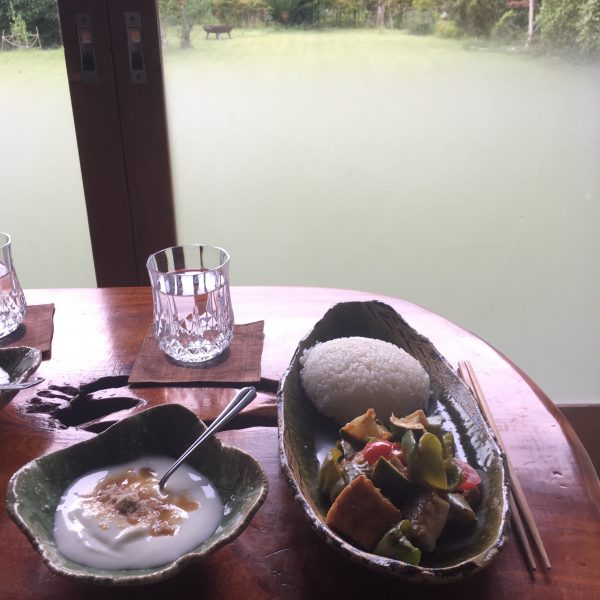
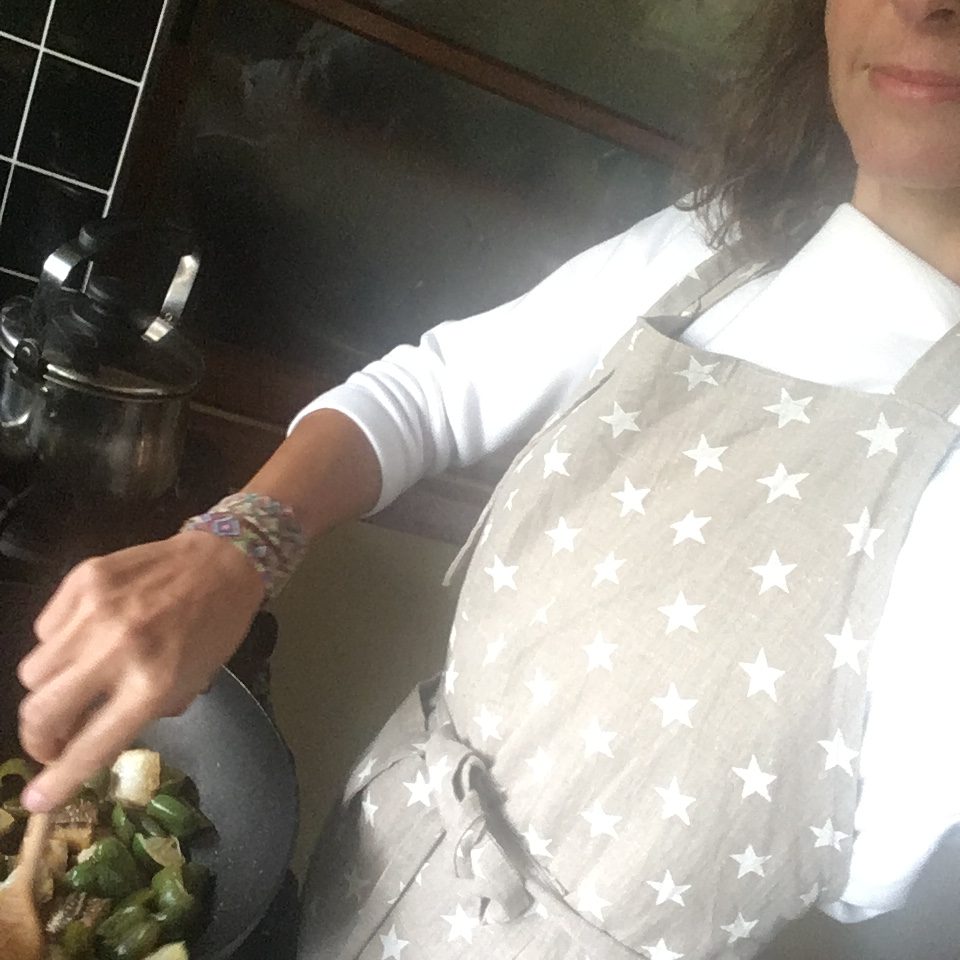
Wash and cut in rough pieces the bell peppers. Cut the citrus fruit in large pieces. Clean the fish and cut in large byte size. In a wok or pan, heat the cooking oil, add the fish and wait until half cooked, add the bell peppers. stir gently. Add the soya sauce, the water and the citrus fruit. Cook at medium-high heat until the liquid starts to reduce significantly and thicken a bit. Stop here the cooking and serve not too hot, with some white rice ideally.

Tonkatsu!!! No, hirekatsu!

What the heck!!!

Tonkatsu is the famous, and usually most beloved by foreigners, Japanese fried pork cutlet. It is a fatty part of pork, further rolled in panko and deep fried. It’s heavy, fatty and honestly the rice and the shredded cabbage on the side cannot help pumping the fat!!! We never eat it. But there exist slightly better version of it: hirekatsu – ヒレカツ (filet katsu…). Instead of the fatty cutlet it is the most meager part of pork: filet. That makes thing more bearable and not without reminding me the veal escalope my grandmother was making. My father and A. are big fans of it and I would usually (before it closed) buy hirekatsu at Genji in Isumi, and we would have it altogether. So about once a year or so!! Another option would be Saboten, a chain store in Tokyo that prepares on the spot a variety of fried meat and fish and croquettes.

With the travel ban, my parents didn’t come in March and so A. didn’t have had much a chance to eat hirekatsu in the past year… so the now that it is rainy and chilly, I could venture in making some richer food, and just had a nice piece of pork filet from Isumi. All set!! Of course I don’t deep fry, so it is a panfried version, but it works as well… and here is my recipe, but really you don’t need one for making this!!!

Pan fried hirekatsu

  • A piece of pork filet
  • 1 egg
  • Panko
  • Frying oil

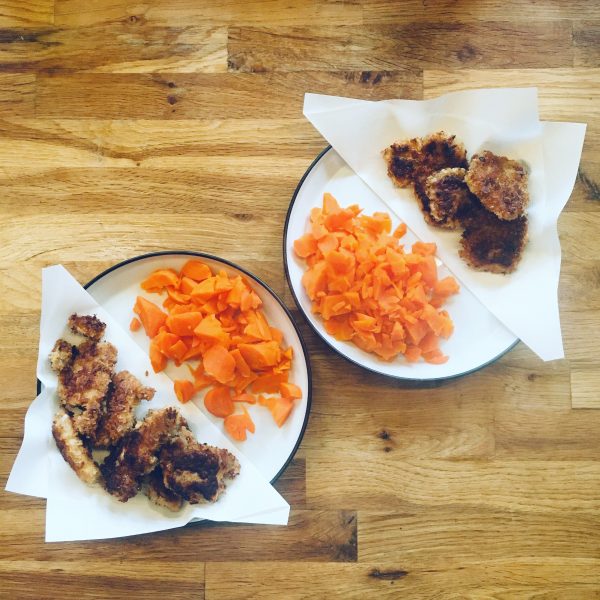
Cut the pork filet in 5mm~1cm slices (count 4 slices per person). Break the egg in a bowl and make and egg batter. Set the panko in a plate. Heat sufficient oil in a fry pan at high heat. Dip one pork slice in the egg batter the in the panko until fully covered and fry in the pan. Continue until all done. Turn the piece on all side until golden. There’s really nothing special about that preparation in fact!!!

Serve with some shredded cabbage for Japanese style, or anything else if you prefer: I served with steamed carrots.

Koyadofu – 高野豆腐

There is more than one ingredient in Japanese cuisine that is intriguing, konyaku, fu and koyadofu are some of them. So let’s talk about koyadofu this time…

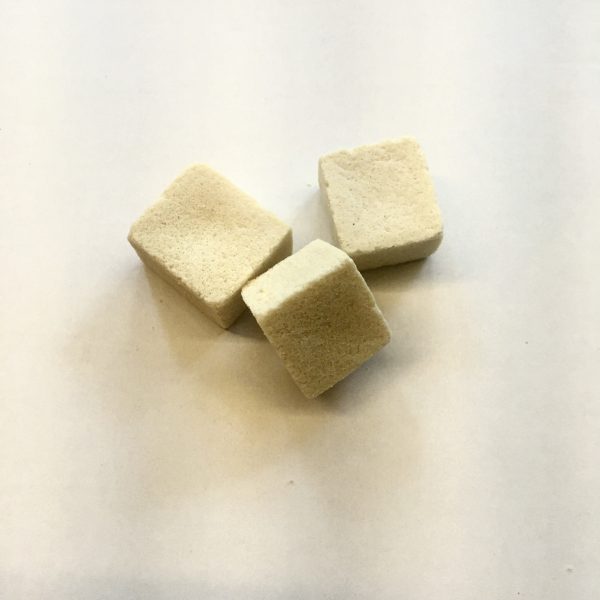
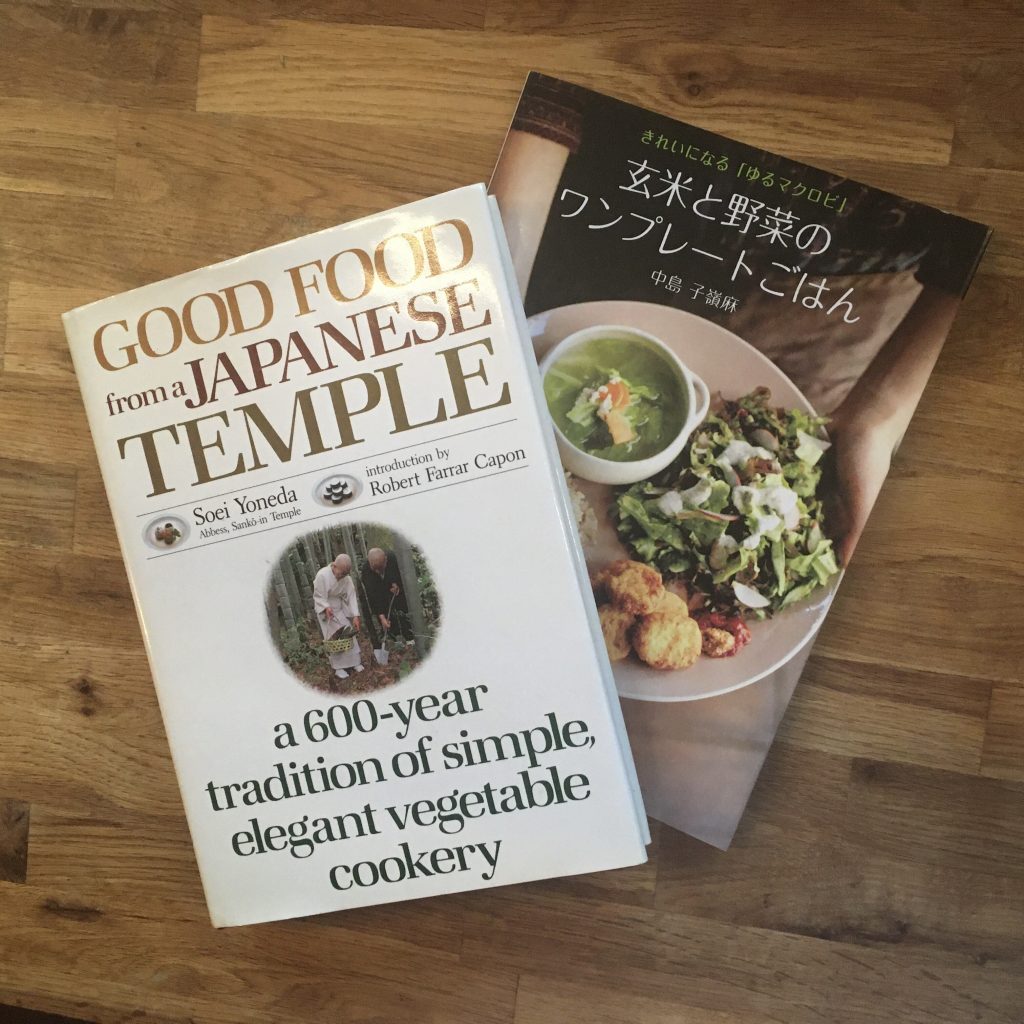
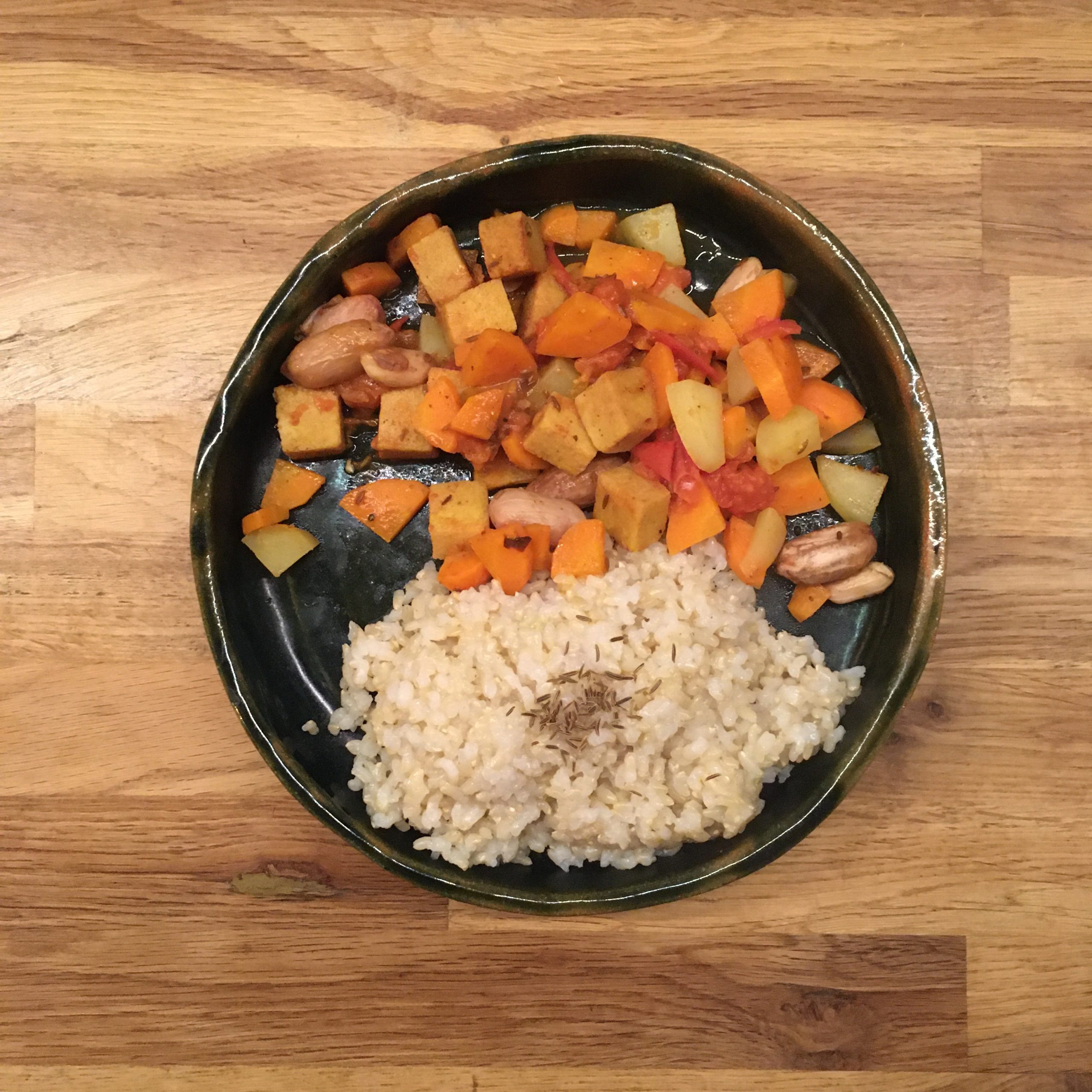
Koyadofu 高野豆腐 or freeze-dried tofu is a product that has been used in temple vegan cuisine and for traveling warriors for about 500 years. It is a way to preserve tofu for long times in a compact way, and very rich nutritionally. Indeed koyadofu is packed with proteins and fat. It’s a kind of space food in a sense, or one of its ancestors. To be honest, at first koyadofu doesn’t look like an attractive food: it is truly like a very thin sponge, and usually served soaked after simmering or in some kind of bouillon. For those that find tofu insipid, and I know many may think so, they should probably pass on Koyadofu because taste is even thiner and lighter. However, when well prepared it is a very nice ingredient to use and it adds an interesting texture to dishes. Most recipes of koyadofu will be found in buddhist and macrobiotic cookbooks. I find my inspiration from my two favorite of the kind: “good food from a Japanese temple” and “玄米と野菜のワンプレートごはん”. And the recipe I present today is inspired by both, it’s a curry with seasonal vegetables koyadofu served with brown rice. It is really simple and delicious.

Koyadofu curry-rice (serves 2)

  • 1 cup of brown rice, cooked
  • 6 blocks (2cmx2cm) of koyadofu or one large
  • seasonal vegetables of your choice: carrot, potatoes, butternut squash, tomatoes
  • a handful of peanuts (it’s a seasonal and local product in Isumi, so I used fresh ones simply boiled)
  • 1tsp of curry powder
  • 1tsp of ground coriander
  • 1tsp of ground turmeric
  • 1tsp of cumin seeds (carvi seeds or anis seeds can work…)
  • 1 pinch of ground red pepper
  • 1 pinch of salt
  • 1tsp of cooking oil of your choice

Koyadofu always needs to be returned to a moist status. So put the blocks in tepid water for 5min, then drain by squeezing gently, and rinse/squeeze under running water until the water turns clear. It’s basically like washing a sponge… now it’s ready to use.

Peel, wash, cut the vegetables. In large pan or wok greased with cooking oil, toss the vegetables in order of cooking time. And stir once in a while. Add the koyadofu. Stir. Then cover with water, add all the spices, and the peanuts. Cook at low heat until the liquid is almost gone, by then the vegetables should be just cooked. You don’t want to overcook them, to keep an interesting mix of texture. You can serve with the brown rice and enjoy!!!

Have a good day!

Proudly powered by WordPress | Theme: Baskerville 2 by Anders Noren.

Up ↑

Verified by MonsterInsights