Tofu cheese cake

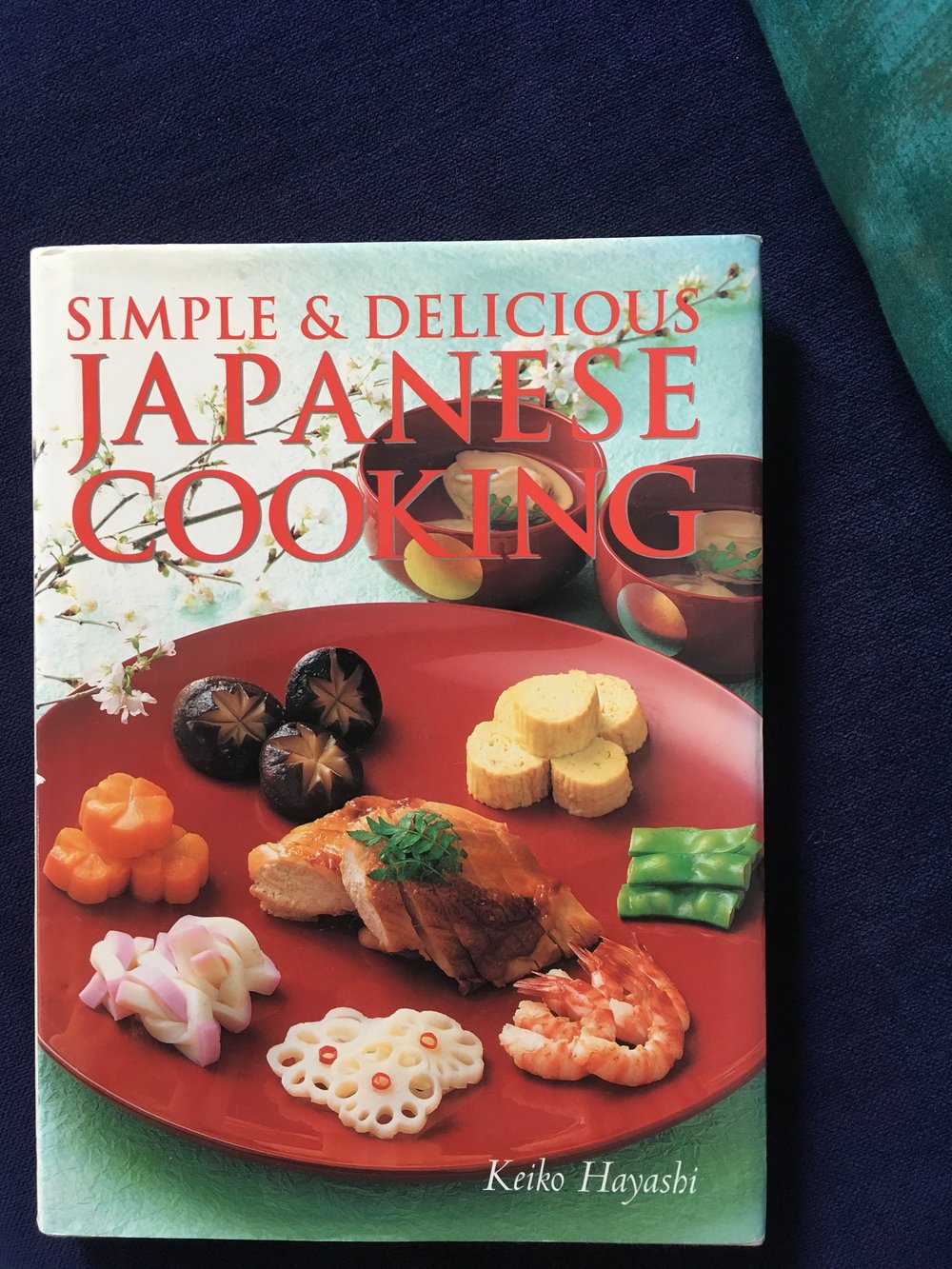
About 10 years ago, my parents came to spend some time with us and my mother absolutely wanted to cook some Japanese dessert. I didn’t have much Japanese cooking books that were not in Japanese, so the best I could offer was this book I already introduced some time ago

There are very few recipes of desserts but one that pleased everyone: tofu cheese cake. Of course we didn’t really follow the recipe, and add different flavoring. But the basic recipe was simple and the result never disappointing. Last night I was looking for a dessert recipe, and when I saw some tofu in the fridge, I remembered that recipe and decided to try it again. And this time was not different. A simple tasty and healthy dessert!!! 

Tofu cheese cake (for 4-6 people)

– one block of tofu drained, recipe said momendofu (hard), but I used kinudofu (silky tofu)

– 5tbs of flour or cornstarch

 – 3 eggs

– 6tbs of sugar

– flavoring: vanilla, lemon juice, lemon zest or macha or spices of your choice (I tried with cardamom) 

 Preheat the oven to 180deg. In a bowl, mix the tofu with the flour, the egg yolks, and 3tbs of sugar, the flavoring. In an other bowl beat the whites until stiff and the sugar and continue beating until silky. Add this mix to the previous one delicately.

Line a pie dish or an oven dish with cooking paper, and then pour the preparation in. Cook in the oven about 30min or until golden.
Lotus root sushi – 蓮根寿司

When we were in Fuefukigawa, our ryokan had a very nice library where we enjoyed spending some time. It’s very nice to go to someone else library because you can discover many things through others books. That’s how I discovered a little cook book with some inspiring recipes. And I tried one of the inspiration as soon as we got back home. It was a recipe of lotus root sushi. So basically vinegared rice and vinegared lotus roots, served with ginger and sesame.  It’s been many years I haven’t made sushi rice so I was happy to prepare some again. Since it was served with the vinegared lotus root I didn’t make it too sour, and I served it with some ginger-pork sautéed.

So here is the lotus-root sushi recipe. It is quite simple if you can find fresh lotus roots (which in Japan is obviously very easy) and it has a very Japanese flair. 

Lotus-root sushi: 

– 1 cup of Japanese rice (I always use Koshihikari but choose your favorite one) 

– 1 large lotus root, fresh

– a bulb of fresh ginger, not too big

– 2 or 3 myoga

– 3 tbs of golden sesame

– 3 tbs of white vinegar

– 1 tbs of natural sugar

– 1 tsp of salt

– 2 tbs of sake (optional) 

First wash the rice, and cover with 1cup of water, the sake and cook as usual. While the rice is cooking, peel and wash carefully the lotus root. Cut in very thin slices (I used the mandolin for that). Set in a bowl, add some water to almost cover, but don’t put too much. Add most of the sugar, the salt and 2tbs of white vinegar. Stir with the hands, and let rest. Stir once in a while. Peel and cut thinely the ginger and the myoga. In a frypan roast the sesame until it starts to smell. Once the rice is cooked and has cooled down a bit add the remaining 1tbs of vinegar and the remaining sugar, stir well. Add the ginger, the sesame to the rice, stir; add the lotus root drained. Add the myoga. That’s it!!!

Yamanashi!!

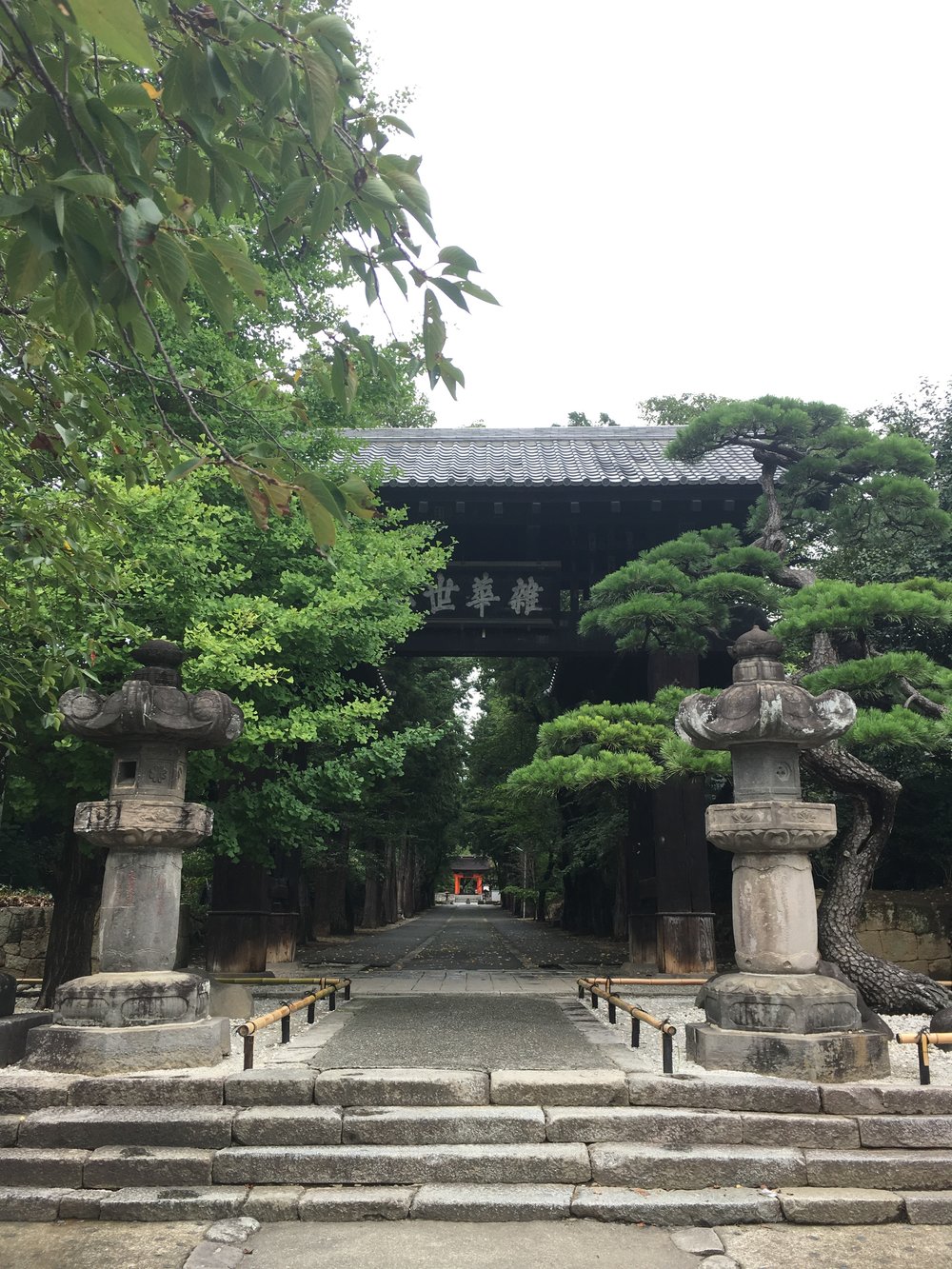
 entrance of Erinji
entrance of Erinji

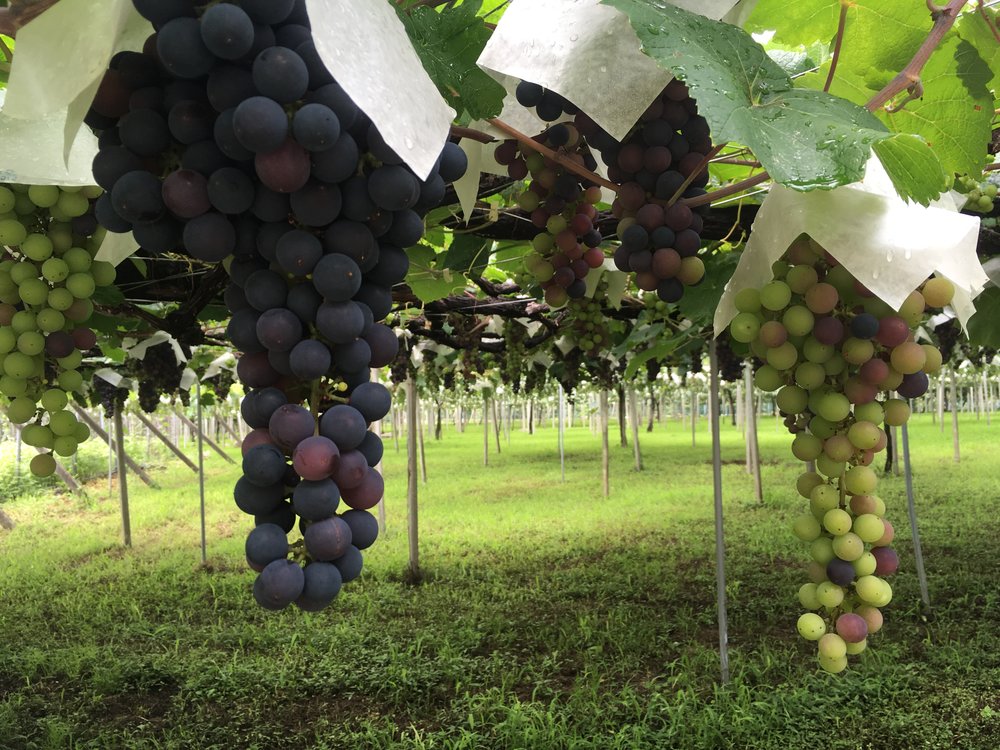
The last stop of our trip was in Yamanashi prefecture to visit wineries and fruits orchards. I had know idea what too expect and what we would actually see, and it was a great surprise! First the place we stayed at (Fuefukigawa onsen – 笛吹川温泉) was fantastic with a chef preparing delicious cha-kaiseki cuisine and adjusting easily with my very special food restrictions. We had plenty of local products at each dinner and breakfast there and it’s been a long time since I haven’t had proper cha-kaiseki. Probably since my last cha-kaiseki class too many years ago… so I was really happy! Then we went to visit on foot the surroundings and were enchanted by the mix of orchards and residential areas near Erinji, a remarkable temple with old beautiful pine trees. In the orchards one can find grapes of course, but also peaches, chestnuts, persimmons, apples… Most people may be chocked by the excess of care given to the fruits: each may have a little paper hat to protect it, and in may cases they are wrapped in a little paper bag. It results in fruits that are almost all perfect, protected from bugs, heavy rain, direct sun…

 protected grapes
protected grapes

Many places on the road sides sell fruits to eat directly on the spot or take away, it gives a very casual, not Japanese atmosphere that was very interesting!!!

 panoramic view of the Suntory winery
panoramic view of the Suntory winery

Want to know more about what to see and where to stay? Leave a comment!!! 

Nakasendo, Magome juku – 中山道・馬籠宿

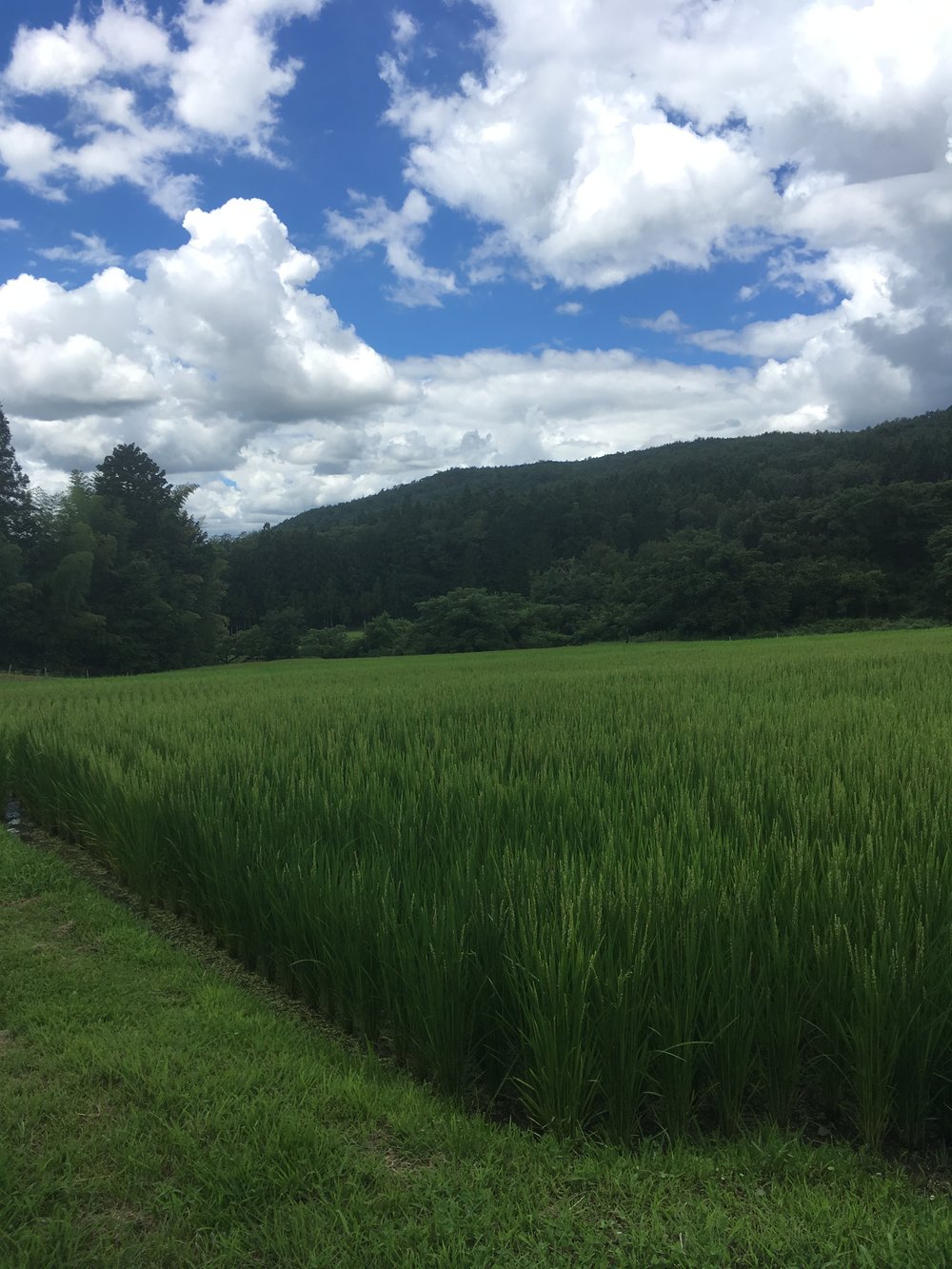
 Terraced rice fields along the hike to Magome
Terraced rice fields along the hike to Magome
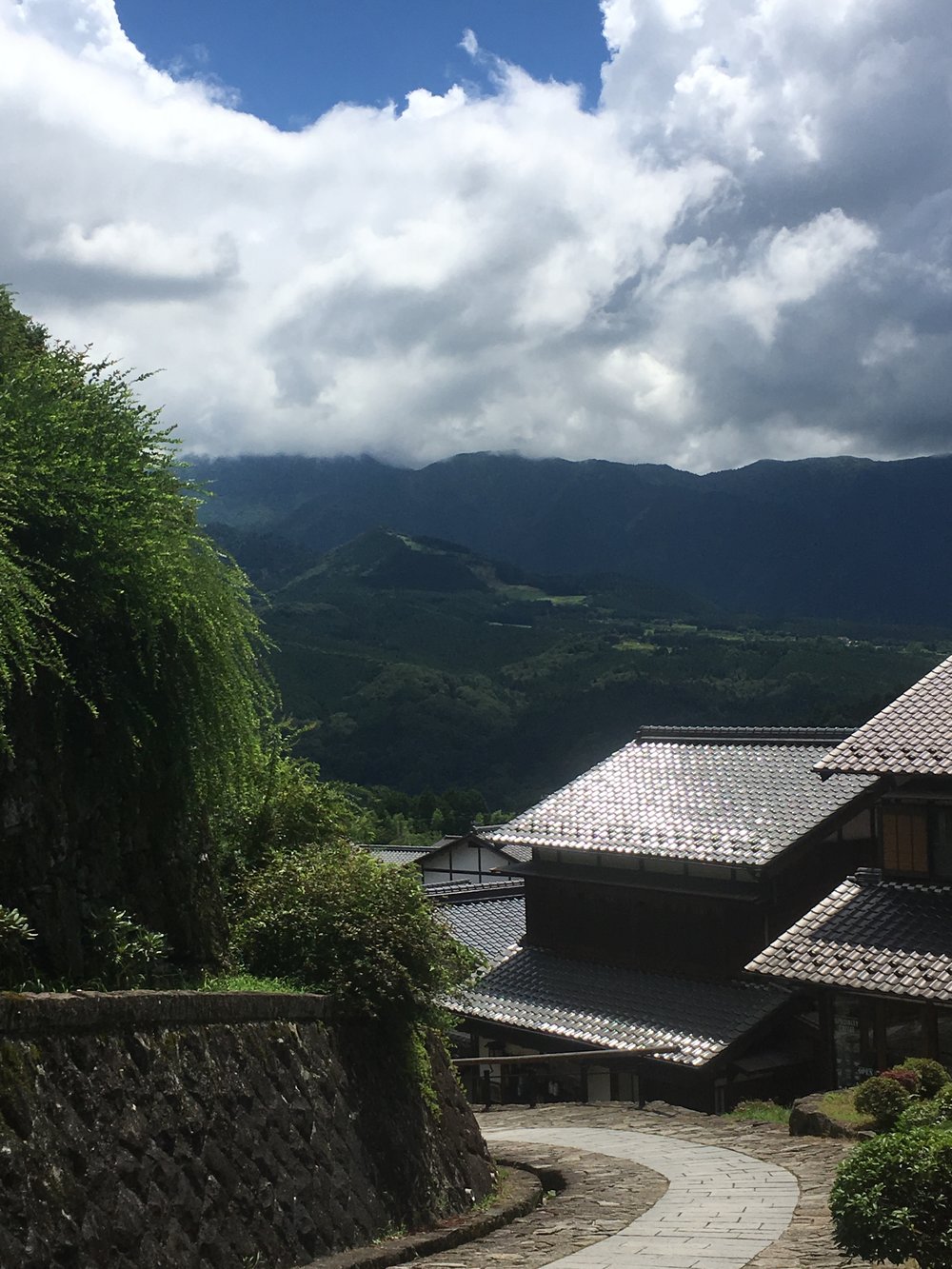
 Magome juku
Magome juku
 Yakimochi
Yakimochi

We are still on the road both by car and by foot with A. And after Tsunan, Hakuba, Azumino, Matsumoto, Kamikochi, Takayama, Gero, Ena we are now in the Kiso valley, or rather on the old road Nakasendo, in a very nice little inn where we are the only guests and very well taken care of. Our hike today, shortened by the heat has taken us to Magome juku, an old post town on the Nakasendo, one of the roads widely employed to travel between Kyoto and Tokyo in the past, a still very well preserved place with very picturesque views and old houses. Back at our inn: Shinchaya, our host had prepared a huge dinner as could be expected in every minshuku and ryokan. What is great with minshuku compared to ryokan is that it is more homemade-like food and easy to get recipes directly from the cook! For addresses and tips about traveling in the Kiso valley, please leave a comment!

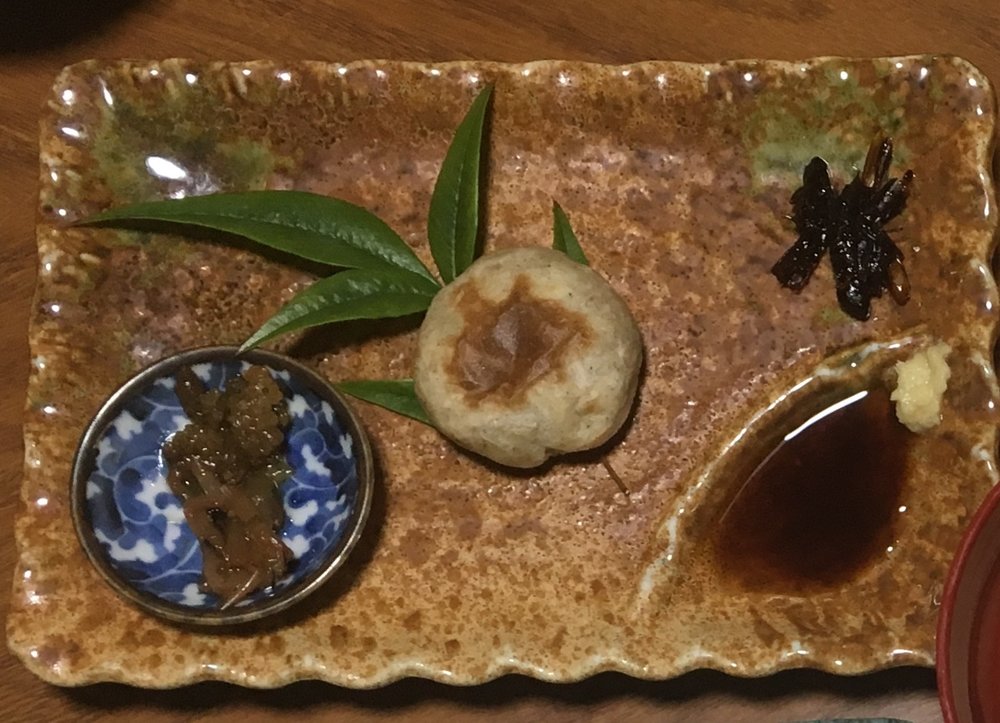
This time the nice surprise was what is called yakimochi – 焼き餅 but it is not made of rice! The recipe is quite simple and the results quite delicious!

 Yakimochi – 焼き餅 from Shinchaya

– a few taro – 里芋

– buckwheat flour

– salt

– soya sauce

– fresh ginger

Boil the taro, and peel them. Mash them with a fork, add some salt and the buckwheat flour to obtain a smooth mix. Make paddies with the mix and grill them (oven, pan…). Peel and grat the fresh ginger. Serve the grilled paddies with soya sauce and the ginger.

Wasabi – 山葵

 At work
At work

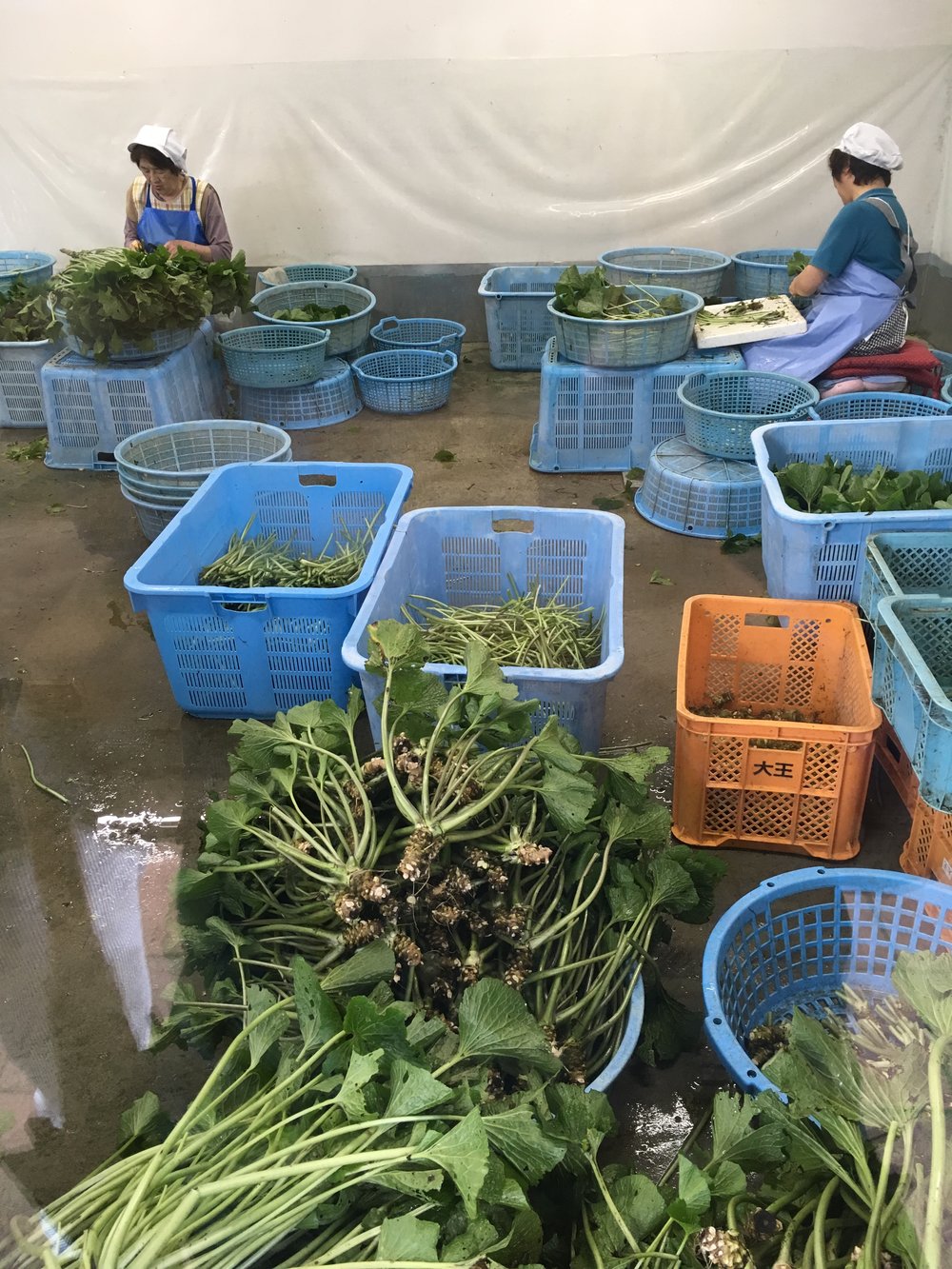
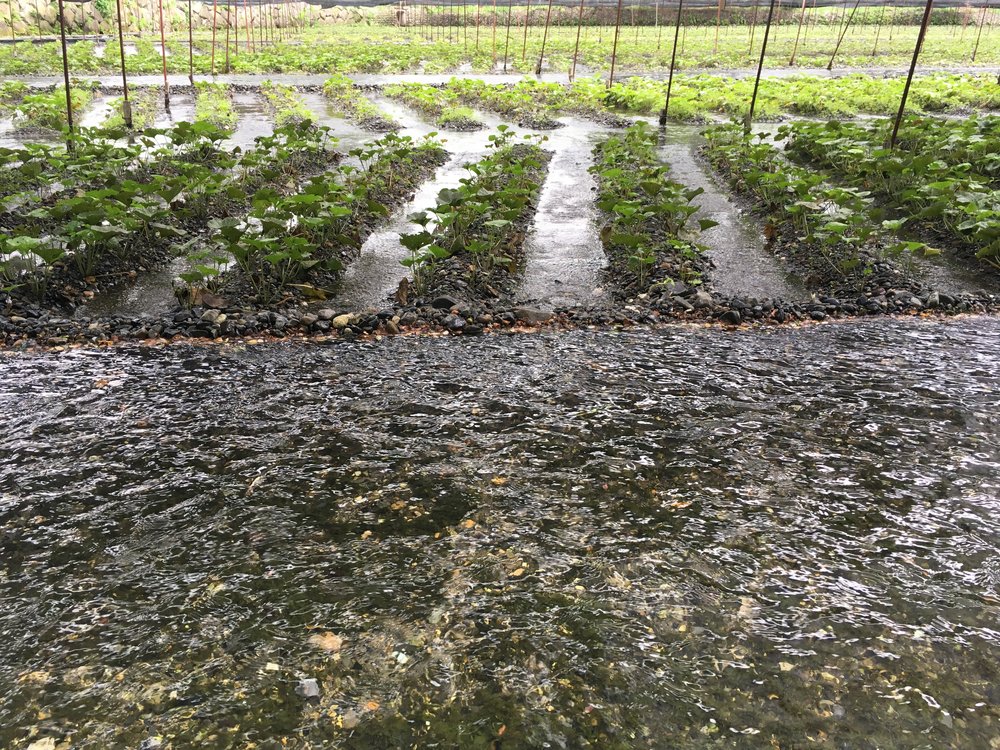
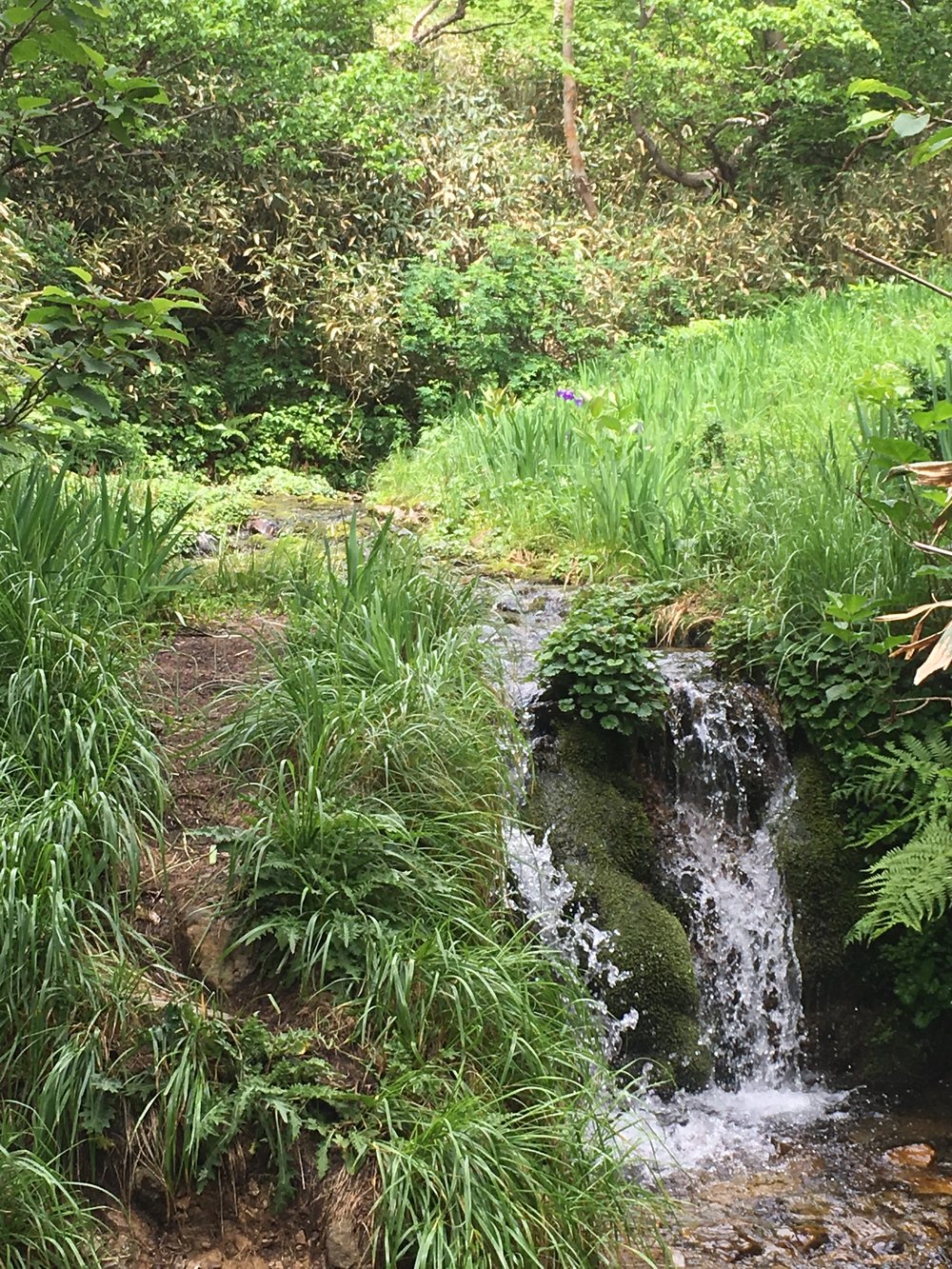
Wasabi is an important ingredient in Japanese cooking. It is of course used for sushi, but also with tofu, soba noodles… It is an autochthonous plant that grows naturally nearby clear streams. Historically it was first used as medicine in Nara period (700AD) before being popularized as food during the middle age: Muromachi period (1300~). And probably with the sushi boom in the early 1900’s wasabi has been more in demand and a few farms were created. That’s then that the now world biggest wasabi farm started. Daio farm started in 1910 but it took about four decades to become a decent wasabi farm and what it is now. One can easily imagine the landscape transformation such an installation has provoked and how intensive production to meet demand and keep price low affects the rural and natural areas. Yet Daio wasabi farm is an interesting place to visit and it is quite beautiful. The super pristine waters needed for the culture of wasabi, the little plants in the rock bed and the curvy lines of the field bordered by leafy willow trees are really quiet and peaceful. It is a very different landscape from those usually seen in Japanese. Picturesque like a Seine and Marne village cherished by the Japanese painters in the 1900’s or the japonism painters (top picture). Visiting Daio farm is a really nice stroll. It is also possible to see people at work to extract the stem from the plant (upper picture), visit the little history museum and try some wasabi food (we had ice cream). Since they also sell fresh wasabi at the farm I was looking for a cookbook or something to learn more about how to use wasabi, but none was available. An other time…

 Wasabi fields and pristine water  
Wasabi fields and pristine water  

Daio wasabi farm: free entrance, open all year round from 9:00〜17:20, count 1-2h stroll


Learning new recipes

We are now in Hakuba for the second stop of our little Japanese road trip. Staying as usual at La Neige Higashikan where we are pampered as usual. We spend our days hiking and visiting the surroundings, which are very different from the winter. It’s the first time ever I go to the mountain in the summer (I am more of a sea person) so seeing all the lifts, and the lush green pasture is very new to me and going up the mountains and hiking among the streams and the flowers was a great experience!!! 

What was really great is also to have dinner at our favorite Hakuba restaurant: the humming bird. The chef and his wife received us like kings! They opened the restaurant just for is and cooked us some delicious local cuisine, like awabitake: some delicious mushrooms from Nagano area, rhubarb compote… and some home made pickles that tasted very different than what we usually eat. The secret of such sweet taste was very simple but new to me: to pickle it they used plum syrup!!! 

Pickles in plum syrup: 

– plum syrup in enough quantity to cover the vegetables

– cucumbers

– 1 dry red pepper (togarashi) 

Wash the cucumbers, remove a bit of the peel to create stripes. Cut the red pepper in thin slices. Add the red pepper in the plum syrup. Dip the cucumbers and wait a few hours to one day. Remove the cucumbers, wash them briefly. Cut and serve.

Have a beautiful month of August!!! 

Special guest: cooking in Tsunan

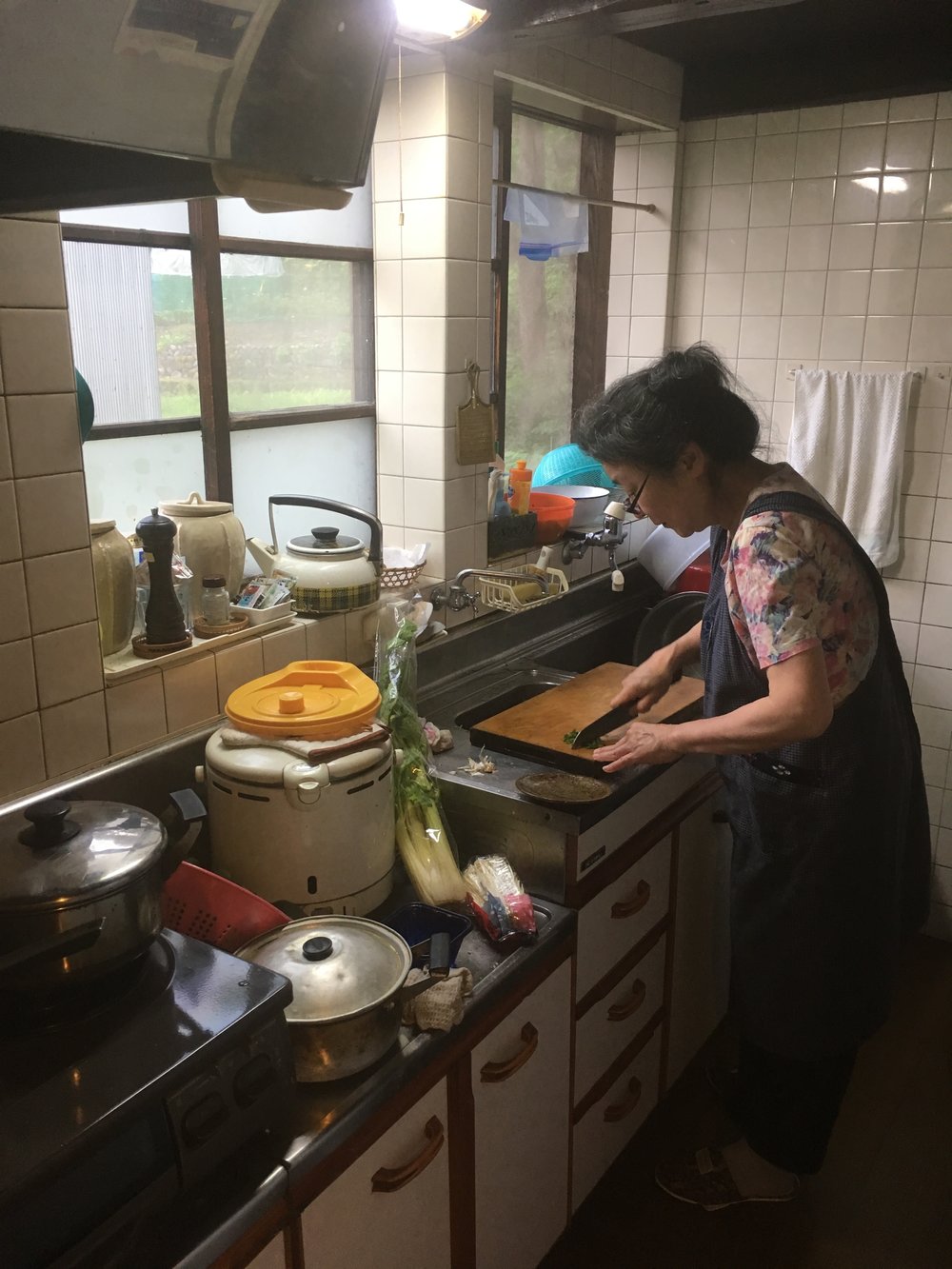
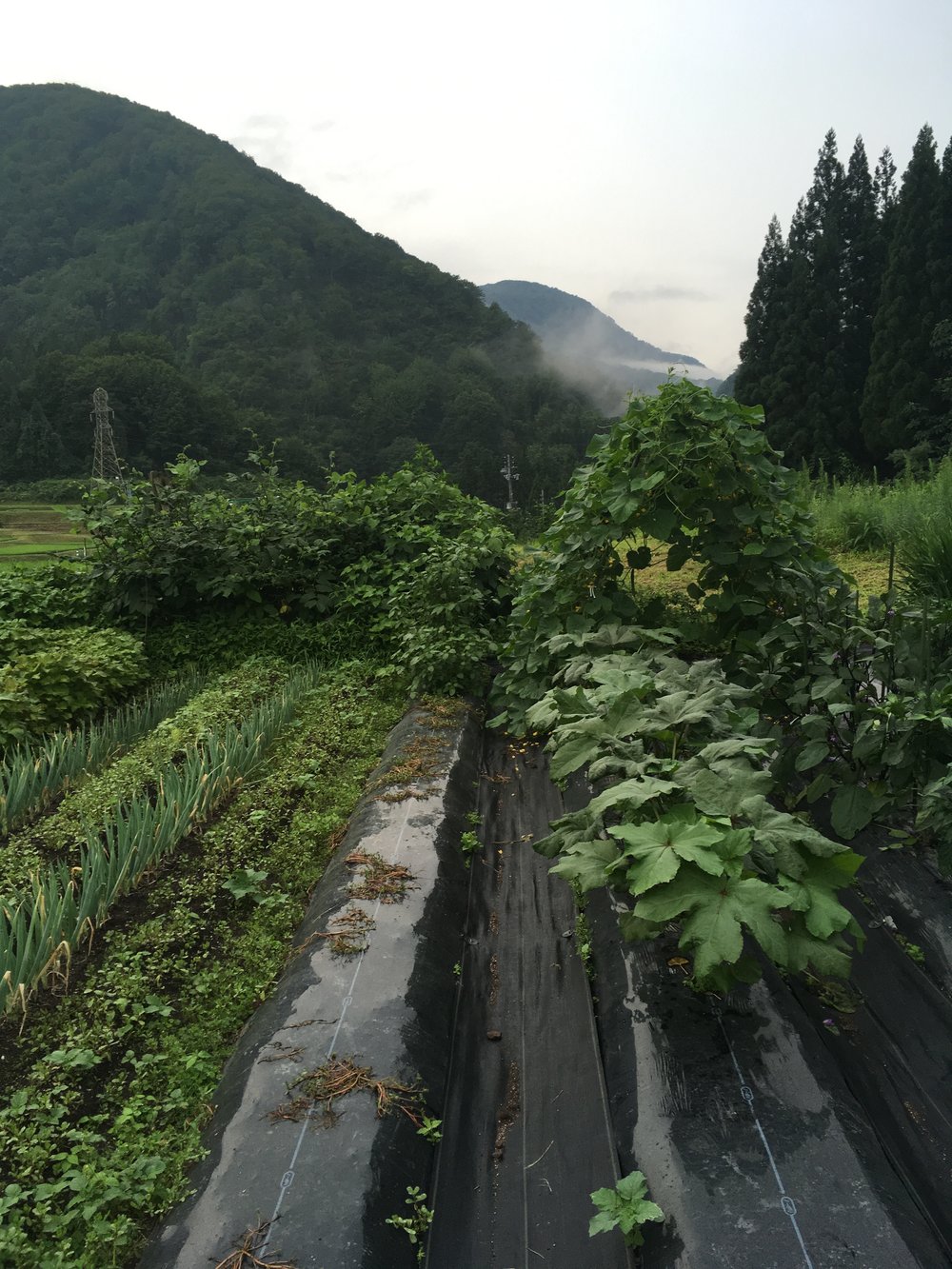
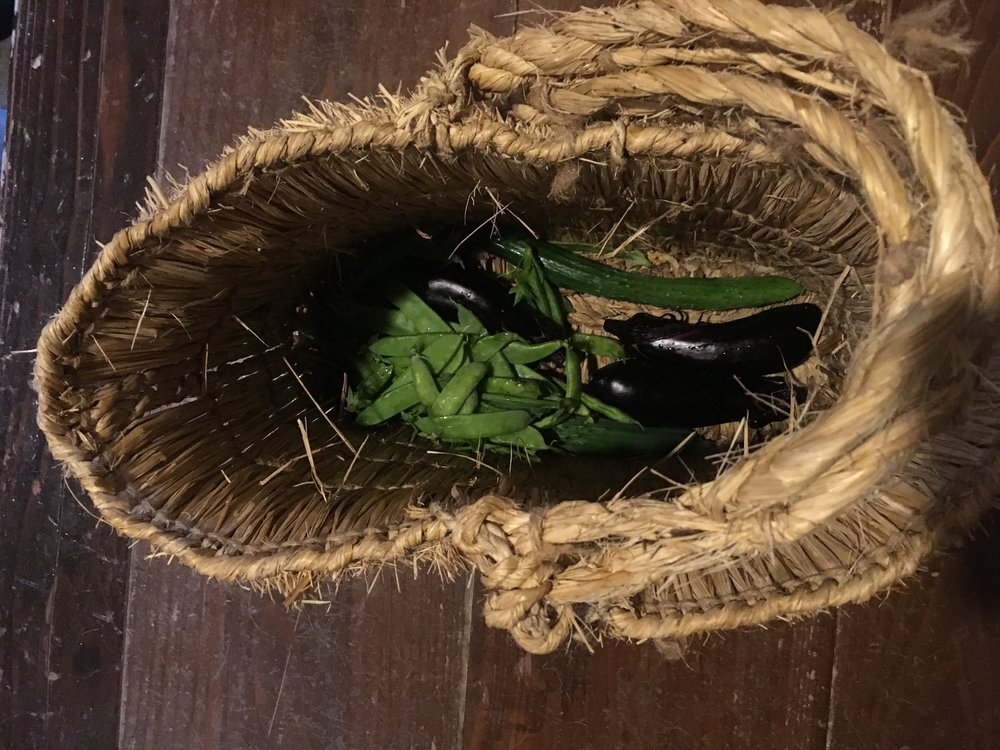
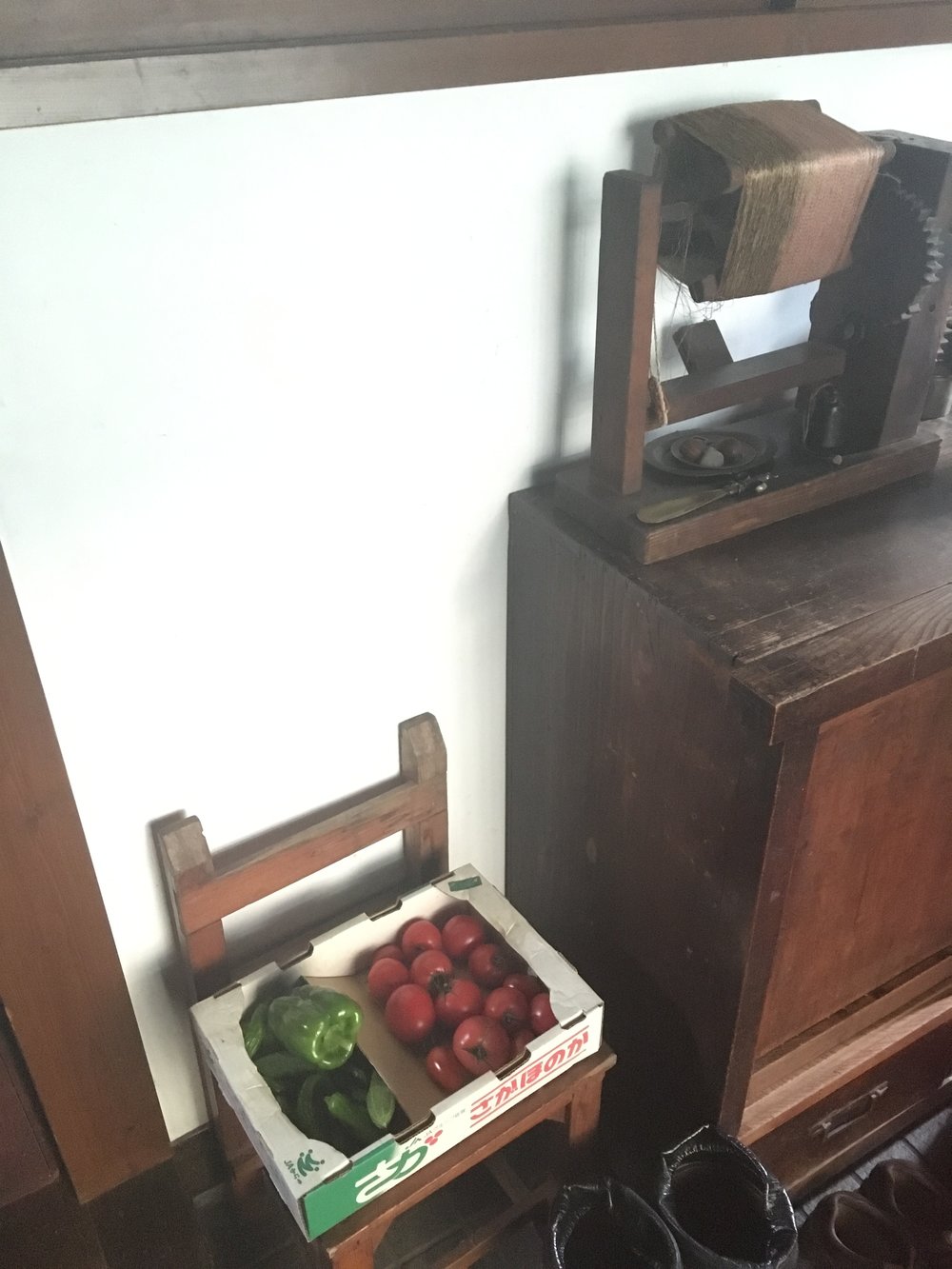
We are back to our friends’ place in Tsunan for a few days and as usual having fun cooking with K. the local products and vegetables from their kitchen garden. In the summer they grow a lot of tomatoes that are always super delicious, a lot of eggplants and cucumbers too. K. is very good at cooking, she knows a lot of different inspirations from their travels and she mixes it quite well to Japanese traditional cooking and Japanese ingredients. Cooking with her is always very inspiring for me, and I learn a lot helping her in the kitchen. But I also cook for them some dishes, this time a blueberry tart.

Even if there is often some meat in many of her recipes, she uses a lot of fresh vegetables from their garden and she always make a twist to Japanese traditional recipes. This time she prepared shabu shabu, but served it with celery, fresh lettuce, sprouts, mizuna, pickled cucumbers, snap peas and soya sprouts… the vegetables only where so delicious. And of course there was as always, one of her wonderful tomatoes salad. K. always peels her tomatoes for the salad and serves them with many different dressings: sometimes just black pepper and salt, or just green shiso (perilla) sometimes with more complex preparations. This time she prepared a sesame dressing with roasted and grinded sesame (about 4tbs), soya sauce (3tbs), rice oil (3tbs).

 K. in her kitchen
K. in her kitchen
 S. kitchen garden  
S. kitchen garden  
 Modest harvest of the day
Modest harvest of the day
 Modest harvest of the day
Modest harvest of the day

Salsola – okahijiki

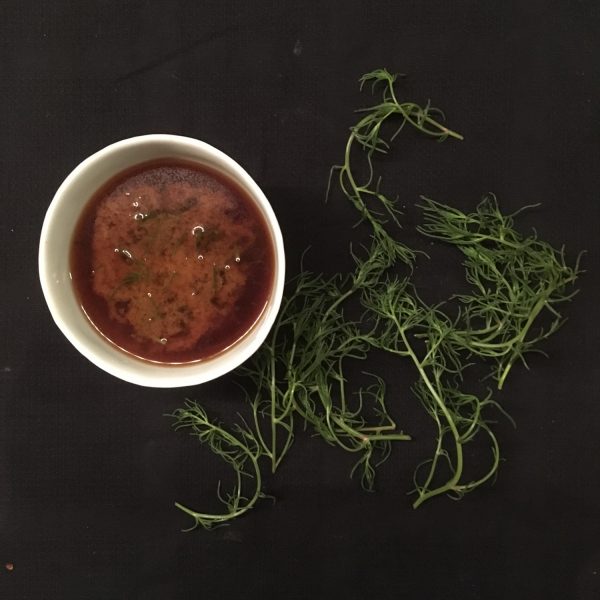
Trying new vegetables is always fun! In particular when you can easily imagine how to prepare them! So when we went to the farmers market and I found okahijiki-おかひじき  I simply couldn’t wait to cook them. And with the super hot weather I thought of a simple Japanese meal again with rice, grilled fish and umeboshi, and I wanted to have some miso soup with red miso (the one more appropriate for the summer). And to make it more country-like I didn’t use katsuo bushi but rather niboshi from sardines -鰯 for the soup base. I simply added the okahijiki after washing them and removing the hardest parts to the broth and cooked them 2min. I added the red miso as usual in the end, just before serving.

Have a beautiful week!!! 

Simple Japanese meal

With friends at home for the whole weekend I ended up not cooking Japanese at all, and since Friday I was still craving for some simple Japanese taste. Finally last night I got it done! A. is good at preparing Japanese rice, which saves a bit of time when I am finishing work rather late, and I had some perfect fresh Japanese vegetables for a simple meal: onion for Shirako, white carrots and new lotus roots. I simply wash/peel and cut all the vegetables, heat a bit if oil in a pan and cook them under cover until almost done (the onion being probably the most critical) then I remive the cover, add some soya sauce and cook at high heat for 2 minutes, and serve with the rice. It’s not very elaborated but it tastes perfectly Japanese!

Proudly powered by WordPress | Theme: Baskerville 2 by Anders Noren.

Up ↑

Verified by MonsterInsights