Japanese delight

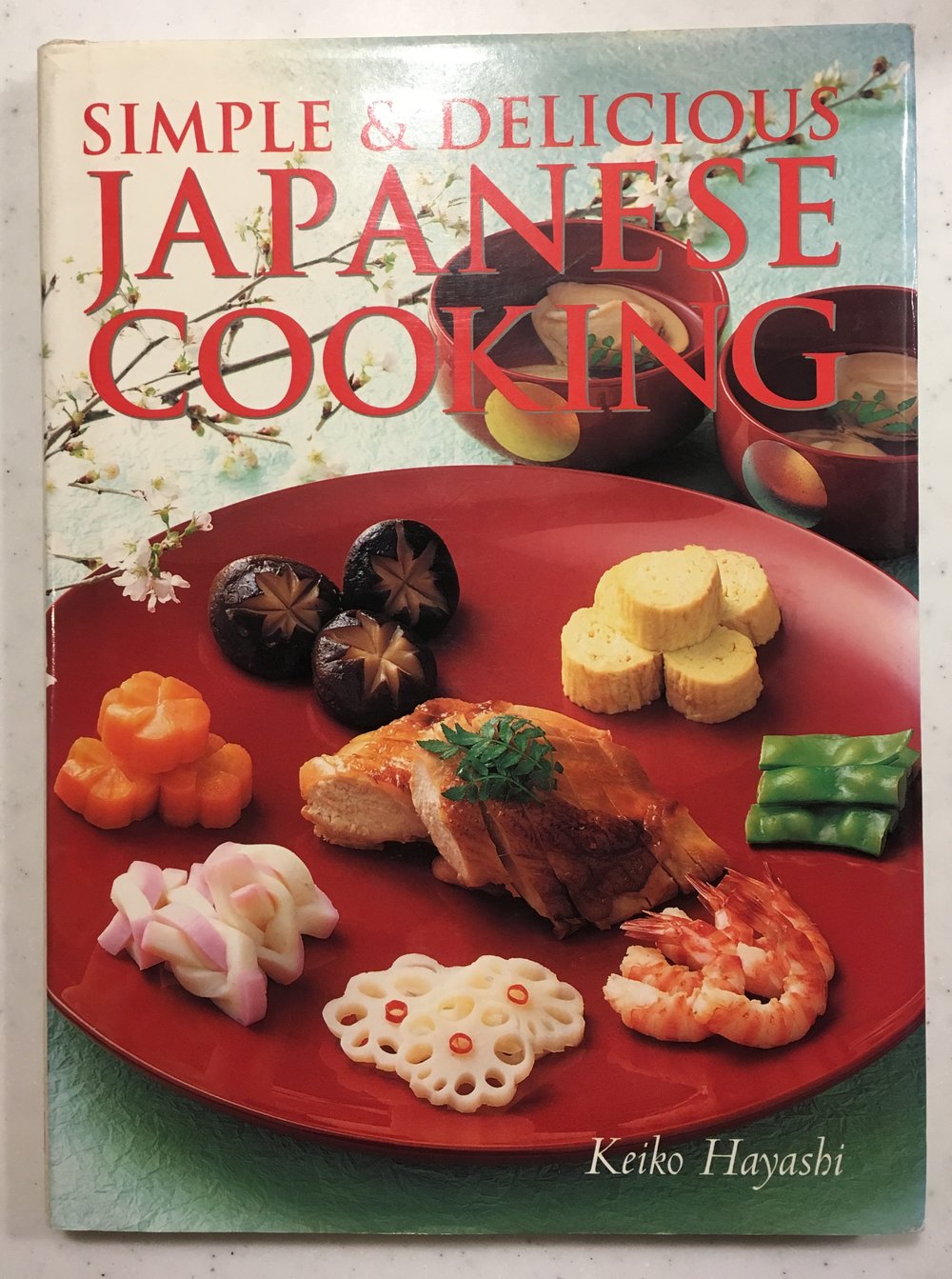
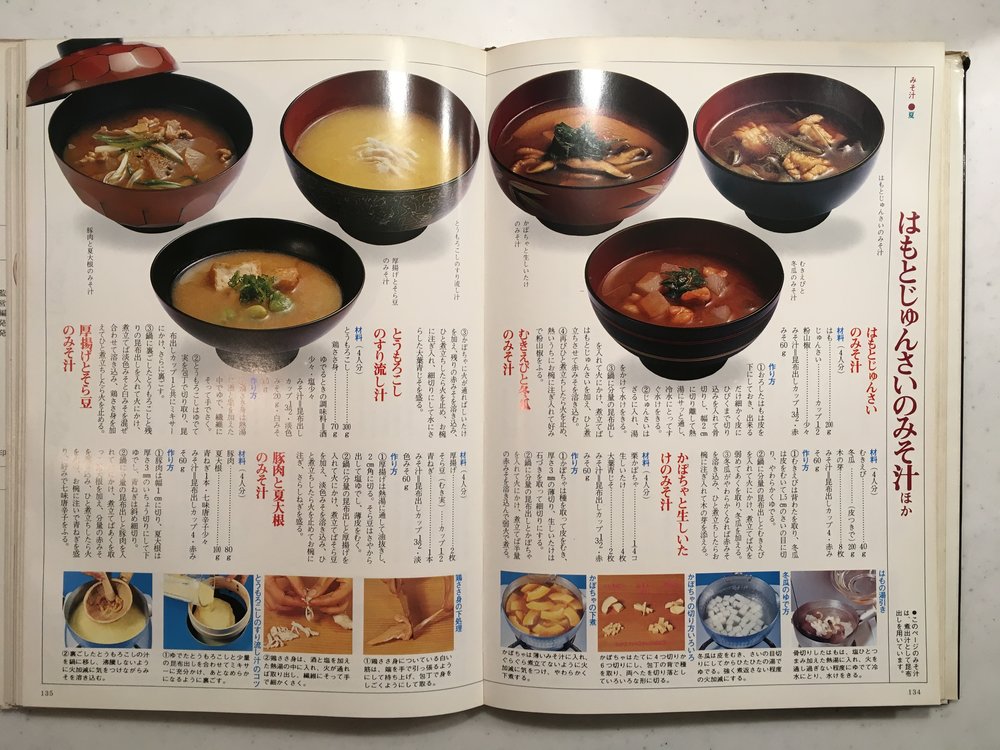
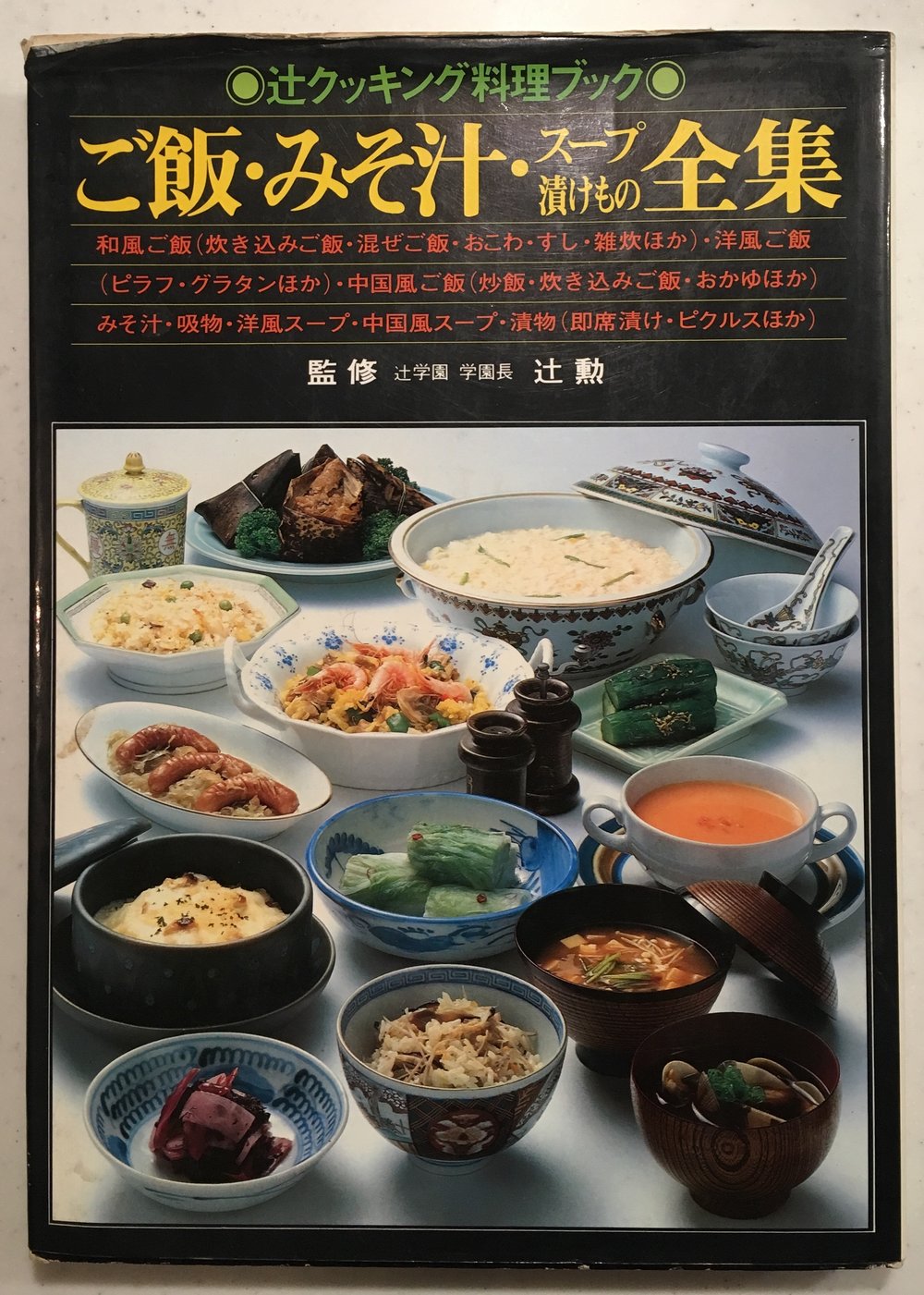
I finally tested a recipe inspired by the cooking book I bought last week on my way home at a bouquinist in Jimbocho. It’s an old book from the 1970’s or 1980’s and it has a lot of very beautifully presented food. Plating changes with time and they certainly had some nice one at that time too!! Though a few a bit crazy… bubble time… The recipes that attracted me much were the miso soup and other clear bouillons. I mean I didn’t actually read much of the recipes, rather I enjoyed reading the explanations about how to choose a good rice and how to cook it very interesting. But the soup section pictures inspired me a lot. One recipe I wanted to try was daikon miso soup. Actually, after years of living in Japan, I finally start to really enjoy cooking daikon. May be because the most often we find is gratted daikon, which I find extremely boring, or simmered and over cooked, but there is so much to do with it. I could now totally go with a daikon week of recipes!!! Would you like that??? Let me know and I’ll be happy to share my favorite classic Japanese recipes and my invented ones!
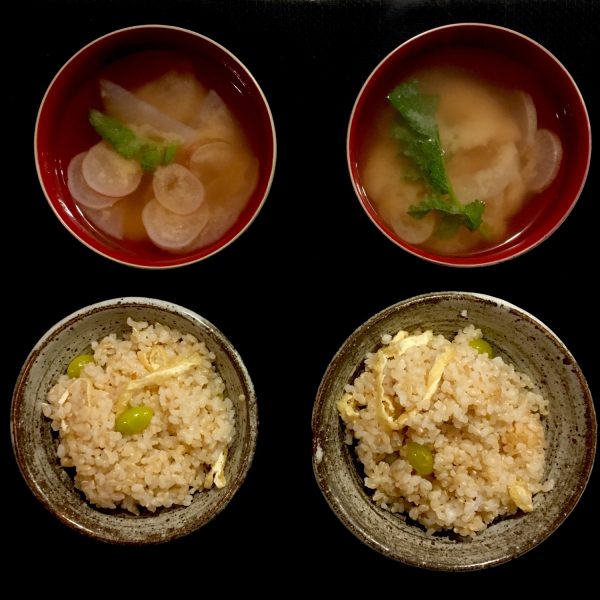
Today, I’ll just share a simple white miso soup with both radish and daikon, but daikon only, or radish only, works very well too. It is extremely simple and delicious and warm form a chilly evening. You need for 4 serving, 1.5L of dashi (I used simple katsuobushi),  a 7cm cut of daikon, 3 large pink radishes, 4 small leaves from the radishes tops (optional), 3tbs of white miso. In a large pan, prepare the dashi. Peel the daikon, cut the piece in half in the lenght to obtain half circle shapes. Cut slices of 1mm in the width. Add to the dashi and cook for 10min. Wash the radishes and slice them. Add to the soup and cook for 4min. Add the washed tops, the miso, stir and serve immediately. If you want to prepare ahead, reduce the cooking time to 7min and 2min. Add the tops and miso after reheating the soup, and serve immediately. I served it with grilles sanma, and briwn rice with fried tofu and gingko nuts.
Shopping spree!

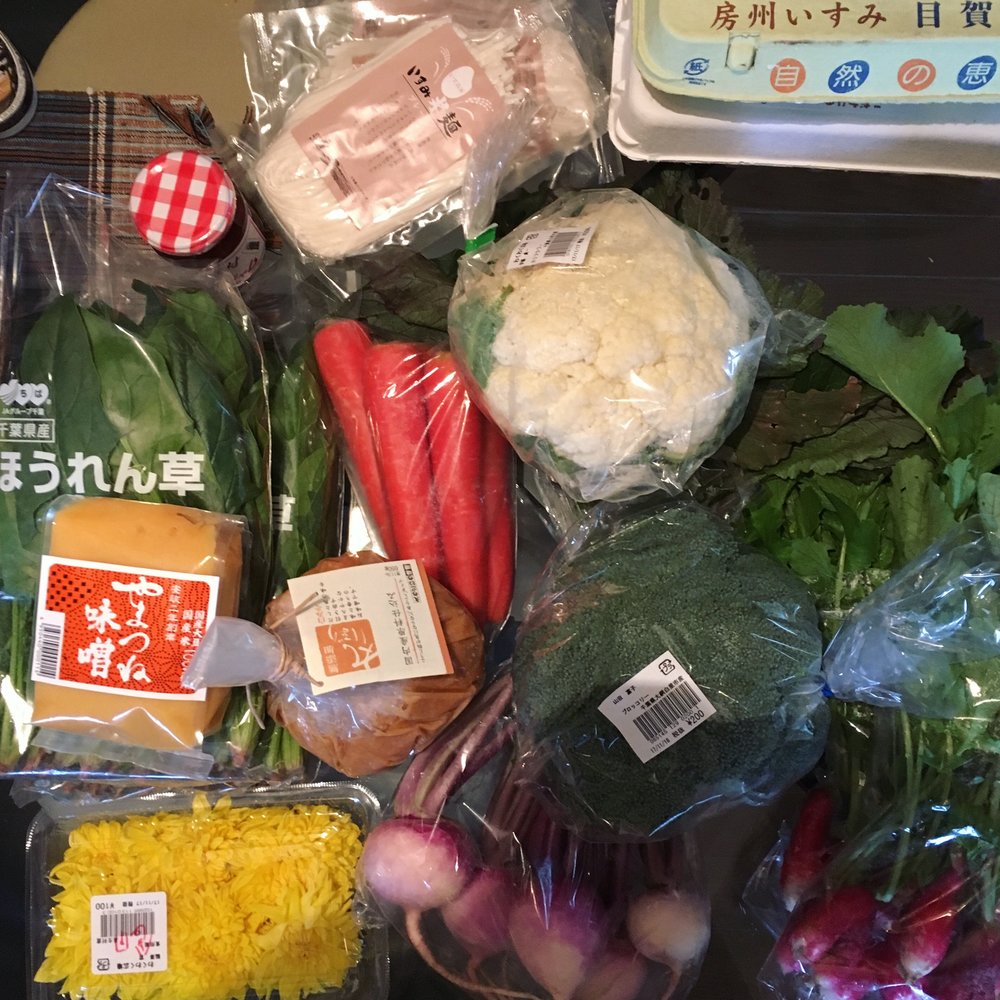
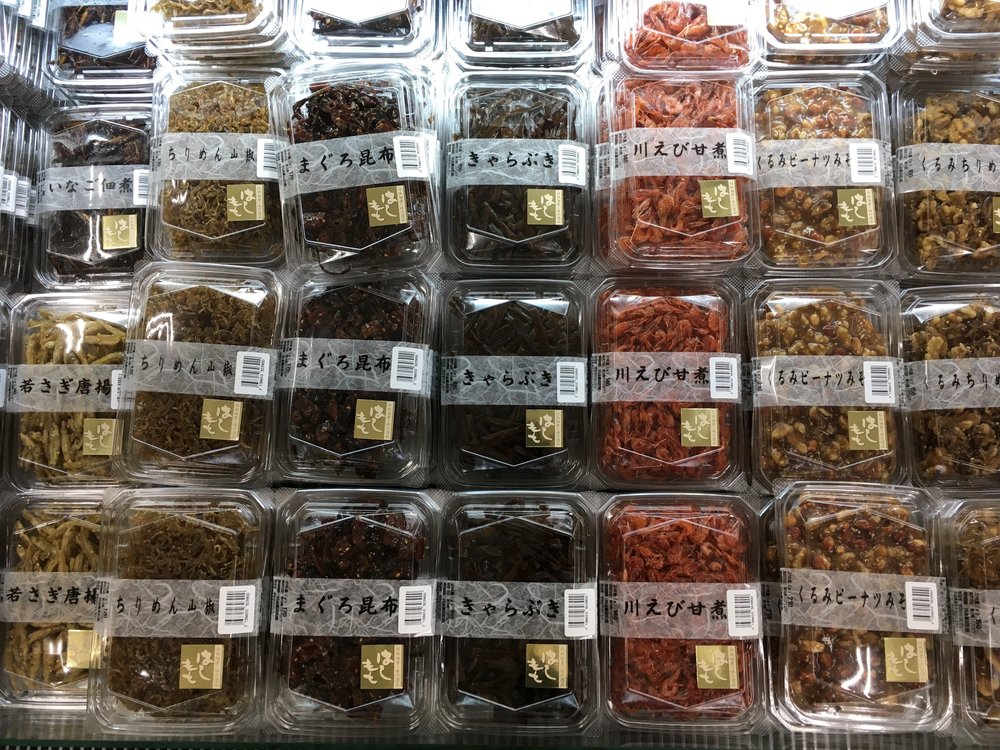
With our new work schedule, we finish work quite late on Friday evening and leaving for the country at 23:00, in the cold evening, empty stomachs and drained from the week is not too tempting, so we prefer to wake early on Saturday morning and leave quickly. In the winter fewer people go surfing and golfing that early so it’s not jammed. It is great to drive by day to enjoy the scenery, and we also can stop on the way at local shops we usually don’t go too often. Saturday we stopped at Wakuwaku in Otaki, a shop selling a lot of local products and fresh veggies and fruits, as well as some fish and local pork. Actually we haven’t been for the whole summer, and since we last went they had a total refurbishment and new branding with more organic products too. And it was just crazy! On top of the regular fresh fruits and vegetables I regularly buy, I also bought different types of miso, dry fish, block ham, sausages and locally made rice pasta. They also had tones of preparations such as small fish or shrimp cooked in soya sauce, with walnuts… pickles, tofu… and they had a lottery where I won an other bag full of dried sweet potatoes, rice crackers…

The thing I was the most tempted to try right away was the rice pasta from Isumi. I decided to cook them in a wok of vegetables, with chrysanthemum and sausages. So I boiled and drained the pasta, and kept in cold water. In a wok slightly greased I added 4 little sausages chopped, one red carrot cut in rectangles, a handful of brocoli, a handful of cherry tomatoes, and the petals of two yellow chrysanthemum flowers. Once the sausage were ready, I added one table spoon of soya sauce, then added the drained pasta and stirred well. Served immediately with an other chrysanthemum flower for decor. Simple and delicious!

Have a great week! 

Shiitake week! Day 4!

Some time ago I was writing about my worst culinary failure ever when I made my first miso eggplants. The recipe came from the very Japanese cooking book I bought. And this book has been very precious for us when we started to live in Tokyo. “Simple & delicious Japanese cooking” by Keiko Hayashi has been my Japanese cooking bible for almost one year. And the very first recipe I tried was a shiitake recipe: takikomi gohan, it was also the very first recipe I shared on our blog back in 2004, one that everyone can make, everywhere there are shiitake. And if 13 years ago you could only find them in asian supermarkets, now they are much easier to find. 

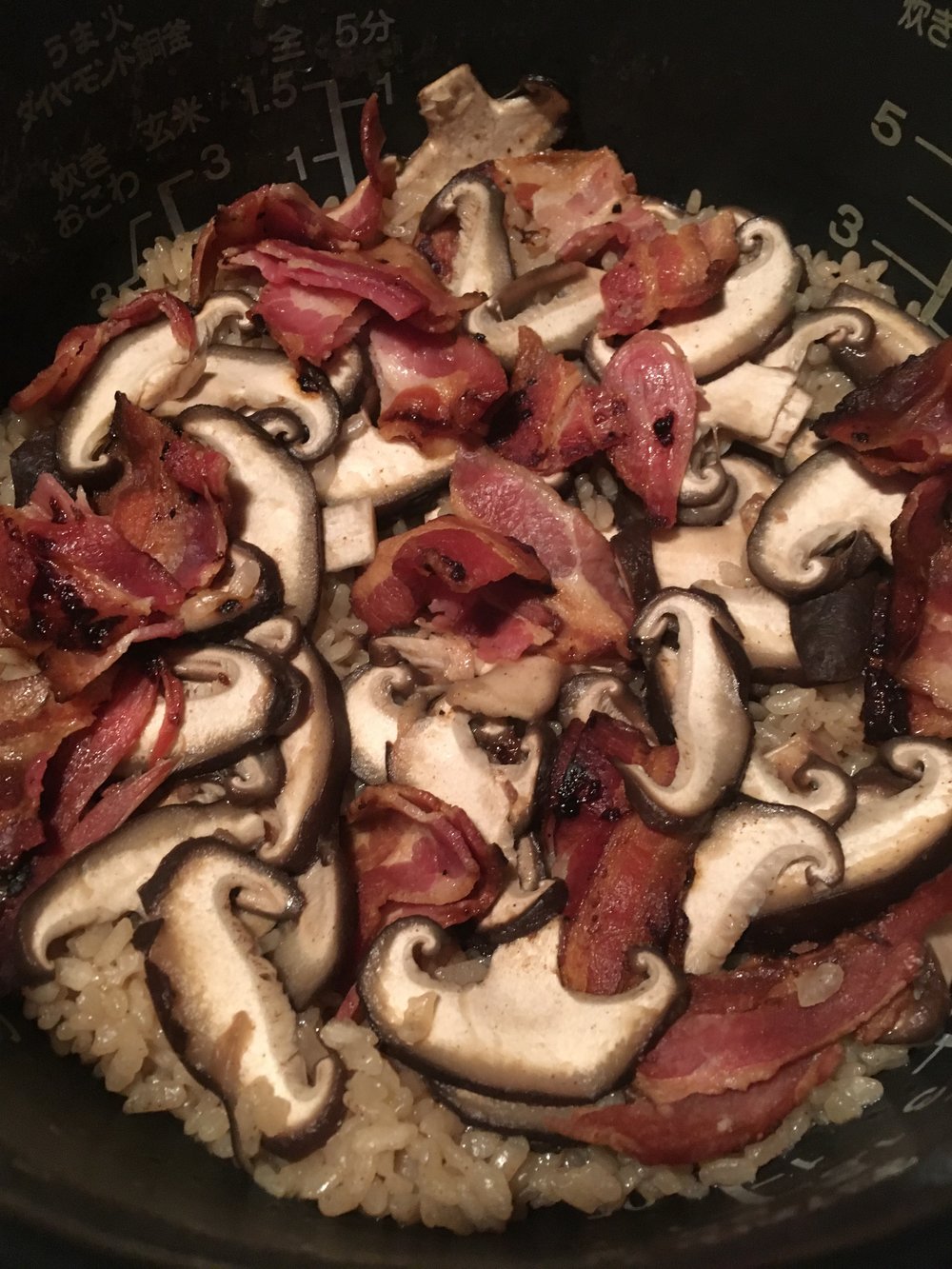
Today I have prepared a new version of the classic recipe that is in the book to share with new. It uses all the basic ingredients for takikomi gohan, and the same technique. It is very simple to prepare and it cooks unattended during 50min in the rice cooker, giving plenty of time for doing something else. Here is my recipe (the original recipe)

Shiitake takikomi gohan (for 2 people) 

– 6 shiitake

– 1 cup of rice

– 1 cup of dashi

– 1tbs of soya sauce  

– 1tbs of sake

– 4 slices of bacon (150g of chicken meat) 

– 10 gingko nuts peeled (4 steamed or boiled chestnuts) 

Wash and slice the shiitake. Cut the bacon and grill it in a pan until crispy. In the rice cooker add the rice, wash it, add the dashi, the shoyu, the sake, the shiitake, the meat the gingko nuts. Start cooking in normal mode. That’s it!!! Enjoy!

Shiitake week! Day 3!

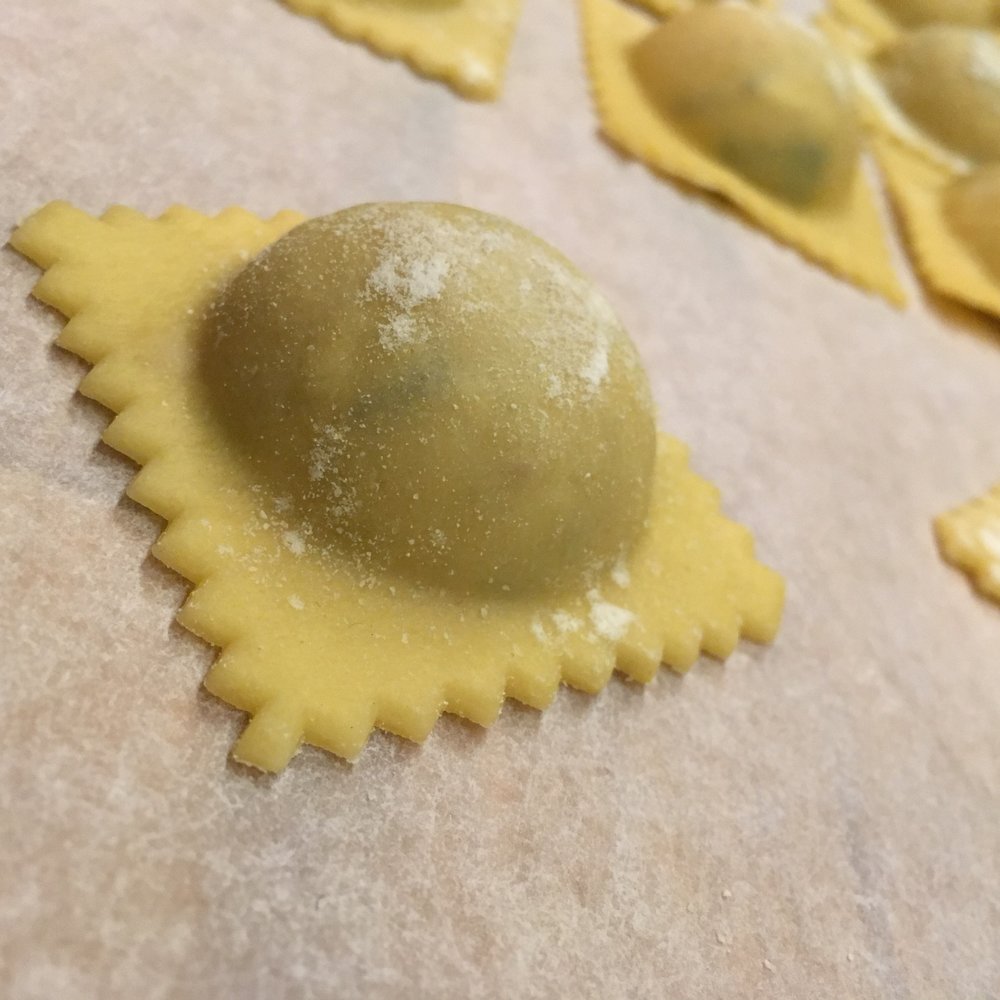
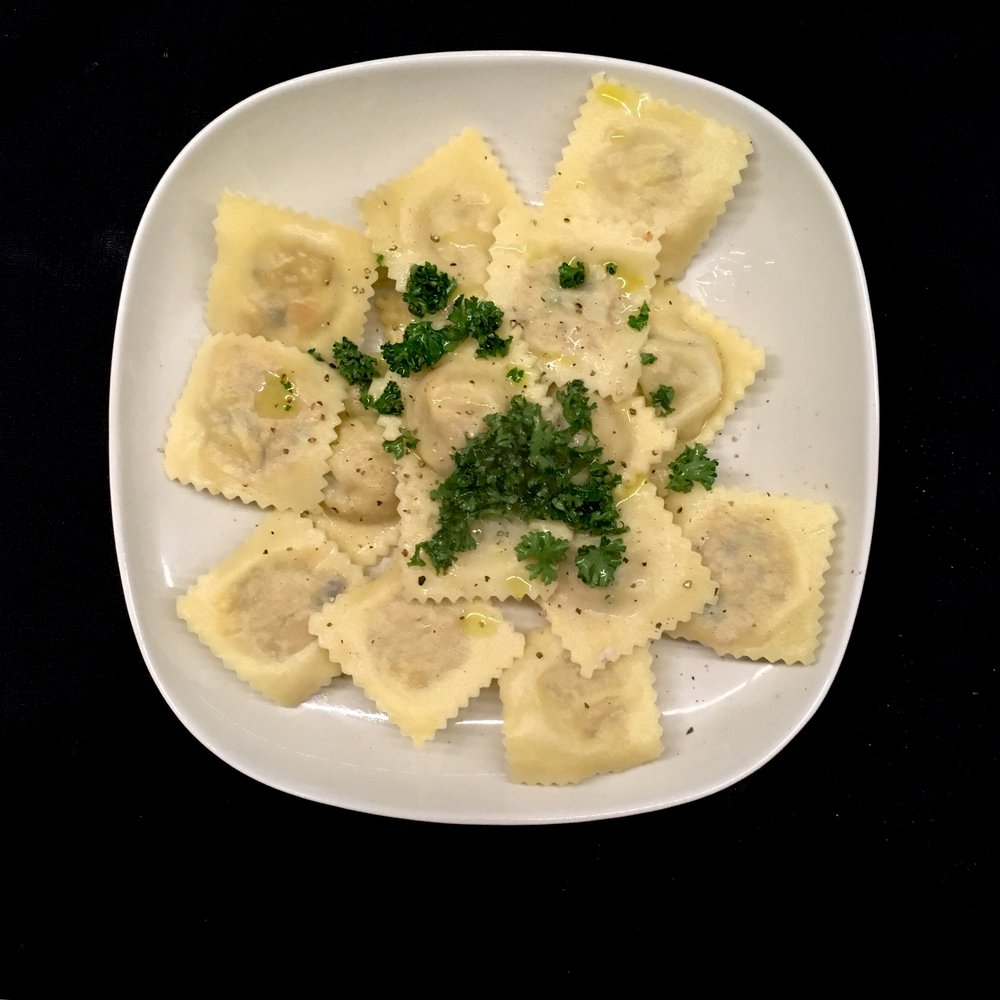
It’ been quite sometime I didn’t make ravioli right?! And I couldn’t wait any longer to train again… in prevision of my visit to Tuscany next month… And with beautiful shiitake, kabocha season and delicious Isumi pork, it was easy to decide what the fillingwould be: it will be all or nothing!  Indeed kabocha and shiitake are a great match, the pork is optional but it had really the perfect balance: sweet and savory! So the recipe is rather simple:

Kabocha and shiitake ravioli:

– 1/4 of kabocha

– 6 shiitake

– 100g of ground pork meat

– 1 egg

– 150g of flour

– olive oil

– water

– salt and pepper  

Steam the kabocha and puréed it. Dice the shiitake and roast them in a very little bit of olive oil or nothing. Add them to the kabocha purée. For the pork meat, just cook it in a pan until golden, and add to the mix. Salt, pepper and that’s it. For the pasta I used 150g of flour and 1egg, a little of olive oil and water. It made about 35 large ravioli. I also prepared a little mix of olive oil and parsley to top them and it was really de-li-cious… I’m really crazy about Italian food! And when it is mixed with Japanese… 

Shiitake week! Day 1!

After weeks trying to get this new rythm, I think we’ve almost got it… and a weekend in the country with tennis, gardening and cooking, plus the cat and a bit of work was the perfect way to completely get it right. My muscles hacking from the tennis and the gardening: trimming a Japanese pine is quite a demanding task, and I didn’t even manage to get it done… For the cooking I have been enjoying a lot the autumn vegetables, in particular most of my recipes included shiitake lately, I put them every where. So this week is a shiitake recipe week! But if you don’t have shiitake you can replace them by porcini or simple mushrooms. 

Let’s start with this very nice marcrobiotic French Japanese style recipe of Persillade. Traditional persillade is made with garlic, parsley, oil etc… except that I don’t like garlic (one reason why I never use it, despite all the health benefits it may have), so I have invented this new recipe that ressembles persillade but is much more fun and goes perfectly with shiitake! Here is my recipe!

My ginger persillade (for 2) 

– 1 cup of brown rice

– 2 carrot

– 6 shiitake

– 1/2 burdock root

– parsley

– fresh ginger

Cook the rice in a pot, Japanese style, or in a rice cooker. Brown rice requires a little bit more water than white rice. 

Peel the burdock, cut in bites and wash abundantly, same with the carrots. Wash the shiitake and slice them thinly. In a heated pan add a bit of olive oil, then the burdock, later the carrots and finish with the shiitake. Stir once in a while. 

Peel the ginger, cut in thin slices and then dice in 1mm side. Wash the parsley and chop it. Add the ginger and the parsley in the pan, stir regularly. Add a bit of olive oil if necessary. That’s it!  

Serve the rice, the vegetables and enjoy your meal!!! 

New rythm

Pfou… it’s not easy to find a mew rythm when days at work are 13h and one day you start early, the other you finish late… even less easy when A. has meetings until quite late… Cooking dinner past 22:30 when lunch is that far away and you’re starving requires food that can be prepared quite rapidly… but I still want to eat fresh, seasonal, local food. There are a few tricks to do that:

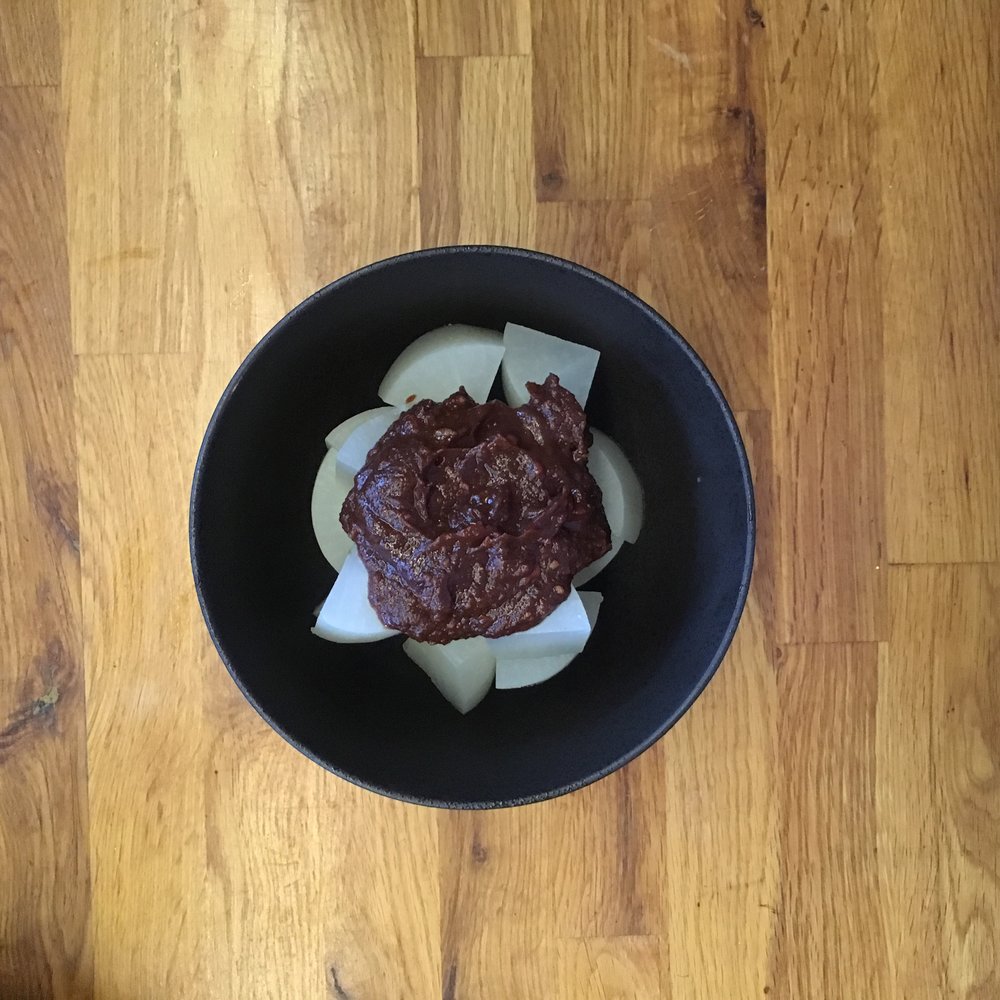
– trick No 1: stock on daikon radish, carrots and miso. It takes 2minutes to peel and cut daikon sticks (even faster than carrots!!) and 3minutes for a carrot or two. Dipped in miso they are the perfect snack!

– trick No 2: pack on food that can be prepared in hot simple pot and don’t need to much time to prepare (no peeling…): kabocha, sweet potatoes, carrots… in 10min they can be cooked and preparing them is simple: wash & cut! 

– trick No 3: prepare your rice cooker in the morning and schedule cooking or cook rice in a thick pan on gaz directly (it reduces cooking time to a mere 20min)

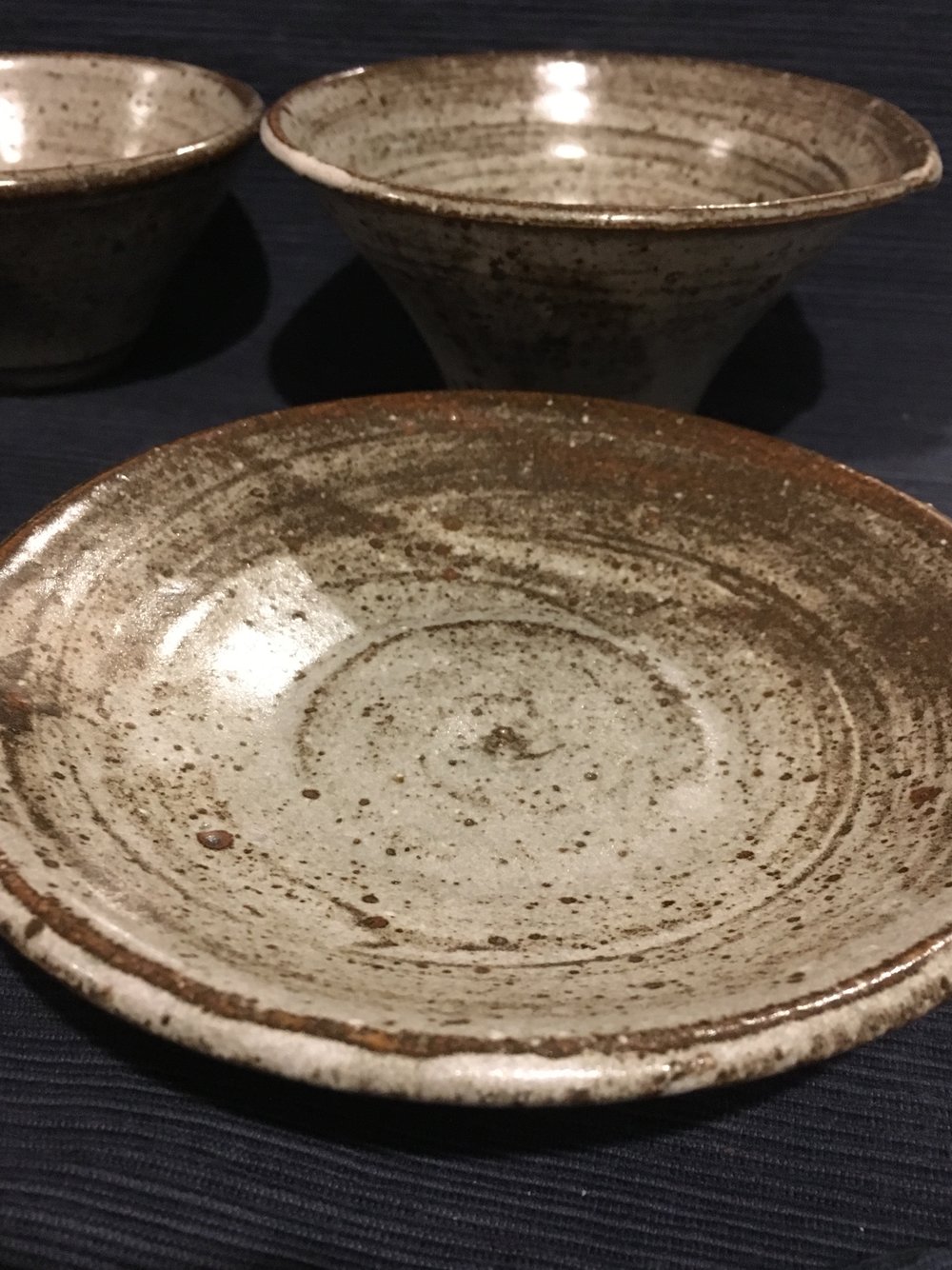
And while you eat you veggies with miso and you smell the veggies roasting and the rice boiling you can open your mail, chat about your day and admire the result of your first experience of making pottery on a wheel!

Curry-rice quiche!

Not enough of the leek tart with some brown rice pie crust, I went further with this curry-rice quiche. All in one dish all in one quiche! Same pie crust as the last post, but this time after half baking it I filled it with a special mix. In a pan I cut roughly a bundle of fresh spinach washed, 2 pieces of chicken breast and cooked at high heat for 5 minutes, then added a block of silky tofu and cooked 10 minutes while stirring, finished with 1tbs of curry powder, some red pepper, nutmeg and salt and pepper, took away from the heat and added 3 eggs. Stirred well and poured everything in the pie crust. Baked for 35min at 180deg, checking regularly after 20min that it wasn’t over cooked but just golden. I served that to friends for dinner with a fresh green salad. Simply delicious and astonishing! 

Yuzu season: start!

The autumn is here for sure now, and despite the lot of rain, the typhoons etc… there are a few very beautiful sunny days like today. And it is great to enjoy yuzu in the recipes with the fruits starting to appear at the farmers market. I love to use the skin of the yuzu in many recipes and this uear I have been totally in love with Malabar spinach (ツルムラサキ) and I’ve been cooking some a lot. The yuzu goes very well with it and so dowa the lorus root. So naturally I prepared this little dish with grilled lotus roots, blanched Malabar spinach and fresh yuzu peels. A perfect combination to eat with rice of course. And stay dry in Tokyo since the rain is back again!

Two simple Japanese recipes

With some guests from France at home this weekend I cooked some simple Japanese recipes that they could reproduce back home. And because the weather was really terrible I could take all the time needed to chop thinly the vegetables and prepare recipes I usually don’t.

The two recipes I prepared were daikon and miso, and some kinpira gobo (without the red pepper). 

Daikon and miso: 

– 1/2 daikon

– 2 tbs of miso of your choice

– 1/2L of dashi of your choice: konbu, katsuo, niboshi… 

Cut the daikon in 3cm slices, peel them. Prepare the dashi and when boiling cook the daikon. It is ready when a toothpick enters smoothly. In a small bowl put the miso, add 2 or 3 tbs of dashi and stir to obtain a creamy paste. At this stage you can add yuzu peels… for a slightly enhanced version of the recipe. One the daikon is cooked, drain and top with the miso preparation. Eat while still warm.

Kinpira gobo :

 – 1 burdock

– 1 carrot

– a small piece of lotus root (optional) 

– 300ml of dashi of your choice

– 1tbs of soya sauce

– 1tbs of sake

– 1tsp of sugar

– 1 red pepper  

Peel the vegetables. Cut the burdock and gobo in thin matches sticks. Cut the lotus root and the red pepper in thin slices. In a pan boil the vegetables in the dashi. When reduced, add the sake, the red pepper, the sugar, and the soya sauce. Cook until almost dry. Add a few sesame seeds to decorate eventually.

Proudly powered by WordPress | Theme: Baskerville 2 by Anders Noren.

Up ↑

Verified by MonsterInsights