Goya chanpuru

In Okinawa cuisine they use a lot of pork meat and of goya, a bitter melon. Goya in Okinawa is delicious, but goya is a vegetable I never buy in Tokyo, because the ones you find in supermarkets are usually horribly bitter and hard (I did try a few times a long time ago…). There are a few tricks to remove the bitterness but normally you shouldn’t even need it… When someone give me one from their garden they are usually very delicious and not bitter at all, then I am more than happy to cook it. And one of the most classic recipe is goya chapuru ゴヤチャンプル. A traditional recipe from Okinawa with goya, tofu, pork meat and eggs. Sometimes moyashi (sprouted soya beans) are added… the pork meat is usually thin slices of pork belly or ribs, or in cheap version Spam. And it is seasoned with sesame oil usually but not always.

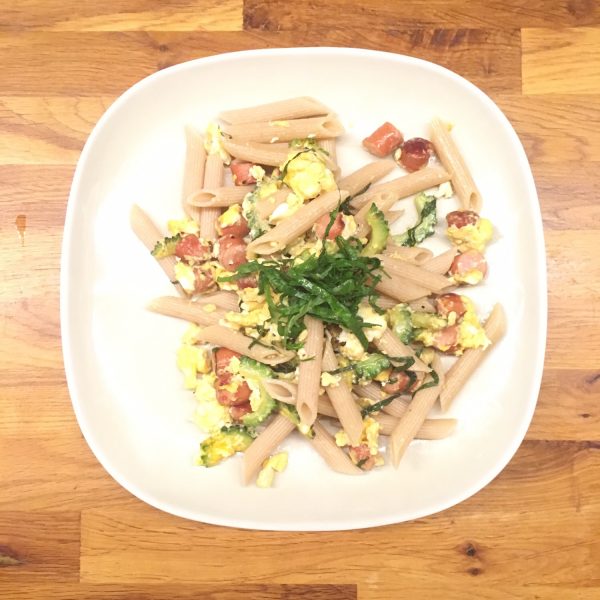
Since I received a beautiful goya And it’s been a really long time I haven’t I was really happy to cook it. With the heat and beautiful weather an Okinawa style preparation was perfectly adequate. Except that I didn’t have tofu and wanted some carbs to make the meal nourishing. I opted for a version of whole wheat penne with a goya, sausage and eggs preparation very similar to goya chanpuru. I used olive oil though rather than sesame oil. I simply cut the sausages in bites, grilled them in a frypan slightly greased, then added the goya, halved and sliced (and the seeds removed) and once they have soften with the heat I had 4 eggs beaten and stir regularly. I served it on top of the boiled penne and added olive oil, salt and pepper to finish.
Wafu pasta

The way of preparing pasta is unlimited and using Japanese ingredients with pasta may be really strange at first but it is not at all so strange in the end, it’s actually rather good. They are called wafu pasta (和風パスタ) and are actually quite common in Japan, they are regular pasta (most often spaghetti) with a dressing that uses Japanese typical ingredients such as meitaiko, nori… At first I didn’t like this mix too much, probably because it is often served in old not so nice cafe places, but I slowly got used to the idea and actually now enjoy preparing some.

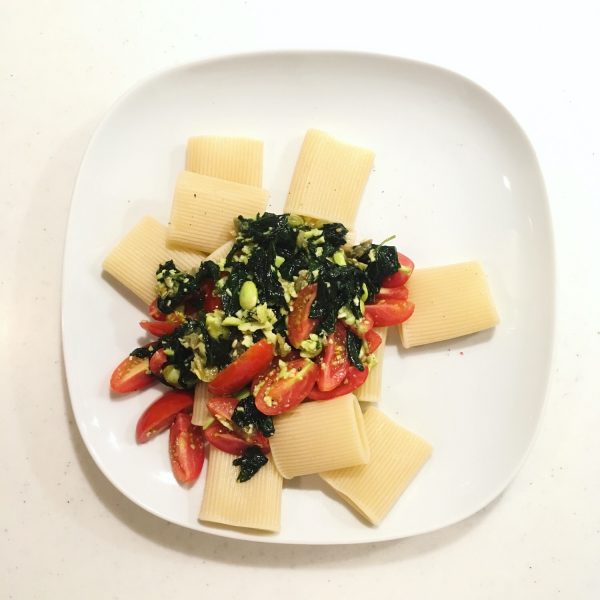
I prepared a summer wafu pasta recipe with crushed edamame, jute mallow and tomatoes with olive oil. It is so simple but so fresh and summer like that I’m thinking I will prepare more wafu pasta in the future!

In the mean a typhoon is coming to Tokyo, keep dry and safe and have a nice weekend!

Some new greens

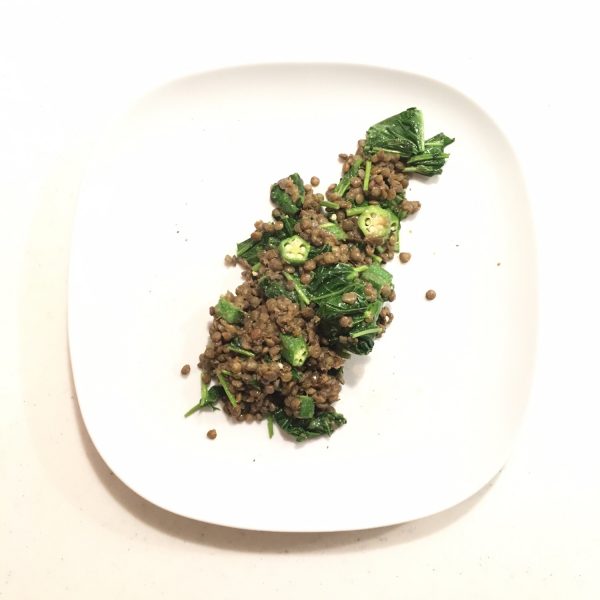
Every season brings a new kind of greens to the table, not just seasonal but also things I have never seen or cooked before. That’s what is fun with shopping at local farmers markets. Each one has some different products. When I shop in Ohara, I don’t find the same things than when I shop in Kuniyoshi, 10km inland or in Ohtaki, just a little further inland. There is always something I have never seen, or something rare in Ohara. For example cresson cannot be found easily in Ohara but inland yes!!! This time I’ve found a new type of green with beautiful thick and shiny green leaves and hollow stems. I used them like spinach somehow but it has a more grassy taste. And with the heat settling in Tokyo I prepared a simple dish with French green lentils, this new green blanched with okra, olive oil and curcuma.

Stay cool!

Sansho

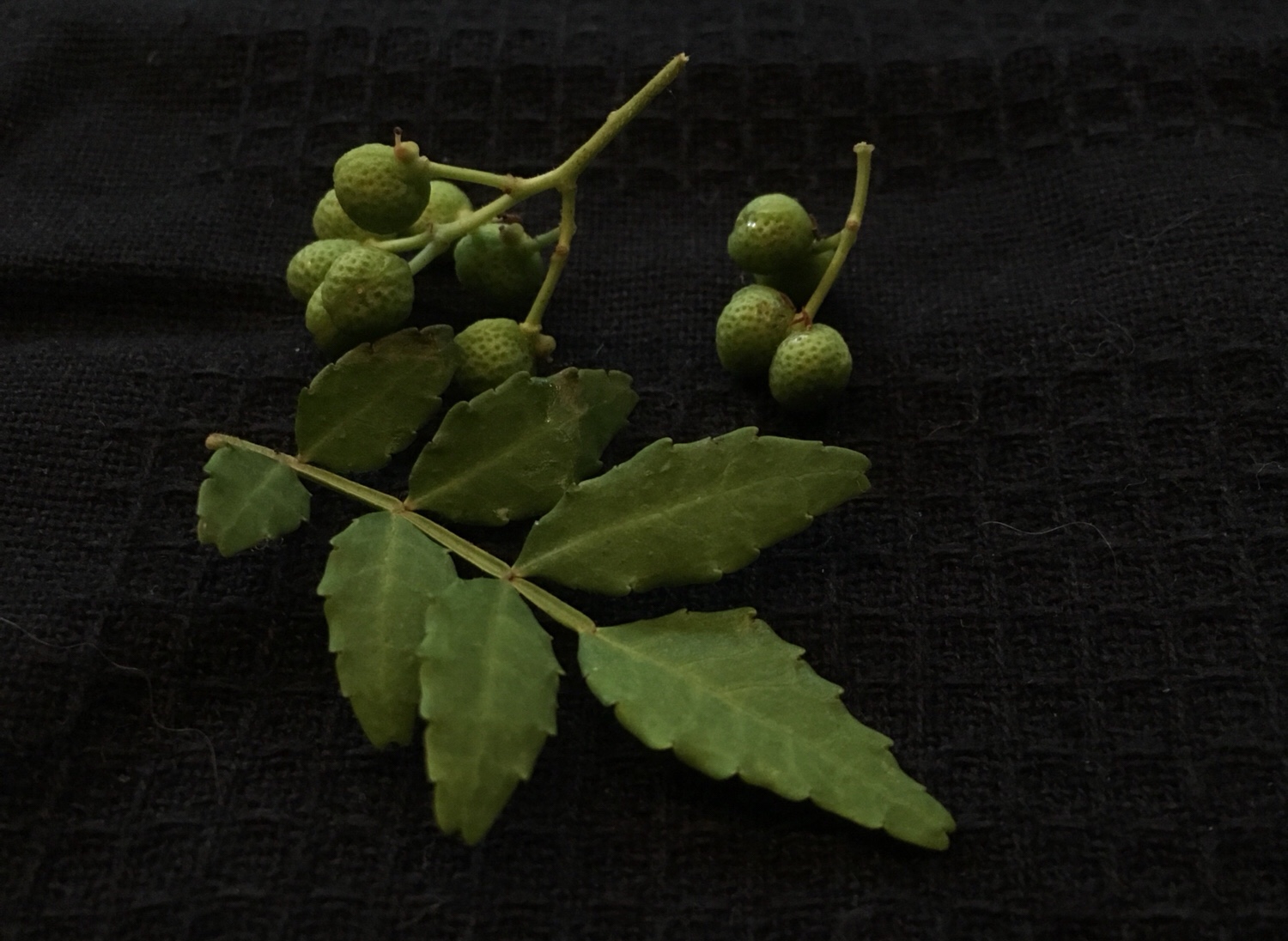
One of the first thing I planted in the garden 6 years ago was herbs: rosemary, mint, sage, parsley, basil and a sansho shrub. I wanted to be able to go down the garden when I was cooking and puck whatever herb I needed. The rosemary and mint did really well, and they are still there, growing and spreading! The basil and the parsley never survive the winter so I replant some every year. The sage survives the the mild winters but not the cold ones. The sansho? It grows at a pace I didn’t imagine! Actually after a while I realized there was already a sansho shrub in the garden but at a very inconvenient place so I took it and gave it to our neighbor. Sansho is great because you can use both the fruits and the leaves.

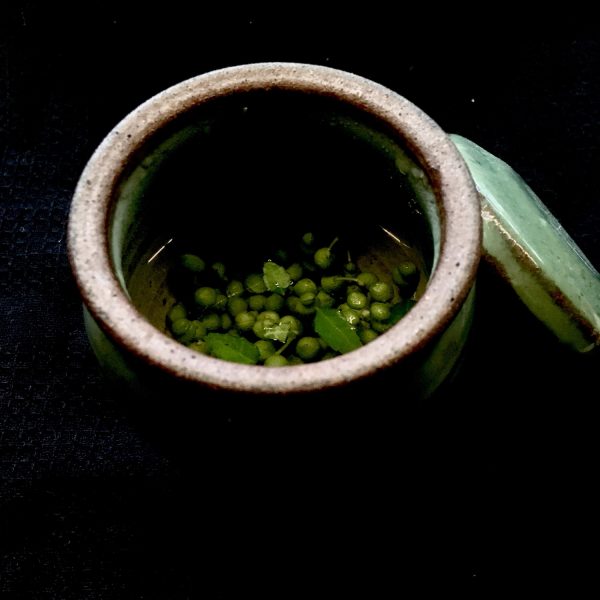
After trying a few recipes of simmered sansho with konbu… I decided to prepare them in a manner that will allow to keep them longer and eat them all year round. Indeed, the shrub is growing and the number of fruits too, but it is difficult eating more than four of five grains at the time because it is really very fragrant. I found a recipe of saumure for sansho so I have decided to try it. It was awfully simple to prepare but it needs to be kept 3 months before eating… so we’ll see in September…

Summer teaser

Last weekend and today were really giving a taste of summer. Harvesting from the garden: locats, plums, herbs, sansho, eating in the garden at night, playing tennis and going swimming or bodyboarding right after in the chilly water of the ocean to cool down the body… and now a typhon is coming, it rains and it is cold. It was just a teaser for the coming summer… I didn’t harvest enough locats to make more than fruit salad. But I harvested again about 15kg of plums this weekend and it’s a great time to do some plum job: ume jam, umeboshi, ume syrup…

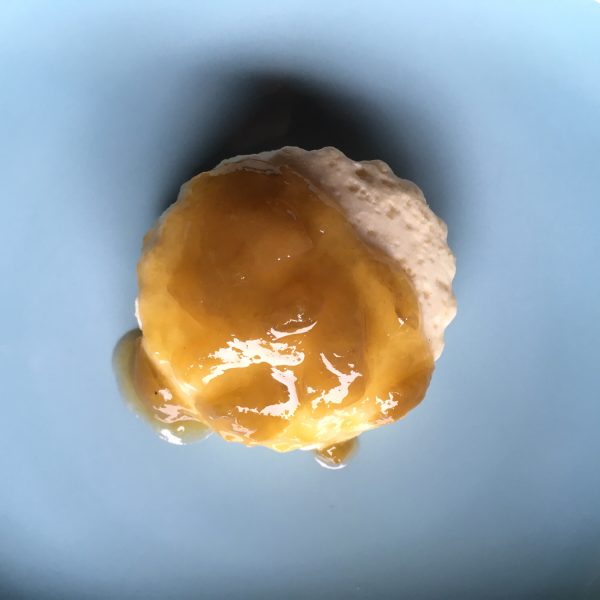
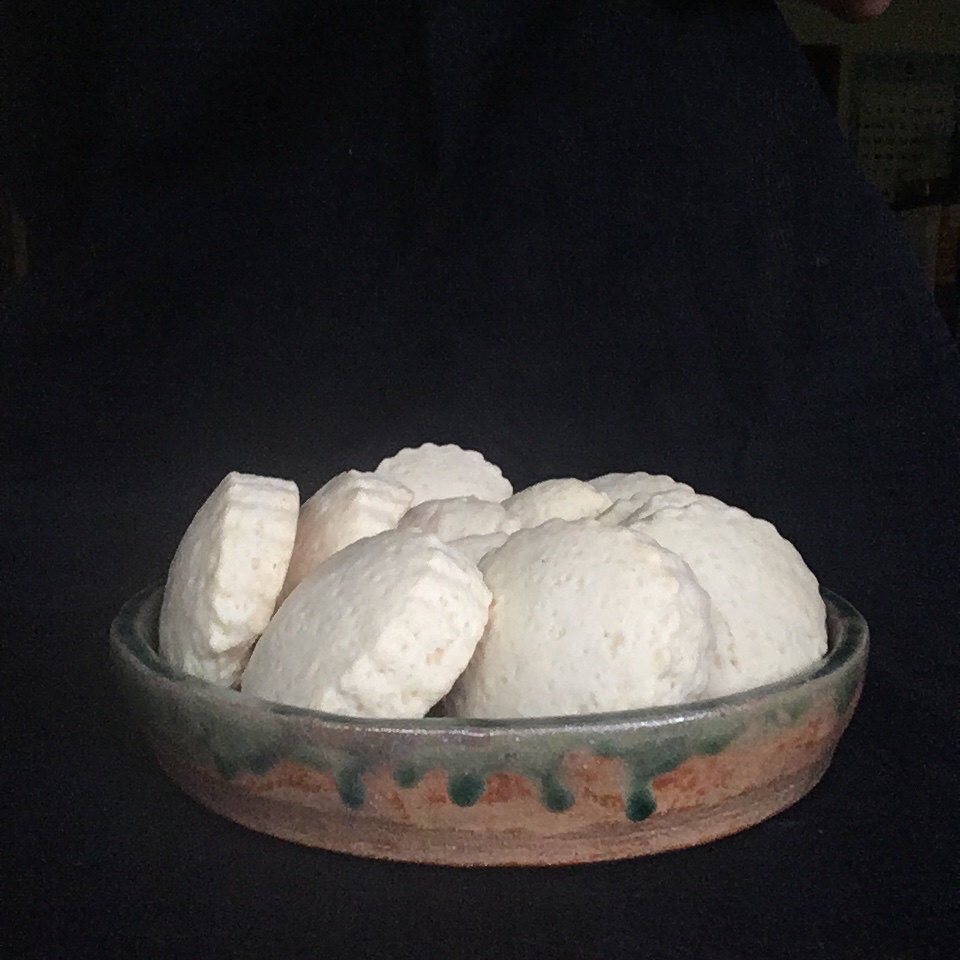
I like particularly ume jam because it can be eaten right away. All the other you have to wait between one week and one year… and ume jam is perfect with a batch of English scones!!!

The recipe is really simple. The same base as plum jelly except that you don’t use agar agar but instead I put the seeds of 2 apples in a tea bag and cook further, before pouring into boiled glass bins and closing.

Another quiche…

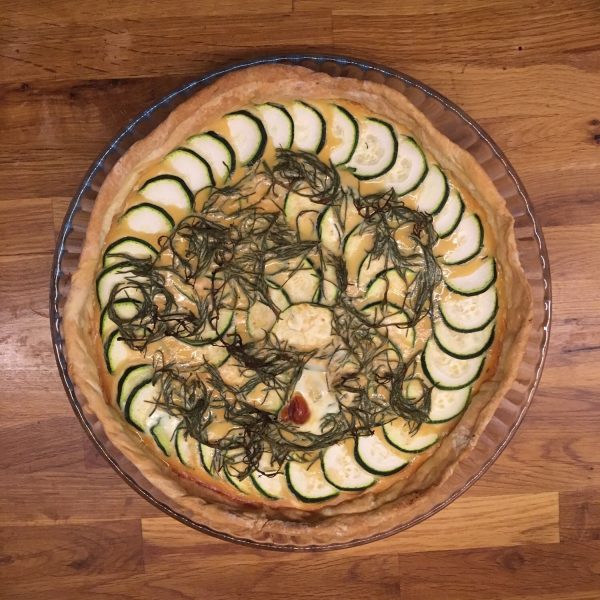
There’s nothing like a good quiche for dinner! I was missing not preparing some for a while, so I had to fix that. With the summer vegetables starting I bought plenty of zucchini at the farmers market because we love them and ones need to enjoy them when they are in season (the season in Japan is rather short and starts early). Zucchini are perfect for summer style quiche. I prepared them with okahijiki (salsola), this little plant I discovered last year. And I used miso in the egg mix to add a bit of texture and flavor. The result was a great one. Oh… and for the dough I went with a bit different recipe, something close to pasta dough, thin and crispy… Indeed while I was kneading the flour with an egg I realized it was the same start as making pasta dough (it crossed my mind to do lasagna for a second then…) but I finally added olive oil little by little to obtain a smooth dough but slightly oily compared to pasta. Something I’ll do again for sure!

Salsola and zucchini quiche

For the filling:

– 1 or 2 zucchini

– a handful of salsola

– 2tbs of miso

– 2 eggs

– some milk (or soya milk)

For the dough:

– 100g of flour

– 1egg

– olive oil

Mix the flour and the egg, add olive oil little by little and knead well. The dough must be smooth, shiny and feel a little greasy but not perspire oil!

Roll the dough into a thin circle and set on the pie dish (I used a low and large one).

Wash the vegetables, slice the zucchini and set them in the dough. In a bowl bit the eggs with the miso and the milk, add the salsola. Pour onto the zucchini.

Bake at 180deg for 30min or until golden.

I served it with some yogurt with herbs in.

Attention: miso is usually very salty so do not add salt in any of the mixes.

Rainy season?

Just back from Australia to Tokyo, and I find that the rainy season is getting near. The air is already quite humid and temperatures are mildly warm or hot. Soon it will be time to harvest the plums in the garden, even hopping it is not too late already… It’s been 3 weeks we haven’t go to the country house… I can easily imagine how green and lush the garden is and the hydrangeas will be all ready to bloom soon.

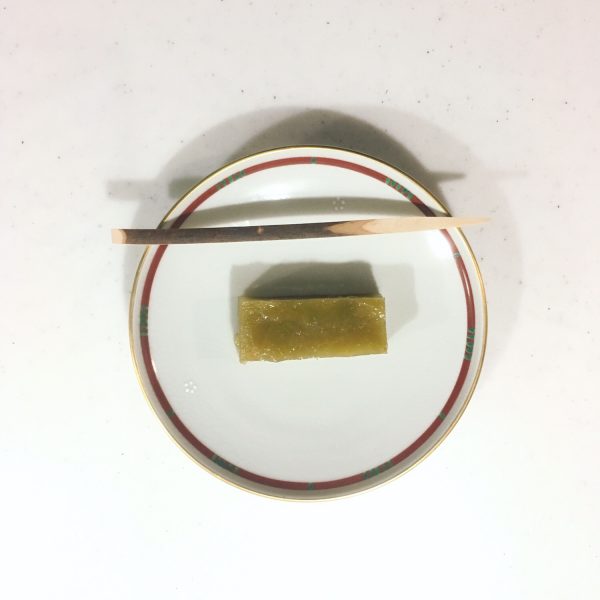
One thing I like to prepare with plums, other than ume-shu, ume-syrup and umeboshi is plum jam and plum jelly, something that you can enjoy right away and doesn’t have to sit for weeks or months. I am not very good at making jams and preserves but I keep trying. Jelly or yokan (ようかん) is much easier for me… but it uses only a little bit of fruits compared to all we have…

Japanese plum jelly – ume yokan

I used about twenty green large plums, sugar to your liking, agar-agar, and about 2/3L of water.

First wash and remove the stems of the plums, boil the water and add the plums, cook under cover at low heat until the plums are soft and the skin and flesh detach easily. Then add the sugar and the agar-agar (quantity will depend on how hard you like the jelly and how much liquid remains in your pan. Cook at medium heat for 5-10min and then pour in a dish. Wait until it cools down to refrigerate. After 2-3h you can serve, by cutting blocks out of the jelly. That’s it!

Fava beans and wakame

I’m a great great fam of greens such as asparagus, green peas, green beans, snap peas eda mame and fava beans. I could eat them all the time! Unfortunately the season for each is rather short but luckily they follow each other and overlap a bit so from March to August there are always some nice greens to eat!!!

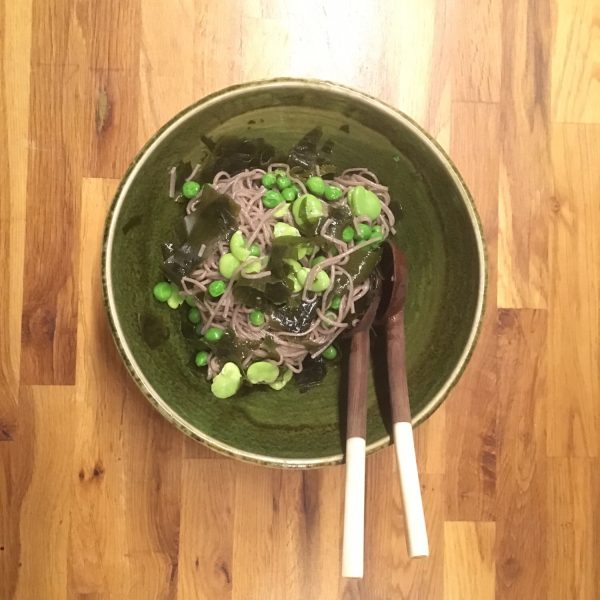
Now is the season for fava beans and green peas and I cook them quite often. A classic Japanese preparation of fava beans in Shojin cuisine is with wakame, and I really like the association of the melting soft bean with the more slimy and crunchy seaweed. In the books normal recipe the fava beans and the wakame are simmered with soya sauce and sake. I chose a lighter version in taste and I prepared them as a sauce for soba noodles and added also some green peas. It’s almost a classic for me since I often cook something similar at that season! Here is my recipe:

Fava bean and wakame soba

– a handful of fava beans

– a handful of green peas

– a bit of wakame (I used new wakame)

– soba noodles

– olive oil and salt (or soya sauce)

Shell the peas and the beans. Peel the beans (I realized recently that it is no need to blanch the beans to peel them, raw they are easy to peel too). Boil water in a small pan to blanch them. Add the wakame cut in small pieces and then drain and reserve. In a large pan boil water for the soba. Cook as instructed. Then rinse in fresh water and drain very well. In a bowl put the soba, pour some olive oil, add salt or soya sauce, then the vegetables. Stir gently and serve.

D-4 – snap peas

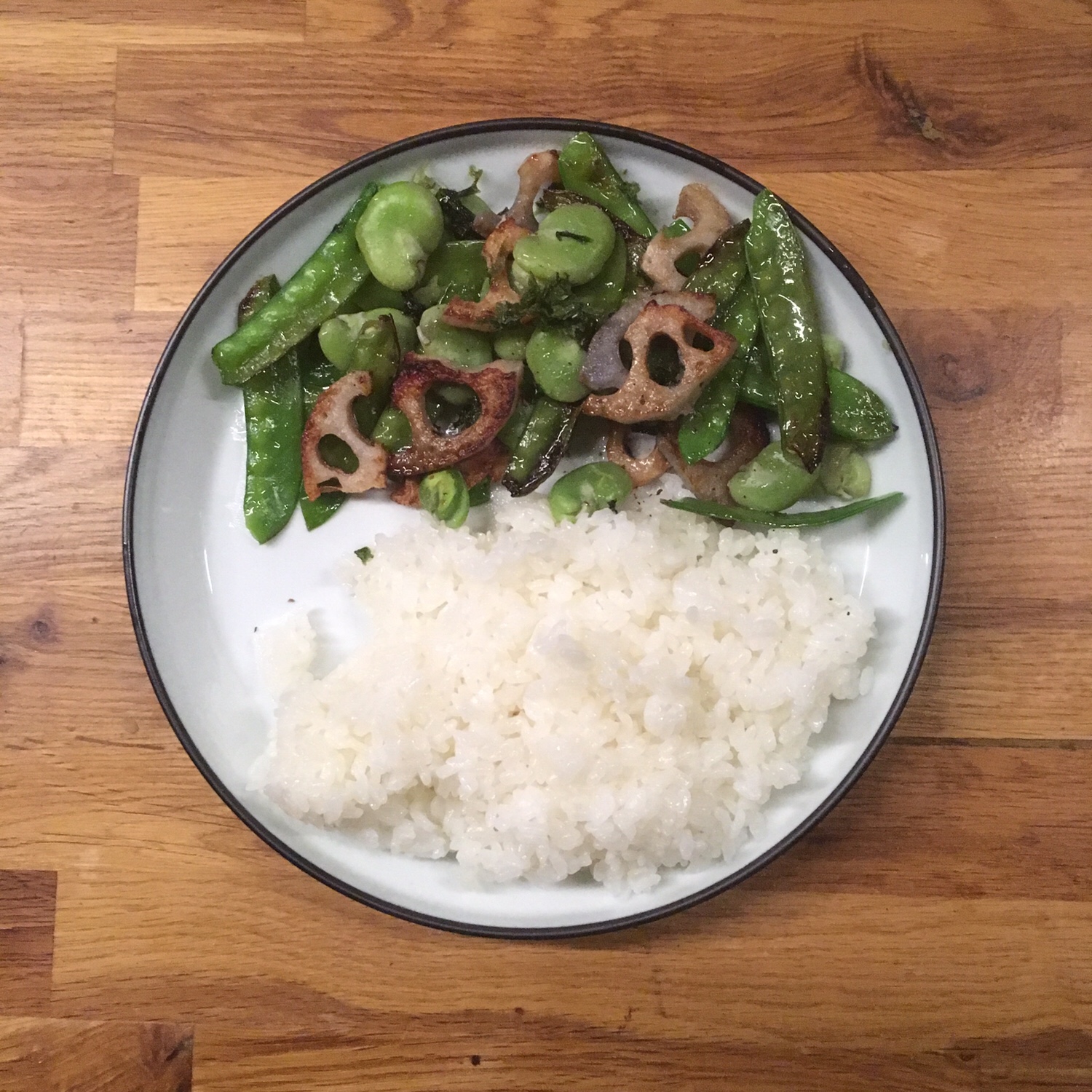
Oh my god! In 4 days my lab at the university is moving and things have gotten a little bit out of control. I’m very lucky to have a great crowd of researchers and students to help prepare this big change. But the moving is just one thing among many many others that I have to handle. There are so many things going on at the same time and days are so short… that these past few days cooking has unfortunately not been a priority. Hopefully the weekend gives a better chance to cook some more elaborated food… just a bit more. So this week has been all about rice/pasta/gnocchi with sautéed vegetables, in particular snap peas, lotus roots, fava beans and green peas. I also bought a few things that I haven’t bought in a long long time, in particular kamaboko. Kamaboko is a kind of fish paste made with white fish, egg and steamed on a wooden plate. It ressembles in some sense to surimi (I’m not talking about the horrible thing you can buy in supermarkets, right! But of homemade surimi (recipe to come any time soon!)). It is very convenient to use kamaboko in rapid recipes and it adds a bit of protein and a nice texture with crunchy spring greens.

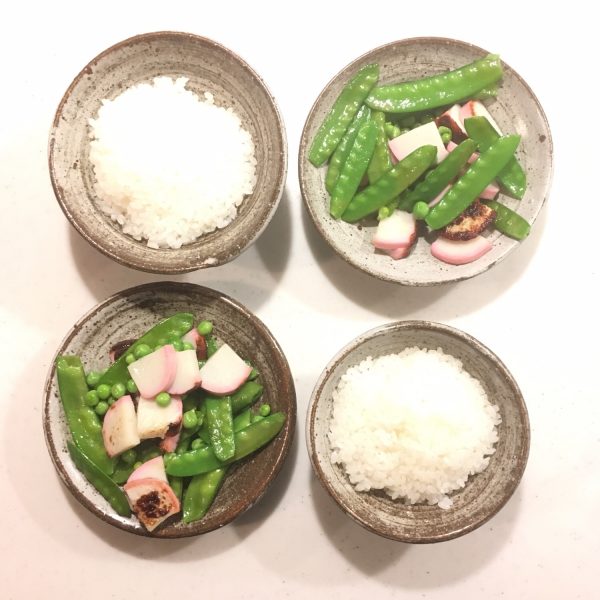
So last night I simply cooked some rice, and in a pan greased with a bit of vegetal oil I simply sliced a pice of kamaboko and added plenty of snap peas. And dinner was ready!!!

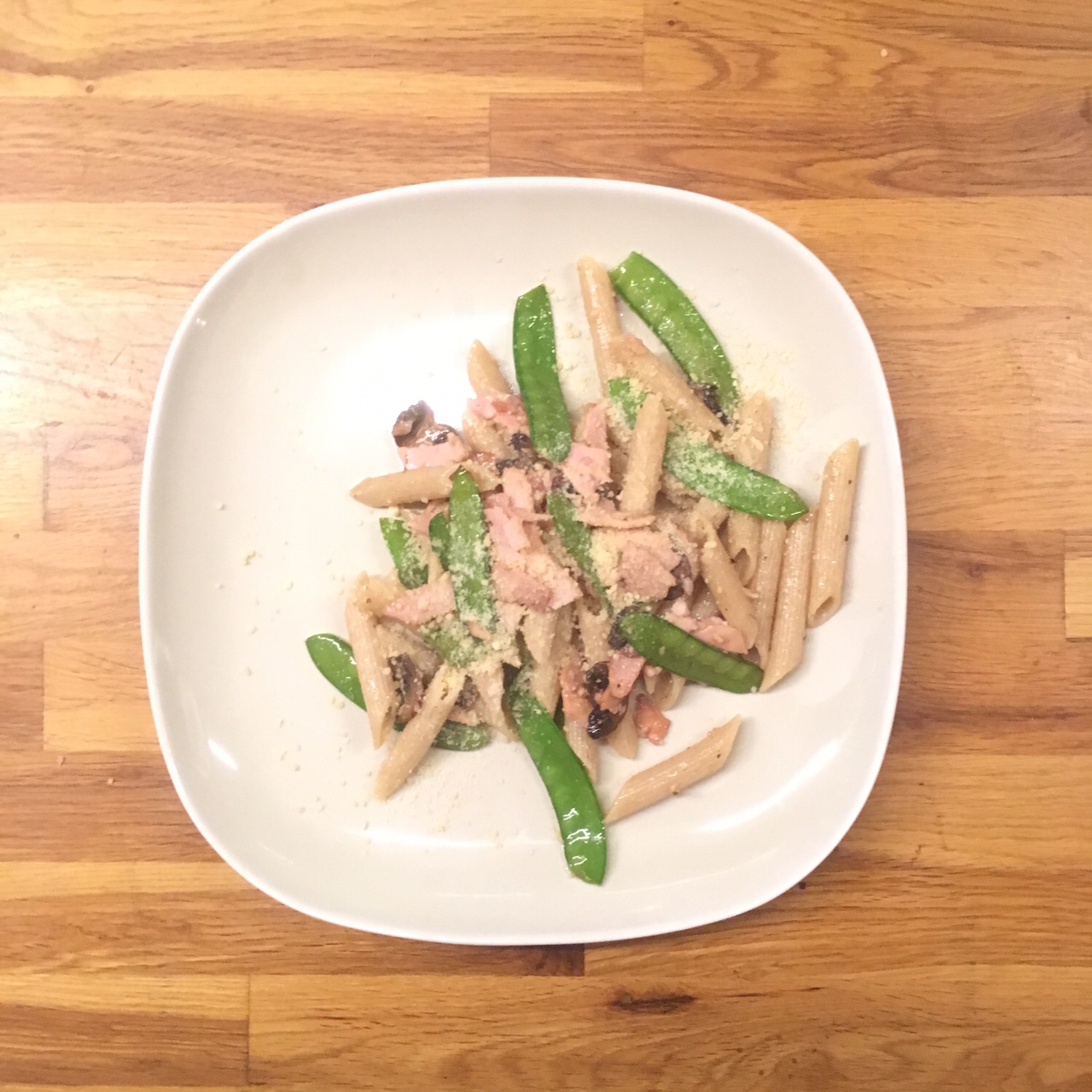
And as I said this week was really all about simple food, so here are a few other plates with snap peas that I cooked for dinner recently. This spring is all about snap peas!!! What about yours?

Proudly powered by WordPress | Theme: Baskerville 2 by Anders Noren.

Up ↑

Verified by MonsterInsights