Nimono – 煮物

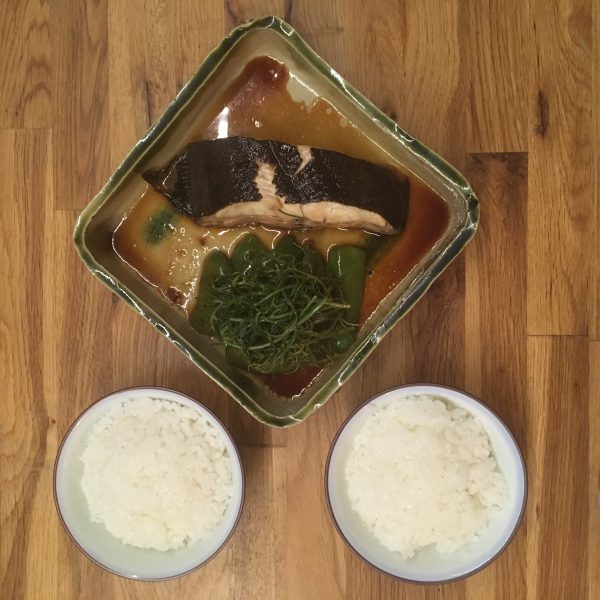
There are things that I love but never cook. I only have them in restaurants or cooked by someone else. One in particular is nimono – 煮物 a simmered Japanese preparation, often used for vegetables and fishes, or at least for those I eat. The base for the simmering is almost always the same: sake, mirin, sugar, soya sauce. As I don’t use mirin I replace it by a mix of rice vinegar and rice oil. This preparation is a classic in most fish restaurants and more particularly on the sea side. Kakui – かくい, near Katsuura was a very good place for that, but there are plenty everywhere they have fresh local fish. The simmered preparation suits many fishes, best when they have skin and bones. You can make a whole fish or large cuts. So when A. told me to buy this beautiful cut olive flounder (ヒラメ) and we ended with it in the fridge as I was at first a bit annoyed with the cutting and how to prepare it… To be frank, I don’t like cutting and preparing fish too much or rather I don’t mind doing it but then I don’t like eating it anymore so I didn’t want to touch the raw fish too much. A. was suggesting to cook it with soya sauce, so I thought grill… but then we both agreed on simmering. I think that’s what A. had in mind from the beginning but he just didn’t know the term… and I never do it because I thought I took much time than it actually does, so it didn’t come to my mind. So here I am preparing my flounder. And because simmered fish goes well with greens, I added some summer vegetables: okahijiki and green bell peppers. Served with or without rice, but honestly the sauce with rice is just divine, and I’ll do it again and again!

So here is my recipe. Ginger is optional but I highly recommend it.

Simmered fish and greens (for 2 servings)

– a fish or a large piece. I used olive flounder.

– some greens: I used okajiki (salsola), green bell pepper, but okra are also a common pairing

For the sauce

– 3tbs of soya sauce

– 3tbs of sake

– 1tsp of rice vinegar

– 1tsp of rice oil

– 1tsp of sugar (optional)

– finely cut fresh ginger (optional)

In a fry pan mix all the ingredients for the sauce, add the fish and cook at low heat under tight cover. After 8min add the vegetables washed and adequately cut. Cook under cover for 5min. Remove the cover and cook at high heat if there is too much liquid until a bit only is left. Serve with a bowl of rice.
Tofu ae – 豆腐和え

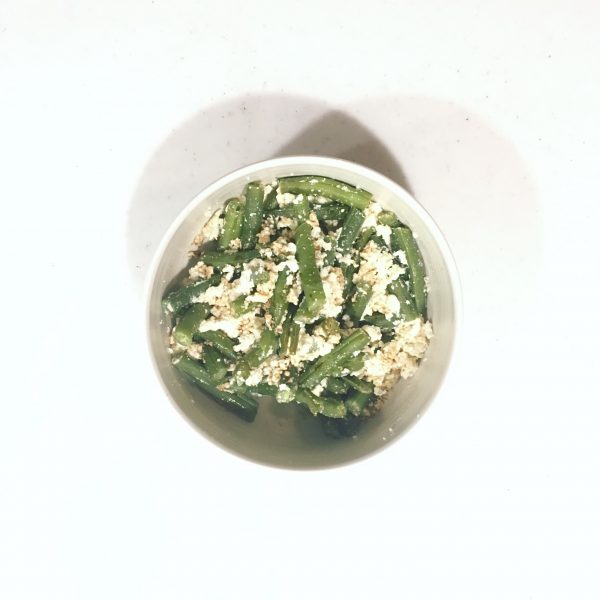
This recipe is a classic from Japanese cuisine and Japanese cha kaiseki cuisine. I’ve eaten it many times when going to typical Japanese restaurants and I learned how to make it properly when I was taking cha kaiseki lessons. I use the same base in a persimmon recipe I created and it’s called tofu ae. It’s a sort of vegan creamy tofu dressing in a sense, that you can accommodate with many different vegetables all year round. In the fall with persimmons, winter with spinach, in the spring with green peas, and now with green beans, edamame… A full version of the recipe would include a bit of dashi, but I prepared a simpler version with only tofu and sesame, and a bit of salt. Here it is

Tofu ae

– a piece of hard tofu

– 4tbs of sesame, white or black depending of color effet wanted

– a pinch of salt

Drain the tofu with a weight on top. Once well drained, squeeze in a clothe to remove more water and obtain a paste. Grind the sesame (if you don’t have sesame, or the tools to grind it, just use gomasio)

Mix the tofu and the sesame, add a pinch of salt.

Boil a vegetable of your choice: green beans, edamame, broad beans… and mix with the tofu dressing.

Potatoes Japanese style

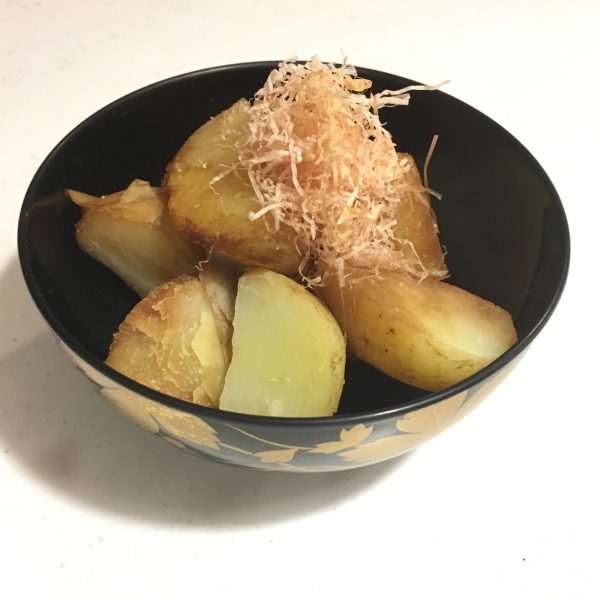
Day 2 for this week of freshly harvested potatoes. Today it’s a Japanese simple recipe that can be made everywhere, every time. Of course it is much tastier with new potatoes but it can work with old ones too. It has all the distinguishable flavors of Japanese cuisine: the cooked sake, the soya sauce, the sweetness, and the katsuobushi, well the umami as it’s called and as it’s all over cooking and gourmet magazines.

Simmered potatoes Japanese style

– a few (new) potatoes. Pick 3 midsize (billiard ball size) new potatoes per person for a main dish, 2 for a side.

– 3tbs of soya sauce

– 3tbs of sake

– 2tbs of brown sugar

– some katsuobushi, optimally ultra-thin cut (see below)

Wash the potatoes and cut them in four. In a pan, set the potatoes and cover with water. Start boiling under cover. When the potatoes are almost done, add the soya sauce, the sake and the brown sugar. Simmer a little and turn the pan so that all the sauce will pass over all the potatoes. Do not stir!! You may break the potatoes and end up with a purée!!

Cook at high heat will turning the pan once in a while. When the sauce is almost gone move in serving plates or a bowl. Top with ultra thin cut katsuobushi (itogiri katsuobushi – 糸切り鰹節). Eat right away or after it has cooled down. Enjoy!!!

Potatoes week

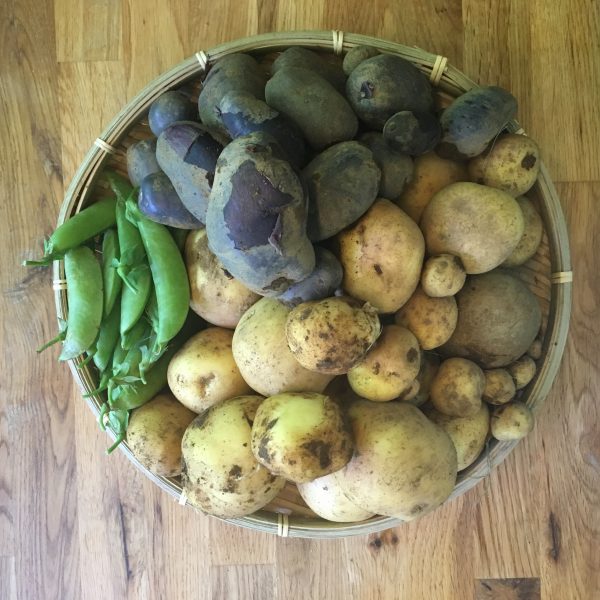
In March we planted potatoes in our new kitchen garden. We went for two species: some melty white potatoes and some purple ratte potatoes. It was our first time ever growing potatoes on our own, so I guess we made some mistakes: soil too rich and too compact, lack of leaves clearing… but I still harvested a few plants and we got a decent amount of potatoes. Enough for the two of us, to eat fresh and new (I am not good with preserving food for long). So I’ve decided this week will be a potato week! And I’ll share with you some of my favorite recipes. Stay tuned for the first recipe!!!

Plum plum plum…

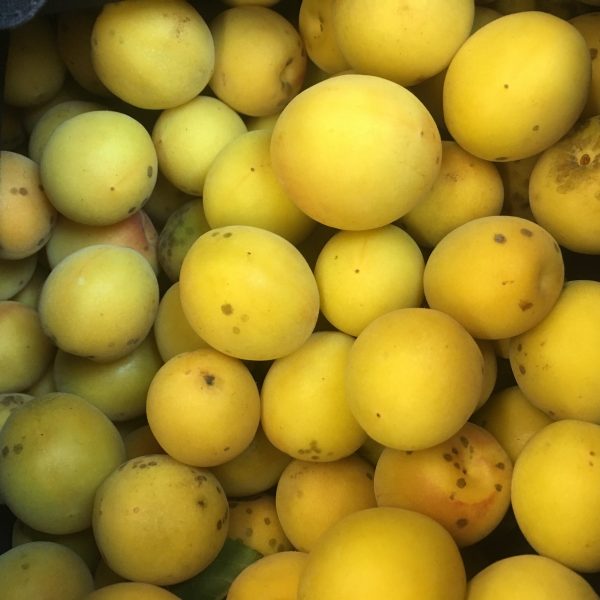
June is the time for the rainy season, and every day the weather reminds us that, but it is also the season for plum harvesting and plum pickling.

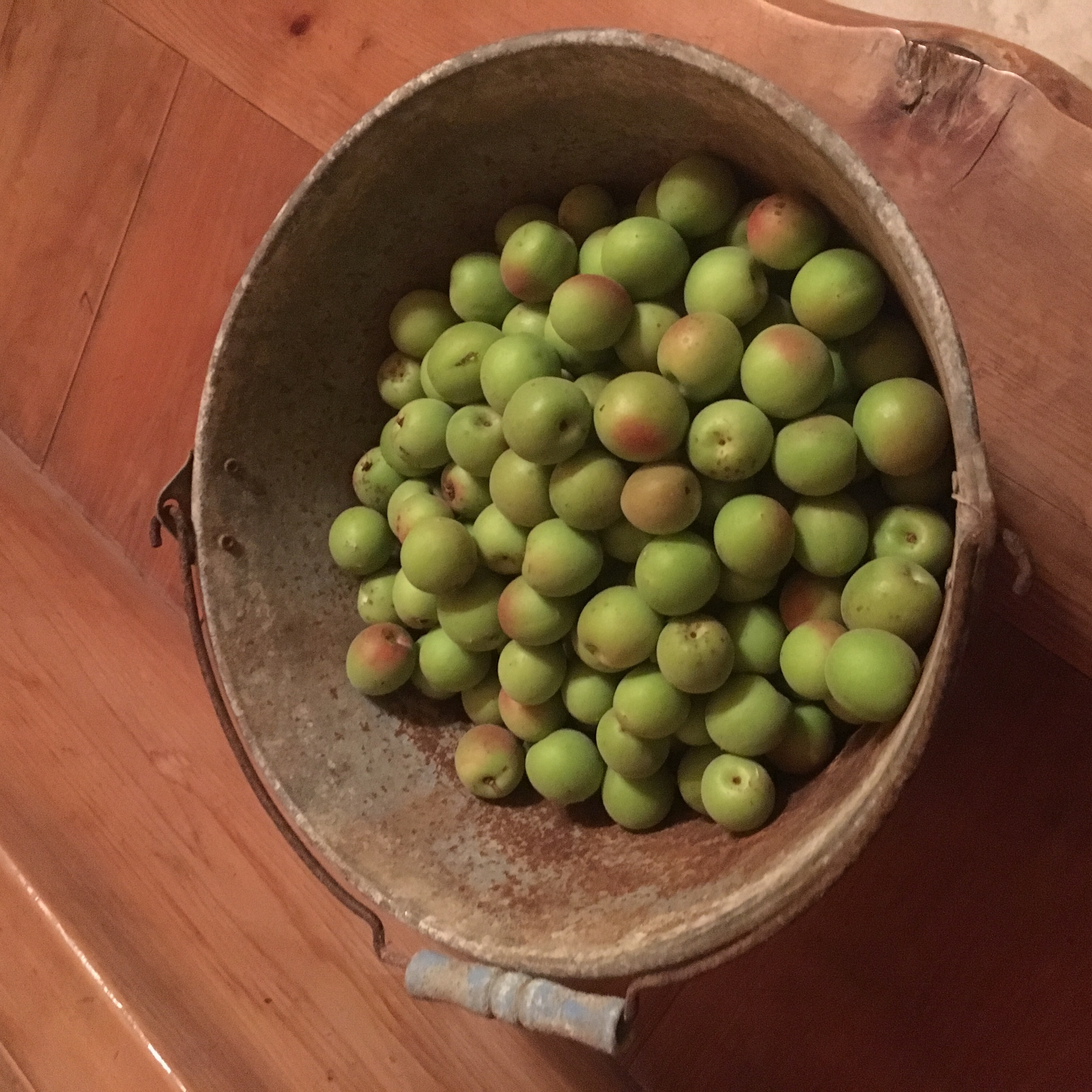
Even though I trimmed many of our plum trees this winter, the amount of fruits they produce it still enormous and it’s also time for giveaways. 1Kg here, 3Kg there… yet the harvesting is tedious and with one rainy day following the previous one, it doesn’t make things easy.

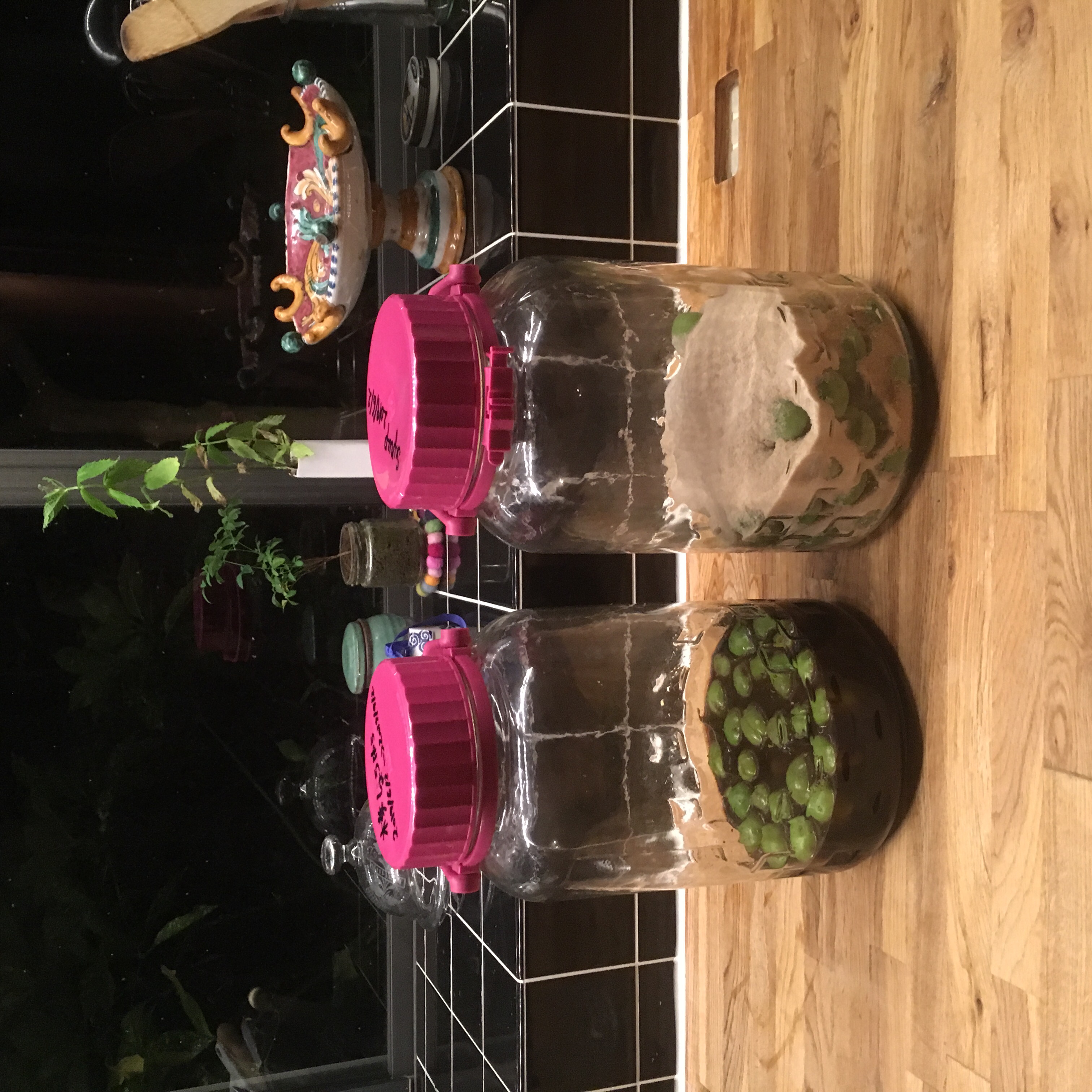
Once harvested I pickled quite a bit of our plums. I usually make plum wine and plum syrup with the green plums and umeboshi with the yellow ones (which is about 7 to 15 days after harvesting the green plums).

But because only our visitors drink umeshu and I still have plenty from last year, and we drink little syrup and again last year I made plenty, I decided to try new recipes. One new syrup recipe and one of savory plums in soya sauce. Because the preparation has to sit for three months I have no idea what it would taste like but just wanted to share that recipe because it looks really nice.

Soya sauce pickled plums

– 1kg of green Japanese plums

– 1/2L of soya sauce

– 4tbs of brown sugar

– 2 pieces of dry konbu (4x4cm)

– a handful of katsuobushi flakes.

Wash the plums and remove the stems. Dry them well. Pick them to make a few small holes in. In a clean and sterile bin, set the plums, add the sugar, the konbu pieces cut in four, the katsuobushi flakes. Cover with the soya sauce. Set to rest for 3 months. Turn the bin every week. We’ll see in the results together in 3 months!!

Have a good week!

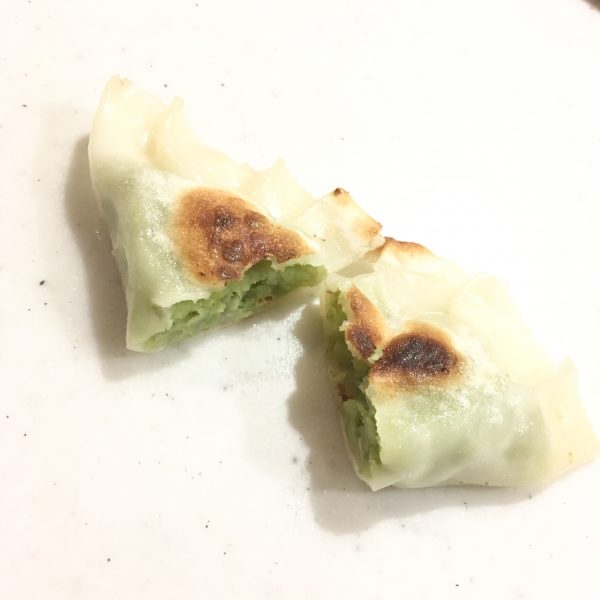
Fava beans gyoza

I could have started a “fava beans week” and write everyday a new recipe using them, whether Japanese, Italian or French… but I was alone these days, A. traveling again for work, and my work is kind of busy… a lot of things have suddenly started to move forward since February, after months if not years waiting for that… yet everything decided to move at the same time so my hands are more than full… but I cannot complain too much, can I? So the fave beans week ended up being nothing… sorry for that, but you can check my past recipes here and here.

But while work keeps me busy, it doesn’t prevent for my mind to wander and invent new recipes. And this recipe is something that I have thought about for quite a bit now. I first thought about ravioli, but guessed it would be too common, and reminding myself (1) how much we love gyoza; (2) how delicious the butternut gyoza I made were; (3) how easy it is to make, I could only try.

Let me share with you this delicious recipe!

Fava beans gyoza (makes about 16 pieces)

For the gyoza dough:

– 50g of bread flour

– 50g of pastry flour

– a pinch of salt

– 50cl of tepid water

For the filling:

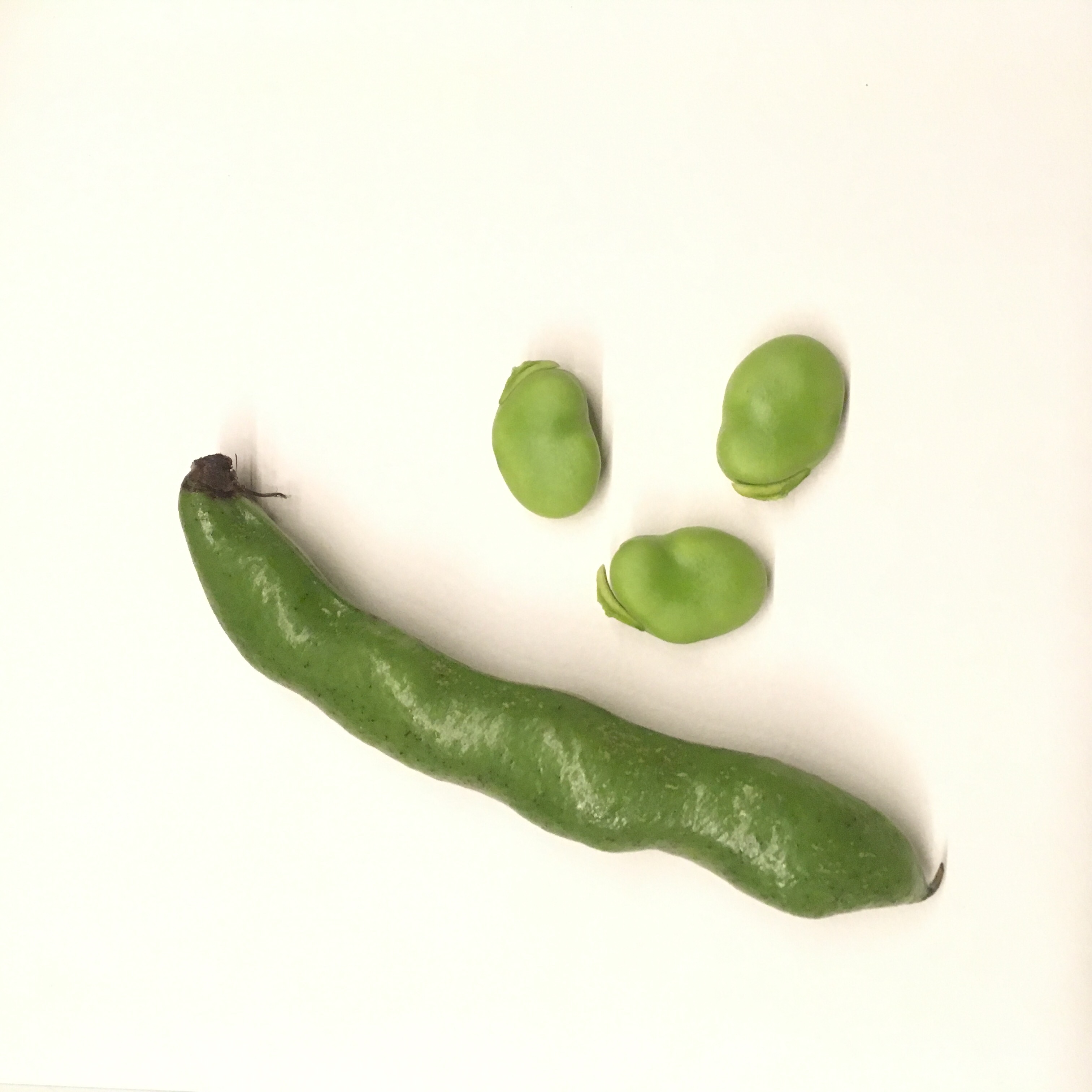
– 20 pods of large fava beans

– salt and pepper

For the dressing:

– 20 sansho leaves (kinome) or a small piece of fresh ginger

– 2tsp of soya sauce

– 3tsp of olive oil

Prepare the dough by mixing the ingredients. Make a ball and leave to rest for 30min.

In the meantime boil the fava beans and peel them. Crush them and add salt and pepper.

Chop finely the kinome leaves (or the ginger if you use ginger). In a small bowl mix with the soya sauce and the olive oil.

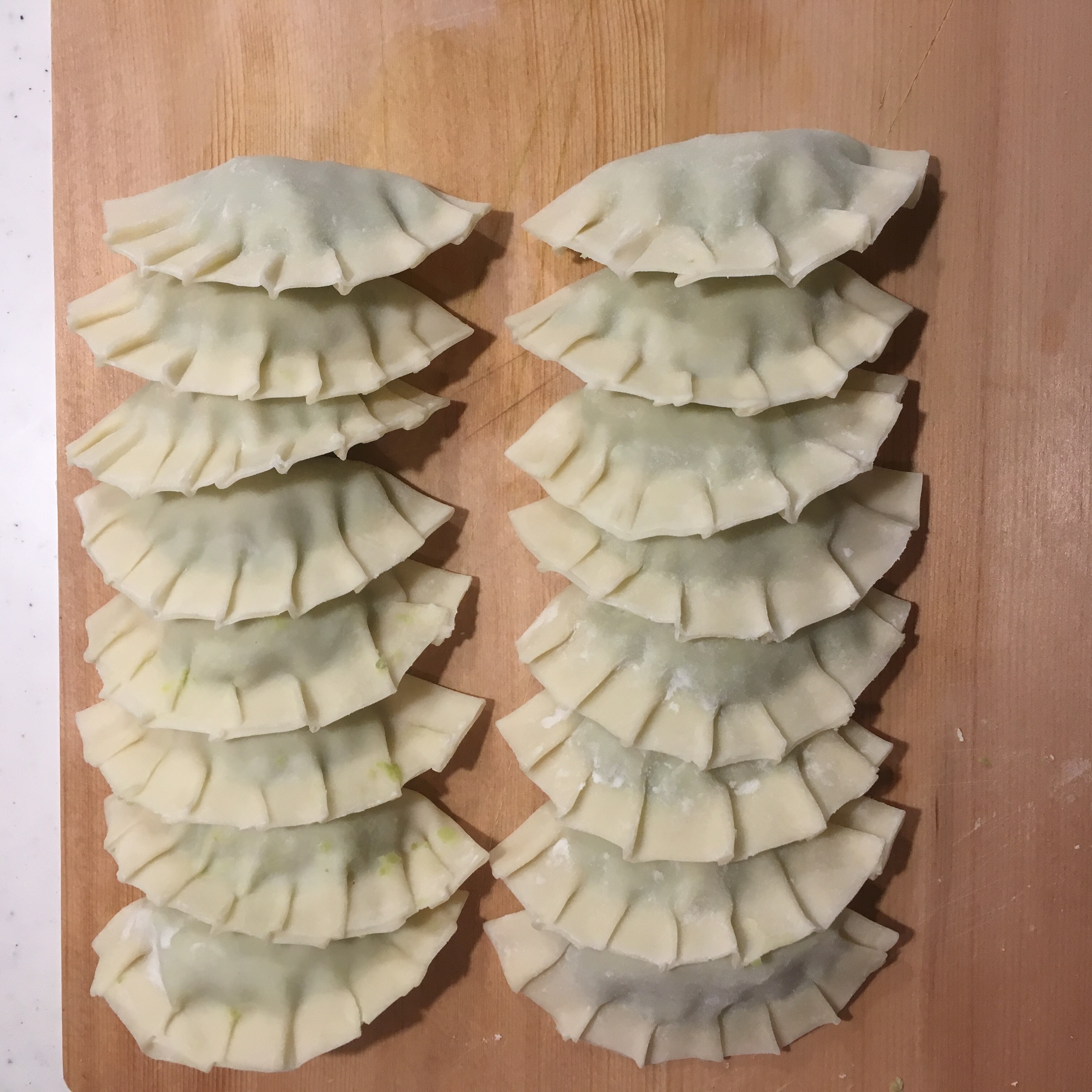
Now 30min should have passed. Make a stick with the dough and cut in 16 equal parts. Make 16 small balls, and roll them in a 1mm thick round of dough.

I each round set a tsp of the crushed fava beans and close the gyoza with a bit of water on each side of the dough.

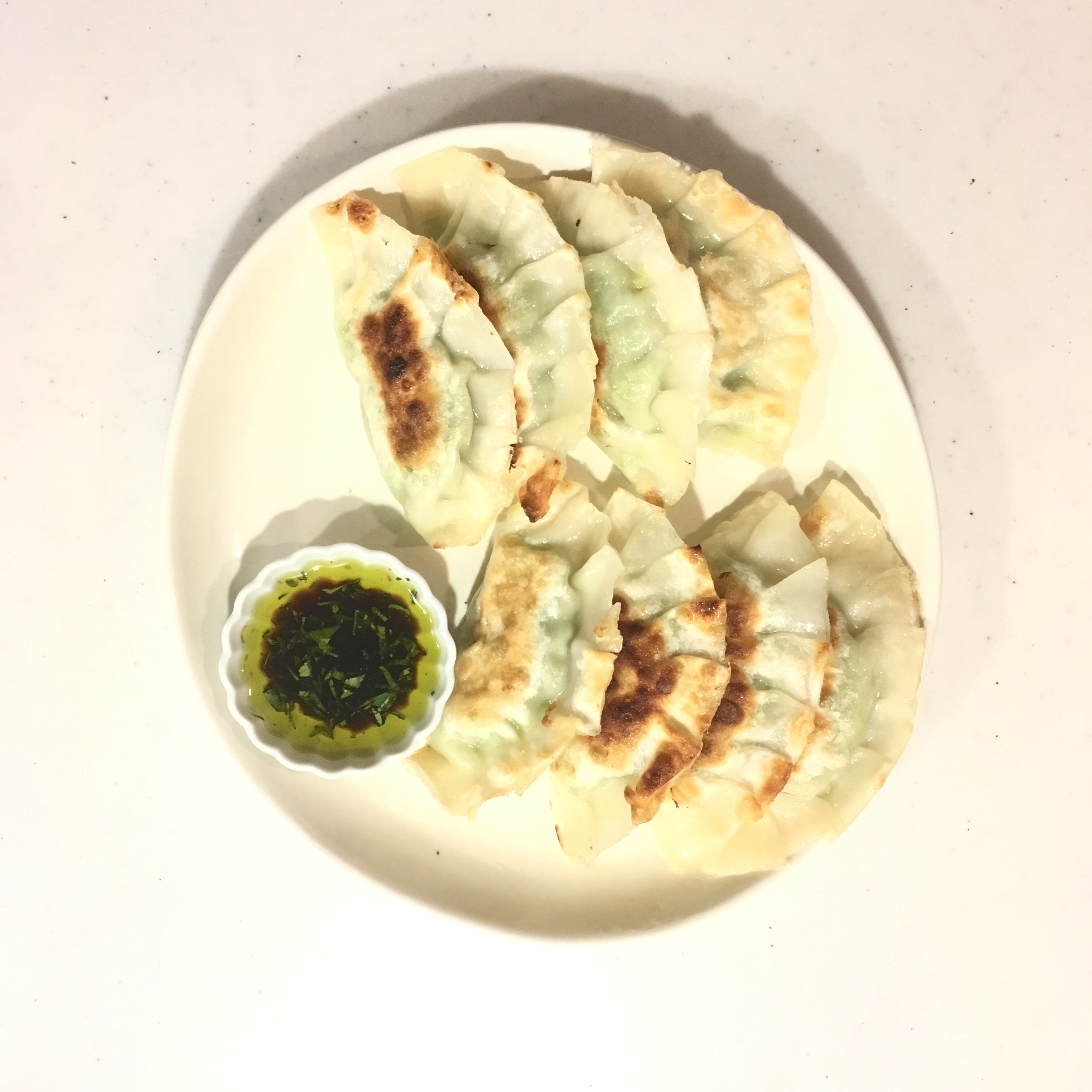
In a large greased frypan, add about 5mm of water and cook at high heat the gyoza. When the water is gone reduce a bit the heat and then flip the gyoza.

Serve with the dressing in a side bowl to dip them in. Enjoy!!

Urui

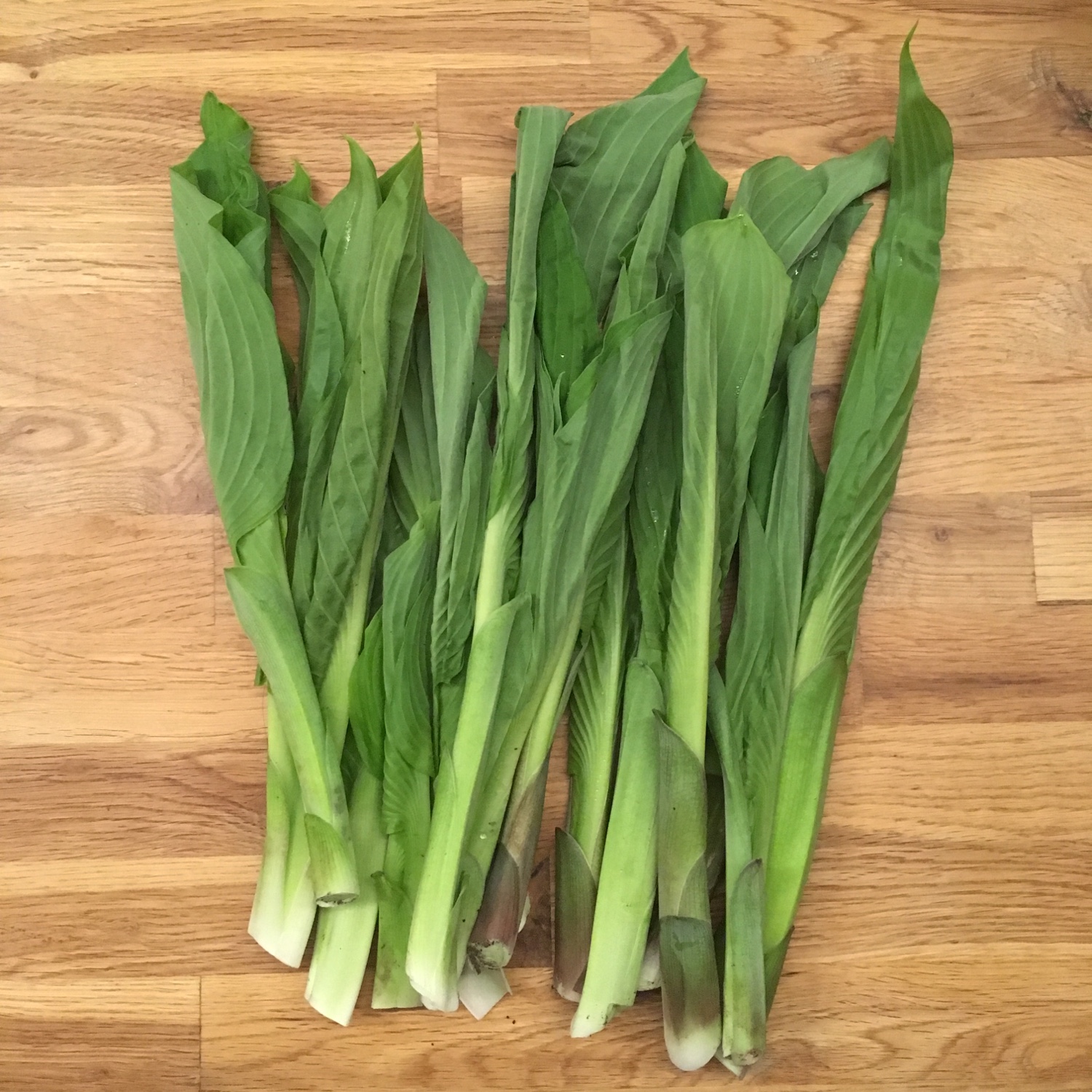
In the series of spring greens now is the time to talk about urui – うるい or hosta in English is not really a wild plant but rather something that grows freely in gardens. Their beautiful leaves and flowers are a nice ornament but what is most interesting is the leaves right after sprouting as they are edible and particularly delicious.

In Kanto area the season is much past for that and I don’t recall seeing any at the farmers market, and we don’t have any (yet) in our garden, however our friend K. in the Niigata mountains has plenty in her garden, so we left her with a huge bundle of freshly cut leaves.

After removing corollas and washing the leaves carefully they are ready to be prepared.

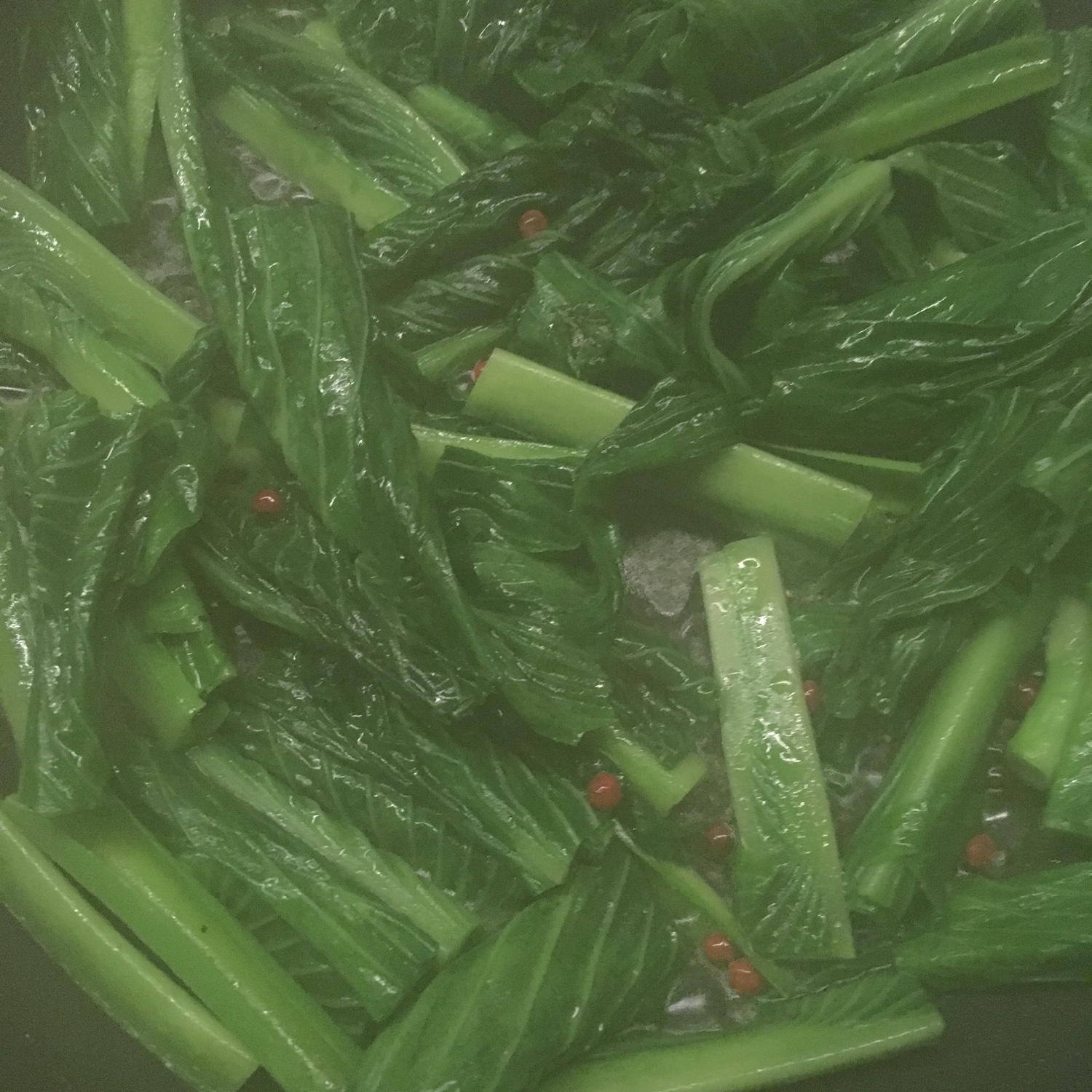
My favorite way of eating them to enjoy their fresh and crispy texture is to simply cut them in 4cm parts and cook them first in a little of olive oil while stirring, then add a bit of water and a few pink peppercorn and stop cooking when they are a vibrant green. Served as a side dish they are perfect.

Wild mountain plants

More than 10 years ago our friends K. and S. invited us to their home in the Niigata mountains to go picking wild plants – 山菜 – sansai with them, and to cook and eat them together. Of course we couldn’t say no, and we had an amazing time with them walking deep in the forest, picking all the different kinds of wild plants, seeing wild animals and then learning how to prepare them…

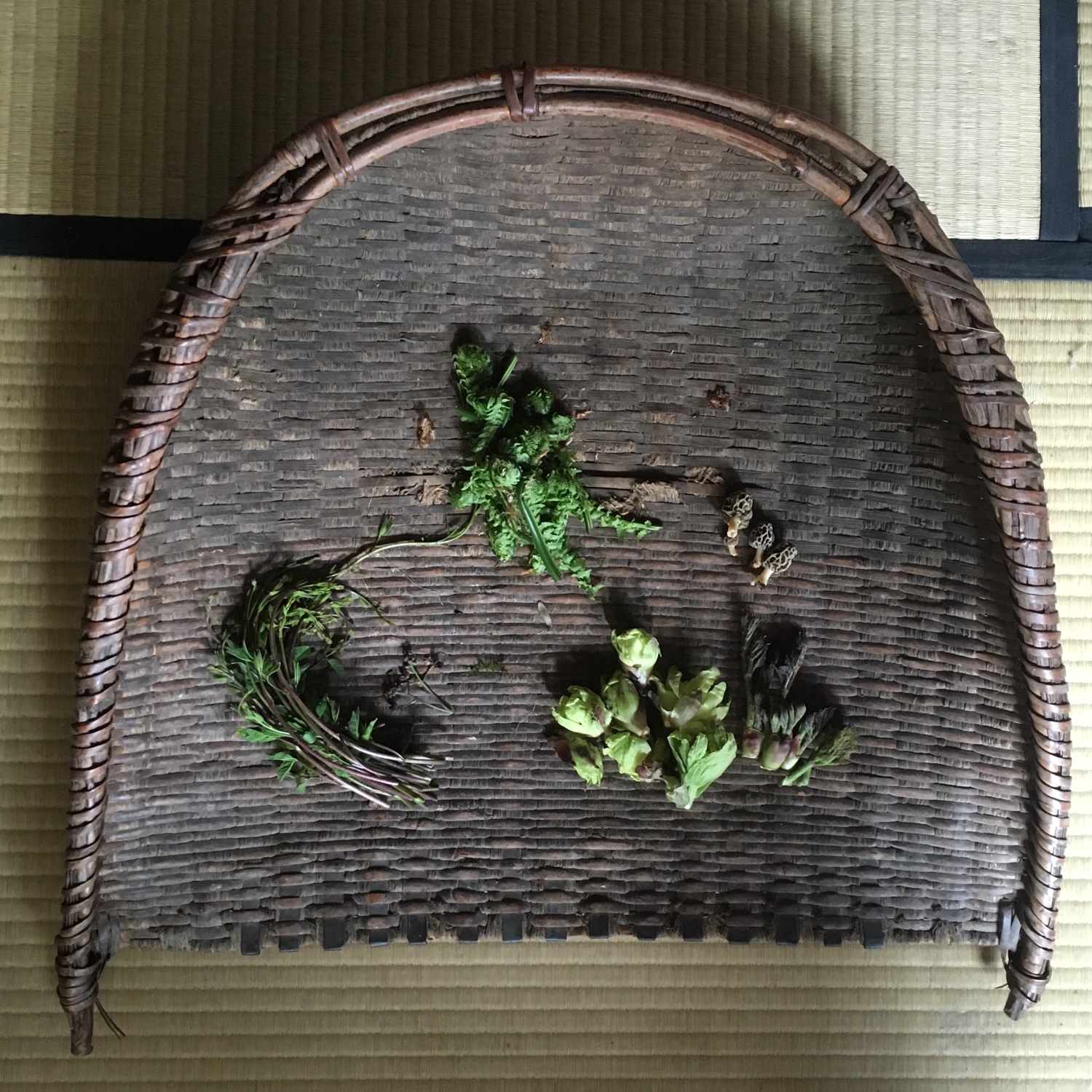
With the super long golden week, we decided to go and visit K. for a short trip to Tsunan and to go wild plants picking again. Since S. has past, we didn’t go as deep in the woods as we did before but we went for a long walk in the woods and picked enough wild plants for a nice lunch. The winter has stretched rather late in April with huge snowfalls and there was still quite a bit of snow, so we were a week or so too early. Here is an illustrated list of what we found though:

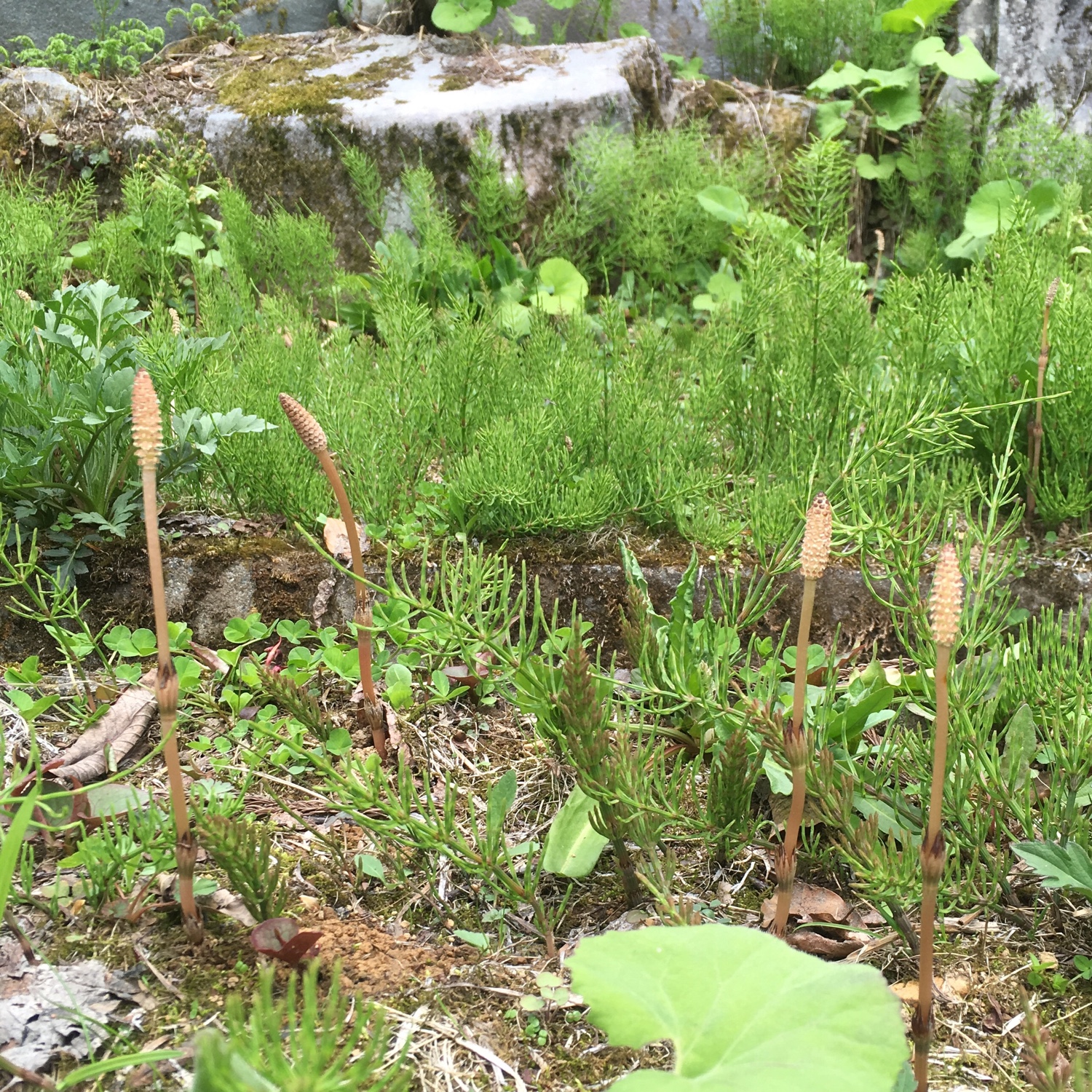
– つくし – tsukushi – horsetail

This little white flower can be easily found everywhere. Always take those that have no pollen. For preparation see my post here.
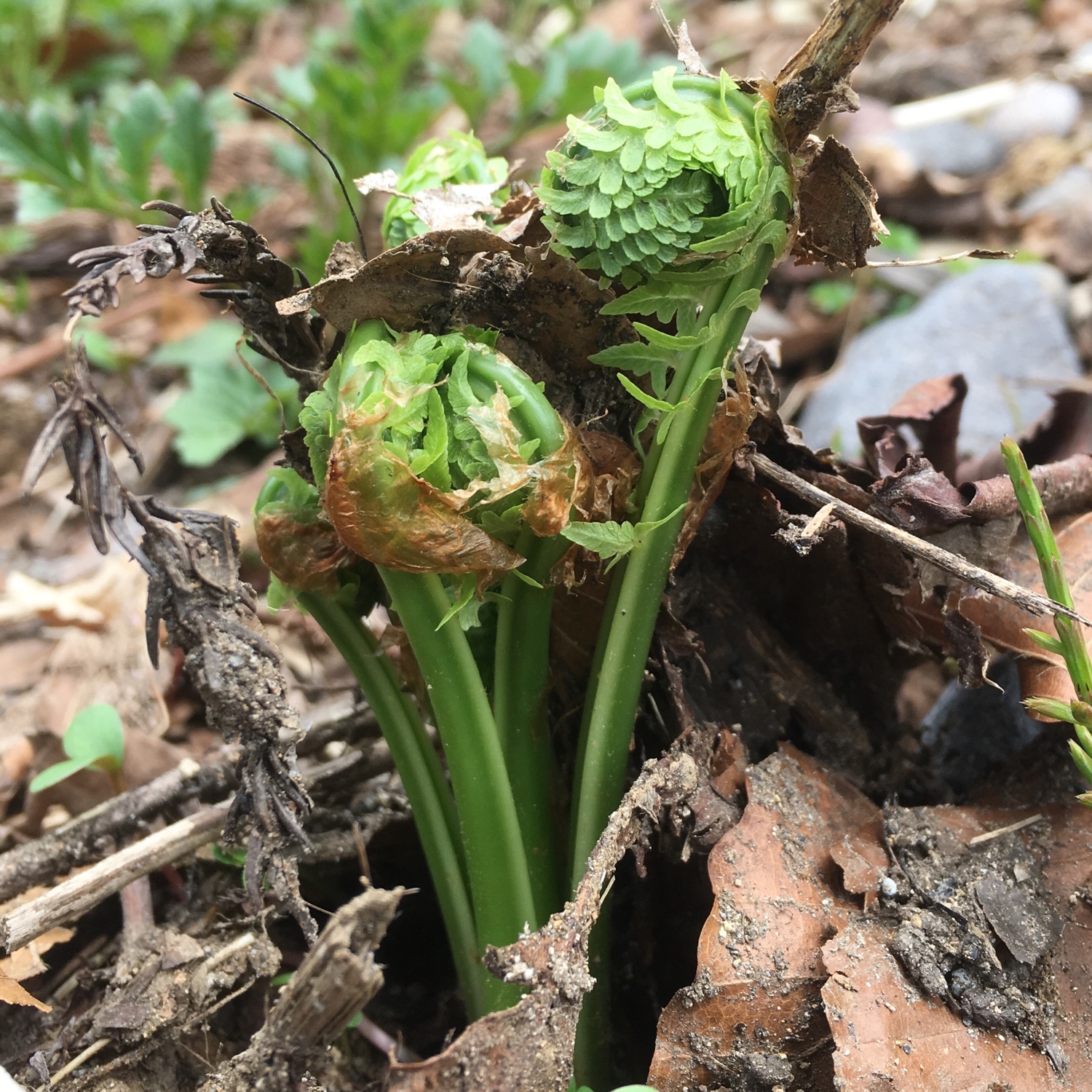
– こごみ – kogomi – fern sprouts

They are easy to spot, easy to pick and super easy to cook. I find them as easy to prepare than wild asparagus: in omelets, with pasta… they are really the simplest of the sansai and the more accessible in terms of flavor and texture.
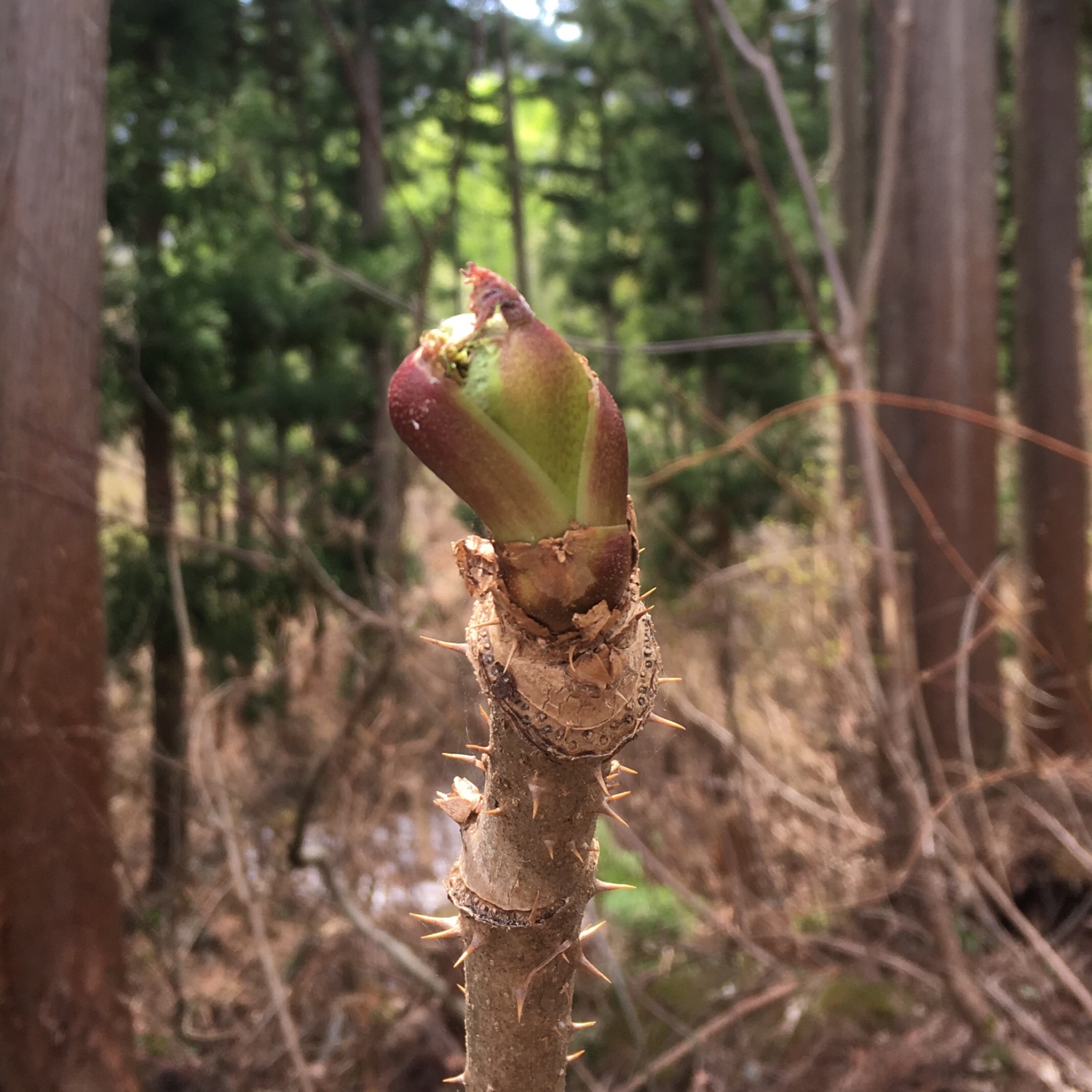
– タラノメ – taranome – angelica buds

They grow at the head of wood sticks. The one in the picture is a little young and they need to have a few leaves out. These ones are really delicious in tempura and require little handling.
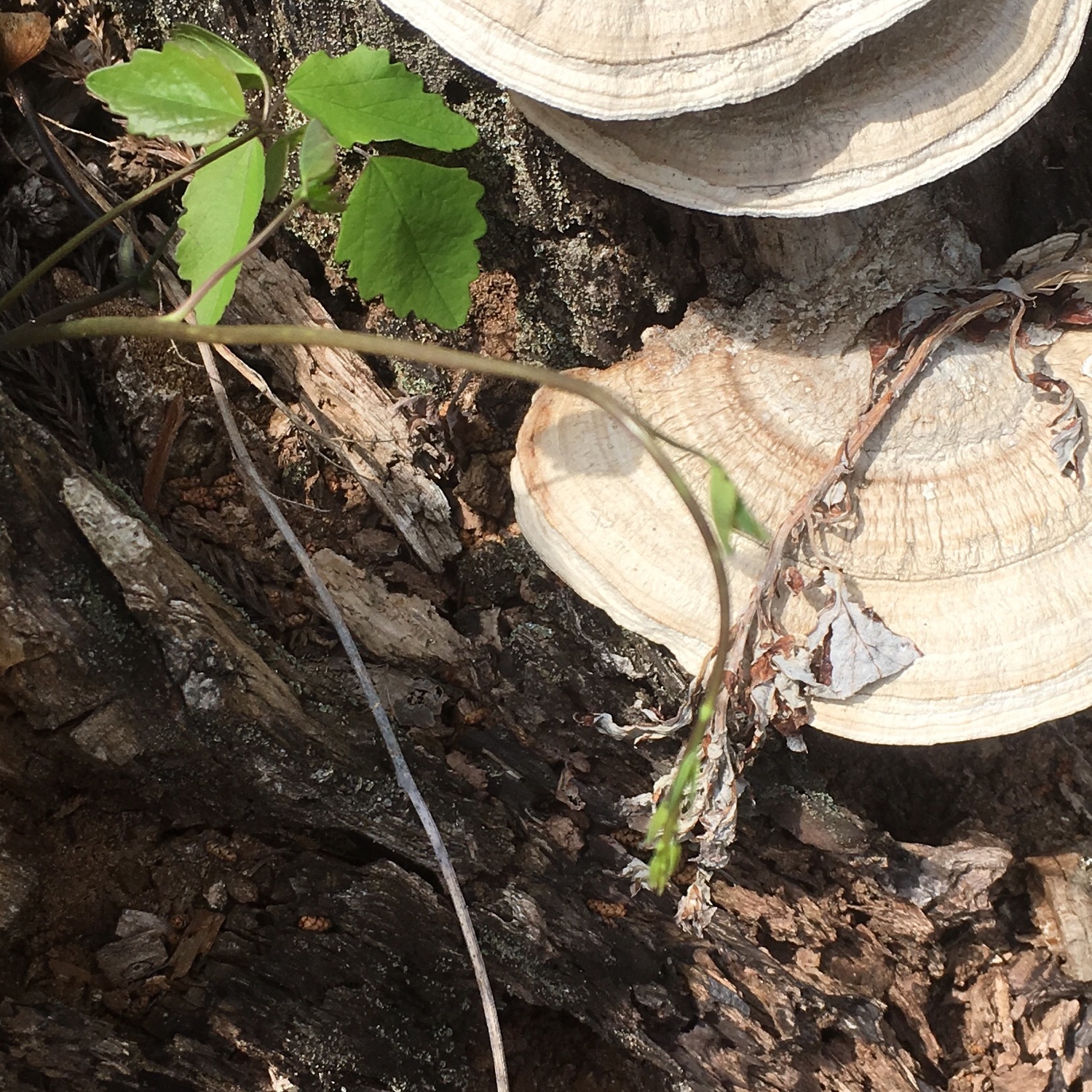
– 木の芽 – kinome – chocolate vine

This little green sprout that grows in the midst of other trees sprouting is the hardest to find, but once you’ve spotted a tree, easily recognized by its leaves, it is easy to find the sprouts. Washed and eaten raw, or cook, it is fresh and crunchy.
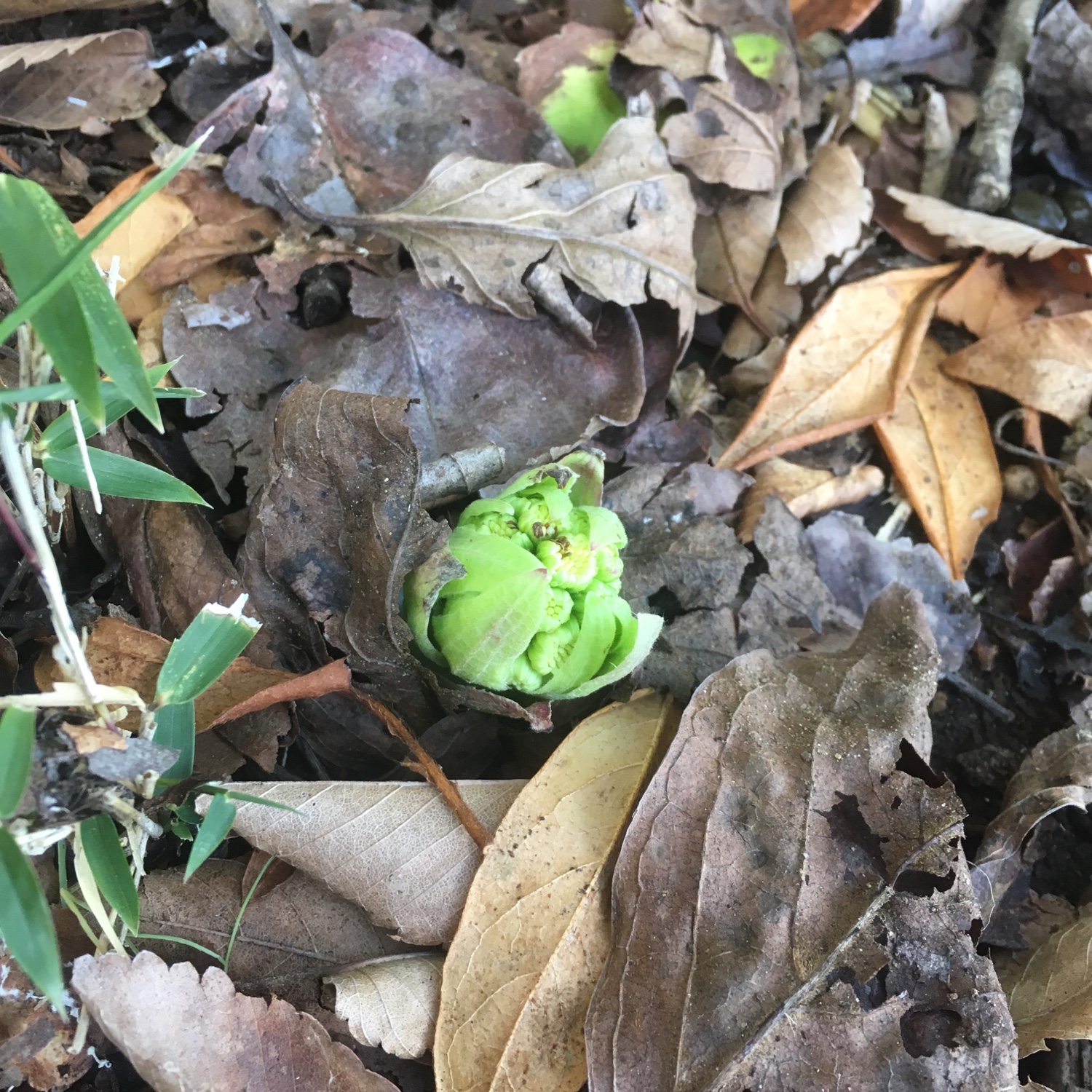
– 蕗の薹 – fukinoto

In the mountain fukinoto grow right after a patch of snow has melted. So spot a patch of snow, and look at the edges. They are best when just sprouting. They can be as big as a ping pong ball. There taste is very strong and specific. Probably the most difficult to accommodate and cook of all. See my posts on fukinoto here.

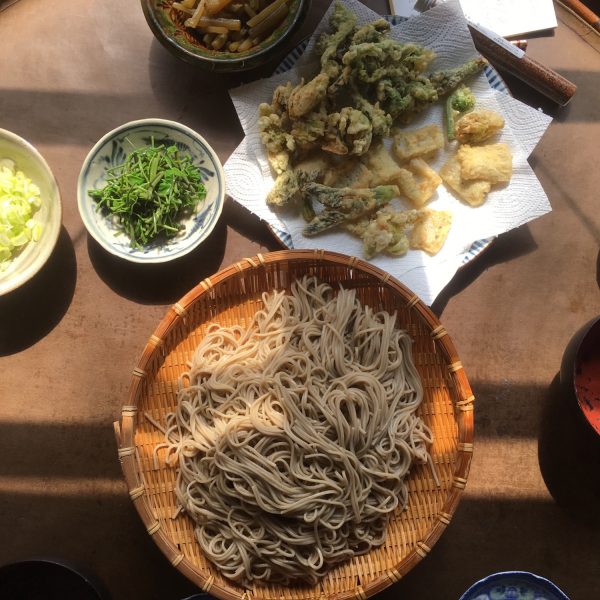
There are many others wild plants such as zenmai – 薇 – osmunda japonica (with me on the below picture), yama udo山ウド, tori ashi shouma – 鶏足升麻… we also harvested a bit of some, so some others… we also found morels. we had taranome, fukinoto and kogomi tempura, kinome salad and tsukushi just heated in soya sauce and dashi.

Now the golden week is getting to its end… time to go back to work soon!

Green plate

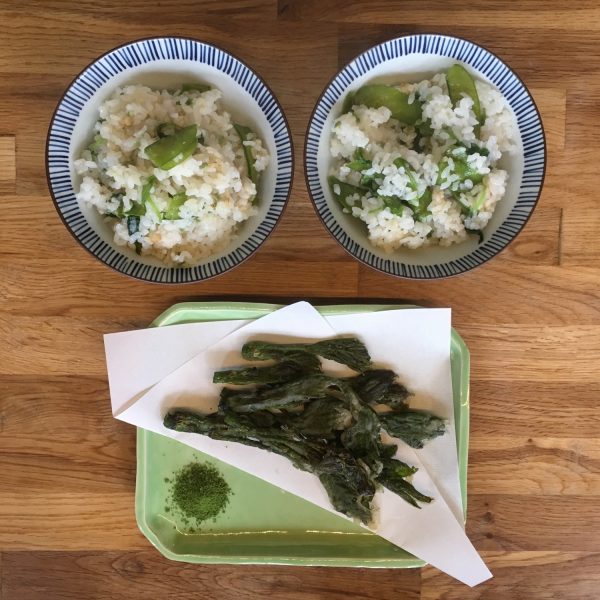
The golden week continues with friends visiting and a lot of cooking for our guests. So when things get quieter I cook some very simple things with one of the seasonal product: yama udo. The first time we ate yama udo was in Tsunan with our friends when we went to pick some. Compared to normal udo, yama udo is thinner and the leaves are very tasty and particularly when cooked quickly. Tempura are a very good option for that. Yet I rarely cook tempura as I don’t deep fry. But I use an alternative that is good enough for small or flat things: I use a thin layer of oil in a pan.

As the tempura mix it is simply half corn starch half flour and water mixed together to obtain a rather liquid dough. I deep the washed vegetables and toss in the heated pan with 5mm of oil. I turn 2 or 3 times until crispy. I used a mix of macha and salt for seasoning in equal proportions.

Golden week is just half way… now we’re heading to Tsunan to see our friend and maybe go to pick more yama udo!

Proudly powered by WordPress | Theme: Baskerville 2 by Anders Noren.

Up ↑

Verified by MonsterInsights