Miso eggplants

This quite simple Japanese recipe is really delicious and I like it very much now, but for sometimes I hated it because the first time I tried to prepare it, it was a terrible failure. The first and only time I prepared something to eat that ended up in the trash because it was not edible. I surely made a mess of this delicious recipe! Probably a problem with the mastering of Japanese ingredients at the timeand the proportions! Indeed when we arrived in Japan, cooking was a quite interesting task and grocery shopping an even more startling! Almost every evening we would go to our local supermarket and starre at what at that time we found strange mushrooms, awkward fruits and unknown fishes. So after a few weeks I decided to buy a beginners Japanese cooking book and to try most of the recipes to get familiar with techniques and basic products. The book I picked was in English of course and was clearly written for foreigners, so it was really helpful! However most of the recipes in this book make use of mirin (together with sugar), a Japanese cooking ingredient that I find unify the taste and is not very interesting (a bit like glutamate in Chinese cuisine). So I will give you my version of miso eggplant, the one that is just perfect and doesn’t use mirin.

For two as a side dish I use 1 or 2 Japanese eggplants (they are quite small); a spoon of miso; a tea spoon of grounded sesame or “surigoma”; a little of vegetal oil. After removing the stems and cutting in halves the eggplants, fry them in a very very thin layer of oil. In the mean time, mix the miso the sesame and a very little of oil if necessary to obtain a paste. Once the eggplants are cooked, set them on a serving plate and delicately spread the paste to obtain a thin layer. Decorate with a little of sesame. You can also set the eggplants on a cooking shit, spread the miso, and grill them 3 min in the oven to obtain a roasted miso thin crust. 
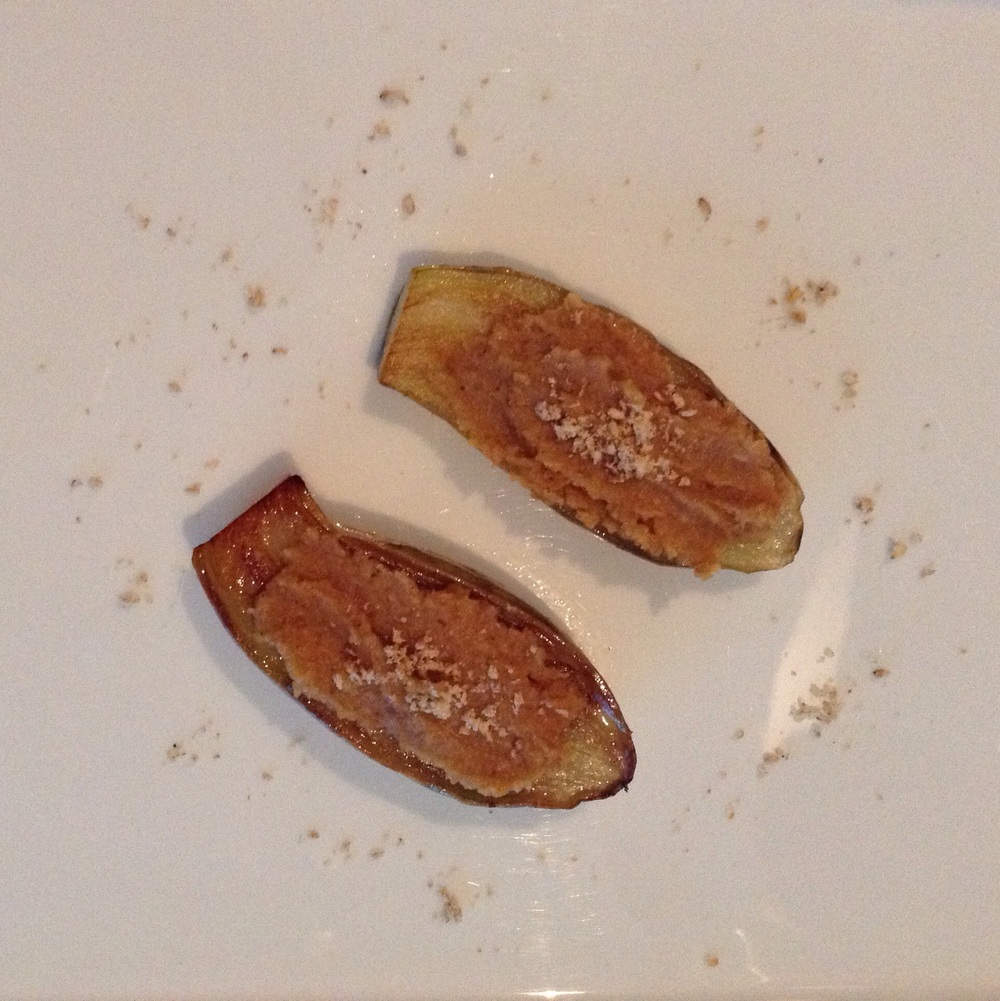
 White eggplants with miso
White eggplants with miso

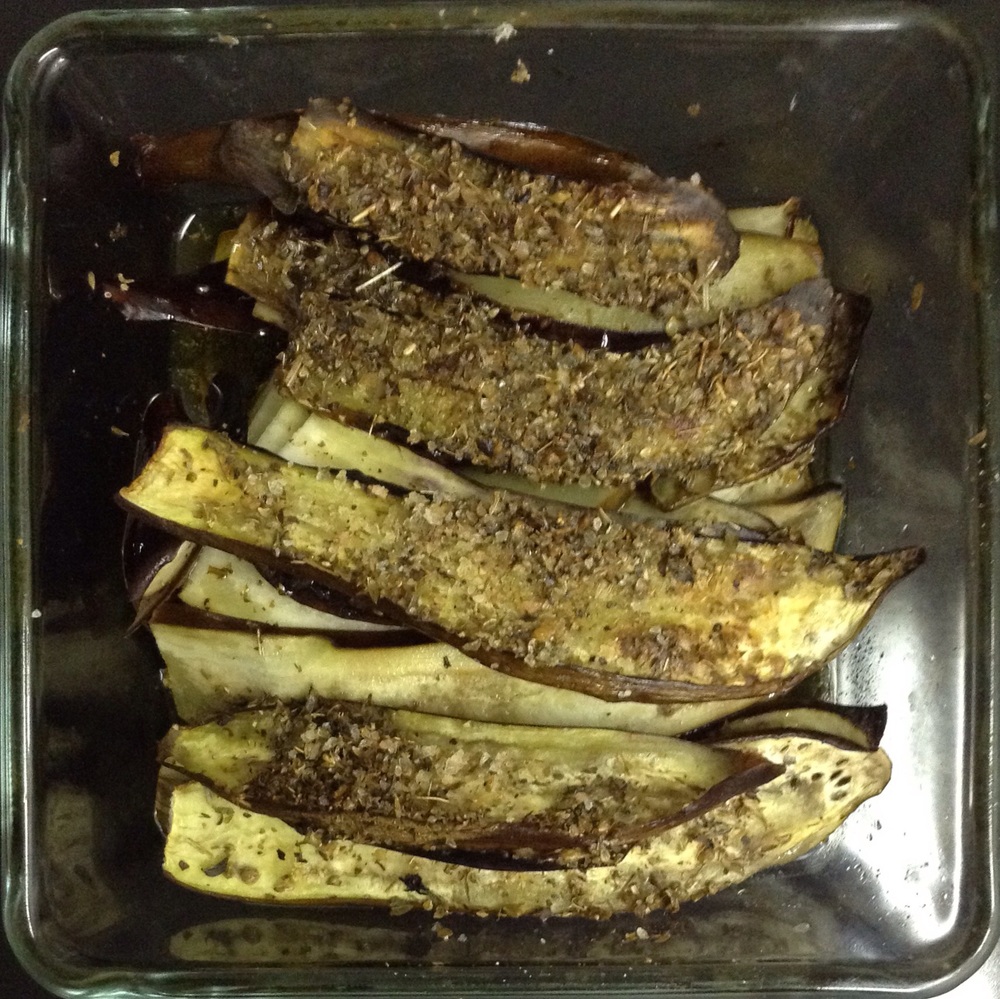
Oven grilled eggplants

The simplest way of cooking eggplants is by oven grilling them. It is so delicious and so handy to cook! For oven grilled eggplants I wash a few eggplants and then slice them with a mandoline or a large knife. In a pie dish I put a thin layer of olive oil, then I set the eggplant slices in a thick layer, top the whole with herbs such as oregano, thyme, rosemary… Then add olive oil again, set in the oven at 200-230deg for 30min. The more they stay in the oven the crispier the top and bottom gets and the more tender gets the middle.

If you like cheese, adding a layer of mozzarella sliced in between the eggplant layers and before the herbs is just too good! My husband doesn’t like cheese so I’m skeeping that… 🙁

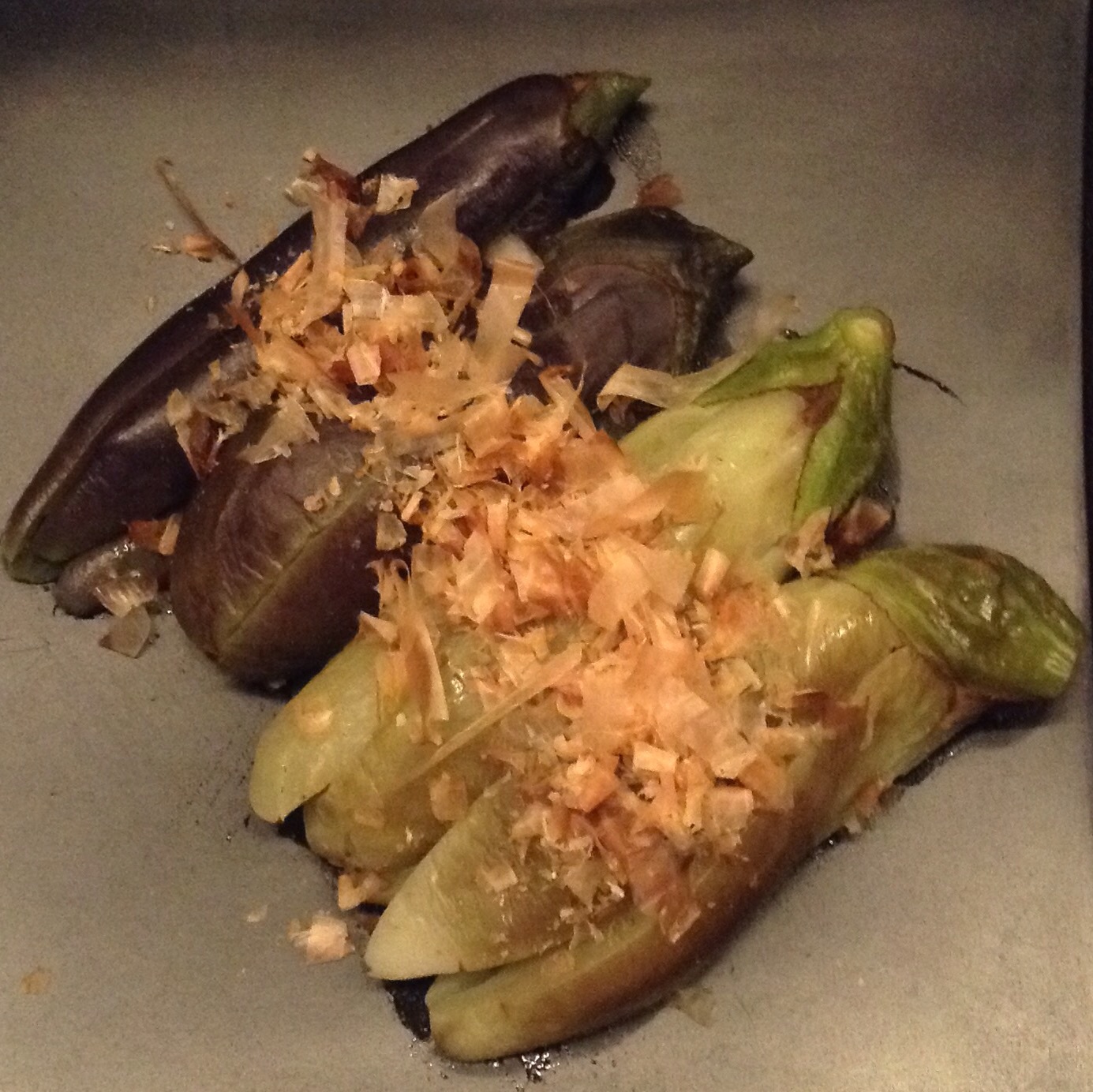
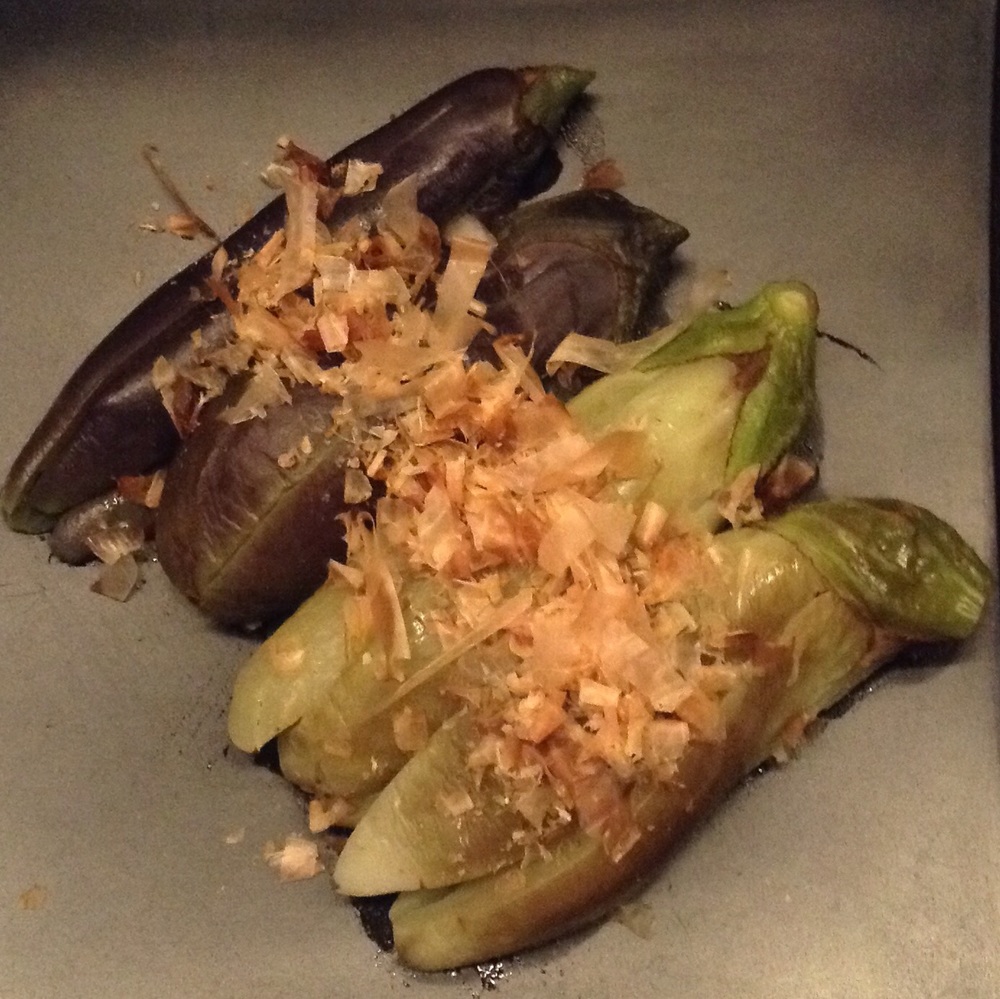
Eggplant and katsuo bushi

The first recipe of eggplant is a Japanese one. It is awfully simple, yet extremely delicious. It is simply boiled eggplant in katsuo bushi dashi (dried bonito consommé to make it short) served with a topping of katsuo bushi flakes (dried bonito flakes). For that I always use small eggplants, like tiny ones. I cut them in four but keep the four pieces attached by the stem. And boil them in katsuo bushi dashi for 10min. Then I drain them well, eventually using some cooking clothe or cooking paper. I serve them cold most of the time and just top them with some katsuo bushi flakes before serving, eventually add a few drops of soya sauce if you think it needs salt, but usually I don’t.

Eggplant week

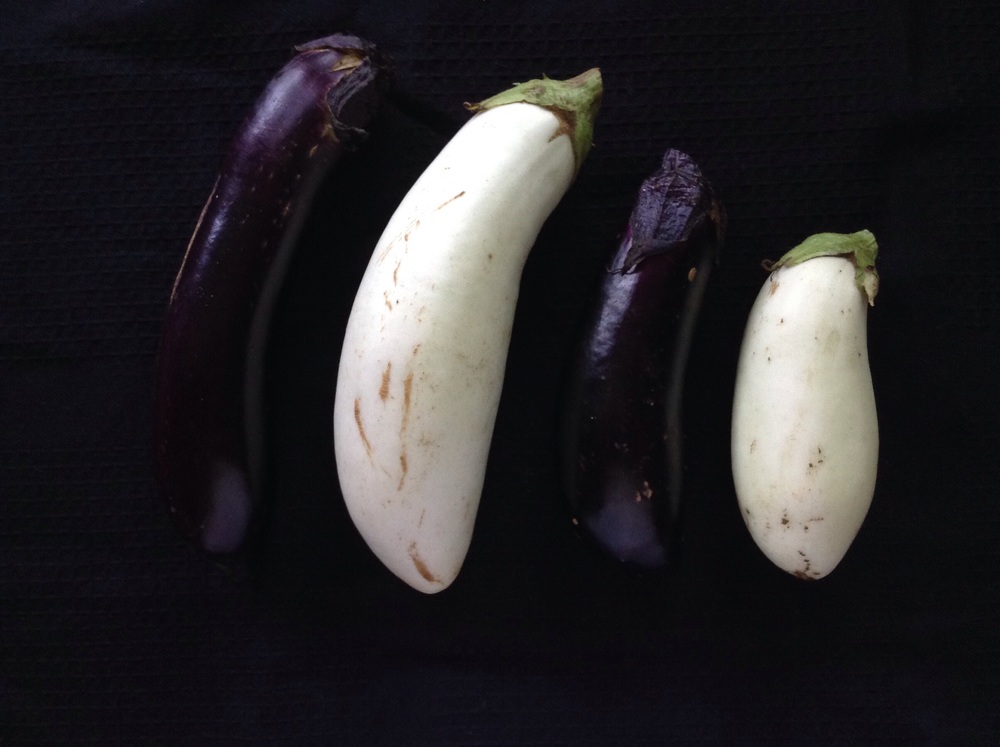
Let’s reiterate a vegetable week! I could have chosen grean beans, but I realize I’ve already posted many recipes involving green beans, so I’ve opted for one other summer star: the eggplant. Funilly eggplants are as much used in Japanese cuisine than in Provence cuisine, though in Japan the eggplant species are slightly different, smaller or thin and long. 

They are also used in summer together with cucumber to make horses and oxes than the spirit of dead people ride to come back to the human world during the Obon period, which is either July 15th or August 15th depending whether one follows the new solar calendar or the old lunar calendar.

So, this week let’s celebrate eggplants!

French baguette

Well, there is no week-end in the country without a proper Sunday morning breakfast with freshly baked bread or equivalent and fresh fruits. This Sunday is not different, and for the breakfast I prepared French baguette. French baguette requires 1h of autolysis before you can start kneading, so it’s not often I have the time to prepare it, because usually I am to busy outside gardening. This week-end it’s a little bit different since we’re having some workers at home for the reform of our entrance hall I’m not gardening much. Preparing baguette is not more difficult than any other bread but as French there is something special about it, something sentimental when you eat it.

So to prepare one baguette I use 166g of flour; 107g of water; 4g of salt; 8g of dry sourdough; 3g of yeast.

First mix the flour with 2/3 of the water and wait for 1h for the autolysis. Then add all the rest of the ingredients, knead until soft and smooth, and let rest 1h30 for proving. Then lay the dough flat for 15min; finally shape the bread and wait an other 1h30; flour and incise before baking at 230 degrees for 20min. And here you have a freshly baked baguette!

Actually because I love freshly baked bread in the morning, I prepare the bread and replace the last 1h30 by a whole night in the fridge. In the morning just have to bake it. 

Summer?

I talk about summer vegetables and fruits a lot, and use many in my cooking every day (I love summer fruits for breakfast) but to tell you the truth though we are in July, the weather is quite tricky these days and summer may be in my plates but not outside. So after a whole week of rainy days and quite cool evenings, I wanted to eat a warm soup. So I went for a simple combination: leek, celery and zucchini in a vegetable consommé that I cooked 10min to keep the celery and the zucchini firm enough. I added a few little pasta at the same time (for the energy after a tough day) and a bit of olive oil. A delicious mix for dinner perfectly balanced in taste and texture. You can also add some gratted Parmegianno. 

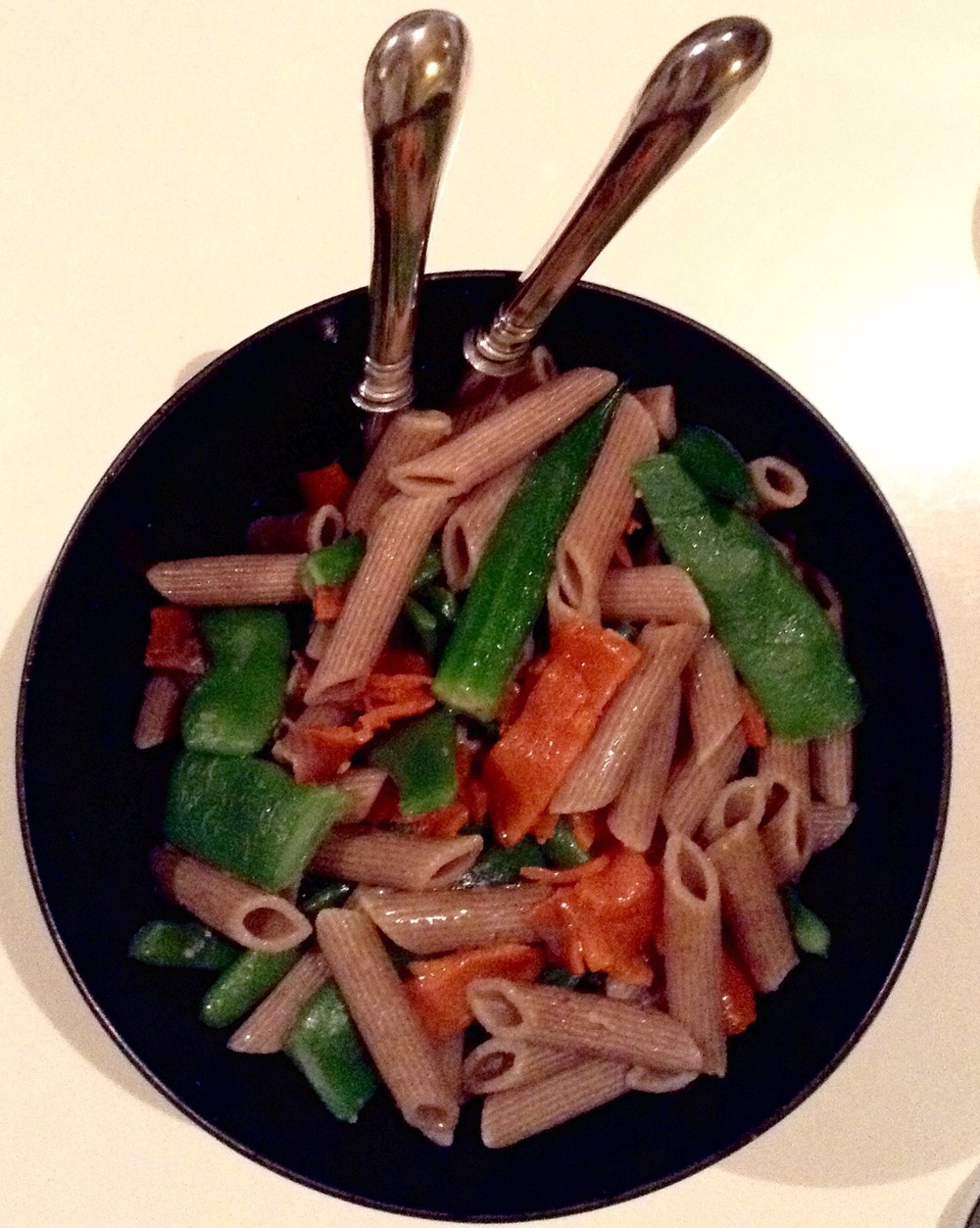
Farro penne salada

Recently there’s been a lot of green beans and broad beans, it is just the pick season here in Japan and I can’t resist buying some several times a week, so our dinner have been based on these greens quite often. Recently I also found okra from Okinawa (usually they come from the Philippines), but not yet local okra. I find the one from Okinawa particularly delicious. It’s funny because I never ate okra before coming to Japan, at first I found it was a strange vegetable, but little by little I started to really enjoy them. When eaten raw they are a bit slimy which might be discussing for some people, but as soon as you boil them for a few seconds they’re not slimy anymore and they keep this beautiful intense green color.
This time I prepared for dinner a farro penne salada. I boiled  the pasta al-dente, and boil the broad beans and green beans together, in the last 30seconds I just added the okra.
I served that with olive oil, salt and pepper, as usual, and added some wild smoked salmon (I don’t why I mention “wild”, because I only eat wild fish from specific areas, like all the vegetables I use are either organic or locally grown without chemicals).
And dinner was ready in less than 15min! Perfect after a long day at work!

Potatoes and green beans salad

My mother does this very simple classic salad as a starter: green beans or broad beans, potatoes, new onion, olive oil and mustard. I love when the potatoes have marinated in the oil and when the green beans water is mixing in an indiscriptibly delicious juice. This time I mimicked her recipe but made it even simpler: remove the mustard and replaced the onion by some momendofu (hard tofu) crumbles and served it as a main dish for dinner. To enjoy the delicious juice I recommend to prepare the salad one hour before serving and with new potatoes I don’t peel them, just brush them under water.

One-plate salad

Spending the week-end in Tokyo we’ve been eating out a bit and I’ve had time to do some cooking reading, and it inspired me for this vegetarian one plate (though eggs are optional and it can turn out vegan easily). I boiled 2 new potatoes, 1egg and 3 asparagus, and 3 okras. In order to spare time, I first put the potatoes in the boiling water, washed but with peel. Then when the potatoes are half cooked (I use a little bamboo toothpick to check) I add the egg to hardboil, after 4min I add the hardest part of the asparagus and after 1min I finally add the head of the asparagus and the okras. After less than 1min I drain everything and rince in cold water. In a bowl I roughly cut one avocado, the egg, the hard parts of the asparagus, mix with a bit of olive oil, salt and pepper. In a plate I slice the potatoes, mount the avocado-egg-aspara mixture in a circle and line the okras, finish with the asparagus heads, a bit of olive oil and salt. Bon appetit!

Proudly powered by WordPress | Theme: Baskerville 2 by Anders Noren.

Up ↑

Verified by MonsterInsights